Best Wet Dog Food: 10 Top-Rated Cans Reviewed by the Petful Team
The 10 best wet dog foods of 2026, compared by quality, cost, and life-stage fit. Open Farm, Just Food For Dogs JustFresh, Hill's, Pro Plan, and more vet-vetted picks.
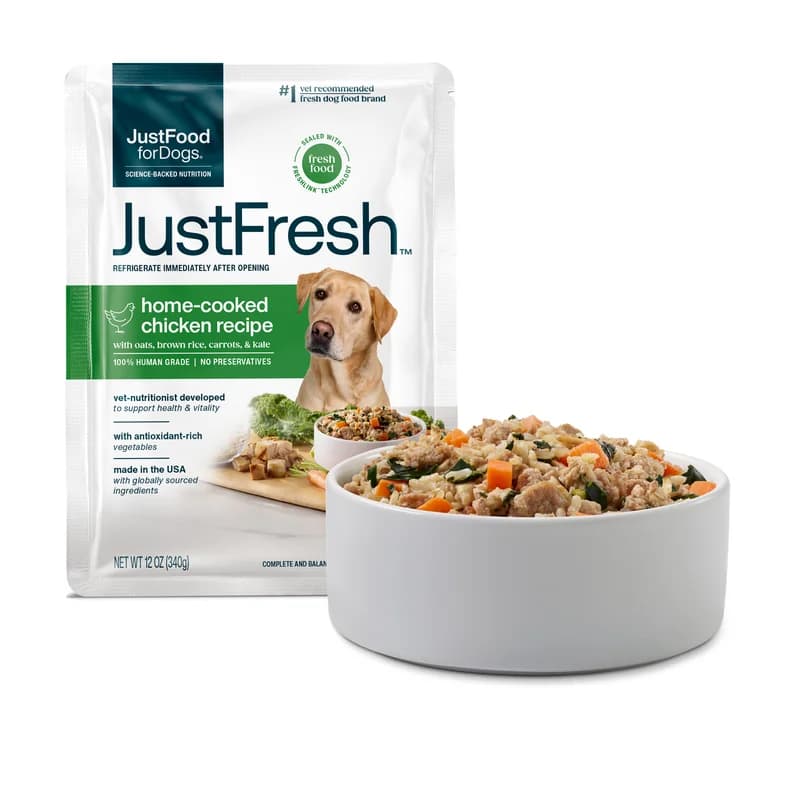
JFFD's JustFresh is a shelf-stable, fresh-cooked human-grade food in pouches (no refrigeration required until opened); pictured: the home-cooked chicken recipe.
Petful is reader supported. As an affiliate of platforms like Amazon and Chewy, we may earn a commission when you buy through links on this page. There is no extra cost to you.
Petful may earn a commission on purchases made through links in this article, at no extra cost to you. Brand selection is independent.
This product is intended for use under veterinary supervision. Nutritional recommendations should be discussed with your veterinarian to determine the most appropriate diet for your dog's individual needs.
- 1Wet dog food contains 70 to 78 percent moisture compared to 8 to 12 percent in dry kibble. The extra dietary moisture passively boosts daily water intake, which can help picky eaters, senior dogs with reduced thirst response, and dogs that drink less than they should. Discuss specific kidney or urinary-tract concerns with your veterinarian, who may recommend a prescription therapeutic diet.
- 2Our top 10 picks span every category: Just Food For Dogs JustFresh (best overall, human-grade), Hill's Science Diet (best vet-recommended mainstream), Open Farm Surf & Turf (best premium pâté), Royal Canin (best for sensitive stomach), and IAMS Proactive Health (best budget).
- 3Wet food can be fed exclusively, mixed with kibble for higher palatability, or used as a topper to encourage picky eaters.
- 4Daily cost ranges from $0.85 (IAMS Proactive Health) to $4.50+ per day (premium fresh-style canned options) for a 30-pound dog.
- 5Always check the AAFCO statement: prefer 'complete and balanced' over 'intermittent or supplemental feeding only.' The latter is meant as a topper, not a main meal.
The best wet dog food in 2026 is Just Food For Dogs JustFresh for overall quality, Hill's Science Diet Adult Chicken & Barley Entree for vet-recommended mainstream cans, and Open Farm Surf & Turf Pâté for premium pâté texture. Wet dog food contains 70 to 78 percent moisture compared to 8 to 12 percent in dry kibble, which makes it useful for picky eaters, senior dogs with reduced thirst response, and dogs that benefit from a passive boost in dietary water intake. General feeding-and-care guidance from the American Veterinary Medical Association (AVMA) supports wet food as one tool for raising daily moisture intake; specific kidney or urinary-tract management decisions should be made with your veterinarian. Daily cost runs from $0.85 (IAMS Proactive Health) to $4.50 or more (premium fresh-style canned options) for a 30-pound dog. Wet food can be fed exclusively or used as a topper to improve palatability of dry kibble for picky eaters.
| Category | Our Pick | Daily Cost (30 lb dog) |
|---|---|---|
| Best Overall | Just Food For Dogs JustFresh | $2.75 to $4.25 |
| Best Premium Pâté (Sourcing Transparency) | Open Farm Surf & Turf Pâté | $2.50 to $4.50 |
| Best Vet-Recommended | Hill's Science Diet Adult Chicken & Barley Entree | $1.80 to $3.25 |
| Best for Sensitive Stomach | Purina Pro Plan Sensitive Skin & Stomach | $1.85 to $3.30 |
| Best OTC Digestive Wet | Royal Canin Digestive Care Loaf in Sauce | $2.40 to $4.00 |
| Best Fresh-Style Alternative | The Farmer's Dog (fresh wet) | $2.50 to $6.50 |
| Best Premium Specialty | Weruva Dogs in the Kitchen | $2.20 to $3.80 |
| Best Grain-Free Wet | Wellness CORE Grain-Free | $2.00 to $3.50 |
| Best Mid-Range Mainstream | Blue Buffalo Homestyle Recipe | $1.40 to $2.50 |
| Best Budget | IAMS Proactive Health Wet | $0.85 to $1.60 |
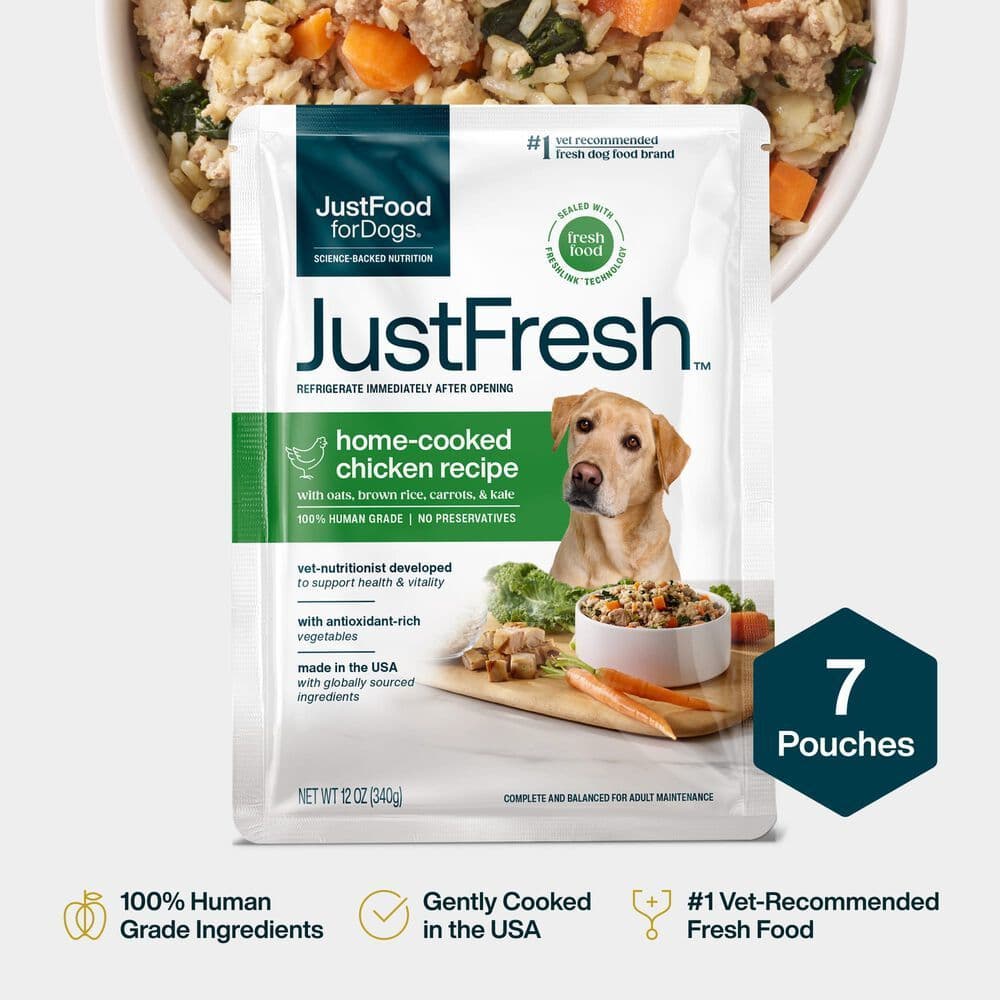
Explore the JustFresh chicken pouch from our wet-food pick, with pantry storage before opening.
- Home-cooked chicken recipe
- Shelf-stable pouches before opening
- Fresh-food convenience without freezer space
Petful may earn a commission when you click through to JustFoodForDogs, at no extra cost to you.

Sign up for expert-backed reviews and safety alerts all in one place.
Why Feed Wet Dog Food Instead of Kibble?
The primary advantage of wet dog food is moisture. Canine kidneys evolved to extract water from prey (which is roughly 70 to 78 percent moisture by weight). Modern dry kibble runs 8 to 12 percent moisture, which means dogs eating kibble exclusively must drink significantly more water to compensate. Many do not, especially older dogs whose thirst response declines and dogs that drink less than they should. Increased dietary moisture from wet food is a useful passive way to boost daily water intake; specific decisions about diet for diagnosed kidney disease, urinary tract issues, or struvite crystal formation should be made with your veterinarian, who may recommend a prescription therapeutic diet.
Wet food also tends to be more palatable than kibble for picky eaters, senior dogs with declining appetite, and dogs recovering from illness or surgery. The stronger aroma and softer texture encourage intake during periods when the dog is otherwise reluctant to eat. Many veterinarians recommend wet food specifically during recovery from gastrointestinal upset, dental procedures, or post-spay/neuter when kibble is hard to crunch.
Wet Dog Food Terminology: Pâté, Loaf, Stew, and Shreds Explained
Wet dog food covers a range of textures, each designed for different preferences and feeding situations. Understanding the four main textures helps you match the right format to your dog's age, dental health, and palatability needs.
Pâté
Pâté is the smoothest texture: finely ground meat, organs, and vegetables blended into a uniform, spreadable consistency. Pâté is the easiest format for senior dogs with dental disease, picky eaters who prefer mild textures, and dogs recovering from oral surgery. Open Farm Surf & Turf Pâté and most Hill's Science Diet wet entrées use this texture. Pâté is typically the highest-moisture wet format (75 to 82 percent water by weight).
Loaf in Sauce
Loaf in sauce blends a dense, sliceable protein loaf (similar to pâté in texture) with a separate broth or gravy sauce. Royal Canin Digestive Care Loaf in Sauce uses this format. Loaf adds visual variety to mealtime and the sauce can be drizzled over dry kibble as a topper. The texture is firmer than pâté but softer than stew chunks.
Stew (or Chunks in Gravy)
Stew formats use whole or large pieces of meat, vegetables, and grains in a gravy or broth base. Examples include Wellness Complete Health Stew and Cesar Filet Mignon Flavor. Stews are visually appetizing and the chunky texture appeals to dogs who like to chew their food. The drawback: chunk-style wet food can be harder to portion for senior or small dogs, and the chunks can feel dry compared to pâté.
Shreds (Pulled-Style)
Shreds use long, fibrous strips of meat in a savory broth or jelly. KOHA Pure Shreds and Weruva Dogs in the Kitchen specialize in this format. The pulled texture mimics rotisserie-cooked meat and is highly palatable for picky eaters. Shreds typically run higher in fat and calories than pâté, so adjust portions accordingly for less-active or senior dogs.
Explore the JustFresh chicken pouch from our wet-food pick, with pantry storage before opening.
- Home-cooked chicken recipe
- Shelf-stable pouches before opening
- Fresh-food convenience without freezer space
Petful may earn a commission when you click through to JustFoodForDogs, at no extra cost to you.
- Canine kidneys evolved to extract water from prey, which is 70 to 78 percent moisture. Wet dog food runs 70 to 82 percent moisture, closer to that evolutionary baseline than kibble (8 to 12 percent moisture). The extra moisture matters most for older dogs, dogs prone to UTIs or struvite crystals, and dogs with chronic kidney disease.
What Is the Best Wet Dog Food of 2026?
1. Just Food For Dogs JustFresh: Best Overall Wet Dog Food
Just Food For Dogs JustFresh is one of the few human-grade fresh-cooked foods that stays shelf-stable while qualifying under the AAFCO 2019 labeling definition, with every ingredient and the finished product prepared in compliance with human-edible-food regulations (USDA-inspected meat sourcing plus human-food current good manufacturing practices for facility operation). Recipes are gently cooked at low temperatures from human-grade ingredients, then sealed in shelf-stable pouches that do not require refrigeration until opened. JustFresh is available in home-cooked chicken, beef, turkey, and pork recipes per the current JFFD product page, each labeled for adult maintenance; sensitive-skin, sensitive-stomach, and other limited-ingredient JFFD options exist as separate Vet Support Fresh Frozen recipes rather than JustFresh variants. Petful’s guide to shelf-stable fresh dog food has the full breakdown.
- Fully human-grade per the AAFCO 2019 labeling definition (manufactured under FDA's 21 CFR 117 human-food current good manufacturing practices)
- Shelf-stable pouches, no freezer or refrigerator required until opened
- Recipes developed by board-certified veterinary nutritionists
- Gently cooked from USDA-inspected human-grade ingredients
- Targeted Vet Support Fresh Frozen recipes (Sensitive Skin, Sensitive Stomach, Joint & Skin Support, Healthy Weight, others) available alongside JustFresh for dogs with specific needs
- $2.75 to $4.25 per day for a 30-pound dog (premium tier)
- Smaller pouch sizes mean more packaging than canned alternatives
- Limited protein variety (chicken, beef, turkey, pork)
2. Open Farm Surf & Turf Pâté: Best Premium Pâté for Sourcing Transparency
Open Farm Surf & Turf Pâté stands out for ingredient sourcing transparency in the wet category. Per the official product page, the recipe leads with ocean whitefish, fish broth, beef broth, and potatoes in a smooth pâté texture, with no artificial preservatives or fillers. Open Farm's signature ingredient-level traceability lets you trace each protein back to its source farm or fishery via a lot code on the can.
- Ocean whitefish and beef broth lead the ingredient panel
- No artificial preservatives, colors, or fillers
- Ingredient traceability with published farm sources
- Grain-free pâté texture suits picky eaters and senior dogs
- Available at most premium pet retailers
- Pricier than mainstream brands ($3 to $4 per can)
- Fish-forward flavor does not suit every dog's palate
- Pâté texture not preferred by chunk-loving dogs
3. Hill's Science Diet Adult Chicken & Barley Entree: Best Vet-Recommended
Hill's Science Diet Adult Chicken & Barley Entree is the wet food most frequently stocked by U.S. veterinary clinics for healthy adult dogs. Hill's publicly responds to WSAVA's manufacturer-selection questions, substantiates selected adult-maintenance recipes through AAFCO feeding trials (formulation-only substantiation is used on some other recipes), and lists real chicken as the first ingredient on this entree. Hill's also offers wet variants in Perfect Weight, Sensitive Stomach & Skin, and Senior 7+ to match life stage and health profile.
4. Purina Pro Plan Sensitive Skin & Stomach: Best for Sensitive Stomachs
Purina Pro Plan Sensitive Skin & Stomach (wet) is the wet variant of Pro Plan's salmon-and-rice sensitive line. Salmon is the first ingredient, supplemented with rice, oat meal, and fish oil for omega-3 fatty acid support. Per Purina's product page, Pro Plan substantiates selected recipes through AAFCO feeding trials and Purina publishes nutrition research from its St. Louis research facility. This makes Pro Plan one of the more evidence-backed mainstream sensitive-stomach wet options short of a prescription diet.
5. Royal Canin Digestive Care Loaf in Sauce: Best OTC Sensitive Stomach Wet
Royal Canin Digestive Care Loaf in Sauce is the over-the-counter wet pick for dogs with mild gastrointestinal sensitivity, occasional digestive upset, or post-surgical recovery support. For diagnosed chronic gastrointestinal disease that requires therapeutic management, the prescription Royal Canin Veterinary Diet Gastrointestinal or Gastrointestinal Low Fat lines are the appropriate next step and require veterinary authorization. The Loaf in Sauce texture is highly palatable for dogs recovering from illness when other foods are refused.
Explore the JustFresh chicken pouch from our wet-food pick, with pantry storage before opening.
- Home-cooked chicken recipe
- Shelf-stable pouches before opening
- Fresh-food convenience without freezer space
Petful may earn a commission when you click through to JustFoodForDogs, at no extra cost to you.
6. The Farmer's Dog (Fresh Wet): Best Fresh-Style Alternative
The Farmer's Dog is technically a fresh-frozen subscription rather than traditional canned wet, but the high moisture and soft texture put it in the wet feeding category for many owners. Recipes are cooked from USDA-inspected human-grade ingredients, portioned to each dog's profile, and shipped frozen. See our full Farmer's Dog cost breakdown for pricing.
7. Weruva Dogs in the Kitchen: Best Premium Specialty Wet
Weruva Dogs in the Kitchen stands out for the visibly shredded whole-meat texture in every can (you can see the actual chunks of chicken or beef, not just ground pâté). Cooked in human-food facilities in Thailand under BRC food-safety certification, with no thickeners, gums, or carrageenan. The premium price reflects the visible ingredient quality and the texture-loving palatability.
8. Wellness CORE Grain-Free: Best Grain-Free Wet
Wellness CORE Grain-Free is our recommended grain-free wet option in light of the FDA's open investigation into reports of non-hereditary canine DCM associated with certain diets (the FDA has stated that adverse-event reports do not establish causality). Wellness Pet publishes information about its formulation approach and the DCM investigation on its corporate site.
9. Blue Buffalo Homestyle Recipe: Best Mid-Range Mainstream
Blue Buffalo Homestyle Recipe is a widely distributed mid-range wet dog food in the United States, with real chicken or beef listed as the first ingredient and a recipe free of chicken by-product meal, corn, wheat, and soy. Blue Buffalo does not publicly identify a full-time board-certified veterinary nutritionist on staff and does not appear to engage as substantively with WSAVA's manufacturer-selection questions as the Big Three (WSAVA does not certify pet food brands or maintain a compliant-brand list). Manufacturing quality has cleaned up since the brand was acquired by General Mills in 2018, and the price-to-quality ratio is strong for the mid-range tier.
10. IAMS Proactive Health: Best Budget Wet
IAMS Proactive Health Wet is a budget wet option that meets AAFCO nutritional adequacy and lists a real animal protein as the first ingredient on its primary variants. Pricing typically sits in the budget tier (under $1.50 per day for a 30-pound dog at most retailers; check current per-can pricing for your region before relying on a specific number). Owned by Mars Petcare, IAMS uses long-running production lines and is widely distributed at grocery and pet retailers.
- Whether you are switching from dry kibble to wet entirely or just adding wet food as a topper, transition over 7 to 10 days. Day 1 to 3: 25 percent wet, 75 percent old food. Day 4 to 6: 50 / 50. Day 7 to 9: 75 percent wet, 25 percent old. Day 10: 100 percent wet (or your target mix). Wet food spoils faster than kibble: refrigerate any uneaten portion within 2 hours and discard after 4 to 5 days even refrigerated. Open cans should be covered or transferred to a sealed container.
How Do You Choose the Right Wet Dog Food?
Start with the AAFCO nutritional adequacy statement on the can. Wet foods labeled 'complete and balanced' meet nutritional needs as a sole diet. Wet foods labeled 'for intermittent or supplemental feeding only' are designed as toppers or treats, not meals, feeding these as a main diet will create nutritional deficiencies over time. For most adult dogs, look for a wet food substantiated through AAFCO feeding trials rather than formulation-only analysis.
Explore the JustFresh chicken pouch from our wet-food pick, with pantry storage before opening.
- Home-cooked chicken recipe
- Shelf-stable pouches before opening
- Fresh-food convenience without freezer space
Petful may earn a commission when you click through to JustFoodForDogs, at no extra cost to you.
Match the wet food to your dog's life stage and health profile. Puppy wet foods (Hill's Science Diet Puppy Chicken & Rice Stew, for example) are calorie-dense and high in DHA for brain development. Senior wet foods include joint-support ingredients and lower-calorie formulas. Sensitive stomach variants (Purina Pro Plan, Hill's, Royal Canin) reduce ingredient complexity to ease digestion. For prescription needs (kidney disease, food allergies, obesity), your veterinarian will recommend a specific therapeutic line.
Does Wet Food Cause Dental Problems in Dogs?
The most common objection to feeding wet dog food is dental health. The reasoning: dry kibble's hard, crunchy texture provides abrasive mechanical cleaning of teeth as the dog chews, while wet food's soft texture skips that step entirely. Wet food, the argument goes, leads to faster plaque buildup, gingivitis, and periodontal disease.
The evidence is more nuanced. According to the American Veterinary Dental College (AVDC), regular kibble does not actually provide meaningful dental benefit. The kibble shatters on first bite and does not scrub the tooth surface long enough to remove established plaque. The only kibbles with verified dental benefit are those specifically formulated for plaque control (Hill's Prescription Diet t/d, Royal Canin Dental Care, Purina Pro Plan Dental Diets), which use larger kibble size, fiber matrix, and specific shape engineering to require sustained chewing.
What actually keeps dog teeth clean is daily brushing with enzymatic toothpaste, dental chews approved by the Veterinary Oral Health Council (VOHC), and routine professional dental cleanings under anesthesia at the veterinarian. If your dog gets those interventions, the wet-versus-dry distinction has minimal impact on dental health. If your dog gets none of those, neither regular kibble nor regular wet food will prevent periodontal disease alone.
- Daily brushing with enzymatic toothpaste is the single highest-impact intervention. Add VOHC-approved dental chews 3 to 5 times per week (look for the VOHC seal on the package). Schedule professional dental cleanings annually for small breeds, every 1 to 2 years for medium-large breeds. The food's texture is roughly the fifth most important factor, not the first.
How Do You Combine Wet and Dry Dog Food?
Many owners feed a combination of wet and dry food to capture the advantages of both. Three common approaches work well, depending on your dog's preferences and budget.
Wet as topper, dry as base
The most common combination. Feed 75 to 85 percent of daily calories as dry kibble, with 15 to 25 percent wet food mixed in or layered on top. This boosts palatability and moisture without dramatically increasing cost. A 30-pound adult dog needing 800 calories daily might eat 660 calories of kibble (about 1.25 cups) plus 140 calories of wet food (one-third of a 13-ounce can). Daily cost stays around $1.50 to $2.50.
Wet AM, dry PM (or vice versa)
Some dogs do better with separated wet and dry meals rather than mixed. Common variation: wet meal in the morning (more palatable to wake up to), dry meal in the evening (longer satiety, easier overnight portion control). This works well for dogs with sensitive stomachs that do not handle rapid texture transitions within a single meal.
50/50 mixed feeding
For owners who can afford it, a 50/50 calorie split between wet and dry maximizes hydration and palatability while keeping costs in check. This approach is particularly useful for picky eaters, senior dogs with reduced appetite, and dogs recovering from illness. Daily cost for a 30-pound dog at 50/50 typically runs $2.50 to $4.00.
Whatever ratio you choose, calculate total daily calories first, then split. Free-feeding both wet and dry (leaving both out all day) is the most common cause of overfeeding and weight gain. Body Condition Score should be your check: a healthy adult dog should have a visible waist when viewed from above and ribs that are easily felt but not visible.
- Once opened, refrigerate wet dog food immediately and use within 5 to 7 days. Keep the can covered (a silicone can lid or plastic wrap works) and warm portions to room temperature before serving. Dogs reject cold-from-the-fridge food more often than warm. Discard any food left at room temperature for more than 2 hours.
How Long Does Wet Dog Food Stay Good After Opening?
Wet dog food spoils much faster than dry kibble once opened, and improper storage is the most common cause of diet-related vomiting and diarrhea in dogs eating wet food. The basic rule: opened wet food is good for 4 to 5 days refrigerated, or 2 hours at room temperature.
| Condition | Maximum safe time | How to store |
|---|---|---|
| Unopened can or pouch (pantry) | Until 'best by' date (1-2 years) | Cool, dry place out of direct sunlight |
| Opened, in original can refrigerated | 4-5 days | Cover with plastic wrap or can lid |
| Opened, transferred to sealed container refrigerated | 5-7 days | Airtight glass or BPA-free plastic |
| At room temperature (in bowl) | Maximum 2 hours | Discard uneaten portion after meal |
| Frozen (post-opening portion) | 1-2 months | Single-meal portions in freezer bags |
Two common mistakes to avoid. First, leaving uneaten wet food in the bowl all day. Within 2 hours at room temperature, bacterial counts begin to rise in food left exposed, and within several hours it can cause vomiting and diarrhea. Pick up the bowl 30 minutes after feeding and refrigerate any leftovers. Second, using metal cans without sealing them after opening. Once exposed to air, wet food in a metal can oxidizes rapidly and can develop off-flavors that dogs reject within 48 hours. Transfer leftovers to a sealed glass or BPA-free plastic container.
How Many Calories Are in Wet Dog Food Versus Dry?
Wet dog food has substantially lower calorie density than dry kibble, which means you feed a larger weight of wet to hit the same calorie target. This is the source of most owner confusion when switching between formats.
| Food type | Typical calorie density | Daily feeding (30 lb adult, 800 cal/day) |
|---|---|---|
| Standard adult kibble | 350-450 kcal per cup | 1.75 to 2.25 cups (about 6 oz dry weight) |
| Premium / high-protein kibble | 450-550 kcal per cup | 1.5 to 1.75 cups (about 5 oz dry weight) |
| Standard wet food (canned) | 300-450 kcal per 13 oz can | 1.75 to 2.5 cans daily (23 to 32 oz wet weight) |
| Premium wet food | 400-550 kcal per 12.5 oz can | 1.5 to 2.0 cans daily (19 to 25 oz wet weight) |
| Fresh-style wet (JFFD, Farmer's Dog) | 500-700 kcal per pound | 1.2 to 1.6 lb daily |
Always check the specific can or bag for kcal/cup or kcal/oz on the AAFCO statement. Numbers vary significantly between brands. Royal Canin Adult Wet runs around 350 kcal per 13-ounce can; Purina Pro Plan Sport Adult Wet runs around 480 kcal per 13-ounce can; the difference would change daily feeding by a full can if you don't read the label.
If your dog is overweight, the lower calorie density of wet food can be advantageous: feeding a larger volume of food for the same calorie target creates more satiety. The Hill's Perfect Weight wet line and Purina Pro Plan Weight Management wet variants are specifically engineered around this principle.
Is Wet Dog Food Better for Senior Dogs?
Senior dogs (typically defined as age 7+ for medium-large breeds, 9+ for small breeds) benefit from wet food more than younger dogs for three specific reasons.
Reduced thirst drive
Senior dogs experience a measurable decline in thirst response, which makes dehydration a chronic risk. Adding wet food to the daily diet can passively boost daily water intake by 70 to 200 milliliters per day depending on portion. For senior dogs with diagnosed kidney disease or urinary tract issues, the diet should be selected in consultation with your veterinarian, who may recommend a prescription therapeutic diet (such as Royal Canin Renal Support or Hill's Prescription Diet k/d) rather than a general senior wet food.
Dental and oral changes
Many senior dogs have periodontal disease, missing teeth, or sore gums that make crunching kibble painful. Wet food's softer texture allows comfortable eating even with significant dental compromise. Brands like Hill's Science Diet Senior 7+ wet and Purina Pro Plan Bright Mind 7+ wet are formulated specifically for senior nutritional needs (lower sodium, joint-support ingredients like glucosamine and omega-3) in a wet format that's easy to eat.
Appetite decline
Senior dogs often have reduced appetite, sometimes from medication side effects, often from declining olfactory sensitivity. Wet food's stronger aroma and higher moisture make it more palatable, helping maintain healthy intake. Veterinary nutritionists frequently recommend transitioning senior dogs to a 50/50 wet/dry mix or warming wet food slightly (10 seconds in the microwave or stirred with warm water) to amplify the aroma further.
Two cautions. First, senior dogs with diagnosed kidney disease need a prescription therapeutic diet (Royal Canin Renal Support or Hill's Prescription Diet k/d) rather than a general senior wet food. Second, dogs with diagnosed pancreatitis need lower-fat wet options (Royal Canin Gastrointestinal Low Fat) rather than the higher-fat senior formulas.
Frequently Asked Questions
The healthiest wet dog food for most adult dogs is one that publicly engages with WSAVA's manufacturer-selection questions and substantiates selected recipes through AAFCO feeding trials. Our top picks are Just Food For Dogs JustFresh (best overall, human-grade), Hill's Science Diet Adult Chicken & Barley Entree (best vet-recommended mainstream), and Open Farm Surf & Turf Pâté (best premium pâté texture). The healthiest specific choice depends on your dog's age, breed, and health profile.
Just Food For Dogs JustFresh is our editorial pick for the wet dog food category for owners who want human-grade fresh nutrition in a soft-textured format. Among mainstream kibble brands, U.S. veterinarians frequently recommend Hill's Science Diet, Purina Pro Plan, or Royal Canin wet food lines because those three brands consistently conduct AAFCO feeding trials, employ board-certified veterinary nutritionists, and publish their research in peer-reviewed journals. For prescription needs (sensitive stomach, kidney disease, food allergies), Royal Canin and Hill's prescription lines lead the therapeutic category.
Yes, provided the wet food is labeled 'complete and balanced' under AAFCO standards (not 'for intermittent or supplemental feeding only'). For dental care, daily brushing with enzymatic toothpaste, dental chews accepted by the Veterinary Oral Health Council (VOHC), and routine professional cleanings are the evidence-backed interventions; ordinary dry kibble has not been shown to provide meaningful dental benefit. Only specialty dental diets accepted by the VOHC have demonstrated plaque-control effects.
Feeding amounts depend on your dog's weight, age, activity level, and the calorie density of the specific food. As a rough rule, a healthy adult 30-pound dog eats roughly 1 to 1.5 cans (12 to 13.2 oz each) of standard wet food per day if fed exclusively. Always follow the feeding guide on the can's label or talk to your veterinarian if your dog is overweight, underweight, pregnant, or nursing.
Neither is universally better. Wet food advantages: higher moisture (helps picky eaters, senior dogs with reduced thirst response, and overall hydration), stronger aroma (helps picky eaters), softer texture (easier on senior teeth). Dry kibble advantages: lower cost, longer shelf life after opening, and easier portion control. Many veterinarians recommend a mix of both, or wet food used as a topper on dry kibble to combine the advantages. Dental care should rely on daily brushing, VOHC-accepted chews, and professional cleanings rather than on food texture.
Companion educational guides
These deeper educational and clinical companions cover the science behind the buyer's guide above:
- Senior Dog Food, 10 vet-reviewed picks for joints, cognitive health, and senior weight management
- Dog Food for Sensitive Stomachs, 9 vet-recommended picks for dogs with chronic digestive sensitivity
- Allergens in Dog Food, the top 9 food allergens for dogs (beef, dairy, chicken, wheat, lamb) with symptoms and elimination protocol
Which Wet Dog Food Should You Choose?
The best wet dog food for most healthy adult dogs is Just Food For Dogs JustFresh for fresh, human-grade quality in a shelf-stable format, Hill's Science Diet Adult Chicken & Barley Entree for research-backed mainstream nutrition, or Open Farm Surf & Turf Pâté for premium pâté texture and ingredient sourcing transparency. If your dog has a sensitive stomach, choose Purina Pro Plan Sensitive Skin & Stomach (OTC) or Royal Canin Digestive Care (OTC); for diagnosed chronic gastrointestinal disease, ask your veterinarian about prescription Royal Canin Veterinary Diet Gastrointestinal or Gastrointestinal Low Fat. For budget-conscious feeding without compromising AAFCO compliance, IAMS Proactive Health is the honest pick. Whichever you choose, transition over 7 to 10 days and refrigerate any open cans within 2 hours.
For broader context across all dog food categories beyond wet, see our complete guide to the best dog food brands of 2026. If your dog has food allergies, our best dog food for allergies guide covers prescription and limited-ingredient options specifically. For fresh-style wet alternatives, see our deep dive on whether fresh dog food is worth the switch.

Coreen Saito is a pet writer and longtime shelter volunteer with more than a decade in animal rescue. She covers cat behavior, breed care, and the small, ordinary science of sharing a life with companion animals, with a particular focus on honest takes about the products and decisions that actually matter. At home in Arizona, she's outranked by Mac (a dog with the loudest opinion in the house), Rebel (a cat who governs by quiet authority), and Meri (an orange tabby who runs the late shift and the laundry basket). She writes about all three, plus the rescues that keep coming through her life, at LifeWithMinty.com.
Sign up for expert-backed reviews and safety alerts all in one place.