Brussels Griffon Breed Profile: Essential Facts
Brussels Griffons are small, spunky and intelligent dogs with great personalities who enjoy the company of other dogs and cats.

- AKC Group: Toy
- Weight: 8-10 lbs.
- Height: 7-10 in.
- Life Span: 10-15 years

Sign up for expert-backed reviews and safety alerts all in one place.
Key Characteristics of Brussels Griffons
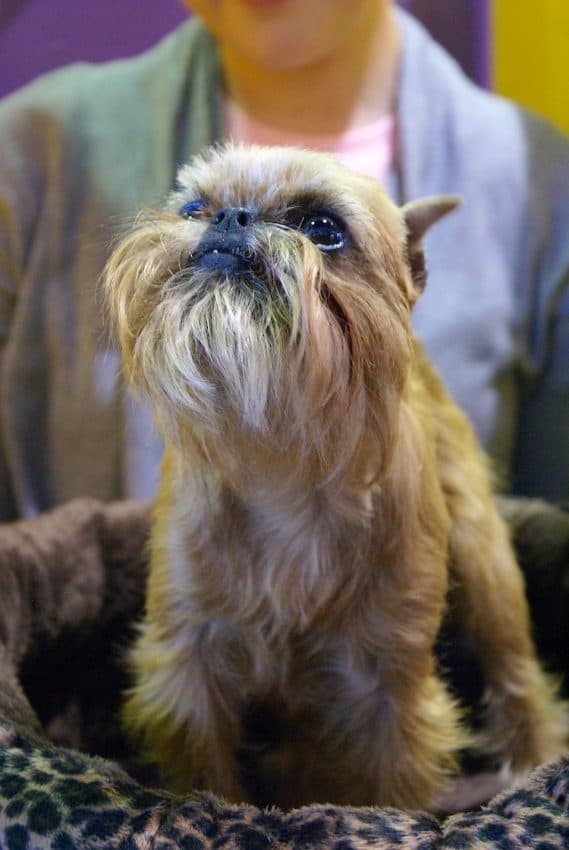
Much like the Affenpinscher, the Brussels Griffon looks a little monkey-like in the face.
The dog's head is large and round with a black nose. The eyes are black and wide, and the ears and tail are high-set unless they're cropped (which is illegal in some countries for non-working dogs).
The 2 coat types for this breed are rough (wiry and dense) and smooth (short and glossy). Colors include red, belge (red-brown and black), black and tan, and solid black.
Where Brussels Griffons Come From
Brussels Griffons were likely a result of crossing German Affenpinschers with Belgian street dogs. Other breeds involved in Brussels' development may have also included Pugs, King Charles Spaniels and Ruby Spaniels.
The European breed club (FCI) lists 3 separate breeds for the Brussels, each with its own breed standard: Griffon Bruxellois Griffon Belge Petit Brabancon
The first Brussels Griffon was exhibited in 1880 at the Brussels Exhibition. The American Kennel Club (AKC) recognized the breed in 1910.
How Friendly Are Brussels Griffons?
Brussels Griffons are friendly, cheerful, curious, charming and affectionate.
These intelligent dogs can learn many tricks, but house-training isn't so easy for them.
Brussels Griffons typically live with other dogs and cats without issue, but be sure to properly socialize and introduce your pets to avoid problems.
Prone to separation anxiety, Brussels Griffons need consistent training and exercise to deal with other behavioral issues.
Is This the Right Dog for You?
Exercise Needs
LOW: This small toy breed is active indoors and does well in apartments, but take yours for a daily outdoor walk.
They need regular exercise, consistent training and mental stimulation to keep them from becoming destructive, defiant and even aggressive.
Grooming Needs
LOW: Brussels Griffons shed little to no hair. Brush the coat a few times a week and check for any discharge or debris from the ears and eyes.
Remember to clean the teeth and keep the nails trimmed.
Health Problems
LOW: Brussels Griffons are pretty healthy, but here are some problems common in the breed: Luxating patella Eye problems Respiratory problems
- Sensitivity to extreme temperatures, particularly heat
More Stats About Brussels Griffons
| Friendliness | ★★★★☆ |
| Ease of Training | ★★★☆☆ |
| Barking/Howling | ★★★★☆ |
| Shedding | ★★★☆☆ |
| Tolerate Being Alone | ★☆☆☆☆ |
| Very Good With Kids | ★★★★☆ |
The beard on this Brussels Griffon is out-of-control adorable:
How to Adopt a Brussels Griffon
Brussels Griffons are rare and can be hard to find, but please check adoption resources and shelters first. You can also start with Petful's adoptable dog search.
Going through a breeder? Ask for health clearances from the dog's parents, ask to see your new puppy interacting with their mother, inspect the premises and stay alert for puppy mill warning signs.
Related Dog Breed Profiles You May Like
- Bullmastiff Breed Profile: Essential Facts
- Cesky Terrier Breed Profile: Essential Facts
- Coton de Tulear Breed Profile: Essential Facts
- Dandie Dinmont Terrier Breed Profile: Essential Facts
- Dachshund Puppies Breed Profile: Essential Facts
Frequently Asked Questions (FAQ)
A Brussels Griffon puppy typically costs between $2,000 and $5,000, depending on the breeder, pedigree, and location.
They can be prone to separation anxiety, stubbornness, and respiratory issues due to their short snout. They also require consistent training and socialization.
Yes, Brussels Griffons love to cuddle and enjoy being close to their owners. They are affectionate lap dogs that thrive on companionship.
No, they are low-shedding dogs, but their coat type (smooth or rough) determines grooming needs. Regular brushing helps control shedding.
Yes, they require regular grooming, training, and attention. They are also sensitive and need a lot of social interaction to stay happy.
Yes, they can be stubborn and difficult to house-train, but consistency, positive reinforcement, and crate training can help.
References
- "Brussels Griffon." American Kennel Club. https://www.akc.org/dog-breeds/brussels-griffon/.
- American Brussels Griffon Association. https://abga.club/.
- "The Griffon Bruxellois." The Griffon Bruxellois Club. http://thegriffonclub1897.co.uk/viewpage.php?page_id=22.

Kristine Lacoste has been researching dog and cat breeds for nearly a decade and has observed the animals up close at dog shows in both the United States and the United Kingdom. She is the author of the book One Unforgettable Journey, which was named as a finalist for a Maxwell Award from the Dog Writers Association of America, and was host of a weekly pet news segment on the National K-9 Academy Radio Show. In addition, she was the New Orleans coordinator for Dogs on Deployment, a nonprofit that helps military members and their pets, for 3 years. Kristine has researched and written about pet behaviors and care for many years. She holds a bachelor’s degree in psychology, another bachelor’s degree in English and a Master of Business Administration degree.
Sign up for expert-backed reviews and safety alerts all in one place.