Why Do Cats Chirp at Bugs? Understanding Your Cat's Unique Hunting Behavior
Why do cats chirp at bugs, birds, and even at you? That distinctive chatter is your cat's hunting instinct showing. Here is what cat chirping, chattering, and trilling really mean, plus when the sound is worth a closer look.
Petful is reader supported. As an affiliate of platforms like Amazon and Chewy, we may earn a commission when you buy through links on this page. There is no extra cost to you.
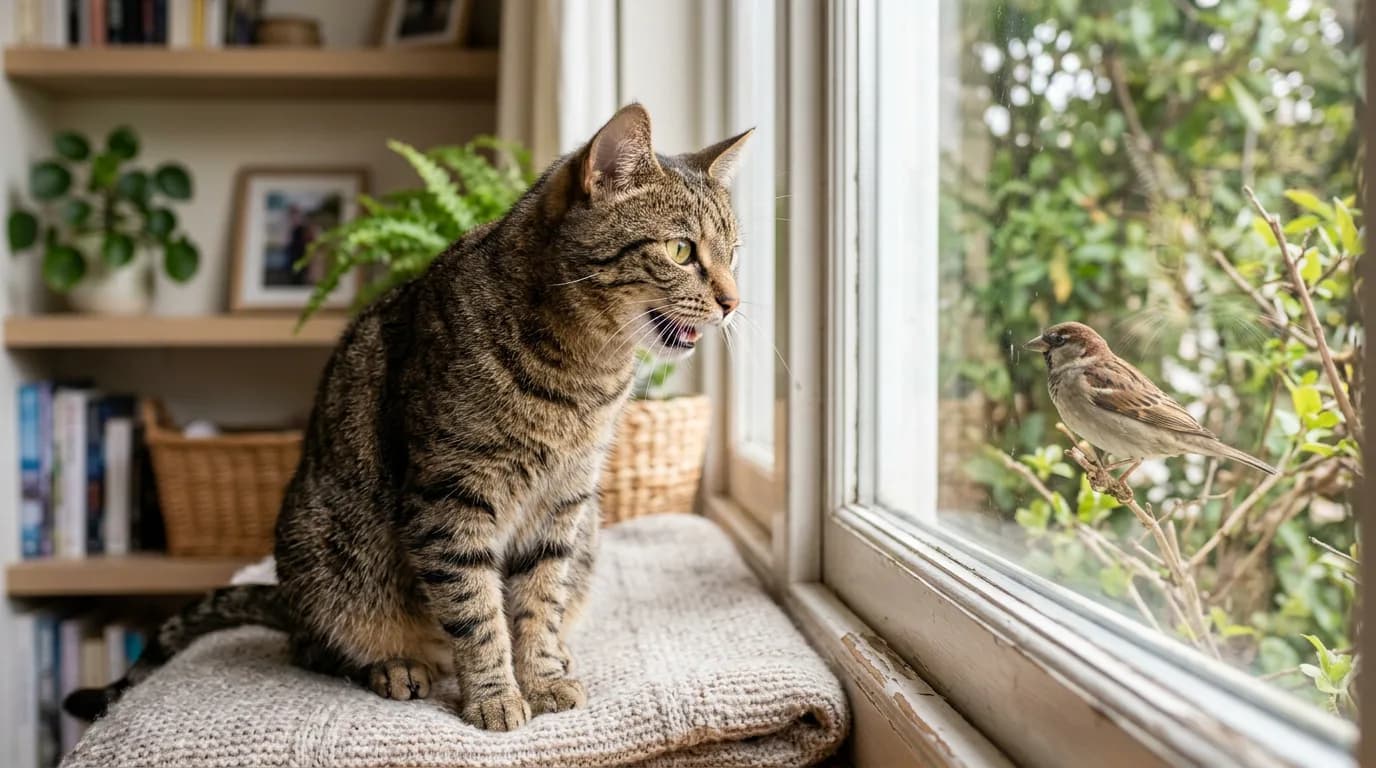
If you have ever watched your cat freeze at the window, lock onto a bird, and let out a stuttering little sound, you have probably asked yourself: why do cats chirp? That quick, chattering noise (some owners swear it sounds like a tiny dolphin) usually shows up when your cat spots prey she cannot reach, like a bug on the ceiling or a sparrow on the other side of the glass.
Chirping is one of the most charming and least understood sounds in a cat's vocabulary. It blends deep hunting instinct, a jolt of excitement, and maybe a touch of frustration. Below, we break down what the sound really means, how a chirp differs from a chatter and a trill, why your cat aims it at bugs, birds, and sometimes you, and when (if ever) it is worth a closer look.
Chirping is a normal, instinctive cat sound, not a problem to fix. Cats chirp when prey they cannot reach triggers their hunting drive, when they are excited or mildly frustrated, and when they are greeting you. It only deserves a vet visit if it comes with appetite loss, low energy, breathing changes, or other unusual signs.

Sign up for expert-backed reviews and safety alerts all in one place.
Why Do Cats Chirp? The Quick Answer
Cats chirp because the sight of prey switches on their hunting instinct. The explanation most feline behavior experts favor is that a chirp is an involuntary burst of excitement (and possibly mild frustration) when a cat locks onto something she wants to chase but cannot reach. Mother cats also chirp and trill to call their kittens, so many cats keep using the sound as a friendly greeting to their humans.
In short, your cat is usually telling you one of four things:
- Hunting instinct: a bird, bug, or squirrel has triggered her prey drive.
- Excitement: she is stimulated, alert, and ready to pounce.
- Mild frustration: the target is out of reach behind glass or up on the ceiling.
- Communication: she is greeting you or inviting you to follow, the way a mother cat calls her kittens.
Here is what that chirping looks and sounds like in action:
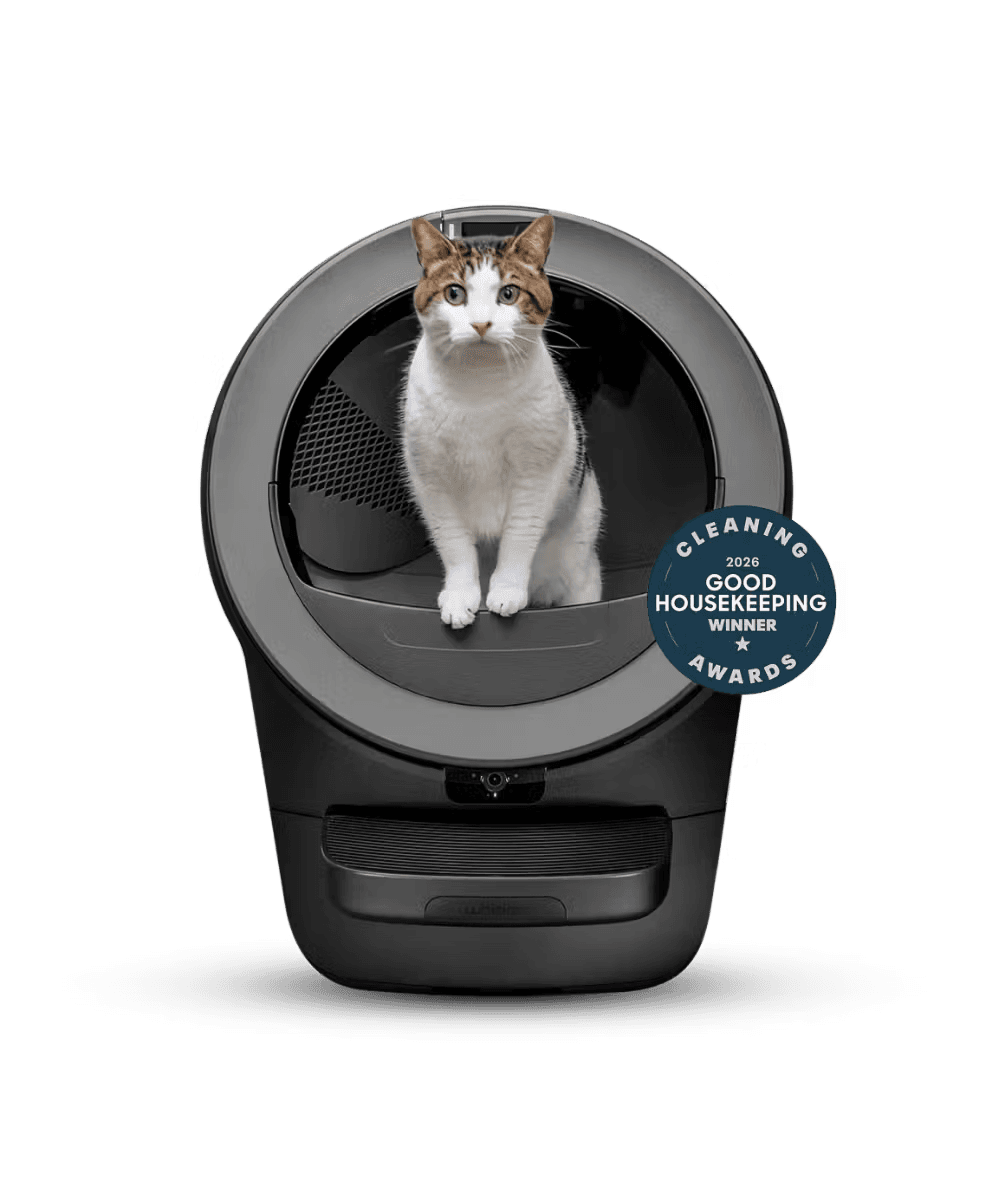
Indoor cats who patrol the window all day still need a clean box. The self-cleaning Litter-Robot keeps scooping off your daily to-do list.
Petful may earn a commission when you click through to Whisker, at no extra cost to you.
Chirp vs. Chatter vs. Trill: What Is the Difference?
Cat owners use chirp, chatter, and trill almost interchangeably, but they are slightly different sounds with slightly different meanings. Here is a simple way to tell them apart.
| Sound | What you hear | What it usually means |
|---|---|---|
| Chirp (or chirrup) | A short, high, birdlike peep, often repeated | Excitement, a friendly greeting, or "come follow me" |
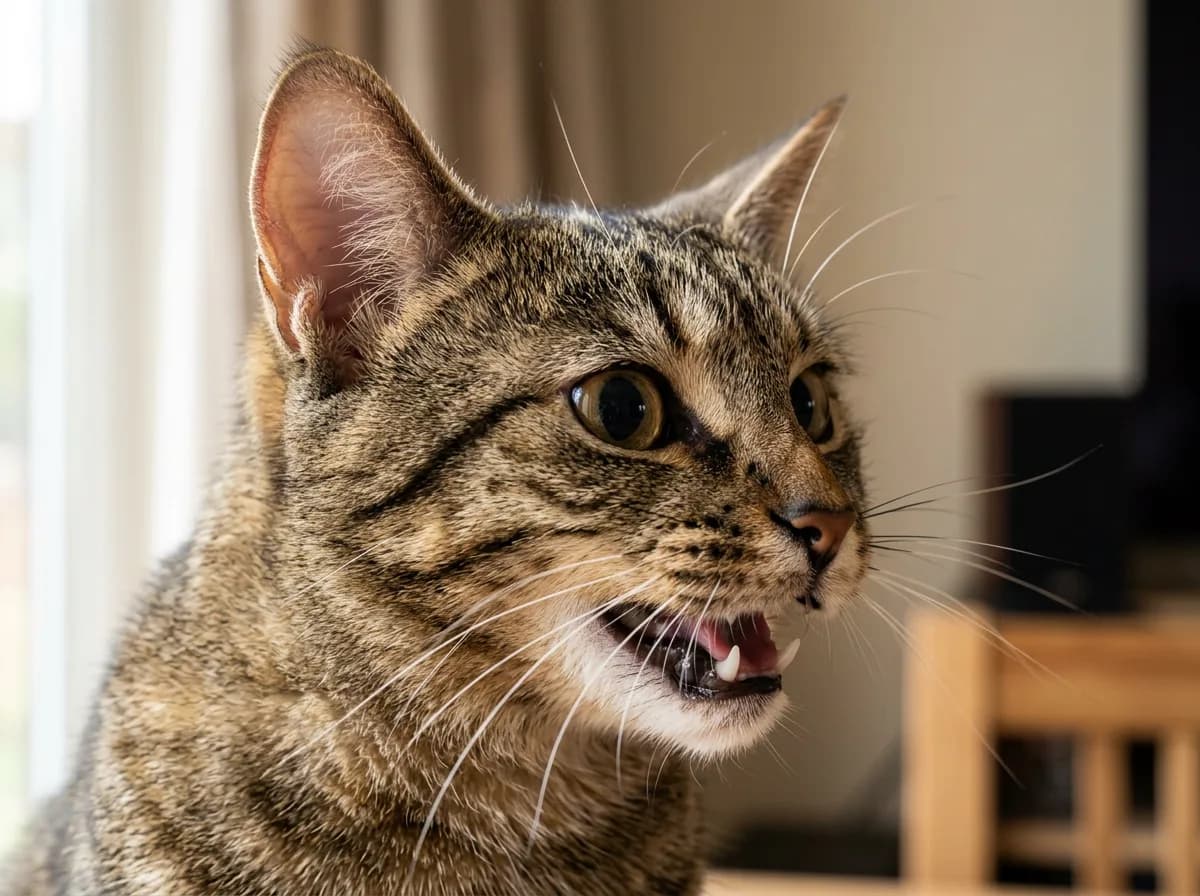
| Chatter | A rapid, stuttering teeth-clacking sound with a vibrating jaw | Intense focus on prey she cannot reach, like a bird at the window |
| Trill | A soft, rolling sound that rises at the end, made with the mouth closed | Affection and greeting, a habit learned in kittenhood |
There is plenty of overlap. A cat watching a fly might chirp, then slide into a hard chatter as her focus sharpens. Dr. Susanne Schotz, a phonetician at Lund University in Sweden who leads the Meowsic research project on cat vocalizations, has catalogued chirps, trills, and chatters as part of a surprisingly rich feline sound system that goes far beyond the basic meow.
Why Do Cats Chirp at Birds and Bugs?
Cats chirp at birds and bugs because small, fast-moving prey is exactly what their hunting instinct is wired to chase. When your indoor cat spots a sparrow through the window or a moth on the ceiling, her brain runs the opening steps of a hunt even though she cannot finish it. The chirp or chatter is what leaks out.
The hunting and prey-drive theory
This is the most common explanation. The sight of prey triggers the prey sequence (stare, stalk, pounce), and the rapid jaw movement you hear during a chatter may even mimic the killing bite cats use on prey. Their senses are finely tuned for the hunt, which is part of why even a well-fed indoor cat will fixate on a single fly. Because the target is unreachable, the sequence stalls, and the built-up energy comes out as sound.
The bird-mimicry theory
A second theory is that cats chatter to imitate the sounds of their prey. Certified cat behaviorist Mieshelle Nagelschneider has pointed to bird mimicry as one possible driver of the behavior. It is not as far-fetched as it sounds: the margay, a small wild cat of Central and South America, has been documented mimicking the call of its prey to lure monkeys closer, a behavior recorded by Wildlife Conservation Society researchers in the Brazilian Amazon. Your house cat is not that calculating, but the instinct may share the same roots.
The excitement and frustration theory
Many sources describe chirping as a mix of excitement and frustration at unreachable prey. It is worth noting that the frustration label is debated. Some behaviorists argue there is little solid evidence that cats feel true frustration in these moments, and that the sound is simply high arousal and anticipation. Either way, it is a normal, healthy expression of your cat's predatory nature, not a sign that she is upset with you.
- You do not need an outdoor cat or live prey to hear chirping. A bird feeder outside a window, a laser dot on the wall, or a bug near the ceiling is more than enough to set it off. Indoor cats are often the most enthusiastic chirpers, because the window becomes their personal hunting ground.
Why Does My Cat Chirp at Me?
If your cat chirps directly at you, she is almost certainly greeting you or asking for your attention. The habit traces back to kittenhood, when a mother cat chirps and trills to tell her kittens to look at her and follow along. Many cats carry it into adulthood and aim it at the humans they trust.

Feathered teaser wand with catnip-stuffed bird. Pairs perfectly with the no-bite training policy: redirect Bengal play drive into a 10-minute interactive session with the wand.
Petful may earn a commission when you click through to Chewy, at no extra cost to you.
You might hear it when you walk in the door, when she wants you to follow her to the food bowl, or when she hops up for attention. International Cat Care describes these chirrups and trills as friendly, greeting-style sounds, which is why a chirp aimed at you is usually a small feline compliment.
If you want more of these friendly moments, our guide on how to get a cat to like you covers simple ways to build trust and affection.
Raising a kitten? Early habits matter, so our guide to preventing behavior problems in kittens can help your new arrival grow into a confident, well-adjusted adult.
How Chirping Differs From Meowing, Purring, and Hissing
Chirping stands apart from your cat's other vocalizations, and each one carries its own message:
- Meowing is aimed at people, usually to ask for food, attention, or a door to be opened. Adult cats rarely meow at each other.
- Purring usually signals comfort and contentment, although cats sometimes purr to self-soothe when they are anxious or unwell.
- Hissing is a clear warning that says back off, and it signals fear or distress.
So why chirp instead of meow when prey appears? A meow is a request directed at you. A chirp is an instinctive, hunting-driven sound directed at the prey or the moment, made with rapid jaw movements and a higher pitch. Learning to tell them apart helps you read what your cat actually needs.

Give your indoor hunter a place to climb, perch, and survey the room. A tall cat tree turns that prey drive into healthy daily exercise.
Petful may earn a commission when you click through to Chewy, at no extra cost to you.
Is a Chirping Cat a Happy Cat?
In almost every case, yes. Chirping is a positive, excited sound tied to play and the thrill of the hunt, not to pain or fear. A cat who chirps at the window and then trots over for a treat or a play session is a content, stimulated cat. The behavior usually means she feels safe enough to switch into playful predator mode.
Should You Be Concerned About Frequent Chirping?
For the vast majority of cats, frequent chirping is completely normal and nothing to worry about. It simply means your cat has plenty to watch and a healthy prey drive. That said, pay attention if the sound changes character or comes packaged with other symptoms.
- Chirping on its own is harmless, but check in with your veterinarian if it appears alongside any of these: a sudden drop in appetite or energy, coughing, wheezing, or other breathing changes, or new restlessness, pacing, and signs of stress. In those cases the chirp is not the problem; the accompanying sign is what your vet needs to evaluate.
It also helps to tell the difference between excited chirping and a cat who seems anxious or over-stimulated. If your cat startles easily or hides often, our guide to fearful behaviors in cats can help you separate normal arousal from genuine stress.
How to Encourage Your Cat's Hunting Instinct (Safely)
Chirping is a window into your cat's natural hunting drive, and you can give that drive a healthy outlet indoors. A cat who gets to hunt is less bored, less stressed, and more satisfied.
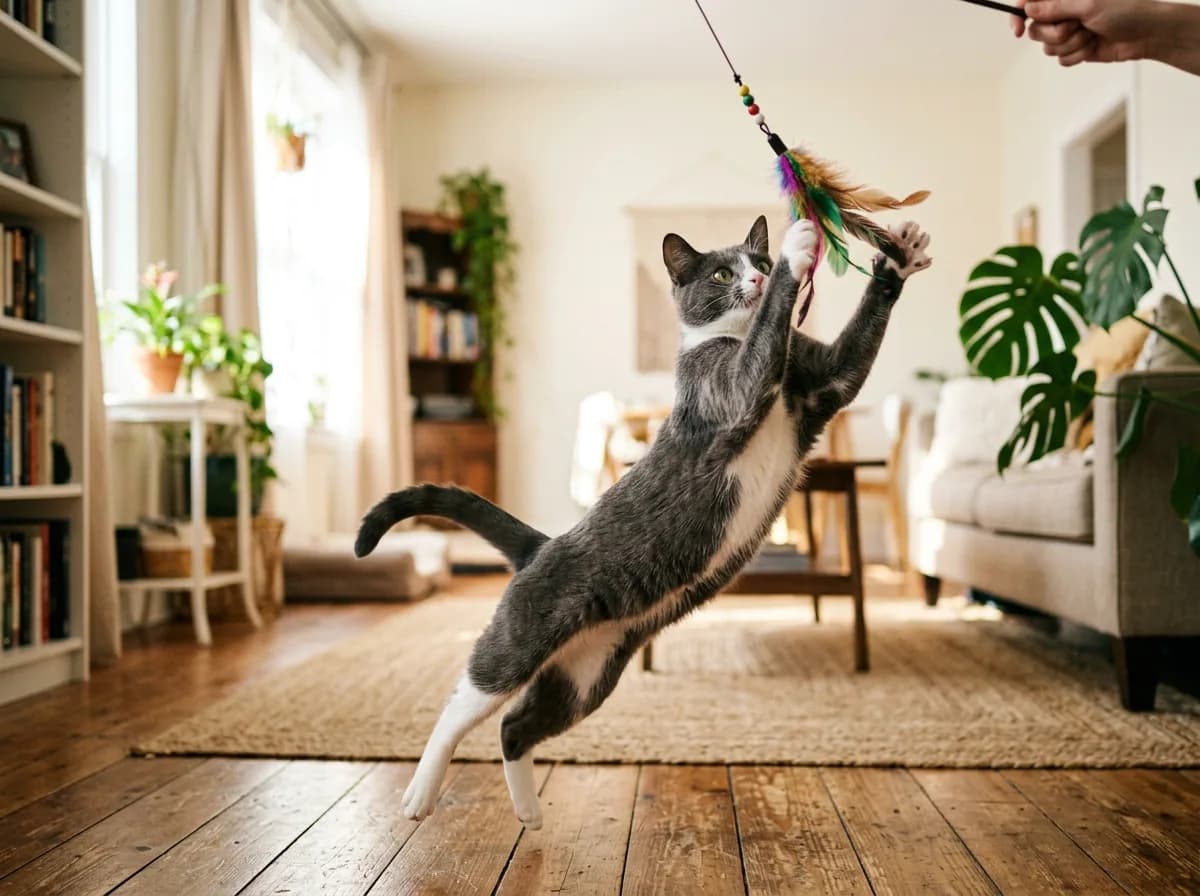
- Interactive toys: feather wands and small, prey-like toys invite the full stalk-and-pounce sequence.
- A window perch: a comfortable spot to watch birds and squirrels gives your cat a daily front-row seat to her favorite show.
- Puzzle feeders and laser play: moving targets satisfy the chase, just be sure to end every laser session by letting her catch a real toy or treat so the hunt has a payoff.
Want to build a richer setup? Our guides to creating an indoor cat play area and choosing the best cat window perch walk through easy ways to turn your home into a stimulating hunting ground.

Watch your cat's health between vet visits. PrettyLitter changes color to flag possible issues early, a simple safeguard for any indoor cat.
Petful may earn a commission when you click through to Chewy, at no extra cost to you.
Chirp Back: A Simple Bonding Trick
Here is a fun experiment that cat owners love: chirp back. Many cats will respond to a gentle imitation of their own chirp by perking up, looking for you, and coming to investigate.
One owner noticed her cat chirping at bugs on the wall, so instead of grabbing the bug herself, she would mimic the chirp. Her cat would come running, fully locked into hunting mode, ready to handle the intruder. Done playfully, chirping back can:
- Spark interactive play and burn off energy.
- Let your cat express her hunting instinct safely indoors.
- Build a bond by making you part of the hunt.
Try it the next time your cat starts chattering at the window, and watch how she reacts.
Frequently Asked Questions
Cats chirp as a natural hunting instinct, usually triggered by the sight of prey they cannot reach, such as a bird or bug. It is a normal sign of excitement, focus, and sometimes a friendly greeting.
Birds are classic prey, so the sight of one switches on your cat's hunting drive. The chirp or chatter is a burst of excitement and focus, and possibly an instinct to mimic bird sounds, while she watches a target she cannot reach.
When a cat chirps at you, she is usually greeting you or asking for attention. The sound comes from kittenhood, when a mother cat chirps to call her kittens, and many cats keep using it with the humans they trust.
A meow is a request aimed at people, while a chirp is an instinctive, hunting-driven sound aimed at prey or the moment. Some cats simply favor chirps and trills as their everyday way of talking, especially chatty, people-oriented breeds.
A chirp in response to a touch is usually a sound of pleasant surprise or excitement, a quick hello reaction to being petted or picked up when she is in a good mood.
Very. Indoor cats are often the most frequent chirpers, because windows, bird feeders, and bugs give them constant prey to watch. Chirping at the glass is a normal, healthy outlet for an indoor cat's hunting instinct.
No. Chirping varies by personality and, to some degree, breed. Talkative, people-oriented breeds tend to chirp and trill more, while some cats rarely make the sound at all. Both are perfectly normal.
The Bottom Line
Chirping is one of the most endearing reminders that your house cat is still a hunter at heart. Whether she is chattering at a sparrow, trilling a hello, or peeping at a bug on the ceiling, the sound almost always means she is excited, engaged, and feeling safe. Give that instinct a healthy outlet, enjoy the dolphin noises, and only worry if the chirping ever shows up alongside signs that something else is wrong.
References
- International Cat Care. "Cat Communication and Behaviour." https://icatcare.org/advice/
- PetMD. "Cat Noises: What Do Different Cat Sounds Mean?" https://www.petmd.com/cat/general-health/cat-noises
- Chewy. "Why Do Cats Chirp at Birds? Is This Normal?" https://www.chewy.com/education/cat/training-and-behavior/why-do-cats-chirp-at-birds
- Hill's Pet Nutrition. "What Is Cat Chirping and Why Do Cats Do It?" https://www.hillspet.com/cat-care/behavior-appearance/cat-chirping
- Schotz, Susanne. "Meowsic: Melody in Human-Cat Communication." Lund University research project on feline vocalization.

Gayle Hickman has been researching and writing about pet behaviors since 2011. In addition to Petful, her articles have appeared on Reader's Digest, YAHOO Shine and WebVet, to name a few.
Sign up for expert-backed reviews and safety alerts all in one place.