Do Cats Smell Mice? Exploring Feline Instincts and Hunting Abilities
Cats have an enormous amount of smell receptors in their noses, but that's not the only thing that makes your fluffy feline a total mouse-hunting machine.

Petful is reader supported. As an affiliate of platforms like Amazon and Chewy, we may earn a commission when you buy through links on this page. There is no extra cost to you.
Do Cats Smell Mice? Understanding a Cat's Powerful Sense of Smell
Right from birth, kittens rely on their sense of smell to locate their mother’s milk. This powerful sense continues to guide them throughout life, helping them detect food, threats, and other animals. But do cats smell mice to track them down? Absolutely – they use their keen sense of smell as a primary tool for hunting.
- A cat’s sense of smell is 14 times stronger than a human's.
- Cats have nearly 70,000 “smell receptors” in their nasal area, while humans have only 20,000. Learn more about human smell receptors.
- This keen sense of smell helps cats:
- Locate food in hidden places
- Detect other animals, such as potential mates or threats
- Recognize their own scent markings within their territory
Interestingly, research shows that cats can even smell the difference between plain water and slightly salted water – a scent that’s undetectable to humans.
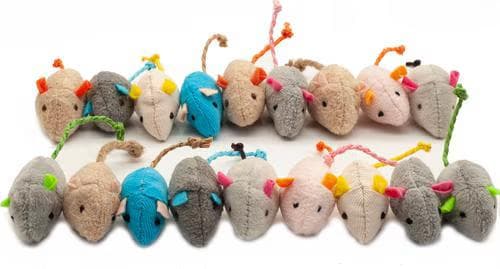
Pack of 18 soft plush mice filled with catnip to spark batting, pouncing, and play.
Petful may earn a commission when you click through to Chewy, at no extra cost to you.
Jacobson's Organ: Enhancing a Cat's Hunting Abilities
Cats can even "taste" smells, thanks to a unique sensory organ known as Jacobson's organ at the back of their mouths. If your kitten gulps in air while investigating something, that’s just Jacobson's organ helping her detect scents. Jacobson's organ

Never Scoop Again® with the Whisker Litter-Robot, the smart self-cleaning automatic litter box. Monitor visits and track weights for better overall care in the Whisker® app. Multi-cat friendly.
Petful may earn a commission when you click through to Whisker, at no extra cost to you.
Beyond their extraordinary sense of smell, cats rely on other senses to sharpen their mouse-hunting skills. A cat’s eyesight and hearing play a significant role in their natural hunting and chasing instincts, helping them become highly alert and patient hunters.

63-inch multi-level cat tree with scratch posts, hammock, plush perches, and dangling toys. Vertical territory is non-negotiable for high-energy climbing breeds like the Bengal.
Petful may earn a commission when you click through to Chewy, at no extra cost to you.
- Jacobson's organ and their keen sense of smell allow cats to pinpoint the location of mice.
- Their whiskers can detect tiny movements, such as a mouse scurrying in complete darkness, through air movement.
All these senses make cats nearly perfect predators, highly adept at tracking down mice and other small prey.

108-oz stainless steel pet fountain with quiet pump and water-level window. Bengals are notoriously water-obsessed; a flowing fountain encourages hydration and pulls them away from sinks and toilets.
Petful may earn a commission when you click through to Chewy, at no extra cost to you.
Noses Are Just a Small Part of the Total Hunting Package
Cats' noses aren't the only tool they use when hunting. You may wonder, do cats smell mice to track them down? The answer is yes, but their noses are just one part of their complete hunting package. This blend of senses and instincts makes them highly effective mouse hunters: Sharp sense of smell Acute sense of hearing Heightened sense of taste Ultra-sensitive whiskers Natural instinct for "the chase"
Growing up, I remember my grandmother always keeping at least two cats around. My cousins and I enjoyed playing with them, dangling a string to watch them pounce and paw at it, simulating their natural hunting instincts.
Over the years, I learned more about feline behavior, and research helped me understand the "cat versus rat" motivation a bit better. Looking back, I’d definitely commend my grandmother for her cost-effective technique of mouse-proofing her home with her feline companions.
Frequently Asked Questions (FAQ)
Mice may avoid areas where they detect a cat's scent, but it doesn’t guarantee they’ll stay away completely.
When cats sense mice, they often become alert, focus on the source, and prepare to stalk or pounce.
Yes, mice can sense the presence of a cat through smell and may act more cautiously or avoid the area.

Sign up for expert-backed reviews and safety alerts all in one place.

Gayle Hickman has been researching and writing about pet behaviors since 2011. In addition to Petful, her articles have appeared on Reader's Digest, YAHOO Shine and WebVet, to name a few.
Sign up for expert-backed reviews and safety alerts all in one place.