Silvervine vs Catnip: Response Rates, Forms and Best Picks
Silvervine vs catnip, compared: which cats respond to each, a 3-step home test, silvervine sticks, powder, spray and toys, safety at a glance, and four product picks to start with.
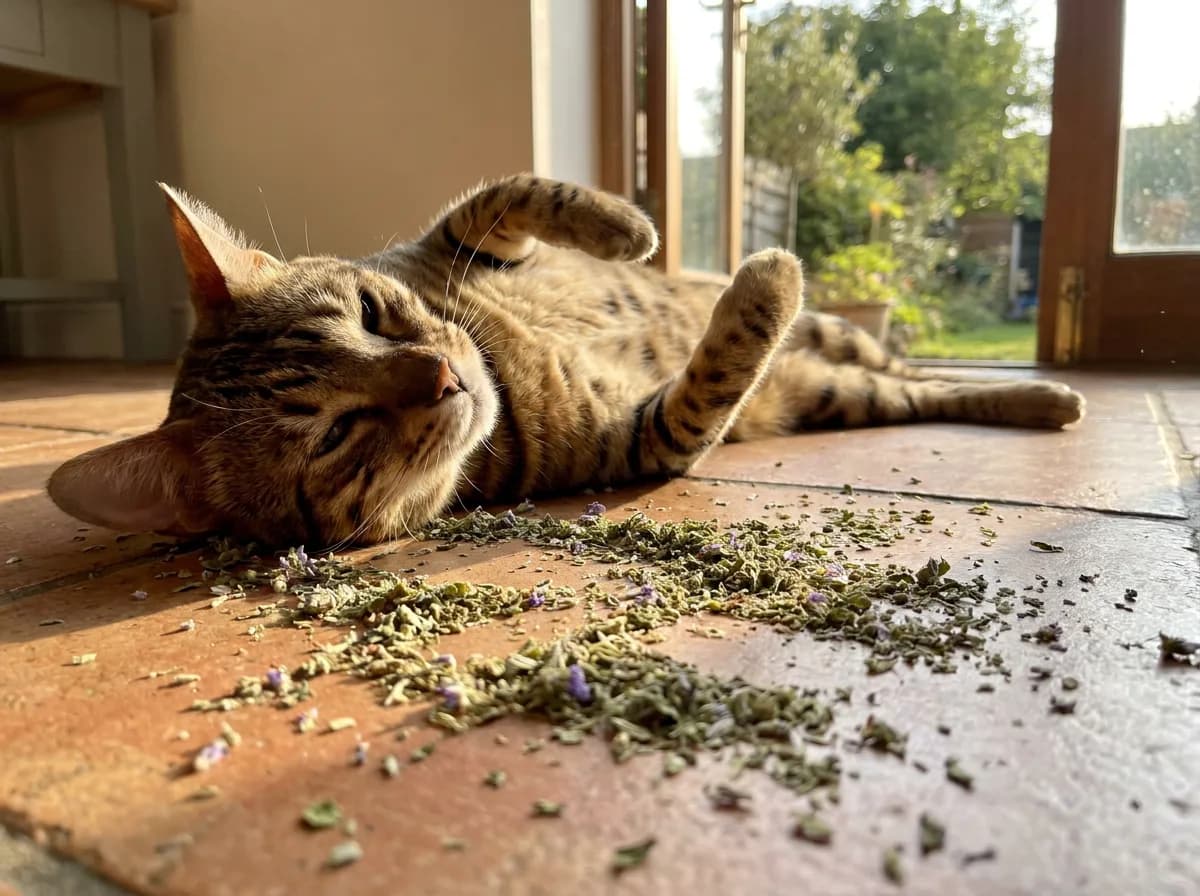
A spotted brown tabby cat lies on its back on terracotta tiles with its paws in the air, surrounded by scattered dried catnip leaves and small purple flowers.
Petful is reader supported. As an affiliate of platforms like Amazon and Chewy, we may earn a commission when you buy through links on this page. There is no extra cost to you.
Silvervine vs catnip comes down to odds and preference: in the largest published comparison, about 79% of cats responded to silvervine and 68% to catnip, and most cats that ignored catnip still reacted to silvervine. Catnip remains a reliable choice for the majority of cats, and a few cats prefer it outright.
Below you will find a side-by-side table, a simple home test to learn which plant your cat prefers, the main silvervine forms, safety basics and the products we would start with.

Sign up for expert-backed reviews and safety alerts all in one place.
Silvervine vs Catnip at a Glance
About 79% of cats respond to silvervine and about 68% respond to catnip, according to Bol et al. 2017 in BMC Veterinary Research, a study of 100 domestic cats. The two plants trigger similar rolling and rubbing through different compounds: actinidine and nepetalactone are the best-known markers of silvervine and catnip, respectively.
- 1More cats respond to silvervine than to catnip, about 79% versus 68% in one 100-cat study
- 2Catnip still works for roughly two out of three cats, and some cats prefer catnip only
- 3If your cat ignores catnip, try silvervine first; 71% of catnip non-responders reacted to it
- 4Both plants are non-toxic and work best in short, supervised sessions
| Attractant | Active compounds | Response rate (Bol 2017) | Common forms | Best for | Main tradeoff |
|---|---|---|---|---|---|
| Silvervine (Actinidia polygama) | Nepetalactol, actinidine, dihydroactinidiolide and related iridoids | About 79% | Dried sticks, gall fruit powder, gall fruit balls, stuffed toys | Cats that ignore catnip, chewers | Sticks are milder than gall powder, and chewed sticks need supervision |
| Catnip (Nepeta cataria) | Nepetalactone | About 68% | Dried leaf, sprays, stuffed toys, fresh plant | Known catnip fans, easy home-grown supply | Roughly one in three cats shows no response |
| Both together | Mixed | Not measured as a blend | Blended canisters and combo toys | Covering both bases in one product | You cannot tell which plant your cat is reacting to |
So is silvervine stronger than catnip? For more cats, yes, in the sense that it gets a reaction. Silvervine (also spelled silver vine) is not the same plant as catnip, though, and it is not guaranteed to beat catnip for your particular cat. Think of silvervine as a catnip alternative or a partner, not a replacement you buy blind.
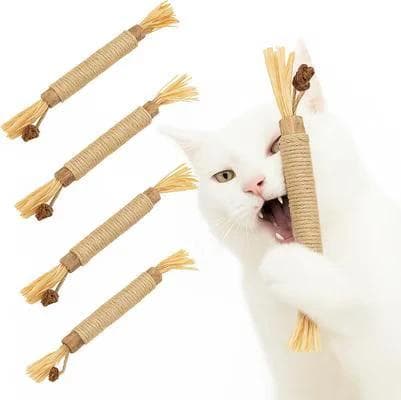
Silvervine and catnip dental chew sticks that give cats a safe, satisfying outlet for biting and chewing while helping scrape away plaque.
Petful may earn a commission when you click through to Chewy, at no extra cost to you.
You will also see catnip and silvervine products sold under nicknames. "Kitty crack" is informal slang that shoppers and some sellers use for silvervine (and sometimes strong catnip) because the reaction can look dramatic. It is a nickname, not a product type or an ingredient, so read the label to see which plant is inside.
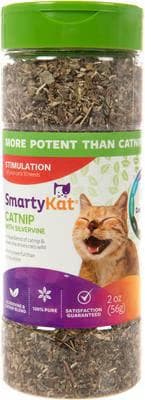
If you want to feel out the difference between silvervine and catnip before buying two separate products, a blended canister such as SmartyKat Silvervine Cat Attractant Catnip sprinkles both at once. The catch is that a blend tells you the cat likes the mix, not which plant is doing the work, so use single-plant products for the home test below.
Silvervine for Cats: The Plant and How It Differs From Catnip
Silvervine for cats is the dried wood, leaves or fruit galls of Actinidia polygama, a climbing vine in the kiwi family native to the mountains of Japan and eastern Asia. In Japan it is called matatabi. Catnip, Nepeta cataria, is a mint-family herb most cat owners already know as dried leaf. If your cat ignores toys entirely, WebVet's guide to catnip toys and why some cats ignore them is the companion read.
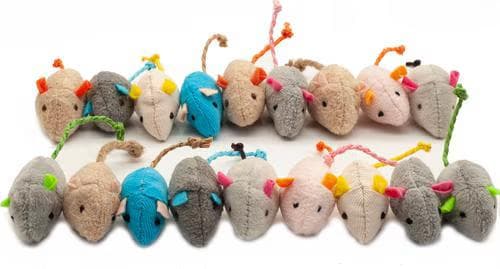
Pack of 18 soft plush mice filled with catnip to spark batting, pouncing, and play.
Petful may earn a commission when you click through to Chewy, at no extra cost to you.
The silvervine plant is not a catnip variety, and it is not the same thing as catnip. The two plants are unrelated botanically and use different chemistry to produce a similar reaction. That is why a cat can ignore one and roll wildly on the other.
What silvervine for cats looks like depends on the part used:
- Gall fruit: The most potent part. Insects cause the fruit to swell into knobby galls, which are dried and ground into powder. Bol et al. 2017 used this powder in their testing.
- Wood: Sticks of dried vine that cats sniff, rub and chew. In a later study by the same group (Bol et al. 2022, BMC Biology), only about 20% of cats responded to silvervine stem, far fewer than to the gall powder.
- Leaves: Occasionally dried and sold, though less common in pet stores.
Do cats like silvervine? Most do, and the reaction looks familiar: sniffing, licking, cheek rubbing, rolling and sometimes drooling or chewing. A cat eating silvervine powder or gnawing a stick is normal behavior with a non-toxic plant, as long as it is not swallowing wood fragments.
How long should a cat play with silvervine? The reaction itself is brief. In the 2022 recordings, individual responses to the plants typically lasted under a minute each, with cats returning for repeat bouts. In practice, we suggest a 10 to 15 minute supervised session, then putting the silvervine away so the scent stays interesting and nobody swallows pieces.
Which Cats Respond to Which (and a 3-Step Home Test)
More cats like silvervine than catnip: in Bol et al. 2017, about 79% of cats responded to silvervine versus 68% to catnip, and 22 of the 31 cats that ignored catnip (71%) still responded to silvervine. Those rates come from one study design: each cat was offered each plant separately and scored for any response, and some cats still prefer catnip while a minority react to neither. The practical answer is to offer both and let your cat decide.
A 2026 study from Iwate University and Nagoya University, published in the Journal of Chemical Ecology, used a different study design: a free-choice trial in which cats had both extracts available at once. Among 22 captive purebred cats:
- Chose silver vine: 15 cats
- Chose catnip: 3 cats
The same researchers measured far more active compound in fresh catnip than in silver vine, yet cats still chose silver vine more often. Read the two studies side by side, not as one head-to-head: Bol et al. 2017 measured how many cats respond at all, while the free-choice trial measured which plant a cat picks when both are offered. Both point the same way, and both show a real group of cats that prefer catnip.
What about a cat that doesn't react to catnip or silvervine? Responsiveness varies from cat to cat, and some adults simply do not react to either. Young kittens often do not respond yet, which our guide on how catnip works and when kittens start responding explains. Test before you conclude your cat is a true non-responder.
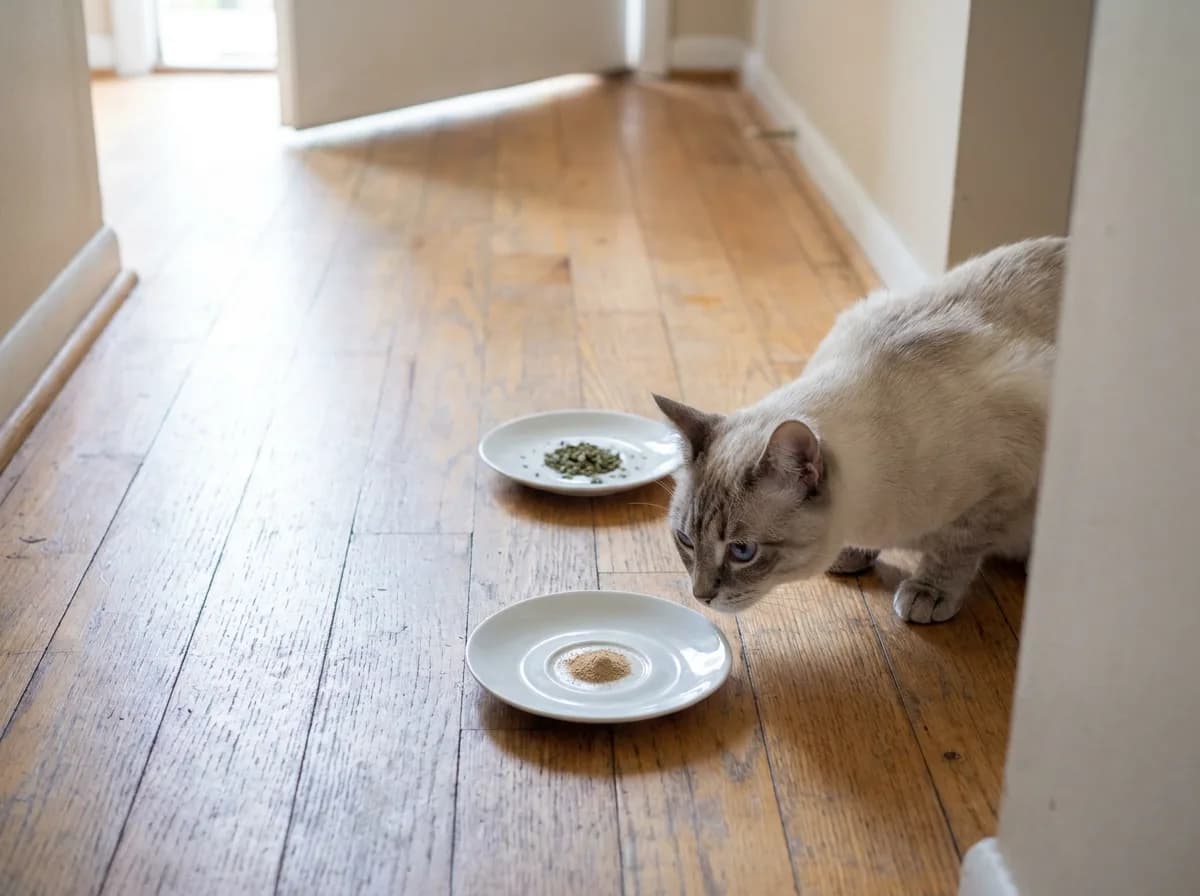
- Step 1: Offer one plant at a time on the same neutral surface, such as a plain cloth square on a floor your cat already uses. Step 2: Rest at least a day between trials so leftover scent and a satisfied cat do not skew the next result. Step 3: Log the response for each plant as none, sniff only, rub, or full roll. Try silvervine first if your cat already ignores catnip. If neither gets a reaction, wait two weeks and repeat once before switching to active play.
This is a repeatable home test for silvervine and catnip, so run it the same way each time. Here is how to give cats silvervine for the test: sprinkle a pinch of powder on the cloth, or rub a stick between your fingers to release its scent and set it down. For catnip, crush a pinch of dried leaf. Keep other toys away from the test spot so you are measuring the plant, not the object.
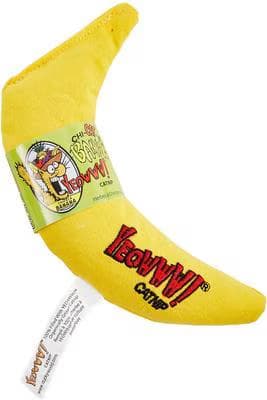
For the catnip side of the test, a pure catnip toy such as the Yeowww! Catnip Yellow Banana Cat Toy makes a clean comparison because it contains catnip and nothing else. If your cat ignores it on a fresh try but rolls on silvervine, you have your answer.
Petful may earn a commission when you click through to Chewy, at no extra cost to you.
The non-responder plan, if your cat ignores both after a repeat trial:
- Switch to active play: Wand toys, track toys and puzzle toys deliver enrichment without relying on scent. Our list of interactive cat toys for cats that ignore catnip is a good place to start, and a ball track such as the Catstages Tower of Tracks keeps a cat busy on its own.
- Try valerian or Tatarian honeysuckle: In Bol et al. 2017, about a third of catnip non-responders reacted to Tatarian honeysuckle, and 47% of all cats reacted to valerian root.
- Retest later: A cat that was stressed, full or distracted may react on another day.
Silvervine Forms: Sticks, Powder, Spray and Toys
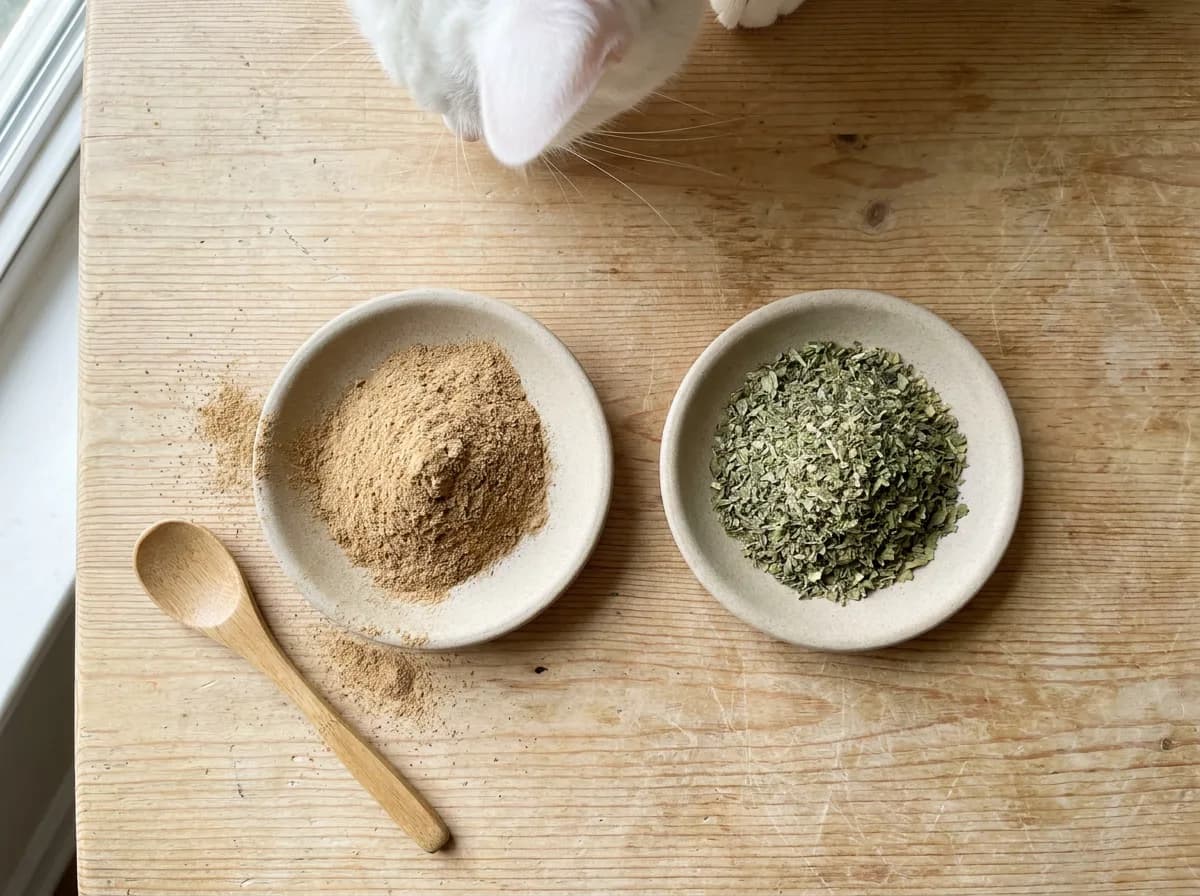
Silvervine comes in four common forms, and each suits a different cat. The right choice depends on whether your cat likes to chew, roll or chase. Sticks are thin brown twigs, powder is ground tan fruit, spray is a liquid extract, and toys are fabric shapes stuffed with the dried plant.
Silvervine Sticks for Cats
Silvervine sticks for cats are short lengths of dried vine with a visible bark texture. Cats lick, rub and chew them, which is why they are sold as silvervine cat chews and silvervine dental sticks. Do cats like silvervine sticks? Many do, but the wood is milder than gall powder, so a cat that ignores a silvervine stick may still react to powder. Scrape the bark lightly to refresh the scent.
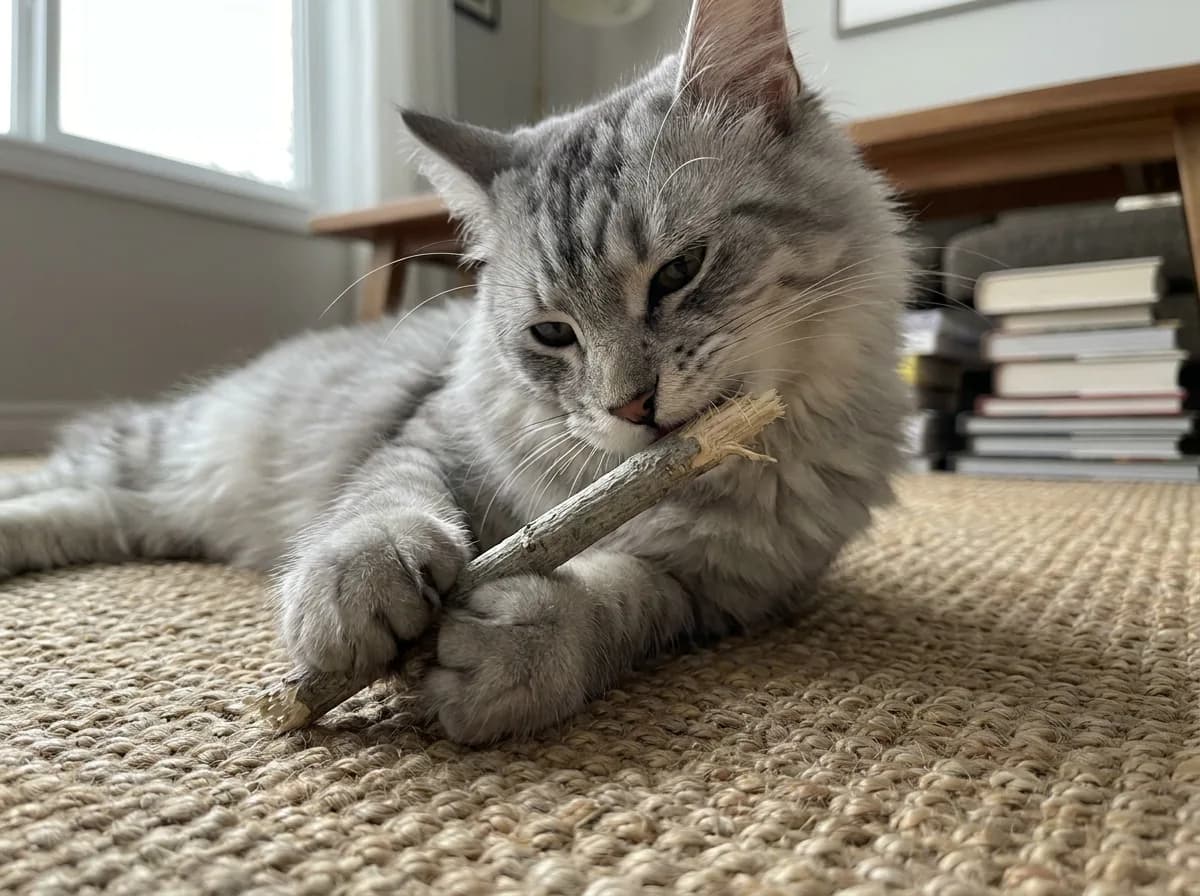
Does silvervine help cats' teeth? Chewing a textured stick may rub off some soft debris, but we found no published study showing that silvervine sticks clean cats' teeth or reduce tartar. Treat the "silvervine for cats teeth" claim as an inference from chewing, not a tested benefit, and keep brushing or a vet-recommended dental product as the real plan.
If your cat is a chewer, the SunGrow Silvervine Teething Chew Sticks come as a five-pack of dried silvervine sticks with a feather attachment. Replace a stick once it splinters or the end is chewed down.
Silvervine Powder for Cats
What is silvervine powder for cats? It is dried silvervine gall fruit or vine ground into a fine, light brown powder, the strongest and most studied form. Sprinkled powder works on scratch pads, beds and toys, and it is the easiest way to run the home test. A small pinch is enough. Dried silvervine loses scent over time, so keep the container sealed.
Petful may earn a commission when you click through to Chewy, at no extra cost to you.
Silvervine Spray for Cats
Silvervine spray for cats and silvervine extract products carry the scent in a liquid you mist onto toys or scratchers. They are handy for refreshing old toys, but strength varies by brand. Is Meowijuana a type of catnip? No. Meowijuana is a brand name, not a plant; the company sells catnip products such as Meowijuana catnip spray, along with silvervine products. Check the label to see which plant is in the bottle.
Silvervine Toys for Cats
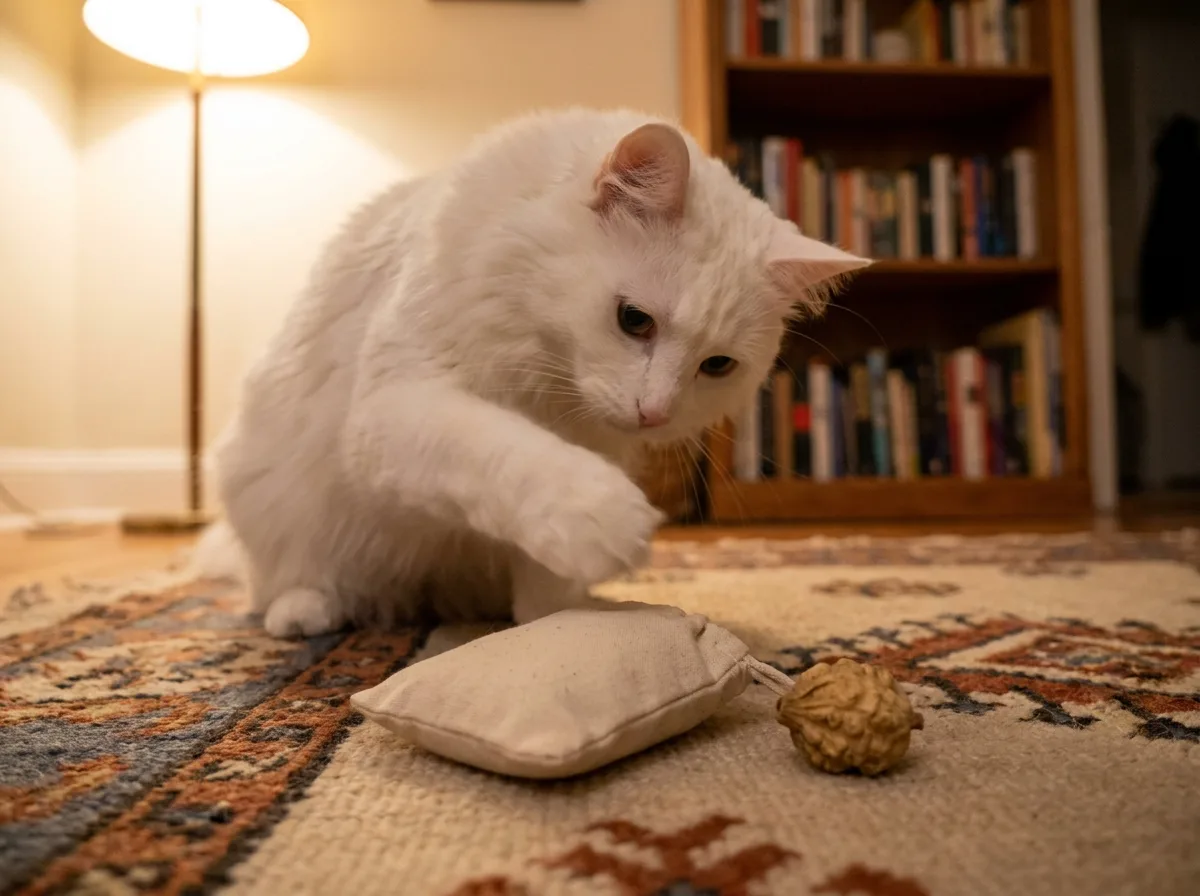
Silvervine toys for cats are fabric toys stuffed with silvervine, or whole dried gall fruit balls. A silvervine gall fruit cat toy looks like a small, wrinkled, knobbly nut. Cats bat and carry a silvervine toy more than they chew it, which suits cats that like to play rather than gnaw. Can cats eat silvervine fruit? Nibbling is not toxic, but whole galls are a toy to supervise, not a treat.
Why Silvervine and Catnip Work (and When Kittens Start Responding)
Both plants contain iridoid compounds that cats detect by smell. A 2021 study in Science Advances linked silvervine's nepetalactol to a rise in beta-endorphin and found that rubbing coats a cat's fur in a natural mosquito repellent. Does silvervine get cats high? Not in a drug sense: the effect is a short, harmless burst of pleasure that fades within minutes. For more on why cats react and when kittens start responding, see our guide on how catnip works and when kittens start responding. If you are wondering what drug catnip is equivalent to, that guide explains why the comparison misleads.
Our Picks for Silvervine and Catnip Products
Pet retailers now carry silvervine sticks, powders and toys alongside catnip, so where to buy silvervine for cats is no longer the hard part; choosing the right form is. These are the four products we would start with, matched to what each form is best for.
- Best silvervine sticks: SunGrow Silvervine Teething Chew Sticks. A five-count pack for cats that like to gnaw and rub.
- Best for using both: SmartyKat Silvervine Cat Attractant Catnip. A 2-oz canister of silvervine and catnip to sprinkle on scratchers and beds once you know your cat responds.
- Best single catnip toy: Yeowww! Catnip Yellow Banana Cat Toy. Pure catnip in a kick-toy shape; best for the catnip side of the home test and for bunny-kicking cats.
- Best value catnip toys: Fashion's Talk 18 Piece Plush Catnip-Filled Mice. Enough small mice to rotate so the scent stays fresh; best for multi-cat homes and cats that bat toys under furniture.
Whichever you choose, rotate products rather than leaving them out all the time. Scent fades with constant access, and a stick or toy that reappears after a few days usually gets more attention than one that never leaves the floor.
To buy a silver vine plant for cats and grow your own, look at specialty nurseries or online seed and cutting sellers. Actinidia polygama is a hardy, cold-tolerant vine, but expect a few years before it produces the fruit and galls that cats react to most.
Is Silvervine Safe? Safety Compared With Catnip
Yes, silvervine is safe for cats in normal amounts with supervision. Bol et al. 2017 noted that none of the four plants they tested, including silvervine and catnip, is listed as poisonous or toxic by the ASPCA Animal Poison Control Center (APCC) or the ASPCA. Silvervine and catnip share a similar safety profile; the main practical difference is that sticks get chewed.
Do vets recommend silvervine for cats? We found no formal veterinary guideline that endorses silvervine specifically. Veterinary behavior guidance does support scent-based enrichment, and silvervine is a non-toxic option in that category. Ask your vet first if your cat has a history of seizures, stomach upset from chewing, or a condition that makes excited play risky.
Silvervine is safe for most cats when you keep sessions short and supervise chewing. Here is what to watch for.
- Supervise chewing with silvervine sticks, and remove the stick when it splinters or gets short enough to swallow. Put powder and toys away after a 10 to 15 minute session. Stop offering silvervine if you see vomiting, repeated sneezing, skin redness or aggression that does not settle. For dogs and for too much silvervine, see the notes and guides below.
- Are silvervine sticks safe for cats? Yes, with supervision. The risk is mechanical, a swallowed splinter, not chemical.
- Is catnip with silvervine safe for cats? Yes. Blends and using both on the same day are fine; they just muddy the home test.
- Silvervine cat allergy: Rare. Drooling and rolling are normal; sneezing fits or skin signs are not.
- Is silvervine safe for dogs? Does silvervine affect dogs? Silvervine is not listed as toxic, and the dramatic rolling reaction is a cat response. For the full answer, see our guide to silvervine and catnip toys for dogs.
Can a Cat Have Too Much Silvervine?
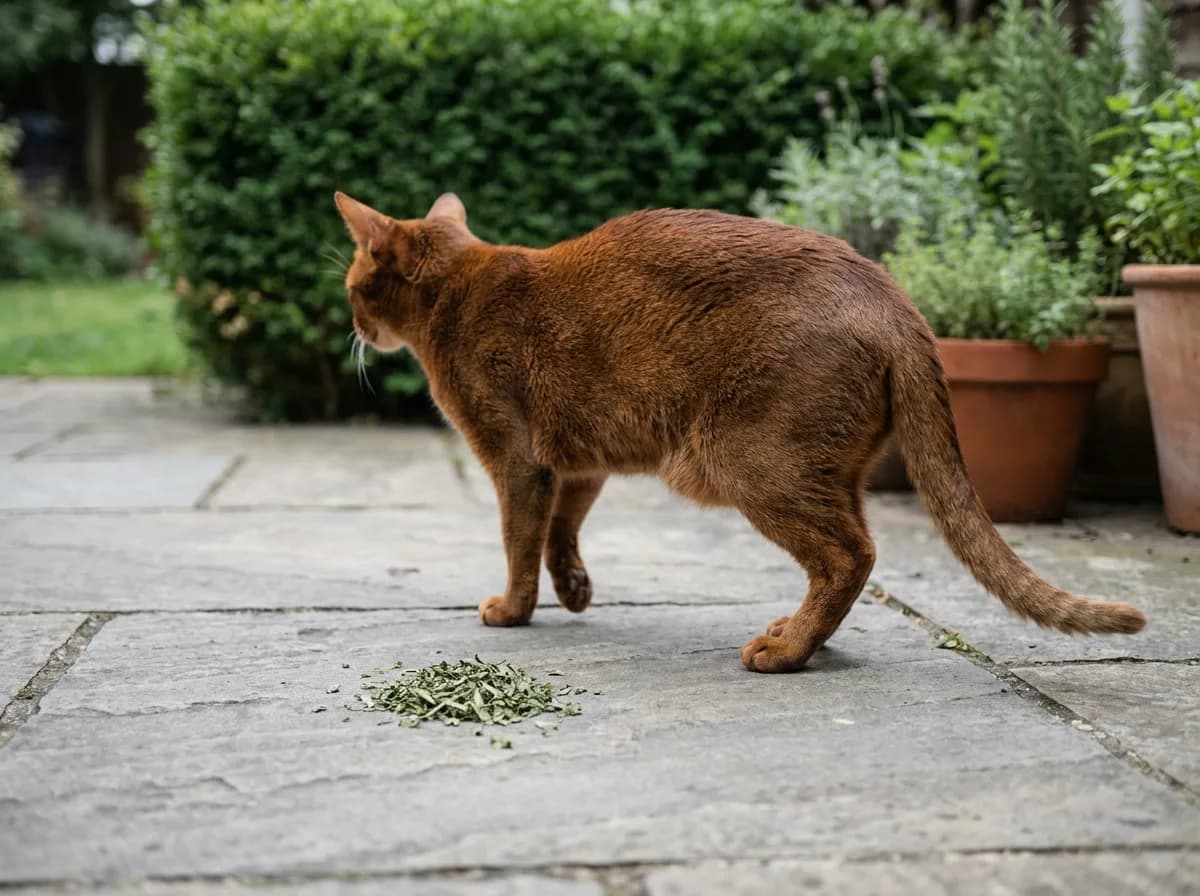
Too much silvervine is more likely to leave a cat overexcited, then sleepy or briefly uninterested, than seriously ill, although eating a lot of any plant material can upset the stomach. If your cat ate a silvervine stick, watch for vomiting or signs of a blockage and call your vet if they appear. Whether silvervine can make cats sick, aggressive or sleepy, and how much is too much, is covered in our guide on whether cats can have too much catnip or silvervine.
Silvervine vs Catnip FAQ
No. Catnip is sold openly as a garden herb across the US, it is legal to grow, and it is not a controlled substance. Silvervine is also sold as an ornamental vine. Before planting either outdoors, check your state or county invasive-species list, since some nonnative plants are restricted locally.
Yes. Offering catnip and silvervine together, or using a blended product that contains both, is safe for a healthy cat. The downside is that you cannot tell which plant your cat likes, so run the home test with single-plant products first and save blends for later.
A true allergy appears to be a rare sensitivity. Drooling, rolling and brief excitement are normal. If your cat develops sneezing fits, watery eyes, skin redness or vomiting after exposure, stop offering silvervine and ask your vet whether the plant was the cause.
Silvervine is not toxic, but many young kittens do not respond yet and sticks can splinter, so supervise chewing closely. Our guide to how catnip works explains when kittens typically start responding to catnip and silvervine, and why waiting a few months often makes the first try more rewarding.
There is no published study showing that silvervine sticks clean teeth or prevent dental disease. The claim is inferred from the chewing action, which may rub off some soft debris. Keep brushing and your vet's dental advice as the actual plan, and treat sticks as enrichment.

Coreen Saito is a pet writer and longtime shelter volunteer with more than a decade in animal rescue. She covers cat behavior, breed care, and the small, ordinary science of sharing a life with companion animals, with a particular focus on honest takes about the products and decisions that actually matter. At home in Arizona, she's outranked by Mac (a dog with the loudest opinion in the house), Rebel (a cat who governs by quiet authority), and Meri (an orange tabby who runs the late shift and the laundry basket). She writes about all three, plus the rescues that keep coming through her life, at LifeWithMinty.com.
Sign up for expert-backed reviews and safety alerts all in one place.