How Does Catnip Work? What It Does to Your Cat
How does catnip work on cats? Learn how nepetalactone acts through the nose, what cats on catnip do, why some never respond, when kittens start reacting, and how long an episode lasts before it works again.
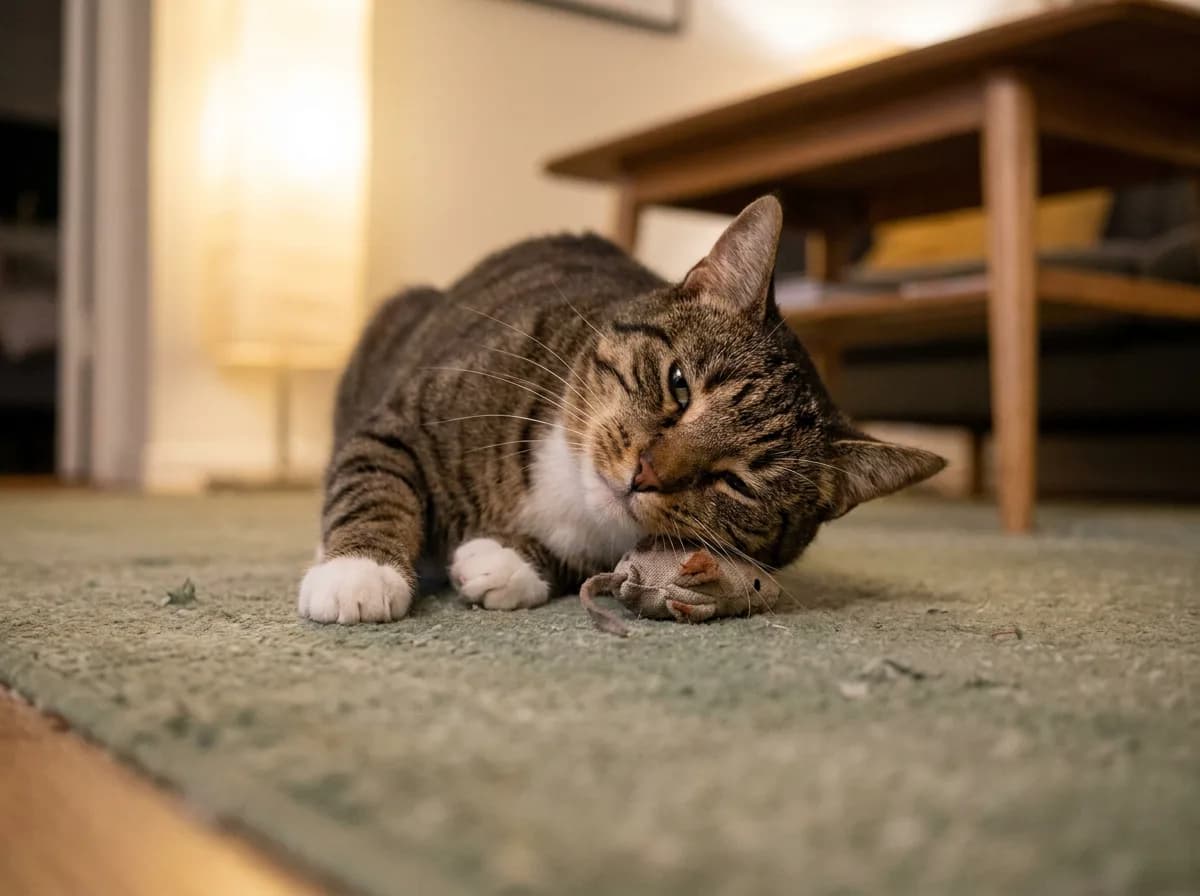
A brown tabby cat with white paws lies on a green rug and rubs its cheek against a small catnip toy mouse with half-closed eyes.
Petful is reader supported. As an affiliate of platforms like Amazon and Chewy, we may earn a commission when you buy through links on this page. There is no extra cost to you.
How does catnip work? A chemical called nepetalactone drifts off the plant, your cat inhales it, and odor receptors in the nose relay the signal to brain areas that govern mood and behavior. The result is a short burst of rubbing, rolling and play, followed by a calm spell and a stretch when catnip does nothing at all.
Not every cat reacts, and young kittens usually ignore it. Here is what the plant is, what happens inside your cat, what the studies measured, and how to use catnip well.

Sign up for expert-backed reviews and safety alerts all in one place.
What Is Catnip?
Catnip is Nepeta cataria, a perennial herb in the mint family (Lamiaceae). Every catnip toy, spray and dried pouch is made from this one plant. VCA Animal Hospitals describes it as a mint-family herb that grows 1 to 3 feet tall and blooms from late spring into autumn.
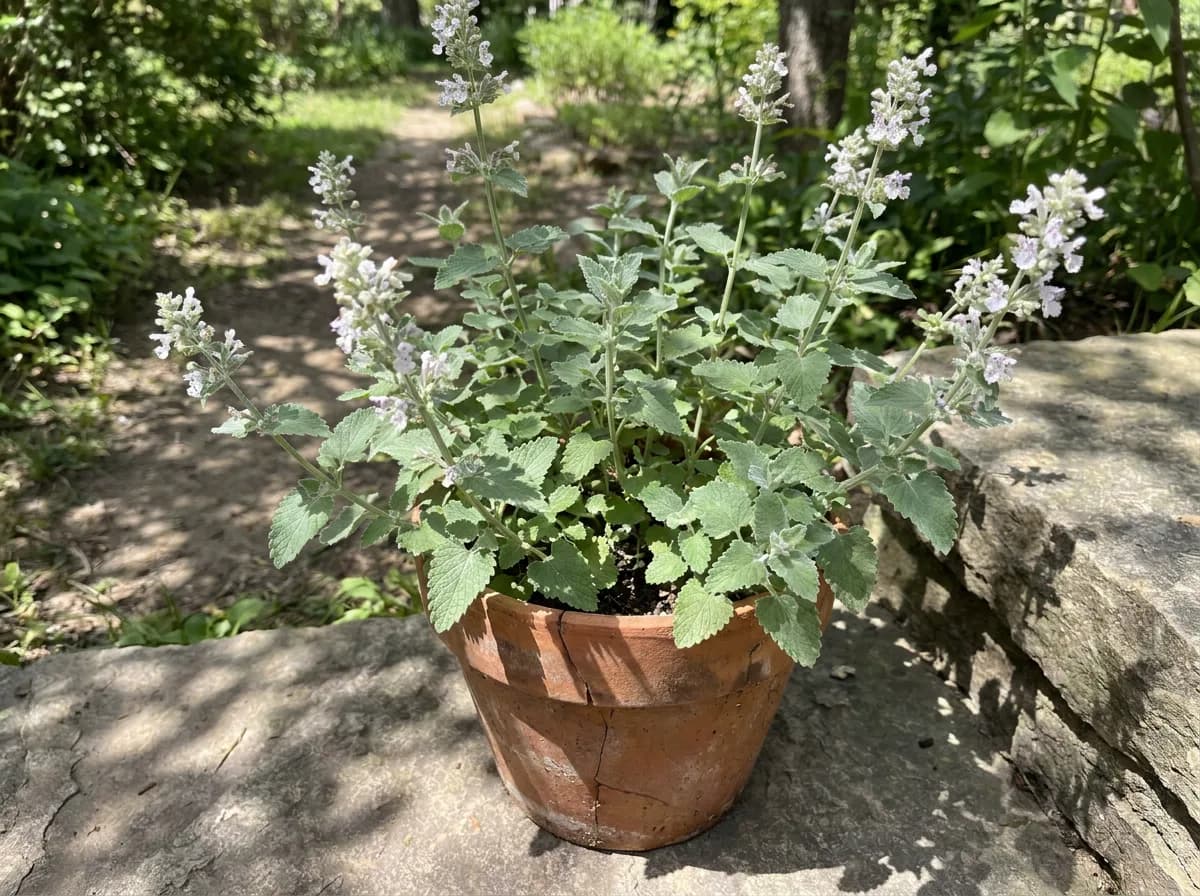
So what does catnip look like? The living plant has soft, gray-green, heart-shaped leaves with toothed edges and a fine fuzz, square stems like other mints, and flower spikes packed with small white blooms flecked with purple. Wild catnip looks the same and often grows along roadsides.
The key catnip ingredients are simple. The plant's active ingredient is nepetalactone, an iridoid that makes up most of catnip's essential oil, alongside smaller amounts of related essential-oil compounds such as other nepetalactone isomers and caryophyllene. Those volatile oils sit in tiny glands on the leaves and stems, which is why bruising releases the scent.
Is catnip just oregano? No. Oregano (Origanum vulgare) is a cousin in the same mint family, which is why the dried leaves can look alike in a jar. The difference that matters to your cat is chemistry: catnip carries nepetalactone, and oregano does not, so oregano will not set off the catnip response.
Other common mix-ups:
- Catmint: Garden catmint usually means ornamental Nepeta relatives grown for their long purple bloom. They are related, but catmint vs catnip is not a matter of two names for one plant, and most cats show far less interest in catmint.
- Cat grass: Cat grass is sprouted wheat, oat or barley. Cats chew it, but it contains no nepetalactone and causes no catnip reaction.
- Lemon catnip: This is a lemon-scented variety of Nepeta cataria (often sold as 'Citriodora'). It is still catnip, though growers often describe its appeal to cats as milder.
The main types of catnip are true Nepeta cataria and the ornamental catmint cultivars gardeners grow for flowers, and cats respond far more strongly to true catnip. You can buy it dried, grow it fresh, or use catnip spray and compressed pellet forms, and all of them work the same way, by releasing scent.
Petful may earn a commission when you click through to Chewy, at no extra cost to you.
A multi-pack such as the Fashion's Talk 18 Piece Plush Catnip-Filled Mice lets you rotate fresh toys in and out, since catnip scent fades.
How Does Catnip Work? Nepetalactone and the Olfactory Pathway
Catnip works through smell. Nepetalactone binds odor receptors in the olfactory epithelium, the scent-detecting lining inside the nose, and the signal travels to the olfactory bulb and on to brain regions such as the amygdala and hypothalamus, which shape emotion and behavior. Bol et al. 2017 states the effect comes from the smell of catnip, not its taste.
So what is in catnip that makes cats go crazy? It is nepetalactone, the volatile oil released from the leaves and stems. The effects of catnip, from rolling to zoomies, follow from that scent signal, which is also the short answer to why does catnip make cats go crazy: the smell appears to trigger a pleasurable, reward-linked response in the brain.
- 1Catnip acts through the nose: nepetalactone has to be inhaled to trigger the classic response
- 2It is an inherited response, so some healthy adult cats never react
- 3Most kittens start responding somewhere in the three to six month range, and sources differ on exactly when
- 4An episode lasts minutes, then a refractory period follows before catnip works again
Here is what happens, step by step, when a cat meets catnip:
- Release: Tiny oil glands on the plant burst when it is bruised or chewed, and nepetalactone evaporates.
- Detection: The cat sniffs, and the molecule reaches receptors in the nasal lining. The Cornell Feline Health Center's Catwatch newsletter, quoting Cornell veterinarian Carolyn McDaniel, VMD, notes that nepetalactone has to be inhaled rather than swallowed to work.
- Reward: In Uenoyama et al. 2021, published in Science Advances, cats exposed to nepetalactol (the silvervine cousin of nepetalactone) had higher blood levels of beta-endorphin, and blocking mu-opioid receptors suppressed their rubbing.
- Behavior: The cat rubs, rolls and plays, then settles.
Some explainers credit the vomeronasal organ, the pheromone sensor in the roof of the mouth. Cornell's Catwatch says nepetalactone is absorbed there, but the wider research picture on the exact pathway remains unsettled.
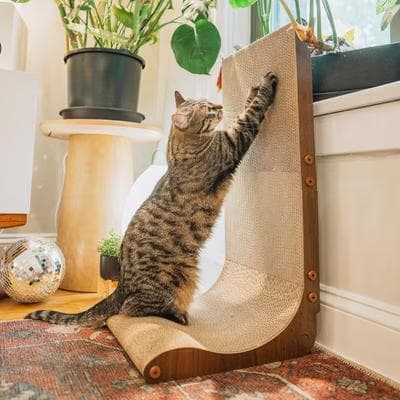
Curved cardboard wall scratcher with a wood frame that protects walls and gives cats a satisfying vertical scratch surface.
Petful may earn a commission when you click through to Chewy, at no extra cost to you.
What pests does catnip keep away? Mosquitoes have the best evidence. Uenoyama and colleagues showed that when cats rub on these plants, they transfer the iridoids onto their face and head fur, where the compounds repelled Aedes albopictus mosquitoes. You will also see claims that catnip repels cockroaches and helps with fleas, but we found no controlled home trial showing that loose catnip controls either one.
What Does Catnip Do to Cats?
Catnip gives most responsive cats a short, happy burst of activity: they sniff, lick or chew the plant, rub their chin and cheeks on it, roll over, and often vocalize or race around before settling down. WebVet's veterinarians cover the same reaction from the clinical side in what catnip does to cats.
The effects of catnip on cats follow one pattern even when the intensity varies: the catnip effects listed below are the same ones owners see with dried leaf, fresh plant, spray, or a stuffed toy, and they fade on their own within minutes.
Bol et al. 2017 lists the classic responses as sniffing, licking and biting the plant, head shaking, rubbing the head, chin or cheeks against it, and rolling over. In the order you are most likely to see them, a typical cat on catnip will:
- Sniff intently, sometimes with a slack jaw or a dreamy stare.
- Lick, chew or bite the leaves or the toy.
- Head rubbing: press cheeks and chin into the source again and again.
- Rolling and vocalizing: flop, roll on its back, and meow, trill or growl softly.
- Zoomies: sprint, pounce or kick at the toy with the back feet.
- Calm: finish in a relaxed, sometimes sleepy state.
What is catnip like for cats? The Uenoyama beta-endorphin finding suggests it is pleasurable rather than distressing. A non-responder simply sniffs and walks away.
Does catnip make cats horny? The rolling and vocalizing resemble a female in heat, but males and females, spayed or not, react alike. It is a scent-triggered pattern that looks similar, not a reproductive change.
If your cat gets playful, a wand toy such as the Frisco Bird with Feathers Teaser Wand gives that energy a target that is not your ankles. Some cats get overstimulated and nip, so skip handling mid-episode.
Why Do Cats Like Catnip (and Why Some Cats Don't)?
Cats like catnip because the smell appears to switch on their reward system, and the capacity to respond is inherited. Cornell's Catwatch newsletter describes sensitivity as an autosomal dominant trait, meaning a cat needs only one copy of the gene from either parent to respond. Cats without it are not broken or unhappy; they simply lack the response.
That explains the most common complaint: "my cat doesn't like catnip." If an adult cat has had fresh catnip and still shows no interest, it is most likely a non-responder. Before you conclude that, rule out the easy fixes:
- Stale product: Old, dusty catnip loses its scent. Try a fresh pouch or bruise fresh leaves.
- Age: A young kitten may not respond yet (see the next section).
- Setting: A nervous cat in a new home may ignore catnip until it feels settled.
- Timing: A cat still in its refractory period will not react again right away.
Does catnip help cats in heat? No. Catnip does not treat or shorten a heat cycle. A pinch may briefly distract a restless cat in estrus, but in some cats the added stimulation heightens agitation, yowling and rolling instead, so it is not a calming tool for heat; spaying is the reliable fix.
The responder percentage is best given as a sourced range, roughly 60 to 90 percent of adult cats depending on the source, because no single figure holds up. This is where catnip pages usually repeat one number without a source. In Bol et al. 2017, 68 of 100 domestic cats aged six months or older responded to catnip, and the authors noted that pooled data from earlier studies found 53 non-responders out of 170 cats (31 percent). Cornell's Catwatch newsletter reports 10 to 30 percent non-responders, and PetMD, reviewed by Hannah Hart, DVM, says about 60 percent of cats react.
| Claim | Figure and source | Do sources agree? |
|---|---|---|
| Share of cats that respond | 68% of 100 cats (Bol et al. 2017); 10 to 30 percent non-responders (Cornell Catwatch); about 60% (PetMD, Hannah Hart, DVM) | Sources disagree: 60 to 90 percent, with Bol et al. 2017 the only measured sample |
| Age kittens start responding | Not before 6 to 8 weeks, full response about a month later (Cornell Catwatch); 6 months to 1 year for most cats (PetMD) | Sources disagree on timing; most kittens fall in the 3 to 6 month range |
| How long an episode lasts | 5 to 15 minutes (Cornell Catwatch); around 10 minutes (PetMD) | Broadly agree |
| Refractory period before the next response | An hour or more (Cornell Catwatch); about 30 minutes (PetMD) | Sources disagree: 30 minutes to over an hour |
| What triggers the response | Smell, not taste (Bol et al. 2017); rubbing tied to beta-endorphin and mu-opioid receptors (Uenoyama et al. 2021) | Agree on the scent route |
Do Big Cats Like Catnip?
Some do, but not all. Bol et al. 2017 tested non-domestic cats directly: eight of nine tigers were indifferent to catnip, while one of five bobcats responded to catnip and four responded to silvervine. The same paper summarizes earlier reports that lions, jaguars, leopards and snow leopards appear sensitive to catnip, while most tigers do not respond.
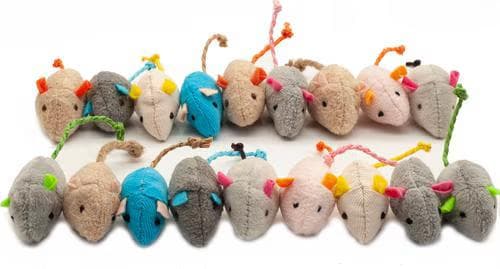
Pack of 18 soft plush mice filled with catnip to spark batting, pouncing, and play.
Petful may earn a commission when you click through to Chewy, at no extra cost to you.
So does catnip work on lions? Published observations say lions often react. Tigers on catnip are the exception: Bol's results contradict the Cornell newsletter's statement that tigers are believed to react. The newsletter also lists mountain lions as responders, but we found no controlled test of them.
At What Age Does Catnip Affect Kittens?
Kitten age is best stated as a sourced range, because Cornell and PetMD give different ages and no controlled kitten study settles it. Most kittens begin responding to catnip somewhere between three and six months of age, and some take longer. Kittens can have catnip safely before then; they just usually ignore it. If your young kitten sniffs a catnip toy and wanders off, that is normal development, not a sign it will never respond.
- Cornell's Catwatch newsletter says kittens younger than six to eight weeks will not respond and may need about another month to respond fully, which puts full response near three months. PetMD says most cats will not react until six months to a year. Sources disagree on the exact age, so treat three to six months as the usual window rather than a fixed date.
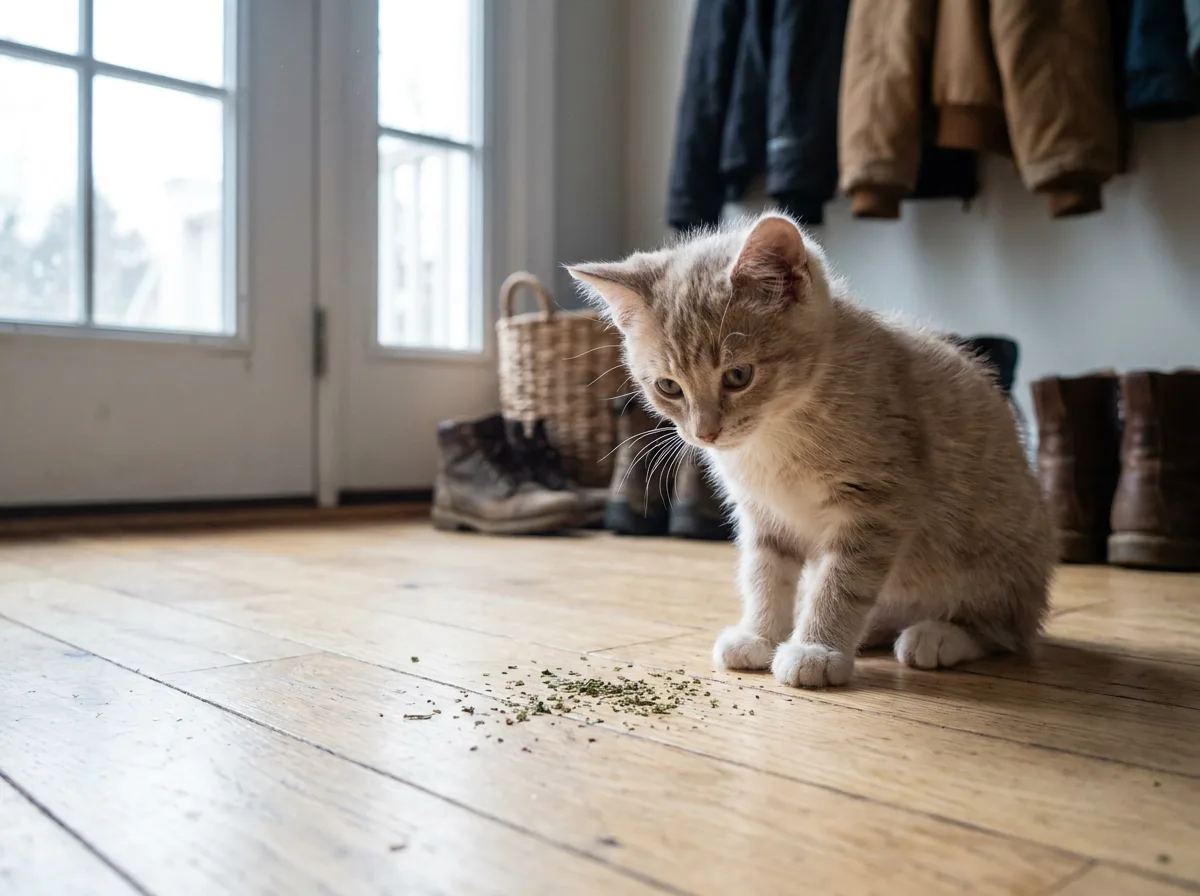
Why the delay? Nobody has pinned it down. The Cornell newsletter suggests either the scent-detecting receptors or the brain area behind the catnip response may still be maturing. Bol et al. 2017 tested only cats six months or older, so the kitten question still rests on veterinary experience.
For owners wondering when you can give a kitten catnip, or whether kittens can play with catnip toys, the practical answers are:
- Can kittens have catnip? Yes. Catnip toys are fine for kittens, as long as the toy is sized so it cannot be swallowed.
- Can kittens eat catnip? A nibble is harmless; it just will not produce much reaction in a young kitten.
- What does catnip do to kittens? Before the response develops, usually nothing beyond curiosity.
- How old do cats have to be for catnip to work? Try again every few weeks once the kitten is past three months, then judge at six months or later.
How Long Does Catnip Last, and When Can Cats Have It Again?
A catnip episode usually lasts about 5 to 15 minutes. Cornell's Catwatch newsletter gives that range, and PetMD puts it at around 10 minutes. How long does catnip take to kick in? Almost immediately; a responsive cat typically starts sniffing, rubbing or rolling within seconds to a minute of reaching the scent.
After the episode, the cat enters a refractory period, a stretch when catnip has little or no effect. Cornell's newsletter says it takes an hour or more before the cat responds again, while PetMD says about 30 minutes. More catnip during that window does not extend the effect. How often can you give a cat catnip? A few sessions a week keeps it special; daily use is not known to be harmful, but the reaction tends to stay stronger when catnip is occasional.
Use this five-minute test to learn how your own cat responds:
- Offer a pinch of fresh dried catnip on the floor or rub it into a clean toy.
- Watch for five minutes. Note how quickly your cat reacts, or whether it walks away.
- Note the response type: active (rolling, zoomies) or mellow (stretched out, half-closed eyes).
- Put the catnip away as soon as your cat loses interest.
- Wait out the refractory window, at least 30 minutes and ideally an hour or more, before you offer it again.
If nothing happens on two or three tries with fresh catnip, your cat is probably a non-responder. A few logged sessions show your cat's usual duration and style.

Feathered teaser wand with catnip-stuffed bird. Pairs perfectly with the no-bite training policy: redirect Bengal play drive into a 10-minute interactive session with the wand.
Petful may earn a commission when you click through to Chewy, at no extra cost to you.
Can catnip go bad? It does not spoil dangerously, but its potency fades as the volatile oil evaporates, so an old pouch or toy stops working. Store dried catnip sealed in an airtight container somewhere cool and dark, and keep a bulk supply in the freezer, which slows that oil loss and extends potency for months.
How to Use Catnip: Training, Enrichment, and Play
The best catnip benefits are behavioral: it can make a new object interesting, reward exploration, and add scent enrichment to an indoor day. What is catnip good for in practice? Mostly steering attention, whether toward a scratcher, a carrier or a toy.
Here are the most useful ways to give your cat catnip:
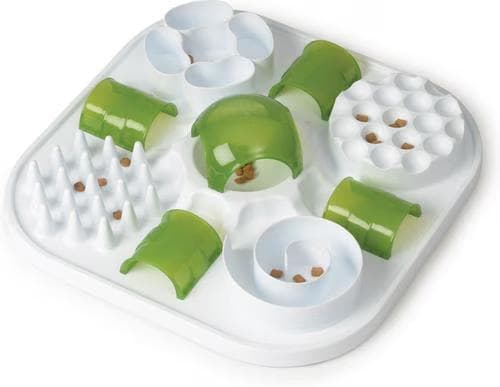
- Food and treat puzzles: Sprinkle a pinch in a treat puzzle such as the Catit Play Treat Puzzle so the scent draws your cat in and the puzzle keeps it busy after the episode fades.
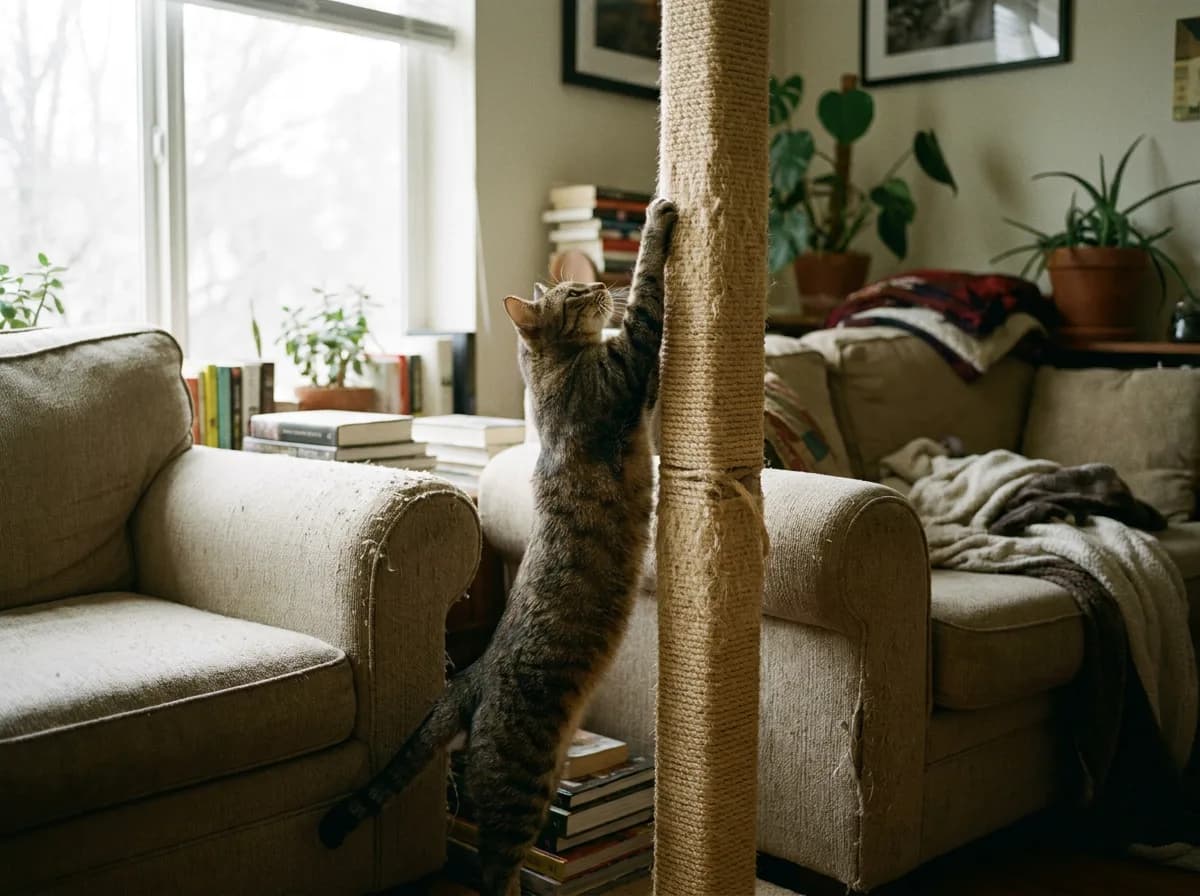
- Scratcher training: Rub catnip onto a new scratching post or pad to redirect scratching away from furniture.
- Carrier and cat tree training: A little catnip on a carrier bed or a new cat tree shelf builds a positive association.
- Solo play: Catnip infused toys for cats keep a cat interested when you are busy; refillable catnip toys for cats let you top up with fresh herb.
- Stray cats: Caretakers use catnip for stray cats near a feeding station.
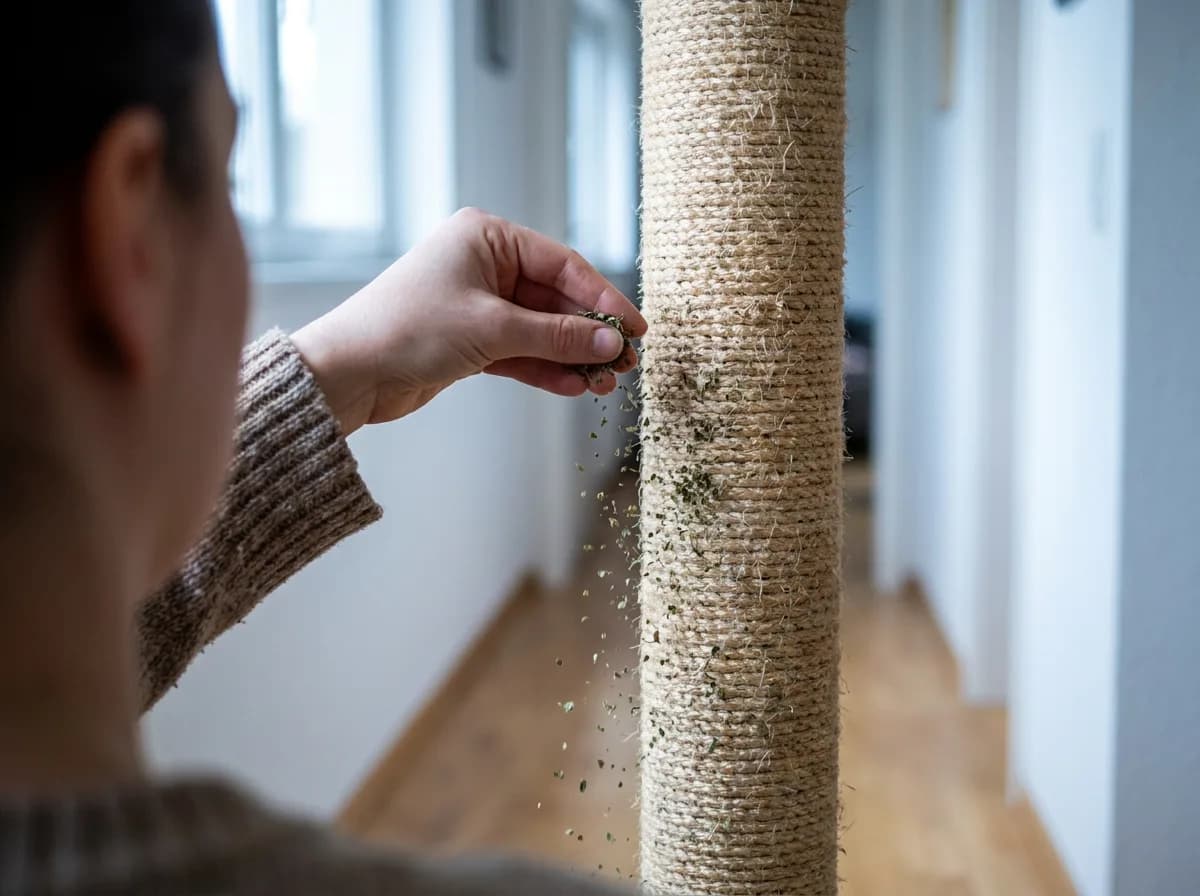
How does catnip spray work? A catnip spray is concentrated catnip oil or extract in liquid. You mist it onto a bed, toy or scratcher, and the nepetalactone evaporates just like it does from the leaf. It suits vertical surfaces but fades faster, so reapply each session.
For scratcher training, a wall-mounted option like the Necoichi Premium Comfort Cat Scratcher Wall pairs well with a light rub of dried catnip. Place it where your cat already scratches and refresh the catnip every few days. Catnip treats and catnip for a cat tree work the same way: a little scent goes a long way.
Eating vs. Sniffing Catnip: Why Some Cats Get Mellow and Others Hyper
Eating versus sniffing matters because the olfactory route is the only one that triggers the full reaction: nepetalactone has to reach receptors in the nose, while swallowed leaves mostly just pass through. Cats both eat catnip and smell it, but sniffing catnip is what triggers the classic response, because nepetalactone works through the nose. Eating catnip is common and generally harmless in small amounts; Bol et al. 2017 says the effect comes from the smell rather than the taste, so swallowing the leaves is not what produces the rolling and rubbing.
Are cats supposed to eat catnip? Chewing is part of the normal response, and it bruises the leaves, which releases more scent. Can cats eat catnip leaves or fresh catnip from the garden? Yes. Fresh catnip for cats is safe and often stronger than dried, and dried catnip leaves for cats are the easiest to store.
Why do some cats get mellow and others hyper? The honest answer is that the two styles are well described but poorly explained. Here is what owners typically see:
- Hyper responders: roll, rub, vocalize, sprint and attack toys. This is the pattern most people picture.
- Mellow responders: lie in a sphinx pose or stretch out, with a half-lidded, relaxed look, and may purr or doze.
- Mixed responders: start active and finish mellow as the episode winds down, which is a very common sequence.
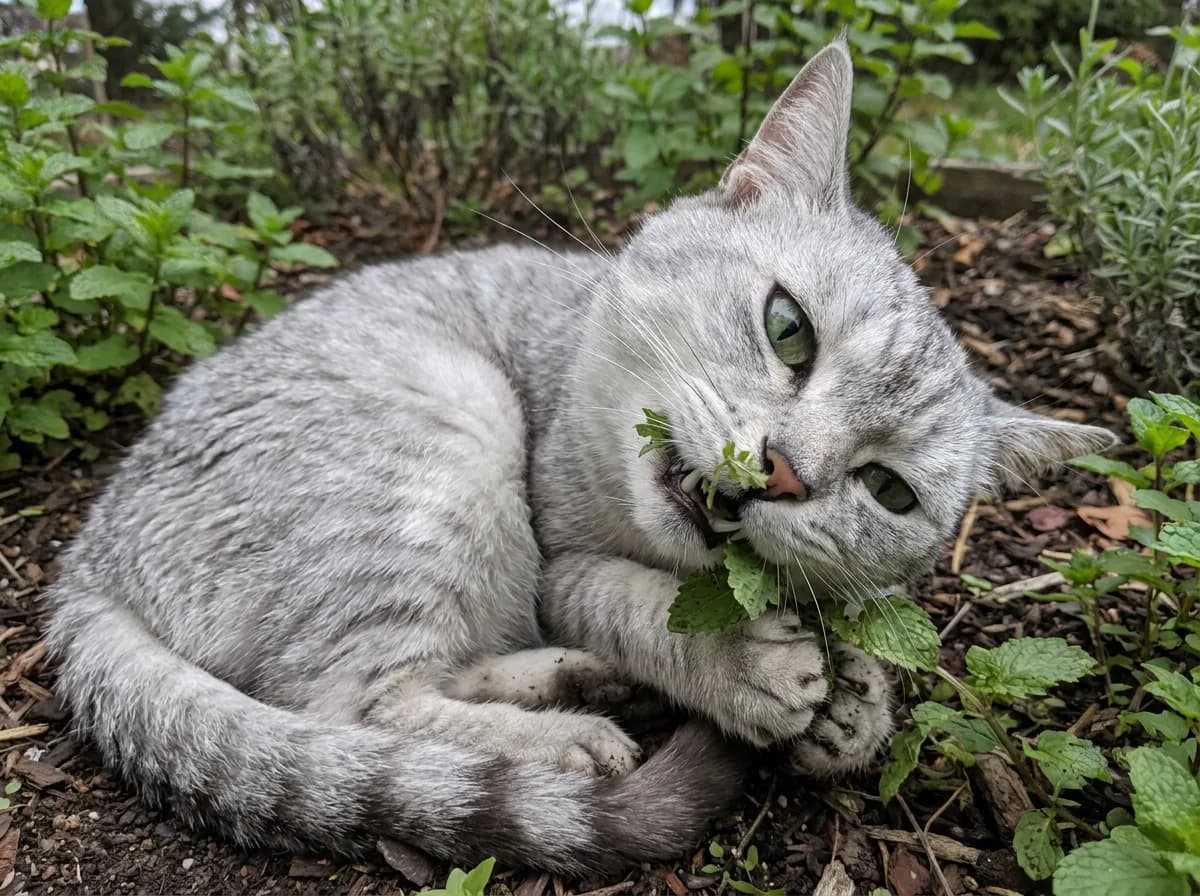
A widely repeated explanation is that sniffing makes cats hyper and eating makes them sleepy. We could not find a controlled study that confirms that split, so treat it as an owner observation rather than an established fact.
Does catnip make cats sleepy? Often, especially at the end of an episode, and a nap is a normal way for a session to end.
Is Catnip a Drug for Cats?
Yes and no. Catnip does act on a cat's nervous system: Uenoyama et al. 2021 linked the related compound nepetalactol to higher beta-endorphin levels and to mu-opioid receptors, the same reward pathway involved in pleasure. In that narrow sense, it is a psychoactive plant. But it is not a drug in the sense most people fear: veterinary sources describe it as not addictive, with no documented withdrawal.
Is catnip like weed for cats? Only loosely. Both change behavior for a while, but catnip works through smell, lasts minutes rather than hours, stops working for a stretch after each exposure, and leaves the cat alert and responsive. Does catnip make cats high? "High" is a fair shorthand for a short, happy, scent-driven episode, as long as you remember it is brief and self-limiting.
Cats on catnip are not losing control; the refractory period is a built-in brake. People do not react the same way, and this page sticks to cats.
Is Catnip Safe? What Too Much Catnip Looks Like
For most cats, catnip is safe, and there is no fatal overdose of the kind owners fear. Questions such as can cats overdose on catnip, how much catnip is too much, can catnip make cats sick, and is catnip bad for cats have their own detailed answers in our guide to whether cats can overdose on catnip and how much is too much, which covers symptoms, amounts and when to call a vet.
- There is no fatal overdose of catnip for cats. A cat that eats a lot of it may vomit or have loose stool for a short time. For symptoms, amounts, and when to call your veterinarian about too much catnip or an overdose on catnip, see the dedicated safety guide linked above.
Is there a downside to catnip? The main ones are mild stomach upset from eating large amounts and the occasional overstimulated cat; the safety guide covers both in depth.
If Your Cat Doesn't Respond: Silvervine and Other Alternatives
If your cat ignores catnip, it may still respond to a different plant. Bol et al. 2017 found that 79 percent of the domestic cats tested responded to silvervine, and that 22 of the 31 cats that did not respond to catnip (71 percent) did respond to silvervine. Which catnip alternative for cats to try, whether silvervine vs catnip is the better fit for your cat, and which products are worth buying are all covered in our comparison of silvervine vs catnip for cats that do not respond, including the best catnip toys.
What About Dogs and Catnip?
Catnip has little effect on most dogs, and dogs do not show the rolling, rubbing response cats do. For the catnip and dogs handoff, including whether dogs can chew catnip toys and what to do if a dog steals the cat's toys, our guide to whether dogs can play with catnip toys explains what catnip does to dogs and how to keep toy time safe.
Frequently Asked Questions About How Catnip Works
Not quite. Catnip is Nepeta cataria. Garden catmint usually refers to ornamental relatives such as Nepeta mussinii and its hybrids, grown for long-lasting purple flowers. They share a genus, but catmint generally carries less nepetalactone, so most cats show much weaker interest.
Catnip does not spoil in a dangerous way, but it loses potency as the volatile nepetalactone evaporates. A stuffed toy left out can fade within weeks. Store dried catnip in an airtight container away from heat and light, keep spare toys sealed, and replace a toy when your cat stops reacting.
Yes. Fresh leaves are safe for cats and are often stronger than dried because the oils have not had time to evaporate. Bruise the leaves between your fingers to release the scent before offering them. Use plants free of pesticides.
There is no evidence that catnip changes a heat cycle or calms a cat in estrus. Because the rolling and vocalizing in a catnip response resembles estrus behavior, owners sometimes confuse the two. A mellow responder may relax briefly, but spaying is the reliable way to prevent heat cycles; talk with your veterinarian.
You can. Sprinkle a pinch of crushed dried catnip over wet food or near a food puzzle to encourage a hesitant eater. Keep it to a small pinch, not a spoonful, and ask your veterinarian before using it to hide medication.
There is no controlled evidence that sprinkling catnip on a cat or its bedding prevents fleas. Research on catnip compounds and insects has focused on mosquitoes, and a home remedy is not a substitute for flea prevention. Use a veterinarian-recommended flea product made for cats.

Coreen Saito is a pet writer and longtime shelter volunteer with more than a decade in animal rescue. She covers cat behavior, breed care, and the small, ordinary science of sharing a life with companion animals, with a particular focus on honest takes about the products and decisions that actually matter. At home in Arizona, she's outranked by Mac (a dog with the loudest opinion in the house), Rebel (a cat who governs by quiet authority), and Meri (an orange tabby who runs the late shift and the laundry basket). She writes about all three, plus the rescues that keep coming through her life, at LifeWithMinty.com.
Sign up for expert-backed reviews and safety alerts all in one place.