Introducing Cat to Newborn Baby: A Week-by-Week Guide
A step-by-step plan for introducing your cat to a newborn: pregnancy prep, CDC litter rules for the pregnant parent, the first meeting, crib safety, stress signs, and a week-by-week timeline.

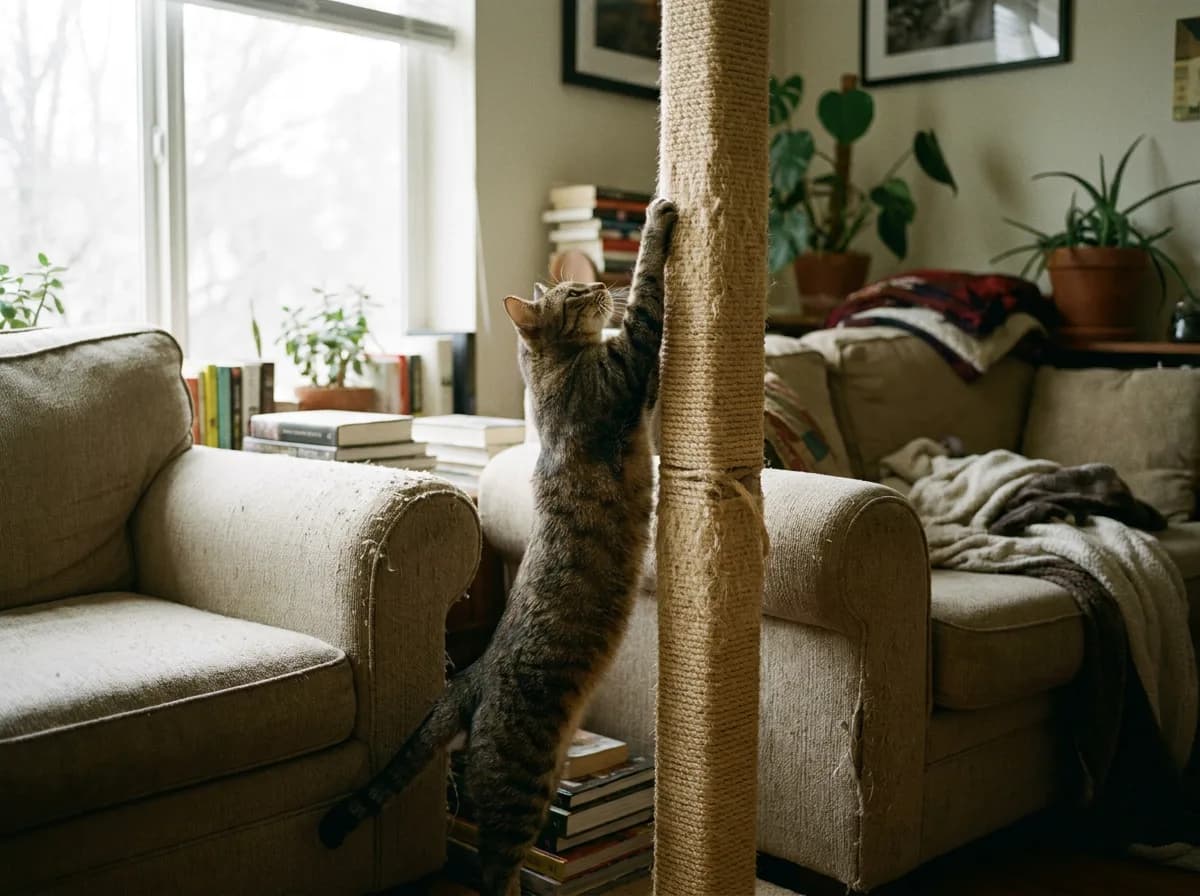
A parent standing in a hallway holding a swaddled newborn while a black and white cat sits on a wooden chair a few feet away.
Petful is reader supported. As an affiliate of platforms like Amazon and Chewy, we may earn a commission when you buy through links on this page. There is no extra cost to you.
Introducing cat to newborn baby works best as a plan that starts months before the due date, not a single moment at the front door. Cats cope with change when it arrives gradually, predictably, and on their terms. This guide walks you through pregnancy prep, safe litter handling, the first meeting, nursery rules, and a week-by-week plan that tells you when to slow down.

Sign up for expert-backed reviews and safety alerts all in one place.
Is It Safe to Have a Cat Around a Newborn?
- 1Start preparing your cat 1 to 2 months before the due date
- 2Greet your cat alone first, then let it approach the baby at its own pace
- 3Supervise every moment: cat and baby are never alone together
- 4Keep the cat out of the crib and bassinet, and close the sleep-room door
Yes, it is safe to have a cat around a newborn when two conditions hold: supervised contact and a firm safe sleep rule. Supervised contact means an adult is present and alert whenever the cat and baby share a room. The safe sleep rule means the baby sleeps in an empty crib or bassinet the cat cannot get into.
It becomes unsafe in two situations: a cat left alone with a sleeping infant, even briefly, or a cat that already naps in the bassinet because nobody set the boundary early.
International Cat Care puts it plainly: cats should never be left unattended with babies, and physical interactions should always happen with an adult present. If you want the evidence behind common fears, such as whether cats "steal a baby's breath," our guide to myths about cats and babies covers those claims and why cats seem drawn to infants.
Before the Baby Arrives: Prepare Your Cat During Pregnancy
Your cat's world is about to change: new furniture, new smells, new sounds, and less of your attention. The goal during pregnancy is to introduce those changes one at a time so none of them lands on homecoming day. The ASPCA recommends shifting routines 1 to 2 months before the birth, and International Cat Care stresses that every change should be gradual.
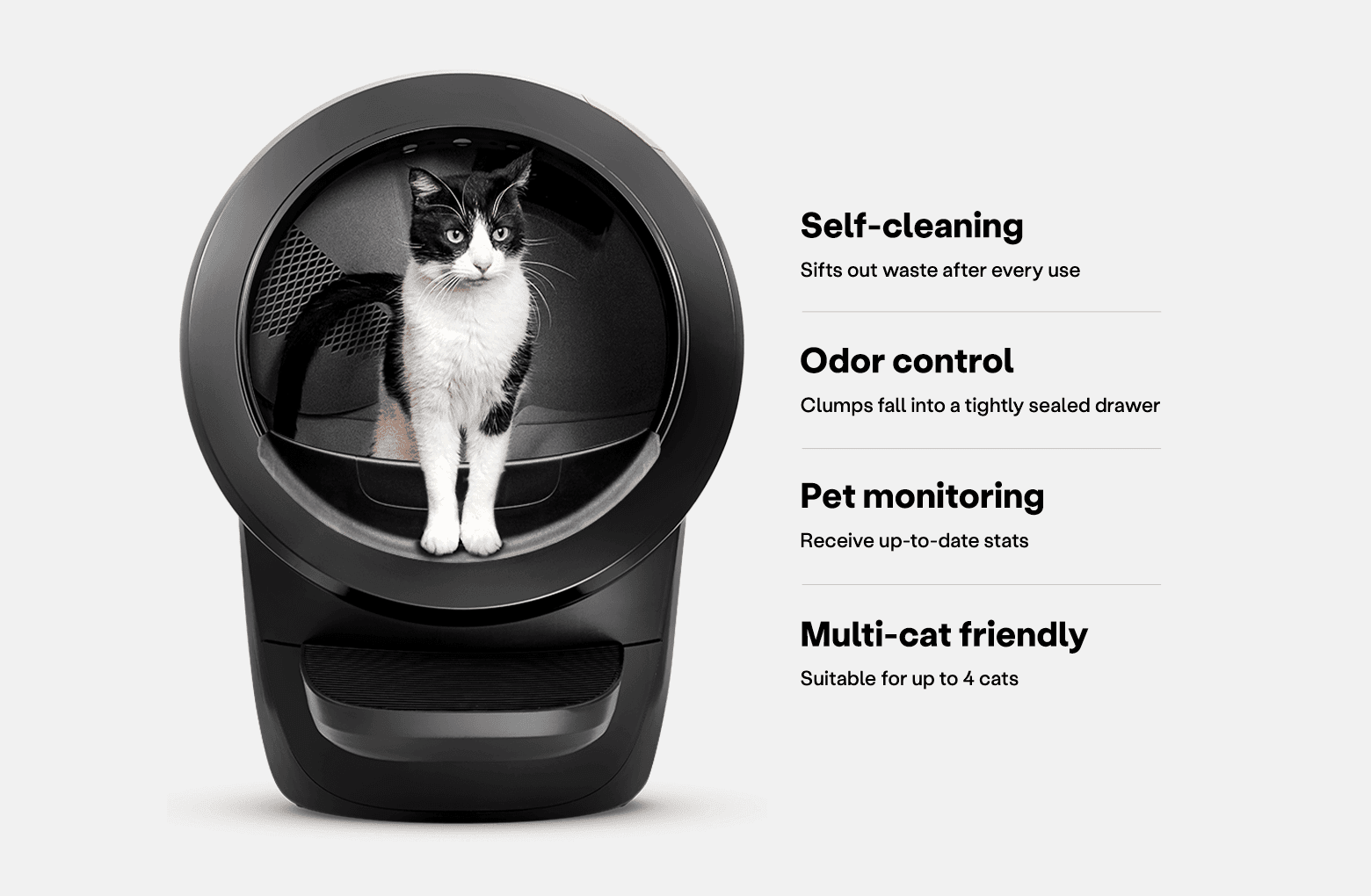
The proven Litter-Robot trusted by 1.8M+ households, with real-time litter and waste tracking in the Whisker app. The established pick if you want Litter-Robot reliability for less.
Petful may earn a commission when you click through to Whisker, at no extra cost to you.
Work through these steps over the last trimester:
- Shift routines early. Start feeding, play, and sleep-spot changes 1 to 2 months before the due date. If a partner will take over feeding, have them start now so the cat does not link the change to the baby.
- Play baby sounds. Play recordings of a baby crying at a volume that is barely audible, then raise it gradually over the weeks.
- Introduce baby smells. Use baby lotion and baby wipes around the house so the scents become ordinary before the baby arrives.
- Set up the nursery early. Assemble the crib, changing table, and swing weeks ahead so the cat can inspect them before they matter.
- Move the litter box gradually. If the box sits in the future nursery, move it a few inches at a time toward its new spot rather than relocating it overnight.
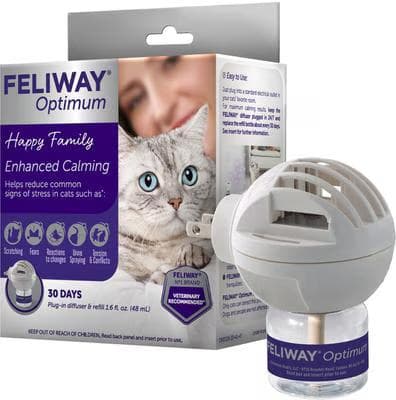
If your cat sleeps in your bedroom and will lose that access once the baby rooms with you, International Cat Care advises making that change slowly and giving the cat an attractive alternative bed nearby. Many parents also plug in a synthetic pheromone diffuser such as the Feliway Optimum Diffuser Start Kit in the room where the cat spends most of its time. International Cat Care lists pheromone diffusers as one way to help a cat feel secure; treat one as a support for gradual change, not a replacement for it.

Petful may earn a commission when you click through to Chewy, at no extra cost to you.
Set Up the Nursery and Crib Rules
Decide now which spaces the cat may use and which it may not, and enforce those rules before the baby arrives. A cat that has napped in the crib for a month will not understand why it is suddenly banned.
The American Academy of Pediatrics safe sleep guidance says a baby should sleep on their back, on a firm, flat surface, with no pillows, blankets, bumpers, or toys in the sleep area. It also recommends room-sharing without bed-sharing for at least the first 6 months. The AAP guidance does not address pets, but a cat in the crib breaks the empty-crib rule just as a blanket would, so the cat stays out.
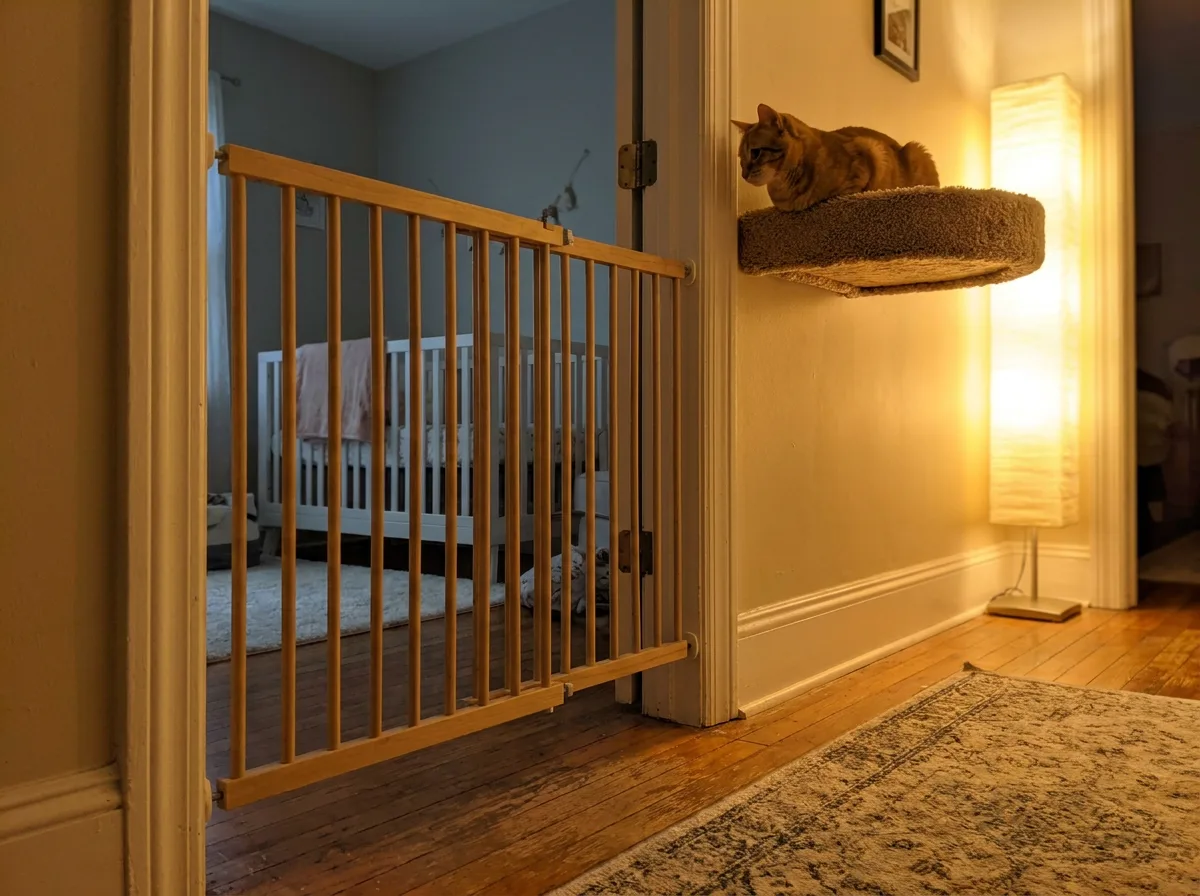
- Keep an empty crib: no cat, no blankets, no toys. Never let the cat into the crib or bassinet. Keep the nursery door closed, or the door of whichever room the baby sleeps in, for naps and overnight. If a door is not possible, use a screen door or a crib tent.
Useful deterrents during pregnancy:
- Sticky surfaces. The ASPCA suggests double-sided tape on furniture such as the changing table about a month before the due date. Most cats dislike the feel and stop jumping up.
- Fill the crib. Some parents set a few empty cardboard boxes inside the crib until the baby comes home so there is nowhere comfortable to lie down. Remove them before first use.
- Offer something better. Place a soft bed or perch nearby but outside the nursery, so the cat has an approved spot with a view.
Litter Box and Toxoplasmosis: What the Pregnant Parent Should Do
Newborns do not usually catch toxoplasmosis from the family cat after birth. The real risk is prenatal: a parent who is newly infected with Toxoplasma gondii during or just before pregnancy can pass the infection to the baby, which is called congenital toxoplasmosis. That is why the litter rules apply during pregnancy. The CDC advice is simple: if possible, have someone else change the litter; if no one else can, wear gloves (disposable ones) and wash your hands with soap and water afterward. Either way, keep to a daily litter change.
The daily schedule matters because, according to the CDC, the parasite does not become infectious until 1 to 5 days after a cat sheds it, so if you change the litter daily you remove waste before it can infect anyone. The ASPCA goes further and recommends scooping at least twice a day, which is a reasonable stricter option for households that can manage it.
| Household | Scooping duty | How often | What to wear |
|---|---|---|---|
| Partner or other adult scoops | Partner or another adult takes over all scooping duty | Change the litter daily; twice a day is the stricter option | Disposable gloves as a precaution, then hand washing |
| Pregnant parent must scoop | Pregnant parent, only when no one else can | Change the litter daily without skipping | Disposable gloves every time, then wash hands with soap and water |
| Solo pregnant parent | Pregnant parent, with a sitter covering hospital days | Change the litter daily; a self-cleaning box reduces handling but waste still needs bagging | Disposable gloves for every scoop or bag change, then hand washing |
The CDC adds three more steps for pregnant people: keep cats indoors so they do not hunt, do not feed cats raw or undercooked meat, and do not adopt or handle stray cats or kittens during pregnancy. For the full scooping and washing method, see our guide on how to clean a litter box.
A self-cleaning box such as the Litter-Robot 4 can cut down on daily scooping for a solo parent. It does not remove toxoplasmosis risk: someone still empties the waste drawer, and the CDC glove and hand washing rules still apply.
If you want to know how likely a cat owner is to get toxoplasmosis in general, and whether you need to rehome your cat (you do not), our article on cats and toxoplasmosis covers the odds. Ask your obstetric provider about testing during pregnancy.
The First Meeting: How to Introduce Your Cat to Your Newborn
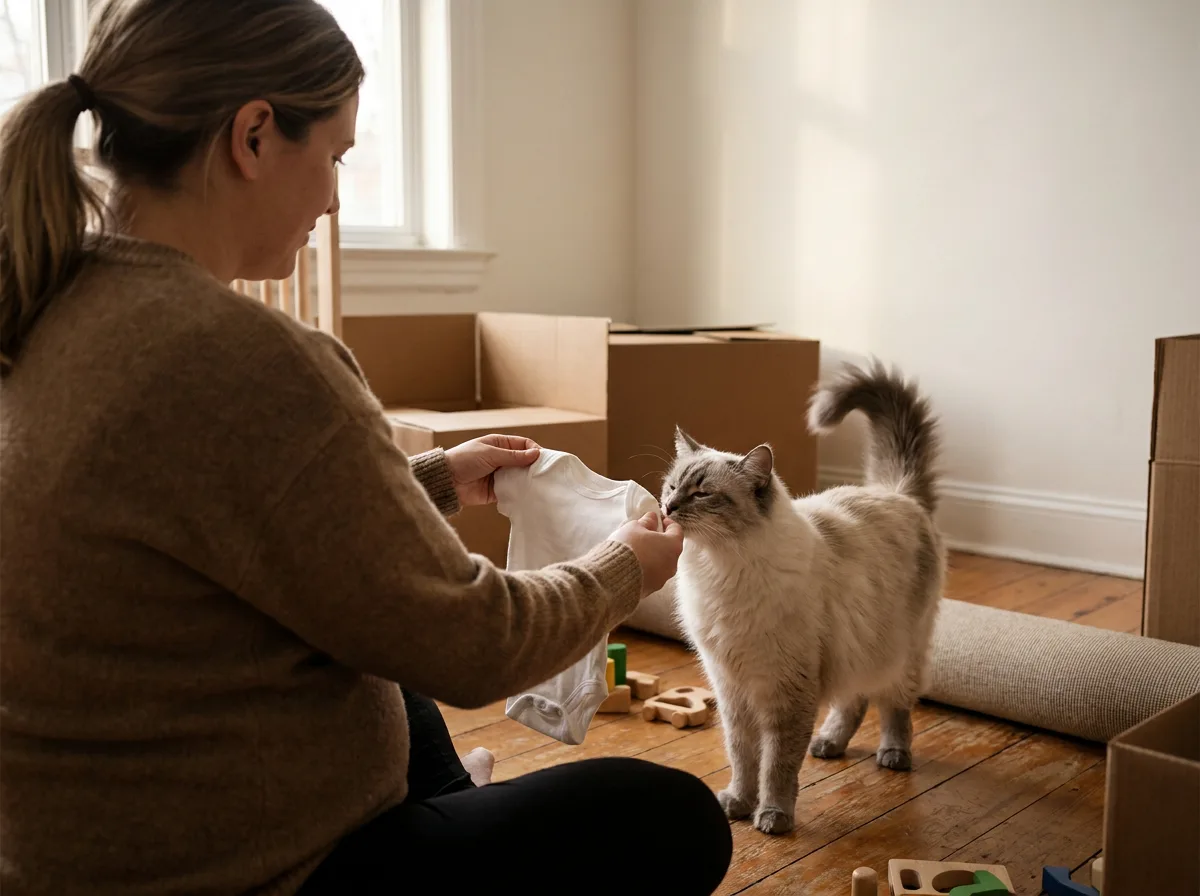
Most parents want to know how soon, how long, and whether it is safe, so here is what a calm first meeting looks like. Start introducing your cat to your newborn by sending a scent ahead: before the baby comes home, have someone bring a used receiving blanket from the hospital and let the cat sniff it. On homecoming day, greet your cat alone first, calmly, while another adult holds the baby. Then sit in a quiet room holding the baby and let the cat approach at its own pace.

Petful may earn a commission when you click through to Chewy, at no extra cost to you.
How soon can I introduce my newborn to my cat? You can make the introduction the same day you bring the baby home. Keep it calm and short: sit down in a quiet room with the baby in your arms, keep your voice low, and let the cat choose the distance. It may sniff a foot, watch from across the room, or leave, and all three are fine. What matters is that the cat has already had its own greeting and never feels pushed toward the baby.
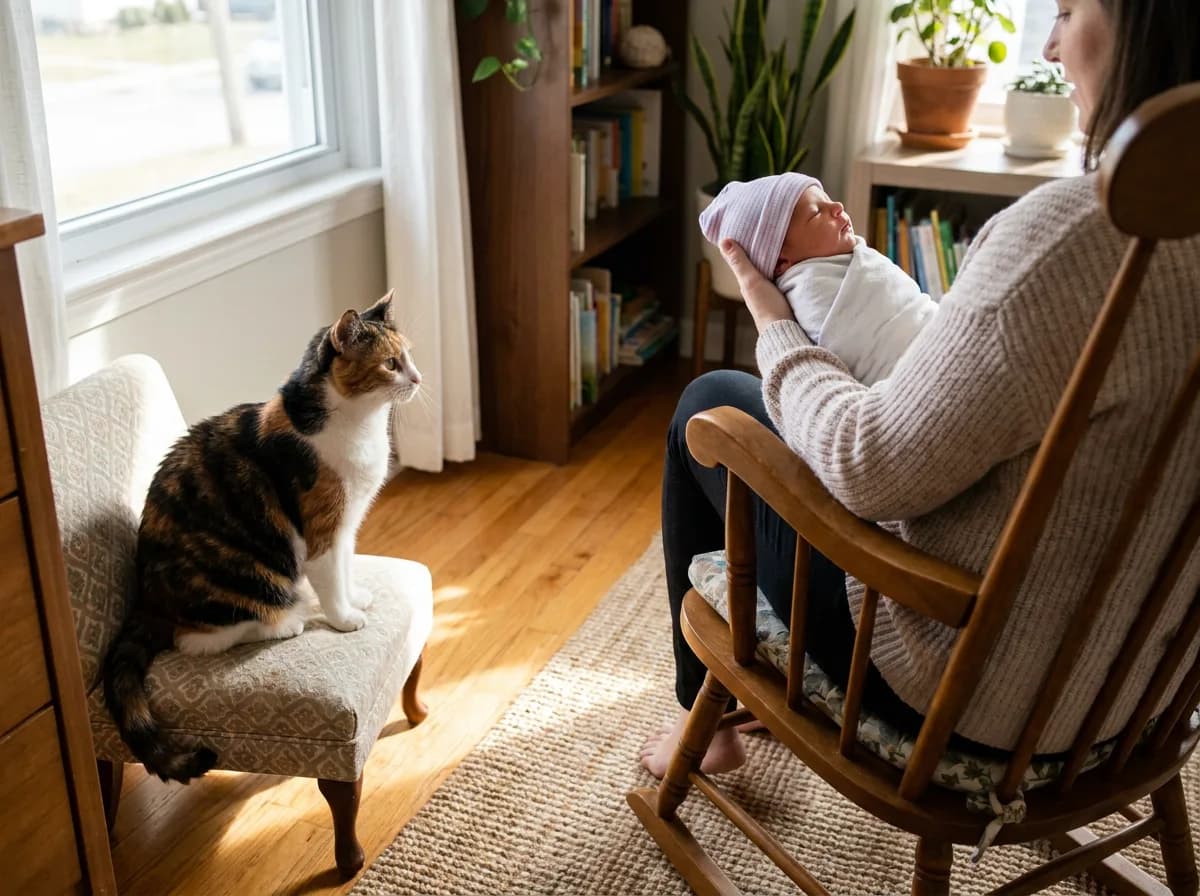
The scent blanket works because cats gather information through smell first. Lay it on a favorite perch or cat tree platform and let the cat investigate without pressure. International Cat Care also suggests rubbing a soft cloth on the cat's cheeks and wiping it on new baby items, so the nursery smells partly familiar.
For the meeting itself, keep it short and calm:
- Come in without the baby and greet the cat as you normally would. You have been gone for days, and it has noticed.
- Sit down somewhere quiet with the baby in your arms and a second adult nearby.
- Let the cat sniff from a distance it chooses. Do not carry the cat to the baby or hold the baby out to it.
- Reward calm curiosity with a quiet word or a treat.
- If the cat walks away, let it go. Leaving is a normal, healthy choice.
These same principles apply to introducing pets to a new baby in general: familiar scent first, a calm greeting, and a choice to leave. The difference with cats is that many prefer to watch from a high perch for days before coming closer, and that is fine.
Supervision Rules and Where the Cat Can Be
Yes, it is okay to have a cat and a newborn baby together, provided an adult is always watching and the cat always has a way out. Plan your rules for your most exhausted moments, such as dozing off on the sofa with the baby while the cat curls up nearby.
Use three simple zones:
- Open zones: living areas where the cat may be with the family while an adult is awake and present.
- Supervised-only zones: the room where the baby is being fed or changed. The cat may come in, but an adult is actively watching.
- Closed zones: the room where the baby sleeps, whenever the baby is asleep. Door closed, or a screen door or crib tent in place.
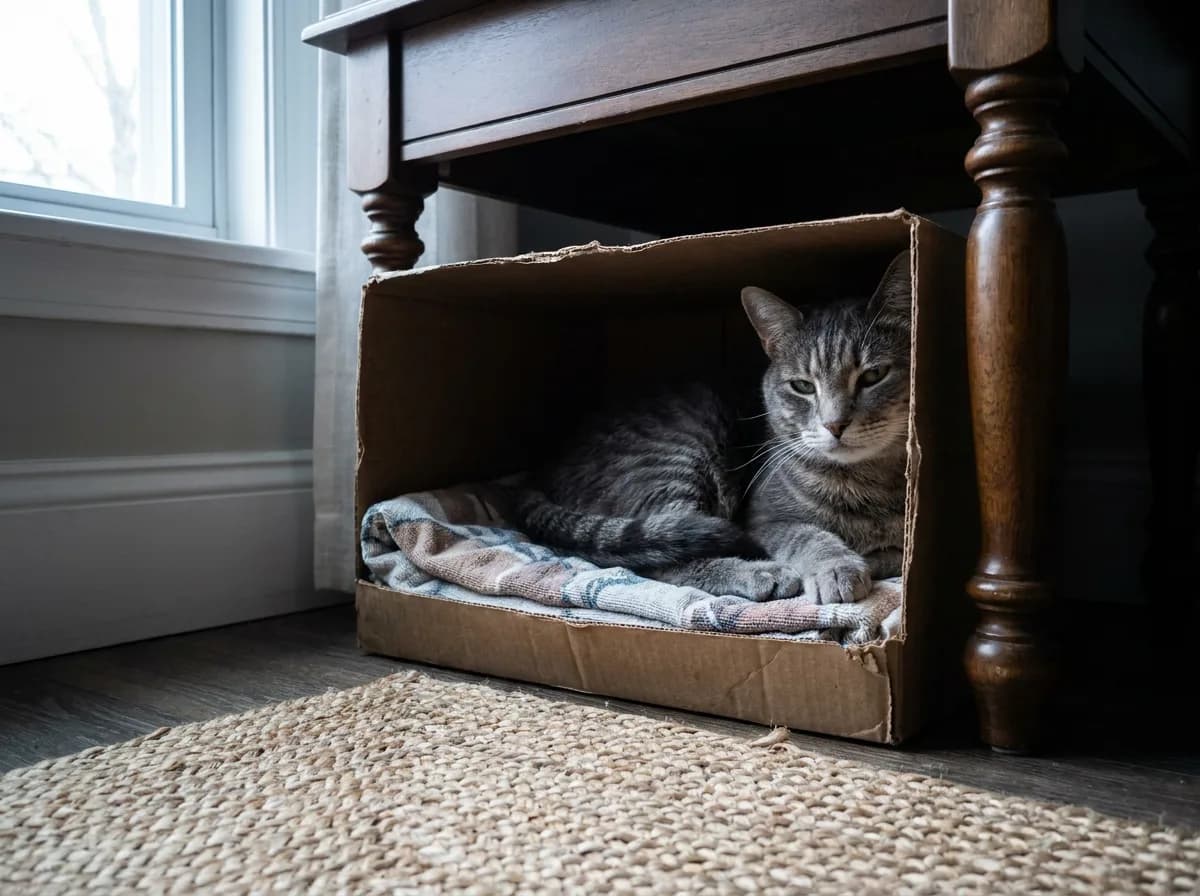
Give the cat high places to retreat to in the open zones. A tall cat tree like the Frisco 72-in Cat Tree & Condo lets the cat watch the new family member from a safe height; International Cat Care recommends perches, shelves, and cat trees a baby cannot reach.
Petful may earn a commission when you click through to Chewy, at no extra cost to you.
Signs Your Cat Is Stressed (and Signs It Is Coping)
Use these stress versus coping signs as a body language checklist to tell a curious cat from a frightened one before you decide whether to continue a visit or end it.
A cat typically reacts to a newborn baby with caution first: watching from a distance, sniffing baby items, and sometimes hiding for a day or two when the crying starts. Some cats become curious quickly and want to sit near the baby. A few become withdrawn or start soiling outside the box. Reading the difference tells you whether to keep going or slow down.
Signs your cat is coping:
- Eats, drinks, and uses the litter box normally
- Approaches the baby's area and sniffs, then relaxes or wanders off
- Sleeps in its usual spots with a loose body
- Slow-blinks at you and accepts petting and play
Signs your cat is stressed:
- Hides for most of the day, or for more than a few days
- Hisses, growls, or flattens its ears when the baby cries
- Urinates or defecates outside the litter box
- Overgrooms, stops eating, or becomes clingy and vocal
If they persist, go back a step: fewer changes, more quiet time with you, and more hiding spots. Our guide to fearful behaviors in cats explains how to desensitize a frightened cat step by step.
What the 3-3-3 Rule Means for a Cat and a New Baby
The 3-3-3 rule is a shelter guideline for introducing pets to a new home: roughly 3 days to decompress, 3 weeks to learn the routine, and 3 months to feel fully at home. It is a shelter rule of thumb, not a study, and it was designed for a newly adopted animal in a new house, not a resident cat meeting a baby.
Still, the rule offers a useful rough rhythm. Your resident cat is not decompressing from a move, but it is absorbing a new routine. Expect the first 3 days to be the most unsettled, the first 3 weeks to be a learning period, and the first 3 months to bring a steadier normal. The difference is that a baby keeps changing: new sounds, new schedules, and soon crawling, so the plan needs checkpoints rather than a finish line. The week-by-week plan below provides them.
Week-by-Week Plan After Baby Comes Home
How long does it take for a cat to get used to a new baby? Many cats settle within the first few weeks and reach a steady routine within about three months, but the pace depends on the cat. Follow the plan below, and move on only when your cat shows no stop signal for the current stage.
Each stage below pairs a cat goal with a parent action and a stop signal, so you know what your cat should manage and when to pause.
| Stage | Cat goal | Parent action | Stop signal |
|---|---|---|---|
| Last month of pregnancy | Cat accepts new routine, sounds, and nursery rules | Finish routine shifts, play baby sounds louder, set crib deterrents, book a cat sitter | Hiding or litter box avoidance after a change: pause new changes for a week |
| Homecoming day | Cat greets you and sniffs the scent blanket | Greet the cat alone, then sit calmly with the baby in a quiet room | Hissing or bolting: end the session and try again tomorrow |
| Baby weeks 1 to 2 | Cat eats, sleeps, and uses the box normally | Keep the cat's meals and play at the same times; short supervised visits | Not eating for a day, or hiding most of the day: call your vet |
| Baby weeks 3 to 4 | Cat shares rooms with the baby calmly | Allow the cat nearby during feeds with an adult watching | Swatting toward the baby or stalking the bassinet: return to distance-only visits |
| Baby weeks 5 to 8 | Cat relaxes during crying and routine noise | Keep one-on-one play daily, even if short | Overgrooming or new vocal distress: reduce changes, add hiding spots |
| Baby weeks 9 to 12 | Cat has a stable routine alongside the baby | Review zones and plan for rolling and crawling | Any aggression or persistent fear: book a veterinary behaviorist |
Protect one small daily ritual throughout: a few minutes of play or a food puzzle at the same time each day. A treat toy such as the Catit Play Treat Puzzle keeps the cat busy during a feed or nap when you cannot play.
When to Call a Vet or Behaviorist
Call your veterinarian first if your cat stops eating, starts peeing outside the box, or suddenly changes behavior, because pain and urinary problems can look like stress. If the vet rules out illness and the problems continue, a veterinary behaviorist can build a tailored plan.
- Stop desensitizing and book a veterinary behaviorist if fear persists past two weeks despite a slower pace, if litter box avoidance continues after your vet rules out illness, or if the cat swats, scratches, or bites at the baby. Keep the cat and baby fully separated until you have a plan.
Adding a Second Cat Instead? That Is a Different Plan
If you are bringing home another cat or a kitten rather than a baby, this plan does not apply. Cat-to-cat introductions use separate rooms, scent swapping, and gradual supervised meetings between two animals that may compete for territory. For the full step-by-step protocol, including how to handle hissing, see our guide on how to introduce a kitten to a cat.
Frequently Asked Questions About Cats and Newborns
You usually cannot tell by looking. The CDC notes that most infants infected before birth have no symptoms at birth but can develop serious problems later in life, such as blindness. If you were infected or tested positive during pregnancy, or you are unsure, call your pediatrician and ask about congenital toxoplasmosis screening and follow-up testing for your baby.
Not while the baby sleeps. Because the AAP recommends the baby sleep in your room for at least the first 6 months, the cat should not share that room overnight. Keep a closed nursery door, or a closed bedroom door, during naps and at night, and give the cat a comfortable bed elsewhere. Sharing the same room overnight can wait until the baby has its own room and the door stays shut.
Make the crib unappealing and unavailable. Use a sticky tape deterrent on nearby surfaces, keep the door shut whenever you are not in the room, and fit a crib net or crib tent designed for the model you own. Offer a better nearby perch and reward the cat for using it. Never leave the baby asleep in a crib the cat can reach.
If you plan to use one, start it early. Plug in a pheromone diffuser before the baby arrives so the cat is used to it during the late-pregnancy changes, not meeting it for the first time alongside the baby. International Cat Care lists synthetic pheromones as a way to help cats feel secure, but a diffuser supports gradual preparation; it does not replace it.
Arrange it before labor starts. A trusted cat sitter or neighbor should feed, scoop daily, and give the cat some company at its usual times. An automatic feeder can cover mealtimes, but someone still needs to check water and the litter box. Leave written instructions, and ask the sitter to bring home the used receiving blanket if possible.

Coreen Saito is a pet writer and longtime shelter volunteer with more than a decade in animal rescue. She covers cat behavior, breed care, and the small, ordinary science of sharing a life with companion animals, with a particular focus on honest takes about the products and decisions that actually matter. At home in Arizona, she's outranked by Mac (a dog with the loudest opinion in the house), Rebel (a cat who governs by quiet authority), and Meri (an orange tabby who runs the late shift and the laundry basket). She writes about all three, plus the rescues that keep coming through her life, at LifeWithMinty.com.
Sign up for expert-backed reviews and safety alerts all in one place.