Dog Anxiety: Causes, Signs, and Treatment Options
Dog anxiety is a common, treatable stress response. This guide covers the types (separation, noise, travel, generalized), the causes and signs, diagnosis, and the full treatment ladder from training to vet-prescribed medication.

Veterinarian · BVMS, MRCVS
Petful is reader supported. As an affiliate of platforms like Amazon and Chewy, we may earn a commission when you buy through links on this page. There is no extra cost to you.
Dog anxiety is a stress response that shows up as pacing, panting, trembling, hiding, destructive chewing, or near-constant barking, and it affects a large share of pet dogs at some point in their lives. According to a 2020 study of more than 13,700 pet dogs published by researchers at the University of Helsinki in the journal Scientific Reports, 72.5% of dogs displayed at least one anxiety-related behavior problem, with noise sensitivity the single most common at roughly 32%. Understanding what dog anxiety looks like, what triggers it, and how veterinarians treat it is the difference between a dog who slowly gets worse and one who learns to feel safe again. For more, see Petful’s guide to why do dogs eat underwear.
This guide walks through the major types of canine anxiety, the causes and risk factors behind them, the physical and behavioral signs to watch for, when to call your veterinarian, and the full treatment ladder from environmental tweaks all the way to prescription medication. Every medical claim here is tied to a primary veterinary source so you can act on it with confidence.
- 1Dog anxiety is common and treatable, affecting an estimated 7 in 10 dogs to some degree per a University of Helsinki study of 13,700+ dogs
- 2The main types are separation anxiety, noise anxiety, travel anxiety, and generalized anxiety, and many dogs have more than one
- 3Signs range from panting, pacing, and trembling to destructive behavior, house soiling, and excessive vocalization
- 4Treatment is a ladder: start with environment and training, add calming aids and supplements, and escalate to vet-prescribed medication for moderate to severe cases
- 5A veterinary exam should always come first to rule out pain or illness that can mimic anxiety

Sign up for expert-backed reviews and safety alerts all in one place.
What Is Dog Anxiety?
Dog anxiety is the anticipation of a future threat that produces a physical and behavioral stress response, even when no real danger is present. The American Kennel Club describes anxiety in dogs as a normal emotion that becomes a problem when it is disproportionate, persistent, or triggered by everyday situations, and notes that left unaddressed it can develop into a chronic anxiety disorder. In practical terms, a dog with anxiety is bracing for something bad, and that bracing floods the body with stress hormones like cortisol and adrenaline.
There is an important difference between fear, anxiety, and a phobia. Fear is the response to a present threat, such as a vacuum cleaner switching on. Anxiety is the response to an anticipated threat, like a dog who starts panting the moment you pick up your car keys. A phobia is an extreme, persistent fear of a specific trigger, such as thunderstorms, that is out of proportion to any actual risk. Veterinary behaviorists treat all three, but the distinction shapes the plan, because anxiety and phobias usually need a combination of behavior work and sometimes medication, not just management.
Anxiety is not the dog being stubborn, dramatic, or spiteful. The destructive chewing, the puddle by the door, the howling that the neighbors complain about, these are symptoms of genuine distress, not misbehavior. Reframing the problem as a medical and emotional one rather than a discipline one is the first step toward helping your dog.
- Punishing an anxious dog for chewing, barking, or soiling the house almost always makes anxiety worse, because it adds a new thing to fear. The goal of every approach in this guide is to lower your dog's stress, not to suppress the behavior it produces.
Types of Dog Anxiety
Most canine anxiety falls into four overlapping categories: separation anxiety, noise-related anxiety, travel anxiety, and generalized anxiety. The American Kennel Club identifies separation, noise, and confinement as among the most common triggers, and veterinary behaviorists note that a single dog frequently struggles with more than one type at once, which is why a thunderstorm-phobic dog often also panics when left alone. Identifying which type or types your dog has tells you where to focus treatment.
Separation Anxiety
Separation anxiety is distress that occurs specifically when a dog is left alone or separated from the person it is most attached to, and it is one of the most common behavior disorders seen in companion dogs. Veterinary Partner, the client-education arm of the Veterinary Information Network, estimates that separation anxiety affects around 14% to 20% of dogs and notes that signs begin within minutes of the owner's departure rather than hours later. The hallmark is that the behavior happens only, or mostly, in the owner's absence.
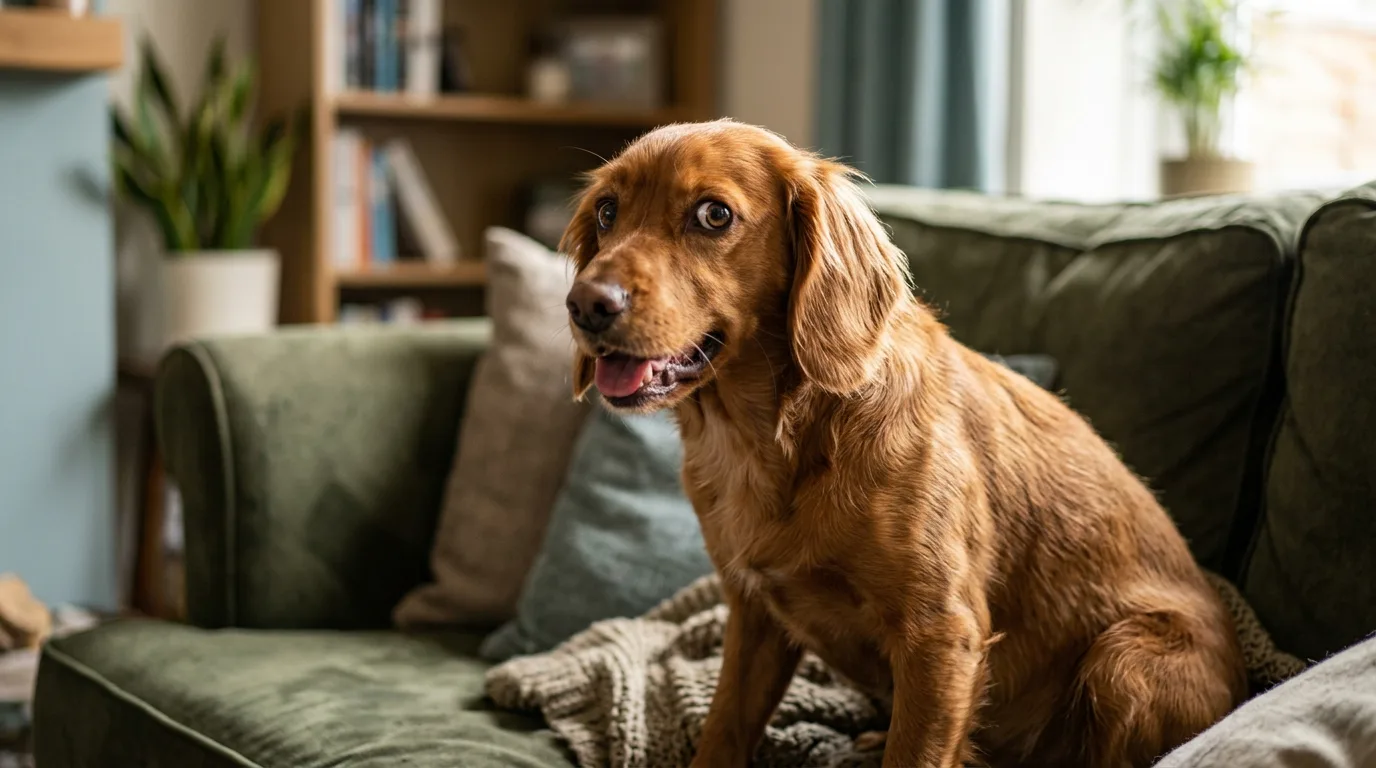
Classic signs include barking, howling, or whining that starts shortly after you leave, scratching or chewing at doors and windows in an attempt to escape, house soiling in a fully house-trained dog, drooling, and frantic pacing. Many owners only discover the problem through a pet camera or a noise complaint. Separation anxiety is highly treatable but rarely resolves on its own, and it tends to escalate without intervention. For a deeper walkthrough, see Petful's guide on curing dog separation anxiety quickly.
 Sponsored
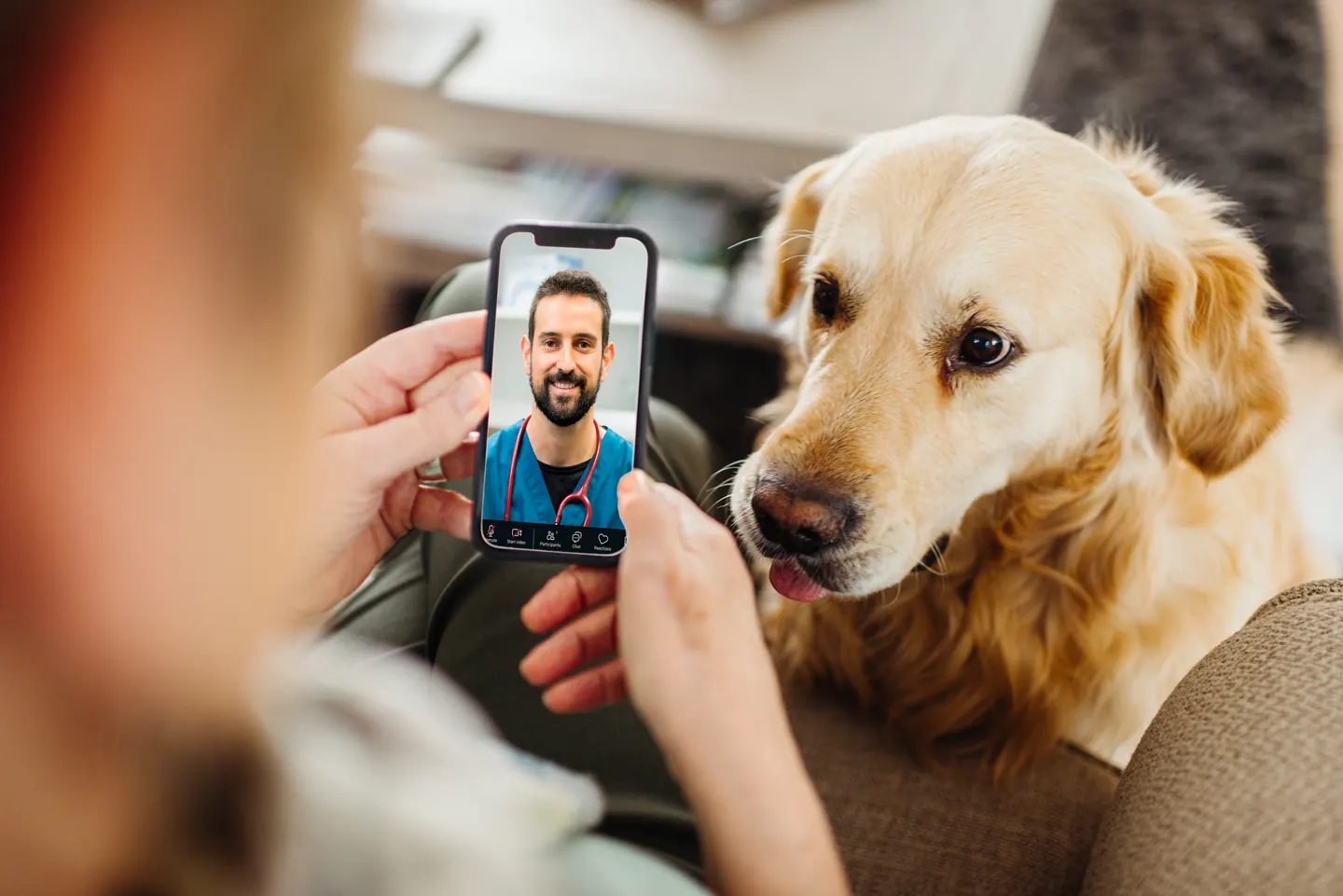
Want a vet's help with your dog's anxiety or behavior?
Talk to a licensed vet at Dutch over video, often the same day. They can recommend treatment and prescribe it when it's appropriate.
Use code Pets60
Plans start at $12/month · covers up to 5 pets
- Licensed vets in most states
- Rx for 150+ conditions
- 4.7 on Trustpilot
Noise-Related Anxiety (Thunderstorms, Fireworks)
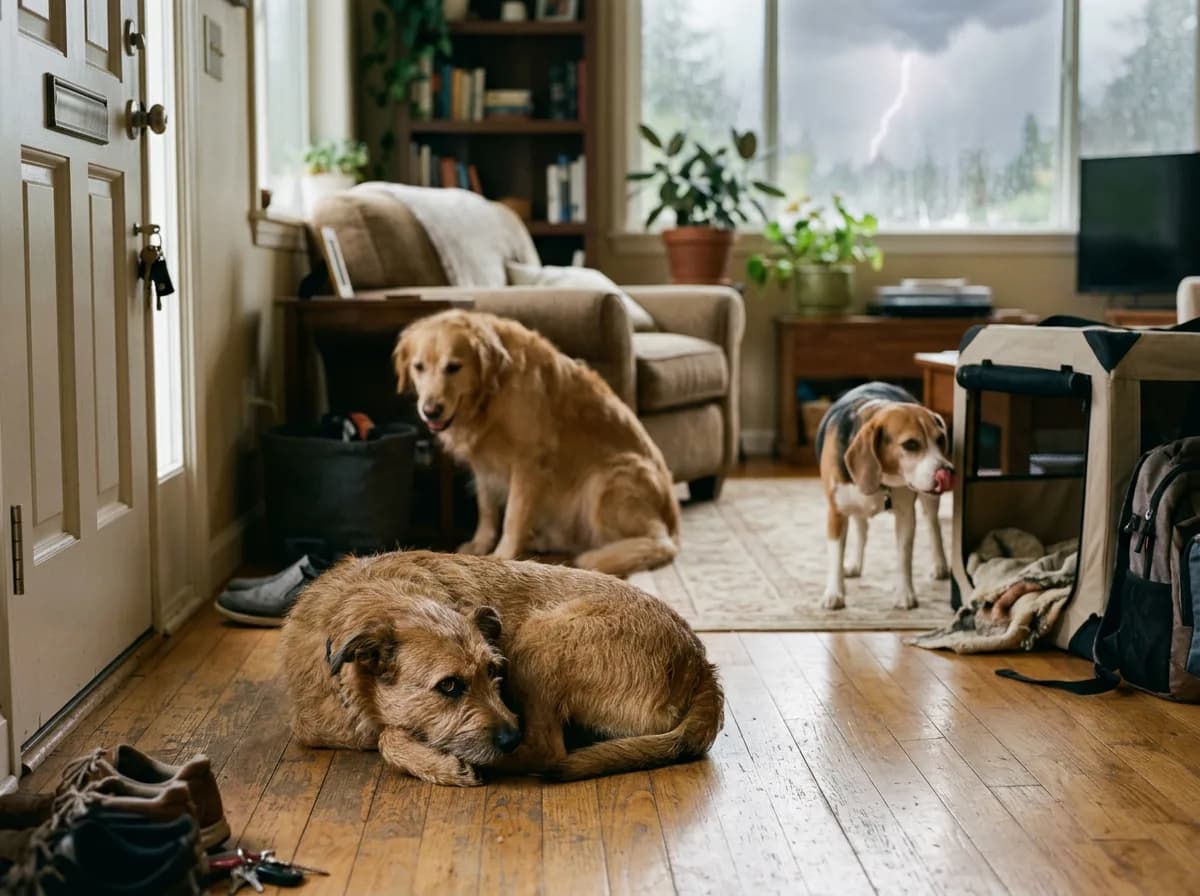
Noise anxiety is fear triggered by loud or sudden sounds, most often thunderstorms and fireworks, and it is the single most common anxiety type in dogs. The University of Helsinki study of more than 13,700 dogs found noise sensitivity in roughly 32% of dogs, with fear of fireworks and thunder the most frequently reported triggers. Thunderstorm phobia is its own challenge because dogs react not just to the thunder but to barometric pressure changes, static electricity, wind, and the smell of rain, which is why some dogs panic before a storm is even audible to humans.
Signs of noise anxiety include trembling, hiding in a closet or bathroom, pacing, excessive panting, drooling, clinginess, and in severe cases destructive attempts to escape that can cause injury. Because the triggers are seasonal and predictable, noise anxiety responds especially well to a planned approach that combines a safe space, desensitization, and sometimes situational medication. Petful's vet-reviewed playbook on how to calm a dog during a storm covers the storm-specific tactics in detail.

Peanut butter soft chews with L-theanine, chamomile, and ashwagandha to ease hyperactivity and support calm, relaxed behavior.
Petful may earn a commission when you click through to Chewy, at no extra cost to you.
Travel Anxiety
Travel anxiety is stress associated with car rides or other transport, and it often blends genuine motion sickness with learned fear, especially when most car trips end at the vet or groomer. Cornell University College of Veterinary Medicine notes that motion sickness is more common in puppies and young dogs because the inner-ear structures that control balance are not fully mature, and that many dogs outgrow the physical component but keep the learned anxiety. The result is a dog who associates the car with feeling sick or with an unpleasant destination.
Signs include drooling, whining, panting, restlessness, vomiting, and refusing to get in the vehicle at all. The most effective fix combines desensitization, building positive car associations one short trip at a time, with managing nausea, sometimes with a vet-prescribed anti-nausea drug. Petful's guide on dog car anxiety and what helps details the step-by-step desensitization process.
Generalized Anxiety Disorder in Dogs
Generalized anxiety is a persistent, baseline state of worry that is not tied to one specific trigger, leaving the dog on edge much of the time. Unlike a storm-phobic dog who is calm between storms, a dog with generalized anxiety shows a low but constant level of stress, often startling easily, struggling to settle, and reacting to minor changes in the environment. The American Kennel Club notes that generalized anxiety can stem from a mix of genetics, early-life experience, and chronic stress, and that it frequently coexists with the situational types above.
Because there is no single trigger to remove or desensitize against, generalized anxiety usually requires the most comprehensive plan, often combining a predictable routine, ongoing behavior modification with a qualified professional, and daily anti-anxiety medication prescribed by a veterinarian. It is also the type most likely to be confused with an underlying medical problem, which makes a thorough veterinary workup essential.
Common Causes and Risk Factors
Dog anxiety usually has more than one cause, with genetics, early experience, environment, and age all contributing. The American Veterinary Medical Association emphasizes that behavior problems, including anxiety, are among the most common reasons dogs are surrendered to shelters, and that many of these cases are preventable or treatable when the underlying drivers are identified early. Understanding the common causes helps you spot risk before anxiety takes hold and informs the treatment plan once it has.
Genetics and Breed Predisposition
Genetics play a measurable role in canine anxiety, and some breeds are predisposed to specific anxiety types. The University of Helsinki research found that the prevalence of noise sensitivity, fearfulness, and other anxiety behaviors varied significantly by breed, with herding breeds such as the Border Collie and certain spaniels and pointers showing higher rates of noise sensitivity and general fearfulness. This does not mean an individual dog of a given breed will be anxious, but it does mean breed history is a real risk factor worth knowing.
Temperament is partly heritable, which is why responsible breeding for stable, confident temperament matters, and why a puppy from anxious, poorly socialized parents carries elevated risk. If you know your dog's breed is prone to noise or separation issues, early prevention work is especially worthwhile.
Past Trauma or Neglect
A history of trauma, abuse, neglect, or abandonment is one of the strongest drivers of anxiety, particularly in rescue and rehomed dogs. The ASPCA notes that dogs adopted from shelters or with unknown histories show separation anxiety at higher rates than dogs raised in one stable home from puppyhood, likely because the experience of being surrendered or losing a caregiver sensitizes them to being left. A dog who has learned that people disappear, or that the world is unpredictable and unsafe, brings that expectation into every new situation.
Trauma-linked anxiety does not mean a dog is broken or unfixable. With patient, consistent, positive-based work, many rescue dogs become confident and secure. It does mean the timeline is often longer and that pushing too fast can backfire, so management and gradual exposure matter more than ever.
Environmental Changes
Major changes to a dog's environment or routine are a frequent trigger for new-onset anxiety. Moving to a new home, a change in the family's work schedule, the arrival or departure of a person or another pet, renovation noise, or a new baby can all upset the predictability that dogs rely on to feel safe. Veterinary behaviorists point out that the surge in separation anxiety reported when many owners returned to in-person work after extended periods at home is a textbook example of how an environmental shift can trigger distress.
Dogs are creatures of routine, and abrupt change removes the cues they use to anticipate what happens next. Where a change is unavoidable, easing into it gradually and keeping other parts of the routine stable can soften the impact.
Aging and Cognitive Dysfunction Syndrome
In senior dogs, new or worsening anxiety can be an early sign of canine cognitive dysfunction syndrome, the dog equivalent of dementia. Cornell University College of Veterinary Medicine describes cognitive dysfunction as an age-related decline in memory, awareness, and learning, with symptoms summarized by the acronym DISHA: disorientation, altered interactions, sleep-wake cycle changes, house soiling, and changes in activity, anxiety, and pacing among them. A previously calm older dog who starts pacing at night, getting lost in familiar rooms, or showing new separation distress should be evaluated for cognitive decline.
Because anxiety in a senior dog can have a medical and neurological basis, treating it as a pure behavior problem misses the cause. Veterinary diagnosis here is especially important, because diet, supplements, and medications can slow cognitive decline when it is caught early.
- A sudden change in behavior, including new anxiety, pacing, or house soiling in a senior dog, can signal pain, illness, or cognitive dysfunction rather than a behavior problem. Do not assume it is "just getting old." Have your veterinarian rule out a medical cause first.
Recognizing Anxiety Signs in Dogs
Anxiety shows up in the body, in behavior, and in destruction, and the signs often appear together. The American Kennel Club groups the warning signs into physical reactions, behavioral changes, and destructive or escape-driven behavior, and notes that recognizing the subtle early signals, the lip licks, yawns, and whale eye, lets owners intervene before a dog tips into full panic. Learning to read these signals is the most useful skill an owner of an anxious dog can develop. Petful's guide on the signs of stress in dogs breaks down the body language in more depth.
Physical Symptoms
Physical signs of anxiety are driven by the stress response and include panting when the dog is not hot or tired, drooling, trembling or shaking, dilated pupils, a tucked tail, pinned-back ears, and raised hackles. The American Kennel Club also lists subtler tells such as repeated lip licking, yawning out of context, and "whale eye," where the whites of the eyes show as the dog turns its head away. Many of these are easy to miss because they look like ordinary dog behavior in isolation.
Other physical signs include excessive shedding, sweaty paw pads that leave damp prints, loss of appetite, and digestive upset such as diarrhea. When several of these appear together in a specific situation, they form a clear picture of a dog under stress.
Behavioral Warning Signs
Behavioral signs are the changes in what your dog does, and they are often the first thing owners notice. These include pacing or restlessness, an inability to settle, clinginess and shadowing the owner from room to room, hiding or trying to escape, excessive barking, whining or howling, and compulsive behaviors like repetitive licking of a paw or flank. A dog may also become withdrawn, refusing food, play, or affection it normally enjoys.
Aggression can also be anxiety-driven. A fearful dog that feels cornered may growl, snap, or bite, not out of dominance but out of a perceived need to defend itself. Recognizing fear-based aggression as an anxiety sign, rather than a "bad dog" label, is critical to handling it safely and getting the right help.
Destructive Behaviors
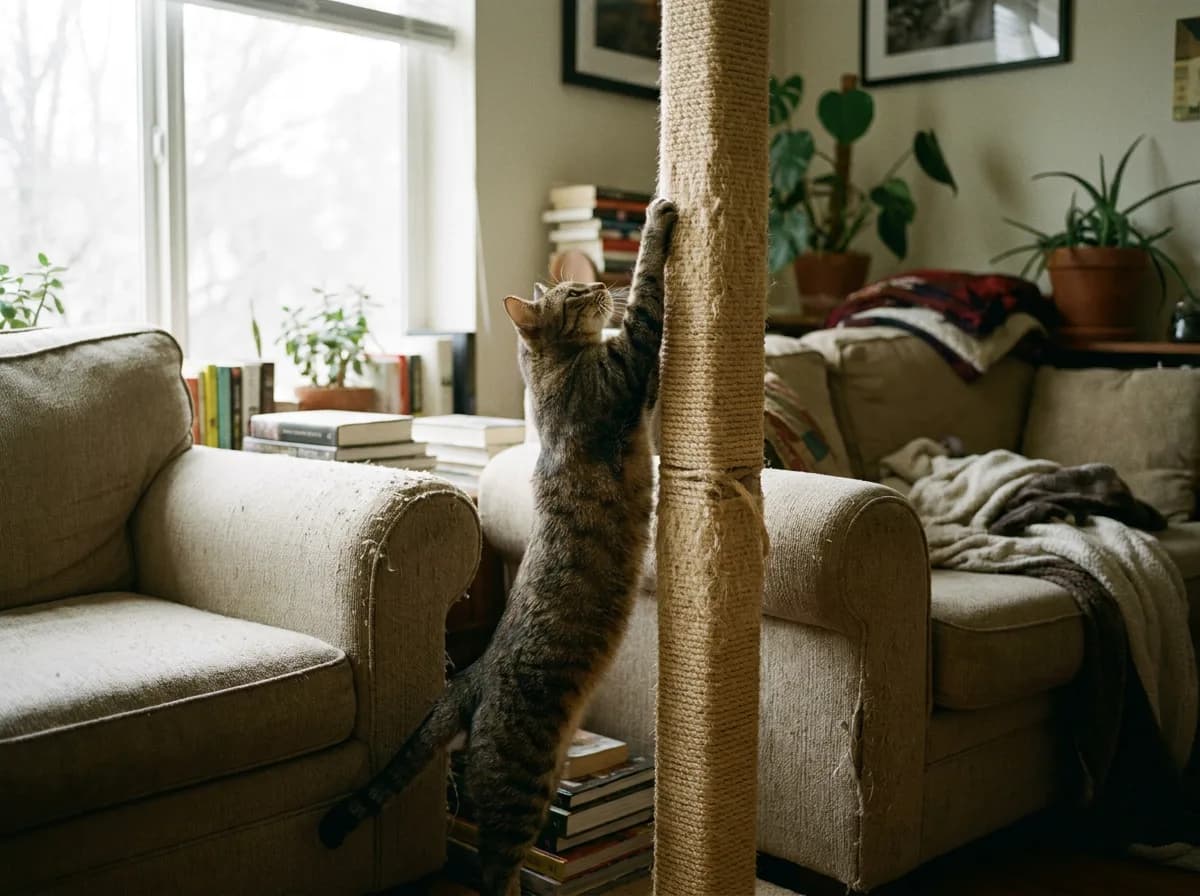
Destructive behavior is one of the most visible and costly signs of anxiety, especially in dogs with separation anxiety. This includes chewing furniture, doorframes, and walls, scratching and digging at exits, shredding bedding or household items, and in extreme cases self-injury from trying to escape a crate or break through a window or door. Veterinary Partner notes that destruction in separation anxiety is typically focused on exit points, doors, windows, and crates, which distinguishes it from ordinary boredom-driven chewing that is more random.

A vet-recommended probiotic supplement that helps dogs manage anxious behaviors and stay calm during stressful events like fireworks.
Petful may earn a commission when you click through to Chewy, at no extra cost to you.
The key diagnostic clue is timing and location. Damage concentrated near doors and windows that happens only when the dog is alone points to separation anxiety, while scattered chewing that happens whether or not anyone is home is more likely boredom or under-stimulation, which calls for a different fix.
When to Consult a Veterinarian
You should consult a veterinarian whenever anxiety is intense, getting worse, causing injury or property damage, or interfering with your dog's quality of life. The American Veterinary Medical Association recommends that any persistent or escalating behavior change be evaluated by a veterinarian, because anxiety can have medical causes and because early professional intervention dramatically improves the odds of a good outcome. Waiting until a dog is hurting itself or the household is at a breaking point makes treatment harder, not easier.
Specific red flags that warrant a prompt visit include self-injury, aggression toward people or other pets, refusal to eat, a sudden change in a previously calm dog, and any anxiety severe enough that your dog cannot be safely left alone or transported. Your regular veterinarian can begin treatment and, for complex cases, refer you to a board-certified veterinary behaviorist.
Diagnosis Process
Diagnosing anxiety is a process of careful history-taking, physical examination, and ruling out medical causes, because there is no single blood test for it. Your veterinarian will ask detailed questions about when the behavior happens, what precedes it, how long it lasts, and what makes it better or worse, often aided by video you record at home of the dog when alone or during a trigger. Pure Paws Veterinary Care, like most behavior-focused practices, emphasizes that owner-recorded video is one of the most valuable diagnostic tools, because dogs frequently behave differently in the clinic than at home.
From that history, the veterinarian builds a behavioral diagnosis, identifying the type or types of anxiety and the triggers, and then designs a treatment plan. For complicated or severe cases, a referral to a veterinary behaviorist, a veterinarian with specialty board certification in behavior, gives access to the deepest expertise.
Ruling Out Medical Conditions
A core part of diagnosis is ruling out medical conditions that can cause or mimic anxiety, which is why a physical exam and often bloodwork come first. Pain from arthritis, dental disease, or injury can make a dog restless, irritable, and clingy. Thyroid imbalances, neurological conditions, and cognitive dysfunction in seniors can all present as anxiety. Cornell University College of Veterinary Medicine stresses that a medical workup should precede any behavioral diagnosis, because treating "anxiety" that is actually untreated pain will fail and prolong the dog's suffering.
Only once medical causes are excluded or addressed does a pure behavioral plan make sense. This sequencing, medicine first, behavior second, protects your dog from being medicated or trained for a problem that has a physical root.
- Conditions like arthritis, dental pain, thyroid disease, and canine cognitive dysfunction can all look like anxiety. Starting anti-anxiety treatment without a veterinary exam can mask a serious medical problem. Always begin with a vet checkup.
 Sponsored
Vet care that's always there
Unlimited video calls and messaging with licensed vets for less than a typical vet visit. One membership covers up to five pets.
Use code Pets60
Plans start at $12/month · covers up to 5 pets
- Licensed vets in most states
- Rx for 150+ conditions
- 4.7 on Trustpilot
Treatment Ladder: From Behavioral to Pharmaceutical
The most effective approach to dog anxiety is a layered ladder that starts with environment and training and escalates to medication as needed. Veterinary behaviorists consistently recommend a tiered plan: modify the environment, teach the dog new emotional responses through behavior work, add calming aids and supplements, and reserve prescription medication for moderate to severe cases, where the AVMA notes it works best in combination with behavior modification rather than alone. The point is to use the least intensive measures that work, while never withholding medication from a dog who genuinely needs it.

Environmental Modifications
The first rung of the ladder is changing the environment to lower stress and give the dog a sense of control and safety. This means creating a dedicated safe space, a covered crate, a quiet room, or a familiar corner with the dog's bed, that the dog can retreat to voluntarily and that is never used for punishment. For noise anxiety, that space should muffle sound, and white noise or calming music can mask thunder and fireworks. The American Kennel Club specifically recommends a quiet, enclosed safe haven combined with sound masking as a frontline storm-anxiety measure.
Other environmental tools include blackout curtains to hide lightning, pheromone diffusers that release a synthetic version of the calming pheromone mother dogs produce, and removing or softening predictable triggers where possible. Environmental modification rarely cures anxiety by itself, but it reduces the baseline stress that everything else builds on.
Behavioral Training and Desensitization
Behavior modification, specifically desensitization and counter-conditioning, is the core long-term treatment for most anxiety and the rung that produces lasting change. Desensitization means exposing the dog to a very mild version of the trigger, so mild it produces no fear, and very gradually increasing intensity over many sessions. Counter-conditioning pairs that trigger with something wonderful, usually high-value food, so the dog's emotional response slowly shifts from dread to anticipation. Veterinary Partner describes this pairing as the evidence-based foundation of anxiety treatment, noting that it must progress slowly enough that the dog never tips into fear, or it can backfire.
For separation anxiety, this looks like graduated departures, leaving for seconds, then minutes, then longer, always returning before the dog panics. For storms, it might mean playing recorded thunder at a barely audible volume while feeding treats. This work takes weeks to months and is where a certified trainer or veterinary behaviorist earns their keep. A complementary tactic for high-energy dogs whose anxiety is fed by under-stimulation is simply more structured exercise and enrichment, as Petful covers in its guide on how to calm down an energetic dog.
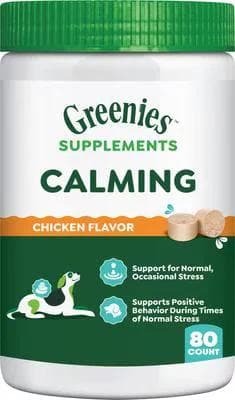
Chicken flavored soft chews that support calm, positive behavior during times of occasional stress like fireworks and storms.
Petful may earn a commission when you click through to Chewy, at no extra cost to you.
Calming Aids and Supplements
Calming aids and over-the-counter supplements form the next rung, useful for mild anxiety or as support alongside training and medication. Pheromone products such as Adaptil mimic the dog-appeasing pheromone and come as diffusers, sprays, and collars. Pressure wraps like the ThunderShirt apply gentle, constant pressure that has a swaddling effect on some dogs. Nutritional supplements with ingredients such as L-theanine, alpha-casozepine (a milk-derived protein), and tryptophan are marketed for anxiety, and some, like the alpha-casozepine product Zylkene, have small supporting studies, though the AVMA cautions that supplement evidence is generally weaker than for prescription drugs and quality varies widely.
These aids are attractive because they are low-risk and need no prescription, but expectations should be realistic. They tend to take the edge off mild anxiety rather than resolve moderate or severe cases, and they work best as part of a broader plan. Tell your veterinarian about any supplement you use, since some can interact with medications.
Natural Calming Products
Natural calming products, including herbal blends, calming treats, and CBD, are a popular subset of aids, but they require a careful, vet-informed eye. Calming treats often combine chamomile, L-theanine, melatonin, and ginger, and many owners find them helpful for predictable, low-grade stress like a car trip or a single fireworks night. Melatonin in particular has modest evidence for noise phobias and is used by some veterinarians, but dosing should be confirmed with your vet. The Tufts Cummings School of Veterinary Medicine notes that while CBD is widely marketed for canine anxiety, rigorous evidence for its effectiveness remains limited and product quality and labeling are inconsistent, so it should only be used under veterinary guidance. For more, see Petful’s guide to noise phobia in dogs.
A crucial safety point: never give a dog a human anxiety product, and check every "natural" remedy with your veterinarian, because some botanicals are toxic to dogs and because melatonin gummies and supplements made for people often contain xylitol, which is deadly to dogs even in small amounts. Natural does not mean safe by default.
Prescription Anti-Anxiety Medications
For moderate to severe anxiety, prescription medication, used together with behavior modification, is the most effective tool, and veterinary medicine has several well-studied options. Two drugs are FDA-approved specifically for canine anxiety: fluoxetine (Reconcile), a daily SSRI approved for separation anxiety, and clomipramine (Clomicalm), a daily tricyclic antidepressant also approved for separation anxiety. These are maintenance medications that take several weeks to reach full effect and are meant to be paired with training. For predictable, short-term triggers like storms or vet visits, veterinarians often add a situational, fast-acting medication such as trazodone or gabapentin, given a couple of hours before the event.
Wedgewood Pharmacy and other veterinary pharmacy resources note that medication choice depends on whether the anxiety is constant or situational, with daily SSRIs and tricyclics for chronic anxiety and shorter-acting agents for episodic triggers. Dosing is always individualized, so frame every dose as something to confirm with your veterinarian rather than a number to self-administer. Used correctly, these medications do not sedate a dog into a zombie; they lower the baseline so the dog can actually learn during behavior work.
- For moderate to severe anxiety, the AVMA notes that the combination of medication and behavior modification outperforms either one alone. The right drug does not change your dog's personality; it lowers the fear enough that training can finally work. Discuss the FDA-approved options, fluoxetine and clomipramine, with your veterinarian.
Prevention Strategies
Many cases of dog anxiety can be prevented or softened through early socialization, a predictable routine, and confidence-building, especially when started in puppyhood. The American Veterinary Medical Association and the American Kennel Club both emphasize that the sensitive socialization window, roughly 3 to 14 weeks of age, is when positive exposure has the greatest lifelong protective effect against fear and anxiety. Prevention is far easier than treatment, so building these habits early pays off for years.
Early Socialization
Early, positive socialization is the single most powerful prevention tool, exposing a puppy to a wide variety of people, animals, sounds, surfaces, and experiences during the sensitive period. The American Veterinary Society of Animal Behavior position statement holds that the benefits of early socialization, including a dramatically lower risk of fear and anxiety, outweigh the small infectious-disease risk of careful exposure before the puppy series is complete. The keyword is positive: every new experience should be paired with treats, play, and calm, never forced.
Socialization is not a one-and-done puppy task. Continuing to expose a dog to novelty in a positive, low-pressure way throughout its first year, and beyond, keeps the confidence built early from fading.

Clinically tested vet-formulated chews with a colostrum calming complex, L-theanine, and thiamine to quickly ease everyday stress, thunderstorms, and anxiety.
Petful may earn a commission when you click through to Chewy, at no extra cost to you.
Establishing Routine
A consistent daily routine reduces anxiety by making the world predictable, which is deeply reassuring to dogs. Regular times for feeding, walks, play, and rest let a dog anticipate what comes next instead of bracing for the unknown. Veterinary behaviorists note that predictability is itself a calming intervention, and that even small consistent rituals, a particular cue before you leave, a set bedtime routine, give an anxious dog something stable to anchor to.
Routine also makes it easier to spot trouble early, because a break from the normal pattern, refusing a meal, skipping a favorite activity, stands out clearly against a stable baseline.
Building Confidence Through Exercise
Adequate physical exercise and mental enrichment build confidence and burn off the nervous energy that feeds anxiety. A tired, fulfilled dog is far less likely to develop or escalate anxious behavior, and structured activities like nose work, food puzzles, and trick training give dogs a sense of mastery that translates into resilience. The American Kennel Club notes that daily exercise appropriate to the dog's age and breed is foundational to behavioral health, not optional.
Exercise is not a cure for clinical anxiety on its own, but as a preventive and supportive measure it is hard to overstate. It lowers baseline stress, improves sleep, and gives both dog and owner a positive shared outlet.
Long-Term Management and Support
For dogs with established anxiety, success comes from long-term management: ongoing veterinary monitoring, professional training support, and a consistent home plan rather than a one-time fix. The American Veterinary Medical Association frames chronic anxiety as a manageable condition much like other long-term health issues, where the goal is sustained quality of life through regular reassessment and adjustment. Expecting a permanent cure from a single intervention sets owners up for disappointment; expecting steady, maintainable improvement is realistic.
Regular Veterinary Monitoring
Anxiety treatment, especially with medication, needs regular veterinary monitoring to track progress and adjust the plan. Dogs on daily anti-anxiety medication typically need periodic rechecks and sometimes bloodwork to monitor organ function, and the dose or drug may need fine-tuning over time. Your veterinarian will also reassess whether behavior work is progressing and whether the dog can eventually taper off medication, which many can once new emotional responses are well established.
This ongoing relationship matters because anxiety can shift, a new trigger appears, a senior dog develops cognitive changes, or life circumstances change. Scheduled check-ins keep the plan matched to the dog in front of you.
Professional Dog Training
A qualified trainer or behavior professional is one of the highest-value long-term investments for an anxious dog. Certified professional dog trainers and certified applied animal behaviorists use positive, science-based methods to run desensitization and counter-conditioning programs correctly, which is harder to do well than it looks. For the most severe or complex cases, a board-certified veterinary behaviorist combines behavior expertise with the ability to prescribe and manage medication.
Avoid trainers who rely on punishment, dominance theory, or aversive tools for anxiety, since these approaches typically increase fear. Look for credentials such as CPDT-KA, CAAB, or DACVB, and ask specifically about experience with anxiety cases.
Holistic and Complementary Approaches
Holistic and complementary approaches can support a core plan, provided they are used alongside, not instead of, evidence-based care. Calming music composed for dogs, massage and gentle handling, pheromone therapy, structured enrichment, and a calm household atmosphere all contribute to a lower-stress life. Some owners explore acupuncture or other complementary therapies with veterinary input. The Tufts Cummings School of Veterinary Medicine encourages an integrated approach where complementary methods are layered onto, and never substituted for, proven behavioral and medical treatment.
The guiding principle for any complementary method is simple: if it lowers stress, is safe, and does not replace the parts of the plan that actually treat the disorder, it can earn a place. Run anything new past your veterinarian, especially ingestible products.
Frequently Asked Questions
Separation anxiety shows up within minutes of you leaving and includes barking, howling, or whining, scratching or chewing at doors and windows, house soiling in a house-trained dog, drooling, and frantic pacing. The defining feature is that the behavior happens only or mostly when the dog is left alone. A pet camera is the easiest way to confirm it, since many owners never see the behavior firsthand.
Dog anxiety usually has more than one cause. The main drivers are genetics and breed predisposition, past trauma or neglect (common in rescue dogs), major environmental or routine changes such as a move or a new work schedule, and, in seniors, age-related cognitive dysfunction. A veterinary exam should rule out pain or illness, which can mimic anxiety, before settling on a behavioral cause.
Treatment follows a ladder. Start by modifying the environment with a safe space and sound masking, then do desensitization and counter-conditioning to change your dog's emotional response to triggers. Add calming aids or supplements for mild cases, and for moderate to severe anxiety work with your veterinarian on prescription medication. The AVMA notes that combining medication with behavior modification works better than either approach alone.
Options range from over-the-counter calming aids like pheromone diffusers (Adaptil), pressure wraps (ThunderShirt), and supplements containing L-theanine or alpha-casozepine, to vet-prescribed medications such as fluoxetine and clomipramine for chronic anxiety or trazodone and gabapentin for situational triggers. Never give a dog a human anxiety medication or a melatonin product that may contain xylitol, and confirm every dose with your veterinarian.
You cannot force anxiety to stop, but you can lower it systematically. Identify the trigger, create a safe space, avoid punishing anxious behavior, and run a slow desensitization and counter-conditioning program so the dog learns the trigger predicts good things. For moderate to severe cases, add veterinary-prescribed medication so the dog is calm enough to learn. Consistency over weeks to months is what produces lasting change.
There is no single best treatment, because the right plan depends on the type and severity of anxiety. For most dogs, the most effective approach is the combination of behavior modification (desensitization and counter-conditioning) with environmental management, escalating to prescription medication for moderate to severe cases. Veterinary behaviorists consider medication plus behavior work the gold standard for serious anxiety, not medication or training alone.
Yes. Two medications are FDA-approved specifically for canine anxiety: fluoxetine (Reconcile) and clomipramine (Clomicalm), both daily drugs for separation anxiety that take a few weeks to reach full effect. Veterinarians also prescribe situational medications like trazodone and gabapentin for predictable triggers such as storms or vet visits. These are prescription drugs that must be dosed and monitored by your veterinarian, never sourced or dosed on your own.
The 3-3-3 rule is a guideline for helping a newly adopted dog decompress, and it matters for anxiety because the stress of rehoming is a common trigger. The ASPCA frames it as roughly 3 days to begin decompressing and feel overwhelmed, 3 weeks to start learning the household routine, and 3 months to feel settled and bonded. It is a framework, not a strict schedule, and giving a rescue dog this much patience and predictability lowers the early anxiety that can otherwise harden into a lasting problem.
Not really. Benadryl (diphenhydramine) is an antihistamine that can cause mild drowsiness, but veterinary sources including PetMD note it is not an anxiolytic, meaning it does not actually reduce fear, it may just make a dog sleepy while its brain still processes the stress. It is not an effective treatment for true anxiety, and you should never give it without checking the dose and suitability with your veterinarian. For real anxiety relief, vet-prescribed medication paired with behavior work works far better.

Allison Gray gained a wealth of knowledge about animal welfare issues and responsible pet care during her nearly 5 years of work for an animal shelter. She is a writer, photographer, artist, runner and tattooed remedial knitter. Allison also has been researching, testing out and perfecting nutritious pet treat recipes in her kitchen for Petful since spring 2017.
Veterinarian · BVMS, MRCVS
Dr. Pippa Elliott, BVMS, MRCVS, is a veterinarian with nearly 30 years of experience in companion animal practice. Dr. Elliott earned her Bachelor of Veterinary Medicine and Surgery from the University of Glasgow. She was also designated a Member of the Royal College of Veterinary Surgeons. Married with 2 grown-up kids, Dr. Elliott has a naughty Puggle named Poggle, 3 cats and a bearded dragon.
Sign up for expert-backed reviews and safety alerts all in one place.