Signs of Stress in Dogs: Recognize the Signals and Help
Dogs show stress through body language, behavior, and physical signals. Spotting subtle cues like whale eye, tucked tail, and pinned ears helps you catch distress early, plus calming steps and when to call your vet.

BVMS, MRCVS

Petful is reader supported. As an affiliate of platforms like Amazon and Chewy, we may earn a commission when you buy through links on this page. There is no extra cost to you.
The most reliable signs of stress in dogs are body-language shifts that happen before any growl or bite: a tucked tail, ears pinned flat against the head, "whale eye" (the half-moon of white sclera you see when a dog turns its head but keeps watching something), lip licking when no food is around, yawning when the dog is not tired, panting on a cool day, pacing, and a low, crouched posture. According to VCA Animal Hospitals, these subtle cues almost always appear before the obvious ones, which is exactly why so many owners miss the early warning and react only once a dog snaps or shuts down.
Reading these signals is the single most useful skill a dog owner can build. Stress is your dog's way of saying "I am not okay in this moment," and dogs are remarkably consistent about how they say it. This vet-reviewed guide breaks the signs into subtle versus critical, walks through what stress looks like in the situations that trigger it most (around other dogs, at the vet, when left alone, and during big life changes), separates everyday stress from clinical anxiety, and gives you practical, calm-first steps to help.
- 1Stress shows up in body language first (tucked tail, pinned ears, whale eye, lip licking, yawning) long before barking, snapping, or hiding
- 2Context matters: the same tucked tail means something different at the dog park than it does in the vet's exam room
- 3Short-term stress is normal and self-resolving; chronic anxiety lasts, disrupts daily life, and needs a veterinary plan
- 4Calming signals (head turns, lip licks, paw lifts) are your dog trying to de-escalate, so respond by giving space, not pressure
- 5Call your vet for sudden behavior change, aggression, self-injury, or stress that does not settle once the trigger is gone

Sign up for expert-backed reviews and safety alerts all in one place.
Recognizing Signs of Stress in Dogs
The signs of stress in dogs fall into three layers: body-language signals, behavioral changes, and physical symptoms. The American Veterinary Medical Association notes that a dog's stress response is driven by the same fight-flight-freeze physiology people have, so a stressed dog is not "misbehaving," it is reacting to a perceived threat. Learning to read all three layers, rather than waiting for a growl, lets you intervene while your dog can still recover quickly.
Subtle vs Critical: What Every Dog Owner Should Know
Subtle stress signs are the quiet, easy-to-miss cues a dog gives early: a quick lip lick, a single yawn, a brief head turn, a paw lifted off the ground, or a "freeze" where the dog goes still. Critical signs are louder and harder to ignore: trembling, persistent panting, snapping or air-snapping, growling, cowering, trying to flee, loss of bladder or bowel control, or a complete shutdown where the dog stops responding. The escalation usually moves in that order, so catching the subtle layer is what keeps a situation from reaching the critical one.
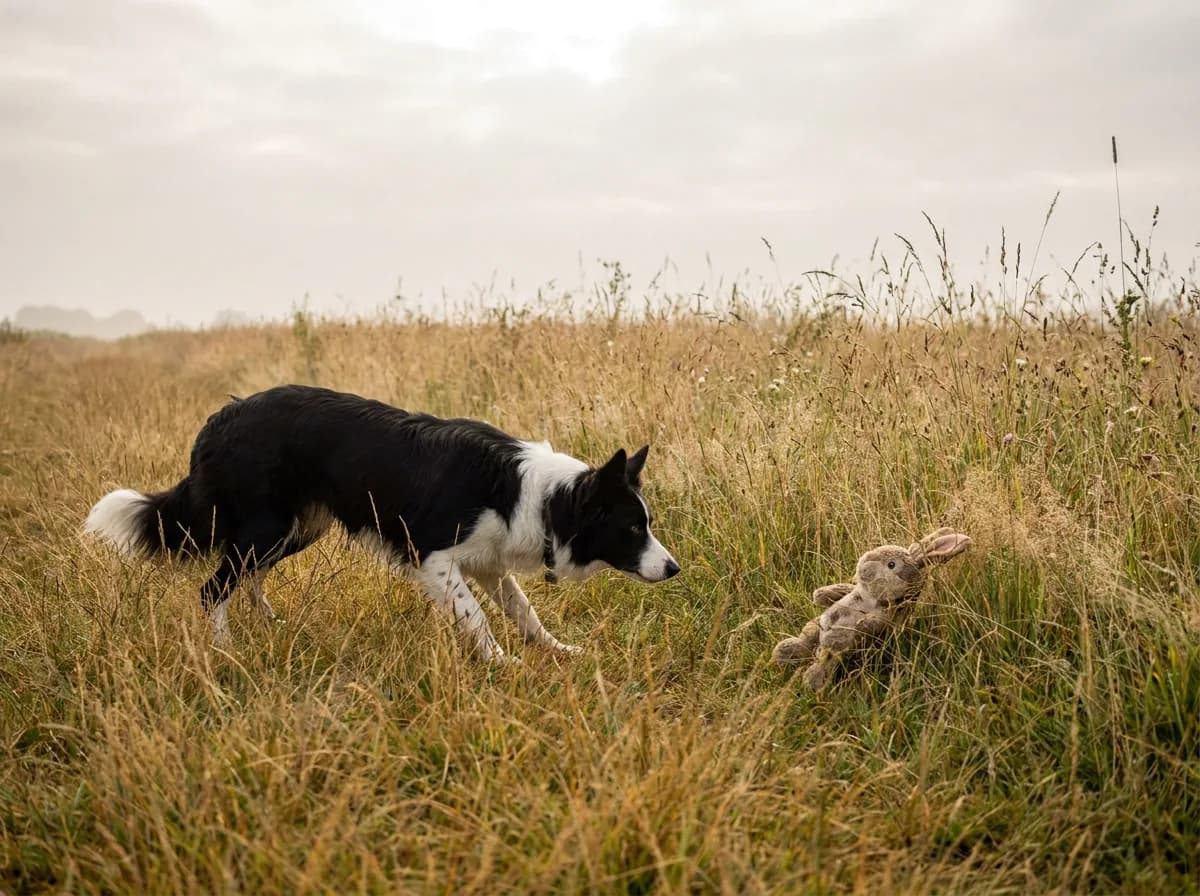
The mistake owners make is assuming a calm-looking dog is a relaxed dog. A dog can be perfectly still and deeply stressed. Stillness paired with a closed mouth, hard staring, and a tense body is a freeze response, not contentment.
- Tail position and motion both matter. A high, stiff, fast wag can signal arousal or threat, while a low, loose wag at hip height usually reads as friendly. A tail tucked tight under the body is fear. Read the whole dog (ears, mouth, weight distribution), never the tail alone.

 Sponsored
Want a vet's help with your dog's anxiety or behavior?
Talk to a licensed vet at Dutch over video, often the same day. They can recommend treatment and prescribe it when it's appropriate.
Use code Pets60
Plans start at $12/month · covers up to 5 pets
- Licensed vets in most states
- Rx for 150+ conditions
- 4.7 on Trustpilot
Body Language Signals
Body language is the first place stress appears, and it is the most honest. Watch the eyes, ears, mouth, tail, and overall posture as a single picture. "Whale eye" (whites of the eyes showing as the dog turns away but keeps the trigger in view) is one of the clearest distress signals. Pinned-back ears, a tucked tail, a lowered or crouched body, raised hackles along the spine, and a tightly closed mouth all point the same direction. For a deeper walkthrough of how dogs communicate visually, see our guide to dog body language.
- Whale eye: crescent of white sclera visible as the dog avoids looking directly at a trigger
- Pinned ears: ears flattened back or sideways against the skull
- Tucked tail: tail clamped low or under the belly
- Crouched posture: weight shifted back and down, making the body smaller
- Raised hackles (piloerection): the strip of fur along the spine standing up, a sign of arousal that can accompany fear or excitement
- Hard, closed mouth: lips tight, no relaxed open-mouth pant
Behavioral Signs
Behavioral signs are the actions a stressed dog takes, and several of them are easy to misread as ordinary habits. Lip licking and yawning out of context (no food present, dog not sleepy) are two of the most common and most overlooked stress behaviors, according to Dogs Trust. Panting when it is not hot or after no exercise, pacing, whining, sudden excessive barking, drooling, and shaking off as if wet when the coat is dry all belong in this group.
- Lip licking and yawning with no food or fatigue to explain them
- Panting unrelated to heat or exertion
- Pacing or an inability to settle
- Whining, whimpering, or sudden barking beyond the dog's baseline
- Shake-off (a full-body shake when dry), often a reset after a tense moment
Physical Symptoms
Physical symptoms are the body-level signs of a stress response and tend to show up with stronger or longer stress. Trembling and shaking, sudden excessive shedding (the "vet clinic blowout" many owners notice), sweaty paw pads leaving prints on the exam table, drooling, loss of appetite, and gastrointestinal upset such as diarrhea can all be stress-driven. Avoidance behaviors belong here too: hiding, turning away, pressing into a corner, or trying to leave the room.
Calming Signals: What Dogs Use to De-escalate Stress
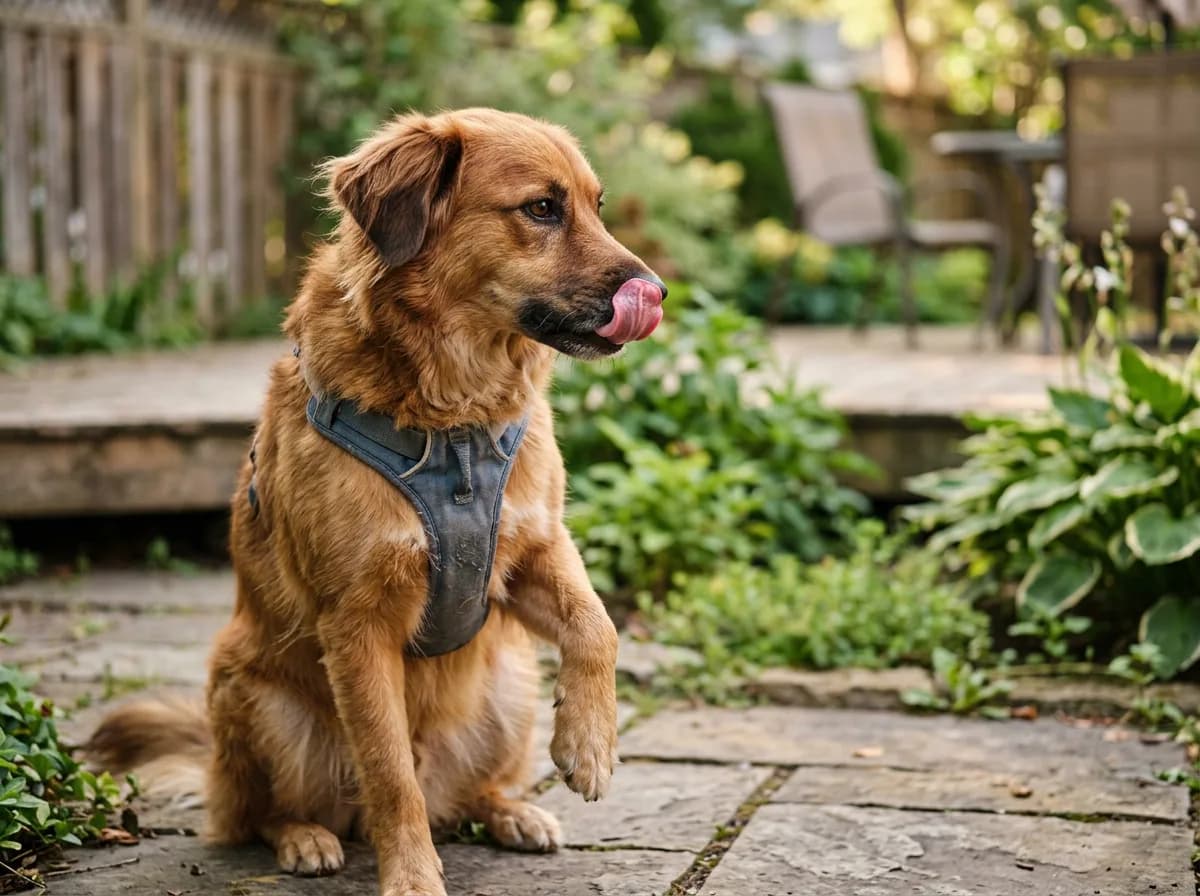
Calming signals are deliberate, low-key gestures a dog uses to defuse tension, both in itself and in others around it. The term, popularized by Norwegian trainer Turid Rugaas and echoed by organizations like Dogs Trust, describes the appeasement language dogs use to say "I mean no harm, please ease off." Recognizing them matters because they are early-warning stress signs and a request for space, so the right response is to reduce pressure, not push closer.
Lowered Head, Turning Away, Lip Licking, Paw Lift, and the Appeasement Grin
A dog throwing calming signals will often lower its head carriage, turn its head or whole body away from the trigger, lick its lips or nose, lift one front paw, sniff the ground suddenly, move in a curve rather than straight on, or flash a "submissive grin" (lips pulled back horizontally, which is appeasement, not aggression). None of these are commands to correct. They are your dog self-regulating.
When you see a cluster of calming signals, the helpful response is to back off, soften your own body language, look away, and give the dog room to reset. Looming over a dog, staring, hugging, or forcing an interaction while it is signaling stress is how a tense moment tips into a defensive snap. Understanding why dogs snap makes clear that most bites are preceded by exactly these ignored signals.
- Dogs read your body. If your dog is signaling stress, slow your movements, unclench your posture, breathe out, and turn slightly sideways instead of facing the dog head-on. Lowering your own intensity often does more to settle a dog than any verbal reassurance.

Peanut butter soft chews with L-theanine, chamomile, and ashwagandha to ease hyperactivity and support calm, relaxed behavior.
Petful may earn a commission when you click through to Chewy, at no extra cost to you.
Stress in Different Contexts
The same stress signs mean different things depending on where they show up, which is why context is the key to reading them correctly. A tucked tail at the dog park, in the vet's exam room, at home alone, or during a household upheaval points to four very different triggers and four different fixes. Below are the four situations that most often overwhelm dogs.
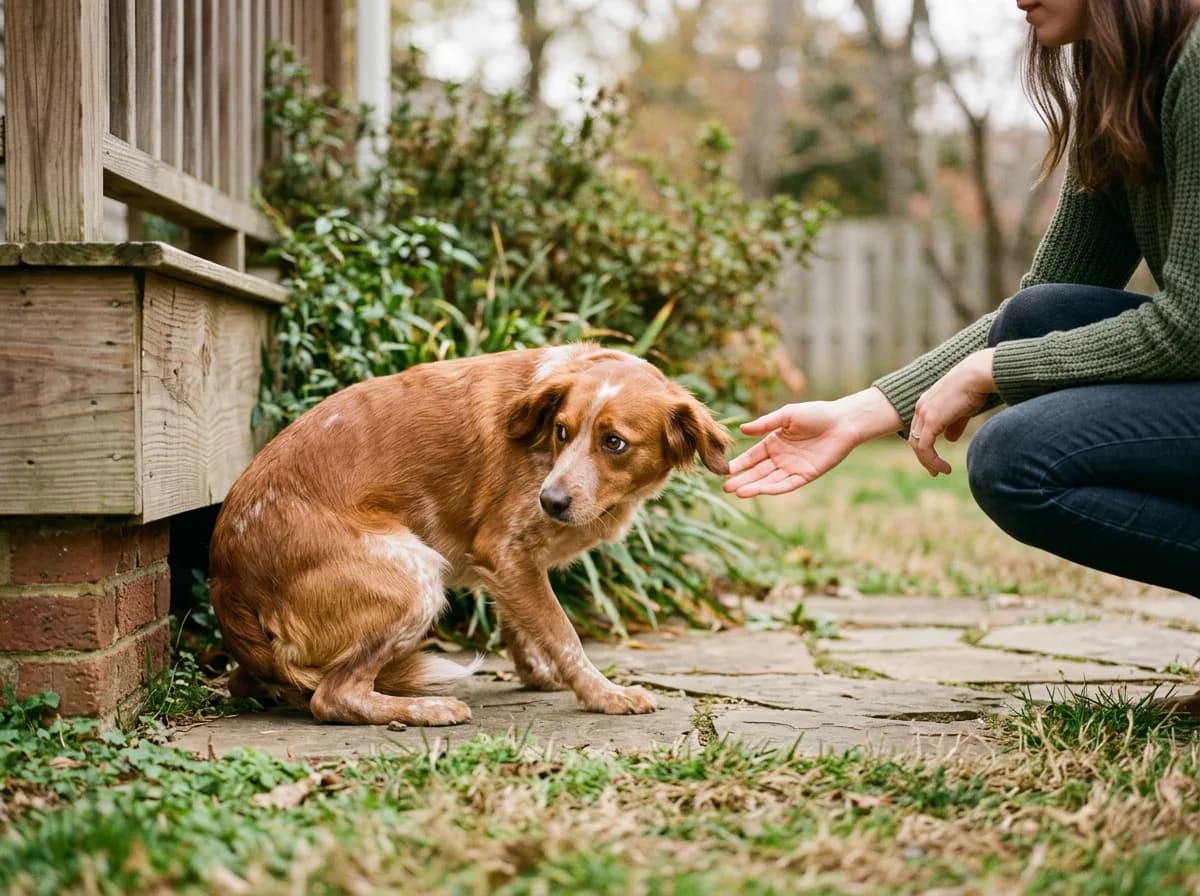
Stress From Other Dogs
Stress around other dogs usually shows up as a freeze, a tucked tail, lip licking, repeated head turns away from the other dog, and attempts to put you or an object between itself and the approaching dog. At an off-leash park or during an on-leash greeting, watch for a dog that goes stiff, lifts a paw, or curves its body away. These are requests for distance. The America's VetDogs service-dog programs stress that handlers should read a dog's consent to interact, not assume it, because forcing dog-to-dog contact through visible stress is a common path to a scuffle. If you see these signs, calmly create space and let your dog disengage.
Stress at the Vet Clinic
Veterinary visits are one of the most predictable stress triggers, and the signs are textbook: backing away, a lowered crouch, yawning, trembling, sweaty paws, sudden heavy shedding, drooling, and sometimes defensive snapping when handled. As Petful's own coverage of dog anxiety at the vet explains, fear at the clinic is a shared problem to solve, not a character flaw, and gradual desensitization plus positive reinforcement (treats, short low-stakes visits) can reshape the association over time. Ask your clinic about Fear Free or low-stress handling appointments, which many practices now offer.
Separation Anxiety
Separation anxiety is stress triggered specifically by being left alone, and it has a recognizable cluster of signs: destructiveness aimed at exits (chewed door frames, scratched doors), house soiling in a house-trained dog, excessive vocalization (barking, howling, whining) that starts soon after you leave, pacing, drooling, and frantic greeting on return. It is distinct from boredom because it is bound to your absence and often begins within minutes of departure. Our full guide to separation anxiety in dogs covers the gradual departure-training that helps most cases. True separation anxiety is a clinical condition, so persistent cases warrant a veterinary or behaviorist plan rather than punishment, which reliably makes it worse.
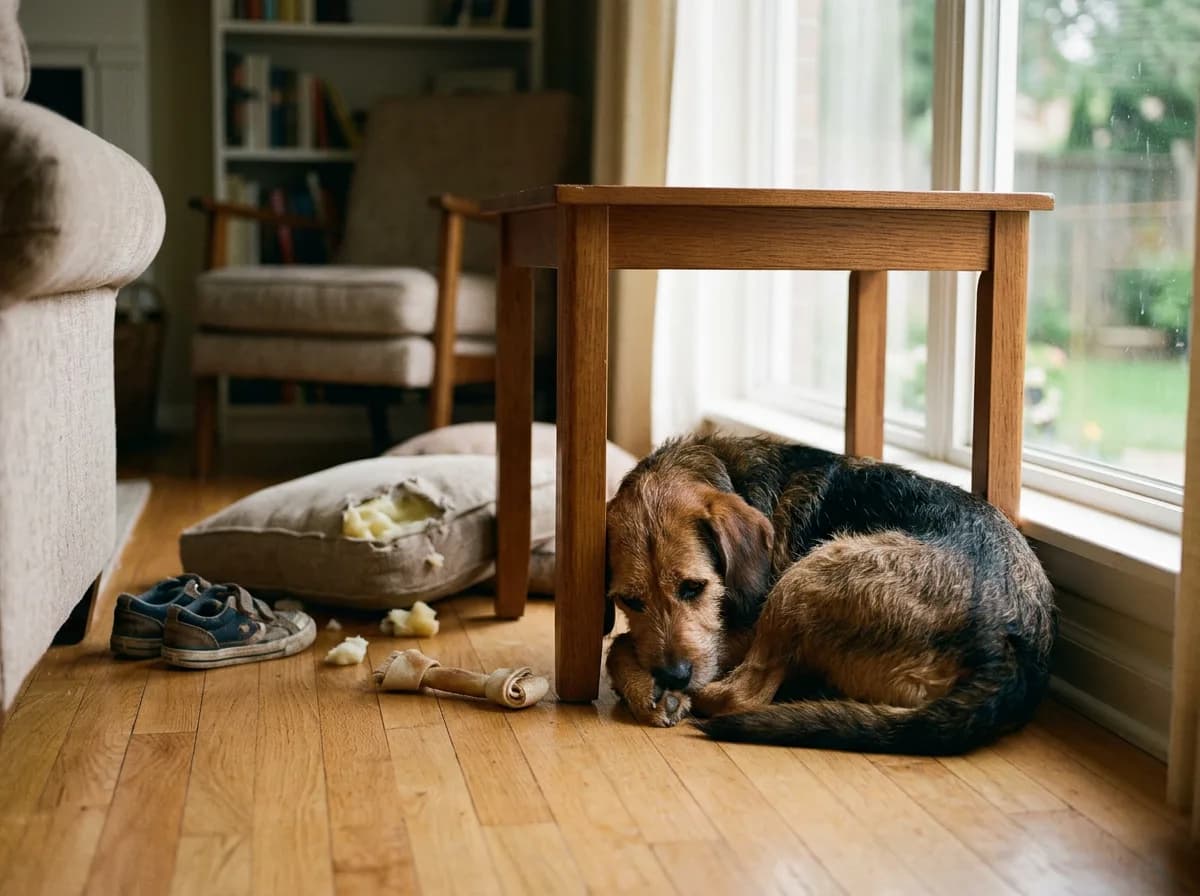
Stress From Life Changes
Dogs are creatures of routine, so disruptions to that routine are a major and underrated stressor. A move to a new home, a new baby or new pet, a schedule change, a household member leaving, renovation noise, or even rearranged furniture can all unsettle a dog. Signs include clinginess, withdrawal, appetite changes, restlessness, regression in house training, and increased vocalizing. When you are adding a new animal, a careful, gradual introduction lowers the stress dramatically; see our steps for introducing a new pet to your dog. Keeping feeding, walk, and sleep times consistent through any big change gives a dog an anchor of predictability.
 Sponsored
Vet care that's always there
Unlimited video calls and messaging with licensed vets for less than a typical vet visit. One membership covers up to five pets.
Use code Pets60
Plans start at $12/month · covers up to 5 pets
- Licensed vets in most states
- Rx for 150+ conditions
- 4.7 on Trustpilot
Stress vs Anxiety: Understanding the Difference
Stress and anxiety are related but not the same: stress is a normal, short-term response to a present trigger, while anxiety is anticipatory distress that persists even when no threat is there. The American Animal Hospital Association frames anxiety as a stress response that has become chronic or disproportionate, and that distinction decides whether you manage the moment or pursue a treatment plan. A dog stressed by a thunderstorm settles once it passes; an anxious dog dreads the next storm for hours or days.
When Stress Becomes Clinical Anxiety
Stress crosses into clinical anxiety when it stops being proportional to the trigger, lingers after the trigger is gone, or starts to interfere with normal life (eating, sleeping, being left alone, walking past the spot where something scary once happened). Generalized anxiety, separation anxiety, and noise phobias are the common clinical forms veterinarians diagnose. Signs that you have crossed the line include self-injury (licking or chewing to the point of sores), panic that cannot be interrupted, and avoidance that shrinks the dog's world. These are veterinary conversations, not training problems alone.
Short-term Stress vs Chronic Anxiety
The simplest test is duration and recovery. Short-term (acute) stress has a clear cause, an obvious peak, and a return to normal once the situation ends, like a dog that pants at the groomer and is fine in the car home. Chronic stress and anxiety have no clean off-switch: the dog stays keyed up, sleeps poorly, may lose condition, and shows stress signs across many situations rather than one. Chronic stress also takes a physical toll, suppressing immune function and digestion over time, which is why persistent anxiety is a health issue and not just a behavior quirk.
| Type of Sign | What It Looks Like | What to Do First |
|---|---|---|
| Subtle / early | Lip licking, yawning, head turns, paw lift, freeze | Identify and remove the trigger; give the dog space |
| Behavioral | Pacing, whining, panting, sudden barking, destructiveness | Redirect calmly to a safe space; do not punish |
| Physical | Trembling, drooling, shedding, appetite loss, diarrhea | Reduce exposure; if it persists, call your vet |
| Critical | Snapping, cowering, fleeing, shutdown, soiling | Stop the interaction immediately; protect the dog and others, then consult your vet |
What Triggers Stress in Dogs
Stress triggers fall into three broad buckets: environmental, social, and physical or medical. Knowing which bucket you are dealing with is what makes a calming plan actually work, because removing a loud noise, managing a crowd, and treating a painful joint call for completely different responses.
Environmental Triggers
Environmental triggers are the sensory overloads in a dog's surroundings. Loud noises top the list (thunderstorms, fireworks, vacuum cleaners, construction), and noise phobia is one of the most common anxiety disorders vets see. Crowds, unfamiliar places, car rides, new smells, and sudden changes in lighting or footing (slippery floors) also qualify. Dogs with noise sensitivity often start showing stress before you hear anything, because their hearing detects the storm or the truck first.
Social Triggers
Social triggers come from interactions with other animals and people. Unfamiliar dogs, unfamiliar humans (especially those who approach head-on, loom, or reach over the head), changes in the household, visitors, children who handle a dog roughly, and the loss or addition of a family member or pet all register as social stress. Even well-meaning affection like hugging can read as a threat to a dog that has not opted in.
Physical and Medical Triggers
Physical and medical triggers are the ones owners most often miss: a dog in pain or fighting an illness will show stress and behavior change before anything else points to the problem. The ASPCA and most veterinary behaviorists urge a medical workup whenever stress or anxiety appears suddenly or worsens without an obvious cause, because pain (arthritis, dental disease, ear infections, gastrointestinal trouble) and age-related cognitive decline are frequent hidden drivers. New, unexplained stress is a reason to call your vet, not just to adjust the environment.
- A sudden change in temperament, new irritability, or stress with no clear trigger should prompt a vet visit before you assume it is "just behavioral." Pain and illness are among the most common and most overlooked causes of stress signs in dogs, and they are treatable once identified.
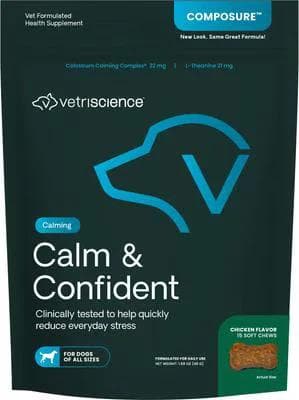
Clinically tested vet-formulated chews with a colostrum calming complex, L-theanine, and thiamine to quickly ease everyday stress, thunderstorms, and anxiety.
Petful may earn a commission when you click through to Chewy, at no extra cost to you.
How to Help a Stressed Dog
Helping a stressed dog comes down to three things: lower the trigger, give the dog a predictable safe space, and know when the situation has outgrown home management. The Humane Society's guidance on stress emphasizes prevention and calm handling over correction, because punishing stress signals only teaches a dog to suppress its warnings, which makes bites less predictable, not less likely.

Immediate Calming Strategies at Home
In the moment, your goal is to reduce intensity and give the dog an exit. Remove or increase distance from the trigger, lower your own energy, and avoid crowding or reaching for the dog. Redirect to a simple known cue (a "touch" or a scatter of treats on the floor) to shift the brain out of the stress loop. Slow, predictable movement and a soft voice help; loud reassurance and fast hands do not. For noise events, muffle the sound with a fan, white noise, or a closed interior room.
- Increase distance from the trigger before doing anything else
- Offer a safe retreat (open crate, quiet room) and let the dog choose it
- Use food scatters or sniffing games to lower arousal
- Keep your own posture loose and your voice low and even
- Do not punish, crowd, hug, or stare during a stress episode
Creating a Safe Space and Routine
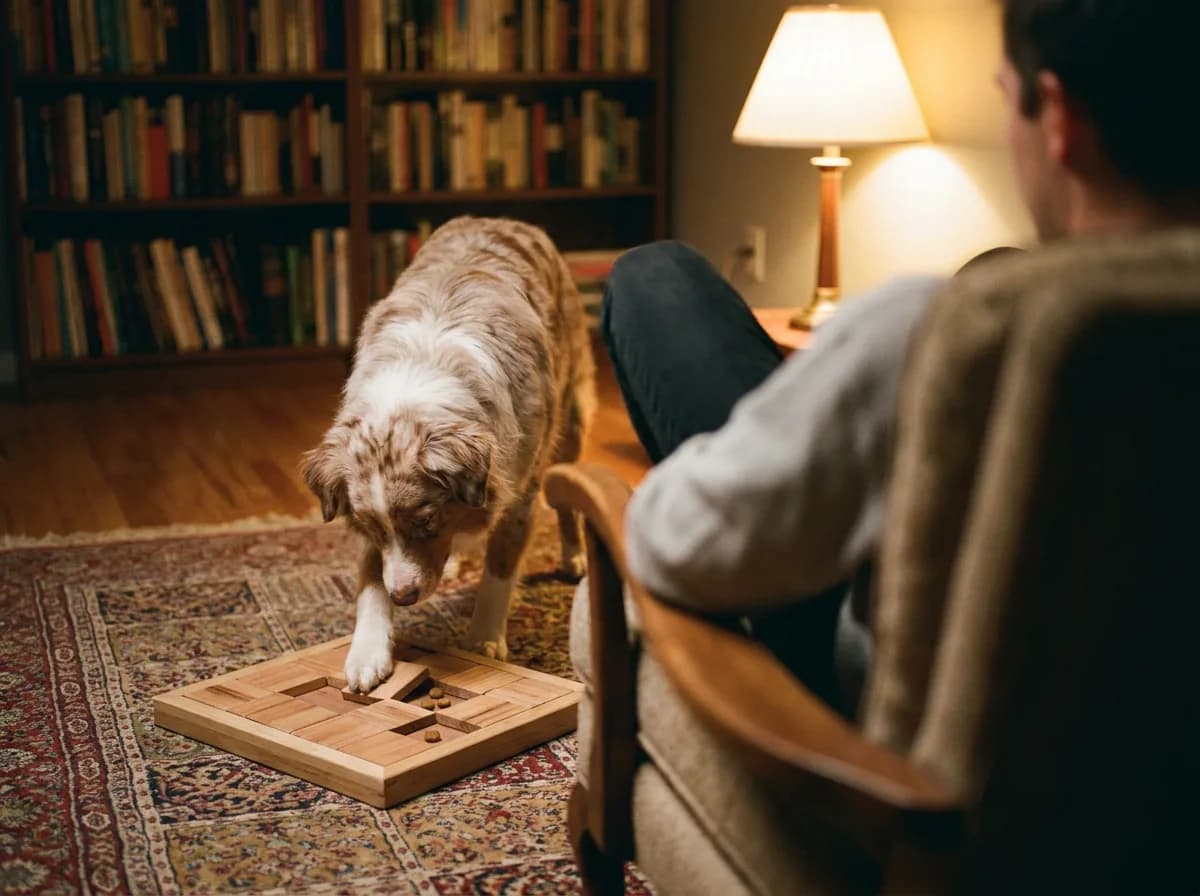
A consistent safe space and daily routine are the strongest long-term stress buffers you can give a dog. Set up a quiet, low-traffic spot with the dog's bed, a few toys, and water, an open crate often works well, and let it be a place the dog is never disturbed or cornered. Keep feeding, walking, and rest times consistent, since predictability is calming. Daily physical exercise and mental enrichment (sniff walks, puzzle feeders, training games) measurably lower baseline stress. Calming aids such as pheromone diffusers or snug body wraps help some dogs, though evidence varies, so treat them as supplements to management, not replacements for it.
When to Contact Your Veterinarian
Contact your veterinarian when stress is intense, persistent, or escalating, when it appears suddenly with no clear cause, or when your dog is harming itself or others. Specific red flags include aggression or snapping, self-injury, panic that cannot be interrupted, loss of appetite lasting more than a day, house soiling in a trained dog, and any stress that does not resolve once the trigger is removed. Your vet can rule out pain or illness, and for true anxiety disorders may recommend a veterinary behaviorist, a behavior-modification plan, and in some cases anti-anxiety medication. Any medication is a vet decision: dosing, drug choice, and monitoring are theirs to set, never something to improvise at home.
- Punishing a dog for growling, snapping, or showing stress teaches it to hide the warning, not to feel safe. A dog that has learned to skip the growl is a dog that bites "without warning." Always address the underlying stress, and get professional help for any aggression rather than suppressing the signal.
FAQ: Common Questions About Dog Stress and Anxiety
The 3-3-3 rule is a guideline for newly adopted or rehomed dogs: roughly 3 days to start decompressing and feel less overwhelmed, 3 weeks to settle into a routine and show more of their real personality, and 3 months to feel fully at home and bonded. It is a reminder to be patient, keep things calm and predictable, and not judge a new dog by its first stressful days.
Five common warning signs are pinned-back ears, a tucked tail, "whale eye" (whites of the eyes showing as the dog looks away), lip licking or yawning with no food or fatigue to explain it, and panting or pacing when the dog is not hot or tired. Any cluster of these means your dog is uncomfortable in that moment.
Build calm with consistency: keep feeding, walking, and rest times predictable, provide daily physical exercise and mental enrichment like sniff walks and puzzle feeders, give the dog a quiet safe space it is never disturbed in, and reward calm behavior rather than only reacting to stressed behavior. Avoid punishment, which raises stress. For lasting anxiety, ask your vet about a behavior plan.
In the moment, increase distance from whatever is stressing the dog, lower your own energy and voice, and offer a safe retreat such as an open crate or quiet room. Redirect with a simple cue or a scatter of treats to break the stress loop, and muffle scary noises with a fan or white noise. Do not crowd, hug, or stare at a stressed dog.
Dogs show affection through soft relaxed eyes and a loose body, gentle leaning or settling against you, a relaxed open mouth, slow tail wags at hip height, bringing you a toy, and calm sustained eye contact (very different from a hard stare). A dog that chooses to relax near you is expressing trust and bonding, which is about as close to "I love you" as canine body language gets.
You manage and reduce anxiety rather than "break" it. The proven approach combines avoiding or minimizing triggers, gradual desensitization and counter-conditioning (slowly pairing the trigger with good things at a distance the dog can handle), a consistent routine, exercise and enrichment, and a vet or veterinary behaviorist plan for moderate to severe cases, which may include medication. Punishment-based methods make anxiety worse.
Six common symptoms are panting unrelated to heat or exercise, pacing or an inability to settle, trembling or shaking, excessive lip licking and yawning, hiding or avoidance, and changes in appetite or digestion such as not eating or having diarrhea. Sudden excessive shedding and drooling are also frequent stress signs.
Stress is often described in four escalating stages: an alarm or trigger stage (the dog notices a threat and the stress response fires), a resistance or coping stage (the dog tries to manage with calming signals or avoidance), an escalation stage if the trigger continues (more intense signs like trembling, snapping, or fleeing), and an exhaustion or chronic stage where prolonged stress wears the body down and can affect health. Catching stress in the early stages is the goal.
Final Thoughts: Responsible Dog Ownership and Stress Prevention
Recognizing the signs of stress in dogs is not about becoming a worrier, it is about becoming a translator. Your dog is communicating constantly through its eyes, ears, mouth, tail, and posture, and the owners who learn that language catch problems while they are still small, easy, and kind to fix. Read the whole dog, respect the calming signals, and respond by lowering pressure rather than forcing the issue.
Most everyday stress resolves on its own once you remove or manage the trigger and give your dog a predictable, safe environment. When stress is intense, sudden, persistent, or aimed at self-harm or aggression, that is your cue to involve your veterinarian, who can rule out pain, diagnose true anxiety, and build a plan. Prevention, patience, and a calm hand are the heart of responsible ownership, and they are what turn a stressed dog into a secure one.
BVMS, MRCVS
Dr. Pippa Elliott, BVMS, MRCVS, is a veterinarian with nearly 30 years of experience in companion animal practice. Dr. Elliott earned her Bachelor of Veterinary Medicine and Surgery from the University of Glasgow. She was also designated a Member of the Royal College of Veterinary Surgeons. Married with 2 grown-up kids, Dr. Elliott has a naughty Puggle named Poggle, 3 cats and a bearded dragon.
Sign up for expert-backed reviews and safety alerts all in one place.