Dog Car Anxiety: Signs, Causes, and Treatment Steps
Car anxiety affects many dogs and can escalate into motion sickness or panic. Discover the root causes, recognize key symptoms, and apply proven desensitization steps, plus calming aids and vet medication options reviewed by a veterinarian.

Veterinarian · BVMS, MRCVS
Petful is reader supported. As an affiliate of platforms like Amazon and Chewy, we may earn a commission when you buy through links on this page. There is no extra cost to you.
Dog car anxiety is the fear, stress, or panic a dog feels before or during a car ride, and it is far more common than most pet parents realize. I have traveled with my pups on road trips for more than thirty years, and I have seen everything from a happy co-pilot to a dog who shakes the moment the engine starts. Whether your dog whines, paces, drools, or refuses to get in the car at all, the good news is that car anxiety responds well to patience, gradual training, and, when needed, help from your veterinarian.
This guide walks through how to tell car anxiety apart from motion sickness, the signs to watch for, a step-by-step desensitization plan, calming aids and supplements, prescription medication options, and the safety gear that keeps every ride secure.
- 1Car anxiety and motion sickness overlap but are not the same, and the fix differs for each.
- 2Gradual desensitization is the core treatment, and it can take weeks to a few months.
- 3Calming aids, pheromones, and vet-prescribed medication can support training in moderate to severe cases.
- 4A crash-tested harness or secured crate is non-negotiable for safety on every trip.

Sign up for expert-backed reviews and safety alerts all in one place.
What Is Dog Car Anxiety vs Motion Sickness
Dog car anxiety is a behavioral fear response, while motion sickness is a physical reaction to movement, and a dog can have one, the other, or both at the same time. Anxiety is driven by stress and learned associations, so an anxious dog often reacts before the car even moves. Motion sickness is triggered once the vehicle is in motion, when the eyes, inner ear, and body send conflicting signals to the brain, which is the same mechanism that makes people carsick.
The distinction matters because the treatments are different. The American Animal Hospital Association notes that young dogs are especially prone to true motion sickness because the ear structures involved in balance are not yet fully developed, and many puppies outgrow it. Anxiety, by contrast, usually needs behavior work to resolve and rarely fades on its own. According to Cornell University College of Veterinary Medicine, fear and anxiety in dogs are best addressed with gradual, positive exposure rather than forcing the dog through the experience, which tends to make the fear worse.
- If your dog gets distressed at the sight of the car keys or an open car door, that points to anxiety. If your dog is fine getting in and only drools or vomits once you are driving, that leans toward motion sickness. Many dogs show a mix, which is why a vet visit helps you target the real problem.
A practical way to separate the two: anxious dogs often refuse high-value treats in the car, fixate on escape, and stay tense the whole ride. A purely carsick dog may climb in willingly, seem normal at first, then drool and get nauseous as the trip continues.
 Sponsored
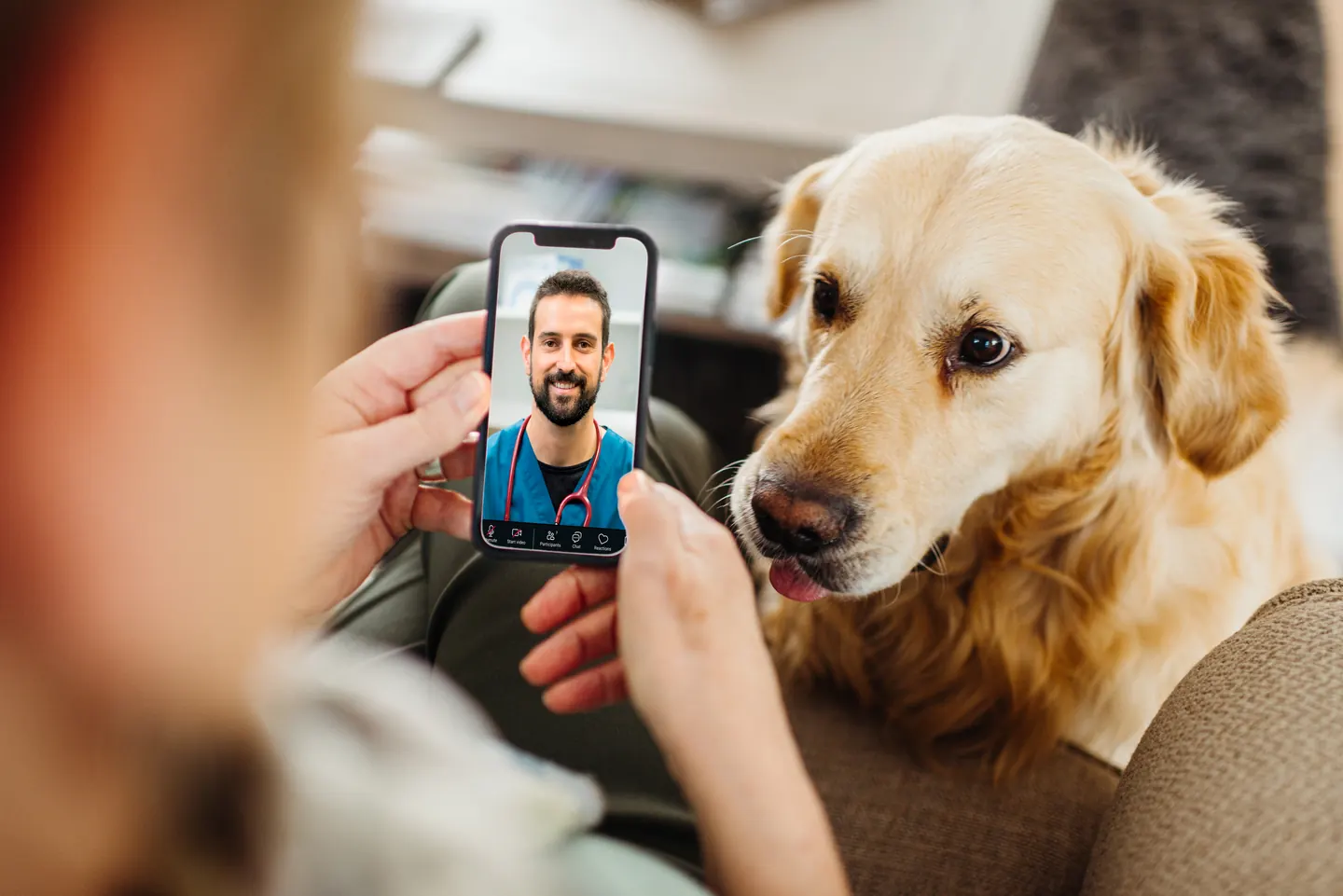
Want a vet's help with your dog's anxiety or behavior?
Talk to a licensed vet at Dutch over video, often the same day. They can recommend treatment and prescribe it when it's appropriate.
Use code Pets30
Plans start at $11/month · covers up to 5 pets
- Licensed vets in most states
- Rx for 150+ conditions
- 4.7 on Trustpilot
What Causes Car Anxiety in Dogs
Car anxiety usually traces back to one or more identifiable triggers, and pinpointing yours shapes the fix. The most common drivers I see, supported by veterinary behavior research, include:
- Lack of early exposure. A dog whose only car trips were to the groomer or vet learns that the car means stress. Puppies who never rode positively during their socialization window are more prone to fear later, though they can still be helped.
- Motion sickness that became fear. A dog who repeatedly felt nauseous on rides can develop anticipatory anxiety, so the queasiness and the fear feed each other in a loop.

Peanut butter soft chews with L-theanine, chamomile, and ashwagandha to ease hyperactivity and support calm, relaxed behavior.
Petful may earn a commission when you click through to Chewy, at no extra cost to you.
- Sensory overload. Fast-moving scenery, engine noise, vibration, and unfamiliar smells can overwhelm a sensitive dog's nervous system.
- Separation anxiety. Some dogs panic at even the slight separation of front seat from back seat, showing whining, panting, and trembling.
- Negative or traumatic associations. A past crash, a hard stop, or being surrendered to a shelter by car can leave PTSD-like reactions, where the dog associates the vehicle with something genuinely bad.
- Insecure footing or unfamiliar restraint. A dog sliding on a slick seat or feeling trapped by a new harness may read the discomfort as a threat.
Sometimes the cause is simply an anxious temperament, certain breeds run more nervous, and that dog needs extra patience rather than a quick fix.
Signs Your Dog Has Car Anxiety
The signs of dog car anxiety range from subtle stress signals to obvious panic, and learning to read the early ones lets you intervene before a ride turns into a meltdown. Some dogs telegraph discomfort with quiet body language long before they bark or shake. The ASPCA describes lip licking, yawning, and a tense posture as common low-level stress signals in dogs, and these often show up first in the car.
Watch for these common symptoms of an anxious dog in a vehicle:
- Refusing to enter the car or actively pulling away from it
- Whale eye, where the whites of the eyes show around the iris
- Lip licking, repeated yawning, or panting that is not heat related
- Excessive drooling
- Whining, barking, or howling in distress
- Trembling or shaking
- Pacing, scratching, or pawing at the windows and seats
- Hiding in the footwell or on the floor
- Diarrhea or accidents in the car
- Refusing high-value treats they would normally take instantly
There is a meaningful difference between mild nervousness and full car anxiety. A nervous dog may hesitate, whine a little, and pant, but settles once the ride is underway. A dog with true car anxiety escalates instead of calming, with severe shaking, frantic barking, total refusal to focus, and symptoms that do not ease and may worsen the longer the drive lasts.
- Before assuming it is anxiety, have your vet check for a physical cause. I once knew a dog who cried every car ride, and it turned out her nails were overgrown and pressing uncomfortably when she braced on the seat. A wellness exam ruled out the simple stuff and pointed us to the real fix. Sudden new car distress in a previously fine dog always deserves a vet look.
Desensitization Steps for Car Exposure
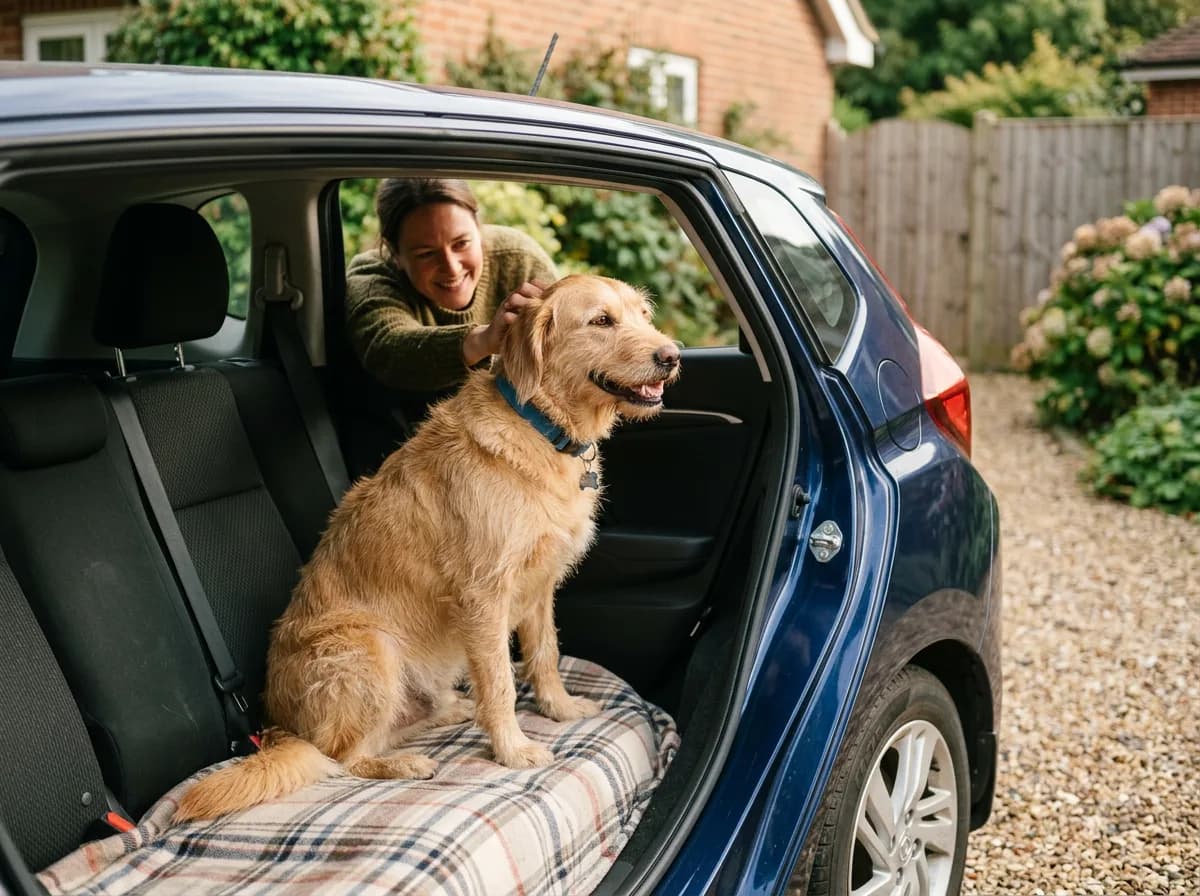
Desensitization means exposing your dog to the car in small, non-scary steps paired with rewards, and it is the single most effective treatment for car anxiety. The goal is to rebuild the car as a place where good things happen, working at a pace slow enough that your dog never tips into panic. Cornell University College of Veterinary Medicine and most veterinary behaviorists agree that counterconditioning, pairing the feared thing with something positive like food or play, is the evidence-based approach for canine fear.

A vet-recommended probiotic supplement that helps dogs manage anxious behaviors and stay calm during stressful events like fireworks.
Petful may earn a commission when you click through to Chewy, at no extra cost to you.
Expect the full process to take several weeks to a few months, depending on how severe the anxiety is. Rushing it backfires. Here is the step-by-step plan I have used with pet parents for years:
| Phase |
|---|
| What You Do |
| Typical Duration |
| Sit Near the Car |
| Reward your dog for calm behavior beside the parked, closed car |
| A few days to a week |
| Get In, Engine Off |
| Coax your dog in with treats and toys, then just sit together, building from one minute to longer |
| About a month |
| Engine On, Still Parked |
| Turn the engine on while parked, reward calm, then turn it off, repeat |
| One to two weeks |
| Short Drives |
| Drive to the corner and back, then around the block, rewarding the whole time |
| One to two weeks |
| Build Distance |
| Gradually extend trips, always ending on a good note |
| Ongoing |
A few rules make the difference between progress and a setback. Always keep sessions short enough that your dog stays under threshold, meaning calm and willing to take treats. If your dog refuses food or starts to panic, you have moved too fast, so back up to the last step where they were comfortable. Pair the car with high-value rewards your dog only gets here, and never use the car as a launchpad to scary destinations during training. End every session before your dog gets stressed, not after.
- Once your dog is comfortable with short rides, drive somewhere fun like a park or a friend with a treat jar, not just the vet. Stacking positive destinations early keeps the car from becoming a one-way ticket to bad places. Bring a second person along for the first few moving trips so someone can reward your dog without distracting the driver.
If you hit a plateau, troubleshoot rather than abandon the plan. Refusing treats almost always means the session is too intense, so shorten it or increase the distance from the car. If your dog does fine parked but panics the instant you move, spend more time on the engine-on, still-parked phase before any driving. For dogs whose anxiety is tangled up with nausea, treating the motion sickness first, often with vet guidance, removes a major obstacle so the behavior work can actually land.
One honest caveat: a small number of dogs are so deeply car-averse that forced desensitization does more harm than good. If your dog spirals into panic at every attempt, that is a sign to loop in your veterinarian or a behavior professional rather than pushing through. Pairing a short course of vet-prescribed medication with the training can lower your dog's stress enough that the desensitization finally works.
 Sponsored
Vet care that's always there
Unlimited video calls and messaging with licensed vets for less than a typical vet visit. One membership covers up to five pets.
Use code Pets30
Plans start at $11/month · covers up to 5 pets
- Licensed vets in most states
- Rx for 150+ conditions
- 4.7 on Trustpilot
Calming Aids and Supplements
Calming aids and supplements can take the edge off mild to moderate car anxiety, and they work best alongside desensitization rather than as a standalone fix. None of these is a cure, but the right product can lower your dog's baseline stress enough to make training stick. Always clear any new supplement with your veterinarian first, especially if your dog takes other medication.
Here are the main categories pet parents reach for:
- Calming chews and supplements. Often made with ingredients like L-theanine, L-tryptophan, chamomile, or hemp, these chewable treats are easy to dose and avoid the pill-time struggle. Look for products from a brand that carries the National Animal Supplement Council (NASC) Quality Seal or is made in a cGMP-certified facility, which signals tested manufacturing standards.
- Pheromone products. Dog-appeasing pheromone (DAP) mimics the natural calming pheromone a mother dog releases to her puppies. It comes as sprays, collars, and diffusers, and you can mist a spray on the seat or bedding 15 minutes before a ride. It does not work for every dog but is drug-free and easy to try.
- Anxiety wraps. Snug-fitting body wraps apply gentle, constant pressure, similar to swaddling, which can be soothing for some dogs during travel.
- CBD products. Interest in CBD oil for dogs has grown, though the research is still limited and largely anecdotal. If you try it, buy from a manufacturer that provides a certificate of analysis for purity and potency, and talk to your vet about interactions first.

Chicken flavored soft chews that support calm, positive behavior during times of occasional stress like fireworks and storms.
Petful may earn a commission when you click through to Chewy, at no extra cost to you.
Timing matters with calming aids. Most chews and pheromone products work best when given 30 to 90 minutes before the ride, not as you are pulling out of the driveway, so build that lead time into your travel plan. Give any new product a trial run on a low-stakes day before you depend on it for a long trip, since not every dog responds the same way and you want to know what works before it counts.
For a deeper look at the chew category specifically, our guide to recognizing real signs of stress in dogs helps you tell whether a calming product is actually working or whether your dog needs more support.
Medication Options from Your Vet
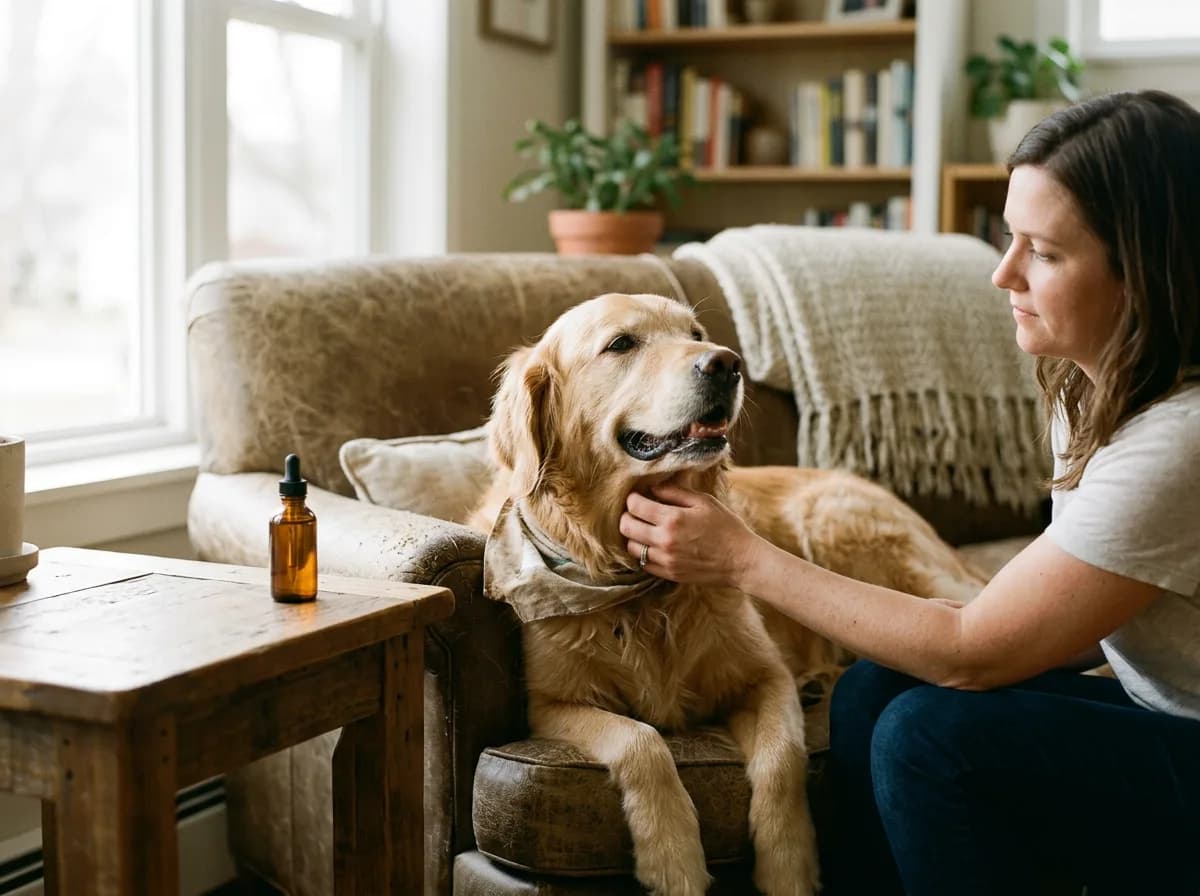
For moderate to severe dog car anxiety, your veterinarian can prescribe medication that supplements have a hard time matching, and these are worth discussing when training alone is not enough. Prescription drugs should always be vet-directed, dosed to your individual dog, and never substituted with human medication, which can be dangerous or fatal for dogs.
Two FDA milestones are worth knowing. For situational anxiety, the U.S. Food and Drug Administration approved Sileo (dexmedetomidine oromucosal gel) on November 19, 2015, as the first drug specifically approved to treat noise aversion in dogs, and vets sometimes use it for other acute, predictable stressors. For travel that triggers vomiting, Cerenia (maropitant citrate) is FDA-approved to prevent vomiting due to motion sickness in dogs, and for the motion-sickness dose it is labeled for dogs 16 weeks of age and older. My own Cocker Spaniel, Sir Alvin, takes Cerenia before long road trips and it has been a game changer for his carsickness.
Commonly discussed options your veterinarian may consider include:
| Medication |
|---|
| Typical Use |
| Notes |
| Sileo (dexmedetomidine) |
| Situational and noise-related anxiety |
| FDA-approved 2015 for noise aversion; given as an oromucosal gel before the trigger |
| Cerenia (maropitant) |
| Motion-sickness vomiting |
| FDA-approved for motion sickness; motion-sickness dose labeled for dogs 16 weeks and older |
| Trazodone |
| Short-term situational anxiety |
| Often used before predictable stressors like car rides |
| Gabapentin |
| Anxiety and stress reduction |
| Frequently combined with other meds for travel |
| SSRIs (such as fluoxetine) |
| Chronic, ongoing anxiety |
| Daily long-term medication, not a same-day travel fix |
- Do not give your dog Benadryl, Dramamine, Xanax, Valium, or any human medication for car anxiety without explicit veterinary direction. Dosing, safety, and drug interactions differ enormously between people and dogs, and the wrong product or amount can cause serious harm. Let your vet choose and dose any drug.
It helps to understand what these medications do and do not accomplish. Same-day situational drugs like trazodone, gabapentin, and Sileo are given before a specific trip to blunt acute stress, and they pair naturally with desensitization. Daily SSRIs such as fluoxetine, by contrast, take several weeks to reach full effect and address chronic, generalized anxiety rather than a single car ride, so your vet would start one well ahead of any travel. Cerenia targets the nausea and vomiting of motion sickness specifically, not the fear, which is why a dog with both problems may need a combination. Whichever route your vet chooses, ask about doing a trial dose at home so you know how your dog reacts before you are on the road.
If your dog's anxiety is severe, involves panic, or makes travel a genuine safety risk, a board-certified veterinary behaviorist can build a combined behavior-and-medication plan. Our overview of managing anxiety in dogs covers how that layered approach works in tougher cases.
Road-Trip Safety and Gear
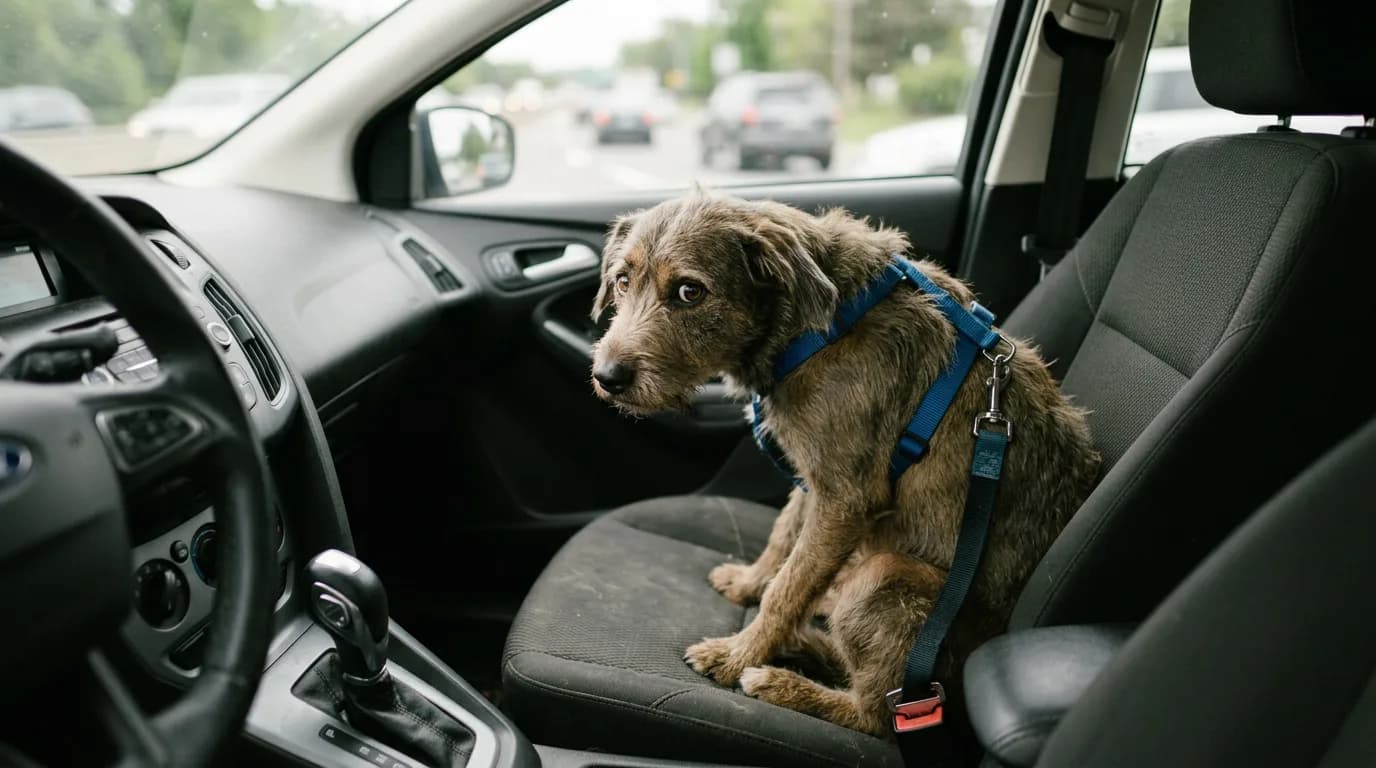
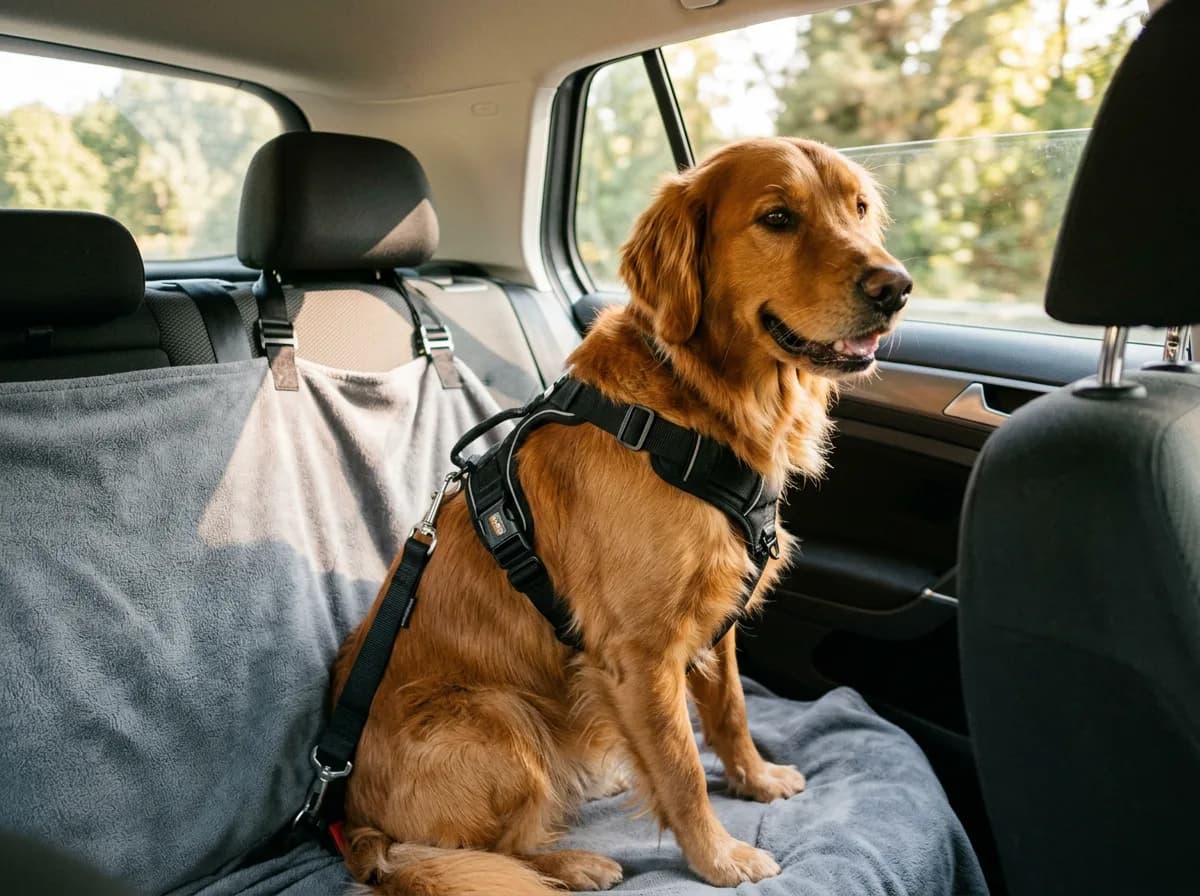
A calm dog still needs to be safely restrained, and proper gear protects your dog, you, and everyone else on the road. The ASPCA recommends that dogs be secured during car travel rather than riding loose, because an unrestrained dog can be injured in a sudden stop and can distract or even endanger the driver. Restraint is not just safer, it can actually reduce anxiety by giving your dog a defined, secure space.

Clinically tested vet-formulated chews with a colostrum calming complex, L-theanine, and thiamine to quickly ease everyday stress, thunderstorms, and anxiety.
Petful may earn a commission when you click through to Chewy, at no extra cost to you.
Your two main options are a crash-tested harness or a secured travel crate:
- Crash-tested safety harness. Look for a harness that has passed independent crash testing and clips to the seat belt. It keeps your dog in place without confining them fully, which suits dogs who feel calmer seeing their person.
- Secured crate or carrier. A properly anchored dog crate can feel like a den and reduce sensory overload for dogs who do better with less visual stimulation. Make sure it is strapped down so it cannot slide.
Beyond restraint, a few travel-day habits make rides smoother. Feed your dog a few hours before departure, since a fairly empty stomach helps with motion sickness. Exercise your dog beforehand, because a tired dog is a calmer passenger. Keep the cabin cool and ventilated, play soft or classical music, and pack a dog travel kit with water, a bowl, waste bags, and any medication. If your dog still struggles with nausea, our guide to motion sickness medicine for dogs covers the vet-backed options in detail.
- As cute as it looks, do not let your dog ride with their head out the window. Wind can overwhelm an already-anxious dog, and rocks or debris can injure the eyes at speed. A cracked window for airflow is plenty.
When to See a Vet for Dog Car Anxiety
See your veterinarian if your dog's car anxiety is severe, sudden, or not improving with patient training, because professional help is a sign of good care, not failure. Any new or worsening distress in a previously calm traveler warrants a checkup to rule out pain, illness, or vision and ear problems. If your dog panics to the point of self-injury, has accidents, vomits repeatedly, or travel has become a safety hazard, do not wait it out. Your vet can rule out medical causes, prescribe appropriate medication, and refer you to a veterinary behaviorist for the toughest cases.
When staying home is genuinely the kinder choice for a particular trip, that is a valid decision too. A trusted pet sitter, doggy daycare, or a friend can keep your dog comfortable while you travel, and there is no shame in choosing the option that keeps your dog calm and safe.
FAQ: Dog Anxiety in Cars
Combine gradual desensitization with a calm environment. Build positive associations by rewarding your dog near and inside the parked car, then for short drives. Keep the cabin cool and quiet, play soft music, use a secure harness or crate, and ask your vet about calming aids or medication if training alone is not enough.
Common causes include lack of early positive exposure, motion sickness, sensory overload from fast-moving scenery and noise, separation anxiety, and negative or traumatic associations such as a past crash or only ever riding to the vet. A vet visit can also rule out pain or illness.
Signs include refusing to enter the car, whining or barking, trembling, excessive drooling, panting, lip licking, yawning, pacing, hiding in the footwell, accidents in the car, and refusing treats they would normally take. Symptoms that escalate rather than ease point to true anxiety.
Plan for several weeks to a few months. Mild cases may improve in a few weeks, while severe anxiety can take longer. The pace depends on keeping each step short and positive, and never pushing your dog into panic, which sets progress back.
Yes, but only under veterinary direction. Vets may prescribe options such as trazodone, gabapentin, Sileo (FDA-approved in 2015 for noise aversion), or Cerenia for motion-sickness vomiting. Never give human medications like Xanax, Valium, or Benadryl without explicit vet guidance.
No. Car anxiety is a behavioral fear response that often starts before the car moves, while motion sickness is a physical reaction to movement once you are driving. Many dogs experience both, and the treatments differ, so a vet can help you target the right one.
Start by rewarding calm behavior near the parked car, then coax your dog inside with the engine off and just sit together. Progress to running the engine while parked, then very short drives, extending distance gradually. Use high-value treats throughout and end each session before your dog gets stressed.
Calming chews with ingredients like L-theanine, L-tryptophan, or chamomile, dog-appeasing pheromone (DAP) sprays and collars, anxiety wraps, and CBD products are commonly used. Choose products with NASC certification or a certificate of analysis, and check with your vet before starting any supplement.
A secured, properly anchored crate can reduce sensory overload and feel like a safe den for dogs who do better with less visual stimulation. Other dogs feel calmer in a crash-tested harness where they can see you. Either way, your dog should always be restrained, never loose.
See your vet if the anxiety is severe, came on suddenly, causes vomiting or self-injury, or does not improve with patient training. A checkup rules out pain or illness, and your vet can prescribe medication or refer you to a veterinary behaviorist for difficult cases.
To help a dog with car anxiety, rebuild a positive association with the car in small steps: feed treats near the parked car, then inside it, then with the engine running, then on very short drives, never moving to the next step until your dog is relaxed. Pair that desensitization with a secure crate or harness, and ask your vet about anti-nausea or anti-anxiety medication for tougher cases.
Dog car anxiety is common, but it is very manageable once you identify the cause and work the problem patiently. Every dog is different, and all of them respond to kindness and positive reinforcement rather than force or frustration. With gradual desensitization, the right calming support, vet guidance when needed, and safe restraint on every ride, most dogs can learn to travel comfortably, and the road trips that follow are worth the effort.

Carol Bryant is the founder FidoseofReality.com and SmartDogCopy.com. A pet product expert, Carol is the Past President of the Dog Writers Association of America (DWAA) and winner of Best Dog Blog. A dog lover of the highest order is how Gayle King introduced Carol when she appeared with her Cocker Spaniel on Oprah Radio’s Gayle King Show to dish dogs. She helps pet, animal, and lifestyle brands achieve copywriting and content marketing success using well-trained words that work and is well-known in the pet industry.
Veterinarian · BVMS, MRCVS
Dr. Pippa Elliott, BVMS, MRCVS, is a veterinarian with nearly 30 years of experience in companion animal practice. Dr. Elliott earned her Bachelor of Veterinary Medicine and Surgery from the University of Glasgow. She was also designated a Member of the Royal College of Veterinary Surgeons. Married with 2 grown-up kids, Dr. Elliott has a naughty Puggle named Poggle, 3 cats and a bearded dragon.
Sign up for expert-backed reviews and safety alerts all in one place.