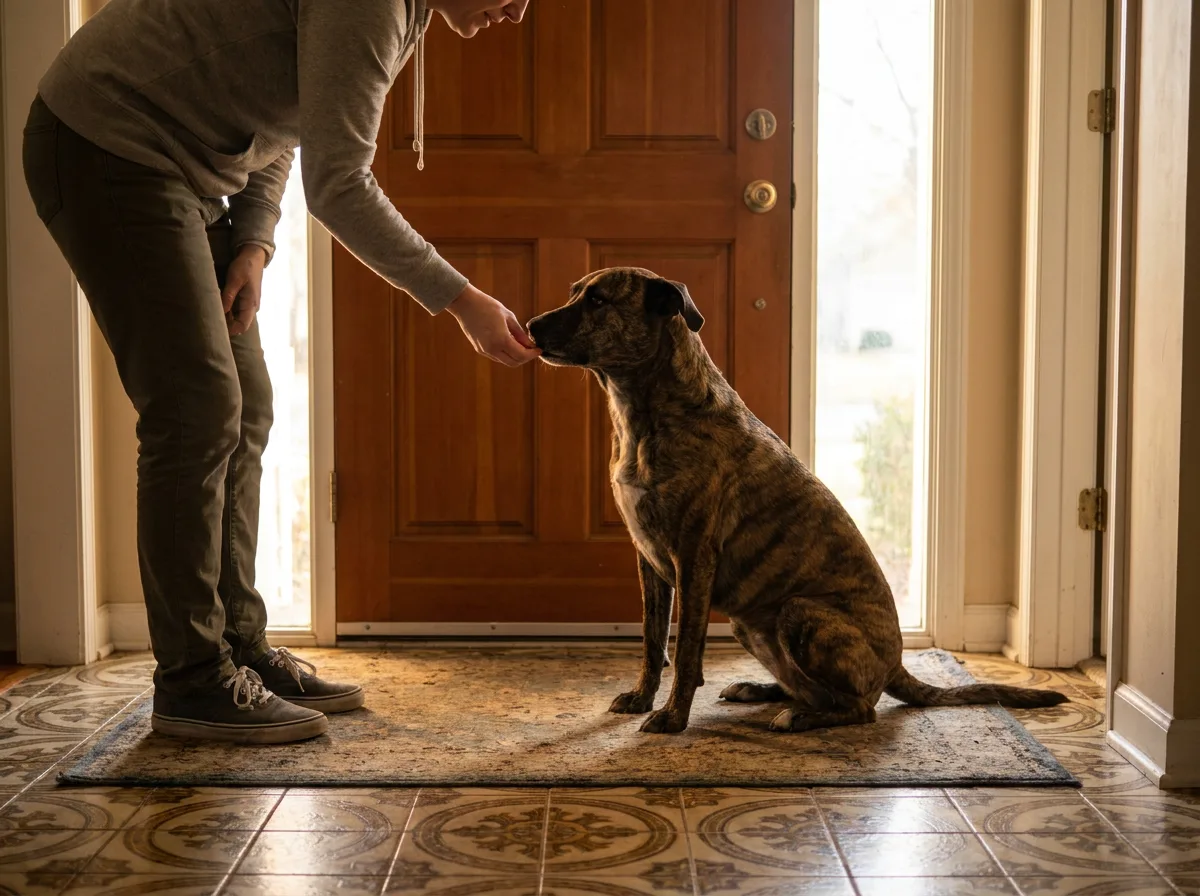
If Your Dog Keeps Running Away, Try These Tips
Here's how to stop this frustrating behavior.

Isn't it always the second you accidentally drop the leash or open the door that your dog runs off? Seemingly deaf to your frantic calls and whistles, he’ll cause a scene straight from vaudeville -- in which you are the bumbling fool chasing after him.
But the real problem is that dogs who get loose are often injured. They chase cars and get hit, fall into ditches or even get into fights with other dogs. It's our responsibility to ensure that doesn’t happen. One way to do that is to invest in proper training.
To learn about best practices, I talked with Jonathan Klein, CDBC, CPDT-KA, who is also a writer here at Petful.
Why Does Your Dog Run?
Dogs will run off for a few reasons, including: Another dog/animal to challenge or investigate Fear To chase cars Food/other temptations
What it really boils down to: There is something much more interesting or less scary "over there" than "over here." “If running away gets him somewhere he’d rather be, he’s likely to run away,” says Jonathan.
As responsible dog people, we must be aware of the lures in our dogs’ environments and prepare to combat them with good training through positive reinforcement.
Indoor Voice, Please
Our first instinct when our dogs take off is to chase them and yell -- we know they could potentially run into danger, and we want to avoid that at all costs. The problem is, our dogs don’t understand that. They only know that we’re mad and we’re chasing after them -- which scares them, so they run faster and farther.
Jonathan puts it this way: “Humans are thinking, ‘Oh no, you’re going to die, you’re my dog and I love you and I don’t want you to die!’ but dogs don’t understand that. Dogs are thinking, ‘Oh no, the longer you chase me yelling, the farther I’m running.’”

Don’t Fib
If your dog does come to you, don’t use that opportunity to scare him.
If you “sweet talk” him over, then start yelling at him, your dog will learn that he can’t trust you, no matter your tone. Your dog needs to know that coming when he is called is a rewarding experience for him -- not a scary one.
What You Can Do to Help Your Dog
First, remember that training takes time. It’s not something that will be concretely reinforced in your dog’s mind for a long time -- and this is a command that you want to practice regularly to keep it fresh.
Second, positive reinforcement is the way to go. You want your dog to know that coming to youis much better than anything he’s going to find out there.
“The object is to teach the dog to do the behavior and then reward him for it, motivate with treats; motivate with play. The object is to make it fun and not let the dog have a chance of failing,” says Jonathan.
When your dog comes to you, praise him like it’s the most amazing thing in the universe. He’ll soon understand that coming to you nets him what he likes best -- your affection.
Check out this video on training a puppy to come to you:
Training Advice
Keep gradually increasing the distractions your dog faces while telling him to come. Start somewhere as isolated as possible, like your living room.
If you live in a rural area, take your dog to a big field, where you will be alone. “If you live in the middle of some rural area, I would go out to the middle of a field and run 100 yards away, then call my dog. What’s the dog going to do? He’s going to come to me. When he does, I praise him,” says Jonathan.
But even if you don’t have a rural area nearby, you can easily use your own living room, backyard or other isolated areas to start. The important thing is to make it a fun, positive and rewarding experience for your dog.
As your dog gets better at coming to you when called, you can gradually move to areas that offer more distractions. Take your time, make it fun and eventually you’ll have a dog who will come to you not just because he has to -- but because he wants to.

Sign up for expert-backed reviews and safety alerts all in one place.

Melissa Smith has been researching and writing about pet behaviors for several years. Her work has been recognized with Certificates of Excellence from both the Dog Writers Association of America and the Cat Writers’ Association. A longtime animal lover, Melissa is a professional pet sitter on Cape Cod through her company, Fresh Start Services.
Sign up for expert-backed reviews and safety alerts all in one place.