Dog Calming Music: Does It Work and the Best Playlists to Try
Dog calming music can reduce stress through genres like classical, reggae, and soft rock, with research showing measurable drops in canine heart rate and cortisol. Learn the best playlists, safe volume and timing, and when music is not enough.

Veterinarian · BVMS, MRCVS
Petful is reader supported. As an affiliate of platforms like Amazon and Chewy, we may earn a commission when you buy through links on this page. There is no extra cost to you.
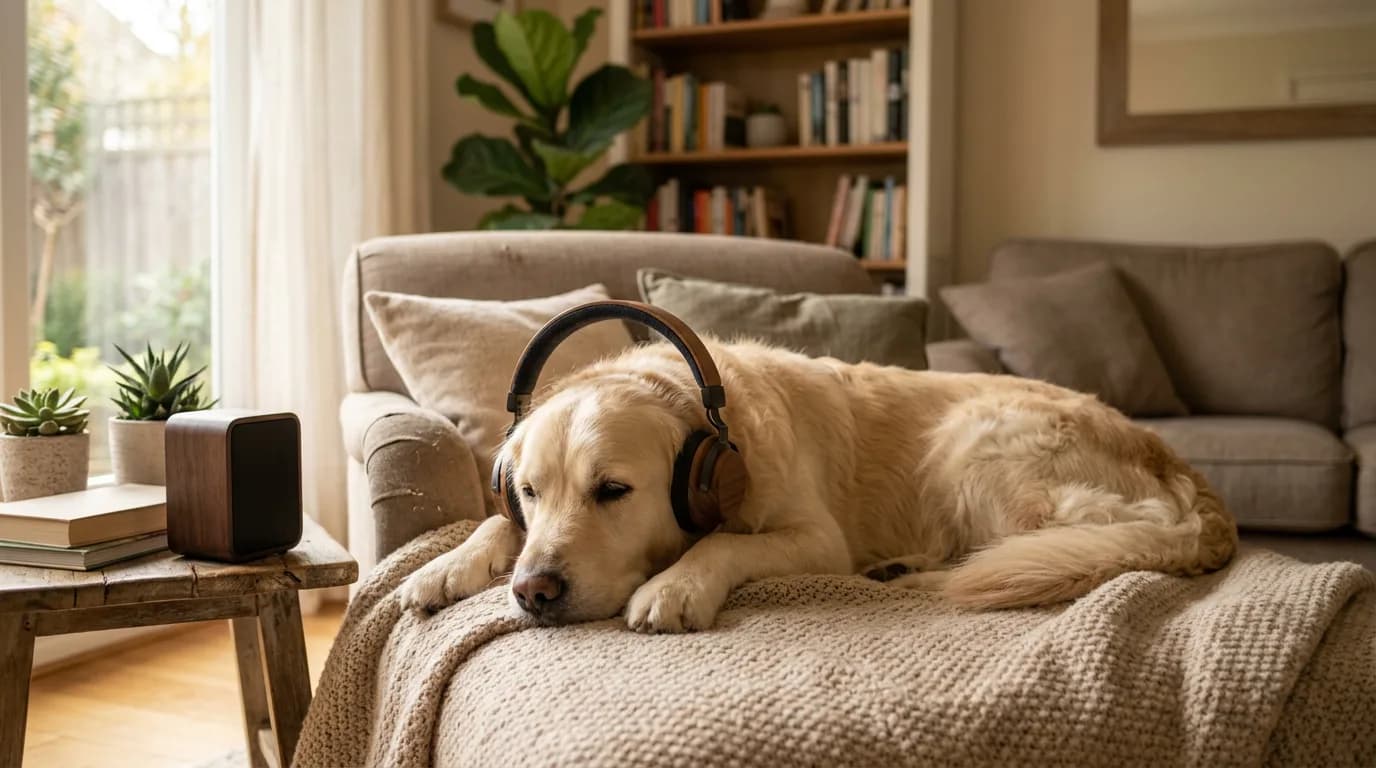
Dog calming music, sometimes called calming music for dogs or calming dog music, is audio, usually slow classical, reggae, soft rock, or specially composed canine tracks, played to lower a dog's stress during storms, fireworks, vet visits, car rides, or time alone. The short answer is yes, it can work: in a landmark Scottish SPCA and University of Glasgow study, kenneled dogs showed a measurable drop in stress, including higher heart rate variability (a sign of relaxation) and more time spent lying down and resting, when music was played in their environment. Music is not a cure for severe anxiety, but as one low cost, low risk tool in a larger plan, the research behind dog calming music is real and surprisingly specific about what actually soothes a dog.
This guide covers the science, the genres that test best, safe volume and timing, where to find free playlists on Spotify and YouTube, and the point at which music alone is not enough and your dog needs a vet.
- 1Peer-reviewed research (University of Glasgow / Scottish SPCA) shows music measurably shifts canine stress markers, raising heart rate variability and increasing resting behavior
- 2Classical, reggae, and soft rock test best; reggae and soft rock produced the largest relaxation response in the Glasgow study
- 3Keep volume moderate (a calm conversational level, roughly 50 to 60 dB at the dog) and rotate genres so the effect does not fade
- 4Music is a support tool, not a treatment for true noise phobia or separation anxiety, both of which need a veterinarian

Sign up for expert-backed reviews and safety alerts all in one place.
Does Dog Calming Music Actually Work?
Yes, dog calming music genuinely works for many dogs, though the effect is modest and varies by individual. The strongest evidence comes from a 2017 University of Glasgow and Scottish SPCA study (Bowman et al., Physiology and Behavior) in which dogs exposed to music showed significantly higher heart rate variability, a physiological sign of lower stress, and spent significantly more time lying down and less time standing. Researchers concluded that auditory enrichment is a practical, drug free way to improve canine welfare in stressful settings.
Music is not magic. It does not override a genuine phobia, and a terrified dog in the middle of a fireworks display will not be cured by a playlist. What music does well is shift a mildly to moderately stressed dog toward a calmer baseline, mask sudden startling sounds, and give an anxious dog a consistent, predictable sensory cue that signals safety. Think of it as one layer in a calming routine rather than a standalone fix.
- The dog music studies tracked objective stress signals, not just owner opinions. The Glasgow and Scottish SPCA work recorded heart rate variability, urinary cortisol, and observable postures such as lying down and standing, while earlier shelter research tracked barking and resting behavior. Music produced real, measurable shifts in those markers, which is why veterinary behaviorists now list it as a legitimate enrichment tool.
The Science Behind Music and Canine Stress
Music affects dogs through the same broad mechanism it affects people: rhythm, tempo, and frequency influence the autonomic nervous system, the part of the body that governs the fight or flight response. Slow, steady tempos (roughly 50 to 60 beats per minute, close to a resting heart rate) encourage the parasympathetic nervous system to take over, which lowers heart rate and muscle tension. The American Veterinary Medical Association recognizes environmental and sensory modification, including auditory enrichment, as part of a complete approach to managing canine anxiety.
Dogs also hear differently than we do. A dog's hearing range runs roughly from 40 Hz up to 60,000 Hz, far above the human ceiling of about 20,000 Hz, which is why some music composed specifically for dogs uses simplified arrangements and frequencies tuned to canine perception rather than human taste. Sudden, high frequency, or chaotic sounds can do the opposite of calming, which is why genre and arrangement matter so much.
Measurable Effects: Heart Rate, Cortisol, and Behavior
The measurable effects of dog calming music documented across the research include higher heart rate variability, more resting behavior, and, in shelter studies, less barking. In the Scottish SPCA and University of Glasgow research, dogs listening to music spent significantly more time lying down and significantly less time standing, and their heart rate variability shifted toward a less stressed profile. Earlier shelter research by Deborah Wells separately found that classical music increased resting and reduced barking compared with other sounds.

Peanut butter soft chews with L-theanine, chamomile, and ashwagandha to ease hyperactivity and support calm, relaxed behavior.
Petful may earn a commission when you click through to Chewy, at no extra cost to you.
One important nuance across this body of work: dogs habituate. The Scottish SPCA team tested multiple genres precisely because dogs in their earlier kennel research grew accustomed to a single repeated soundtrack, so the calming benefit faded as the novelty wore off. The practical fix is variety. Rotating genres helps keep the stress reducing effect alive, a finding that directly shapes how you should build a real world playlist (covered below).

What Music Is Best to Keep Dogs Calm?
The best music to keep dogs calm is slow tempo classical, reggae, and soft rock, with reggae and soft rock producing the largest relaxation response in controlled research. The University of Glasgow study tested five genres, soft rock, reggae, Motown, pop, and classical, and found reggae and soft rock had the strongest calming effect overall, while classical still helped and every genre beat silence. The practical takeaway is that the best genre is not one genre at all, it is a rotation of a few calming ones.
Below is how the leading options compare, followed by a deeper look at each.
| Genre or Program | Why It Works | Best For |
|---|---|---|
| Classical (slow tempo) | Steady 50 to 60 BPM rhythm slows heart rate; widely studied | General daytime relaxation, crate rest |
| Reggae | Strong relaxation response in Glasgow study; steady offbeat groove | Storms, fireworks, high stress events |
| Soft rock | Tied with reggae for top calming effect; gentle, predictable | Alone time, background calm |
| Through a Dog's Ear (psychoacoustic) | Simplified arrangements engineered for canine hearing | Noise phobia, vet and travel anxiety |
| Species specific dog music (RelaxMyDog, etc.) | Frequencies and tempos tuned to dogs, not human taste | Puppies, sound sensitive dogs |
Classical Music and Through a Dog's Ear
Classical music is the most studied calming genre for dogs, and slow, simple classical pieces reliably reduce barking and increase resting behavior. Early shelter research by Deborah Wells found classical music led to more relaxed behavior in kenneled dogs compared with pop, heavy metal, or human conversation, with metal actually increasing agitation and body shaking.
A specialized program called Through a Dog's Ear took this further. Developed by concert pianist Lisa Spector and sound researcher Joshua Leeds, with veterinary neurologist Susan Wagner, it uses psychoacoustic principles, deliberately slowed tempos, simplified solo piano arrangements, and reduced tonal complexity, all engineered to match how dogs process sound rather than how humans enjoy it. The team's own trials in kennels and homes reported calming in a majority of dogs, and separate independent research supports the broader idea: a Colorado State University study by Lori Kogan found that purpose composed and classical music led dogs to spend more time sleeping and less time vocalizing than other sounds.
Reggae and Soft Rock for Dogs
Reggae and soft rock are the two genres that produced the strongest calming response in the University of Glasgow research, outperforming classical, pop, and Motown. The steady, predictable rhythm and moderate tempo of both genres appear to map well onto a relaxed canine state. If you only remember one genre fact from this article, make it this one: reggae is not a quirky novelty for dogs, it is data backed.
That said, the same study is the reason you should not loop a single reggae track forever. Individual dogs had individual preferences, and the calming effect held up best when several genres were mixed. A practical playlist might open with slow classical, move into soft rock, and shift to reggae, then repeat with variation.
- Because dogs habituate to repeated audio, the most effective approach is a rotating mix of classical, reggae, and soft rock rather than one looped track or genre. Many ready made dog playlists already shuffle genres for exactly this reason, so let them shuffle instead of setting a single song on repeat.
Species-Specific Dog Music Programs
Species specific dog music is composed and arranged specifically for canine hearing rather than human enjoyment, using tempos, frequencies, and simplified textures matched to how dogs perceive sound. Programs like Through a Dog's Ear and streaming channels such as RelaxMyDog fall in this category. Because a dog's hearing extends to roughly 60,000 Hz, far beyond the human range, these compositions often strip out busy, layered, or high frequency content that a dog might find overstimulating.
The trade off is that species specific tracks can sound monotonous to human ears, which is by design. They are built to be unobtrusive background audio for the dog, not entertainment for you. For sound sensitive dogs, puppies, or dogs with a history of noise phobia, this engineered approach is often gentler than even slow classical.
Volume Guidelines and Frequency Ranges
For calming music, keep the volume at a soft, conversational level and favor low to mid frequency, slow tempo tracks. Because dogs hear a much wider frequency range than humans (about 40 Hz to 60,000 Hz versus the human 20 Hz to 20,000 Hz), audio that seems quiet and pleasant to you can carry sharp high frequency content a dog finds grating. Slow, bass forward, simply arranged music sits in a comfortable zone for most dogs.
Avoid anything with sudden dynamic spikes, fast tempos, dense layering, or jarring high notes. The goal is steady and predictable. A track that swells from quiet to loud, no matter the genre, can startle rather than soothe.
How to Use Calming Music Safely
To use calming music safely, play it at a moderate volume, introduce it before stress begins, pair it with a comfortable safe space, and combine it with other calming strategies rather than relying on music alone. The AVMA frames anxiety management as multimodal, meaning the best outcomes come from layering several gentle interventions, of which music is one. Used correctly, calming music has essentially no downside, but a few details make it far more effective.
Optimal Volume Levels
The optimal volume for dog calming music is a soft, conversational level, roughly the loudness of a quiet living room, generally in the range of about 50 to 60 decibels at the dog's resting spot. For context, a normal conversation sits around 60 dB and a whisper around 30 dB, so you want background music you could comfortably talk over, not a concert. During genuinely loud events like fireworks, you can raise it slightly so it helps mask the startling outside noise, but never to a level that itself becomes stressful.

A vet-recommended probiotic supplement that helps dogs manage anxious behaviors and stay calm during stressful events like fireworks.
Petful may earn a commission when you click through to Chewy, at no extra cost to you.
A useful rule of thumb: if the music is loud enough to make you raise your voice, it is too loud for your dog. Place the speaker near the dog's safe space, not pointed directly at it, so the sound is ambient rather than blasting.
- Music should make your dog more relaxed, not less. If your dog gets up and leaves the room, pants harder, paces, or seems more agitated after the music starts, lower the volume or switch the track. A worsening reaction means that audio, volume, or timing is wrong for that individual dog, and you should adjust rather than push through.
Timing and Duration for Best Results
For best results, start calming music before a stressful event begins, not in the middle of it. If you know a thunderstorm, fireworks show, houseful of guests, or your own departure is coming, begin the music 30 minutes ahead so your dog settles into a calm state before the trigger arrives. Trying to calm an already panicking dog with music is far less effective than getting ahead of the stress.
Duration is flexible. Music can run for the length of a stressful event, throughout the workday for a dog left alone, or as a nightly wind down routine. The one caveat from the research is variety: rotate genres and tracks over days and weeks so the calming effect does not fade through habituation.
Creating a Safe Space with Music
Calming music works best when it is paired with a defined safe space, a crate, bed, or quiet room your dog already associates with security. Music alone in an open, exposed room does less than the same music layered over a cozy den where the dog can retreat. Set up the safe space with familiar bedding, a favorite toy or chew, and the speaker nearby, then play calming music there consistently so the sound itself becomes a cue that this spot is safe.
Over time the music becomes a conditioned signal: when it plays, the dog knows it is in its secure place and can relax. This is the same principle Petful covers in depth in our guide to how to calm a dog during a storm, where a voluntary den plus layered calming cues outperforms any single product.
Combining Music with Other Calming Strategies
Music is most effective as one part of a multimodal calming plan that may also include exercise, a safe space, pheromone diffusers, calming wraps, and, for clinical cases, veterinary support. The AVMA and veterinary behaviorists consistently recommend combining gentle interventions rather than relying on any one of them. A well exercised dog with a secure den, a pheromone diffuser, and calming music will almost always settle better than a dog given music alone.
For everyday restlessness, pairing music with adequate physical and mental exercise is especially powerful, as Petful explains in how to calm down an energetic dog. And learning to read your dog's body language, covered in our guide to stress signals in dogs, tells you in real time whether the combination is working.
Free Dog Calming Music Sources
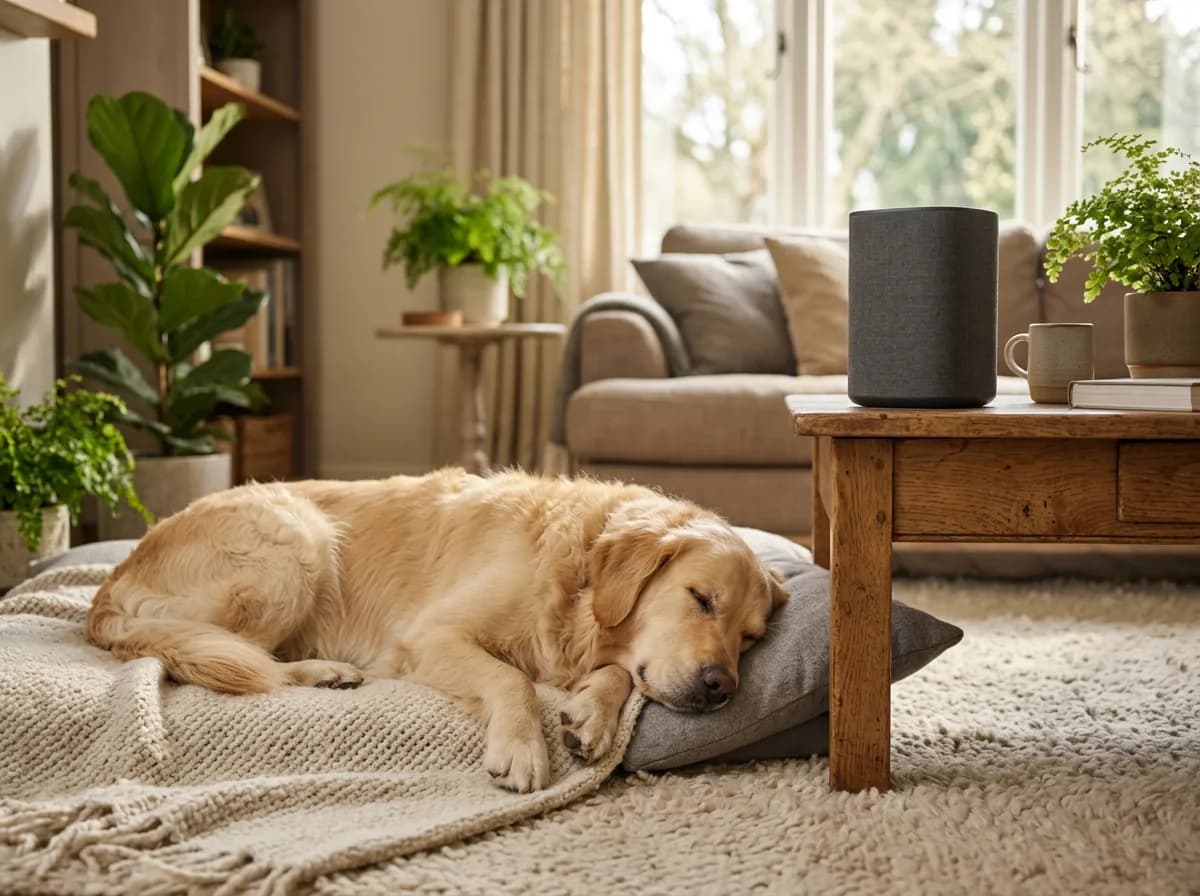
You can find free dog calming music on Spotify, YouTube, and several dedicated apps, with no need to pay for a specialized program to get started. Spotify hosts curated dog relaxation playlists, YouTube has multi hour calming music channels built for dogs, and free apps and websites stream canine specific audio on demand. Below are the best free starting points, plus tips if you want to build your own.
Spotify Playlists for Dogs
Spotify offers free, ad supported access to numerous dog calming playlists, including ones the company built using research on what relaxes pets. Spotify has publicly leaned into pet audio, even launching a Pet Playlist feature that generates a personalized relaxing playlist based on your pet's profile, alongside many user and editorial playlists with names like dog relaxation, calm dog, and music for dogs.

Chicken flavored soft chews that support calm, positive behavior during times of occasional stress like fireworks and storms.
Petful may earn a commission when you click through to Chewy, at no extra cost to you.
To use it free, search dog calming music or relaxing music for dogs in the Spotify app, pick a playlist that mixes slow classical, soft rock, and reggae, and let it shuffle so your dog gets the genre variety the research recommends. The free tier includes ads, but for ambient background calm that is usually a minor interruption.
YouTube Calming Music Channels
YouTube is the largest free source of dog calming music, with dedicated channels offering multi hour, ad light videos engineered specifically for dogs. Channels such as Relax My Dog and Calmradio for pets publish long form videos, often 8 to 15 hours, designed to run unattended while you are out or during a stressful event, with steady tempos and simplified arrangements tuned for canine listeners.
YouTube's advantage is length and zero cost: a single video can cover an entire workday or overnight without restarting. Search dog calming music, music for dogs anxiety, or sleep music for dogs, choose a long video with calming reviews, and play it through a phone, tablet, or smart speaker near your dog's safe space. A premium subscription removes ads, but the free versions are fully usable for background calm.
Free Apps and Websites
Several free or freemium apps and websites stream dog specific calming audio, including RelaxMyDog and various pet relaxation apps available on iOS and Android. These typically offer a free tier with curated canine soundscapes, sleep modes, and timers, with optional paid upgrades for offline downloads or ad removal. Some animal shelters and veterinary sites also host free streaming calming audio you can leave running.
The benefit of a dedicated app over a general streaming service is built in features like auto shutoff timers and modes tagged for specific situations (separation, travel, sleep, thunderstorms), so you are not hunting for the right playlist mid stress.
DIY Music Composition Tips
If you want to make your own calming playlist, build it from slow tempo, simply arranged tracks across classical, reggae, and soft rock, and let it shuffle. You do not need to compose anything from scratch. Choose songs in the relaxed 50 to 60 BPM range, avoid tracks with sudden loud sections or dense, high frequency layering, and assemble 30 to 60 minutes of variety so it does not feel repetitive to your dog.
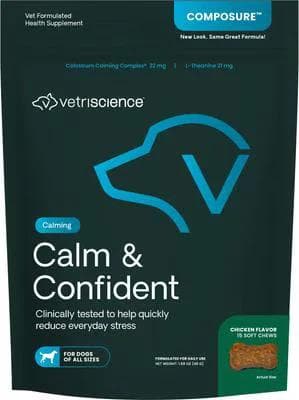
Clinically tested vet-formulated chews with a colostrum calming complex, L-theanine, and thiamine to quickly ease everyday stress, thunderstorms, and anxiety.
Petful may earn a commission when you click through to Chewy, at no extra cost to you.
The key DIY principles mirror the research: slow and steady beats fast and chaotic, variety beats a single looped song, and low to mid frequency, uncluttered arrangements beat busy ones. Save the playlist, start it before stress hits, and refresh the track list every few weeks to fight habituation.
When Music Isn't Enough: Noise Phobia and Separation Anxiety
Music is not enough on its own for true noise phobia or separation anxiety, both of which are diagnosable conditions that often need behavior modification and sometimes medication from a veterinarian. Studies suggest a large share of dogs, by some estimates around a third or more, show meaningful fear responses to loud noises, and severe cases can involve panic, self injury, and destructive escape attempts that no playlist will resolve. Knowing where music's limits are is part of using it responsibly.
Recognizing When Your Dog Needs Veterinary Help
Your dog needs veterinary help when anxiety escalates to panic, self harm, destructive escape attempts, refusing to eat, house soiling despite training, or persistent distress that calming tools do not touch. The American Animal Hospital Association and AVMA classify severe noise aversion and separation anxiety as clinical conditions, not behavior quirks, and they respond best to a structured plan a veterinarian or veterinary behaviorist designs.
Warning signs that you have crossed from manageable nervousness into clinical territory include a dog that injures itself trying to escape a crate or room, breaks teeth or nails on doors and windows, panics so completely it cannot be redirected, or shows anxiety that steadily worsens over weeks. Petful's overview of anxiety in dogs walks through these red flags in detail. At that point, music is a comfort measure, not a treatment, and a vet visit should not wait.
Combining Music with Professional Treatment
When a dog needs professional treatment, calming music becomes a supportive add on to a veterinarian's plan rather than the primary tool. Vets may prescribe anti anxiety medication, situational medications for predictable events like fireworks, or refer you to a veterinary behaviorist for a desensitization and counterconditioning program. Music layers neatly on top of all of these, masking triggers and reinforcing the safe space while the clinical interventions do the heavy lifting.
Never start, stop, or dose any anxiety medication on your own; always ask your veterinarian, because the right drug and dose depend on your individual dog and any other health conditions. Music has no such risk, which is exactly why it pairs so well alongside medical treatment.
Other Calming Approaches Beyond Music
Beyond music, evidence supported calming approaches include pheromone diffusers, compression wraps, adequate exercise, a secure safe space, food puzzles, and, for clinical cases, veterinary behavior therapy and medication. Synthetic dog appeasing pheromone products, for example, mimic the calming signal a nursing mother emits and have research support for reducing stress in some dogs. Compression garments apply gentle, constant pressure that can soothe certain anxious dogs much like swaddling a baby.
For separation related distress specifically, the gold standard is gradual desensitization to being alone, paired with enrichment, as Petful details in our guide to separation anxiety in dogs. Stacking several of these gentle tools, with music as the easy, zero risk layer, gives most dogs the best shot at lasting calm.

Slow tempo classical, reggae, and soft rock are the best genres for calming dogs. In University of Glasgow research, reggae and soft rock produced the strongest relaxation response, while classical also helped and every genre beat silence. Because dogs habituate to repeated audio, the most effective approach is a rotating mix of these genres rather than a single looped track.
Yes. Peer reviewed studies from the University of Glasgow and Scottish SPCA found that dogs exposed to music showed measurable drops in stress markers, including lower heart rate variability stress signals, less barking, and more resting behavior. The effect is real but modest, so music works best as one layer in a broader calming plan rather than a cure for severe anxiety.
Most well adjusted dogs sleep for much of the day when home alone, interspersed with watching windows, chewing toys, and patrolling the house. Dogs with separation anxiety, however, may bark or howl persistently, pace, drool, destroy furniture or doorways, or have accidents indoors. Calming music can help an alone dog settle, but persistent distress signals point to separation anxiety that needs a vet.
Five common calming signals dogs use to ease tension are yawning when not tired, lip or nose licking, turning the head or body away, sniffing the ground, and moving in a slow curved approach rather than head on. These are appeasement behaviors a dog shows to defuse stress, and spotting them helps you tell when your dog is uneasy and may benefit from calming support.
The fastest ways to calm a dog are removing or muffling the trigger, guiding the dog to a familiar safe space, using slow steady petting or gentle pressure, and turning on calming music started before the stress peaks. For an already panicking dog, a quiet den plus your calm presence usually settles it faster than any single product, and severe panic warrants a call to your veterinarian.
Dogs read affection through calm body language, not words: soft slow blinks, relaxed open mouth, gentle petting in spots your dog enjoys, calm time spent together, and a steady soothing voice all communicate affection a dog understands. Calm music and a relaxed safe space reinforce that sense of security, which is part of why dogs associate a soothing environment with feeling loved.
In dog speak, affection is expressed through relaxed, non threatening signals rather than direct staring: soft eyes and slow blinks, a loose wagging body, calm shared presence, gentle touch your dog welcomes, and a soft tone of voice. Creating a calm, predictable environment, including calming music in a safe space, is one more way to tell your dog it is safe and loved.
Keep dog calming music at a soft, conversational level, roughly the loudness of a quiet living room (about 50 to 60 decibels at the dog's resting spot). If it is loud enough to make you raise your voice, it is too loud. During loud events like fireworks you can nudge it up slightly to help mask the outside noise, but watch your dog and lower it if it seems more agitated rather than calmer.
Start calming music about 30 minutes before a known stressful event so your dog settles into a calm state before the trigger arrives. Getting ahead of the stress is far more effective than trying to calm an already panicking dog. The same applies to departures: begin the music before you leave, not as you walk out the door.
See a veterinarian when anxiety escalates to panic, self injury, destructive escape attempts, refusing food, house soiling despite training, or distress that steadily worsens. The AVMA and AAHA classify severe noise aversion and separation anxiety as clinical conditions that often need behavior modification and sometimes medication. At that point music is a comforting support, not a treatment, and the vet visit should not wait.
Calming music for dogs can take the edge off mild to moderate anxiety by lowering arousal and masking sudden triggering sounds, and research shows calming dog music raises relaxation markers like heart rate variability. It works best as one layer of a calming routine, not a cure for a true phobia, which needs a veterinarian.

Coreen Saito is a pet writer and longtime shelter volunteer with more than a decade in animal rescue. She covers cat behavior, breed care, and the small, ordinary science of sharing a life with companion animals, with a particular focus on honest takes about the products and decisions that actually matter. At home in Arizona, she's outranked by Mac (a dog with the loudest opinion in the house), Rebel (a cat who governs by quiet authority), and Meri (an orange tabby who runs the late shift and the laundry basket). She writes about all three, plus the rescues that keep coming through her life, at LifeWithMinty.com.
Veterinarian · BVMS, MRCVS
Dr. Pippa Elliott, BVMS, MRCVS, is a veterinarian with nearly 30 years of experience in companion animal practice. Dr. Elliott earned her Bachelor of Veterinary Medicine and Surgery from the University of Glasgow. She was also designated a Member of the Royal College of Veterinary Surgeons. Married with 2 grown-up kids, Dr. Elliott has a naughty Puggle named Poggle, 3 cats and a bearded dragon.
Sign up for expert-backed reviews and safety alerts all in one place.