Do Cats Get Lonely? The Honest Answer, Signs, and How to Help
Do cats get lonely? Despite their independent reputation, cats form real attachments and can struggle when left alone too long. Here are the signs, the time-alone limits, and the fixes that actually help a solo cat thrive.
Petful is reader supported. As an affiliate of platforms like Amazon and Chewy, we may earn a commission when you buy through links on this page. There is no extra cost to you.
Your cat naps in a sunbeam, ignores you for hours, then demands dinner like nothing happened. So it is fair to ask: behind that cool, self-sufficient act, do cats get lonely when you are not around? The short answer is yes, many cats do, just not in the dramatic, pacing-by-the-door way dogs often show it.
Cats are more socially wired than their aloof reputation suggests. They form genuine attachments to the people and animals they live with, and when those bonds are stretched by long hours alone, too little stimulation, or the loss of a companion, some cats quietly suffer. This guide covers the science of feline loneliness, how to spot a lonely or under-stimulated cat, whether indoor cats get bored, how long a cat can safely be left alone, and exactly how to help a solo cat thrive.
- 1Yes, cats can get lonely. They are social animals that form real attachments, and a 2019 Oregon State University study published in Current Biology found about 65% of cats show a secure attachment style toward their owners, similar to dogs and human infants.
- 2Loneliness in cats usually looks like subtle changes: extra vocalizing, overgrooming, clinginess, litter box lapses, or destructive boredom, not obvious sadness.
- 3Most healthy adult cats handle 8 to 12 hours alone fine; beyond 24 hours they need a sitter or drop-in visits.
- 4Indoor cats can get lonely and bored, but daily play, environmental enrichment, and a predictable routine prevent most of it. No second cat is required for every household.

Sign up for expert-backed reviews and safety alerts all in one place.
Do cats get lonely? What the science says
Do cats get lonely? Yes. Domestic cats are facultatively social, meaning they can live alone but readily form bonds with people and other animals. A 2019 study in Current Biology by Kristyn Vitale at Oregon State University found roughly 65% of cats display a secure attachment to their owners, the same pattern seen in dogs and human babies. When a securely attached cat is left without enough contact or stimulation, loneliness and stress can follow.
This is a big shift from the old myth of the totally independent cat. Researchers now recognize that cats read our routines closely and respond to our presence. A separate 2011 study in the journal Behavioural Processes showed cats and their owners influence each other's behavior in a true reciprocal relationship, which is exactly why your absence registers. Behaviorists sometimes call the result of a solo cat not getting enough interaction single cat syndrome: a cluster of stress and boredom behaviors that show up when one cat's social and mental needs go unmet.
- Loneliness is about missing social contact. Boredom is about a lack of mental and physical stimulation. A cat can be both at once, and the fixes overlap, but knowing which one you are solving for helps you target the right enrichment.

 Sponsored
Want a vet's help with your cat's anxiety or behavior?
Talk to a licensed vet at Dutch over video, often the same day. They can recommend treatment and prescribe it when it's appropriate.
Use code Pets60
Plans start at $12/month · covers up to 5 pets
- Licensed vets in most states
- Rx for 150+ conditions
- 4.7 on Trustpilot
Signs your cat is lonely or under-stimulated
A lonely cat rarely looks sad in an obvious way. Instead, the stress leaks out as behavior changes that owners often misread as spite or a training problem. Watch for these signs of a lonely cat, especially if several appear together or start after a schedule change.
- Excessive vocalizing: Yowling, crying, or constant meowing when you leave or return.
- Overgrooming: Licking or chewing fur to the point of bald patches, a self-soothing behavior.
- Clinginess or shadowing: Following you room to room and refusing to settle when you are home.
- Litter box lapses: Eliminating outside the box, sometimes on items that smell like you.
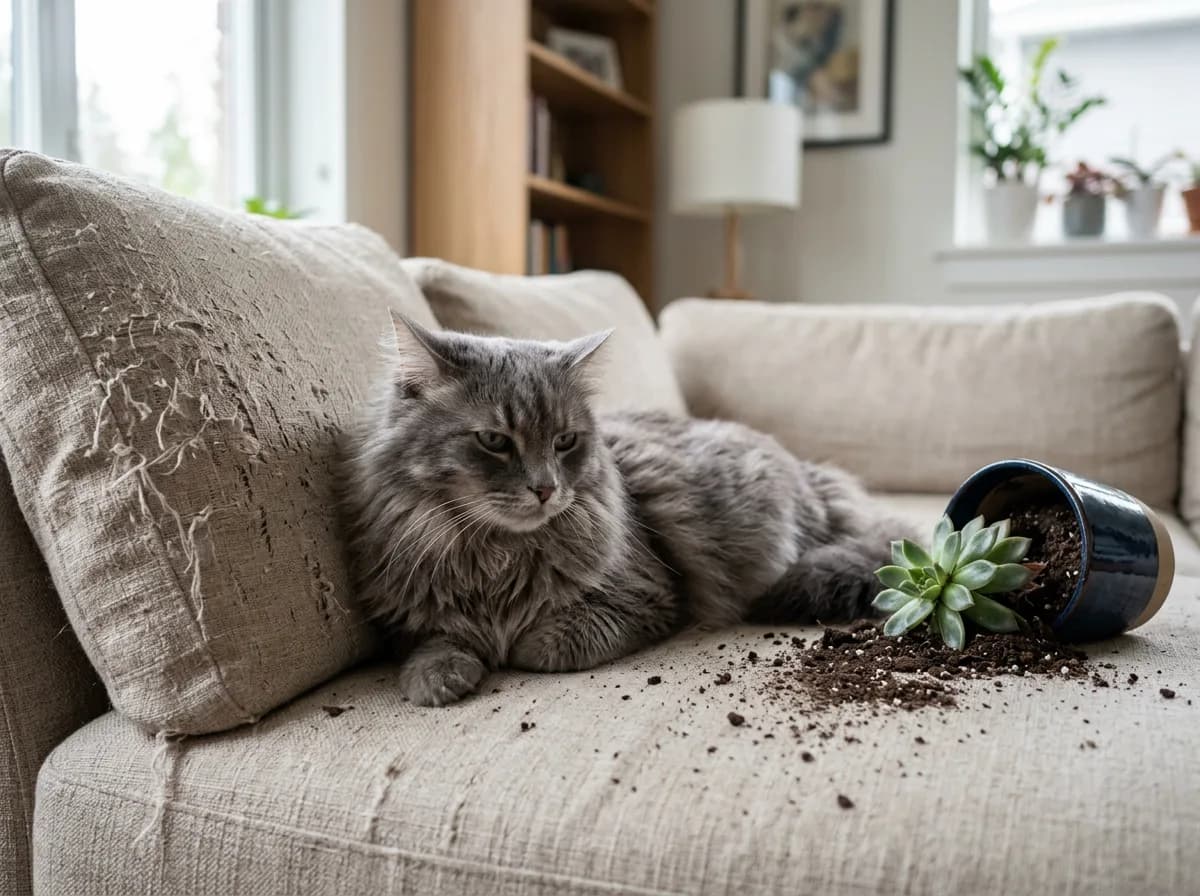
- Destructive boredom: Scratching furniture, knocking things over, or shredding things while you are out.
- Appetite or sleep changes: Eating much less or more, or sleeping even more than a cat's usual 12 to 16 hours.
- Withdrawal: Hiding more, playing less, and seeming generally flat or disengaged.
- Many of these signs (overgrooming, appetite changes, litter box issues) can also signal pain, urinary disease, hyperthyroidism, or other medical problems. Before you chalk a change up to loneliness, have your veterinarian rule out a health cause. Sudden litter box problems in particular warrant a same-week vet visit.

63-inch multi-level cat tree with scratch posts, hammock, plush perches, and dangling toys. Vertical territory is non-negotiable for high-energy climbing breeds like the Bengal.
Petful may earn a commission when you click through to Chewy, at no extra cost to you.
Do cats get lonely when left alone? How long is too long
Do cats get lonely when left alone? Most healthy adult cats tolerate a normal workday of 8 to 12 hours just fine, and Purina notes felines are usually content alone for up to 8 hours. The trouble starts when alone-time stretches past a day, or when a young, senior, or anxious cat is left without check-ins. Use this as a general guide, then adjust for your individual cat.
| Life stage | Comfortable alone | Needs a check-in after |
|---|---|---|
| Kittens under 4 months | 2 to 4 hours | 4 hours |
| Kittens 4 to 6 months | Up to 5 hours | 5 to 6 hours |
| Healthy adult cats | 8 to 12 hours | 24 hours |
| Senior cats (10+ years) | 4 to 6 hours | 8 to 12 hours |
| Cats with medical or anxiety issues | Varies, often 2 to 4 hours | Same day |
Even an adult cat that does fine for a workday should not be left fully alone overnight or longer without someone dropping in. Beyond 24 hours, problems compound: water bowls run dry or get knocked over, litter boxes get foul enough that a cat may stop using them, and a sick cat has no one to notice. For trips, arrange a pet sitter or daily drop-in visits rather than just leaving extra food out. So yes, cats can get lonely when you go on vacation, and the contact a sitter provides is what protects them, not just the refilled bowl.
- If you travel, a sitter who comes twice a day for play and fresh food and water does far more for a lonely-prone cat than a single long visit. The contact and the routine are what your cat is missing, not just the kibble.
Do cats get lonely when you go to work each day?
Do cats get lonely when you go to work? For most adult cats, a predictable daily absence is the easiest kind to handle, because cats are creatures of routine and a steady rhythm is reassuring. The cats that struggle with a workday are usually kittens, seniors, anxious cats, or solo cats with little to do once you leave. The fix is rarely changing your schedule; it is loading the hours you are gone with enrichment (covered below) and bookending the day with play so your departure and return feel normal, not abrupt.
Cats also miss you on longer absences. So will my cat miss me if I leave for 5 days? Likely yes, though behaviorists note much of what looks like pining is really a reaction to the broken routine rather than human-style longing. Cat behaviorist Joey Lusvardi has said it is likely cats do miss us to some degree, but any behavior shift while you are away often traces back to the disruption in their day. Keep feeding, play, and litter on the usual schedule through a sitter and most cats ride out a five-day trip without lasting distress.

Color-changing crystal litter that flags pH shifts in your cat's urine, an early warning sign of UTIs, kidney issues, and more.
Petful may earn a commission when you click through to Chewy, at no extra cost to you.
Do indoor cats get lonely or bored?
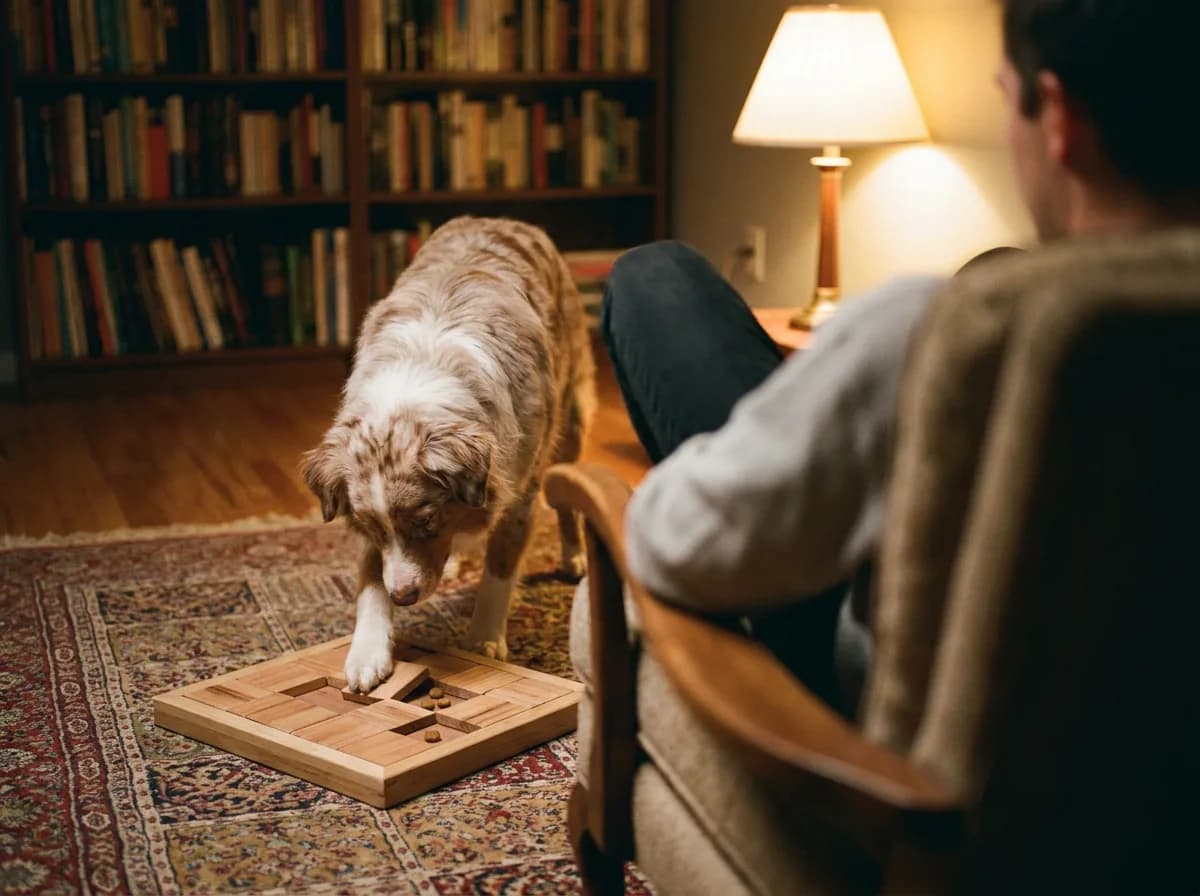
Do indoor cats get lonely? Yes, and in some ways indoor cats are more at risk than outdoor or indoor-outdoor cats, because their world is smaller and depends entirely on what you provide. Indoor cats also get bored easily, since an unenriched home offers little to hunt, climb, or investigate. The fix is not to send them outside, where they face cars, predators, disease, and a far shorter lifespan, but to enrich the indoor space so it stays mentally engaging. Our guides on keeping indoor cats happy and how to keep a cat indoors lay out the enrichment that makes an indoor life a rich one.
Do cats get lonely at night?
Some cats do get lonely at night, especially solo cats, recently adopted cats, and kittens who were used to sleeping in a litter pile. Cats are crepuscular, most active at dawn and dusk, so a cat alone in a quiet, dark house may cry, pace, or come find you for company. A predictable bedtime routine helps: a vigorous play session before bed to spend that hunting energy, a small late meal, and a cozy spot near where the household sleeps. If a cat that used to settle suddenly starts night-yowling, especially a senior, mention it to your vet, since pain and cognitive decline can look like nighttime loneliness.
Separation-related distress: when alone time becomes anxiety
For some cats, time alone goes beyond mild loneliness into genuine separation-related distress, the feline cousin of dog separation anxiety. A 2020 study in PLOS ONE that surveyed cat owners found that about 13% of cats (30 of 223) showed at least one separation-related behavior, with destructive behavior (about 67% of affected cats) and excessive vocalization (about 63%) the most common.
Cats most at risk are those with no other pets in the home, cats kept indoors with little enrichment, cats in homes without a daily routine, and cats that were weaned or separated from their litter too early. The pattern to watch for is distress that clusters tightly around your departures and returns: frantic greeting, urination on your belongings, or destruction that happens only while you are gone.
If that sounds like your cat, our deeper guide to cat separation anxiety walks through causes, symptoms, and a step-by-step desensitization plan. For milder cases, the enrichment steps below usually move the needle.
SponsoredVet care that's always there
Unlimited video calls and messaging with licensed vets for less than a typical vet visit. One membership covers up to five pets.
Use code Pets60
Plans start at $12/month · covers up to 5 pets
- Licensed vets in most states
- Rx for 150+ conditions
- 4.7 on Trustpilot
How to help a lonely or solo cat thrive
The good news: most feline loneliness is very fixable, and you do not always need a second cat to do it. So if you are wondering, my cat is lonely, what should I do, the goal is to meet your cat's needs for contact, mental challenge, and predictability. Work through these in order.
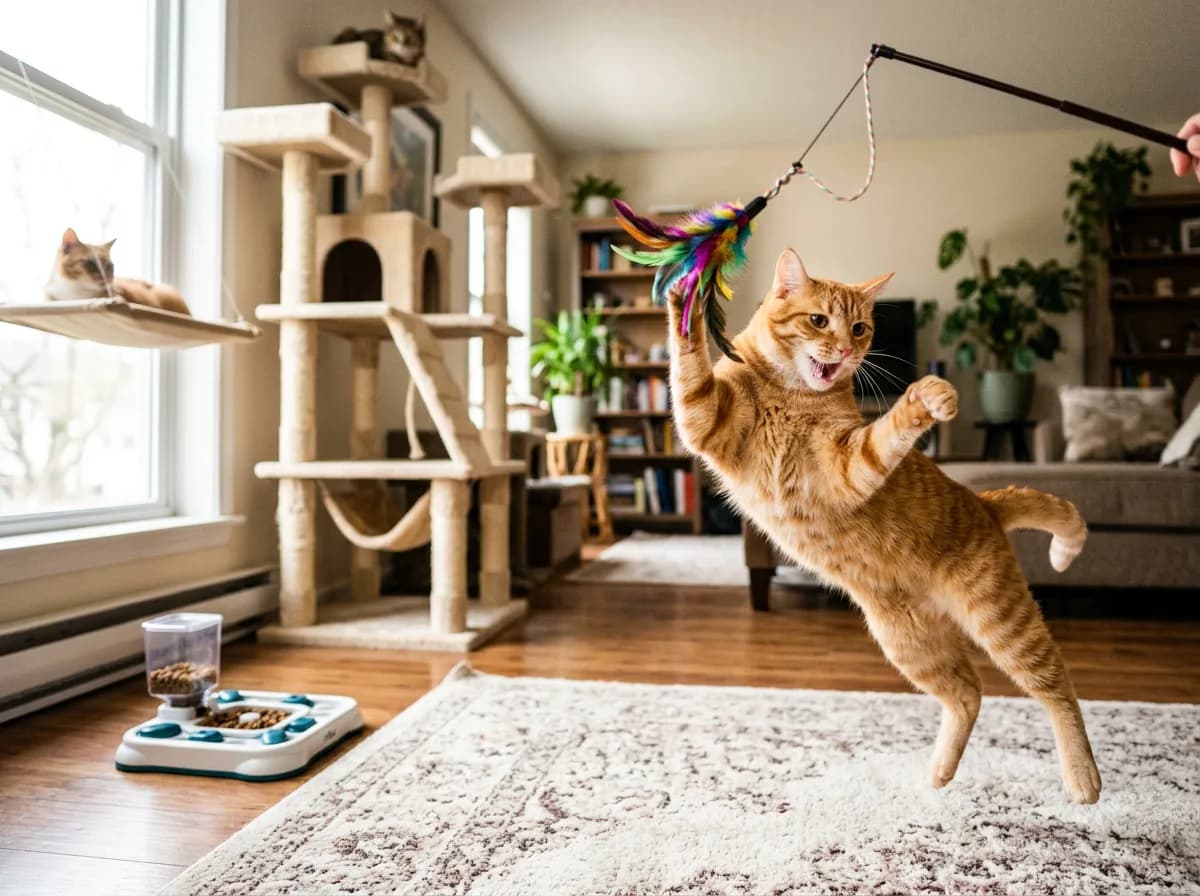
- Schedule daily interactive play. Aim for two 10 to 15 minute sessions with a wand toy that lets your cat stalk, chase, and pounce. The American Animal Hospital Association recommends two or three 10 to 15 minute play sessions a day to keep indoor cats mentally and physically healthy.
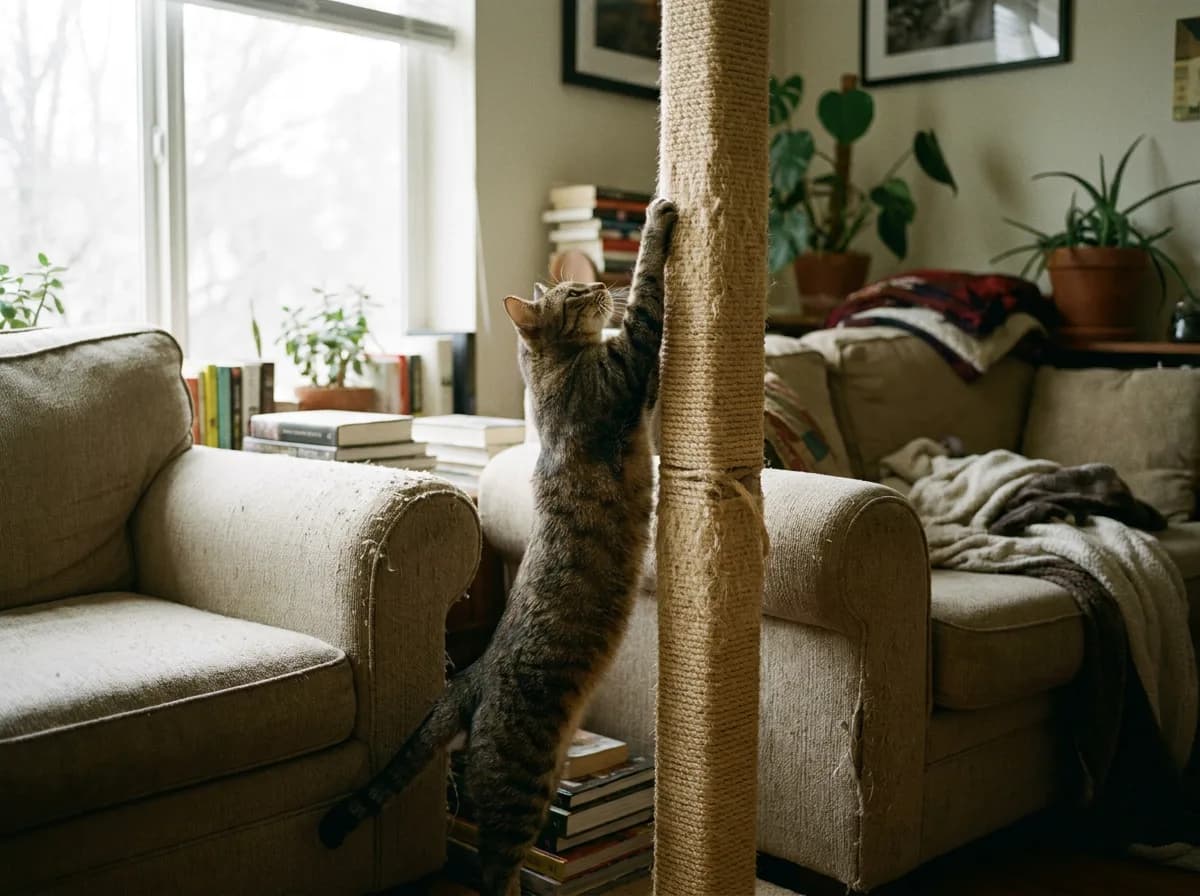
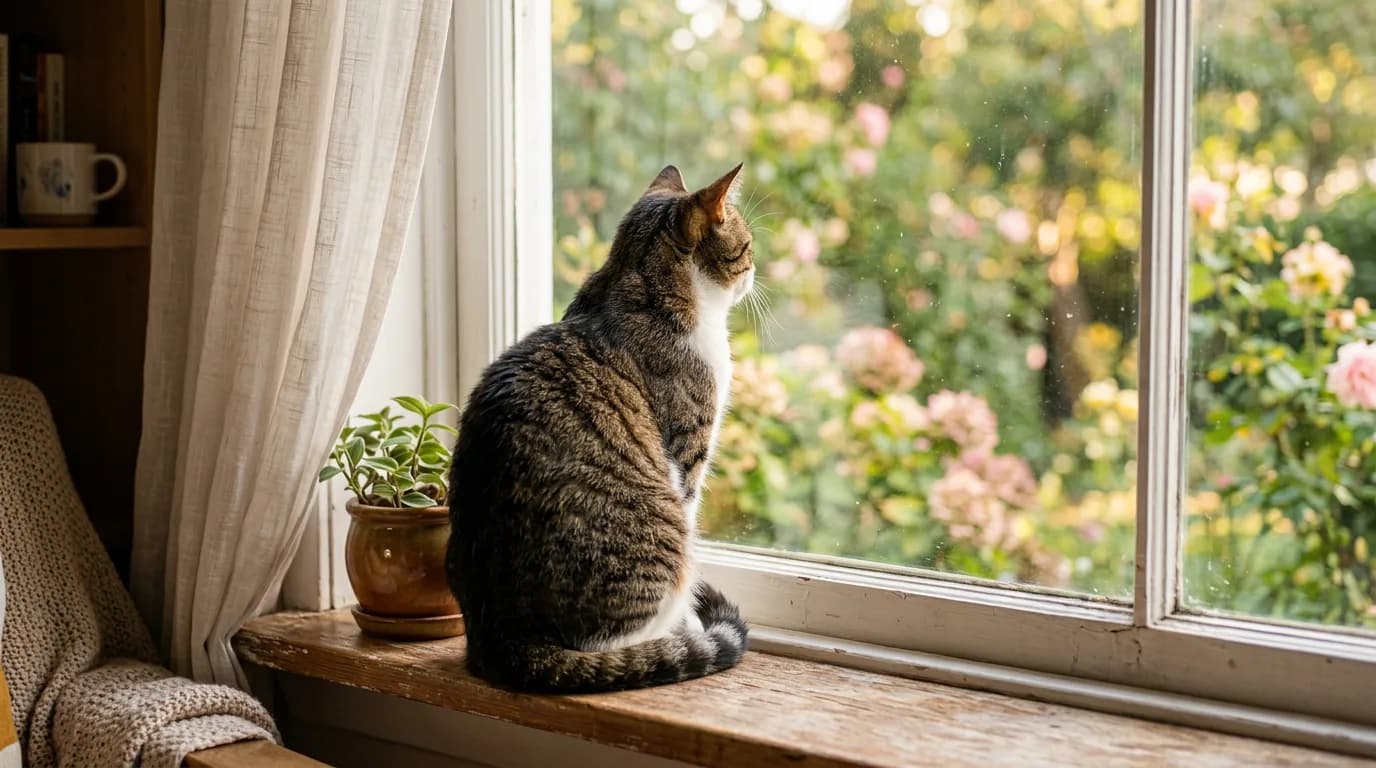
- Build vertical and window territory. A window perch with a bird feeder outside, plus cat trees and shelves, turns a flat apartment into hours of safe entertainment. See our guide to building an indoor cat play area.
- Rotate puzzle feeders and toys. Treat-dispensing balls and food puzzles tap your cat's hunting instinct while you are out. Rotating which toys are available keeps them novel. Our roundup of interactive cat toys covers solid options.
- Keep a predictable routine. Feed, play, and greet at roughly the same times each day. Cats are creatures of habit, and a reliable rhythm is one of the strongest buffers against loneliness and anxiety.
- Leave the right background and a way to check in. Soft music or a cat-TV video of birds and fish can ease the silence for some cats. A pet camera with two-way audio lets you watch and talk to a clingy cat midday, and a synthetic-pheromone diffuser can take the edge off mild stress.
- Consider a feline companion (carefully). For social, play-driven cats, a second cat can be the best enrichment of all. It is not right for every cat, so weigh it before adopting (more on this below).

Petful may earn a commission when you click through to Chewy, at no extra cost to you.
Do cats get lonely without another cat? Single vs. multi-cat homes
Do cats get lonely without another cat? Sometimes the best fix for loneliness is a feline buddy, and sometimes a second cat just stresses out a cat who would rather rule the house solo. It really does depend on the individual cat: age, temperament, and how they were socialized as a kitten all matter. Kittens raised with littermates and young, playful, food-motivated cats tend to do best with a companion, while older cats set in their ways often prefer to stay only cats.
We cover this decision in full in our companion guide, do cats need friends?, including which cats benefit most from a partner and how to read your own cat. If you have already decided to add one, our step-by-step on introducing a kitten to an adult cat will help you do it without a turf war.
- If your current cat is fearful, aggressive, or has unaddressed medical or behavioral issues, adding a second cat usually makes things worse, not better. Solve the underlying problem first, with your veterinarian or a feline behaviorist, before expanding the household.
Do cats get lonely when another cat dies?
Yes, cats can grieve and show loneliness after a bonded companion dies. A cat that has lost a housemate may search the home, call out, eat or sleep less, and become either clingy or withdrawn. There is no fixed timeline, but many cats begin to settle within a few weeks if their daily life stays steady.
Keep the surviving cat's routine as normal as possible, offer extra one-on-one attention and play, and resist rushing to adopt a replacement before the grieving cat has stabilized, since a new arrival during active grief can add stress rather than comfort. If your cat stops eating for more than a day, hides constantly, or the low mood drags on for many weeks, call your veterinarian to rule out illness and discuss support.

Feathered teaser wand with catnip-stuffed bird. Pairs perfectly with the no-bite training policy: redirect Bengal play drive into a 10-minute interactive session with the wand.
Petful may earn a commission when you click through to Chewy, at no extra cost to you.
What is the 3-3-3 rule for cats?
The 3-3-3 rule is a rough timeline for how a newly adopted cat settles in: about 3 days to decompress and feel safe (often hiding), 3 weeks to learn your routine and start showing personality, and 3 months to feel fully at home and bonded. It matters here because a cat that seems withdrawn or lonely in a new home may simply be early in this adjustment, not chronically lonely. Give a new cat time, space, and a quiet room before assuming something is wrong.
Happy cat vs. lonely cat: a quick comparison
Not sure where your cat falls? This side-by-side covers the everyday signals. Remember that a single sign means little; look for a pattern, and check with your vet if behavior shifts suddenly.
| Behavior area | Content, well-stimulated cat | Lonely or under-stimulated cat |
|---|---|---|
| Vocalizing | Normal chirps and greetings | Excessive crying, yowling at departures |
| Grooming | Tidy, regular grooming | Overgrooming, bald patches, or neglected coat |
| Play | Engages with toys, curious | Listless, ignores toys, or destructive when alone |
| Body language | Relaxed posture, slow blinks | Tense, hiding, or frantic clinginess |
| Litter habits | Reliable box use | New accidents, often on your belongings |
The bottom line
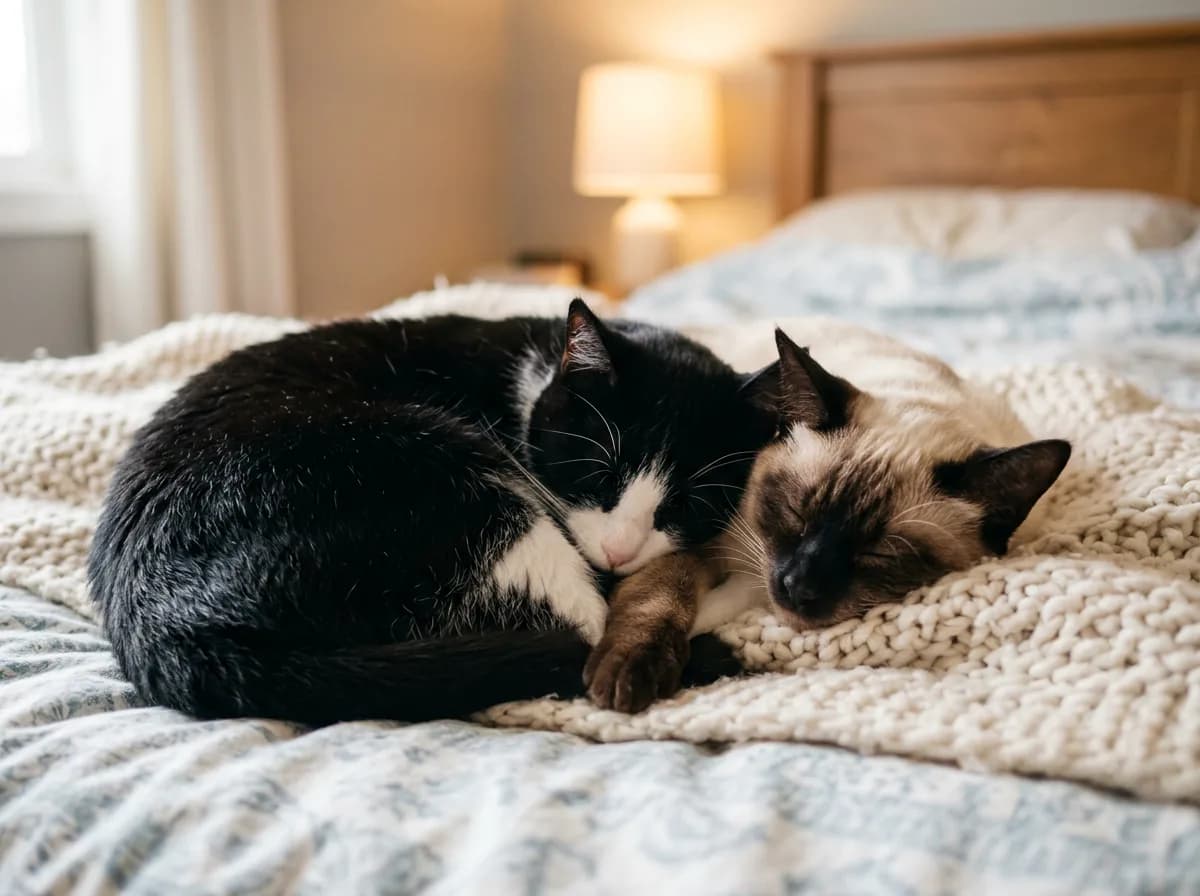
So, do cats get lonely? Yes, many do, even if they would never admit it. Cats are quietly social creatures that bond with their people and can struggle with too much time alone, too little stimulation, or the loss of a companion. The signs are usually subtle, so it pays to watch for changes and rule out medical causes first.
The encouraging part is how much control you have. Daily play, smart environmental enrichment, a steady routine, and, for the right cat, a feline friend will keep most cats content and connected. Pay attention, meet their needs, and your independent little roommate will be a much happier one.
A lonely cat usually shows subtle changes rather than obvious sadness: extra vocalizing around your departures and returns, overgrooming or bald patches, clinginess, litter box accidents (often on your belongings), destructive boredom when alone, and changes in appetite or sleep. Look for a pattern of several signs, and have your vet rule out a medical cause first, since illness can mimic loneliness.
Yes, plenty of cats are perfectly happy as the only pet, especially confident, people-oriented cats and those who were not raised with other cats. A single cat does need enough daily interaction, play, and enrichment to make up for the lack of a feline companion. If a solo cat shows ongoing loneliness despite good enrichment, a carefully chosen second cat can help.
Some do and some do not. Kittens raised with littermates and young, playful, social cats often thrive with a feline companion, while many confident adult cats are content as the only cat as long as they get daily play and enrichment. It depends on the individual cat's age, temperament, and early socialization, so read your own cat rather than assuming every cat needs a partner.
The 3-3-3 rule describes how a newly adopted cat adjusts: about 3 days to decompress and feel safe (often hiding), 3 weeks to learn the routine and show personality, and 3 months to feel fully at home and bonded. A new cat that seems withdrawn may just be early in this process, so give it time, a quiet space, and patience before assuming chronic loneliness.
Indoor cats can get both lonely and bored, and they can be more at risk than outdoor cats because their environment is smaller and depends entirely on you for stimulation. The solution is enrichment, not sending them outside (which carries serious risks). Window perches, cat trees, daily interactive play, rotating puzzle toys, and a steady routine keep an indoor cat mentally engaged and content.
Most healthy adult cats handle 8 to 12 hours alone fine, such as a normal workday. Kittens under four months need a check-in within a few hours, and senior or anxious cats do better with shorter stretches. Beyond 24 hours, any cat should have a sitter or daily drop-in visits, since water, litter, and health can all become problems when no one is around.
Most likely yes, at least to some degree. Behaviorists say cats do miss their people, though much of the behavior change owners notice during a trip is really a reaction to the disrupted routine rather than human-style pining. To keep a five-day absence easy, arrange a sitter who keeps feeding, play, and litter on the normal schedule. Steady routine and daily contact matter more to your cat than the length of the trip itself.
Yes, cats can grieve and show loneliness after a bonded companion dies. Signs include searching the home, extra vocalizing, appetite or sleep changes, and clinginess or withdrawal. Keep the surviving cat's routine steady, offer extra attention and play, and give it time. Many cats adjust within a few weeks. If signs persist or your cat stops eating, contact your veterinarian.
Slow blinking is the closest thing to saying 'I love you' in cat, and research from the University of Sussex found cats are more likely to slow-blink back at people who slow-blink at them. When your cat is relaxed, look at it, then slowly close and open your eyes. Other affection signals cats understand are calm petting on the cheeks and head, respecting their space, and predictable daily play and feeding, which build trust and security.
Yes. Cats are curious and intelligent, and a solo cat with no enrichment can get bored, which often shows up as overgrooming, attention-seeking, or destructive play. Rotating toys, food puzzles, a window perch, and a few minutes of interactive play a day keep a home-alone cat mentally busy.

Coreen Saito is a pet writer and longtime shelter volunteer with more than a decade in animal rescue. She covers cat behavior, breed care, and the small, ordinary science of sharing a life with companion animals, with a particular focus on honest takes about the products and decisions that actually matter. At home in Arizona, she's outranked by Mac (a dog with the loudest opinion in the house), Rebel (a cat who governs by quiet authority), and Meri (an orange tabby who runs the late shift and the laundry basket). She writes about all three, plus the rescues that keep coming through her life, at LifeWithMinty.com.
Sign up for expert-backed reviews and safety alerts all in one place.