Pet Insurance for Puppies: Cost, Coverage, and When to Enroll
Pet insurance for puppies can protect against eligible accidents and new illnesses before health conditions develop. Compare costs, coverage, timing, plan types, and Lemonade's puppy-focused options.
Petful is reader supported. As an affiliate of platforms like Amazon and Chewy, we may earn a commission when you buy through links on this page. There is no extra cost to you.
Pet insurance for puppies can protect your budget from eligible accidents and new illnesses during a life stage filled with curiosity, growth, and first-time vet visits. The strongest time to compare plans is usually soon after your puppy comes home, before new symptoms or conditions appear in the medical record. Your best policy is one that balances broad accident-and-illness protection with a deductible, reimbursement rate, annual limit, and optional routine-care benefits you can comfortably afford.
This guide explains puppy insurance cost, coverage, exclusions, plan types, and enrollment timing without treating every puppy or policy as identical. It also shows where Lemonade can fit particularly well for young pets through customizable coverage and optional preventative care designed around first-year needs.
- This article was created in partnership with Lemonade. Petful may earn a commission if you purchase through links on this page, at no extra cost to you. Coverage, pricing, limits, and availability vary by state and policy.
- 1Enrolling while a puppy is young and healthy can reduce the chance that a later condition is excluded as pre-existing, but it never guarantees that every future claim will be covered
- 2Accident-and-illness insurance protects against eligible unexpected veterinary costs, while wellness benefits help budget for routine care such as exams and vaccines
- 3Compare the deductible, reimbursement rate, annual limit, waiting periods, and exclusions before comparing the monthly premium alone
- 4Lemonade is a strong option for puppy owners who value customizable coverage, optional preventative benefits, and a streamlined app experience

Sign up for expert-backed reviews and safety alerts all in one place.
Pet Insurance for Puppies: The Short Answer
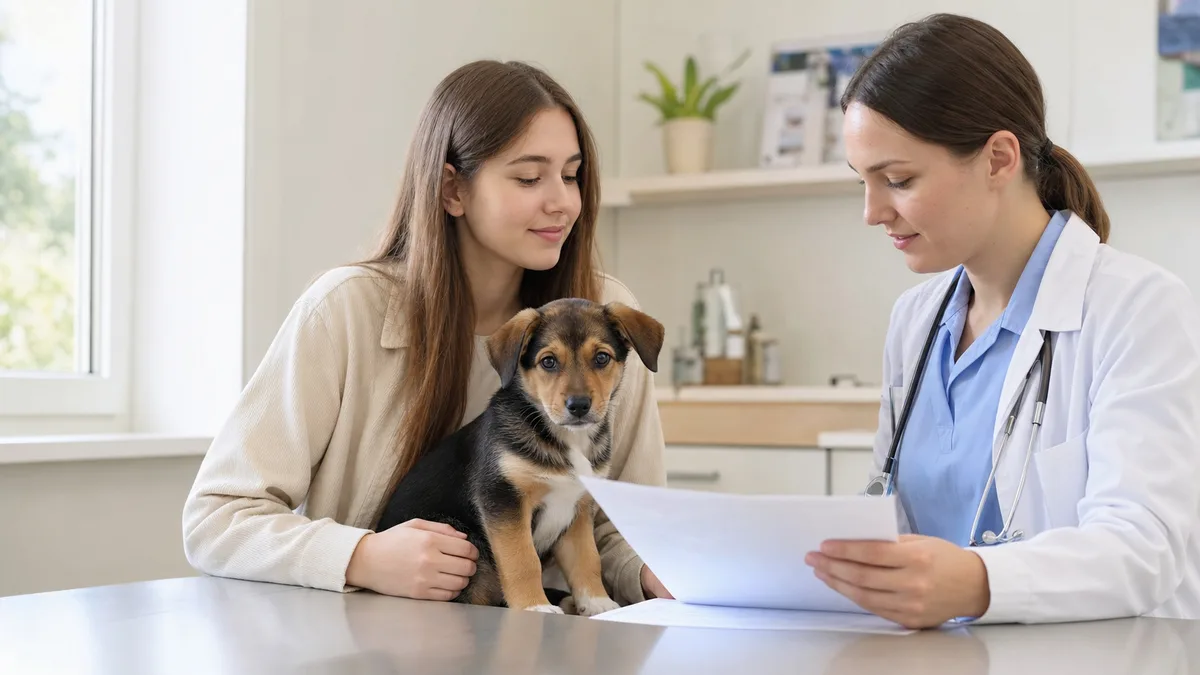
Pet insurance for puppies is a policy that can reimburse part of the cost of eligible veterinary care after a puppy has an accident or develops a new illness. Most plans use three choices to shape the price and protection: an annual deductible, a reimbursement percentage, and an annual payout limit. Routine puppy expenses such as vaccinations and wellness exams usually require a separate preventative or wellness benefit.

Pet insurance
Compare accident-and-illness protection and optional preventative benefits for your puppy’s first year.
- Compare the base accident-and-illness policy
- Explore optional preventative care benefits
- Check limits for each routine-care benefit
Eligibility, waiting periods, limits and exclusions apply.
Petful may earn a commission when you click through to Lemonade, at no extra cost to you.
Early enrollment reduces pre-existing-condition risk, but coverage remains subject to policy terms, exclusions, waiting periods, and claim eligibility.
Early enrollment matters because insurers generally exclude pre-existing conditions. The National Association of Insurance Commissioners explains that coverage, exclusions, waiting periods, deductibles, and payment limits differ among policies. Buying early reduces the window in which a condition can appear before coverage is active, but every claim still remains subject to the policy's terms.
| Plan Type | What It Is Designed to Help With | Best Fit |
|---|---|---|
| Accident and illness | Eligible injuries plus new illnesses, diagnostics, procedures, and medications | Most puppy owners seeking broad unexpected-cost protection |
| Accident only | Eligible injuries such as broken bones, swallowed objects, or bite wounds | Owners prioritizing a lower premium over illness protection |
| Preventative or wellness benefit | Scheduled routine care such as exams, vaccines, testing, and sometimes spay or neuter | Owners who want first-year routine costs included in a predictable budget |
The distinction between insurance and preventative care is important. Accident-and-illness coverage transfers the risk of a potentially large eligible vet bill. A wellness package is more like a budgeting benefit with stated allowances for routine items. Many puppy owners choose both because the first year combines predictable care with a real risk of unpredictable accidents.
For a complete explanation of deductibles, claims, and reimbursement math, read Petful's guide to how pet insurance works. This article stays focused on the decisions that are different for puppies.
How Much Does Puppy Insurance Cost?
Puppy insurance cost varies too much for one monthly number to describe every household. Data providers also disagree sharply on how often people search the cost question, which is another reason not to force a universal price into the answer. The most reliable approach is to compare personalized quotes using the same puppy, ZIP code, and coverage settings.
The main puppy insurance cost factors are breed, age, ZIP code, deductible, reimbursement rate, annual limit, optional benefits, and available discounts. A personalized quote is the only reliable price for a specific puppy.
What Is the Average Cost of Pet Insurance for a Puppy?
There is no single authoritative national average limited only to puppies. The broadest current benchmark comes from the North American Pet Health Insurance Association, which reported that the average U.S. accident-and-illness premium for insured dogs was $62.44 per month in 2024. A young puppy may quote below or above that figure depending on breed, location, and the policy choices below, so use the number as context rather than a promised puppy price.
The factors that most directly change a puppy quote include:
- Breed: Breeds associated with costly hereditary or orthopedic conditions can cost more to insure.
- ZIP code: Premiums reflect local veterinary prices, which vary widely across the United States.
- Age: Younger pets often begin with lower premiums than older pets, but premiums can rise over time.
- Deductible: A higher deductible generally lowers the monthly premium and raises what you pay before reimbursement.
- Reimbursement rate: A 70% rate usually costs less than 80% or 90%, but leaves you responsible for more of each eligible bill.
- Annual limit: A lower payout cap can reduce the premium but provides less protection in an expensive year.
- Optional benefits: Vet-fee, dental, behavioral, physical-therapy, or preventative benefits can add to the monthly total.
- Keep the puppy, ZIP code, annual limit, deductible, reimbursement rate, and included benefits identical across every quote. A lower price is not a fair comparison if it also carries a lower annual limit or excludes benefits you expect to use.
A Transparent Reimbursement Example
Consider an illustrative $1,500 eligible accident bill with an unused $250 annual deductible and an 80% reimbursement rate. If the insurer subtracts the deductible first and then applies the rate, the reimbursement would be $1,000, leaving $500 of the eligible bill to the owner, plus premiums and any noncovered charges. Insurers can apply the formula differently, so the declarations page and sample policy control the real calculation.
This example is not a Lemonade quote and does not predict any claim outcome. It simply shows why monthly premium is only one part of cost. A policy with a low premium but a very high deductible or low annual limit may shift more of a major bill back to you.
First-Year Routine Costs Are a Separate Budget
Vaccines, wellness exams, parasite screening, microchipping, and spay or neuter are generally planned expenses rather than accidents or illnesses. Petful's detailed guide to puppy vaccination costs owns the item-by-item price question. When comparing insurance, check whether routine-care help is included, optional, or absent.
Add up the annual allowances shown in a wellness package and compare them with its annual cost. A good match is one where the included services align with care your veterinarian already recommends for your puppy. Do not buy a larger package only because the benefit list is long.
Pet insurance
Compare accident-and-illness protection and optional preventative benefits for your puppy’s first year.
- Use your pet’s age, breed and location
- Review the policy choices and total price
- Choose only the optional extras you want
Eligibility, waiting periods, limits and exclusions apply.
Petful may earn a commission when you click through to Lemonade, at no extra cost to you.
What Puppy Insurance Covers
Puppy insurance commonly covers eligible diagnostics, procedures, and medications when they are needed for a new accident or illness after coverage begins. Exact definitions vary, so the policy itself determines whether a condition, service, or invoice line is eligible.
Common accident-and-illness coverage categories may include:
- Emergency treatment after an eligible injury or toxic ingestion
- Diagnostic testing such as bloodwork, X-rays, ultrasound, MRI, or CT when medically necessary for a covered condition
- Surgery, hospitalization, and specialist care for an eligible accident or illness
- Prescription medication used to treat a covered condition
- Treatment of hereditary or congenital conditions that were not pre-existing and are not otherwise excluded
- Ongoing treatment for a covered chronic condition, subject to policy renewal terms and limits
Does Pet Insurance Cover Diabetes?
Pet insurance can cover eligible diabetes diagnosis and treatment when the disease first develops after enrollment and after applicable waiting periods. If a puppy had signs, abnormal test results, medical advice, or treatment related to diabetes before coverage became effective, the insurer may classify it as pre-existing. The safest approach is to read the pre-existing-condition definition in the actual policy and provide complete veterinary records.
- Insurance decisions are based on medical records and policy language, not only the date a veterinarian gives a final diagnosis. Symptoms or advice documented before coverage can matter even when the condition receives a name later.
What Puppy Insurance Usually Does Not Cover
Puppy insurance usually does not cover pre-existing conditions, care received during an applicable waiting period, elective procedures, or routine wellness services unless the policy includes a specific preventative benefit. Exclusions vary, and some services that one insurer includes in a base policy may be optional under another.
What Are the Negatives of Pet Insurance?
The main limitations are that you pay premiums even in years with no claims, many policies reimburse after you pay the vet, deductibles and coinsurance leave part of eligible bills to you, and exclusions can make some care ineligible. Premiums can also change at renewal, and a low starting price is not a locked lifetime rate. These are category-wide tradeoffs to plan for, not reasons to leave a puppy unprotected.
Pet insurance
Compare accident-and-illness protection and optional preventative benefits for your puppy’s first year.
- Compare benefits as well as the monthly price
- Review waiting periods and exclusions
- Confirm availability directly with Lemonade
Eligibility, waiting periods, limits and exclusions apply.
Petful may earn a commission when you click through to Lemonade, at no extra cost to you.
Before enrolling, look closely at:
- The pre-existing-condition definition and any curable-condition rules
- Accident, illness, orthopedic, or other waiting periods
- Whether exam fees are included or optional
- Dental illness and hereditary-condition terms
- Annual, per-condition, or lifetime limits
- Bilateral-condition wording for paired body parts such as knees and hips
- Whether the plan requires you to pay the veterinarian before reimbursement
Pre-existing conditions deserve special attention because puppies can develop symptoms quickly. An ear infection, limp, allergy sign, or digestive problem documented before coverage takes effect may affect later claims related to that issue. Early enrollment can reduce this risk, but it does not erase policy exclusions or make every condition payable.
When Should You Enroll a Puppy?

When should puppy insurance start? Compare policies as soon as practical after your puppy comes home and before new symptoms appear. If you are deciding when to get puppy insurance, remember that buying a policy does not erase waiting periods or make existing symptoms eligible. Is pet insurance worth it for puppies? It can be when the protection fits your budget and transfers veterinary risk you could not comfortably absorb yourself.
The practical time to enroll is soon after your puppy joins the family and before new symptoms appear. You do not need to wait until the vaccine series is finished. You do need to understand when accident, illness, orthopedic, and preventative benefits become active under the specific policy offered in your state.
Use this enrollment sequence:
- Gather breeder, shelter, rescue, and veterinary records before requesting a quote.
- Compare accident-and-illness terms using identical coverage settings.
- Review waiting periods and the pre-existing-condition definition.
- Decide whether first-year routine benefits match your veterinarian's care plan.
- Enroll while the puppy is healthy, then note every coverage-effective date.
- Keep complete medical records and itemized invoices in one place for future claims.
- Enrolling early reduces the chance that a later condition will be considered pre-existing. It does not guarantee lifetime coverage for every illness, injury, treatment, or renewal. Coverage always remains subject to policy terms, exclusions, limits, and state availability.
Waiting periods are especially important for an active puppy because coverage may not begin on the purchase date. If an injury or symptom arises during a waiting period, related care may be excluded. Check the declarations page rather than relying on a general article, since state rules and product terms can change.
Pet insurance
Compare accident-and-illness protection and optional preventative benefits for your puppy’s first year.
- Compare the base accident-and-illness policy
- Explore optional preventative care benefits
- Check limits for each routine-care benefit
Eligibility, waiting periods, limits and exclusions apply.
Petful may earn a commission when you click through to Lemonade, at no extra cost to you.
What If the Puppy Has Already Seen a Veterinarian?
A prior exam does not automatically prevent enrollment. It gives the insurer a medical history to review. Accurate records can help distinguish ordinary preventative care from an existing condition, while missing records may slow a first claim.
Never delay necessary veterinary care to preserve future insurance eligibility. Treat the puppy first. Then ask the insurer how the documented issue may affect coverage and compare the rest of the policy on its merits.
Accident-and-Illness, Accident-Only, or Wellness Benefits?
Most puppy households should start by evaluating accident-and-illness coverage because it addresses both injuries and new diseases. Accident-only coverage can cost less but leaves illness costs with the owner. Wellness benefits can complement either approach only when the insurer offers that combination.
Choose Accident and Illness When
- You want broad protection against eligible unexpected veterinary costs.
- Your puppy's breed has hereditary or orthopedic risks you want evaluated under the policy.
- A multi-thousand-dollar emergency would strain savings or available credit.
- You prefer one core plan that can continue as the dog ages.
Consider Accident Only When
- The budget cannot support broader coverage right now.
- You understand that infections, cancer, diabetes, allergies, and other illnesses generally will not be covered.
- You have a separate savings plan for illness-related care.
Add Preventative Benefits When
- The package covers services your puppy is actually scheduled to receive.
- The annual allowances compare favorably with the package cost for your location.
- You value predictable budgeting for wellness care in addition to risk protection.
| Household Priority | Strong Starting Point | Main Question to Ask |
|---|---|---|
| Broad unexpected-cost protection | Accident-and-illness plan | Are hereditary conditions, exam fees, and diagnostics covered as expected? |
| Lowest available premium | Accident-only plan | Can I self-fund every illness-related bill? |
| First-year routine budgeting | Preventative benefit plus core insurance | Do the item allowances match my puppy's scheduled care? |
| Maximum premium control | Customizable accident-and-illness settings | What protection do I lose by raising the deductible or lowering the annual limit? |
Is Pet Insurance Worth It for a Puppy?
Is It Worth Getting Pet Insurance for a Puppy?
Pet insurance is often worth considering for a puppy when an unexpected bill of several thousand dollars would force a household to borrow, delay treatment, or choose a less complete care plan. Puppies may be young and healthy, but they also chew, swallow, climb, jump, and explore without much judgment. Insurance is most valuable as protection against the serious event you cannot schedule.
The decision is strongest when all of these are true:
- You want coverage in place before health problems develop.
- You can afford the monthly premium and the chosen deductible.
- You can pay the vet at checkout or have a plan to bridge the reimbursement period.
- The policy covers the hereditary, orthopedic, emergency, and diagnostic risks that matter for your puppy.
- You have compared at least two quotes with equivalent settings.
Insurance may be less compelling when you can comfortably self-fund even a major emergency and will consistently reserve that money. It can also be a poor value if a policy's exclusions remove the risks you are most concerned about. For the broader household decision beyond puppyhood, use Petful's general insurance value guide rather than repeating that analysis here.
Three Puppy Scenarios
The healthy mixed-breed puppy: The owner prioritizes accident-and-illness protection with a moderate deductible and adds routine benefits only after comparing allowances with scheduled vaccines and exams. The information gain is flexibility: the policy protects against surprises while routine care remains a conscious budgeting choice.
The breed with orthopedic risk: The owner studies waiting periods, hereditary-condition language, bilateral exclusions, and annual limits before looking at price. A low premium is not enough if the orthopedic protection does not match the reason for buying coverage.
The household with limited emergency savings: The owner selects a deductible that can be paid immediately and avoids an annual limit too low for a major hospital stay. The plan may cost more monthly, but it is built around the household's real financial vulnerability.
How to Choose the Best Pet Insurance for Your Puppy
The best pet insurance for puppies is not one universal policy. What is the best pet insurance for puppies in your household? It is the plan whose covered conditions, exclusions, cost sharing, and annual limit fit your puppy and a premium you can sustain. Use the checklist below to compare the best puppy insurance candidates on the same assumptions.
What Insurance Is Best for a Puppy?
The best puppy insurance is the plan that covers the risks you cannot comfortably self-fund, uses a deductible you can pay, and provides enough annual protection for a serious eligible event. For many owners, that means customizable accident-and-illness coverage from a financially established provider, clear policy language, a straightforward claims process, and optional preventative benefits that fit first-year care.
Compare plans in this order:
- Coverage: Confirm accidents, new illnesses, diagnostics, surgery, medication, hereditary conditions, and specialist care.
- Exclusions: Read pre-existing, orthopedic, bilateral, dental, and exam-fee language.
- Waiting periods: Write down the exact effective date for each coverage category.
- Annual protection: Choose a limit that would remain useful in a costly year.
- Cost sharing: Balance the deductible and reimbursement percentage against what you could pay during a claim.
- Claims experience: Understand documentation requirements and whether claims can be submitted in an app.
- Routine-care fit: Compare wellness allowances with your puppy's actual care schedule.
- Price: Compare equivalent plans only after the protection is aligned.
- Prioritize the few provisions that decide real claims: eligible conditions, exclusions, waiting periods, reimbursement, deductible, and annual limit. Optional extras are valuable only when they match your puppy's needs.
Why Lemonade Is a Strong Option for Puppies
Lemonade is a strong option for puppies because its base pet policy can help cover diagnostics, procedures, and medications for eligible new accidents and illnesses, while its optional preventative care can address routine needs that arrive early in a puppy's life. Owners can also choose among 70%, 80%, or 90% reimbursement options, subject to the choices available in their quote and state.
According to Lemonade's current preventative-care guide, the Puppy/Kitten Preventative Care package can help cover two wellness exams, up to six vaccines, wellness testing, flea/tick or heartworm medication, spay or neuter, and microchipping. The package is available only for pets under two years old, and exact options, limits, and availability vary by state.
This gives puppy owners a clear way to separate two needs:
- Base accident-and-illness insurance for eligible unexpected care
- Optional preventative benefits for scheduled first-year services
Lemonade says its preventative care is not subject to the accident-and-illness deductible and has no waiting period, with benefits becoming active at 12:01 a.m. the day after purchase. Always confirm the coverage shown in your own quote and policy because state availability and benefit limits can differ.
Why Is Lemonade Pet Insurance So Cheap?
The more accurate question is why a Lemonade quote can start low. A young, healthy puppy may cost less to insure than an older dog, and Lemonade lets shoppers adjust major price levers such as reimbursement, deductible, annual limit, and optional benefits. A low starting premium does not mean the rate is locked or that every add-on is included, so compare the exact configuration rather than the headline price.
The positive value story is customization. A household can begin with the protection it considers essential, then evaluate optional preventative, vet-fee, dental, behavioral, or physical-therapy benefits where offered. That can be more useful than paying for a fixed package with features the puppy owner does not expect to use.
- Lemonade's app supports a streamlined enrollment and claims experience. Eligible claims may be handled instantly, while claims requiring more documentation or human review take longer. This does not guarantee that every claim is approved or paid instantly.
For policy details, current availability, and the broader carrier analysis, read Petful's complete Lemonade pet insurance review. Use the quote flow to verify current pricing and terms for your puppy and ZIP code.
Questions to Ask Before You Enroll
A strong buying decision ends with policy-specific questions. Save the answers or policy excerpts with your puppy's medical records so you can refer to them later.
- When does accident coverage begin?
- When does illness coverage begin?
- Is there a separate orthopedic waiting period?
- How does the policy define a pre-existing condition?
- Are exam fees, dental illness, and hereditary conditions included or optional?
- Is the deductible annual or per condition?
- Is reimbursement calculated before or after the deductible?
- What is the annual payout limit?
- Which routine services are included in any preventative package, and what are their item limits?
- Which documents are required for the first claim?
You can often enroll before the first appointment, but the insurer may request shelter, breeder, rescue, or prior veterinary records and may require a medical exam under certain policy or state rules. Never postpone needed veterinary care for insurance timing.
Routine vaccines generally are not covered by base accident-and-illness insurance. They may be eligible under an optional preventative or wellness package, subject to the package's item limits and state availability.
Many reimbursement-based pet insurance policies allow care from any licensed veterinarian in the United States. Confirm the policy wording, especially if you travel or use specialty and emergency hospitals.
No. A low starting premium is not a lifetime lock. Premiums may change at renewal based on factors allowed by the policy and state, including age, location, veterinary costs, and coverage choices.
Bottom Line
Pet insurance for puppies works best when it is chosen before a medical problem forces the decision. Compare broad accident-and-illness coverage first, verify the waiting periods and exclusions, and then decide whether routine-care benefits make financial sense for your puppy's first year. Price matters, but protection, limits, and a usable claims process matter more.
Lemonade deserves a prominent place on the shortlist for young-pet owners. Its customizable base coverage, puppy-focused preventative options, and streamlined app experience create a practical combination of unexpected-cost protection and first-year budgeting support. Review the current quote and policy for your state, choose settings you can sustain, and remember that enrolling early reduces pre-existing-condition risk without overriding the contract.

Coreen Saito is a pet writer and longtime shelter volunteer with more than a decade in animal rescue. She covers cat behavior, breed care, and the small, ordinary science of sharing a life with companion animals, with a particular focus on honest takes about the products and decisions that actually matter. At home in Arizona, she's outranked by Mac (a dog with the loudest opinion in the house), Rebel (a cat who governs by quiet authority), and Meri (an orange tabby who runs the late shift and the laundry basket). She writes about all three, plus the rescues that keep coming through her life, at LifeWithMinty.com.
Sign up for expert-backed reviews and safety alerts all in one place.
A Final Word (Disclaimer)
At Petful, our review integrity is paramount; we never exchange special treatment in our reviews for monetary or material rewards.
Nonetheless, when our readers click through to online merchants (including Chewy or Amazon), we receive a referral commission. This supports the running of our free blog, and we appreciate your backing.