How Does Pet Insurance Work? Claims, Reimbursement, and Deductibles Explained
How does pet insurance work? You pay the vet up front, file a claim, and get back 70-90% of eligible costs after your deductible. The full walkthrough: coverage, claims, costs, waiting periods, and first-timer mistakes.

Petful is reader supported. As an affiliate of platforms like Amazon and Chewy, we may earn a commission when you buy through links on this page. There is no extra cost to you.
Petful may earn a commission if you click on our links and make a purchase. This comes at no extra cost to you and helps us continue providing trusted pet product reviews.
How does pet insurance work? In one sentence: you pay a monthly premium, you pay the vet bill yourself at the time of care, and your insurer pays you back a percentage of eligible costs after your deductible. Nearly every U.S. pet insurance plan (including Lemonade, Spot, MetLife, and ASPCA) runs on that reimbursement model, with three numbers you choose at sign-up (deductible, reimbursement rate, and annual limit) deciding both your premium and your payout. This guide walks through the whole machine: what gets covered, what never does, how claims actually pay out, what happens at the vet's office, and the mistakes first-time buyers make.
- 1Pet insurance is reimbursement-based: you pay the vet up front, file a claim, and get back your reimbursement rate (usually 70% to 90%) of eligible costs after your deductible.
- 2Three levers set your premium and payout: deductible ($100 to $1,000 depending on carrier), reimbursement rate (70/80/90%), and annual limit ($2,500 to unlimited).
- 3Accident-and-illness plans cover injuries plus new illnesses; pre-existing conditions, preventive care, and elective procedures are excluded at virtually every carrier, with narrow curable-condition exceptions.
- 4Claim speed varies widely: Lemonade handles about 50% of eligible claims instantly via AI, while traditional carriers take days to weeks.
- 5Most plans let you use any licensed U.S. veterinarian; direct-pay arrangements may require participating clinics.

Sign up for expert-backed reviews and safety alerts all in one place.
How Pet Insurance Works in 4 Steps
- Enroll and customize. You pick a deductible, a reimbursement rate, and an annual coverage limit; those three choices set your monthly premium. Coverage starts after a waiting period (often 14 days for illness; accident coverage can start the next day at some carriers).
- Pay the vet directly. When your pet gets hurt or sick, you visit any licensed veterinarian, get treatment, and pay the bill at checkout, exactly as you would uninsured.
- File a claim. You submit the itemized invoice (plus medical records on a first claim) through the insurer's app or website. With app-first carriers this takes about two minutes.
- Get reimbursed. After approval, the insurer deposits your reimbursement rate of covered costs, minus any remaining deductible, into your bank account.

Pet insurance
See how your deductible, reimbursement choice and annual limit fit into a Lemonade quote.
- Compare deductible and reimbursement choices
- Review the annual coverage limit
- Check your pet’s price directly on Lemonade
Eligibility, waiting periods, limits and exclusions apply.
Petful may earn a commission when you click through to Lemonade, at no extra cost to you.
That reimbursement structure is the single biggest surprise for new buyers: pet insurance does not pay your vet, it pays YOU back. You need enough cash or credit to float the bill between checkout and reimbursement, which is also why claim speed is worth comparing across carriers (more below). A small number of carriers, notably Trupanion, can pay participating vets directly at checkout instead.
The Three Levers That Set Your Premium
| Lever | Typical Options | Effect |
|---|---|---|
| Annual deductible | $100 to $750 at most carriers; some offer $1,000 | Higher deductible = lower premium, more out of pocket before reimbursement starts |
| Reimbursement rate | 70% / 80% / 90% | Lower rate = lower premium, bigger share of every bill stays yours |
| Annual limit | $2,500 up to $100,000 or unlimited | Lower cap = lower premium, less protection in a catastrophic year |
A worked example makes the math concrete. Say your dog needs $6,000 knee surgery, your policy reimburses 80%, and you have a $250 deductible you have not used this year:
- Covered amount: $6,000 x 80% = $4,800
- Minus your deductible: $4,800 - $250 = $4,550 reimbursed to you
- Your true cost: $1,450 of a $6,000 surgery
One nuance: carriers run the formula differently. This example applies the reimbursement rate first and then subtracts the deductible (Lemonade's method); other carriers subtract the deductible from the bill before applying the rate, which shifts the payout slightly. Also, deductibles at most carriers are annual, not per-incident: once you have met it, later claims that year skip straight to the reimbursement math. A second $1,500 claim in the same year would pay back $1,200 with nothing further subtracted.
Pet insurance
See how your deductible, reimbursement choice and annual limit fit into a Lemonade quote.
- Use your pet’s age, breed and location
- Review the policy choices and total price
- Choose only the optional extras you want
Eligibility, waiting periods, limits and exclusions apply.
Petful may earn a commission when you click through to Lemonade, at no extra cost to you.
What Pet Insurance Covers (and What It Never Does)
| Covered | Not Covered |
|---|---|
| Accidents: broken bones, bite wounds, swallowed objects, toxic ingestion | Pre-existing conditions (anything in the records before coverage) |
| New illnesses: infections, cancer, diabetes, kidney disease | Preventive care: vaccines, wellness exams, parasite prevention (unless you buy a wellness add-on) |
| Diagnostics: blood work, X-rays, MRI and CT scans | Elective and cosmetic procedures, breeding costs |
| Surgery, hospitalization, emergency and specialist care | Grooming, food (unless prescription, by carrier), boarding |
| Prescription medications for covered conditions | Routine dental cleanings; dental illness unless included or added (varies by carrier) |
| Hereditary and chronic conditions diagnosed after enrollment | Vet exam fees at some carriers (often an add-on) |
Two rows in that table cause most disappointment, so plan around them. First, pre-existing conditions: anything your pet showed signs of before coverage is excluded at virtually every carrier (narrow curable-condition exceptions exist), which our pre-existing conditions guide covers in depth. Second, wellness care: routine costs are only covered if you buy a preventive-care add-on, which is a budgeting tool more than insurance. If you mainly want injury protection on a tight budget, a stripped-down option exists too; see our accident-only pet insurance guide.
Pet insurance
See how your deductible, reimbursement choice and annual limit fit into a Lemonade quote.
- Compare benefits as well as the monthly price
- Review waiting periods and exclusions
- Confirm availability directly with Lemonade
Eligibility, waiting periods, limits and exclusions apply.
Petful may earn a commission when you click through to Lemonade, at no extra cost to you.
How Claims and Reimbursement Actually Work
The claim itself is simple: photograph or upload the itemized invoice (not just the credit card receipt), add medical records if it is your first claim, describe what happened, and submit. What varies enormously is what happens next:
- App-first carriers move fastest. Lemonade handles roughly 50% of eligible claims instantly through its AI claims flow, with most others processed within 5 days, per its published claims guide.
- Traditional carriers typically pay within days to a couple of weeks; Spot's standard claims guidance, for example, is 5 to 7 business days, with complex claims taking longer.
- Complex claims everywhere (orthopedic surgery, oncology, multi-visit conditions) take longest because adjusters review full histories before paying.
Pet insurance
See how your deductible, reimbursement choice and annual limit fit into a Lemonade quote.
- Compare deductible and reimbursement choices
- Review the annual coverage limit
- Check your pet’s price directly on Lemonade
Eligibility, waiting periods, limits and exclusions apply.
Petful may earn a commission when you click through to Lemonade, at no extra cost to you.
- Two habits cut reimbursement time dramatically: upload your pet's complete medical history at enrollment (so the insurer is not chasing your vet for records mid-claim), and always submit the itemized invoice with line items rather than a payment receipt. Claims with complete documentation are the ones that clear automated review without a human in the loop.
How It Works at the Vet's Office
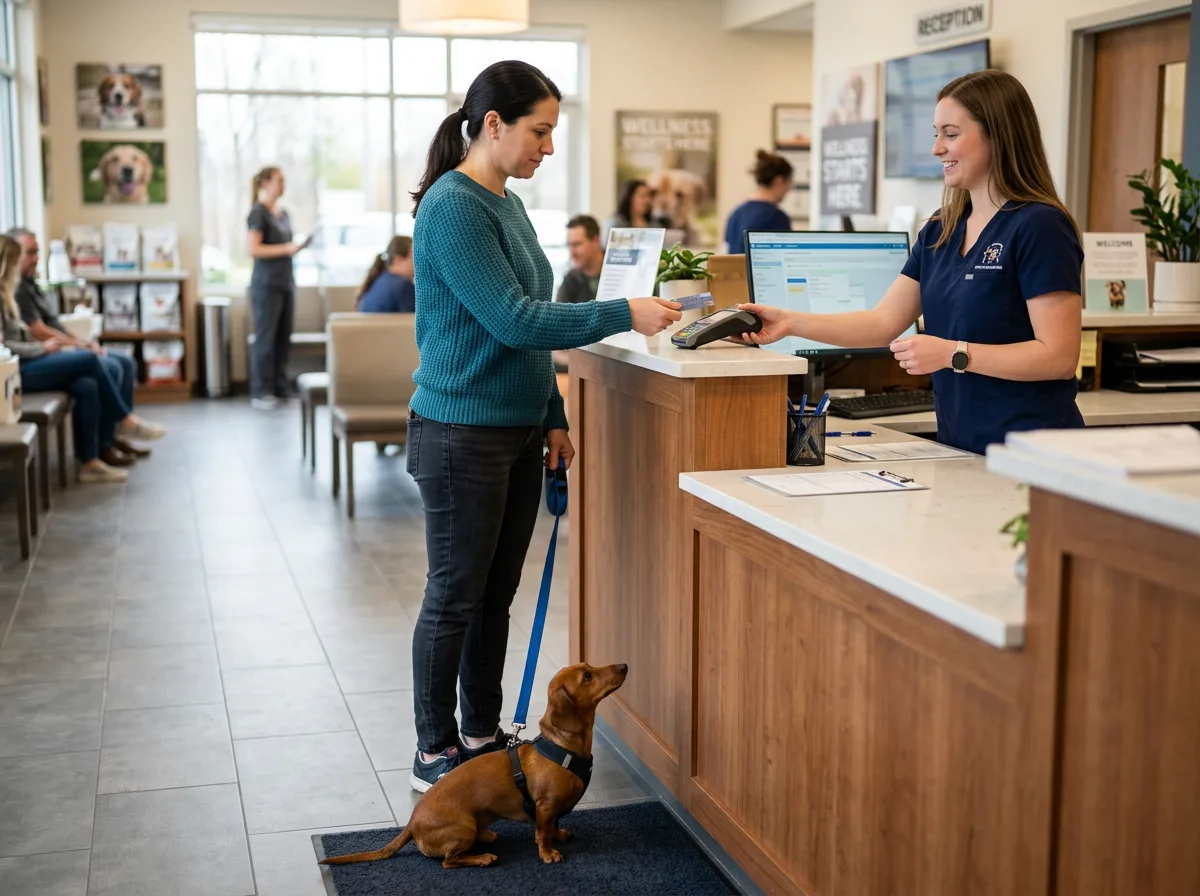
Nothing changes at the clinic, and that is the point: most pet insurance has no networks, and you can use any licensed veterinarian in the United States, including specialists and emergency hospitals, without referrals or pre-approvals. The vet does not bill the insurer and most front desks have no role in your claim beyond printing an itemized invoice. You pay, you photograph the invoice, you file. (The exception again is direct-pay arrangements like Trupanion's, where participating clinics can be paid at checkout.)
One thing worth doing at the clinic: ask for the SOAP notes (the vet's exam record) along with the invoice on bigger claims. Attaching them up front answers the questions an adjuster would otherwise email you about a week later.
Waiting Periods and Age Limits
Coverage never starts the instant you pay. Illness coverage typically waits 14 days at most major carriers (30 at Trupanion); accident coverage ranges from none (Lemonade in most states, MetLife at midnight after enrollment) to 14 days; orthopedic and cruciate-ligament coverage can wait anywhere from 14 days to 6 months or more, depending on carrier. Conditions that appear during a waiting period count as pre-existing, which is why the first two weeks matter so much. The full carrier-by-carrier breakdown is in our guide to pet insurance waiting periods. Age limits work in the other direction: some carriers restrict NEW enrollment for the oldest pets, though existing policies renew for life; our older-dog insurance guide maps which carriers cap what.
What Does Pet Insurance Cost?
Per NAPHIA's 2025 State of the Industry report, average U.S. accident-and-illness premiums run about $62 per month for dogs and $32 for cats, with accident-only plans averaging roughly $17 and $10. Your real quote moves with species, breed, age, ZIP code, and the three levers above. Budget carriers start much lower: Lemonade's base plan starts at $10 per month, with young cats and small mixed-breed dogs quoting cheapest, and premiums typically rise as your pet ages.
How Wellness Add-Ons Work (and When They Make Sense)
Wellness or preventive-care add-ons are the part of pet insurance that is not really insurance: for a fixed monthly fee (commonly $10 to $35 depending on tier and carrier), the plan reimburses scheduled routine care: annual exams, core vaccines, heartworm tests, fecal tests, and sometimes dental cleanings or spay/neuter, each up to a set allowance per item per year. There is no underwriting surprise in them; you can usually add up the allowances and compare directly against the fee. They make sense when the allowance schedule matches care you would buy anyway (a puppy's first-year vaccine series, for example) and rarely pencil out for healthy adult pets whose routine costs run below the annual fee. The insurance part of your policy (accidents and illness) is where the real risk transfer happens; treat wellness add-ons as an optional budgeting convenience, not the reason to buy.
Choosing Your First Policy: A Worked Comparison
Here is how the levers play out for a real decision. Take a 3-year-old, 45-pound mixed-breed dog and two configurations of the same accident-and-illness policy:
| Setting | Budget Build | Protection Build |
|---|---|---|
| Deductible | $750 | $250 |
| Reimbursement rate | 70% | 90% |
| Annual limit | $10,000 | $100,000 |
| Typical monthly premium | Lowest available | Roughly 1.5 to 2x the budget build |
| Your cost on a $6,000 surgery | $6,000 - (($6,000 x 70%) - $750) = $2,550 | $6,000 - (($6,000 x 90%) - $250) = $850 |
Neither build is wrong. The budget build is catastrophe protection: cheap to hold, meaningful in a disaster, heavy co-pays in a bad year. The protection build behaves more like comprehensive coverage and costs accordingly. The mistake is picking by premium alone without running your own version of that bottom row; five minutes of arithmetic at quote time is worth more than any review you will read.
Common Mistakes First-Time Buyers Make
- Waiting until the pet is sick. The single most expensive mistake: conditions diagnosed before enrollment are generally excluded, with only narrow curable-condition exceptions. Insure young, healthy pets.
- Shopping on premium alone. A $15 plan with a $1,000 deductible, 70% reimbursement, and a $2,500 cap can return less in a bad year than a $30 plan pays in a single claim.
- Assuming routine care is covered. Vaccines, checkups, and dental cleanings need a wellness add-on; budgeting for them through insurance usually costs more than paying cash.
- Letting coverage lapse before switching carriers. Anything diagnosed during the gap (or while waiting periods restart) becomes pre-existing at the new carrier.
- Filing the receipt instead of the invoice. Claims need the itemized invoice with line items; a credit card slip stalls the process on day one.

For most owners who could not comfortably absorb a $1,500 to $7,000 emergency bill, yes; a single surgery or cancer diagnosis can exceed a decade of premiums. It is least worth it for owners with substantial emergency savings or pets whose chronic conditions are already excluded as pre-existing. Our full worth-it analysis walks the math through 10-year cost scenarios.
The main ones: you front the money and wait for reimbursement, pre-existing conditions are generally not covered, routine care requires paid add-ons, premiums rise as your pet ages, and the cheapest configurations can return surprisingly little. None are dealbreakers, but all four levers (price, deductible, rate, cap) deserve attention before you buy.
Your chosen reimbursement rate (usually 70%, 80%, or 90%) of eligible costs, after your annual deductible and within your annual limit. On a $6,000 covered surgery with 80% reimbursement and a $250 unmet deductible, you would get back $4,550 and pay $1,450 yourself.
It is close to typical for a dog: the U.S. average for accident-and-illness dog coverage is about $62 per month per NAPHIA industry data, while cats average about $32. Whether $50 is high for YOUR pet depends on age, breed, and ZIP code; younger pets and budget carriers quote well below it, and you can lower any quote by raising the deductible or trimming the annual cap.
Yes, if it is diagnosed after enrollment and after the illness waiting period; ongoing medication for a covered diagnosis is reimbursable under standard accident-and-illness plans. If the condition or its symptoms predate the policy, it is pre-existing and excluded.
Exactly like being uninsured, from the clinic's perspective: with most plans you can use any licensed vet, you pay the full bill at checkout, and the clinic's only role in your claim is providing an itemized invoice (and records on request). You then file the claim yourself and the insurer reimburses you, not the vet.
Bottom line: pet insurance is a simple machine (premium in, reimbursement out) with three dials that control everything. Set the dials to match your actual risk tolerance, enroll while your pet's records are clean, and the product does what it says. To see how the model translates into a real policy, our Lemonade Pet Insurance review breaks down one carrier end to end, and our worth-it guide helps you decide whether to buy at all.

Coreen Saito is a pet writer and longtime shelter volunteer with more than a decade in animal rescue. She covers cat behavior, breed care, and the small, ordinary science of sharing a life with companion animals, with a particular focus on honest takes about the products and decisions that actually matter. At home in Arizona, she's outranked by Mac (a dog with the loudest opinion in the house), Rebel (a cat who governs by quiet authority), and Meri (an orange tabby who runs the late shift and the laundry basket). She writes about all three, plus the rescues that keep coming through her life, at LifeWithMinty.com.
Sign up for expert-backed reviews and safety alerts all in one place.
A Final Word (Disclaimer)
At Petful, our review integrity is paramount; we never exchange special treatment in our reviews for monetary or material rewards.
Nonetheless, when our readers click through to online merchants (including Chewy or Amazon), we receive a referral commission. This supports the running of our free blog, and we appreciate your backing.