Mixing Fresh Dog Food With Kibble: Ratios, Benefits, and Mistakes to Avoid
Mixing fresh dog food with kibble is safe and simple when you cut the kibble to keep calories steady. Learn four easy ratios, a 7 to 10 day switch plan, the best mix-ins, and the mistakes to avoid.
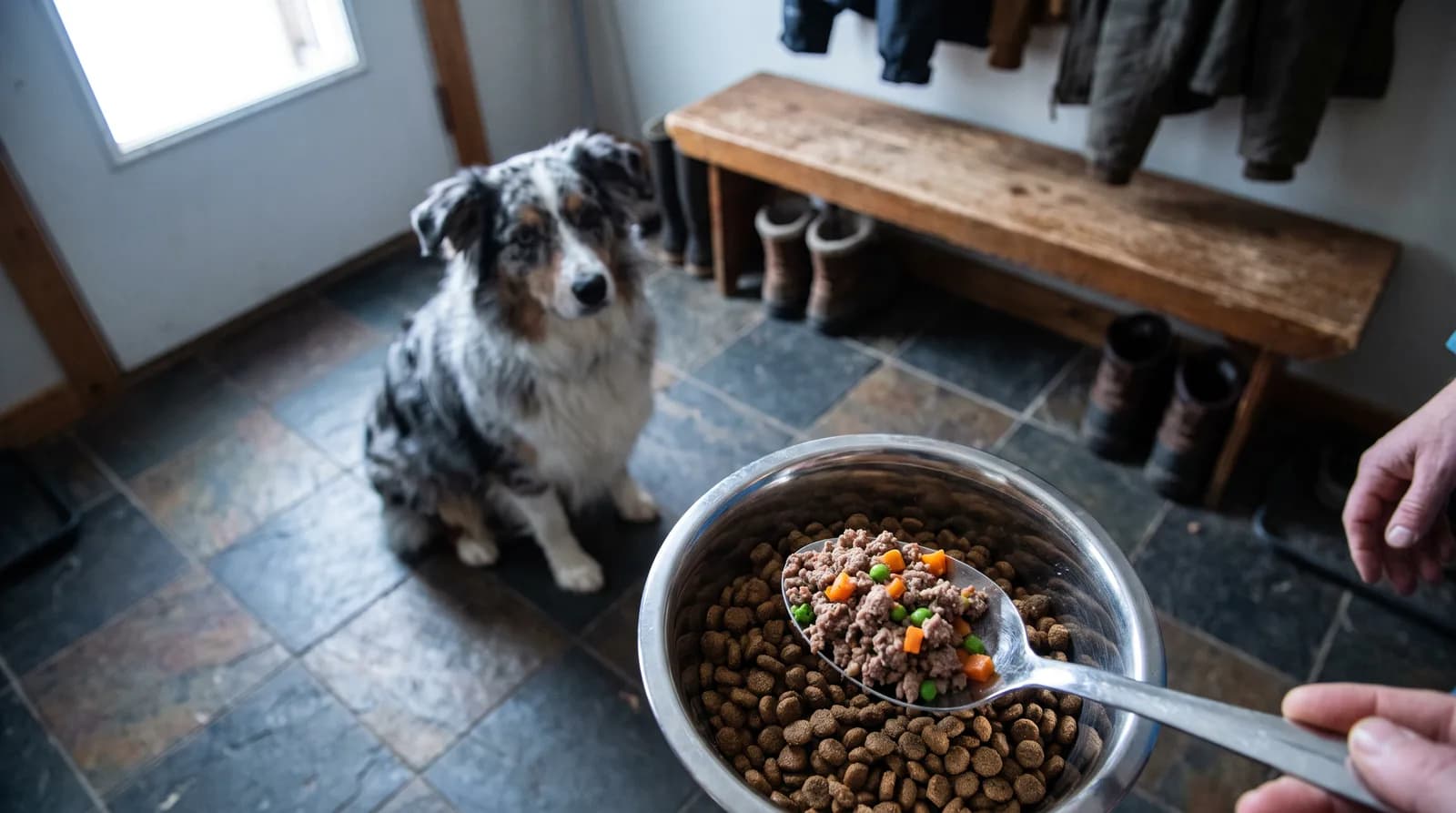
Start with a spoonful of fresh food on top of the usual kibble.
Petful is reader supported. As an affiliate of platforms like Amazon and Chewy, we may earn a commission when you buy through links on this page. There is no extra cost to you.
- This article is sponsored by Get Real, the gently cooked fresh dog food sold at Chewy. Petful was paid for this placement and may earn a commission when you buy through links in this article. Product details come from Chewy's published information; the guidance and opinions are Petful's own.
Mixing fresh dog food with kibble is one of the easiest ways to start fresh feeding, and yes, it is safe. The one rule that matters: when you add fresh food, reduce kibble so your dog eats the same total calories each day. Most problems with mixed bowls, from weight gain to loose stool, come from skipping that step.
This guide walks through four simple ratios, how to cut the kibble for each, a gradual transition plan, which other mix-ins work, and the mistakes that cause weight gain, stomach upset, or spoiled food.

Sign up for expert-backed reviews and safety alerts all in one place.
Can you mix fresh dog food with kibble?
- 1You can mix fresh food and kibble at any ratio, from a spoonful topper to mostly fresh.
- 2Whenever you add fresh food, reduce kibble so your dog gets the same total calories.
- 3Keep at least one complete and balanced food as the base of the diet.
- 4Switch over 7 to 10 days, and slow down if you see soft stool.
- 5Use thawed fresh food within 3 to 5 days and never leave a mixed bowl out for hours.
Yes. Start with a topper-size amount and reduce kibble so your dog eats the same total calories. Adding real food to a dry dog food routine is common: a complete fresh food stirred into kibble gives many dogs a more appealing bowl while keeping the schedule you already have. Mixing the two also lets you control cost and freezer space, because you choose how much of the bowl is fresh.

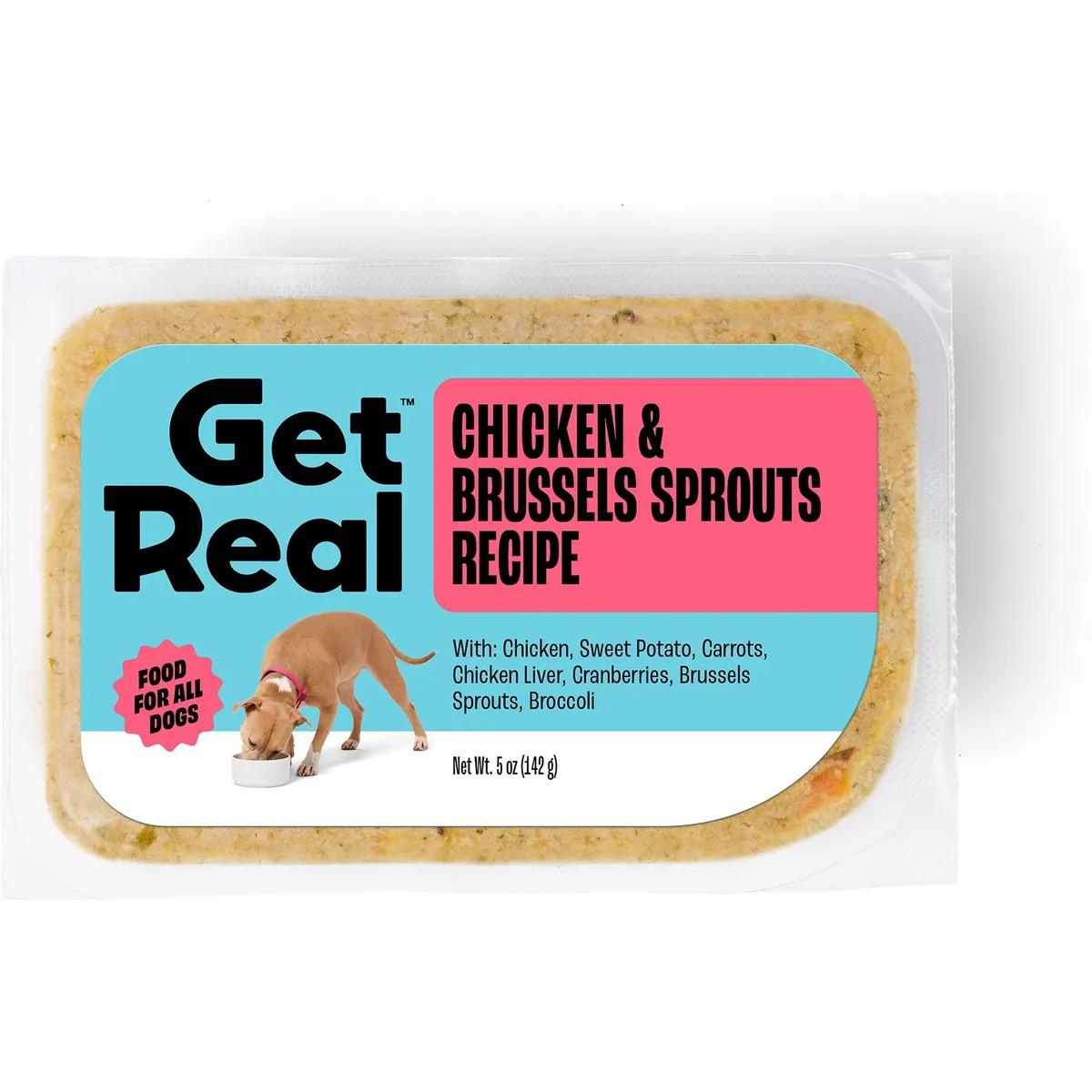
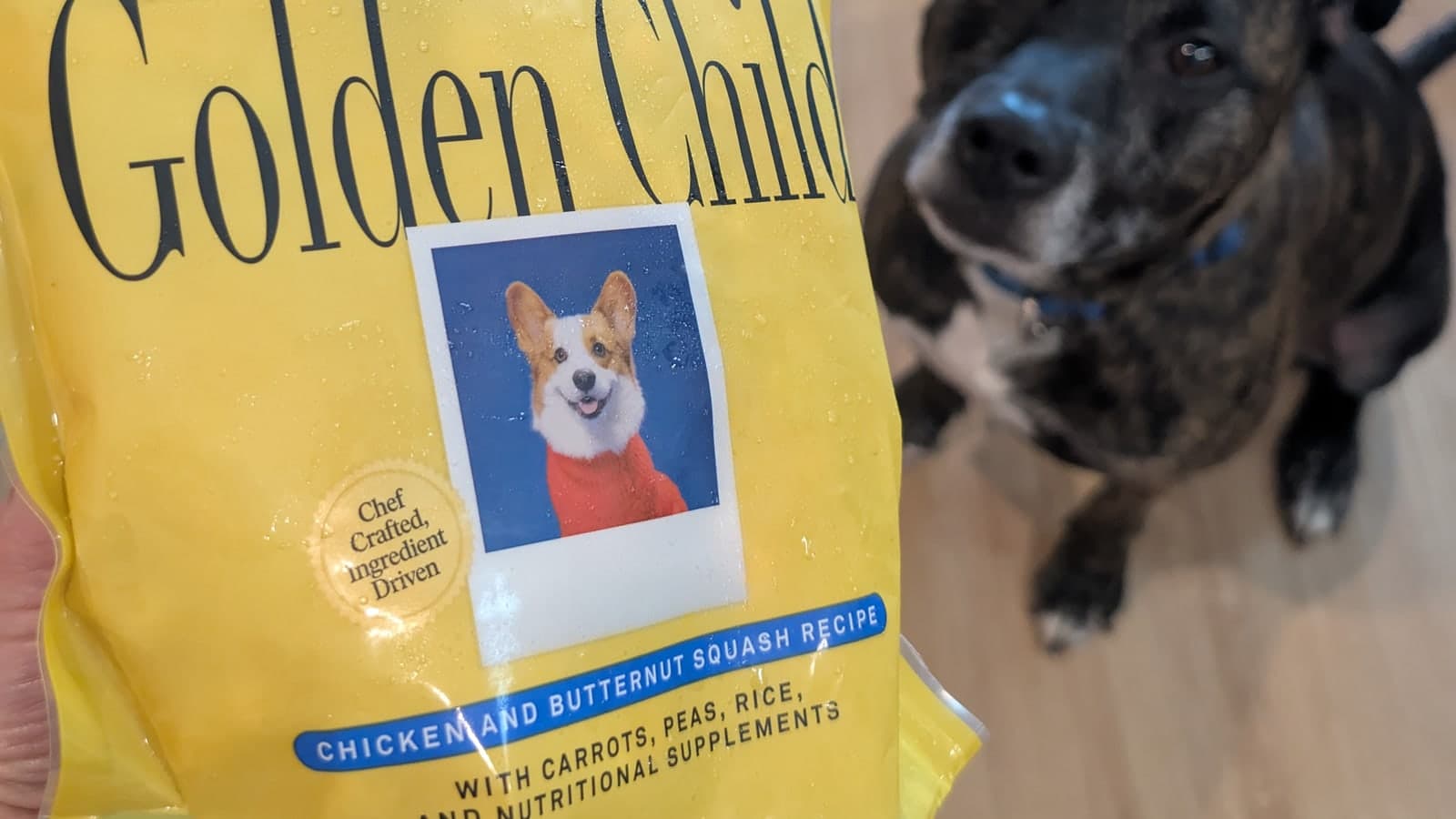
A complete chicken recipe gently cooked with Brussels sprouts, easy to spoon over kibble while you cut the dry portion to match.
Petful may earn a commission when you click through to Chewy, at no extra cost to you.
What makes it work is calorie math, not the mixing itself. Kibble is calorie dense and fresh food is mostly moisture, so a scoop of fresh food added on top of a full kibble portion can quietly add 10 to 20 percent more calories a day. Decide your dog's daily calorie target first (your veterinarian can help, and your current food's label is a starting point), then split it between the two foods. Keep a complete and balanced base diet. Complete and balanced means a food meets an AAFCO nutrient profile for your dog's life stage, so it can be fed alone as a full meal. If both foods meet an AAFCO nutrient profile for your dog's life stage, any mix of the two stays balanced.
If you are new to fresh food, our fresh dog food guide explains how it differs from kibble and canned food.
Benefits of mixing fresh food with kibble
Partial fresh feeding gives you many of the reasons people choose fresh food without changing everything at once:
- Picky eaters often eat more readily when a fresh topper adds aroma and moisture.
- Extra moisture helps dogs who drink little water.
- You can keep the kibble your dog does well on and add variety on top.
- Cost and freezer space scale with the ratio you choose.
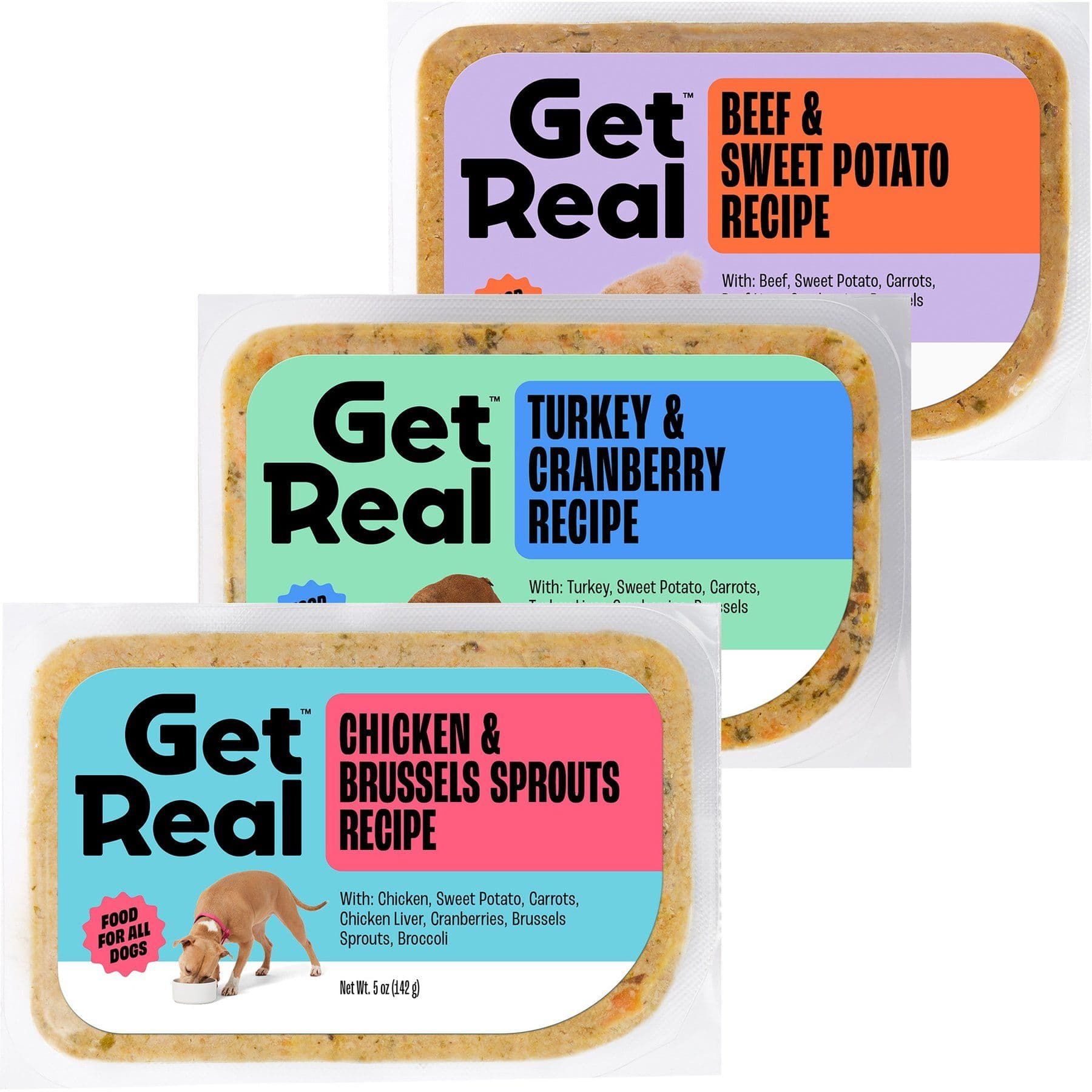
Trying fresh food as a topper for the first time? A sampler lets you test turkey, beef, and chicken recipes on top of your current kibble.
Petful may earn a commission when you click through to Chewy, at no extra cost to you.
Owners often report shinier coats and more enthusiasm at mealtime; our article on the benefits of fresh dog food covers what to watch for in the first month. Results vary from dog to dog, and the biggest practical benefit is simply a bowl your dog wants to finish.
Fresh-to-kibble ratios that work
There is no single correct ratio for mixing dry and wet dog food. Pick the one that fits your goal and budget, then cut the kibble by the same share of calories. Four ratios cover nearly every situation, and the same logic applies when you combine canned wet food with dry food, since canned food also has fewer calories per spoonful than kibble.
| Ratio | Fresh share of daily calories | Cut the kibble by | Best for |
|---|---|---|---|
| Topper | About 10 to 20 percent | About 10 to 20 percent | Picky eaters, first try |
| Quarter fresh ratio | 25 percent | 25 percent | Budget-friendly routine |
| Half and half | 50 percent | 50 percent | Most of the fresh benefits |
| Three-quarter fresh | 75 percent | 75 percent | Near full fresh feeding |
Here is a worked example using published calorie figures for Get Real fresh food. Say your dog's daily target is 1,000 kcal. The Chicken & Brussels Sprouts recipe provides 428 kcal per 12 oz pack, or about 36 kcal per ounce.
- Topper: one 5 oz Chicken mixer pack adds 179 kcal, about 18 percent of the day, so cut the kibble by about 179 kcal. Half a pack keeps the topper near 10 percent.
- Quarter fresh ratio: 250 kcal of fresh food, about 7 oz, and 750 kcal of kibble.
- Half and half: 500 kcal fresh, about 14 oz, and 500 kcal of kibble.
- Three-quarter fresh: 750 kcal fresh, about 21 oz, and 250 kcal of kibble.
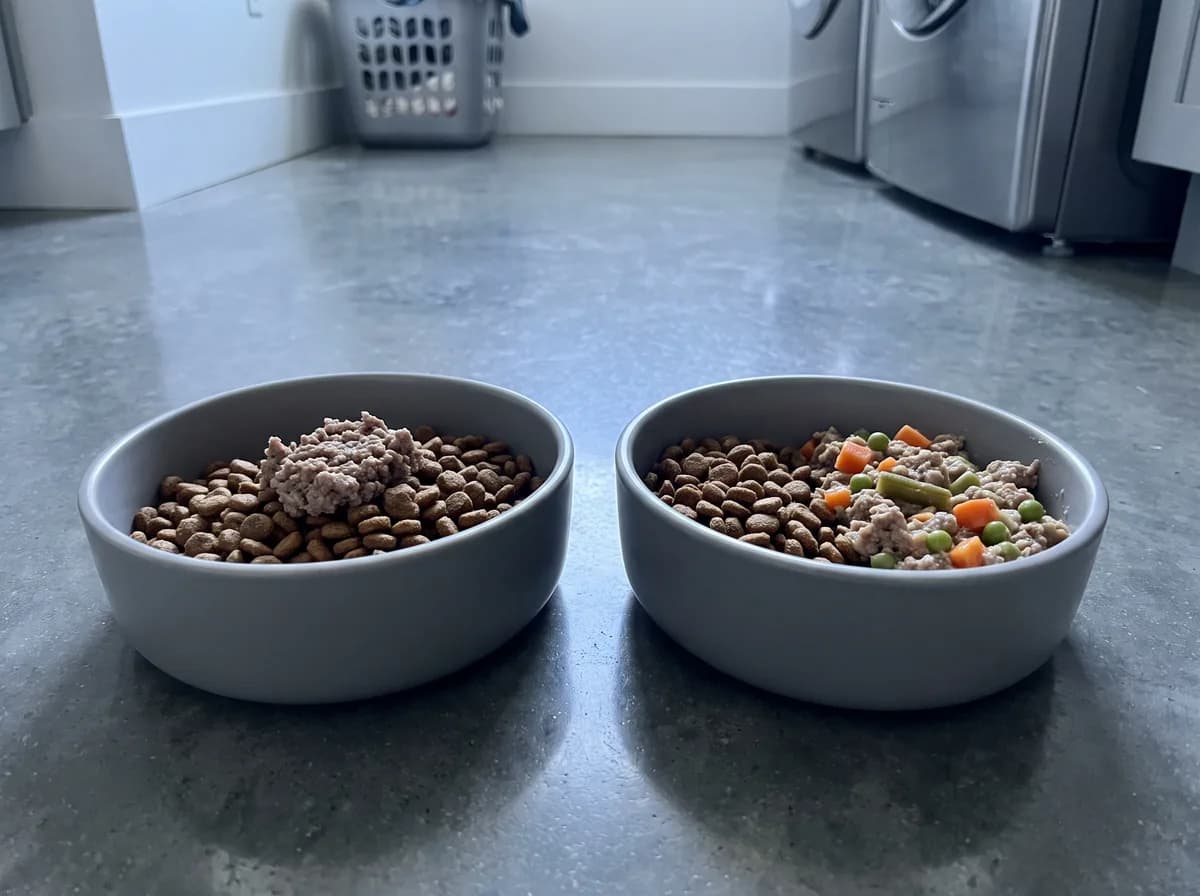
To convert the kibble side, divide the calories by the kcal per cup printed on your kibble bag. The Get Real Chicken & Brussels Sprouts Recipe is used here, but the same method works with any recipe's kcal per pack.
Puppies can eat a wet and dry mix too, with two extra checks. Both foods should be labeled for growth or all life stages, and portions change quickly as the puppy grows, so recheck the ratio and the calorie split every few weeks. For large-breed puppies, the food must meet AAFCO growth requirements for large dogs, because excess calcium and calories affect bone development.
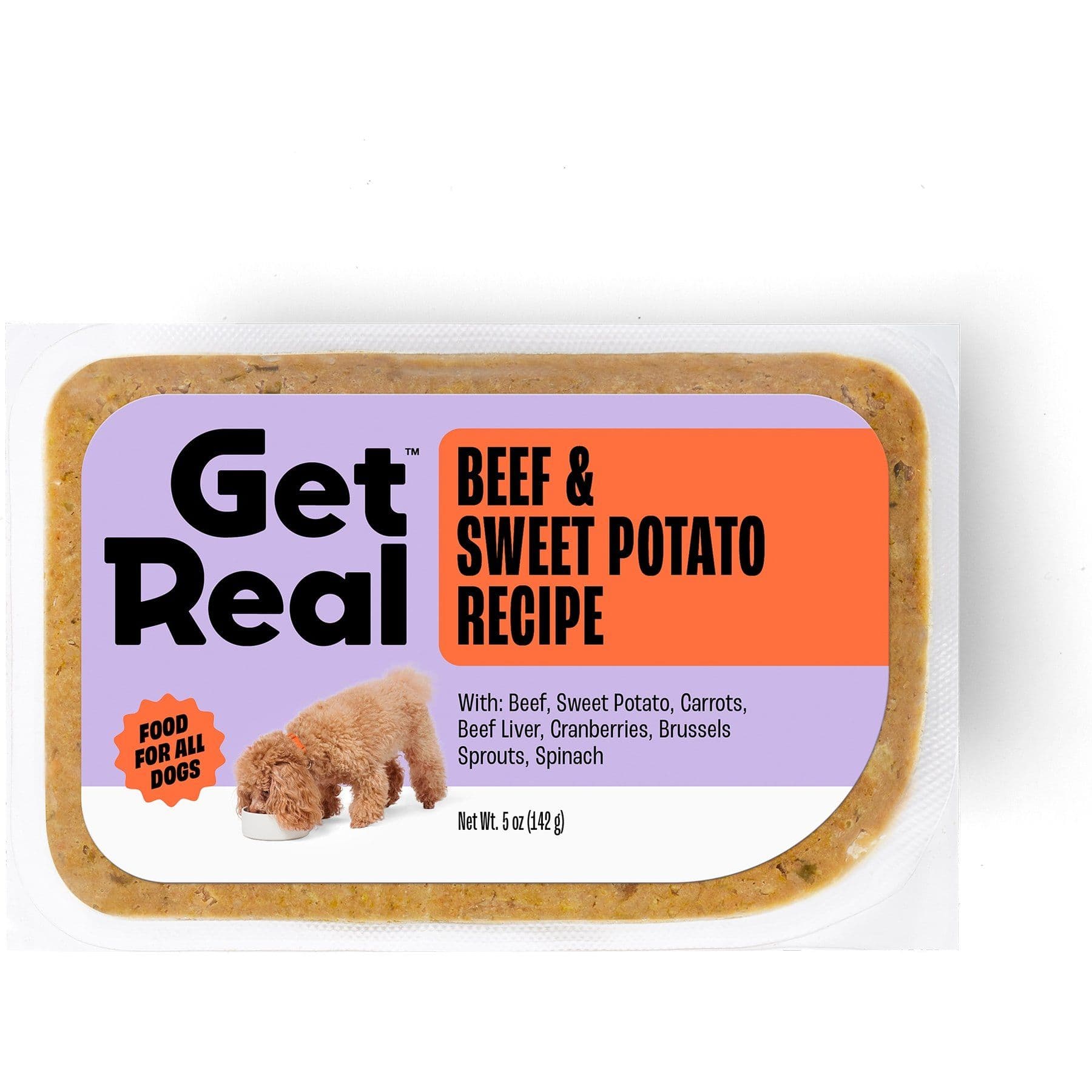
Every Get Real recipe is formulated to AAFCO profiles for all life stages, including large-breed growth, so it can share a puppy's bowl with growth-labeled kibble.
Petful may earn a commission when you click through to Chewy, at no extra cost to you.
How to transition to a fresh and kibble mix
How long does it take for a dog to adjust to a new dog food? Most dogs adjust in 7 to 10 days; dogs with sensitive stomachs may need 10 to 14 days. Start with a small spoonful of fresh food and build toward your chosen ratio:
- Days 1 to 3: a small topper, with kibble cut slightly.
- Days 4 to 6: about a quarter fresh by calories.
- Days 7 to 10: your target ratio.
Soft stool during the switch is common and usually settles within a few days. If it does, hold at the current step for two or three days before moving on. Once you reach your ratio, weigh your dog every two weeks for the first two months; if weight creeps up, trim the kibble side by about 10 percent rather than shrinking the fresh portion. Vomiting, diarrhea lasting more than a day or two, or a dog that stops eating are reasons to call your veterinarian. For a full schedule, see how to switch dog food gradually, and if you plan to move all the way, read our guide to transitioning to fresh dog food.
Mixing kibble with raw, freeze-dried, and wet food
Can you feed a dog both raw and kibble? Many owners do, but raw diets carry a risk of Salmonella and Listeria for your dog and your household, and the FDA advises careful handling if you feed raw. Combining raw with cooked or dehydrated dog food follows the same calorie rule as any other mix. Gently cooked fresh food gives you a fresh meal without the raw handling concerns.
Freeze-dried food is a popular kibble partner because freeze-dried nuggets store at room temperature, but they are very calorie dense by weight, so a small handful can replace a lot of kibble. Rehydrate them with water if the label says to. Whether you feed wet, dry, or mixed dog food, any of the three can work as long as the total diet is complete and balanced and the total calories are right. Canned wet food mixed with kibble works the same way: count its calories, cut the kibble to match, and refrigerate an opened can for no more than a few days.
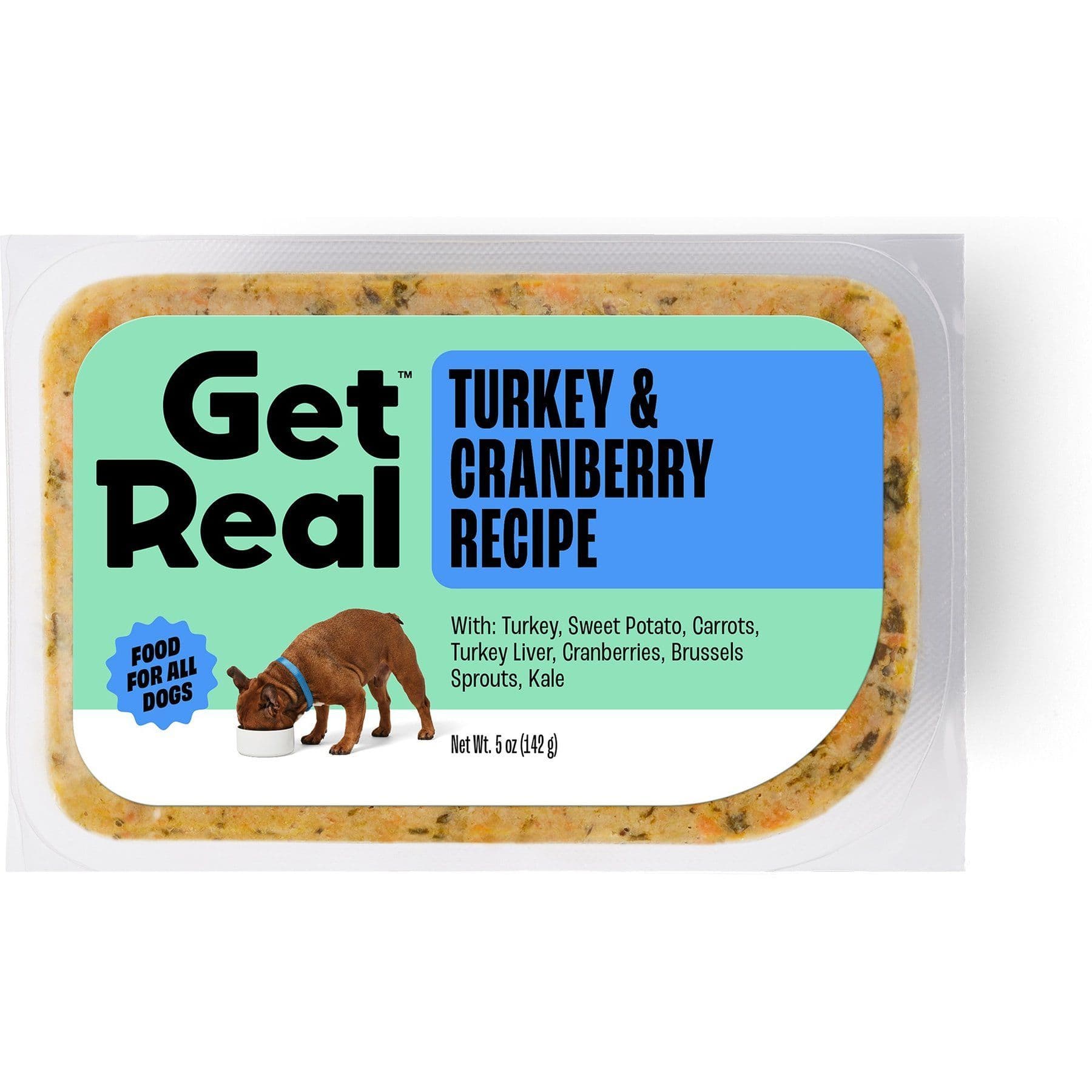
If you want a gently cooked alternative to raw on top of kibble, this turkey recipe with cranberry thaws and serves with no raw handling.
Petful may earn a commission when you click through to Chewy, at no extra cost to you.
Other mix-ins you can add to kibble
What can I mix with my dog's kibble to make him eat it? The most reliable answer is a fresh food topper, because a complete food adds aroma and moisture without unbalancing the diet. Other safe dog food mix ins work too, each with a portion boundary, listed below.
Get Real, Chewy's fresh dog food, comes in a pre-portioned 5 oz mixer pack built for topping kibble, as well as 12 oz and 24 oz packs for bigger shares of the bowl. Each recipe has 10 ingredients or less plus vitamins and minerals, is gently cooked then frozen, and is formulated to AAFCO nutrient profiles for all life stages. The Get Real Turkey & Cranberry Recipe and Get Real Beef & Sweet Potato Recipe round out the line; if you are curious about that second ingredient, see can dogs eat sweet potatoes. Get Real is sold only at Chewy in select markets, by subscription you can change, pause, or cancel.
Safe mix-ins and how much to use:
- A fresh food topper: a complete fresh food is the best choice because it adds flavor without unbalancing the diet; keep it within your calorie split.
- Warm water: a few tablespoons poured over the food releases aroma; discard leftovers after 30 minutes.
- Plain pumpkin: plain canned pumpkin (not pie filling) works at 1 to 2 teaspoons for small dogs and 1 to 2 tablespoons for large dogs.
- Plain yogurt: a spoonful is fine if your dog tolerates dairy; avoid sweetened or xylitol yogurts.
- Fish: tuna packed in water (occasionally, because of mercury) or cooked, boneless, unseasoned salmon adds strong aroma.
- Applesauce and oatmeal: unsweetened applesauce or plain cooked oatmeal is fine in small amounts.
Treat every mix-in except a complete topper as a treat, and keep treats under the 10 percent treat rule for daily calories, so a spoonful of yogurt counts just like a biscuit. Introduce one new mix-in at a time and give it three or four days before adding another, so you can tell which addition caused any loose stool.
Mistakes to avoid when mixing dog food
Most mixed-bowl problems trace back to a handful of mistakes, each with a simple fix:
- Adding without subtracting: piling fresh food on a full kibble portion is the top cause of weight gain. Fix: cut the kibble by the calories you add.
- Changing the dog food mix too fast: jumping straight to half fresh invites soft stool. Fix: build up over 7 to 10 days.
- Thawed food left out: fresh food sitting at room temperature for more than 2 hours can spoil. Fix: serve, then refrigerate or discard what is left.
- Switching flavors or brands every day: rotating dog food flavors is fine for many dogs, but frequent swaps make it hard to spot what upsets the stomach. Fix: change one thing at a time.
- Adding grease or milk: bacon grease and other fats can trigger pancreatitis, and milk upsets many dogs because of lactose. Fix: use warm water or a fresh topper instead.
- Dropping the complete base: feeding only toppers or homemade food leaves gaps. Fix: keep a complete and balanced food doing most of the work.
- Thaw frozen fresh food in the fridge, use thawed food within 3 to 5 days, and discard any portion left at room temperature over 2 hours.
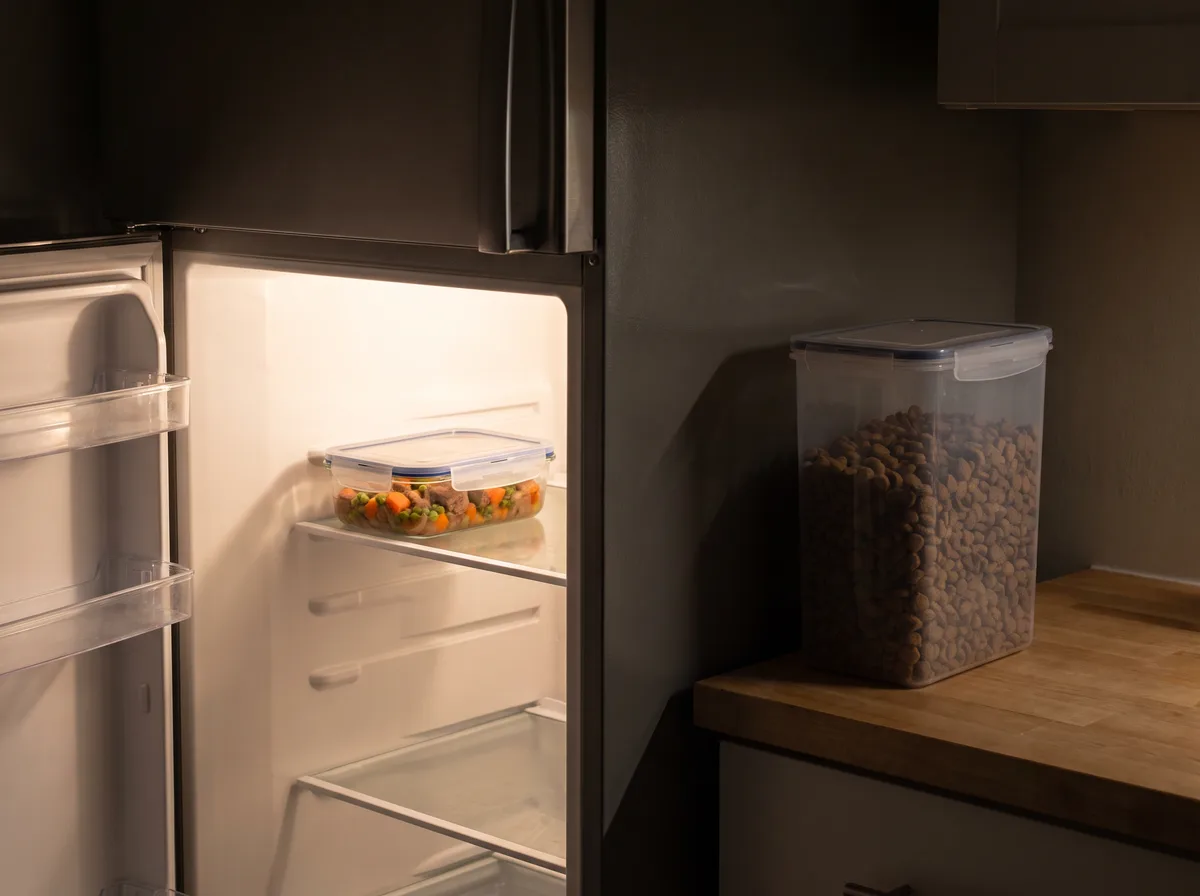
For Get Real specifically, Chewy advises thawing 5 oz and 12 oz packs in the fridge for 12 to 24 hours and 24 oz packs for 35 to 48 hours, and keeping packs frozen until you need them. Moving the next pack from the freezer to the fridge when you open the current one keeps a thawed pack ready without waste.
Frequently asked questions about mixing fresh food and kibble
Yes, as long as the kibble remains the complete base. Unbalanced homemade recipes can miss calcium and other nutrients, so keep toppers small (about 10 percent of calories) unless a veterinary nutritionist has balanced the recipe.
Leave out onions and garlic, grapes and raisins, chocolate, xylitol, macadamia nuts, cooked bones, and heavily salted or fatty foods. If you are unsure about an ingredient, check with your veterinarian first.
Some dogs get soft stool for a few days. Slow the switch and hold at the current ratio until stools firm up; call your veterinarian if vomiting or diarrhea lasts more than a day or two.
Yes. Separate meals work well, for example fresh food at breakfast and kibble at dinner. Keep the daily calorie total the same as before.
It can help picky eaters and dogs who drink little. Use warm water, let the kibble soften for a few minutes, and discard leftovers after about 30 minutes.

Coreen Saito is a pet writer and longtime shelter volunteer with more than a decade in animal rescue. She covers cat behavior, breed care, and the small, ordinary science of sharing a life with companion animals, with a particular focus on honest takes about the products and decisions that actually matter. At home in Arizona, she's outranked by Mac (a dog with the loudest opinion in the house), Rebel (a cat who governs by quiet authority), and Meri (an orange tabby who runs the late shift and the laundry basket). She writes about all three, plus the rescues that keep coming through her life, at LifeWithMinty.com.
Sign up for expert-backed reviews and safety alerts all in one place.
A Final Word (Disclaimer)
At Petful, our review integrity is paramount; we never exchange special treatment in our reviews for monetary or material rewards.
Nonetheless, when our readers click through to online merchants (including Chewy or Amazon), we receive a referral commission. This supports the running of our free blog, and we appreciate your backing.