Fresh Dog Food vs Wet Dog Food: Which Is Better for Your Dog?
Fresh dog food vs wet dog food: compare processing, protein on a dry matter basis, storage, and cost per day, and learn when canned wet food still makes sense and where Get Real fits.
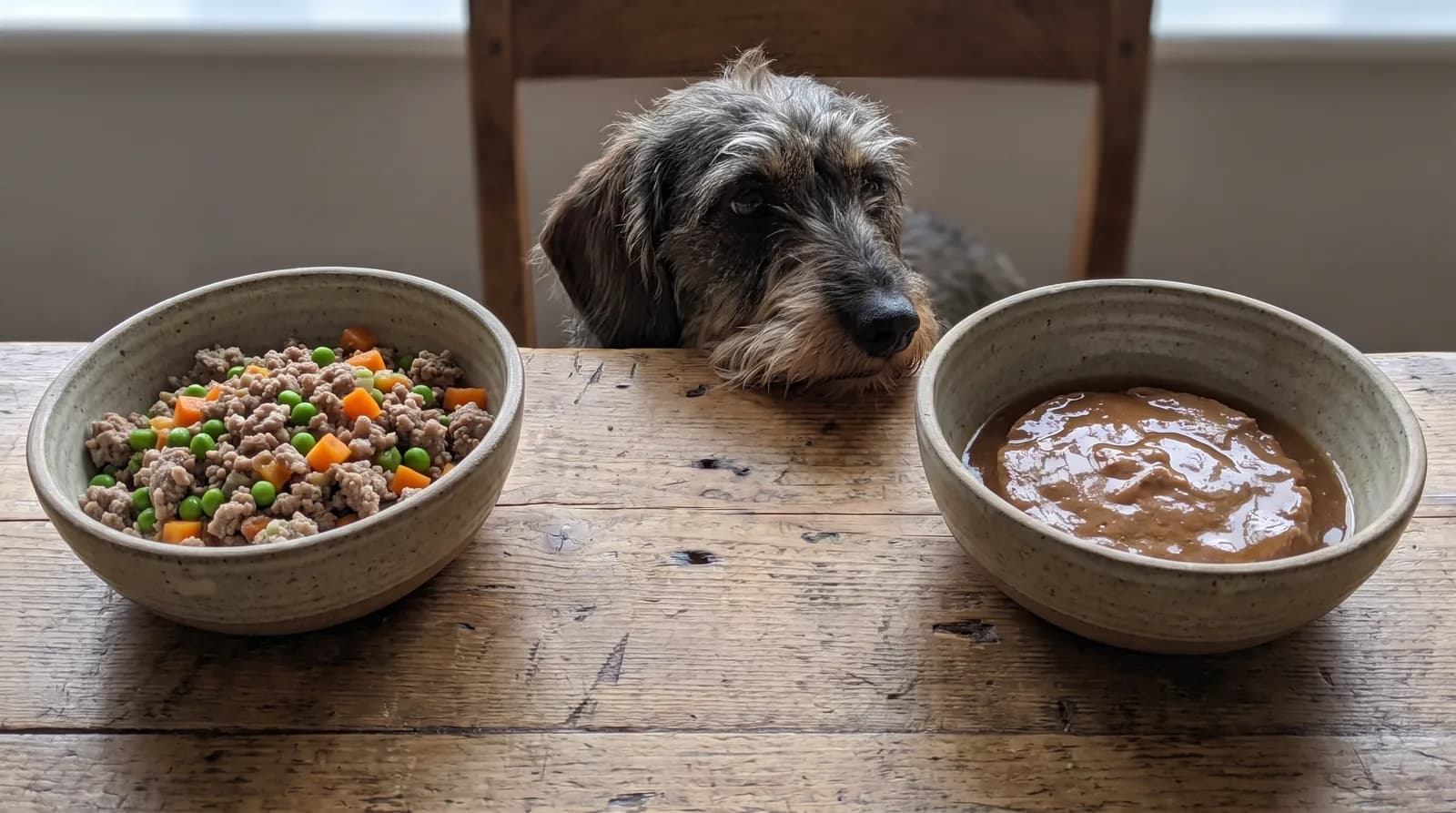
Fresh food shows visible meat and vegetables; wet food is usually a smooth pate or chunks in gravy.
Petful is reader supported. As an affiliate of platforms like Amazon and Chewy, we may earn a commission when you buy through links on this page. There is no extra cost to you.
- This article is sponsored by Get Real, the gently cooked fresh dog food sold at Chewy. Petful was paid for this placement and may earn a commission when you buy through links in this article. Product details come from Chewy's published information; the guidance and opinions are Petful's own.
Fresh dog food vs wet dog food comes down to processing, storage, and budget more than a clear nutritional winner. Fresh food is gently cooked in small batches and kept frozen or refrigerated, while canned wet food is sealed and heat-sterilized so it keeps in the pantry for a long time. Both can be complete and balanced, and both are high in moisture.
So which is better for your dog? If your budget and freezer allow it, fresh food offers simple recipes and portioned meals; if you need shelf-stable convenience, a senior dog's favorite texture, or a low-cost topper, canned food still earns its place. Below, we compare the two on processing, nutrients on a dry matter basis, storage, and cost per day.

A gently cooked chicken recipe with Brussels sprouts, portioned and frozen, for owners who want to try fresh food beside or instead of canned.
Petful may earn a commission when you click through to Chewy, at no extra cost to you.

Sign up for expert-backed reviews and safety alerts all in one place.
Fresh dog food vs wet dog food: the short answer
- 1Fresh food is gently cooked and kept cold, while canned wet food is sealed and sterilized for the pantry.
- 2Both are mostly water, so compare protein and fat on a dry matter basis, not the label as printed.
- 3Thawed fresh food and opened canned wet food both belong covered in the fridge and should be used within a few days.
- 4Compare cost per day using calories, because packs and cans hold very different amounts of food.
The short version: gently cooked fresh food and canned wet food are closer than most marketing suggests. Fresh made dog food usually uses whole meats and vegetables you can recognize, is portioned for your dog, and ships frozen or as fresh refrigerated dog food. Canned wet food is cooked inside the sealed can, which makes it shelf-stable, widely available, and easy to buy one can at a time.
The deciding factors for most households are practical: how much freezer or fridge space you have, how picky your dog is, what you want to spend per day, and whether you want a full meal or a topper. The sections below walk through each one.
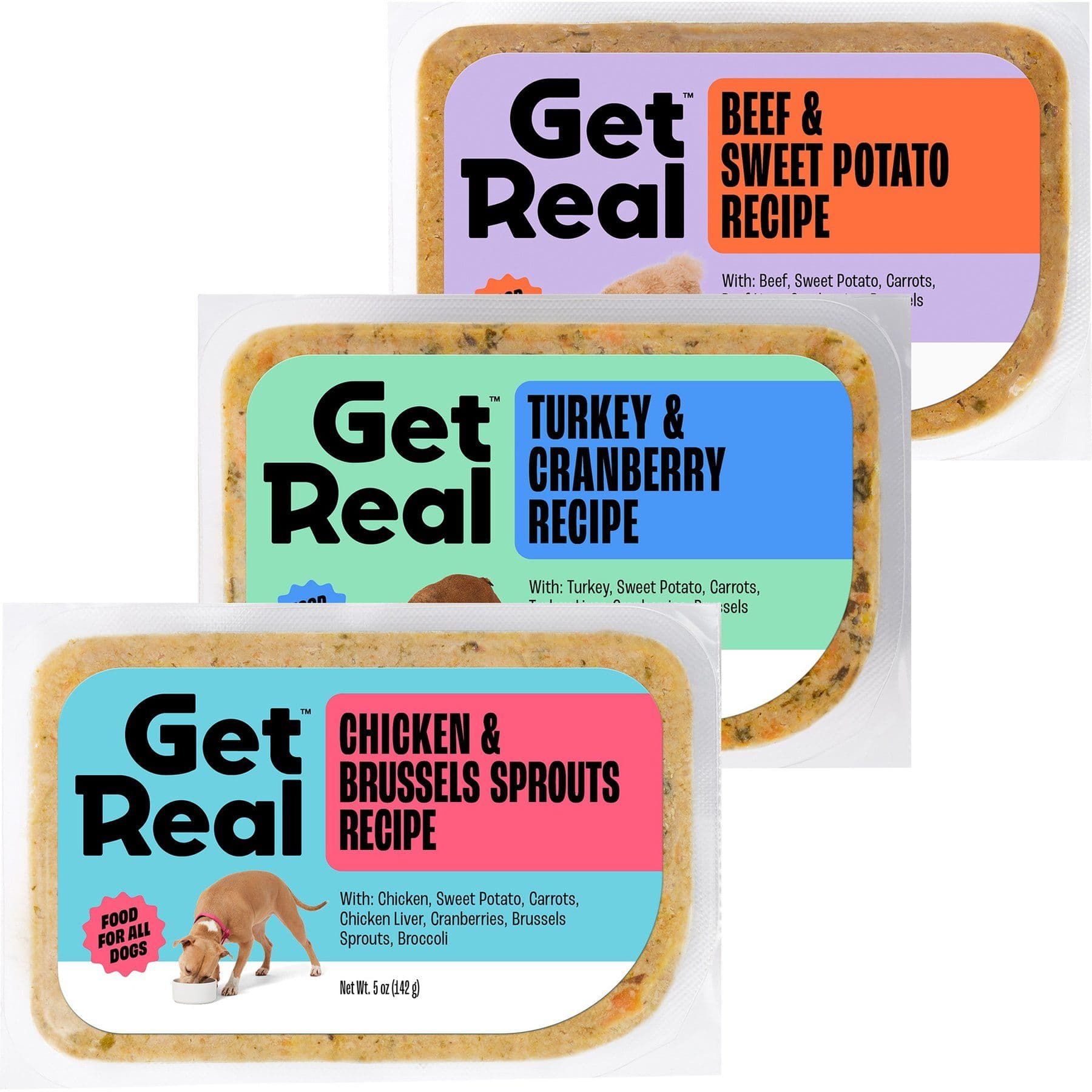
A sampler with beef, chicken, and turkey lets you try three fresh recipes on your own dog before you decide between fresh, canned, or a mix of both.
Petful may earn a commission when you click through to Chewy, at no extra cost to you.
How fresh and canned food are made
Processing is the biggest real difference between the two formats:
- Fresh food: ingredients are cooked at lower temperatures for a shorter time, portioned into packs, then frozen or refrigerated. It needs the cold chain from kitchen to your bowl.
- Canned wet food: ingredients are mixed, filled into cans, sealed, and then heated under pressure. This retort processing makes the food commercially sterile, so unopened cans keep at room temperature.
Retort processing is a safe, well-established method, and it is the reason canned food can sit in a pantry for a long time. The trade-off is texture and form: canned recipes are often loaf, pate, or chunks in gravy, and some use thickeners to hold that shape. Fresh food looks more like home cooking because it is cooked less and kept cold instead.
Neither method decides whether a food is nutritionally adequate. That comes from the recipe and the nutritional adequacy statement on the label. Look for a statement that the food meets an AAFCO nutrient profile for your dog's life stage, which means it can be fed as a complete meal.
Moisture and nutrients on a dry matter basis
Both fresh and canned food are about three-quarters water, so their labels look low in protein next to kibble. The guaranteed analysis lists nutrients as fed, with water included, which makes comparisons between formats misleading. Converting to a dry matter basis removes the water so you can compare protein and fat on equal footing.
Here is the formula you can reuse on any can or pack:
- Find the moisture percentage in the guaranteed analysis.
- Subtract it from 100 to get the dry matter percentage.
- Divide the protein (or fat) percentage by the dry matter percentage, then multiply by 100.
| Food | Protein as fed (guaranteed analysis) | Fat as fed | Moisture |
|---|---|---|---|
| Get Real Chicken & Brussels Sprouts | 10% min | 8.5% min | 75% max |
| Get Real Beef & Sweet Potato | 9% min | 7% min | 75% max |
| Get Real Turkey & Cranberry | 8% min | 10% min | 75% max |
| Typical canned label (example) | 8% min | 6% min | 78% max |
An illustration of the method: the published guaranteed analysis for the Get Real Chicken & Brussels Sprouts Recipe lists a 10 percent protein minimum and a 75 percent moisture maximum. Using those figures, 100 minus 75 leaves 25, and 10 divided by 25 gives about 40 percent. This illustration is computed from guaranteed minimums and maximums, not actual nutrient values, so it shows how the math works rather than what is in the food. The canned row is a typical label, not any one brand.
The takeaway: water hides a lot on both labels, and the specific recipe matters more than the format. Whether you are looking at canned food or the Get Real Turkey & Cranberry Recipe, read the full guaranteed analysis and ask your veterinarian which fat and protein levels suit your dog, especially a dog that gains weight easily. For a fuller explanation with more examples, WebVet's guide to dog food on a dry matter basis walks through labels step by step.
How much wet dog food is equivalent to 1 cup of dry dog food? Match calories, not volume: the equivalent amount is the kibble's kcal per cup divided by the wet food's kcal per can or ounce. AAFCO rules require a calorie content statement on dog food labels, so both numbers are printed on the packaging. For example, if your kibble provides 400 kcal per cup and a 12 oz Get Real Chicken pack provides 428 kcal (about 36 kcal per ounce), one cup of kibble equals about 11 oz of that fresh food. A canned food at 350 kcal per 13 oz can would need a little over one can to match the same cup.
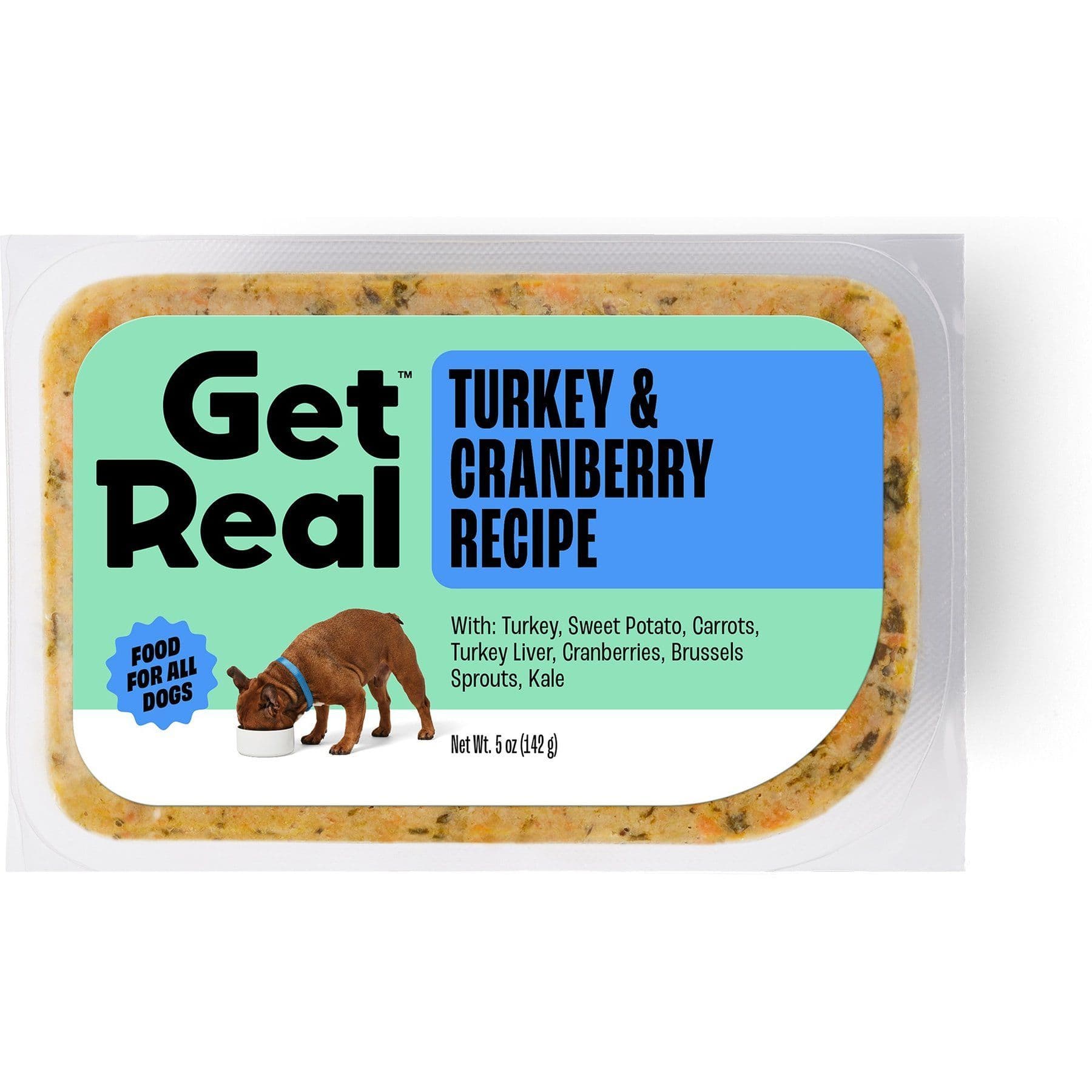
Turkey and cranberry in portioned packs, a fresh option that thaws in the fridge and serves alongside or instead of canned food.
Petful may earn a commission when you click through to Chewy, at no extra cost to you.
Storage, shelf life, and daily convenience
Storage is where the formats feel most different day to day. Unopened canned food lives in the pantry. Fresh food lives in the freezer until you need it, then thaws in the fridge.
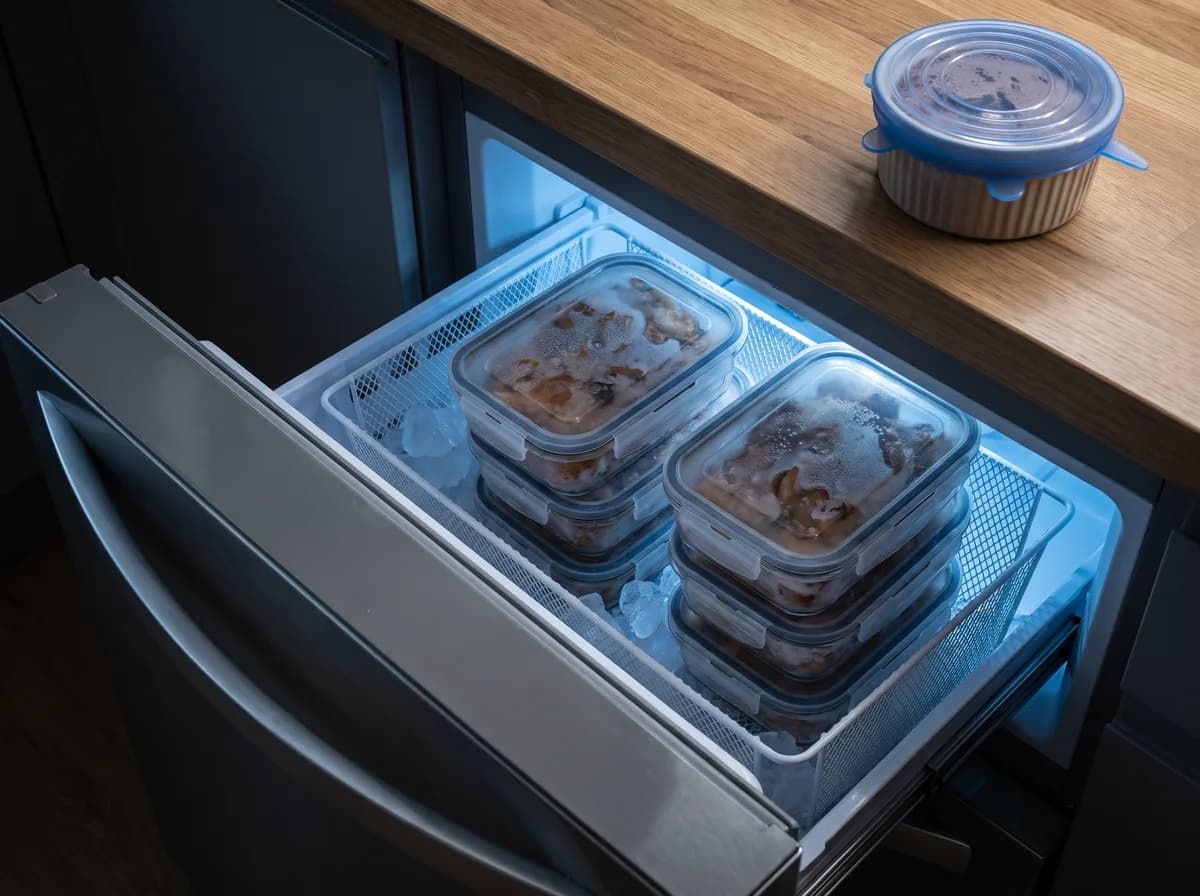
Storage after opening or thawing follows nearly the same rules for both formats:
- Opened canned food: cover it and refrigerate; most manufacturers advise using it within a few days, so check your can's label.
- Thawed Get Real: thaw 5 oz and 12 oz packs in the fridge for 12 to 24 hours and 24 oz packs for 35 to 48 hours, then use within 3 to 5 days.
- Either format: discard food left at room temperature for more than 2 hours.
Canned food wins on grab-and-go simplicity and travel. Fresh food asks for a little planning, such as moving tomorrow's pack to the fridge tonight, but the portioned packs remove the guesswork of scooping half a can.
Cost per day: how to compare fresh and canned
Fresh food generally costs more than canned food for the same calories, but the gap depends on your dog's size and whether you feed a full meal or a topper. The only fair comparison is cost per day.
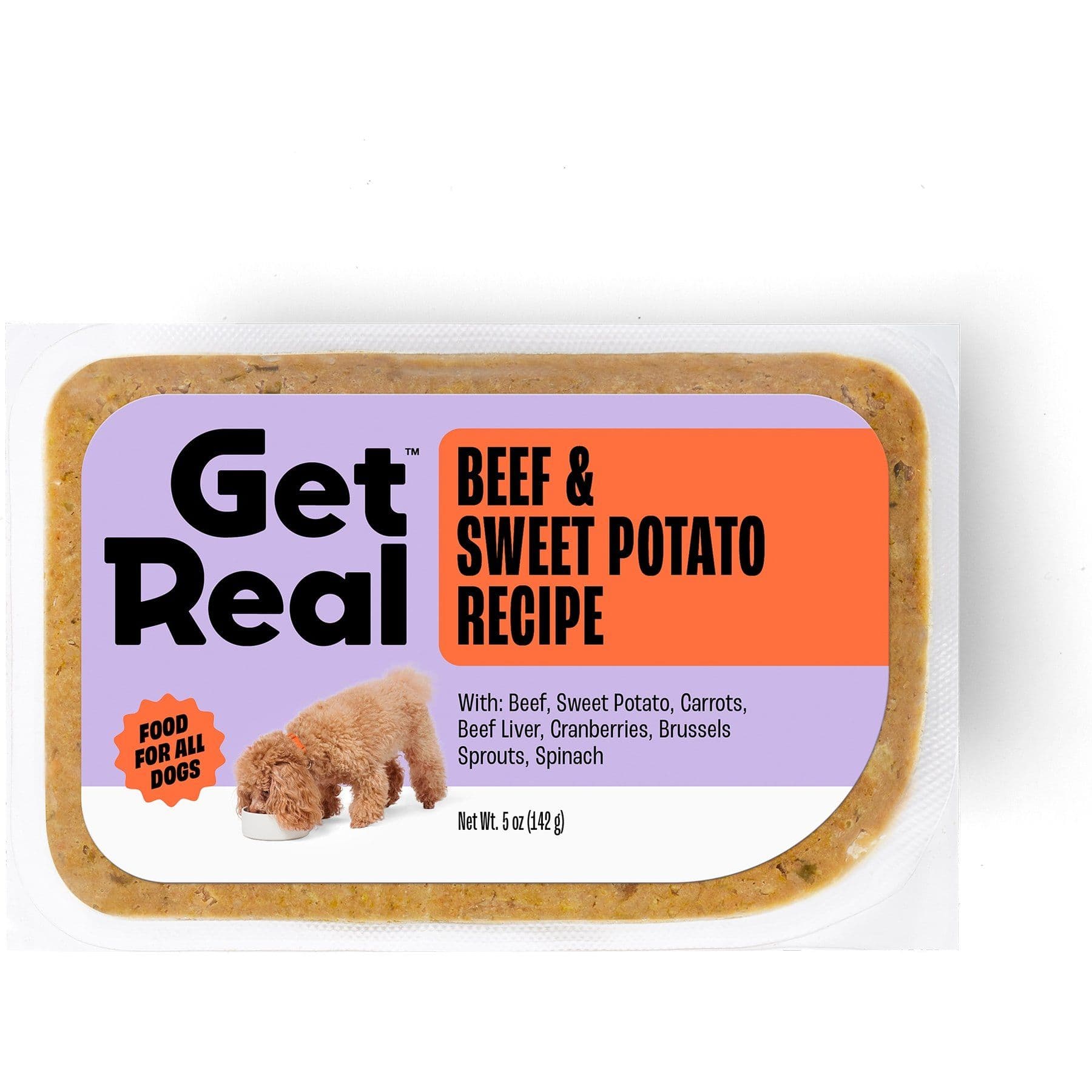
Beef and sweet potato, gently cooked and frozen in portioned packs, as a full meal or a topper over your dog's current food.
Petful may earn a commission when you click through to Chewy, at no extra cost to you.
- To find cost per day, divide the price by the calories per pack or can, then multiply by your dog's daily calories. Use the live cart price each time.
The cost per day method in practice:
- Find your dog's daily calories from your current food's feeding guide or your veterinarian.
- Read the calories per pack or can from the label. Get Real lists 428 kcal per 12 oz Chicken pack, 451 for Beef, and 474 for Turkey.
- Divide the price by those calories, then multiply by your dog's daily calories.
Using fresh food as a topper over canned food or kibble is the easiest way to lower the cost per day while still adding fresh food to the bowl. Small dogs eat few enough calories that a full fresh diet can be affordable, while large dogs often do best with a mixed bowl.
When canned wet food still makes sense
Fresh food is not the right answer for every dog or every household. Canned food still makes sense when:
- You need shelf-stable food for travel, storms, or a small freezer.
- Your dog is a senior who prefers a soft pate, or has dental problems that make chewing harder.
- You want wet food toppers for dogs on a tight budget.
- Your veterinarian has prescribed a specific canned therapeutic diet.
Do vets recommend wet or dry dog food? Most veterinarians recommend whichever complete and balanced food your dog eats well and stays at a healthy weight on. Wet food adds moisture, which helps dogs who drink little, and many owners debating wet or dry dog food land on a mix of both. Canned dog food for senior dogs is often easier to eat, and the same moisture benefit applies to fresh food.
If you choose wet dog food for senior dogs, look for a recipe labeled for adult maintenance or all life stages and ask your veterinarian about calories and kidney health. For picks, our roundup of the best wet dog food covers the best canned dog food for older dogs and other needs.
Mixing formats works too. Many owners feed canned food or kibble as the base and add a fresh topper, reducing each portion so the daily calories stay the same.
Where Get Real fits as a fresh option
Get Real is Chewy's fresh dog food line, launched in September 2025 and available as a full meal or a topper. Most fresh dog food companies ship directly to your home, and Get Real works the same way: fresh dog food delivery arrives frozen in an insulated box with dry ice, typically in about one day, through a subscription you can change, pause, or cancel. It is sold only at Chewy and available in select markets.
What the line includes, compared with other fresh dog food services:
- Three recipes: the Get Real Beef & Sweet Potato Recipe, Chicken & Brussels Sprouts, and Turkey & Cranberry.
- 10 ingredients or less plus vitamins and minerals, with human-grade ingredients gently cooked then frozen.
- Formulated to AAFCO nutrient profiles for all life stages, including growth of large-size dogs.
- Pre-portioned packs: 5 oz mixer packs for topping, plus 12 oz and 24 oz packs.
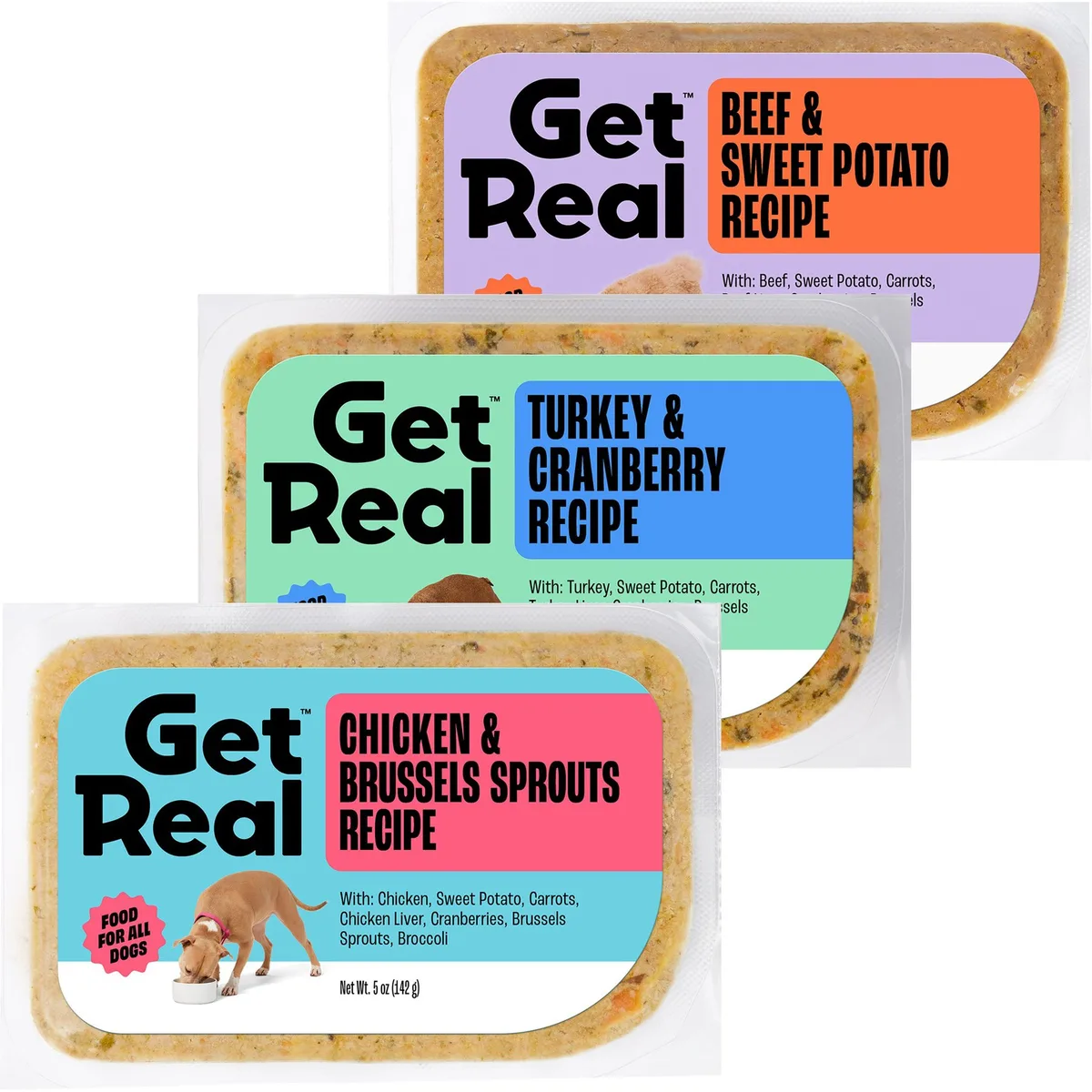
Our Get Real dog food review covers each recipe in more detail. Wondering what the healthiest fresh dog food is overall? That depends on your dog, and our fresh dog food guide compares fresh options and what to look for on the label.
If you decide to switch from canned to fresh, go gradually over 7 to 10 days, or 10 to 14 days for a sensitive stomach. Our guide to transitioning to fresh dog food lays out the steps.
Fresh vs wet dog food questions
Many veterinarians are comfortable with fresh food as long as it is complete and balanced for your dog's life stage. It is not required for good health, so ask your veterinarian whether it suits your dog's weight, age, and any medical needs.
Either can be a good choice if it is complete and balanced. Wet food boosts moisture intake and appeals to picky eaters, while dry food is cheaper and easier to store, so weigh the dental and budget trade-offs for your dog.
Yes. Reduce each portion so the bowl adds up to the same total daily calories, and keep both foods complete and balanced.
Most adult dogs do well on two meals a day, and puppies need three or four. Keep a steady feeding schedule and split the daily amount between meals.
Yes, you can mix fresh and wet food in the same bowl. Make a gradual transition over about a week and cut the canned portion to keep calories steady.
Both should be covered in the fridge. Thawed Get Real should be used within three to five days, and opened cans usually within a similar few days, so check each label.

Coreen Saito is a pet writer and longtime shelter volunteer with more than a decade in animal rescue. She covers cat behavior, breed care, and the small, ordinary science of sharing a life with companion animals, with a particular focus on honest takes about the products and decisions that actually matter. At home in Arizona, she's outranked by Mac (a dog with the loudest opinion in the house), Rebel (a cat who governs by quiet authority), and Meri (an orange tabby who runs the late shift and the laundry basket). She writes about all three, plus the rescues that keep coming through her life, at LifeWithMinty.com.
Sign up for expert-backed reviews and safety alerts all in one place.
A Final Word (Disclaimer)
At Petful, our review integrity is paramount; we never exchange special treatment in our reviews for monetary or material rewards.
Nonetheless, when our readers click through to online merchants (including Chewy or Amazon), we receive a referral commission. This supports the running of our free blog, and we appreciate your backing.