Fresh Dog Food for Large Dogs: Portions, Cost, and What to Look For
Fresh dog food for large dogs is practical once you know the numbers. See daily ounces for 60 to 100 pound dogs, a monthly cost method, freezer planning, and what to check on the label.
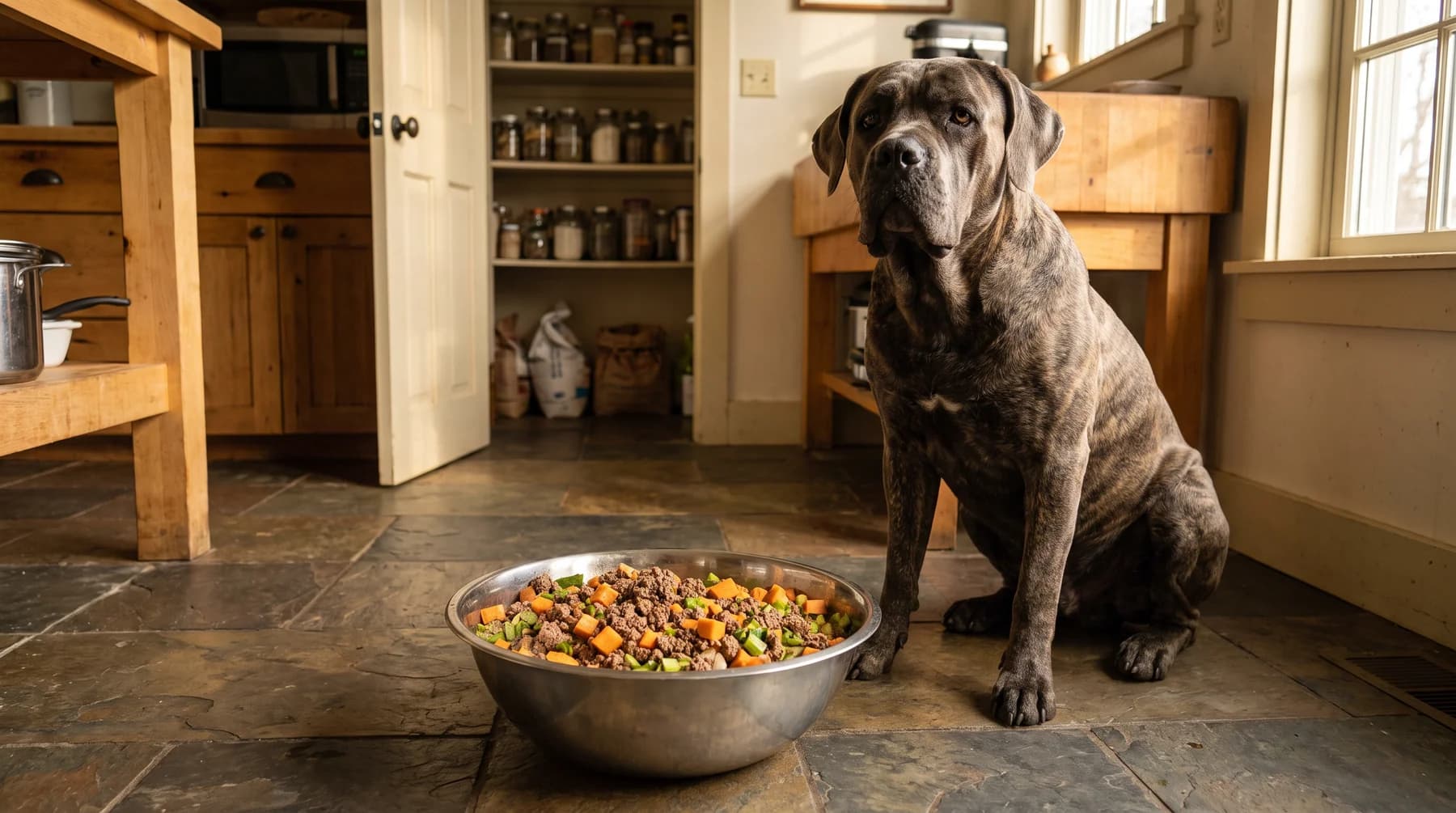
A big dog's daily portion of fresh food fills a much larger bowl than kibble, so planning ounces per day matters.
Petful is reader supported. As an affiliate of platforms like Amazon and Chewy, we may earn a commission when you buy through links on this page. There is no extra cost to you.
- This article is sponsored by Get Real, the gently cooked fresh dog food sold at Chewy. Petful was paid for this placement and may earn a commission when you buy through links in this article. Product details come from Chewy's published information; the guidance and opinions are Petful's own.
Fresh dog food for large dogs is practical when you plan three numbers before the first order: how many ounces your dog eats a day, what that adds up to each month, and how much freezer space a week of food takes. A 60 to 100 pound adult typically eats somewhere around 34 to 55 ounces of gently cooked food a day, which is a lot of food to store and budget for.
The good news is that the math is simple once you know the calories in each pack. This guide works through daily ounces for real big-dog weights, a cost method you can run with the live cart price, a freezer plan, and the label details that matter most for big breeds and growing puppies.

Sign up for expert-backed reviews and safety alerts all in one place.
What large dogs need from a fresh food
- 1Most large adult dogs need roughly 34 to 55 daily ounces of fresh food, depending on weight, recipe, and activity.
- 2Packs per week, not price per pack, is the number that drives a big dog's monthly cost.
- 3Plan freezer space for a full week of food before you order, since packs must stay frozen until thawing.
- 4A topper plan that replaces part of the kibble is the easiest way to add fresh food on a budget.
- 5For a puppy, check that the food meets AAFCO nutrient profiles for all life stages, including growth of large size dogs.
A big dog does not need a different kind of nutrition than a small one, but the stakes of getting the label and the amount right are higher. Three things matter most when choosing fresh dog food for large dogs: a complete and balanced statement, a calorie density you can work with, and a format that fits your kitchen. A 90 pound dog eating an incomplete topper as a full meal would run short on vitamins and minerals, and small errors in portion size add up fast on a large frame.
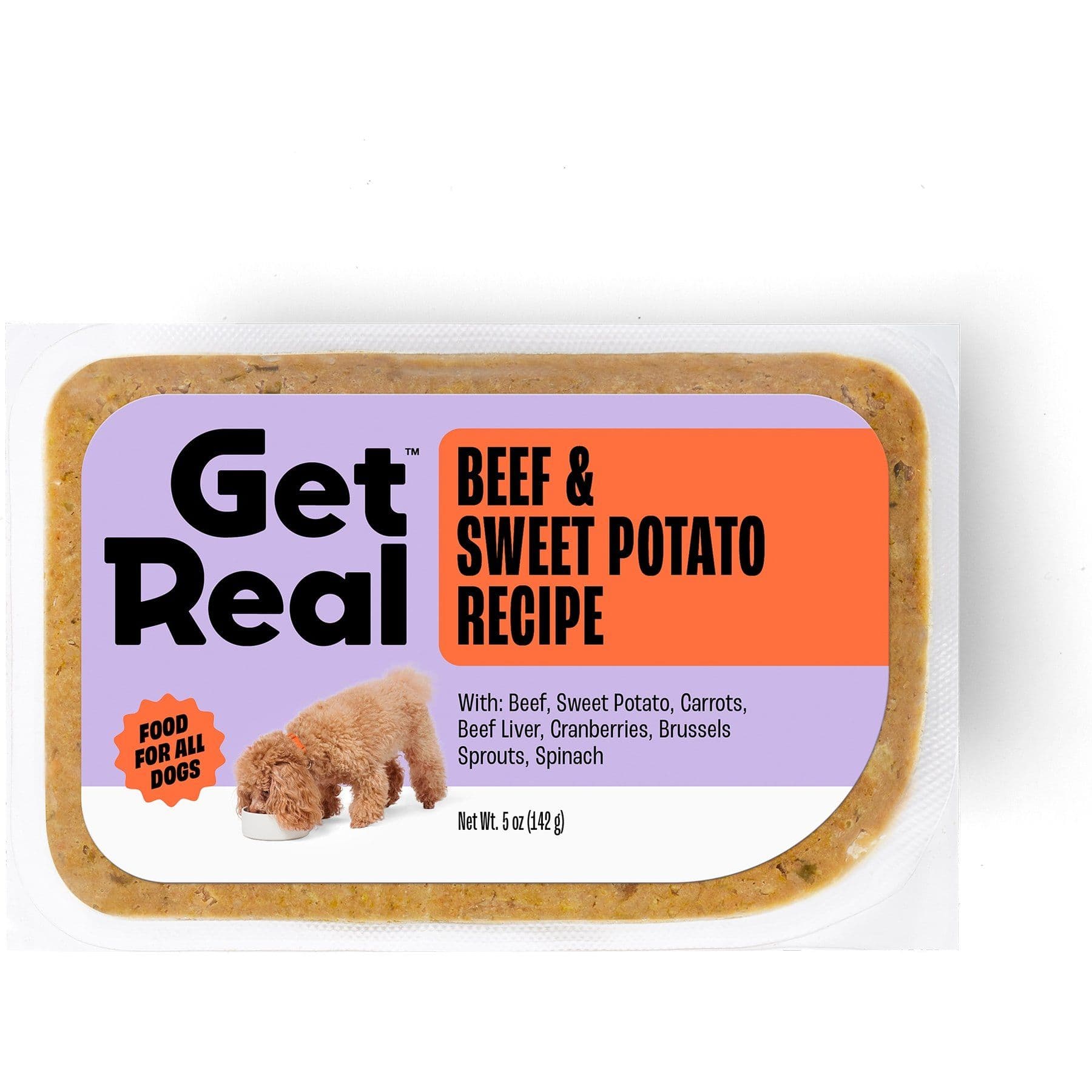
Feeding a big dog who does well on beef? Get Real Beef & Sweet Potato comes in 24 oz packs, meets AAFCO nutrient profiles for all life stages, and publishes its calories per pack so portions are easy to plan.
Petful may earn a commission when you click through to Chewy, at no extra cost to you.
Start with the nutritional adequacy statement. AAFCO publishes the nutrient profiles most US pet foods use to claim a recipe is complete and balanced. For a big breed, look for wording that covers your dog's life stage, and for a puppy that will weigh 70 pounds or more as an adult, wording that includes growth of large size dogs.
Large-breed puppy growth deserves its own check. Puppies of breeds such as Labradors, German Shepherds, and Great Danes grow for 12 to 24 months, and both excess calories and excess calcium can push growth too fast; too much calcium during growth is linked to skeletal problems in big breeds, which is why the large-size growth profile limits it. A fresh food that meets the all life stages profile including growth of large size dogs is formulated for that stage, but portions still need to follow the puppy's body condition rather than appetite. Weigh a large-breed puppy every couple of weeks and adjust with your veterinarian.
When you look at fresh dog food recipes for large dogs, these traits make life easier:
- A named animal protein first on the ingredient list.
- A short, readable ingredient list with vitamins and minerals added to complete the recipe.
- Published calories per pack, so you can convert your dog's needs into ounces.
- Pre-portioned packs in a size that suits a big appetite, so you are not opening a dozen small packs a day.
- Clear thawing and storage rules you can follow on a busy week.
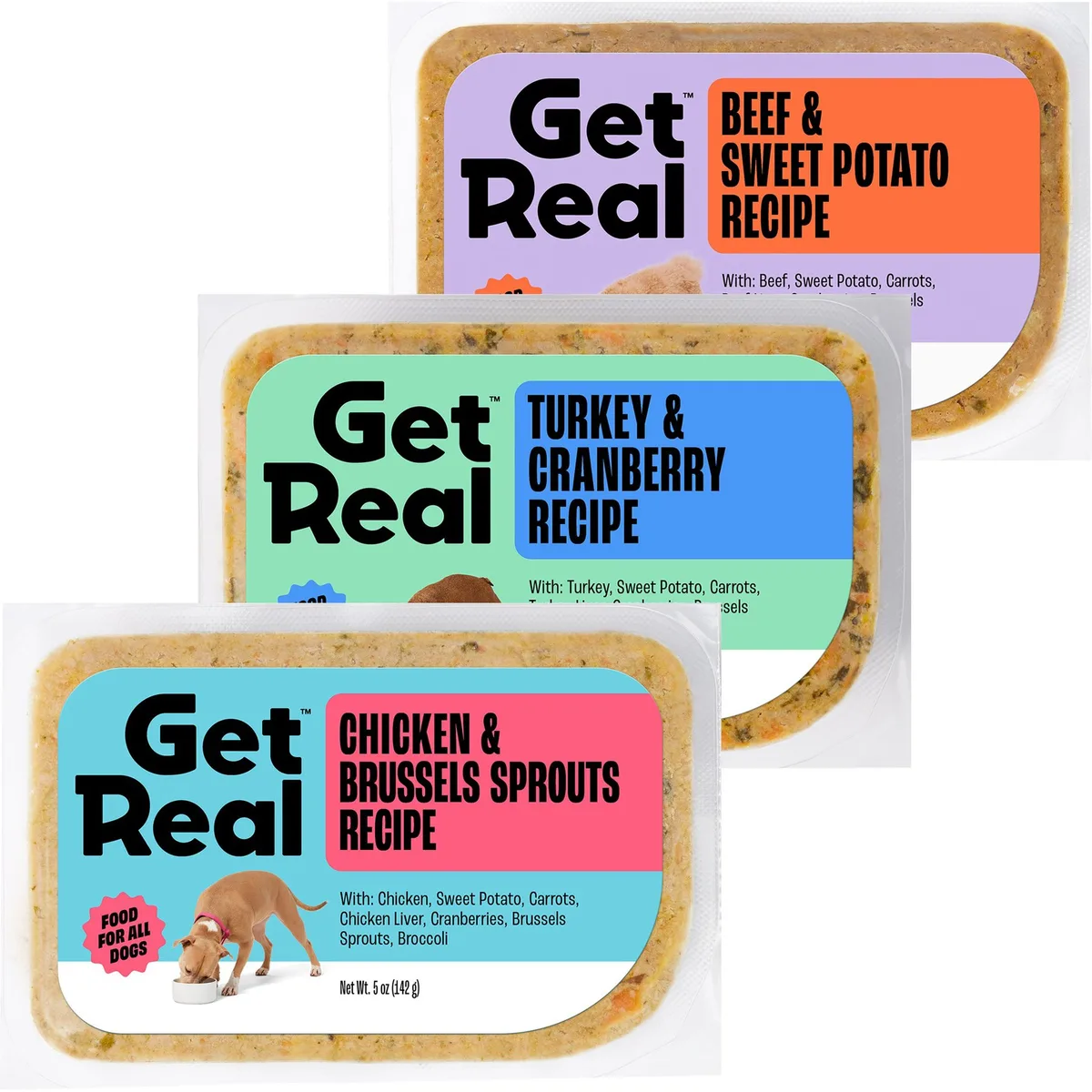
Get Real, Chewy's fresh dog food line, checks those boxes. Each recipe is gently cooked and then frozen, made with human-grade ingredients, and built on 10 ingredients or less plus vitamins and minerals. Chewy states that all three recipes meet AAFCO nutrient profiles for all life stages, including growth of large size dogs (70 pounds or more as an adult). The packs come in 12 oz and 24 oz sizes for meals, plus a 5 oz mixer pack.
For a large adult, the 24 oz pack is usually the practical size, because one pack covers roughly half to two-thirds of a day for a 60 to 80 pound adult, by the portion table below, rather than splitting a day across several small packs. If you want to read more on the wider category before narrowing it to big dogs, our fresh dog food guide covers how fresh food compares with kibble and canned diets.
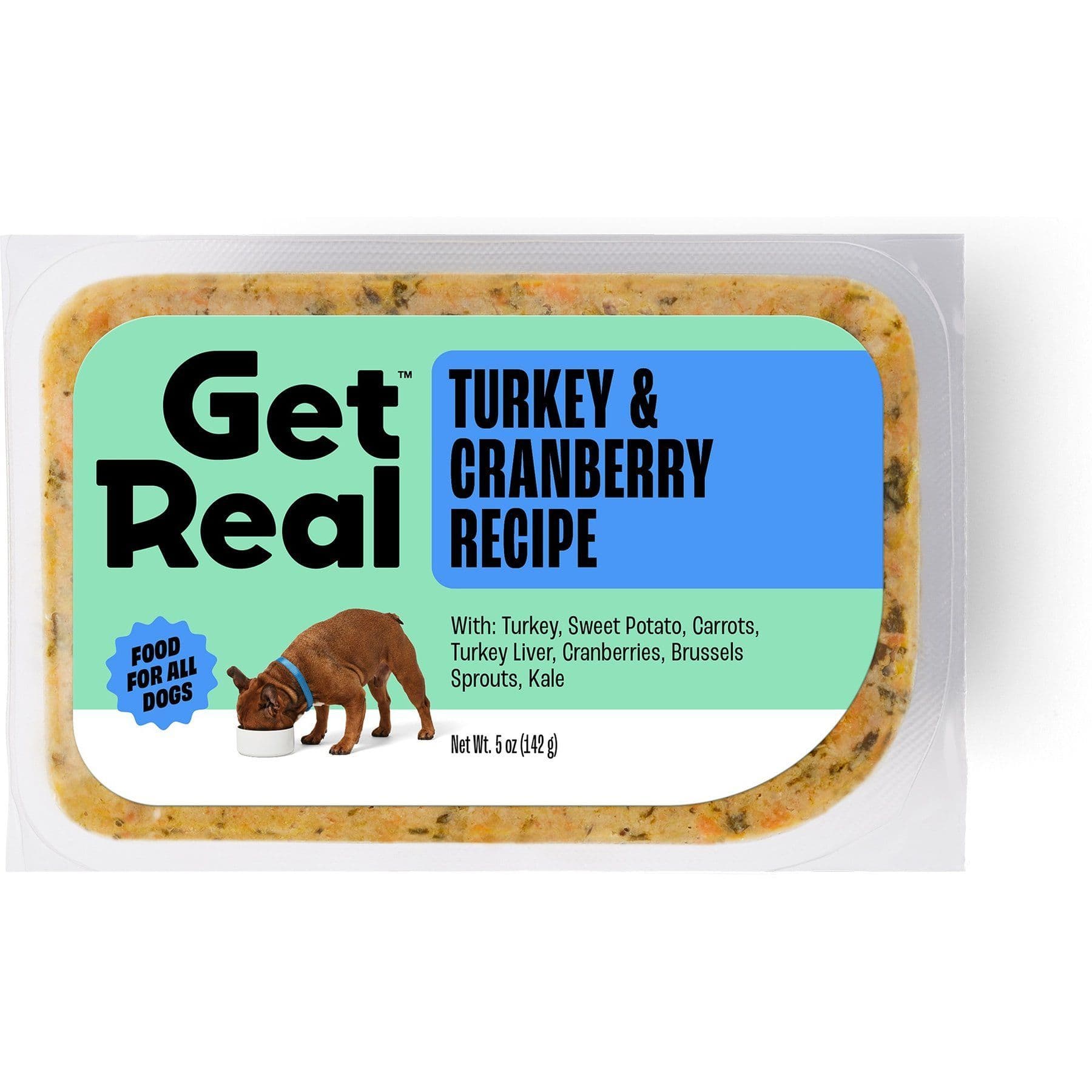
Want the most calories in each pack for a big appetite? Get Real Turkey & Cranberry has the highest calories per pack of the three recipes, so a large dog needs slightly fewer ounces a day.
Petful may earn a commission when you click through to Chewy, at no extra cost to you.
How much fresh food a large dog eats each day
Fresh food works for big dogs, and a typical 60 to 100 pound adult needs about 34 to 55 ounces a day, depending on the recipe and how active the dog is. The way to get there is to start from calories, then divide by the calories per pack. The worked examples below show the actual ounces per day by weight so you can judge whether fresh food fits your fridge and budget before you sign up.
Here is how the estimate works, step by step:
- Convert your dog's weight to kilograms by dividing pounds by 2.2.
- Work out the resting energy requirement: 70 multiplied by body weight in kilograms raised to the 0.75 power, the standard formula used in veterinary nutrition references such as the WSAVA nutrition guidelines.
- Multiply by 1.6 for a typical neutered, moderately active adult. Intact or working dogs may need more; less active seniors often need less.
- Divide the daily calories by the recipe's calories per ounce to get ounces per day.
- Multiply by 7 and divide by the pack size to get packs per week.
Chewy publishes calories per pack for each Get Real recipe. A 24 oz pack holds 856 kcal of Chicken & Brussels Sprouts, 902 kcal of Beef & Sweet Potato, or 948 kcal of Turkey & Cranberry, which works out to about 36, 38, and 40 calories per ounce. Turkey is the most calorie-dense of the three, so a dog needs slightly fewer ounces of it.
| Adult weight | Starting calories per day | Chicken & Brussels Sprouts | Beef & Sweet Potato | Turkey & Cranberry | 24 oz packs per week |
|---|---|---|---|---|---|
| 60 lb | About 1,335 kcal | About 37 oz per day | About 36 oz per day | About 34 oz per day | About 10 to 11 |
| 80 lb | About 1,655 kcal | About 46 oz per day | About 44 oz per day | About 42 oz per day | About 12 to 14 |
| 100 lb | About 1,960 kcal | About 55 oz per day | About 52 oz per day | About 50 oz per day | About 15 to 16 |
These ounces per day by weight are a starting estimate, not a prescription. Individual dogs vary by 20 percent or more in either direction, and treats, chews, and any kibble you keep in the bowl also count toward the day's calories. Chewy sets Get Real portions through its online plan, which asks about weight, breed, age, and activity level, so compare its number with yours and let your dog's body condition settle the difference.
The best check is body condition. You should be able to feel your dog's ribs easily under a thin layer of fat and see a waist from above. Weigh your dog every two weeks for the first two months of fresh feeding. If weight creeps up, trim the daily amount by about 10 percent; if your dog looks lean or hungry, add the same.
Splitting the daily amount helps big dogs too. Two or more meals a day keep each portion smaller, and it makes thawing easier: a 60 pound dog eating 34 to 37 ounces a day works through about one and a half 24 oz packs daily, so keep two days' worth thawed at once.
Estimating the monthly cost for a big dog
Cost is where large dogs feel fresh food most, because a 100 pound dog eats roughly one and a half times what a 60 pound dog does. Rather than guess, run the numbers with the live cart price, since prices change and vary by recipe and plan size.
- A simple monthly cost estimate method: find your dog's packs per week from the portion table, multiply by the current price per pack in your cart, then multiply by 4.3 weeks. If the total is more than you want to spend, price a topper plan that replaces a quarter or half of the kibble instead.
That monthly cost estimate method also gives you a fair price comparison of fresh dog food across brands, as long as you compare cost per day for your dog, not cost per pack. Packs differ in size and calorie density, so a cheaper pack can still cost more per day if it holds fewer calories. Divide each brand's pack price by its calories per pack, then multiply by your dog's daily calories.
A topper plan is the most common way to make fresh food affordable for a big dog. If fresh food replaces a quarter of a dog's calories, you need about a quarter of the packs per week shown in the table, and you reduce kibble by the same share of calories so the total stays the same. For an 80 pound dog on a quarter-fresh plan, that is about three 24 oz packs a week instead of 12 to 14. Get Real is designed to work as a full meal, a topper, or a kibble mixer, so the same recipes cover either plan.

Adding fresh food on top of kibble? Get Real Chicken & Brussels Sprouts works as a full meal or a topper, so you can start with part of the bowl and adjust as you go.
Petful may earn a commission when you click through to Chewy, at no extra cost to you.
The most affordable fresh dog food for large dogs is usually the plan that matches what your dog actually needs. Several levers bring the total down:
- Use a topper plan instead of full meals, replacing part of the kibble with fresh food.
- Choose the larger pack size, which means fewer packs to open and track each day.
- Feed to body condition, since an overweight big dog eating 10 percent too much costs 10 percent more every month.
- Pick a delivery frequency that matches your freezer space, so nothing is thawed and wasted.
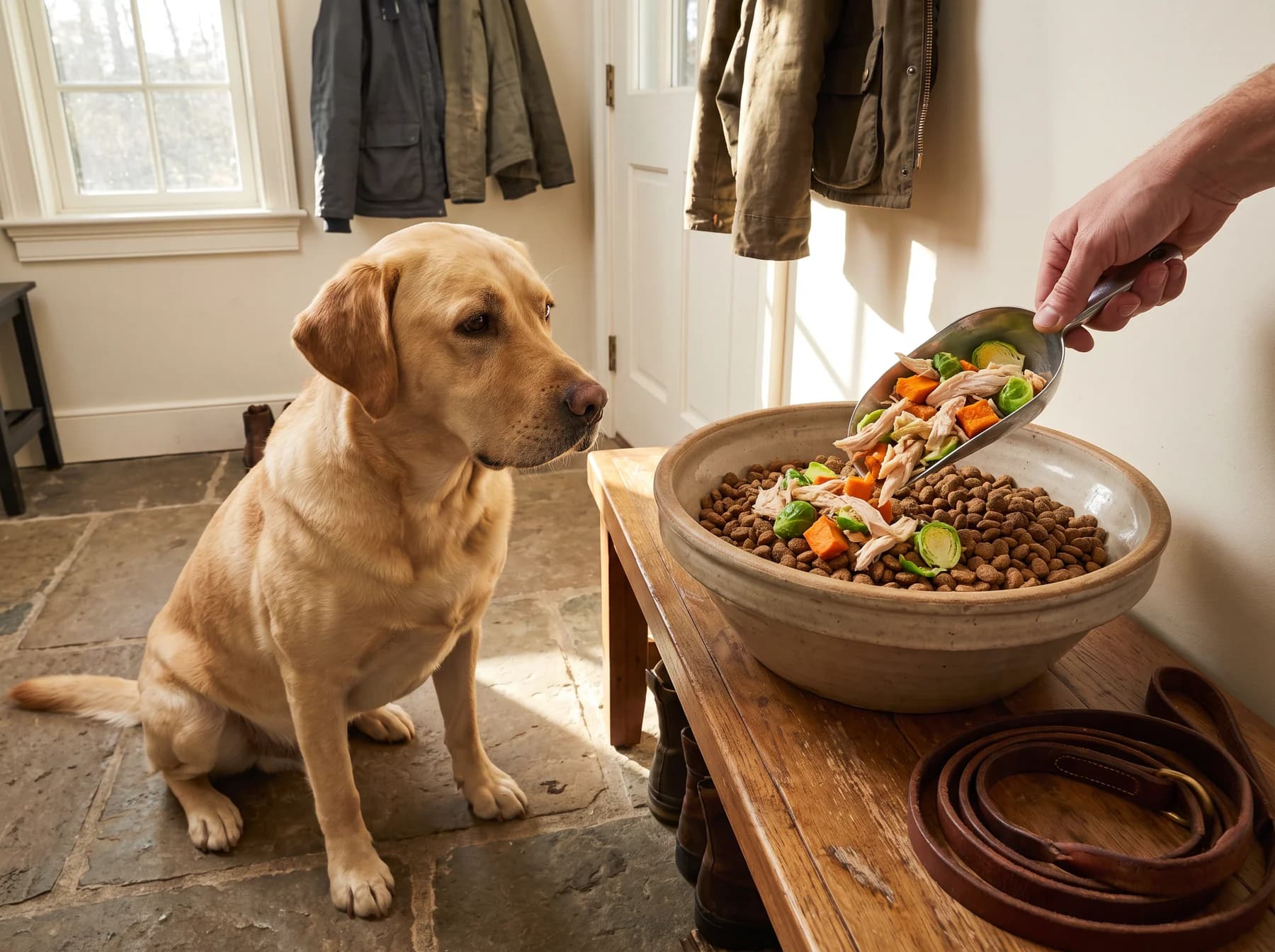
Subscription flexibility matters for cost control too. Get Real orders run on a subscription where you choose recipes and delivery frequency and can change, pause, skip, or cancel anytime, so you can scale a plan up or down after you see how your dog does. For a topper plan, the Get Real Chicken & Brussels Sprouts Recipe is an easy starting point if chicken already agrees with your dog.
Freezer space and delivery planning
Freezer space is the practical blocker most big-dog owners run into. Fresh food packs should go into the freezer as soon as they arrive and stay frozen until you thaw them, so a week of food has to fit in your freezer alongside everything else.
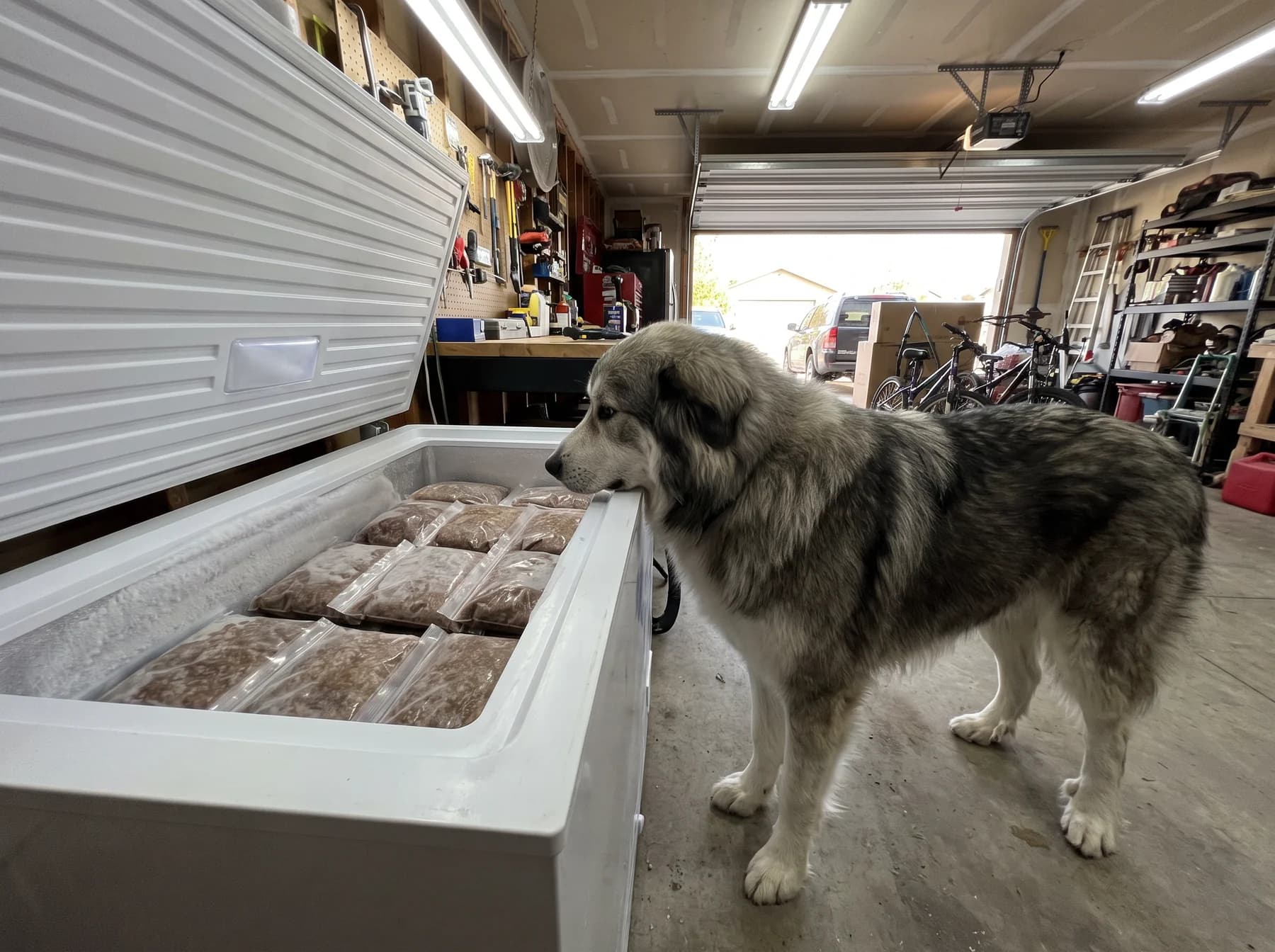
Use the packs per week from the portion table to size it. An 80 pound dog on full meals needs roughly 12 to 14 of the 24 oz packs a week, which is close to 20 pounds of frozen food. In most households that means clearing a full freezer drawer or a shelf of a chest freezer for each weekly delivery. A 100 pound dog needs about 15 to 16 packs, and a 60 pound dog about 10 or 11.
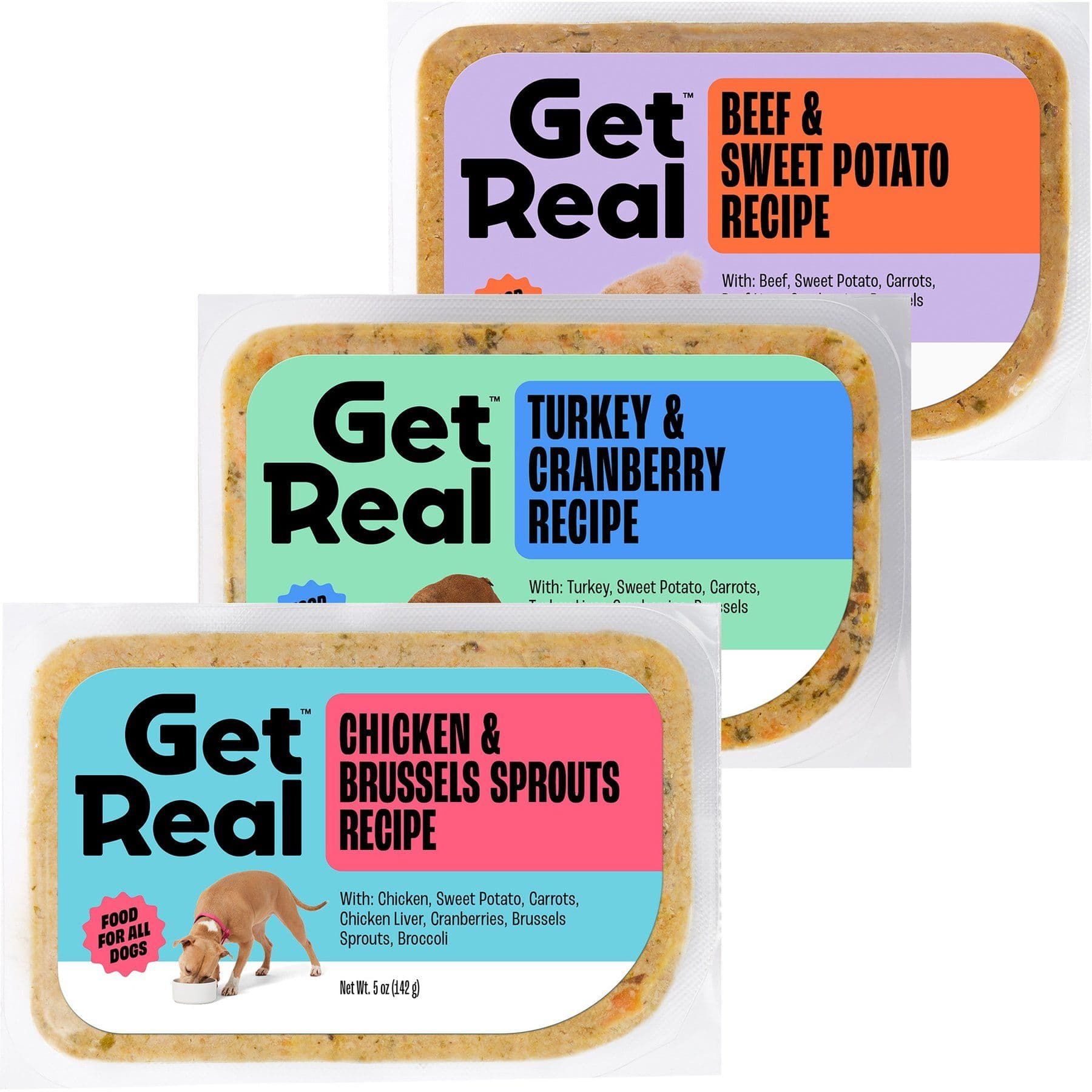
Want to try fresh food before you clear a whole freezer drawer? The Get Real Sampler Pack holds two packs each of the beef, chicken, and turkey recipes, so you can see which one your big dog prefers first.
Petful may earn a commission when you click through to Chewy, at no extra cost to you.
Three habits make the freezer side easier:
- Stack packs flat and upright like files, so you can see what is left and pull the oldest first.
- Move the next day's packs to the fridge ahead of time; Chewy's thawing guidance is 12 to 24 hours in the fridge for 5 oz and 12 oz packs and 35 to 48 hours for 24 oz packs.
- Use thawed food within 3 to 5 days, and keep only one or two days' worth thawing at a time.
Delivery timing helps too. On full-meal Get Real plans, Chewy ships the second order an extra week after the first to allow for the transition, so plan your second order timing around that gap. Orders arrive insulated with dry ice and should stay cold for up to 8 hours after delivery depending on the weather, but unpack them as soon as you can.
If freezer space is tight, a topper plan cuts it sharply, or a small upright or chest freezer in a garage or laundry room can hold a big dog's week with room to spare. Many households with two large dogs find a dedicated freezer is what makes fresh feeding work long term.
Because Turkey & Cranberry is the most calorie-dense recipe, a big dog eats a few fewer ounces of it a day than of the other two. If freezer space is your limit, the Get Real Turkey & Cranberry Recipe is worth comparing on packs per week.
Frozen packs vs refrigerated rolls for big-dog households
Fresh dog food comes in two main formats. Frozen packs ship to your door and stay in the freezer until thawing. Refrigerated rolls and tubs are sold chilled in the fridge case at pet stores and some grocery stores, and you slice or scoop servings from them. Here is how the two formats compare for a large dog:
- Storage: frozen packs need freezer space; refrigerated rolls need fridge space and a quicker turnover.
- Portioning: pre-portioned packs make consistent amounts easy; rolls are sliced by eye or weighed.
- Buying: frozen packs usually arrive by delivery on a schedule; rolls are bought in store as needed.
- Use window: thawed packs are used within days; opened rolls also have a short use window, set by each brand.
Refrigerated dog food brands sold as rolls are convenient for a quick top-up and need no thawing, which suits an owner who shops weekly. The trade-offs for a big dog are volume and timing. A large dog can work through several rolls a week, each one takes fridge space, and once opened a roll has a short window before it must be used. Read each package's own opened-use guidance and follow it.
Frozen packs suit big-dog households that want predictable portions delivered on a schedule. The food stays frozen until needed, so you can hold a week of meals at once, and pre-portioned packs make it easier to feed the same amount every day. The cost is freezer space and the habit of moving packs to the fridge a day or two ahead.
To find the cheapest refrigerated dog food for your dog, compare cost per day for your dog rather than cost per roll, and check whether the roll is labeled complete and balanced or is meant for intermittent or supplemental feeding. A roll intended only as a supplement is not a like-for-like swap for a complete meal.
How to compare fresh brands for a large dog
Fresh dog food reviews are useful for real-world details like how dogs take to the taste and how deliveries arrive, but they rarely tell you whether a food suits a 90 pound dog specifically. Use them alongside a short checklist rather than instead of one.
Before you shortlist the top fresh dog food choices for a big dog, check:
- The AAFCO statement, including growth of large size dogs if you have a puppy.
- Calories per pack, so you can work out ounces and packs per week.
- Pack sizes, since a 24 oz pack makes a big dog's daily routine simpler.
- Ingredient sourcing and handling; our explainer on human-grade dog food covers what that label does and does not mean.
- Plan flexibility, such as whether you can change, pause, or cancel a subscription.
- Storage and thawing rules that fit your freezer and your week.
When a label or ad calls something vet recommended fresh dog food, that claim is less useful than your own veterinarian's view of your dog. The WSAVA global nutrition guidelines suggest asking any pet food company who formulates its diets, what qualifications that person holds, and how the food is tested. Get Real recipes are formulated with certified pet nutritionists and meet AAFCO nutrient profiles for all life stages, which gives you a clear starting point for that conversation.
Get Real is sold only at Chewy and is available in select markets, so check delivery for your address before you plan around it. If you want to see how your big dog responds before you commit to a full plan, the Get Real Sampler Pack includes two packs each of the beef, chicken, and turkey recipes.
Switching a large dog to fresh food
A gradual switch protects a big dog's stomach as much as a small dog's. Chewy recommends moving to Get Real over 7 to 10 days, or 10 to 14 days for sensitive dogs, and our guide to transitioning to fresh dog food walks through the week-by-week ratios. If your dog has done well on beef, the Get Real Beef & Sweet Potato Recipe is a straightforward first recipe for the switch.
During the switch, measure both foods at every meal, since big portions make eyeballing errors larger. Keep treats and chews the same so you can tell what any stool change came from, and use the 5 oz mixer packs for the early days if you want small fresh portions. The 5 oz pack is a mixer portion, not a full meal for a large dog.
Fresh food is far more moist than kibble, so the bowl looks fuller and some dogs drink a little less water. Both are normal. Once the switch is done, keep weighing every two weeks for the first couple of months and adjust portions to body condition.
Questions readers ask
It can be, if the recipe meets AAFCO nutrient profiles for all life stages, including growth of large size dogs, which Chewy states for all Get Real recipes. Large-breed puppy growth needs controlled calories and calcium, so feed to body condition, weigh often, and confirm the plan with your veterinarian.
A typical neutered, moderately active 70 pound adult needs roughly 1,500 calories a day, which is about 38 to 42 ounces of Get Real depending on the recipe. Treat that as a starting estimate and adjust by about 10 percent at a time based on body condition.
It depends on packs per week and your budget. Full meals for a 100 pound dog can take 15 or more 24 oz packs a week, so many owners choose a topper plan that replaces a quarter or half of the kibble with fresh food.
Yes. A topper plan is a common middle path: add fresh food and reduce kibble by the same share of calories so the daily total stays the same. Get Real works as a full meal, a topper, or a kibble mixer.
For an 80 pound dog on full meals, plan on a freezer drawer for roughly 12 to 14 of the 24 oz packs, so clear that space before the first box arrives. On full-meal plans, Chewy ships the second order an extra week after the first, so build that into your second order timing.

Coreen Saito is a pet writer and longtime shelter volunteer with more than a decade in animal rescue. She covers cat behavior, breed care, and the small, ordinary science of sharing a life with companion animals, with a particular focus on honest takes about the products and decisions that actually matter. At home in Arizona, she's outranked by Mac (a dog with the loudest opinion in the house), Rebel (a cat who governs by quiet authority), and Meri (an orange tabby who runs the late shift and the laundry basket). She writes about all three, plus the rescues that keep coming through her life, at LifeWithMinty.com.
Sign up for expert-backed reviews and safety alerts all in one place.
A Final Word (Disclaimer)
At Petful, our review integrity is paramount; we never exchange special treatment in our reviews for monetary or material rewards.
Nonetheless, when our readers click through to online merchants (including Chewy or Amazon), we receive a referral commission. This supports the running of our free blog, and we appreciate your backing.