Freeze-Dried Dog Food vs Kibble vs Fresh: Which Is Best for Your Dog?
Freeze-dried, kibble, and cooked fresh foods differ in moisture, preparation, and handling. Compare complete nutrition, raw status, serving sizes, and daily cost before choosing.
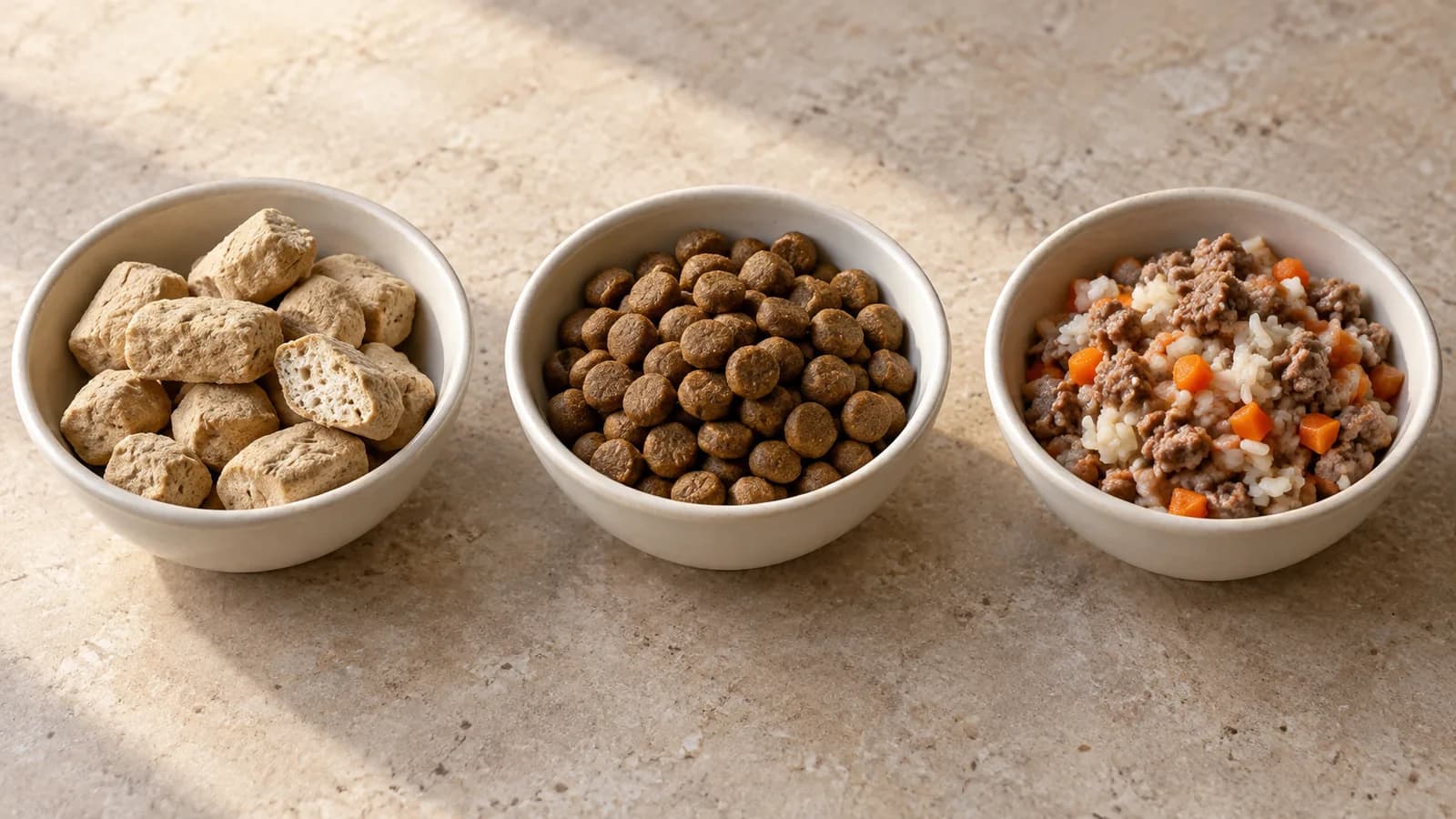
Illustrative scene; food portions shown are not feeding recommendations.
Petful is reader supported. As an affiliate of platforms like Amazon and Chewy, we may earn a commission when you buy through links on this page. There is no extra cost to you.
This article is sponsored by JustFoodForDogs. Petful maintains editorial control and may earn a commission from qualifying purchases, at no extra cost to you.
Comparing freeze-dried dog food vs kibble gets more useful when you include cooked fresh meals and ask three separate questions: Is the food cooked or raw? Does it provide complete nutrition? What does a day's feeding actually cost?
Freeze-drying can make food light and convenient to store, but it does not automatically make a raw recipe cooked. Kibble offers compact dry feeding, while a cooked fresh meal offers a moist texture. The best fit depends on the finished recipe, your dog's needs, and the handling routine you can maintain.

Sign up for expert-backed reviews and safety alerts all in one place.
Freeze-dried dog food vs kibble vs fresh at a glance
- 1Check raw status separately from the preservation method.
- 2Every main diet needs to be complete and balanced for the right life stage.
- 3Compare cost per calorie, then calculate the daily serving; bag weight alone can mislead.
Freeze-drying removes water from frozen food under reduced pressure. Conventional kibble is generally cooked and processed into dry pieces. Cooked fresh food retains considerably more moisture and usually needs refrigeration or freezing, unless it is made and packaged for shelf-stable storage.
When people compare freeze-dried raw dog food vs kibble, the meaningful safety distinction is “raw,” not simply “dry.” Some freeze-dried products are raw, while a manufacturer may use a cooking step for others. Identify which one you are considering before weighing convenience or ingredient appeal.
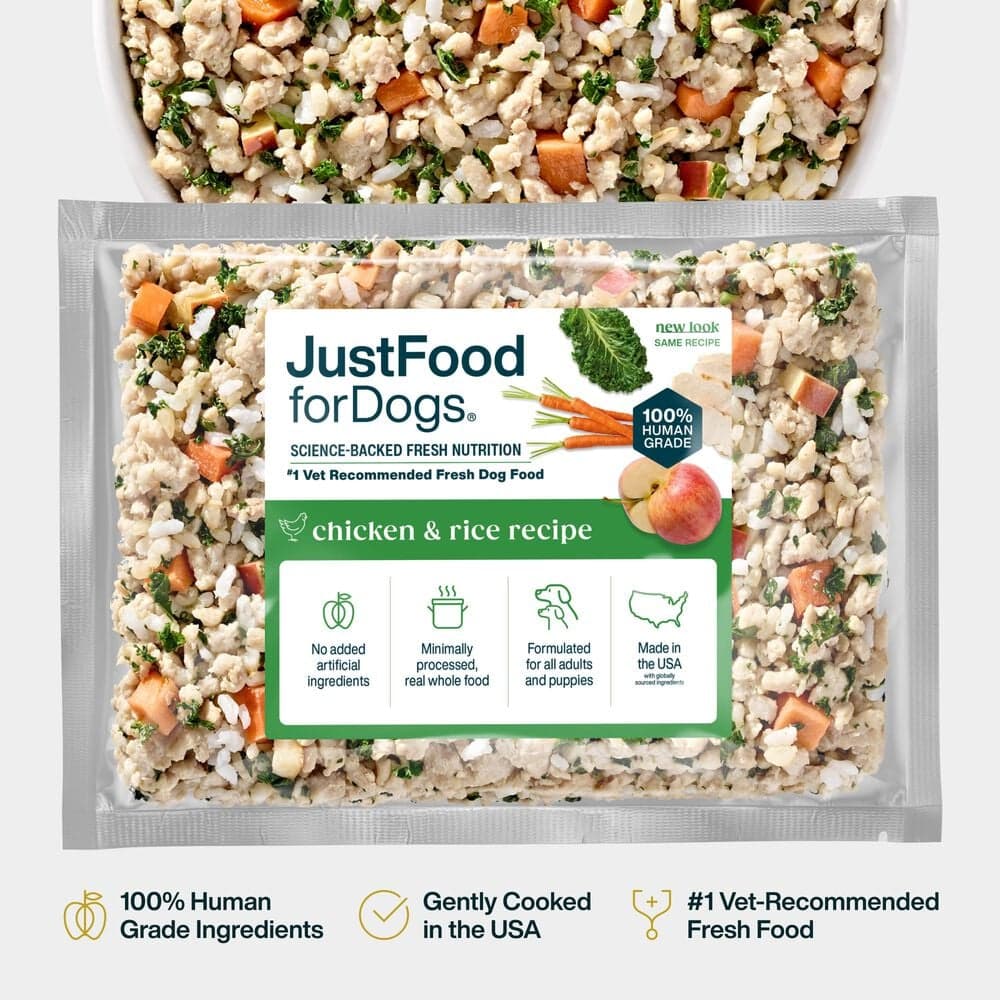
- #1 vet-recommended fresh food
- 10+ years of feeding trials & studies
- Recipes for all breeds, needs and life stages
Petful may earn a commission when you click through to JustFoodForDogs, at no extra cost to you.
| Question | Freeze-dried | Kibble | Cooked fresh |
|---|---|---|---|
| Water content | Very dry before any rehydration | Dry | Moist |
| Raw or cooked? | Check the exact product | Generally cooked during manufacture | Cooked |
| Main-diet suitability | Requires an appropriate adequacy statement | Requires an appropriate adequacy statement | Requires an appropriate adequacy statement |
| Serving preparation | Follow dry-feeding or rehydration directions | Measure as directed | Thaw or store as directed, then measure |
| Practical cost comparison | Cost per calorie and per day | Cost per calorie and per day | Cost per calorie and per day |
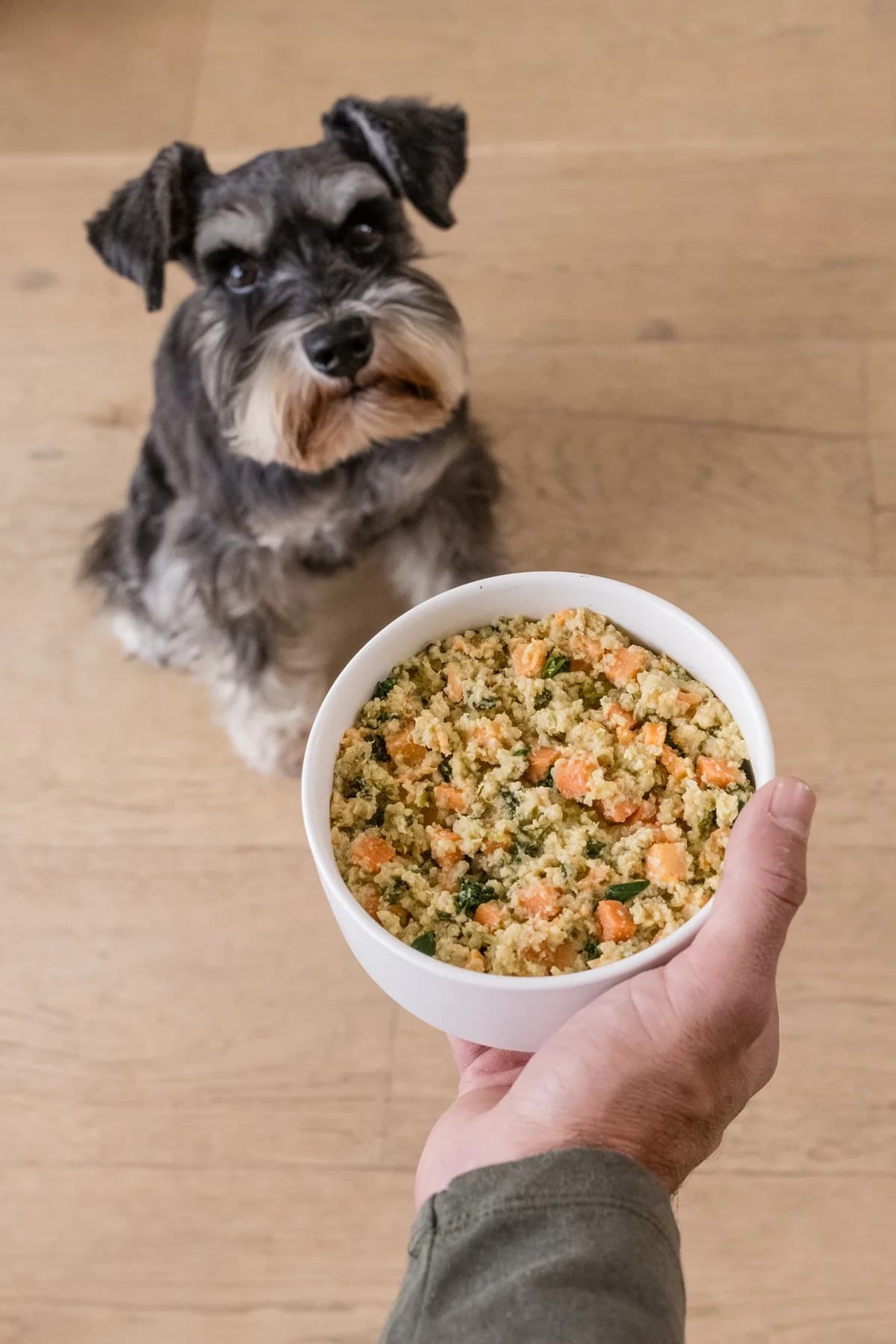
For a prepared cooked option, JustFoodForDogs Fresh Frozen meals give owners a different way to serve a fresh-style diet. That choice avoids needing to rehydrate a dried meal, although it adds a freezer and thawing routine.
Is freeze-dried food better than kibble for dogs? The format alone cannot answer that. Freeze-dried raw dog food preserves uncooked ingredients, while a complete kibble and a cooked fresh meal use different processes. Compare the finished recipes for nutritional adequacy, safety, and your dog’s needs before treating one processing label as a quality ranking.
Freeze-dried does not always mean cooked
Read the product description and handling instructions together. Words such as freeze-dried, frozen, or dehydrated describe aspects of preservation. None should be treated as proof that the food has undergone a validated cooking step.
Cornell's raw-food guidance includes freeze-dried raw products in its discussion of pathogen concerns. A food can feel dry and convenient while still carrying the risks associated with uncooked animal ingredients.
Ask the manufacturer directly
- Is this recipe raw or cooked before drying?
- What food-safety process applies to the finished product?
- Is it intended as a complete meal or as a treat or topper?
- Does the manufacturer require rehydration, and what are the leftover-food instructions?
Do not read a phrase such as “pathogen tested” as a guarantee that every possible risk has been eliminated. Testing and processing address related but different questions. For a household with someone especially vulnerable to infection, discuss raw-food exposure with the appropriate healthcare professionals as well as your veterinarian.
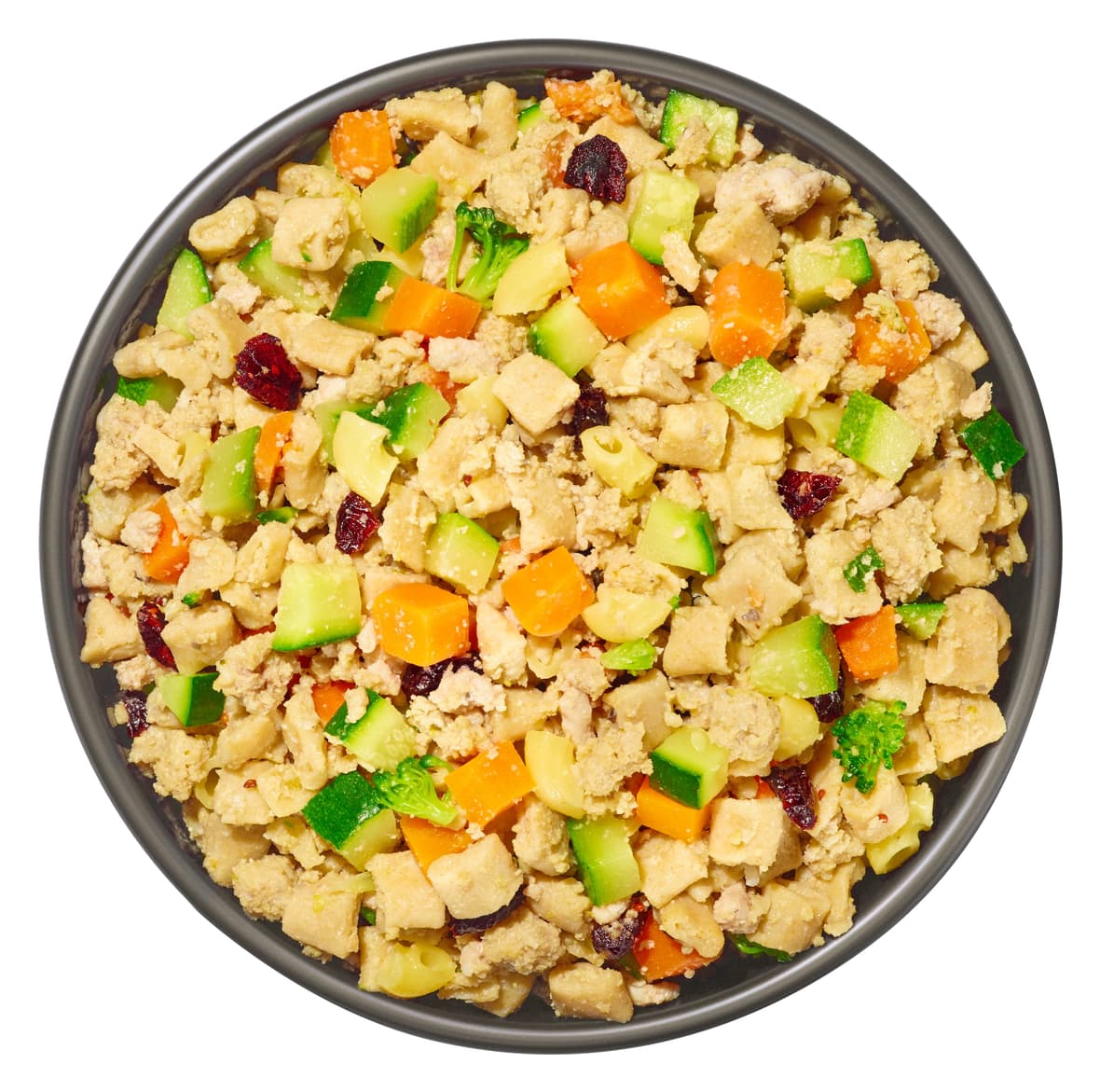
- Chicken with rice and whole-food ingredients
- Fresh Frozen recipe
- View the recipe and feeding guide
Petful may earn a commission when you click through to JustFoodForDogs, at no extra cost to you.
The freeze-dried raw dog food pros and cons therefore need two columns in your thinking. Dry storage and portability may be convenient; nutritional adequacy and bacterial exposure still require separate checks. A benefit in one category does not cancel a concern in another.
Nutrition and digestibility: compare formulas
No format can make an incomplete recipe complete. Start with the adequacy statement and intended life stage. Products meant for intermittent or supplemental feeding should not become the sole food simply because they contain meat or cost more per bag.
The AAFCO label guide explains why a main diet's nutritional statement matters. For a puppy, also verify growth suitability and any large-size-dog qualification. For a dog with a medical condition, the relevant question may be the nutrient profile of a therapeutic diet rather than which food format looks most appealing.
Avoid the water-content trap
The protein percentage on a moist meal and the protein percentage on a dry food are not directly comparable without accounting for water. For example, an illustrative food with 10% protein and 75% moisture has 25% dry matter. Its estimated protein on a dry-matter basis is 10 divided by 25, multiplied by 100, or 40%.
That calculation is a comparison aid, not a complete nutritional assessment. Guaranteed minimums and maximums are not the same as a precise typical analysis. Your veterinarian may need the manufacturer's nutrient figures per calorie, especially when evaluating a medically important nutrient.
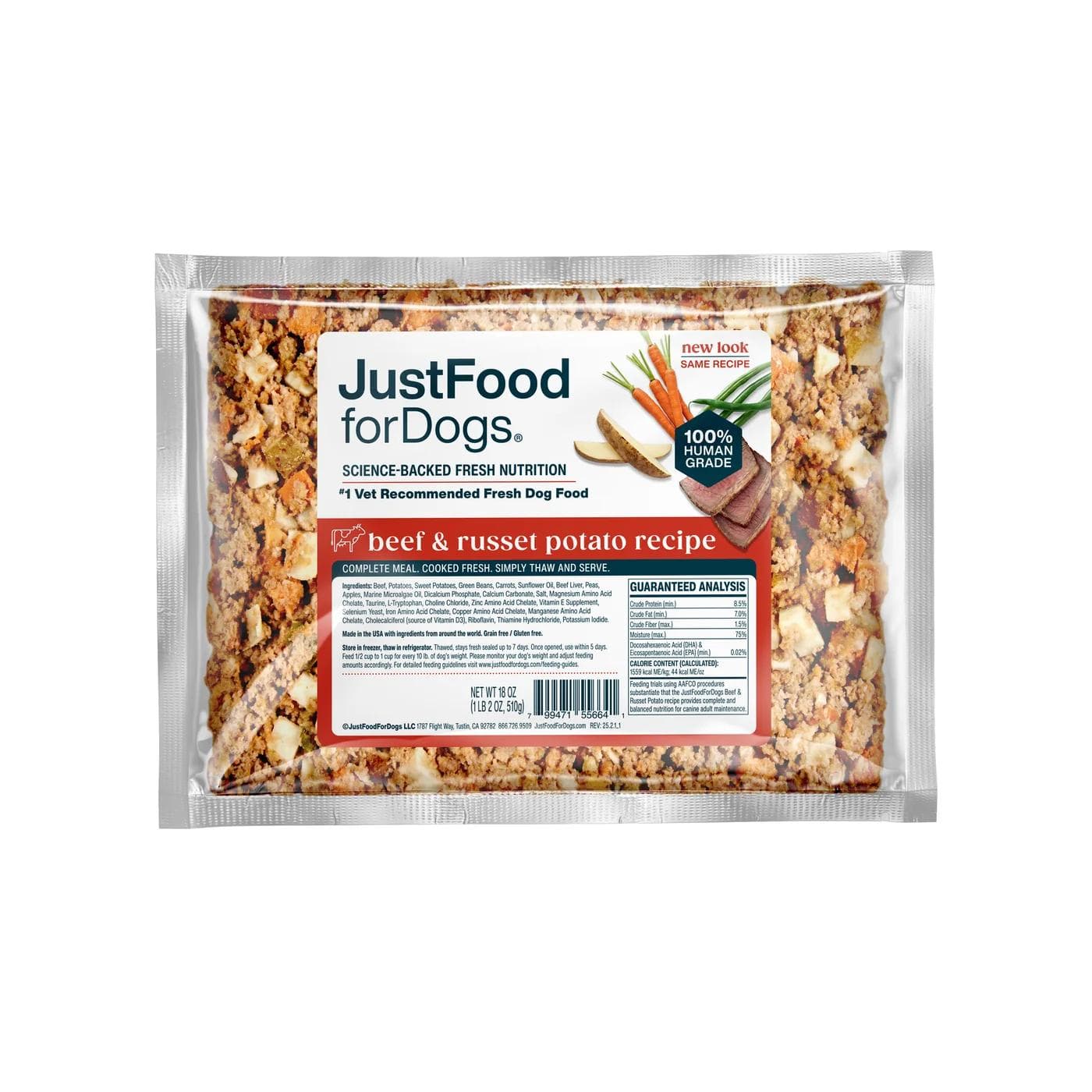
- Beef and russet potato recipe
- Gently cooked, then frozen
- View ingredients and feeding guidance
Petful may earn a commission when you click through to JustFoodForDogs, at no extra cost to you.
JustFoodForDogs Chicken & Rice is a cooked fresh recipe to assess using those same principles. Compare its current adequacy statement and calorie information with the exact dried food you are considering, rather than comparing only package-front percentages.
Is freeze dried food better than kibble for dogs? There is no recipe-independent answer. A claim about better digestion needs evidence for the foods studied and the outcome measured. A pleasant texture, a higher price, or a shorter-looking ingredient list does not independently establish better long-term health.
Water, serving size, and safe handling
Follow the package directions for how to rehydrate freeze-dried dog food. The manufacturer should specify whether water is required, how much to add, how long to wait, and how to handle leftovers. Adding water changes the meal's weight and volume; it does not add food calories or make raw ingredients cooked.
Use clean water and utensils. Once a dry product is rehydrated, treat it according to the manufacturer's instructions for prepared food, not the unopened bag's shelf life. A food that stores well dry may have a much shorter usable period after moisture is added.
Measure before you mix
- Find the calories per gram, ounce, scoop, or other stated dry-food unit.
- Calculate the dry amount needed for the planned calorie allowance.
- Measure that amount using the label's units.
- Add the specified water, if required, and follow the preparation directions.
This sequence answers how much freeze-dried dog food to feed more accurately than filling a bowl to its usual level. If you weigh a meal after adding water but use the dry product's calories per ounce, you will overestimate how much energy it contains.
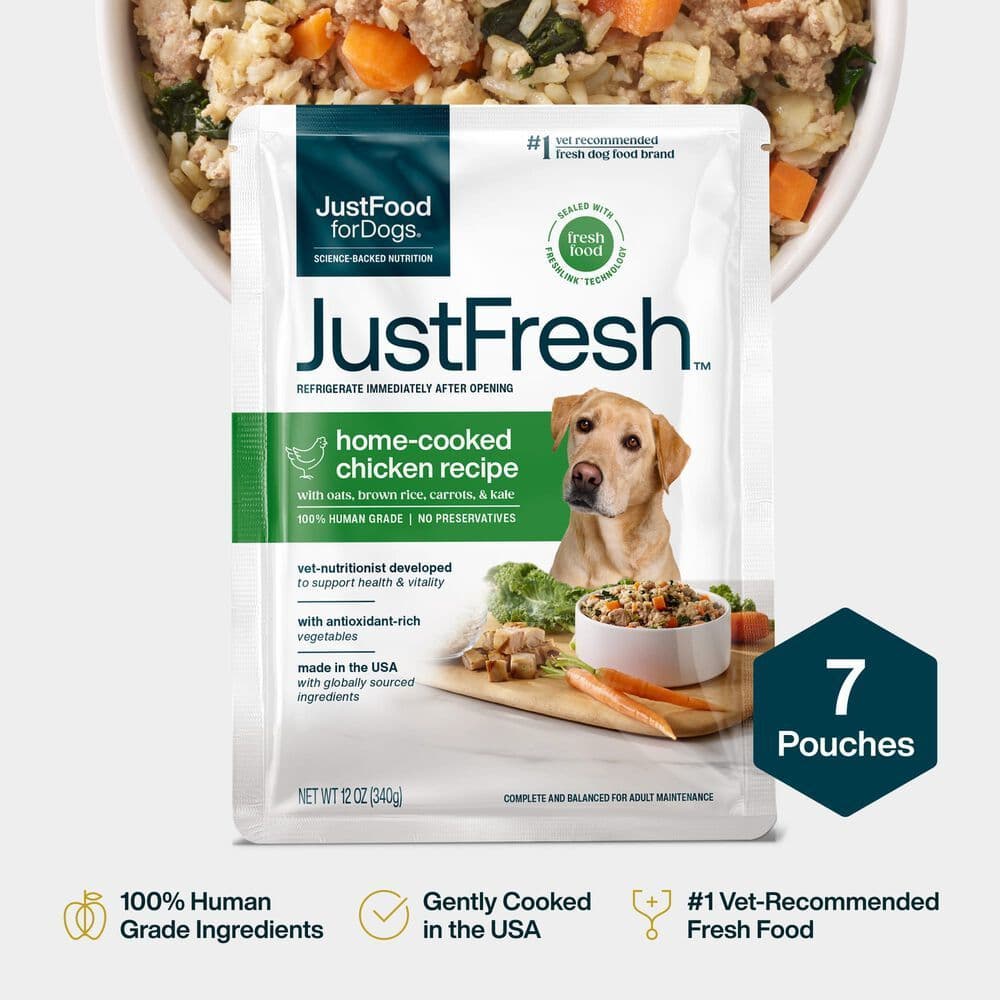
- Home-cooked chicken recipe
- Shelf-stable pouches before opening
- Fresh-food convenience without freezer space
Petful may earn a commission when you click through to JustFoodForDogs, at no extra cost to you.
Cooked fresh meals need a different handling plan. Keep the food at its specified storage temperature, mark opened packs, and use the recipe's directions for thawed or opened food. A variety of cooked Fresh Frozen recipes, including JustFoodForDogs Beef & Russet Potato, lets owners compare meal options without adopting a raw-food routine.
Calorie density also changes what a serving looks like. Removing moisture can concentrate energy into a small portion, while water added during rehydration increases the bowl’s weight without increasing its calories. Use the dry product’s labeled energy information and the prescribed preparation method together. A larger-looking rehydrated meal should not lead you to guess a new daily allowance.
Keep the dry amount and added water distinct
Write down how much dry product supplies the planned calories before adding water. If two people feed the dog, use the same measuring method and preparation directions so one person does not count a rehydrated cup as a dry cup. This simple distinction prevents portion drift and helps keep the feeding budget accurate. The water changes texture and volume; it does not supply the energy removed when you reduce the dry portion.
Compare price per calorie rather than bag weight
Water makes weight-based price comparisons especially unreliable across these formats. A light freeze-dried bag may contain many servings after rehydration. A heavier fresh-food pack includes the water already in the meal. Neither fact tells you the cost of meeting your dog's daily energy needs.
Calculate cost per calorie by dividing the recurring package price by the total food calories in that package. Multiply the result by the dog's planned daily food calories. Use the ordinary repeat-order price, not only a trial discount, and include unavoidable shipping or other charges when comparing your actual options.
- A hypothetical $30 package containing 3,000 calories costs $0.01 per calorie. Feeding 500 calories from it costs $5 per day. Adding water does not change that calorie-based cost.
Record the inputs before choosing
- Exact recipe and package size.
- Total calories in the package.
- Recurring price and any subscription conditions.
- Expected daily portion, including mixed feeding if applicable.
- Storage capacity and likely waste from unused prepared food.
Do not compare a freeze-dried topper's suggested sprinkle with a complete fresh meal's full daily portion. Those are different uses. A fair comparison gives each complete diet the same calorie assignment and makes any topper role explicit.
Choosing the format that fits your household
Choose the food whose nutritional suitability and preparation routine you can support consistently. Kibble may fit a simple dry-feeding routine. A cooked fresh meal may fit an owner who wants moisture and a prepared meal with a cooking step. Freeze-dried food may appeal for dry storage, but check raw status and preparation requirements before treating it as equivalent to cooked food.
If freezer space is the main obstacle to cooked meals, JustFoodForDogs JustFresh Chicken provides a shelf-stable format to consider. Confirm its current life-stage suitability and remember that opened packages have their own storage rules.
Our guide to human-grade dog food adds context on ingredient and handling claims. Keep those claims separate from the complete-diet check. Whichever format you select, introduce changes gradually and monitor appetite, stools, weight, and body condition.
Frequently asked questions
Before vets can recommend a freeze-dried food, they need the exact recipe, its raw status, and whether it is complete and balanced for the dog. Freeze-dried is a preservation description, not a blanket veterinary recommendation. Bring the label and preparation directions to the discussion, especially if the household includes someone vulnerable to infection or the dog has a condition that requires a specific diet.
Potential drawbacks include a high daily cost, preparation time when rehydration is required, and safe handling needs if the food is raw. Some products are also toppers rather than complete meals. These factors vary by recipe, so compare the package instructions and calories instead of assuming every freeze-dried bag has the same limitations or the same main-diet role.
The healthiest food to feed your dog needs to provide complete nutrition for the dog’s life stage and individual requirements. Food format alone cannot identify the healthiest choice. An appropriate cooked fresh meal, kibble, or another complete diet should be evaluated as a finished recipe. Raw products add safety considerations that remain relevant even when they have been freeze-dried.
Whether freeze-dried dog food needs to be rehydrated depends on the exact product’s preparation directions. Some are designed to be rehydrated, while others have different serving instructions. Use the stated water quantity and preparation time, and keep fresh water available. Do not use hot water as an improvised substitute for a validated cooking process, or assume that the dry product's storage limits apply after water has been added.
Suitable complete diets can be combined using a measured calorie plan, but you need to know whether the freeze-dried product is a complete food or a supplemental topper. Replace calories rather than simply adding food. Raw-food handling concerns also remain when raw nuggets are mixed into a cooked meal. Ask your veterinarian before altering a therapeutic diet or a puppy's carefully planned feeding routine.

Coreen Saito is a pet writer and longtime shelter volunteer with more than a decade in animal rescue. She covers cat behavior, breed care, and the small, ordinary science of sharing a life with companion animals, with a particular focus on honest takes about the products and decisions that actually matter. At home in Arizona, she's outranked by Mac (a dog with the loudest opinion in the house), Rebel (a cat who governs by quiet authority), and Meri (an orange tabby who runs the late shift and the laundry basket). She writes about all three, plus the rescues that keep coming through her life, at LifeWithMinty.com.
Sign up for expert-backed reviews and safety alerts all in one place.

A Final Word (Disclaimer)
At Petful, our review integrity is paramount; we never exchange special treatment in our reviews for monetary or material rewards.
Nonetheless, when our readers click through to online merchants (including Chewy or Amazon), we receive a referral commission. This supports the running of our free blog, and we appreciate your backing.