Food Allergies in Cats: Signs, Testing, and the Gut Connection
Food allergies can affect a cat's skin and digestive tract. Learn how elimination diets, rechallenge, and carefully bounded gut-skin support fit together.

BVMS, MRCVS
Petful is reader supported. As an affiliate of platforms like Amazon and Chewy, we may earn a commission when you buy through links on this page. There is no extra cost to you.
Food allergies in cats can cause persistent itching, inflamed skin, recurring ear problems, overgrooming, vomiting, or diarrhea. Those signs are real, but they are not unique to food. Fleas, environmental allergies, mites, infection, inflammatory intestinal disease, and several other conditions can look similar. That is why a food allergy is diagnosed through a controlled feeding trial and rechallenge, not from a symptom checklist, an ingredient guess, or a mail-in sensitivity panel.
The gut and skin communicate through immune, metabolic, and microbial pathways, often called the gut-skin axis. That connection makes microbiome support an interesting part of a complete plan, but it does not turn a bacterial profile into an allergy test. Animal Biome's Gut Microbiome Test for Cats, Skin Rescue, and cat-specific gut-support products can offer useful adjuncts after veterinary evaluation. The elimination diet remains the central diagnostic step, and the cat's prescribed diet and medical treatment stay in control.

Sign up for expert-backed reviews and safety alerts all in one place.
Signs of food allergies in cats
The direct answer is that food allergies in cats are immune reactions to dietary components, usually proteins, and can cause skin or digestive signs. Food intolerance is a broader nonimmune adverse reaction, such as difficulty digesting an ingredient or a predictable response to excess fat. Both can produce digestive signs, so symptoms alone do not reliably separate them. The veterinary next step is to rule out look-alike problems and plan a controlled elimination diet.
A veterinary diagnosis is needed because itching, hair loss, vomiting, and diarrhea have many possible causes. The supportive care boundary is clear: a microbiome test may describe bacterial balance, and skin or gut supplements may support comfort, but only a properly controlled elimination diet and rechallenge can establish a food-trigger relationship.

Petful may earn a commission when you click through to Animal Biome, at no extra cost to you.
Skin signs are common and may include:
- Itching around the face, head, ears, neck, belly, or paws
- Repeated licking, chewing, or overgrooming
- Hair loss or broken hairs from self-trauma
- Redness, crusts, scabs, or small raised lesions
- Recurrent ear inflammation
- Secondary bacterial or yeast infection
Digestive signs can include vomiting, soft stool, diarrhea, gas, increased bowel movements, reduced appetite, or weight loss. A cat may have skin signs, digestive signs, or both. Sneezing alone is more often associated with respiratory disease or inhaled irritants than food allergy, although a complete history matters.
Do not use a photograph to diagnose the cause of a rash. A food reaction can resemble flea allergy, environmental allergy, ringworm, mites, contact irritation, infection, or self-trauma from pain and stress. Seek prompt care for facial swelling, breathing difficulty, repeated vomiting, blood or black stool, marked lethargy, dehydration, refusal to eat, or rapid weight loss.

Food allergy versus environmental allergy
Food and environmental allergies can affect similar body areas and can occur together. Food-related itching is often nonseasonal because the diet is eaten year-round, but an indoor environmental allergen can also cause year-round signs. Seasonal flares can suggest pollen or insects, yet they do not rule out a dietary component. Ear disease, head-and-neck itching, and gastrointestinal signs can raise suspicion for food, but none is diagnostic by itself.
The veterinarian therefore looks at the whole pattern: flea exposure, seasonality, response to parasite control, skin cytology, infection, household changes, diet history, and digestive signs. Treating infection can make the cat more comfortable, but improvement on antibiotics or antifungals does not identify the primary allergy. Likewise, anti-itch medication can control suffering during a trial without proving what triggered the inflammation.
An accurate baseline helps. Before changing food, photograph affected skin, score daily itching or grooming, record vomiting and stool, and obtain a current weight. Use the same measures at rechecks. Objective comparison prevents a naturally fluctuating week from being mistaken for a conclusive diet response.
- Testing principle: Use a controlled diet and rechallenge for the food question, while the wider dermatology workup addresses environmental and infectious look-alikes.
Testing for food allergies in cats is therefore different from testing environmental triggers. Cats can develop food allergies later in life, even to a familiar ingredient, but age does not identify the cause. The elimination diet and controlled rechallenge test the food question, while flea control, cytology, infection treatment, seasonality, and the wider history help the veterinarian separate environmental allergy and other look-alike conditions.
What is the most common food allergy in cats
There is no universal “most common” ingredient for every cat. Published case series often identify animal proteins that are frequently fed, such as beef, fish, or chicken, but frequency reflects exposure as well as biology. A cat must usually encounter a protein before becoming sensitized to it, so a familiar ingredient can be more relevant than an exotic one.
That is why choosing a diet by a generic top-allergen list is less useful than building an accurate diet history. Record every food, treat, flavored medication, supplement, table scrap, and prey exposure. The veterinarian then selects a genuinely novel protein or a hydrolyzed veterinary diet that avoids the cat's prior exposures as reliably as possible.
No single food is the number-one allergy for all cats. Beef, fish, and chicken are commonly reported triggers, but an individual cat may react to another protein or may not have a food allergy at all. The number-one practical issue is uncontrolled exposure during testing: one treat, shared bowl, flavored pill, or outdoor meal can invalidate weeks of careful feeding.
How do I tell if my cat has a food intolerance
To tell if your cat has a food intolerance, start by recognizing that signs alone cannot confirm it. Intolerance tends to produce gastrointestinal effects without the immune component that defines allergy, while allergy often produces skin disease and can also cause vomiting or diarrhea. In real patients, the patterns overlap, so a veterinarian must interpret the diet history, examination, and response to a controlled feeding plan.
The veterinarian first evaluates other likely causes and then uses a controlled diet trial when food is a credible possibility. Improvement on the trial suggests an adverse food reaction. A return of signs during a controlled rechallenge supports the relationship more strongly and can help identify whether the problem behaves like an allergy or another food-responsive condition.
Petful may earn a commission when you click through to Animal Biome, at no extra cost to you.
How veterinarians test for food allergies
The veterinary workup starts with history and examination. The clinician may check for fleas and mites, perform skin cytology or fungal testing, treat secondary infection, and investigate vomiting, diarrhea, or weight loss with fecal tests, bloodwork, imaging, or other diagnostics. A cat can have more than one problem at the same time; flea allergy and food allergy, for example, are not mutually exclusive.
According to the Merck Veterinary Manual's review of cutaneous food allergy, an elimination diet followed by provocation with the former diet is the diagnostic standard. Blood, saliva, hair, and unvalidated “sensitivity” tests should not be treated as definitive evidence that an ingredient is safe or unsafe. A positive panel can lead owners to remove many foods unnecessarily while the true cause remains untreated.
Building a useful elimination diet
The veterinarian may recommend one of two main approaches:
- A hydrolyzed veterinary diet. Proteins are processed into smaller fragments intended to reduce immune recognition. Manufacturing controls are important because trace cross-contact can undermine a diagnostic trial.
- A novel-protein veterinary diet. The diet uses a protein the cat has not eaten before, based on a detailed diet history. “Novel” is individual; duck is not novel for a cat that has eaten duck treats.
Home-prepared diets sometimes have a role under veterinary nutrition guidance, but improvised meat-and-starch recipes are not complete and balanced for long-term feline feeding. Cats have strict nutrient requirements, including taurine. Diagnostic value should not come at the cost of nutritional adequacy.
During the trial, the selected food must be the only food source unless the veterinarian explicitly approves something else. That means no flavored toothpaste, pill pockets, supplements, treats, table food, shared bowls, lickable snacks, or access to another pet's meal. Cats that hunt or visit neighbors may need an indoor plan for the trial.
Elimination-diet contamination audit and checkpoint calendar
An elimination-diet contamination audit looks for every unplanned exposure before a partial response is labeled treatment failure. Pair it with a checkpoint calendar so the family knows what to record, when to review progress, and when appetite or weight makes the plan unsafe.
| Checkpoint | Audit question | Action |
|---|---|---|
| Before day 1 | Are the prescribed food, permitted medicines, baseline weight, skin photos, and symptom scores recorded? | Resolve flavored-medication and transition questions with the clinic |
| First week | Is the cat eating enough, and can every household member follow the plan? | Record intake daily and call for food refusal, repeated vomiting, or lethargy |
| Weekly | Did any treat, shared bowl, prey, pill pocket, toothpaste, supplement, or visitor food enter the trial? | Log the exposure rather than hiding it; ask whether the calendar needs adjustment |
| Midpoint | Are itching, grooming, ears, vomiting, stool, appetite, and weight moving in a consistent direction? | Review the trend with the clinic instead of judging one good or bad day |
| End of the prescribed trial | Was the diet exclusive and nutritionally adequate for the full planned interval? | Decide whether to continue, change the plan, or perform a controlled rechallenge |
| Rechallenge, when appropriate | Do signs reproducibly return after the former diet or ingredient is reintroduced? | Stop or continue only according to the veterinarian's challenge plan |
Assign one person to manage the food list, store trial food separately, wash shared scoops and bowls, and tell visitors not to offer treats. If a medication cannot be changed safely, document it rather than stopping it. Diagnostic purity never justifies inadequate intake, so contact the clinic promptly if the cat refuses food, vomits repeatedly, loses weight, becomes constipated, or seems lethargic.
- Before the trial begins, record the selected food, every permitted medication, the start date, and the cat's baseline weight and symptoms. During the trial, record any accidental exposure and contact the clinic if appetite, weight, vomiting, stool, or skin comfort worsens. A complete record helps the veterinarian distinguish a true diet response from a disrupted or unsafe trial.
When to contact the clinic during the trial
Petful's guide to switching a cat to a prescription diet can help owners make a careful transition without sacrificing adherence. A gradual change may be appropriate when the cat is stable, but the treating veterinarian should direct timing if vomiting, diarrhea, poor appetite, or another medical problem is present.
Petful may earn a commission when you click through to Animal Biome, at no extra cost to you.
What is the 3 day rule for allergies
There is no reliable three-day rule that diagnoses food allergy in cats. Some digestive signs can change quickly, but skin inflammation and secondary infection often take much longer to settle. Veterinary elimination trials typically run for weeks, not three days, and the full duration should be set by the clinician.
Likewise, a cat feeling better after three days does not prove the former food was the cause. Medication, flea control, treatment of infection, stress reduction, and natural fluctuation may all contribute. The controlled rechallenge is what tests whether signs reproducibly return when the prior diet is reintroduced.
Can cats develop food allergies later in life
Yes. A cat can react to an ingredient eaten for months or years because allergy requires prior exposure. A familiar food does not rule out allergy, but neither does it prove one. New symptoms in an adult or senior cat still require a broad evaluation because endocrine disease, cancer, infection, dental disease, inflammatory enteropathy, and other conditions become increasingly important differentials.
Microbiome testing asks a separate question. Animal Biome's Gut Microbiome Test for Cats profiles bacterial DNA and compares patterns with its reference information. It does not identify the food that causes an allergy and should not replace an elimination diet, skin testing for other purposes, fecal testing, or medical investigation. Petful's broader cat gut health guide explains how a bacterial profile can add context without becoming a stand-alone diagnosis.
Why controlled rechallenge matters
Improvement on a new diet is important but not final proof. Other treatments may have taken effect, fleas may have been controlled, an infection may have cleared, or the disease may simply have fluctuated. During a controlled rechallenge, the veterinarian directs reintroduction of the former diet or selected ingredients and watches for a reproducible return of signs.
Do not perform a challenge casually if the cat had a severe reaction, is medically fragile, or still has uncontrolled disease. The veterinarian may decide that the risk outweighs the benefit. When a challenge is appropriate, record what was introduced, how much, and the timing of skin and gastrointestinal changes. If signs return and then improve again when the trial diet resumes, confidence in the diagnosis increases.
Ingredient challenges may later help identify what must be avoided and what can safely widen the diet. This can improve long-term nutrition and quality of life, but it is slower than relying on a broad panel. The extra time buys more trustworthy information.
Elimination diets and long-term treatment
Food-allergy treatment begins by removing the confirmed trigger while feeding a complete, balanced diet the cat will reliably eat. If a diagnostic diet controls signs and rechallenge causes them to return, the veterinarian may resume the successful diet or help identify another nutritionally appropriate option that avoids the trigger.
Petful may earn a commission when you click through to Animal Biome, at no extra cost to you.

How to treat a cat with food allergies
A practical treatment plan may include:
- Feed the veterinarian-selected diet exclusively.
- Treat secondary bacterial or yeast infection when present.
- Maintain effective flea prevention, because flea bites can keep an itchy cat inflamed.
- Use prescribed anti-itch or anti-inflammatory medication when needed.
- Recheck skin, ears, stool quality, appetite, and weight on schedule.
- Keep a dated log of food exposure, medications, itching, grooming, vomiting, and stool.
- Rechallenge only under veterinary direction, especially if prior reactions were severe.
The best cat food for allergies in cats is not one universal recipe. It is the complete, balanced hydrolyzed or novel-protein diet selected from that cat's history and then fed exclusively long enough to produce an interpretable result. Successful treatment depends on that controlled process, not frequent food switching.
- Clear veterinary red flags include breathing difficulty, facial swelling, collapse, repeated vomiting, blood or black stool, dehydration, severe self-trauma, infection, rapid weight loss, or a cat that stops eating. These signs need prompt care. For a stable cat, practical elimination-diet follow-up means recording exposures and response on schedule. Careful limits for microbiome support mean adding it only after urgent needs and the diagnostic feeding plan are protected.
Cats can be reluctant to accept a new diet. Do not starve a cat into compliance. If the prescribed food is refused, contact the clinic promptly so the plan can be adjusted safely. The next practical step may be a different texture, a slower transition, another appropriate formula, or treatment of nausea, not adding multiple toppers that defeat the trial.
What food gets rid of cat allergies
No food gets rid of every type of cat allergy. For a confirmed food allergy, the effective diet avoids the triggering ingredient while remaining complete and balanced. Hydrolyzed or carefully chosen novel-protein veterinary diets are tools for diagnosis and management, not universal cures. Flea and environmental allergies require their own control plans even if diet also matters.
The “best” food is therefore the one that matches the cat's prior exposures, medical needs, nutritional requirements, and willingness to eat, and that can be fed exclusively. Retail labels such as limited ingredient or sensitive skin do not guarantee the manufacturing control needed for a diagnostic trial.
Natural remedies and supplements
There is no natural remedy that can confirm or cure food allergy. Omega-3 fatty acids, selected probiotics or postbiotics, and skin-support nutrients may be useful adjuncts for some cats, but product, dose, and timing matter. Adding supplements during the diagnostic phase can create new exposures or make results harder to interpret. Ask the veterinarian whether to wait until the trial is stable.
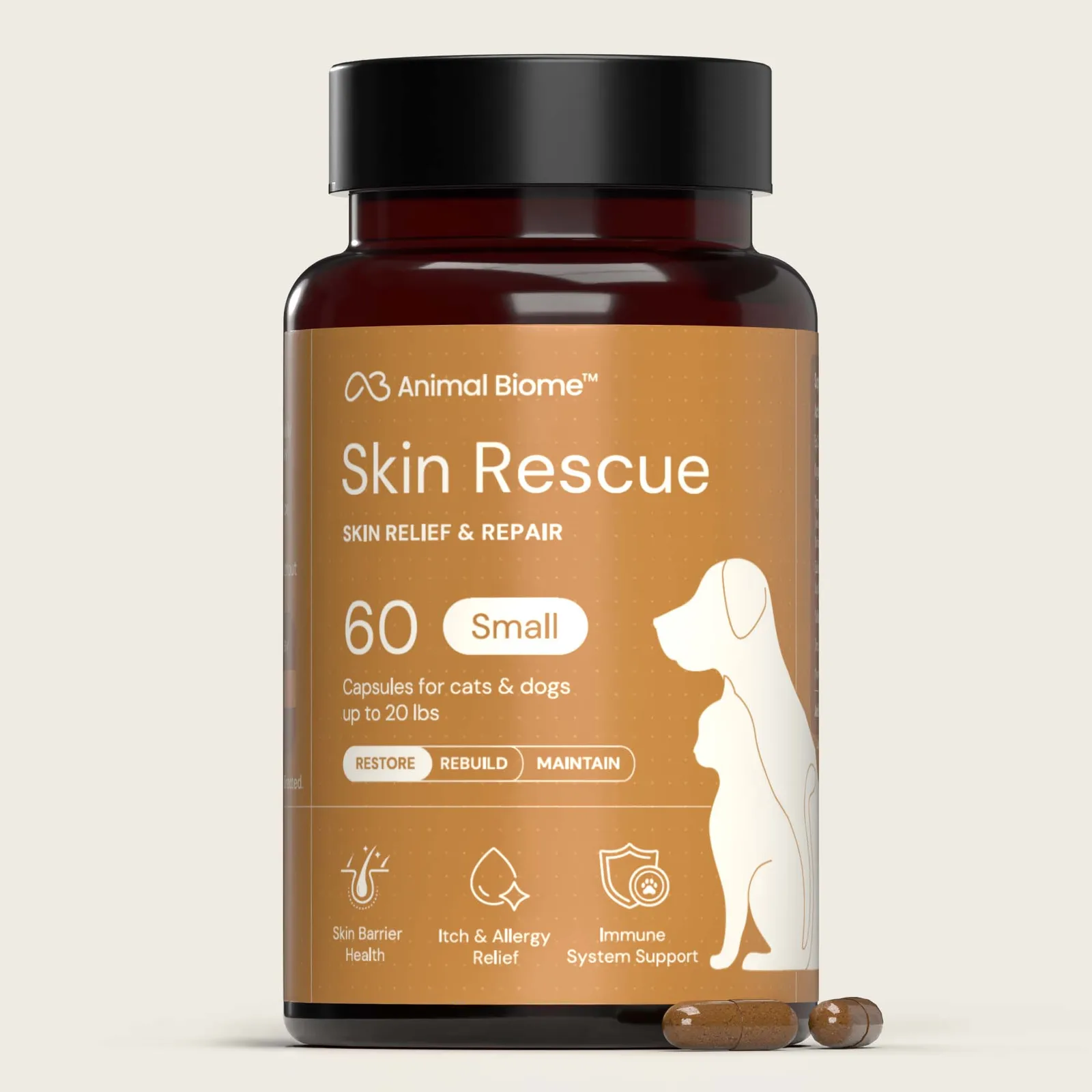
Animal Biome's Skin Rescue is a hypoallergenic skin-support supplement positioned by the company for the gut-skin axis. It is not an antihistamine, allergy test, elimination diet, or replacement for treatment of infection and inflammation. Because there is no client-approved Skin Rescue tracking URL in the current Petful offer library, it is linked here only to the official product page; no affiliate destination has been invented.
The gut-skin connection
The intestinal microbiome interacts with the immune system and produces metabolites that can influence tissues beyond the gut. Researchers are investigating how microbial patterns relate to allergic and inflammatory disease. This is a promising field, but association does not prove that one bacterial change caused a cat's allergy or that correcting a report will remove the trigger.
A sensible gut-skin plan keeps questions separate:
- What is causing the signs? Veterinary examination, parasite control, skin tests where appropriate, gastrointestinal investigation, and an elimination diet address diagnosis.
- Is the current diet nutritionally complete and tolerated? The veterinarian evaluates weight, appetite, stool, and the trial's reliability.
- Would bacterial information change a decision? A microbiome test may be useful when there is a defined before-and-after question, not as a substitute for the diet trial.
- Would a support product add value now? Introduce it for a clear goal and track the response without changing several other variables.
Measuring a gut-skin support trial
Choose outcomes that can be counted. For skin, track grooming bouts, lesion size, ear flares, and rescue medication. For the gut, track vomiting episodes, stool frequency and consistency, appetite, and weight. Keep the prescribed elimination diet unchanged unless the veterinarian says otherwise. Review the product after a defined interval instead of allowing it to become an unexamined permanent addition.
If the cat improves, the support product may be worth continuing within the wider plan. If nothing changes, reassess its purpose rather than adding another supplement. If signs worsen, stop and contact the veterinarian. This measured approach protects the diet trial, keeps the sponsor product in an honest supportive role, and gives the family information they can actually use.
Keep the variables interpretable
The same discipline applies when the skin improves before the gut, or the gut improves while itching continues. Separate outcomes may point to concurrent problems rather than failure of the entire plan. Ask whether flea control is current, infection has cleared, the diet remained exclusive, and medication timing explains the change. A cat may need both allergy management and a separate gastrointestinal diagnosis.
At the final review, decide explicitly what continues. Keep a product because it produced a worthwhile, repeatable benefit, not merely because it was started. Preserve the successful diet's nutritional completeness, document ingredients that caused a confirmed reaction, and retain a plan for future flares. That written summary helps another veterinarian understand the evidence without repeating every restriction from the beginning.
Choose one support tool for a defined goal
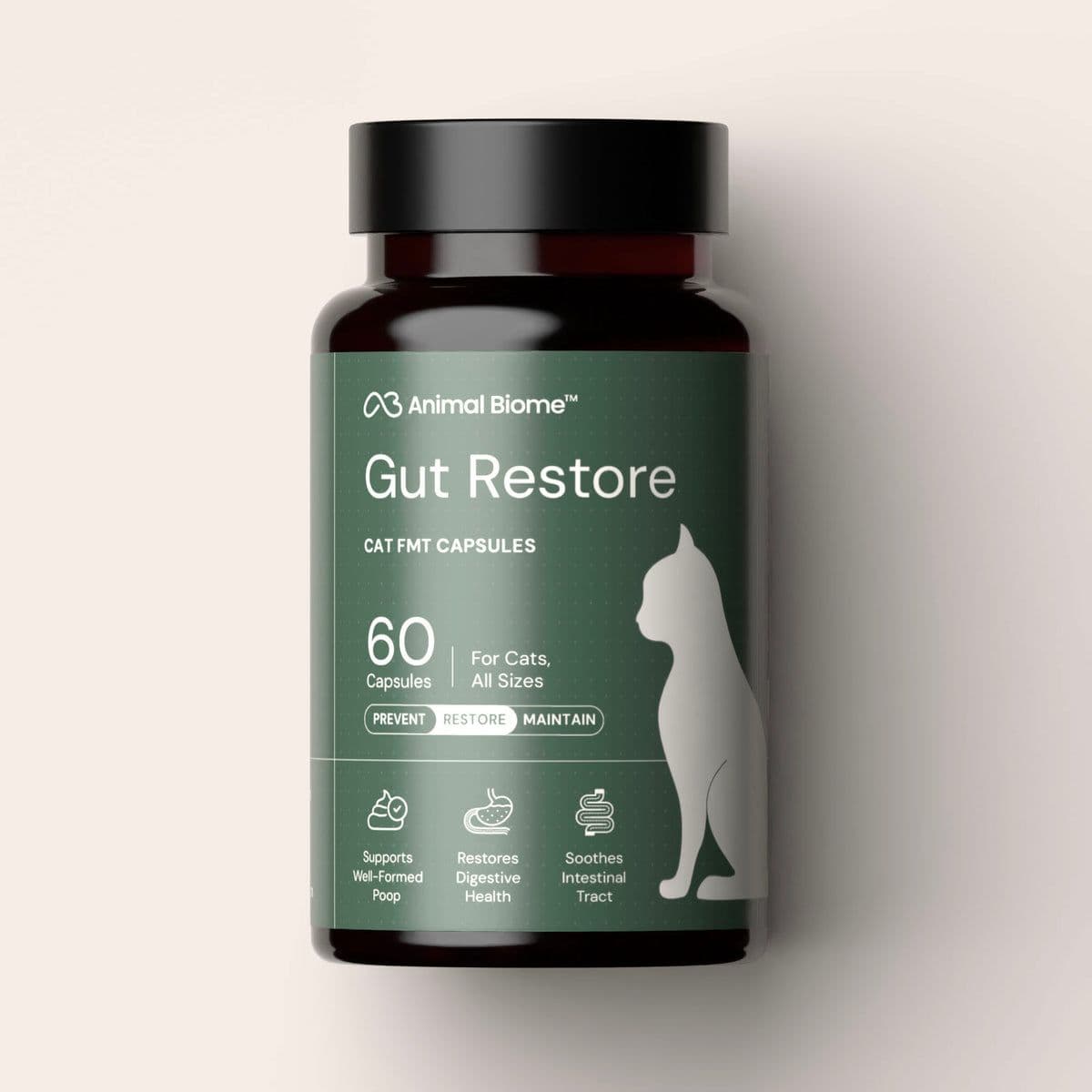
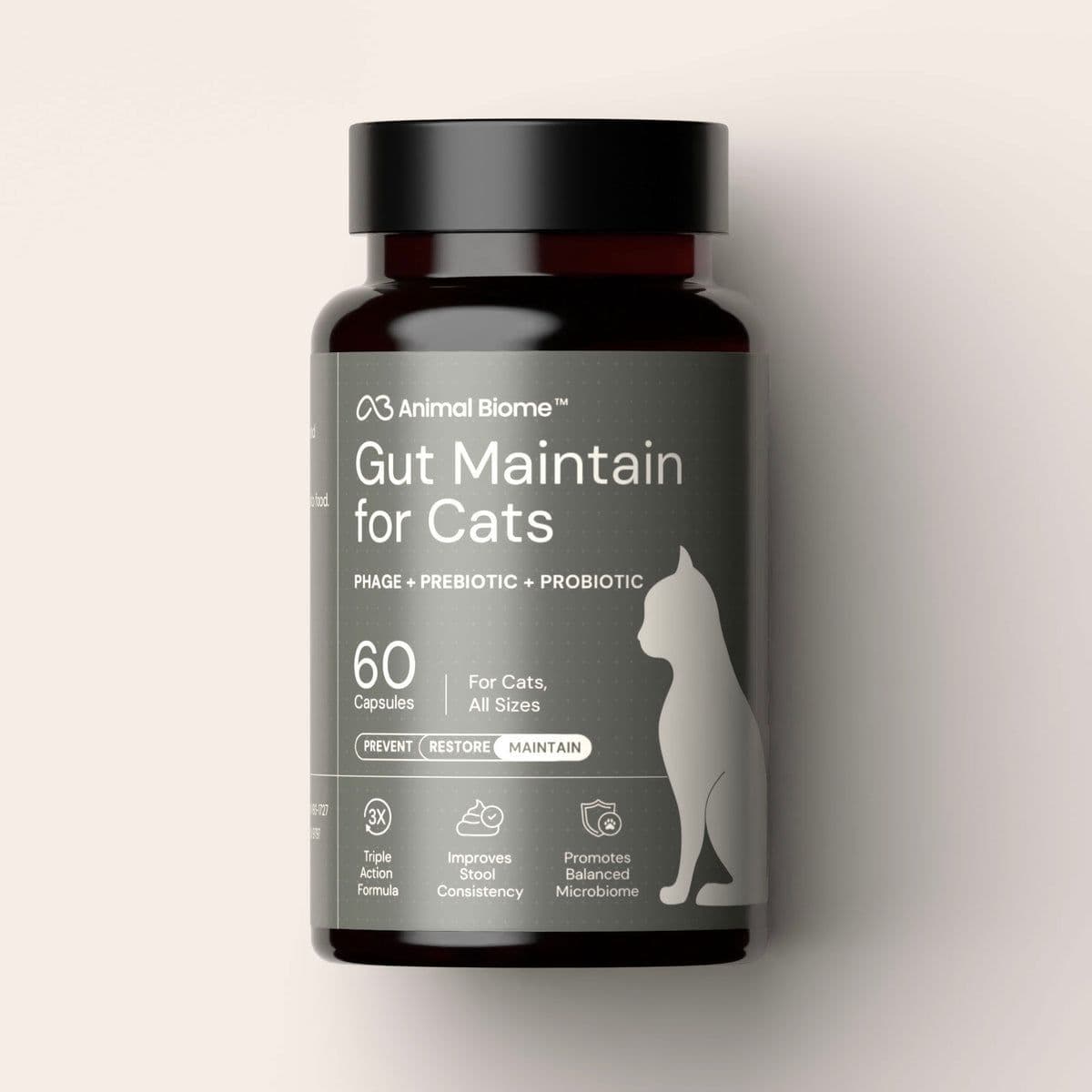
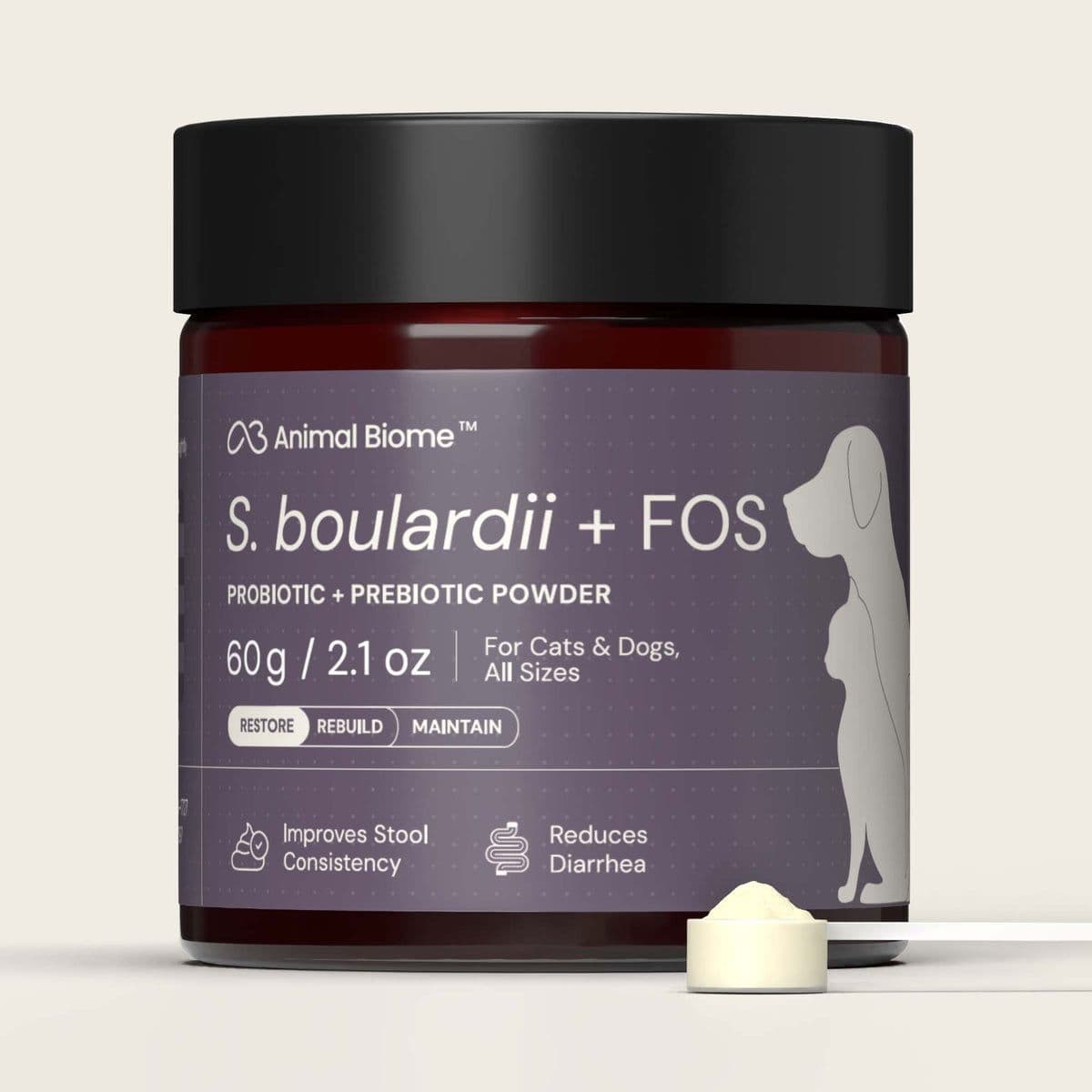
Animal Biome's cat test can provide bacterial context. Gut Restore for Cats is the company's broader cat-specific microbiome restoration product, while Gut Maintain for Cats is positioned for ongoing support. S. boulardii with FOS is a probiotic yeast and prebiotic product for cats and dogs. These are distinct formats. A cat does not need all of them simply because skin and gut signs occur together.
Define success before starting
If a veterinarian recommends microbiome support, define success before starting: fewer vomiting episodes, more consistent stool, stable appetite and weight, less self-trauma alongside the allergy plan, or a planned bacterial comparison. Stop and reassess if the cat becomes less comfortable, eats less, vomits repeatedly, or develops worsening diarrhea.
Food allergies in cats are managed best with precision rather than restriction for its own sake. Establish the veterinary next step, rule out look-alike problems, run an exclusive elimination diet, and use rechallenge to test the conclusion. Once that foundation is sound, Animal Biome testing and skin or gut support can contribute positively to a measured plan without being asked to do the job of diagnosis or treatment.
That sequence protects the cat's nutrition, comfort, and long-term options while giving the family a conclusion they can trust.
Frequently asked questions
There is no single most common food allergy in all cats. Beef, fish, and chicken are frequently reported triggers, but those proteins are also widely fed, and individual exposure history matters. The useful next step is to list every food, treat, flavored medication, supplement, table scrap, and prey exposure. A veterinarian can then select a genuinely novel protein or a hydrolyzed veterinary diet that avoids the individual cat's previous exposures as reliably as possible.
To treat a cat with food allergies, start with an exclusive, complete, and balanced diet chosen by the veterinarian, followed by a controlled rechallenge when it is safe and appropriate. Secondary skin or ear infections, itching, and flea exposure may also need treatment. Keep a dated record of food, medications, skin comfort, grooming, vomiting, stool, appetite, and weight. Do not starve a cat into accepting a new diet; contact the clinic promptly if the prescribed food is refused.
You cannot tell if your cat has a food intolerance from symptoms alone because food intolerance and food allergy can look similar. Intolerance is a nonimmune adverse reaction that often causes digestive signs, while allergy is immune-mediated and commonly affects the skin but may also cause vomiting or diarrhea. Because the patterns overlap, a veterinarian must assess the diet history, examination, and other possible causes. Improvement during a controlled diet trial and a reproducible return of signs during rechallenge provide stronger evidence of a food-related problem.
There is no reliable three-day rule for diagnosing food allergies in cats. Digestive signs may change quickly, but skin inflammation and secondary infection often need much longer to improve, so veterinary elimination trials usually run for weeks. Feeling better after three days does not prove the former food was the cause because medication, flea control, infection treatment, stress reduction, or natural fluctuation may also help. A controlled rechallenge tests the relationship more directly.
BVMS, MRCVS
Dr. Pippa Elliott, BVMS, MRCVS, is a veterinarian with nearly 30 years of experience in companion animal practice. Dr. Elliott earned her Bachelor of Veterinary Medicine and Surgery from the University of Glasgow. She was also designated a Member of the Royal College of Veterinary Surgeons. Married with 2 grown-up kids, Dr. Elliott has a naughty Puggle named Poggle, 3 cats and a bearded dragon.
Sign up for expert-backed reviews and safety alerts all in one place.

A Final Word (Disclaimer)
At Petful, our review integrity is paramount; we never exchange special treatment in our reviews for monetary or material rewards.
Nonetheless, when our readers click through to online merchants (including Chewy or Amazon), we receive a referral commission. This supports the running of our free blog, and we appreciate your backing.