Dog Health Data to Bring to Vet Appointments: A Tracking Checklist
A useful veterinary handoff combines a concise symptom timeline, medication and diet details, relevant records, safe photos or videos, and clearly labeled home trends.

BVMS, MRCVS
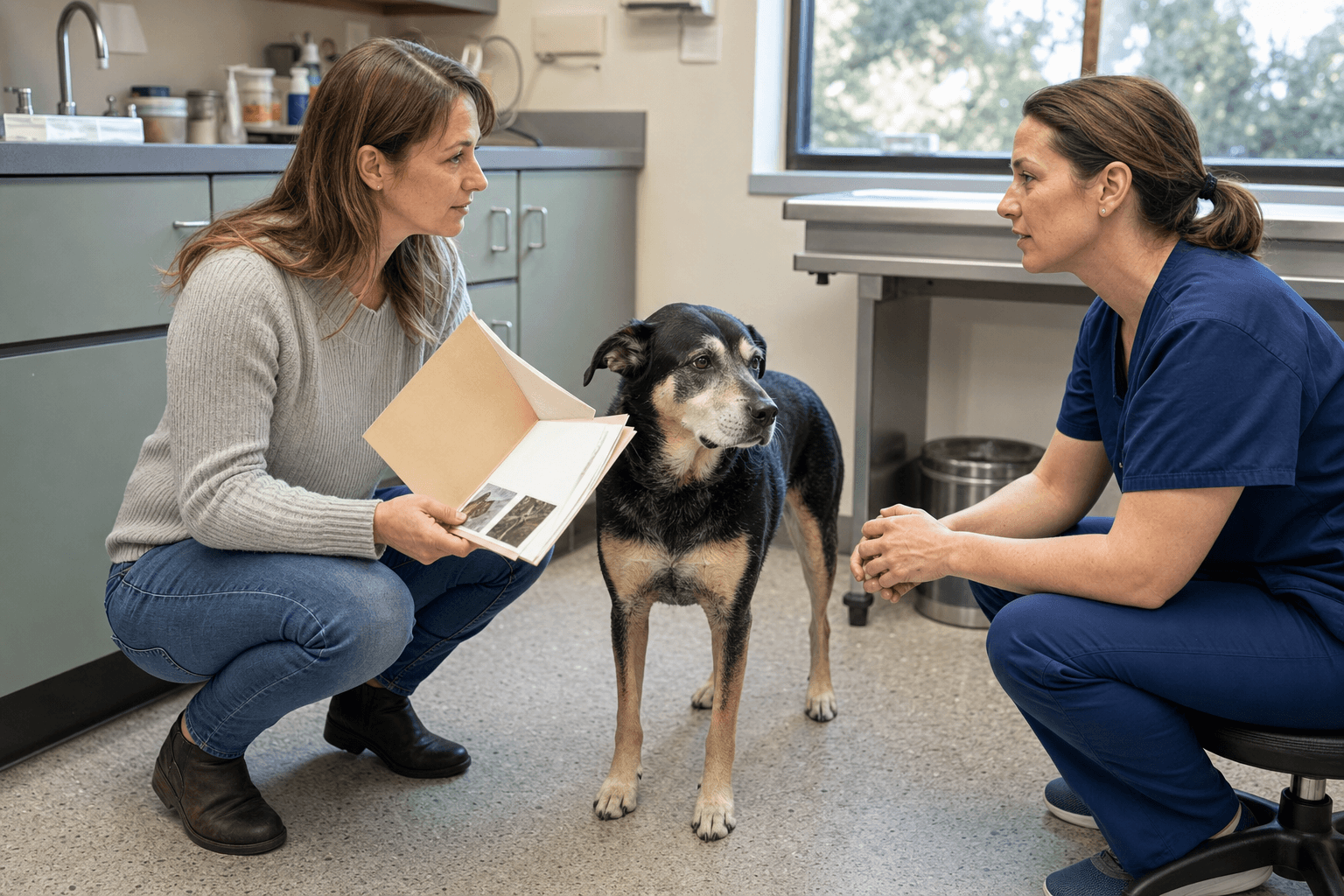
A concise chronology helps a veterinary team find the signal in the record.
Petful is reader supported. As an affiliate of platforms like Amazon and Chewy, we may earn a commission when you buy through links on this page. There is no extra cost to you.
The most useful dog health data to bring to vet appointments is not the largest possible file. It is a concise account of what changed, when it changed, how often it happens, what your dog was doing at the time, and what treatments or routine changes came before it.
Lead with the current concern and a symptom timeline. Add exact medication, supplement, diet, and exposure details; relevant records; clearly labeled home measurements; and short photos or videos when they safely capture an intermittent sign. Bring raw exports too, but make the important pattern easy to find.

Sign up for expert-backed reviews and safety alerts all in one place.
The one-page veterinary health summary
- 1Put the current concern and chronology first.
- 2List exact medications supplements diet and recent changes.
- 3Summarize only the home trends that relate to the visit, with dates and measurement conditions.
The first page should help a veterinary team understand the case in a minute or two. It is not a replacement for the full medical record. Think of it as a map to the details.
What do I need to bring to the vet for my dog? Start with one page of dog health data to bring to vet visits: the current concern, a dated symptom timeline, the exact medication list and supplement details, diet or exposure changes, relevant records, home measurements, and the decision you need help with. This dog health checklist lets the team find the signal quickly while the full reports, raw exports, containers, and media remain available when needed.
Include:
- Your dog's name, age, sex and neuter status, breed or mix, and current weight if known
- The main concern in one sentence
- When the problem started and whether it is improving, worsening, or intermittent
- The most important associated signs
- Current medications, supplements, preventives, and diet
- Known diagnoses, allergies, and previous reactions
- The specific question or decision you want help with
If the appointment is a referral, add the referring clinic, recent diagnostic results, treatment response, and the question the specialist is being asked to answer. The 2025 AAHA referral guidance emphasizes sending a concise history, relevant diagnostics, treatments, and the reason for referral.

A collar-mounted sensor and app for activity, rest, sleep, respiratory rate, heart-rate trends, itch behaviors, and more.
- Builds a personalized baseline over time
- Tracks trends between veterinary visits
- Generates a month-long shareable report
Health monitoring for dogs and cats
Petful may earn a commission when you click through to Maven Pet, at no extra cost to you.
Use exact dates when possible
“For a while” is hard to interpret. “First noticed July 28; happened twice on July 30 and three times overnight on August 2” gives the veterinarian a pattern.
If the start date is uncertain, say so. Use “approximately” rather than inventing precision. Note whether the change began before or after travel, boarding, a diet switch, a new medication, a fall, heat exposure, or access to a possible toxin.

Build a symptom timeline
A dog symptom tracker or simple note can turn scattered memories into clinical context. Dog health tracking works best when each meaningful episode uses the same labels and the chronology shows what changed before, during, and after the sign.
For each episode, record:
- Date and time
- What you observed before, during, and after
- Duration and frequency
- Activity, sleep, meal, medication, or environment at the time
- Appetite, drinking, urination, stool, breathing, mobility, and behavior changes that occurred with it
- What you tried and whether it changed the sign
- Whether a photo, video, measurement, or device record exists
Describe what you saw rather than diagnosing it. “Stood with neck extended, abdomen moving with each breath, would not lie down” is more useful than “had a panic attack.” “Left hind paw touched down for two steps and then lifted” is more useful than “hip pain.”
Record normal periods too
Intermittent problems are easier to interpret when the veterinarian knows what happens between episodes. Note whether your dog returns completely to normal, stays tired, eats normally, or shows a smaller version of the sign.
A tracker or home log can help identify this pattern, but an automated label should not replace the owner's observation. Record the label and what the dog actually did.
A collar-mounted sensor and app for activity, rest, sleep, respiratory rate, heart-rate trends, itch behaviors, and more.
- Builds a personalized baseline over time
- Tracks trends between veterinary visits
- Generates a month-long shareable report
Health monitoring for dogs and cats
Petful may earn a commission when you click through to Maven Pet, at no extra cost to you.
Medications, supplements, diet, and exposures
Bring an exact medication list, not “the little white pill.” A photo of the prescription label can help, as long as the information is readable and current.
For every medication, supplement, preventive, or topical product, include:
- Product name and active ingredient if available
- Strength or concentration
- Amount given
- Route, such as by mouth, ear, eye, skin, or injection
- Frequency and time of the last dose
- Start date and any recent change
- Missed doses or possible extra doses
- Observed benefit or adverse effect
Include over-the-counter products, calming chews, CBD products, vitamins, herbal products, flea and tick preventives, and medications prescribed by another clinic. Do not stop or double a prescribed medicine unless a veterinarian directs you.
Diet information should name the brand, formula, amount, feeding frequency, treats, table foods, chews, and recent changes. For a vomiting, diarrhea, appetite, allergy, or weight concern, this detail can be central.
Possible exposures also matter. Bring packaging or a clear product photo for a suspected toxin, plant, mushroom, pesticide, human medicine, recreational drug, or unusual food. Call a veterinarian or animal poison service immediately rather than waiting to finish a document when poisoning is possible.
Home measurements to include
Home measurements are useful when the method and conditions are clear. A number without context can be misleading.
Potentially relevant measurements include:
- Body weight on the same scale
- Resting or sleeping respiratory rate
- Heart rate when a veterinarian has taught you how to measure it
- Water intake measured over a defined period
- Food intake and appetite score
- Urination or stool frequency
- Temperature only when you can take it safely and accurately
- Mobility observations, such as time or distance tolerated
For respiratory data, include whether the dog was asleep, panting, warm, active, or stressed, plus the count duration. Our guide to the normal respiratory rate for dogs explains the counting method and emergency signs. A dog resting respiratory rate is useful only when the conditions, interval, and measurement method are recorded, so do not present an awake or post-exercise count as a sleeping baseline.
Do not collect a measurement if doing so may hurt, frighten, overheat, or delay care. A veterinarian can tell you which home data is appropriate for your dog.
A collar-mounted sensor and app for activity, rest, sleep, respiratory rate, heart-rate trends, itch behaviors, and more.
- Builds a personalized baseline over time
- Tracks trends between veterinary visits
- Generates a month-long shareable report
Health monitoring for dogs and cats
Petful may earn a commission when you click through to Maven Pet, at no extra cost to you.
How to summarize tracker data
Wearable dog health data is most useful as a dated pattern tied to a clinical question. A dog health tracker can produce far more detail than a veterinary team needs at first glance, so start with a concise summary and keep the raw export available in case the team wants more. This raw data versus a concise trend summary choice should favor the signal first: what changed, when it changed, under which conditions, and what owner observation occurred with it. Activity and sleep trends should be labeled as device-derived measures rather than diagnoses.

A useful summary might say:
- “Daily activity declined from the dog's usual range beginning July 26.”
- “Sleep became more fragmented on the same nights as coughing.”
- “Sleeping respiratory readings were higher on three consecutive nights under similar conditions.”
- “The change began four days after a medication adjustment.”
Avoid sending dozens of screenshots without explaining why they matter. Include the device name, what the metric represents, the date range, measurement conditions, missing-data periods, and whether the dog wore the device consistently.
Maven says its health-monitoring system can track activity, rest, sleep, resting respiratory rate, heart-rate trends, itch behavior, and dog water-intake patterns. It syncs through Wi-Fi and is not a substitute for veterinary care. For current product details, see our Maven Pet health-tracker review.
Keep the evidence boundary visible
A device can identify a pattern without identifying the cause. Sensor contact, fit, charging, connectivity, sleep position, and algorithm behavior can all affect data.
Label owner-entered observations separately from automated measures. Tell the veterinarian when a device alert did not match what you saw, or when visible symptoms occurred without an alert.
Photos and videos that help
Short, calm recordings can preserve an intermittent sign that disappears in the clinic. They are especially useful for gait changes, coughing episodes, unusual breathing sounds, tremors, brief events, stool appearance, skin changes, or behavior that is difficult to describe.
Safe symptom photos and videos show the sign as it happened naturally, include enough surroundings to understand position or movement, and avoid provoking a painful or dangerous event. Record the dog moving naturally from the side when gait is the concern, using an unobstructed side view and secure footing. Stop recording and seek care when breathing, consciousness, severe pain, bleeding, or another urgent sign makes documentation unsafe.
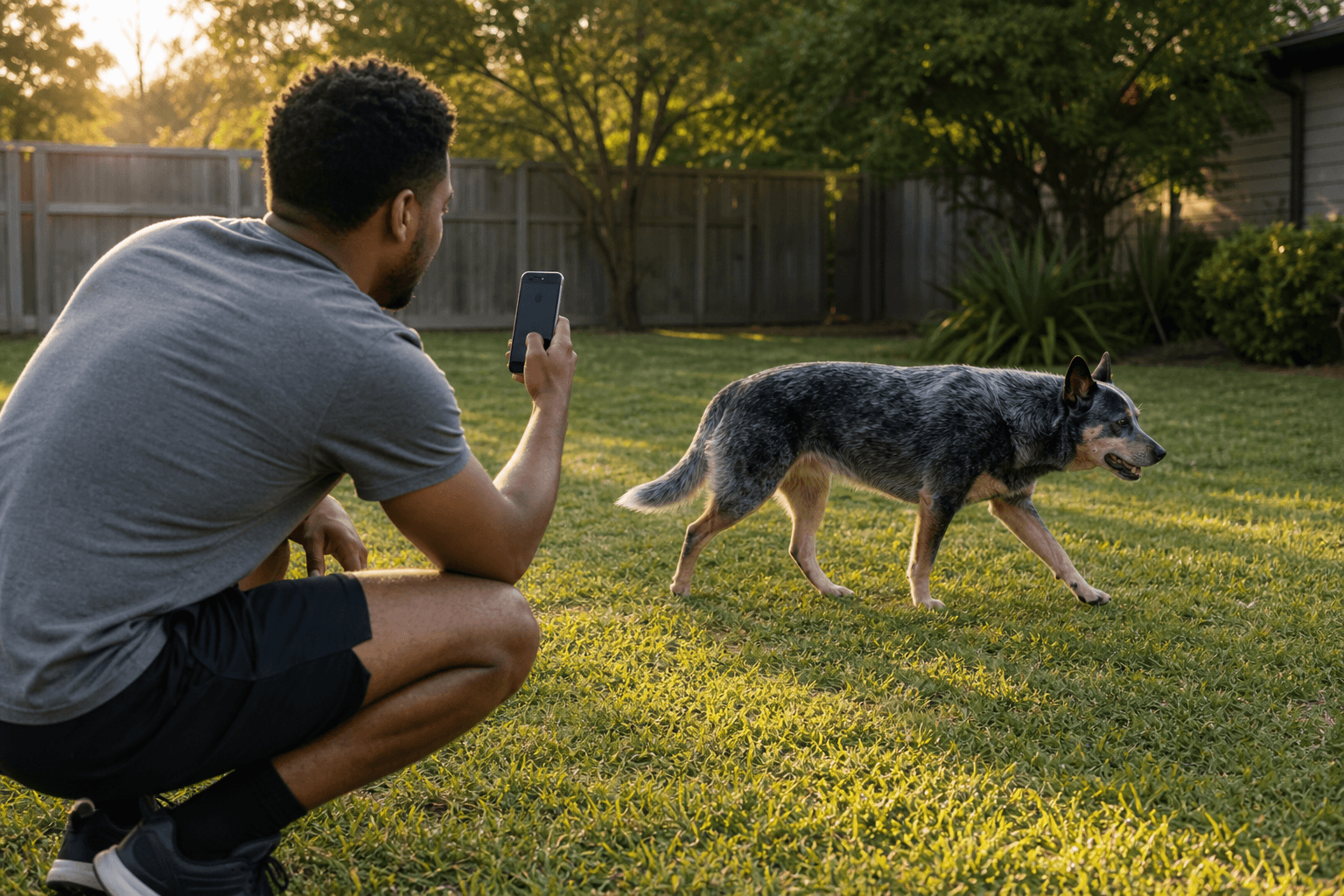
For a useful recording:
- Capture the whole dog and relevant surroundings before zooming in
- Record from the side for gait or breathing when safe
- Include 10 to 30 seconds before and after the main event if possible
- Use normal light and avoid filters
- Do not stage a symptom, repeat a painful movement, or provoke a cough
- Keep your dog away from stairs, traffic, water, or other hazards while recording
- State the date, time, duration, and what happened immediately before the clip
For skin, eye, wound, swelling, stool, or vomit changes, include one wider orientation view and one clear close view with neutral scale when safe. Do not place an object in a wound or near an irritated eye for scale.
A collar-mounted sensor and app for activity, rest, sleep, respiratory rate, heart-rate trends, itch behaviors, and more.
- Builds a personalized baseline over time
- Tracks trends between veterinary visits
- Generates a month-long shareable report
Health monitoring for dogs and cats
Petful may earn a commission when you click through to Maven Pet, at no extra cost to you.
Records and logistics
Bring or send the records that change the current decision:
- Vaccination history
- Current and recent medication list
- Laboratory results
- Imaging reports and, for referral, the actual image files when requested
- Surgery and anesthesia reports
- Pathology or biopsy reports
- Allergy or adverse-reaction history
- Specialist and emergency visit summaries
- Insurance information when relevant to clinic logistics
Call ahead if the clinic needs records sent through a portal or directly from another hospital. A phone screen full of scattered attachments may be hard to transfer during an appointment.
Veterinary records are useful when they answer the current question and arrive in a format the receiving team can review. For a routine visit, that may mean the current medication list and recent laboratory work. For a referral, include the relevant imaging files, reports, treatment response, and referring question. Avoid burying the decision in duplicate pages, unrelated older results, or screenshots that cannot be downloaded into the medical record.
The AAHA senior-care guidelines recommend a thorough history, medication review, nutritional assessment, and attention to changes in function and behavior. Those same principles make a useful handoff for dogs of any age, with the depth adjusted to the concern.
Dog health data checklist
| Category | Minimum useful detail | Common mistake to avoid |
|---|---|---|
| Current concern | One-sentence problem and the decision you need help with | Starting with years of background before naming today's concern |
| Timeline | Onset, frequency, duration, progression, and normal periods | Using vague timing such as recently or sometimes |
| Treatments | Exact product, strength, amount, frequency, last dose, and response | Omitting supplements, preventives, or another clinic's prescription |
| Home data | Date range, measurement method, conditions, baseline, and change | Sending a chart without explaining what the metric means |
| Media | Short natural recording with date, context, and safe camera angle | Provoking or repeating a painful or dangerous event |
| Records | Recent results and reports that affect the current question | Sending duplicate or unrelated files without a summary |
Before the appointment, place the one-page summary first, then the timeline, medication and diet list, relevant results, and optional tracker or media index. Keep originals or raw exports in a separate folder.
This signal-before-volume order helps prioritize chronology and changes instead of a data dump. It can also distinguish routine, specialist referral, and emergency handoffs: routine care may use the concise checklist, a referral needs the question plus relevant diagnostics and response, and an emergency needs immediate transport with only time-critical facts. Label device data and its limitations so an automated metric is not mistaken for a diagnosis or a direct owner observation.
Do not delay urgent care to organize records
- Breathing difficulty, collapse, uncontrolled bleeding, repeated seizures, severe trauma, suspected poisoning, a swollen painful abdomen, inability to urinate, or another rapidly worsening sign should not wait while you finish a checklist.
Call the emergency hospital while leaving. Bring medication containers, possible toxin packaging, and the time the event started if they are immediately available, but do not delay transport to search for perfect records.
Emergency signs should not wait for record preparation. Breathing difficulty, collapse, uncontrolled bleeding, repeated seizures, severe trauma, suspected poisoning, inability to urinate, or rapid worsening matters more than completing a form. If a container or current medication list is immediately available, take it, but do not search through files, create a video, finish a tracker export, or delay departure to make the handoff look complete.
The AVMA pet first-aid guide emphasizes immediate veterinary contact for emergencies and safe transport. The emergency team may ask about medications, toxins, trauma, breathing, consciousness, and the last time your dog ate or drank.
What the veterinarian may decide to do next
The data you bring helps the veterinarian choose the next question. It does not determine the test by itself.
What tests do vets run to see if dogs are sick? The answer begins with the history and physical examination, because those findings determine which diagnostic tests are appropriate. Depending on the dog and concern, a veterinarian may recommend blood or urine testing, imaging, blood pressure, heart testing, cytology, biopsy, infectious-disease testing, monitoring, or no immediate test. There is no universal panel that safely answers every symptom.
Depending on the history and examination, a veterinarian may recommend no testing, monitoring, blood or urine tests, imaging, an electrocardiogram, blood pressure measurement, infectious-disease testing, cytology, biopsy, or referral. The choice depends on the individual dog, clinical findings, urgency, and how a result would change treatment.
Questions to ask before leaving
Ask what each proposed test is intended to answer, how urgent it is, how results will be communicated, and what signs should change the plan while you wait.
Before leaving, confirm the working plan in plain language: what to give, what to monitor, when results are due, which changes require a call, and which changes require emergency care. Add those instructions to the same one-page record so every caregiver follows the same plan.
Frequently asked questions
What health information is most useful to a veterinarian? Lead with a one-page health summary that states the current concern, symptom chronology, onset, frequency, duration, progression, associated signs, and the decision you need help with. Add exact medication and diet details, relevant history, home measurements, and recent records that support that question. Separate direct owner observations from device labels, and keep the complete chart or raw files available instead of placing every detail before the main signal.
How many days of tracker data should I bring? Bring enough of a representative baseline period to show the dog's usual pattern plus the symptom-linked date range. For an acute change that may be several days; for a gradual change it may be several weeks. Mark travel, boarding, medication changes, charging gaps, and days the device was not worn. Ask the clinic whether a specialist or scheduled test needs a specific range, format, or raw export before the appointment.
Should I bring raw tracker data or a one-page summary? Bring a one-page signal-before-volume summary and keep the raw export available. State the device, metric, date range, measurement conditions, missing-data periods, baseline, and the change you want the veterinarian to assess. Include a representative chart only when it clarifies the pattern. Raw data can support follow-up questions, but a concise summary helps the team understand the concern before opening a large file or screenshots.
Are photos and videos useful at a vet visit? Yes, especially for intermittent gait, breathing, coughing, tremor, skin, stool, or behavior changes that may disappear in the clinic. A natural gait recording or short symptom clip should include the date, context, safe camera angle, and what happened before and after. Record naturally and safely, do not provoke a painful event, and never delay urgent care to capture better symptom media.
What information matters at an emergency visit? The time-critical symptom onset, main sign, current medications, known disease, recent treatment, possible medication or toxin exposure, trauma, and changes in breathing or consciousness matter most. Call the emergency hospital while leaving and follow its transport instructions. Bring containers or a current list only when immediately available; care comes before organizing a complete file, downloading a tracker report, or recreating a symptom for a video.
BVMS, MRCVS
Dr. Pippa Elliott, BVMS, MRCVS, is a veterinarian with nearly 30 years of experience in companion animal practice. Dr. Elliott earned her Bachelor of Veterinary Medicine and Surgery from the University of Glasgow. She was also designated a Member of the Royal College of Veterinary Surgeons. Married with 2 grown-up kids, Dr. Elliott has a naughty Puggle named Poggle, 3 cats and a bearded dragon.
Sign up for expert-backed reviews and safety alerts all in one place.
A Final Word (Disclaimer)
At Petful, our review integrity is paramount; we never exchange special treatment in our reviews for monetary or material rewards.
Nonetheless, when our readers click through to online merchants (including Chewy or Amazon), we receive a referral commission. This supports the running of our free blog, and we appreciate your backing.