Dog Breathing Fast While Sleeping: What's Normal and When to Call the Vet
Fast breathing during sleep can accompany dreaming, warmth, pain, or illness. Learn to compare the rate with effort, posture, gum color, and your dog's usual pattern.

BVMS, MRCVS
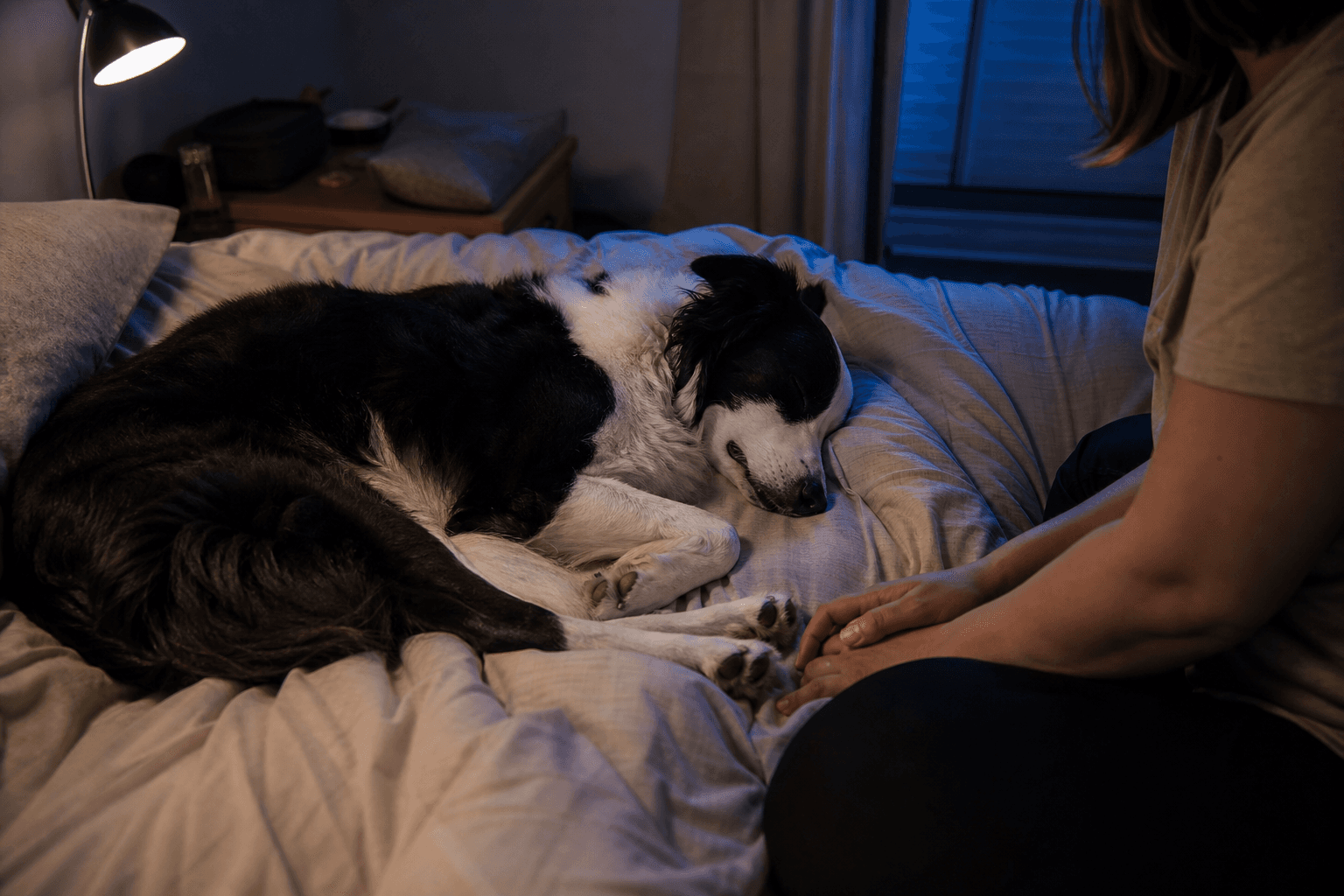
Brief breathing changes can accompany dreams, but sustained changes deserve closer observation.
Petful is reader supported. As an affiliate of platforms like Amazon and Chewy, we may earn a commission when you buy through links on this page. There is no extra cost to you.
Seeing a dog breathing fast while sleeping can be unsettling. A short burst of quicker, uneven breaths may accompany dreaming, but sustained rapid breathing at true rest can also occur with heat, pain, fever, heart or lung disease, anemia, medication effects, and other problems.
Start by looking at the whole dog. Note how long the change lasts, whether the mouth is open, whether the chest and abdomen are working harder, the dog's position, gum color, and whether the pattern settles after waking. Visible breathing effort, abnormal gum color, collapse, or an inability to get comfortable is an emergency, regardless of the exact rate.

Sign up for expert-backed reviews and safety alerts all in one place.
Why dogs may breathe fast while sleeping
- 1Brief changes during a dream can be normal when the dog stays relaxed and returns to an easy pattern.
- 2Sustained rapid breathing during calm sleep deserves a careful count and prompt veterinary advice when it repeats.
- 3Increased effort, blue or gray gums, collapse, or open-mouth breathing outside normal panting needs emergency care.
Why is my dog breathing so fast in his sleep at night? A brief REM variation and sustained rapid breathing are different patterns: a dream change settles, while a persistent dog breathing fast while sleeping needs a calm count, an effort check, and veterinary advice when it repeats. Watch long enough to see whether the dog returns to a loose, easy pattern, and treat visible effort, abnormal gums, collapse, or an inability to settle as an emergency rather than a dream.
Sleep is not one uniform state. During rapid eye movement, or REM, sleep, a dog's eyes may move beneath the lids, paws may twitch, facial muscles may quiver, and breathing may briefly become less regular. Those changes should be temporary, and the dog should otherwise look loose and comfortable.
Fast breathing is less reassuring when it continues beyond a brief dream episode, happens repeatedly through the night, or comes with coughing, weakness, restlessness, an unusual posture, or a change from the dog's normal sleeping pattern. A calm video and timed count can be useful for the veterinarian if recording does not delay needed care.

A collar-mounted sensor and app for activity, rest, sleep, respiratory rate, heart-rate trends, itch behaviors, and more.
- Builds a personalized baseline over time
- Tracks trends between veterinary visits
- Generates a month-long shareable report
Health monitoring for dogs and cats
Petful may earn a commission when you click through to Maven Pet, at no extra cost to you.
A brief REM change
Dream-related breathing often varies rather than staying uniformly fast. You may notice several quicker breaths, a pause, a twitch, and then a return to the dog's usual rhythm. The mouth normally remains relaxed, and the abdomen should not heave with each breath.
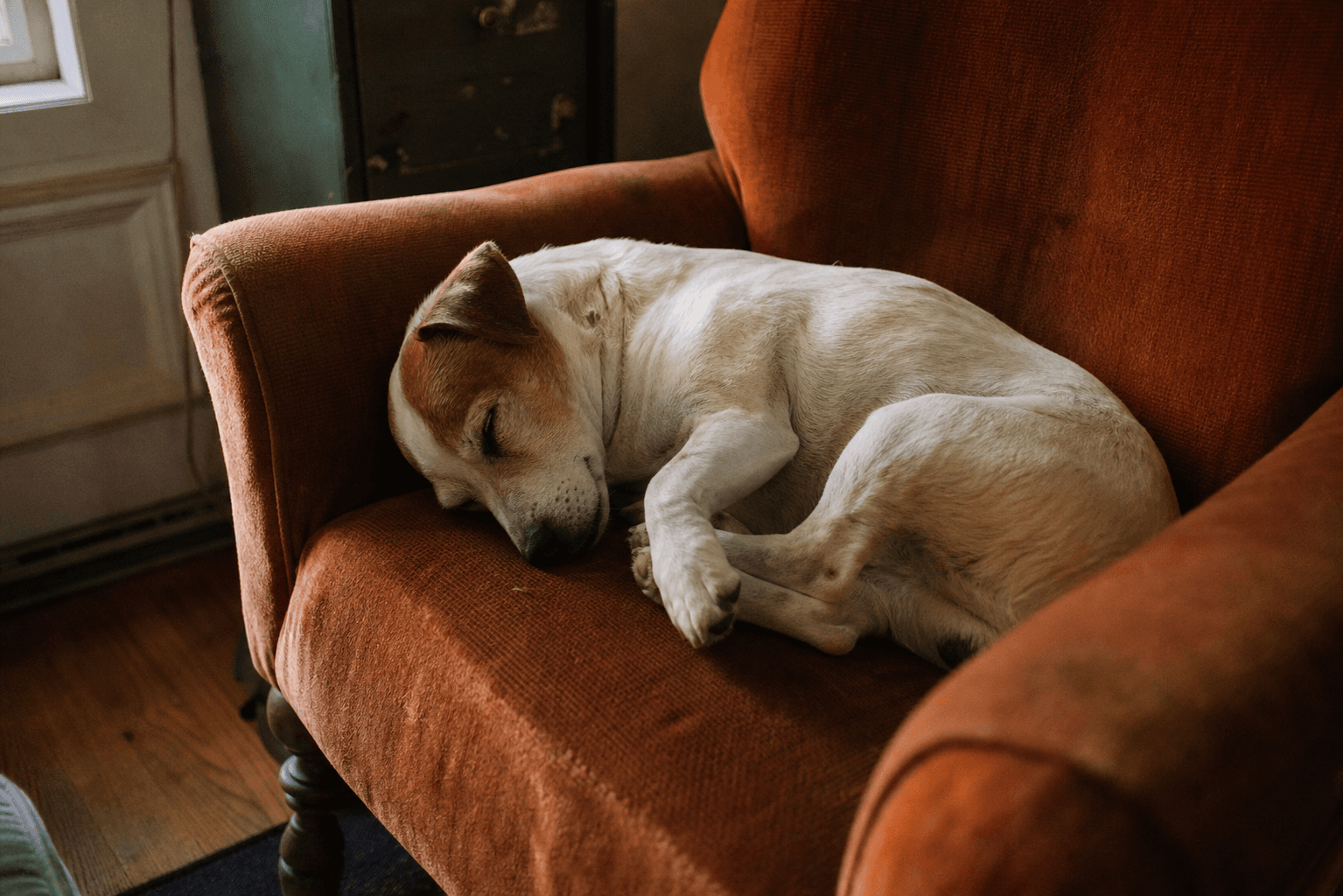
Do not shake or startle a sleeping dog. If you need to see whether the pattern changes, call the dog's name softly from a safe distance. Once the dog is awake and settled, look again before deciding that the faster period was only a dream.
A sustained change at true rest
A dog that continues breathing rapidly after waking and settling is no longer showing only a sleep-stage variation. The same is true when the rate remains high for several minutes during quiet sleep or appears on multiple nights.
Record the time, duration, resting position, room conditions, and any other signs. The distinction between one short episode and a persistent pattern helps a veterinarian decide how urgently the dog should be examined.
Count the sleeping respiratory rate
Wait until your dog is sleeping calmly and is not panting. Watch the ribcage or flank. One complete rise and fall is one breath. Count for 30 seconds and multiply by two, or count for a full minute if the rhythm is irregular.
This is how to count during calm sleep: use a loose, fully resting dog, keep the same viewing point, and repeat an unexpected value only when the dog remains comfortable.
Repeat the count after several quiet minutes when it is safe to do so. A second reading helps identify a counting mistake or a temporary dream change. Our guide to the normal respiratory rate for dogs explains how published reference ranges and an individual baseline fit together.
How to interpret the number
Published ranges differ. Merck lists 18 to 34 breaths per minute for a resting dog, while Cornell describes 15 to 30 as normal and advises consulting a veterinarian when a resting rate is consistently above 35. A dog resting respiratory rate becomes most useful when it is measured under comparable calm conditions and interpreted against an individual baseline. A dog with known heart or lung disease may have a different veterinarian-set threshold.
Do not spend several minutes perfecting a count when the dog looks distressed. Rate is useful only when it does not distract from effort, color, posture, and responsiveness.
Fast breathing versus panting versus labored breathing
These terms are often used as if they mean the same thing, but they describe different observations.
Why is my dog breathing fast but not panting at night? Closed-mouth dog breathing heavily at night can be rapid breathing rather than heat-release panting. A dog rapid breathing at night needs to be assessed by duration, repeat resting rate, posture, effort, and other symptoms rather than by mouth position alone.
| Pattern | What you may see | Why it matters |
|---|---|---|
| Brief REM variation | Closed mouth, loose body, paw or facial twitching, short-lived rate change | Often settles when the dream phase ends or the dog wakes calmly |
| Panting | Open mouth, tongue out, usually after heat, exercise, excitement, or stress | Should ease as the dog cools and settles; unexplained panting at rest needs context |
| Rapid breathing | Faster chest cycles, often with a closed mouth, which may or may not involve extra effort | A sustained resting change can be an early sign that veterinary advice is needed |
| Labored breathing | Strong abdominal push, nostril flare, extended neck, elbows held out, open mouth, noise, or inability to lie comfortably | Treat as respiratory distress and seek urgent or emergency veterinary care |
Panting has a recognizable context
Healthy dogs pant to release heat. Panting can also occur with excitement, fear, stress, pain, fever, medication effects, and disease. At bedtime, ask whether the room is warm, the dog exercised recently, or something stressful just happened.
Normal cooling panting should gradually ease in a cool, quiet environment. Panting that begins without a clear reason, persists at rest, or accompanies weakness, pain, coughing, a swollen abdomen, or pale gums deserves veterinary advice.
Rapid breathing describes rate
Rapid breathing means the chest is cycling faster. The mouth can be closed, and the dog may initially look fairly comfortable. Veterinarians may use the term tachypnea for an abnormally increased respiratory rate.
Rate alone does not identify a cause. A dog can breathe quickly because of normal context, discomfort, fever, metabolic changes, reduced oxygen delivery, heart disease, airway disease, lung disease, or a problem outside the respiratory system.
Labored breathing describes effort
Labored breathing, or dyspnea, means the dog is struggling to move air. Tufts describes difficulty breathing as an emergency sign that can occur with heart failure and other serious conditions.
Effort can become obvious before you finish a count. Watch the abdomen, neck, elbows, nostrils, mouth, and the dog's ability to settle. A normal-looking number does not make visible respiratory struggle safe.
A collar-mounted sensor and app for activity, rest, sleep, respiratory rate, heart-rate trends, itch behaviors, and more.
- Builds a personalized baseline over time
- Tracks trends between veterinary visits
- Generates a month-long shareable report
Health monitoring for dogs and cats
Petful may earn a commission when you click through to Maven Pet, at no extra cost to you.
Common reasons for fast breathing at rest
Several very different conditions can produce a similar outward sign. The following categories help organize observations, but they are not a home diagnostic list.
Why is my dog breathing very fast while laying down? Heat, recent activity, dreams, pain, fever, medication effects, heart or lung disease, anemia, and other whole-body problems can all produce that observation. Check the resting posture, duration, effort, and associated signs. Persistent rapid breathing after the dog wakes and settles, repeated position changes, an extended neck, or an inability to lie comfortably deserves urgent veterinary advice.
Heat, recent activity, and excitement
A warm bedroom, heavy bedding, recent play, or a stimulating event can keep the rate elevated for a while. Move to a comfortable environment and allow quiet rest. Do not apply ice or force cold water.
The rate should trend toward the dog's familiar resting pattern. If it does not, or if the dog seems weak, disoriented, or unusually hot, call a veterinarian.
Dreaming and sleep position
REM sleep can produce brief irregularity. Some positions also make chest movement look more dramatic. Compare the pattern after the dog changes position or wakes calmly.
A dog breathing very fast while laying down may be choosing a position because it is comfortable, but a dog that repeatedly sits or stands, extends the neck, refuses to lie flat, or cannot settle may be trying to breathe more easily. That posture change needs urgent attention.
Why the change may stand out at night
Owners often notice breathing at night because the house is quiet, the dog is close by, and there are fewer distractions. That does not necessarily mean the problem began at bedtime. Review the day for reduced stamina, an unusual pause on a walk, coughing after excitement, poor appetite, restlessness, or a reluctance to use stairs.
Nighttime conditions can also add context. A warm room, a heavy blanket, a stressful thunderstorm, guests in the home, or a late play session may affect the pattern. Record those details, but do not use them to explain away a rate that remains high after the dog is cool and calm.
A dog with heart or lung disease may appear more uncomfortable when lying down. Repeatedly getting up, choosing a sternal sitting position, sleeping with the head elevated, or refusing a familiar bed can be clinically useful observations. Do not force the dog into a position for comparison.
Pain, anxiety, or fever
Pain can raise respiratory rate even when the source is not in the chest. Look for trembling, guarding, reluctance to move, a tense abdomen, vocalizing, or a sudden behavior change. Anxiety may cause panting and restlessness, but anxiety should not be assumed until medical causes have been considered.
Fever can also increase breathing. Do not give human pain or fever medicines. Many are unsafe for dogs, and treatment can obscure important clinical information.
A collar-mounted sensor and app for activity, rest, sleep, respiratory rate, heart-rate trends, itch behaviors, and more.
- Builds a personalized baseline over time
- Tracks trends between veterinary visits
- Generates a month-long shareable report
Health monitoring for dogs and cats
Petful may earn a commission when you click through to Maven Pet, at no extra cost to you.
Heart disease and fast sleep breathing
What are the first signs of heart failure in dogs? A rising sleeping respiratory rate, cough, lower exercise tolerance, weakness, fainting, nighttime restlessness, or abdominal enlargement may be early clues, but none confirms heart failure. Fluid in or around the lungs, reduced circulation, or rhythm problems can affect breathing and stamina.
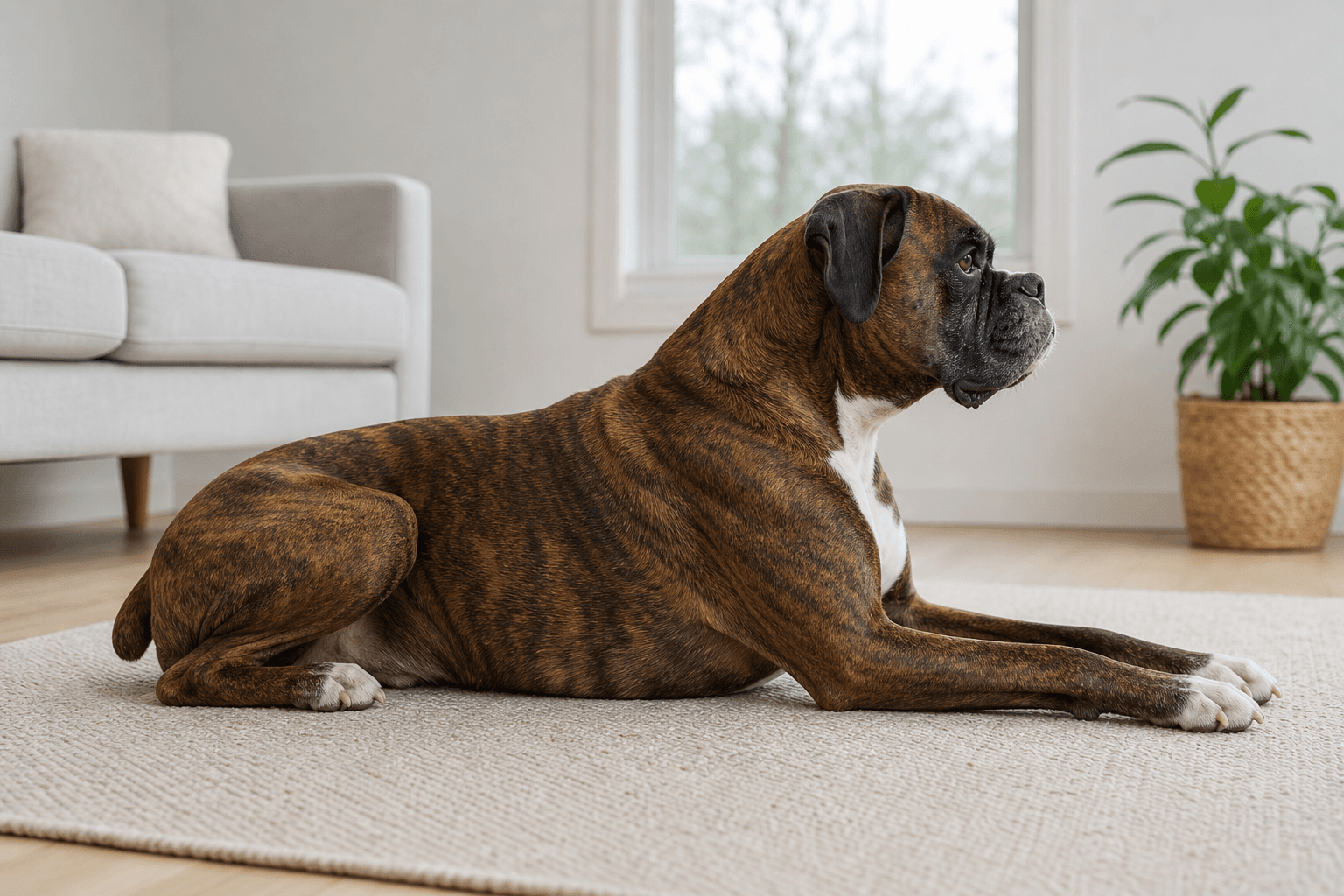
Possible early changes include a repeated rise in sleeping rate, cough, lower exercise tolerance, weakness, fainting, restlessness at night, or abdominal enlargement. None of these findings confirms heart failure. A veterinarian may need an examination, chest imaging, bloodwork, an electrocardiogram, or an ultrasound to determine the cause.
Airway or lung disease
Inflammation, infection, airway narrowing, aspiration, fluid, trauma, and other chest problems can all alter rate or effort. Coughing, noisy breathing, nasal discharge, fever, reduced appetite, or a new intolerance of activity adds useful context.
An upper-airway sound can be especially concerning in a dog with a short muzzle or a known airway condition. Keep the dog cool and calm and obtain veterinary instructions rather than manipulating the mouth or throat.
Short-nosed dogs and confusing sounds
Short-nosed dogs can make more airway noise than long-nosed dogs even when well, but a familiar sound is not a reason to dismiss a new change. Compare with the dog's usual sleep sound, effort, color, recovery after activity, and ability to stay cool. New rasping, gagging, blue or gray color, or rapidly increasing effort needs urgent care.
Reverse sneezing usually looks like a short series of forceful inward snorts while the dog is awake, not continuous rapid chest movement during sleep. A cough may move the whole body and end with a gag. A video can help a veterinarian distinguish the event, but owners should not attempt to provoke it.
Anemia and other whole-body problems
When blood carries less oxygen, the body may compensate with faster breathing and heart rate. Pale gums, weakness, dark stool, bleeding, or collapse requires urgent assessment.
Hormonal disease, metabolic imbalance, toxin exposure, abdominal disease, and medication effects can also change breathing. This is why rate should lead to a veterinary conversation, not a home diagnosis.
Medication, surgery, and recovery context
Sedatives, pain medicines, corticosteroids, and other drugs can change sleep, panting, alertness, or respiratory patterns. After anesthesia or surgery, follow the discharge instructions for monitoring and call the hospital when the breathing change is outside the expected plan.
Have the exact product, strength, dose, and last administration time ready. Do not skip, repeat, or add a dose because of a breathing change unless the prescribing veterinarian gives that instruction.
Pain can raise the rate even when an incision looks normal. Swelling, bleeding, vomiting, extreme sedation, a tense abdomen, crying, repeated position changes, or an inability to rest should be reported with the breathing observation.
Puppies, seniors, and body condition
Age and size can influence ordinary breathing, but they do not create a safe exception for respiratory distress. Puppies may have more variable sleep and dream movement. Senior dogs are more likely to have chronic conditions or medication changes that make a new trend meaningful.
Excess body weight can make heat regulation and breathing more difficult. Very fit dogs may have a lower calm baseline. In every case, a true individual baseline and visible effort are more useful than assuming the rate is normal for an age, breed, or body type.
What to do when you notice fast sleep breathing
Should I worry if my dog is breathing fast? Worry rises when the change persists at true rest, differs from baseline, or occurs with cough, pain, weakness, abnormal color, or effort. The safe response is an observe-repeat-call sequence, not a home diagnosis.
If your dog is comfortable and there are no emergency signs, use a short observe-repeat-call sequence:
- Note the start time and whether the dog appears to be dreaming.
- Check posture, mouth position, chest and abdominal effort, gum color, and responsiveness.
- Count the respiratory rate during calm sleep.
- Wake the dog gently from a distance if it is safe, allow several quiet minutes, and count again.
- Record a short video showing the whole chest and abdomen if that does not delay care.
- Call your veterinarian with the numbers, duration, changes from baseline, and other symptoms.
Use rate and effort together instead of treating every fast count as the same problem. This gives a safe observe-repeat-call sequence for owners at night while the dog remains comfortable. It also helps separate common context from emergency signs without diagnosing a cause: a brief dream variation can be watched, a persistent resting change deserves a veterinary call, and visible struggle requires emergency care rather than another home measurement.
A collar-mounted sensor and app for activity, rest, sleep, respiratory rate, heart-rate trends, itch behaviors, and more.
- Builds a personalized baseline over time
- Tracks trends between veterinary visits
- Generates a month-long shareable report
Health monitoring for dogs and cats
Petful may earn a commission when you click through to Maven Pet, at no extra cost to you.
Do not wait for a routine appointment if the pattern is persistent and new, the rate remains markedly elevated at rest, the dog has known heart or lung disease, or additional symptoms are appearing.
Information that makes the call useful
Have the following ready:
- Respiratory rate and how long you counted
- Whether the dog was asleep, awake, panting, warm, active, or stressed
- Duration and frequency of the episode
- Mouth position and visible breathing effort
- Gum color
- Coughing, gagging, vomiting, weakness, pain, collapse, or behavior change
- Recent medication changes, surgery, travel, heat exposure, trauma, or possible toxin access
- Known heart, airway, lung, blood, or hormonal conditions
If your veterinarian asks you to monitor at home, clarify the counting conditions, frequency, alert threshold, and what should trigger emergency care. Write those instructions down.
This is what to tell the veterinarian: the rates and durations, sleep or awake conditions, effort, posture, gum appearance, associated signs, medication timing, and the change from the dog's baseline. Include whether the dog settled after waking, whether a repeat resting count changed, and whether coughing, weakness, pain, fever, or behavior changes occurred. A concise chronology helps the veterinary team judge urgency and choose the next question without asking you to interpret the cause.
What a veterinary team may evaluate
The veterinarian will first assess urgency, breathing effort, gum color, temperature, heart and lung sounds, circulation, and the dog's ability to tolerate handling. Oxygen or stabilization may come before a full diagnostic discussion when breathing is difficult.
Depending on the examination and history, the next step might include chest imaging, bloodwork, oxygen measurement, an electrocardiogram, heart ultrasound, airway evaluation, infectious-disease testing, or no immediate test at all. The choice depends on the dog and on whether a result will change treatment.
Ask what the team is trying to distinguish, which signs should change the plan, and when a recheck is needed. A home respiratory number is an entry point to that decision, not a test result by itself.
If monitoring continues at home
If the dog is stable enough to go home, ask for a written threshold rather than relying on memory. Confirm whether the team wants a sleeping count, a resting-awake count, or both, how many readings to take, and whether a cough or activity change should trigger an earlier recheck. A precise monitoring plan prevents both unnecessary alarm and dangerous delay.
When fast breathing is an emergency
When should I worry about rapid breathing in my dog? Emergency respiratory red flags include visible struggle, abnormal gum color, collapse, an inability to settle, or rapid worsening. Dog respiratory distress signs outweigh the exact count. These signs of dog respiratory distress need emergency veterinary care because the dog may be unable to move air or oxygenate normally. Do not wait for a higher number, a second video, or a routine appointment when breathing is visibly difficult.
- Go now for open-mouth breathing outside ordinary panting, blue gray purple or very pale gums, strong abdominal effort, collapse, severe weakness, noisy distress, an extended neck with elbows held out, or a dog that cannot settle.
Cornell's respiratory distress guidance highlights rapid breathing, increased effort, abnormal sounds, blue gums, weakness, and collapse. AAHA likewise emphasizes that respiratory distress is time-sensitive.
Keep the dog cool and quiet. Minimize handling and exertion. Call the emergency hospital while leaving so the team can prepare and advise on transport. Do not put anything in the mouth of a dog struggling to breathe, and do not force the dog to lie in a position it resists.
Tracking a pattern without overinterpreting it
For dogs that are comfortable and under veterinary guidance, repeat home measurements can reveal whether a change is isolated or becoming a trend. Use the same conditions whenever possible: similar sleep state, similar room temperature, and the same counting method.
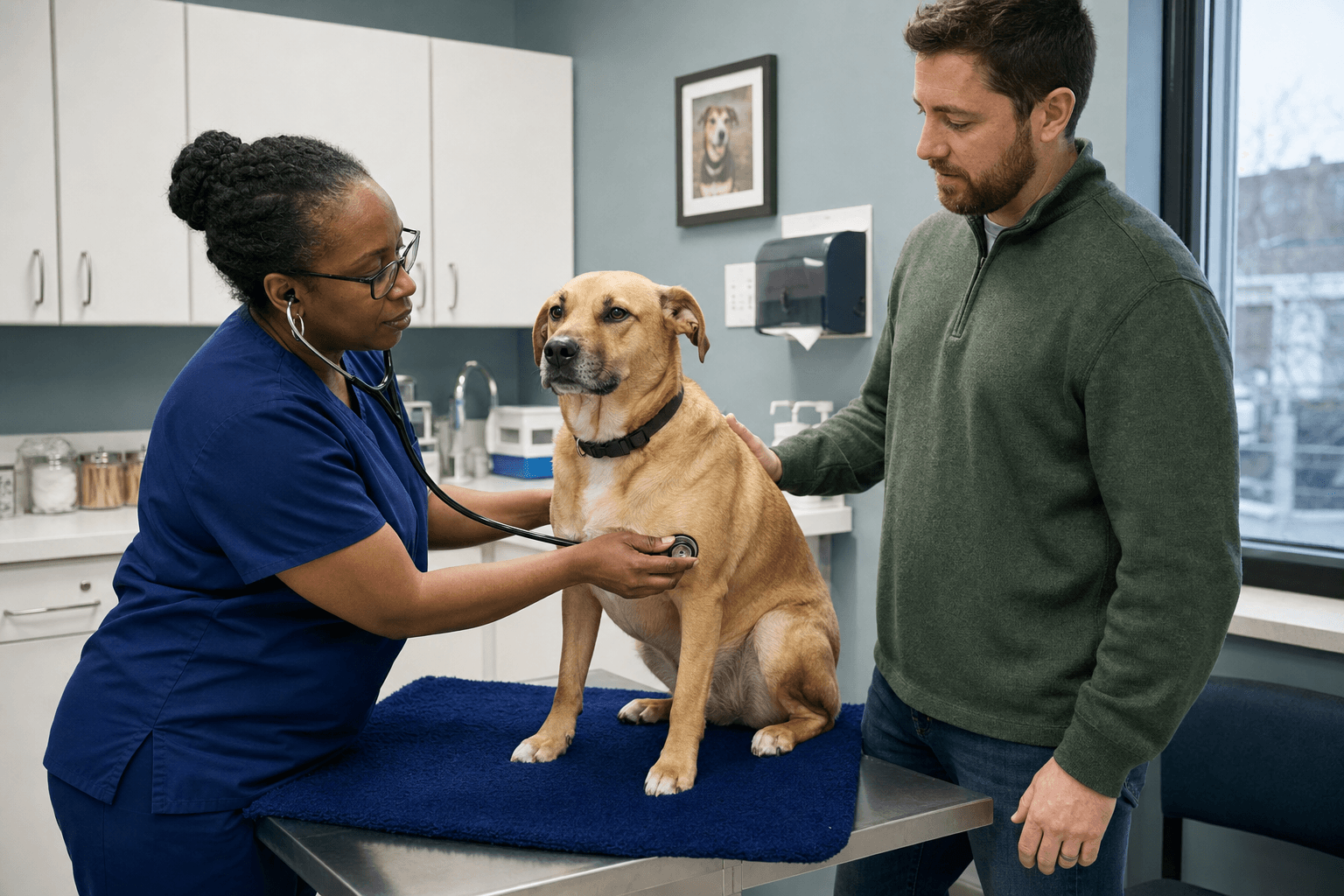
A simple log can contain the date, time, rate, duration, sleep state, position, medication timing, and notable symptoms. A graph may be helpful, but the trend is only as reliable as the measurement conditions.
This rate-effort-duration framework helps readers sort brief REM changes from sustained fast breathing and visible respiratory struggle. It uses the duration of fast breathing, repeat resting count, breathing effort, and gum color before an owner chooses emergency care or a prompt call.
Compare like with like. A count taken in deep sleep should not be treated as equivalent to one taken while the dog is warm, awake, or listening for a treat. Mark missing periods and nights when the dog did not wear a device or sleep in the usual place.
Turn the log into a veterinary summary
When sending a summary, lead with the clinical question and the change: for example, “Sleeping counts increased from the dog's usual range on three consecutive nights and coughing began on the second night.” Keep the full log available if the veterinary team wants it.
Stop routine monitoring and seek new instructions if the dog becomes harder to wake, cannot settle, develops visible effort, or shows abnormal color. A trend log is valuable only while the dog is comfortable enough to monitor safely.
What a tracker can and cannot add
Maven says its health-monitoring system tracks activity, rest, sleep, heart-rate trends, itch behavior, and resting respiratory rate trends through Wi-Fi syncing. Its data can support an observation history, but it cannot explain why a value changed or replace a veterinarian.
A veterinary validation study of Maven respiratory measurements included 19 healthy dogs and 120 paired observations. The results supported measurement agreement in those conditions, not diagnosis or clinical outcomes in a sick dog. If you want the product details and limitations, read Petful's Maven health-tracker review.
Frequently asked questions
Why is my dog breathing so fast in sleep at night? Brief irregular breathing can happen during REM sleep, especially with twitching and a loose, relaxed body. A REM sleep variation should settle as the dream phase ends or after the dog wakes calmly. Persistent rapid breathing, a repeated nighttime change, coughing, restlessness, or any increase in effort deserves a timed count and veterinary advice. Seek emergency care when the dog struggles, has abnormal gum color, collapses, or cannot settle.
Should I worry if my dog is breathing fast? Consider duration, true resting conditions, breathing effort, posture, gum appearance, responsiveness, and change from baseline. If the dog is comfortable, make one repeat resting count after several quiet minutes and call your veterinarian when the change persists or repeats. Seek emergency care for visible struggle, abnormal gum color, collapse, an extended neck, strong abdominal effort, or an inability to settle; those signs matter more than the exact rate.
Why is my dog breathing fast but not panting at night? Closed-mouth rapid breathing is different from an open-mouth panting pattern. It may be temporary after a dream, warmth, activity, or stress, but it should ease when the dog is cool and settled. If it persists during true rest, repeats over several nights, or comes with cough, weakness, pain, fever, posture change, or extra effort, contact a veterinarian and report the timed rate and duration.
When should I worry about rapid breathing in my dog? Worry when the change persists at true rest, is clearly above the dog's usual pattern, or occurs with cough, weakness, pain, fever, abnormal gum color, or increased breathing effort. Respiratory distress signs such as open-mouth breathing outside ordinary panting, strong abdominal push, collapse, an extended neck, or an inability to settle require emergency veterinary care. Do not delay transport to obtain another count or a better video.
Why is my dog breathing very fast while lying down? Heat, a dream, pain, fever, heart or lung disease, anemia, medication effects, and other problems can increase the rate while a dog is resting. Observe the resting posture, duration, mouth position, and effort. A dog that cannot lie comfortably, repeatedly changes position, sits with the neck extended, or develops persistent rapid breathing needs urgent veterinary advice, and visible struggle or abnormal gum color is an emergency.
Can heart disease cause fast breathing during sleep? Yes. A rising sleeping respiratory trend can be important in dogs with heart disease, particularly when fluid affects the lungs, but the rate alone cannot diagnose heart failure. Record several calm counts only while the dog is comfortable, note cough and activity changes, and follow the threshold and action plan set by your veterinarian. Visible respiratory effort, collapse, or abnormal gum color requires emergency care regardless of the suspected cause.
BVMS, MRCVS
Dr. Pippa Elliott, BVMS, MRCVS, is a veterinarian with nearly 30 years of experience in companion animal practice. Dr. Elliott earned her Bachelor of Veterinary Medicine and Surgery from the University of Glasgow. She was also designated a Member of the Royal College of Veterinary Surgeons. Married with 2 grown-up kids, Dr. Elliott has a naughty Puggle named Poggle, 3 cats and a bearded dragon.
Sign up for expert-backed reviews and safety alerts all in one place.


A Final Word (Disclaimer)
At Petful, our review integrity is paramount; we never exchange special treatment in our reviews for monetary or material rewards.
Nonetheless, when our readers click through to online merchants (including Chewy or Amazon), we receive a referral commission. This supports the running of our free blog, and we appreciate your backing.