Cat Diarrhea After Antibiotics: What to Do and How to Support Recovery
Build a useful medication-to-symptom record, recognize signs that need prompt care, and understand how feeding, probiotics, and microbiome support can fit your cat's recovery plan.

BVMS, MRCVS

Petful is reader supported. As an affiliate of platforms like Amazon and Chewy, we may earn a commission when you buy through links on this page. There is no extra cost to you.
Sponsored by Animal Biome. This article contains affiliate links. Petful may earn a commission if you purchase through these links.
Cat diarrhea after antibiotics warrants a call to the prescribing veterinarian, especially if your cat is also vomiting, eating less, or becoming quiet. Report the medicine, dose, when the loose stool began, and whether treatment is still underway. Do not independently change the prescribed course or start a human antidiarrheal medicine.
Supporting a cat with diarrhea after antibiotics means doing several things in the right order: checking for illness that needs prompt care, preserving appropriate food and hydration, and choosing any gut support around the actual medication and your cat's needs. The timing is a useful clue, but it does not prove the antibiotic is the only cause.

Sign up for expert-backed reviews and safety alerts all in one place.
Why Cat Diarrhea After Antibiotics Can Happen
Antibiotics can give cats diarrhea. They may cause gastrointestinal side effects and can alter the intestinal bacterial community, known as the gut microbiome. That community helps process dietary components and participates in the normal functioning of the intestine.
For example, VCA's amoxicillin-clavulanate guidance lists diarrhea, vomiting, and stomach upset among possible adverse effects. Research in cats receiving clindamycin also documents gastrointestinal signs and changes in intestinal microbes. Those observations support taking a new stool change seriously, without assuming every antibiotic has the same effect.
The reason for the original prescription still matters. A cat being treated for an infection may have several influences on appetite and stool at once. A stressful veterinary visit, a different food used to hide medicine, another prescription, or an unrelated intestinal problem can overlap with the antibiotic course.
- Did diarrhea begin before treatment, during the course, or after it finished?
- Is the original condition improving, staying the same, or worsening?
- What else changed around the first loose bowel movement?
An Animal Biome Gut Microbiome Test for Cats can describe bacterial composition when an ongoing microbiome assessment is useful. Its report can complement a clinical discussion, but it does not establish that a particular medicine caused diarrhea.

Bacterial microbiome profiling for an informed ongoing support discussion; not a parasite diagnostic test.
Petful may earn a commission when you click through to Animal Biome, at no extra cost to you.
Possible side effects are not inevitable
Diarrhea is a recognized possible effect of antibiotic treatment, but it is not inevitable. Whether it occurs depends on the particular medicine, the cat, the underlying condition, and other circumstances. A study involving one antibiotic in research cats cannot tell you the chance of diarrhea for every cat receiving a different prescription at home.
Use that information in two ways:
- Report new diarrhea as a possible adverse effect, with the date it began and the doses actually given.
- Keep the original treatment goal in view. The prescriber still needs to know whether the infection or other condition is improving.
A change can also become apparent later in the course rather than after the first dose. If your cat has diarrhea after stopping antibiotics, include that timing in the history. Do not restart leftover medication or assume the bowel simply needs another antibiotic to settle.
For selected cats, microbial restoration may be part of the subsequent support plan. Animal Biome Gut Restore for Cats contains cat-specific microbes from screened donor fecal material in delayed-release capsules. It supplies a community of microbes rather than a conventional single-strain probiotic; its role and timing should fit the cat's current treatment.
Call the prescribing vet with these details
The best first step in stopping diarrhea after antibiotics is to contact the team that knows why the medicine was prescribed. They can assess a possible side effect alongside the infection being treated, other drugs, and your cat's condition. They may recommend monitoring, a feeding adjustment, an examination, or a change to treatment after reviewing those details.
Have the bottle, label, or discharge instructions in front of you. Give the antibiotic name and dose exactly as written, including the liquid concentration if applicable. Saying “the pink medicine” or “one syringe” may not identify the amount your cat received.
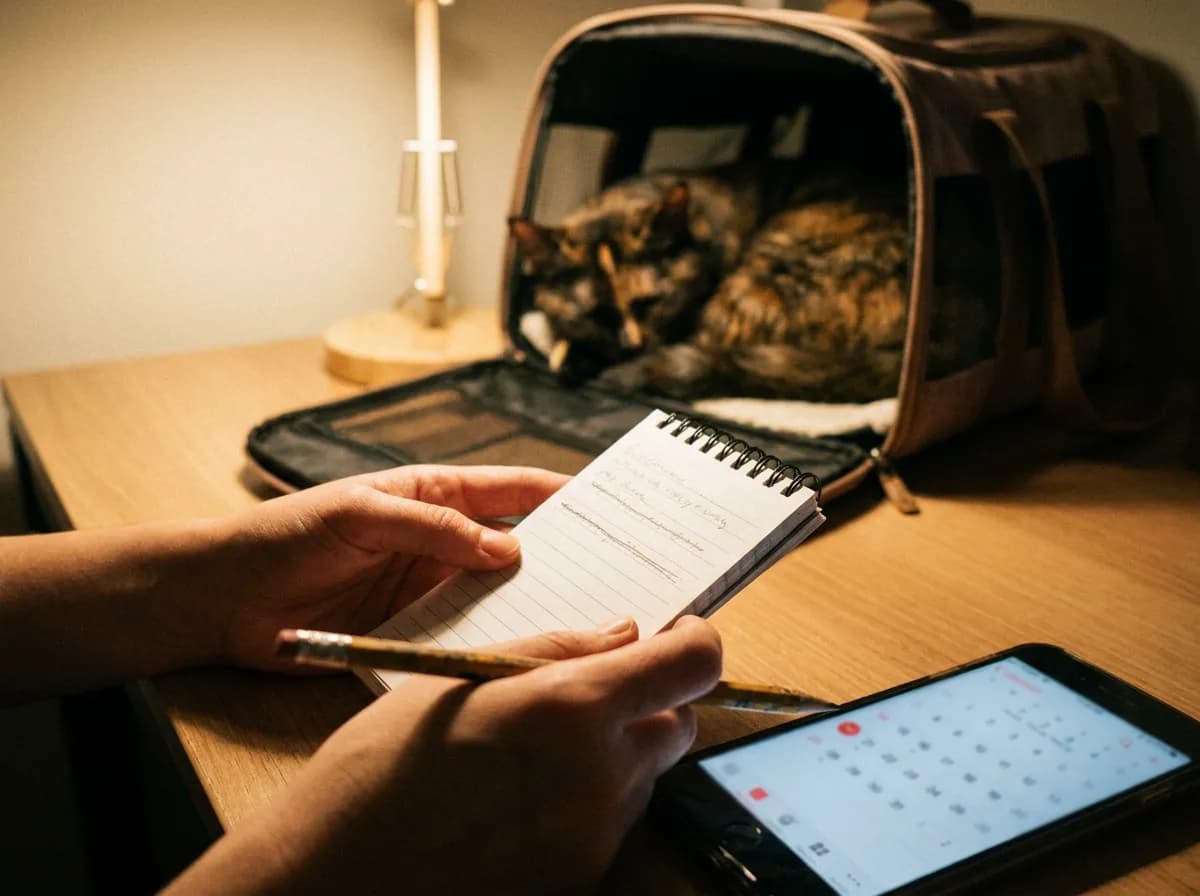
Explain when the first loose stool appeared in relation to treatment. A simple sequence is more helpful than a general statement that your cat “has been upset for a while.” Include the last dose given, the next scheduled dose, and any uncertainty about a missed or vomited dose.
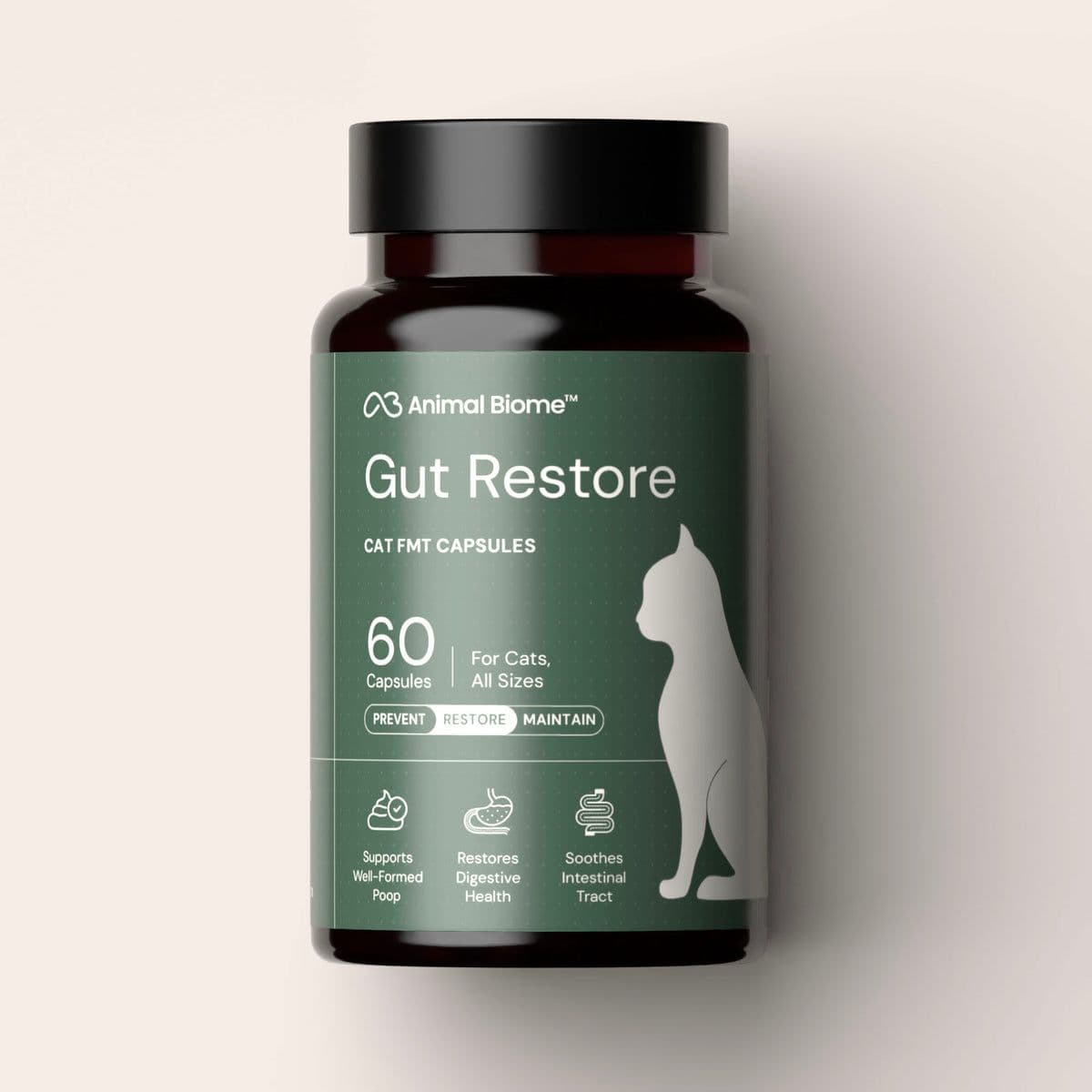
Species-specific microbial restoration for an appropriate veterinary-guided plan.
Petful may earn a commission when you click through to Animal Biome, at no extra cost to you.
| Record item | Details to give the clinic |
|---|---|
| Medication history | Antibiotic name and dose, start date, reason prescribed, and last dose given. |
| Symptom history | First loose stool: date and approximate time, plus whether stool was already abnormal before treatment. |
| Appetite and vomiting | What your cat actually ate, whether vomiting occurred, and when. |
| Food and supplement changes | New foods, treats, pill-hiding foods, probiotics, and other supplements with their start dates. |
| Current pattern | Number of bowel movements, consistency, blood or mucus, energy, and drinking. |
The prescribing veterinarian also needs practical information about administration:
- Whether you followed directions to give the medicine with food.
- Whether your cat swallowed the full dose or some remained in the bowl.
- Whether another caregiver may have given a dose.
- Whether the diarrhea is becoming more frequent or watery.
- Whether your cat has other health conditions or takes additional medicine.
Do not independently change the prescribed dose, duration, or medication, or compensate for an uncertain dose by giving extra. Ask the prescriber for instructions specific to the situation. Stopping diarrhea may require an adjustment to the prescription, a feeding plan, fluid support, or investigation of another cause; the clinician decides which applies.
Use the medication-to-symptom record to tell the prescriber exactly what changed. If diarrhea began before the first dose, say so. If the first loose stool followed a new pill-hiding food, include that food and its start date rather than attributing the change only to the antibiotic. If you use a shared record such as MyPetID.ai, log what was actually administered so family members are working from the same history.
If your cat still has diarrhea after antibiotics, ask when the clinic wants an update or a recheck. There is no reliable universal answer to how long your cat will have diarrhea: the expected course depends on the cause and response. An agreed follow-up point is more useful than waiting for a general internet deadline.
Which symptoms need prompt care
Diarrhea in a cat who is not eating deserves more attention than an isolated soft stool in a cat otherwise acting normally. Record actual food intake rather than appetite alone: approaching the bowl and licking gravy may not mean your cat has eaten their usual meal.
Diarrhea with vomiting can increase fluid loss. Cats who repeatedly vomit, cannot keep water down, become weak, or seem painful need prompt assessment. Kittens, frail older cats, and cats with other illness may need earlier help.
- Poor appetite, repeated vomiting, blood in stool, unusual lethargy, or apparent abdominal pain should be reported promptly. Severe weakness, collapse, breathing difficulty, or facial swelling requires urgent veterinary help.
Dehydration is not something to judge from drinking alone. A cat may drink and still be losing more fluid than they take in. Tell the clinic about watery stool, vomiting, reduced intake, and any change in urination; the team can determine whether an examination and fluid support are needed.
A cat with diarrhea but acting normal still needs the medication change reported. That does not automatically mean an emergency visit, but it gives the prescriber an opportunity to decide whether observation is appropriate and what would change that decision.
Do not wait for several warning signs to appear together. The Cornell Feline Health Center emphasizes veterinary assessment when diarrhea occurs with systemic signs such as poor appetite, lethargy, or vomiting.
What to feed your cat during recovery
Foods that may help during antibiotic-associated diarrhea include the familiar complete cat food if it is still appropriate, or a digestible veterinary gastrointestinal diet selected for the cat's needs. Ask the prescribing team which to use. The answer depends on the usual diet, the reason for treatment, and whether a food response is being investigated. No single food reliably fixes every case.
Ask how much to offer and what to do if your cat eats less than planned. A feeding recommendation is only useful if the cat actually consumes it. Record portions offered and leftovers, including food used to hide medicine, so the clinic can judge nutrition and hydration alongside stool consistency.
An appropriate cat food for loose stool should support adequate nutrition while fitting the clinical plan. A complete, digestible veterinary diet may be useful when recommended. A homemade “bland diet” is not automatically nutritionally complete, and a recipe intended for dogs should not become a cat's recovery diet by default.
- Offer the food and portions the clinic recommends.
- Keep fresh water accessible in familiar places.
- Avoid adding rich treats or several new foods to tempt eating without telling the clinic.
- Record how much food is left, not just whether your cat visited the bowl.
- Follow the actual medicine's instructions about giving it with food.
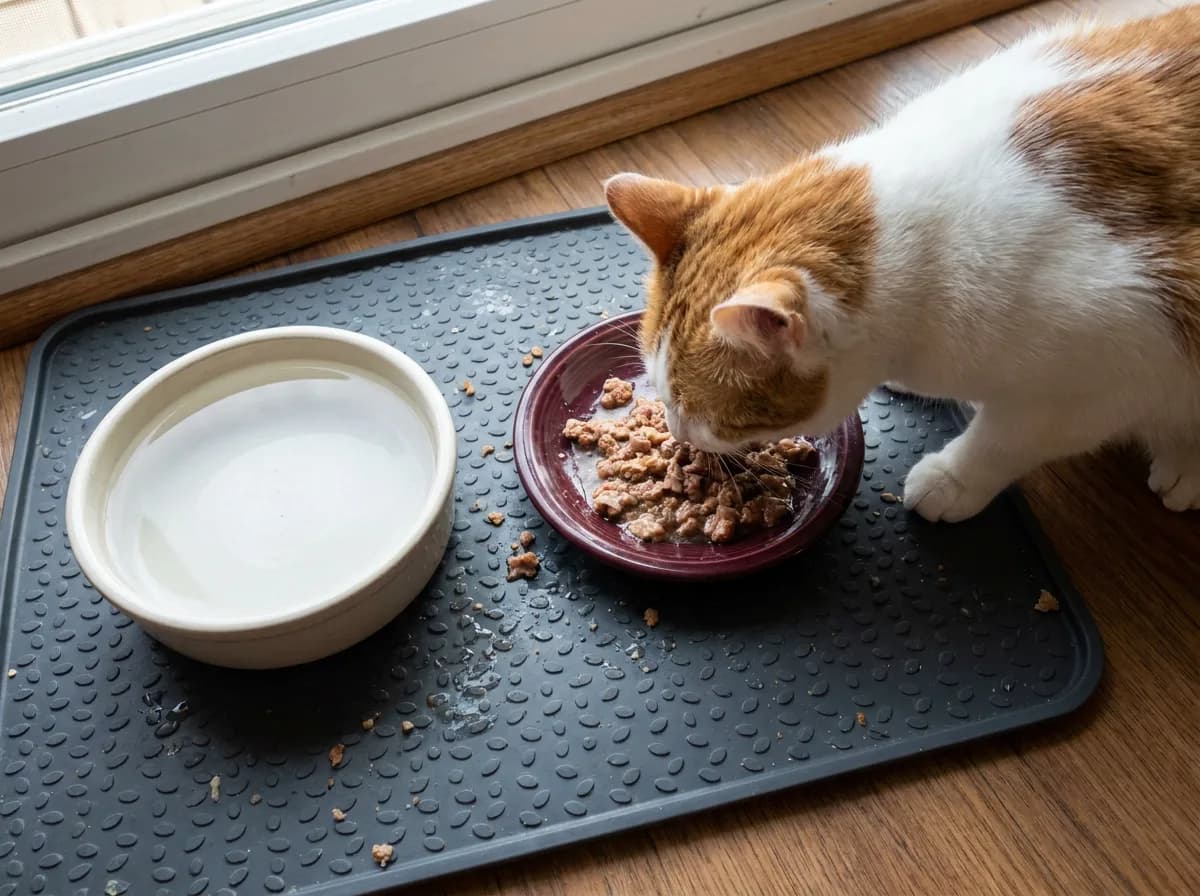
Do not use routine fasting or a human antidiarrheal treatment for a cat without veterinary direction. If your cat will not eat, contact the clinic rather than extending a food-free period. The immediate task is to identify and address the reason for poor intake while maintaining appropriate nutritional support.
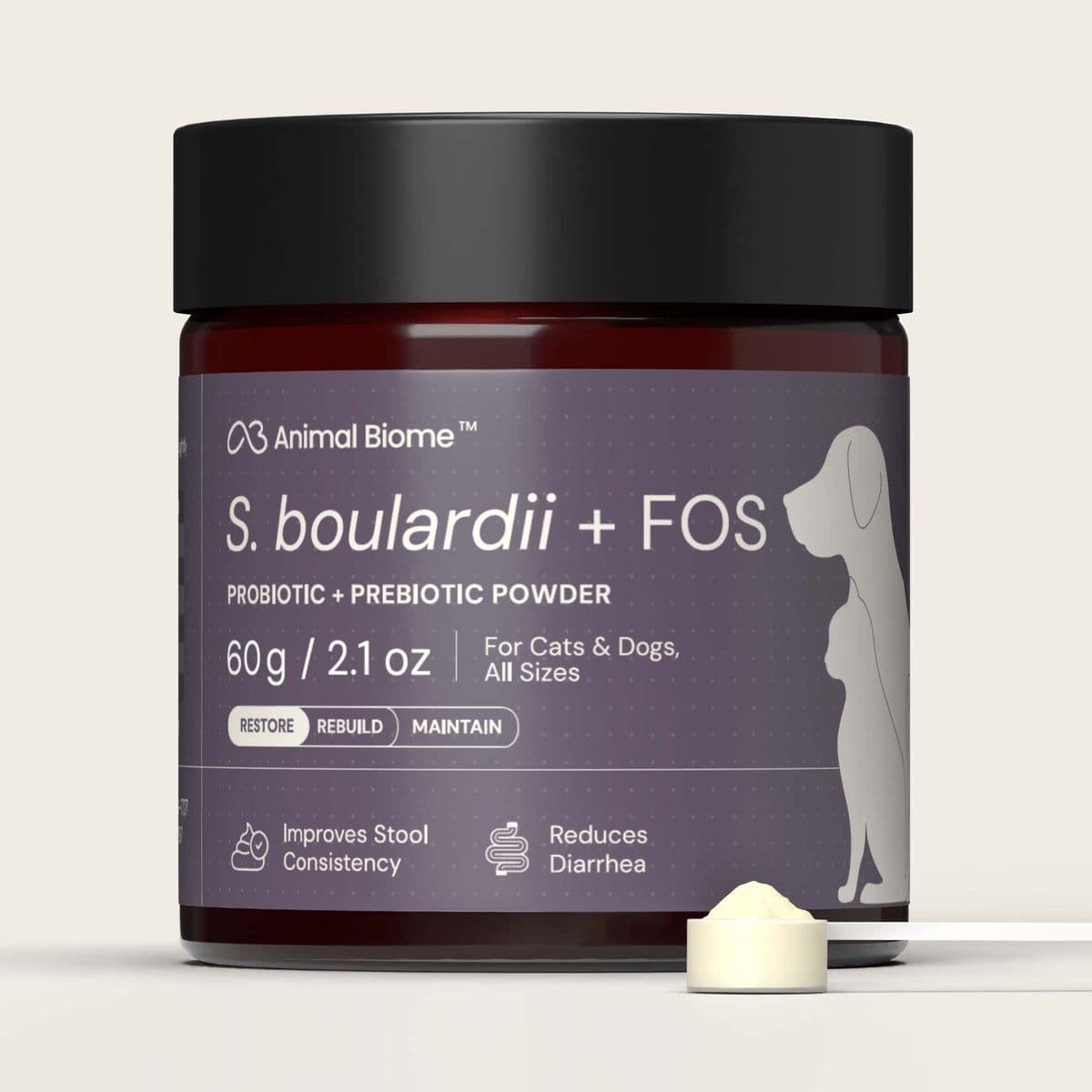
A yeast probiotic plus prebiotic fiber for product-specific digestive support.
Petful may earn a commission when you click through to Animal Biome, at no extra cost to you.
- 1Use appropriate cat food according to the treatment plan.
- 2Keep fresh water accessible and report difficulty keeping it down.
- 3Avoid abrupt changes to food, treats, and supplements while assessing recovery.
Supporting firmer stools
To help firm up stool after antibiotics, use a consistent feeding and hydration plan while the veterinarian addresses the cause. Firmness alone is not the goal: your cat also needs adequate nutrition and comfortable bowel movements.
- Use the appropriate cat food recommended for recovery and avoid unnecessary abrupt dietary changes.
- Keep water accessible and report vomiting or poor intake that prevents adequate hydration.
- If a probiotic or prebiotic is recommended, introduce that product as directed and record the start date.
- Ask before adding extra fiber. The amount and formulation should fit the cat's diet and stool problem.
The label's scoop belongs to that specific formula. Measure the recommended amount rather than transferring a spoonful from a different product's instructions. Keeping the rest of the feeding plan steady makes the next few observations easier to interpret.
Animal Biome S. boulardii + FOS Powder is designed to be mixed into food. It combines a yeast probiotic with a prebiotic fiber, offering a practical format when the cat is eating and that combination fits the treatment plan.
Judge a feeding change by more than the next bowel movement. Watch appetite, comfort, frequency, and the trend in consistency. If stool firms but other signs worsen, report the whole picture rather than counting the change as complete recovery.
How probiotics, prebiotics, and S. boulardii fit
These terms describe different ingredients and functions. Understanding the distinction helps you choose a product for a defined purpose rather than adding several overlapping formulas.
When comparing the best probiotics for cats with diarrhea, ask which exact strain and formulation were studied, whether the study involved cats receiving antibiotics, and what outcome improved. Then match the clinical goal and administration method to your cat. An ongoing option such as Gut Maintain for Cats serves a different purpose from reassessing diarrhea that continues during treatment.
- Bacterial probiotics contain selected live bacterial strains. Their properties and supporting evidence depend on the strains and formulation.
- Yeast probiotics contain a yeast organism. S. boulardii belongs in this category, not the bacterial category.
- Prebiotics provide substrates used by certain intestinal microbes. FOS, short for fructooligosaccharides, is one example.
- Microbial restoration products supply a broader community of microbes and have their own administration requirements.
Animal Biome's powder identifies its yeast as S. boulardii CNCM I-3799 and pairs it with FOS. Its directions distinguish support for currently soft stools from maintenance, use the included scoop, and recommend gradual introduction. Follow the current label and the plan agreed with your veterinarian rather than applying a dose from a different strain or product.
Animal Biome identifies S. boulardii as a yeast probiotic that can be used during antibacterial treatment. Yeast and bacterial probiotics differ, so the organism and formulation help determine how support fits the prescribed course.
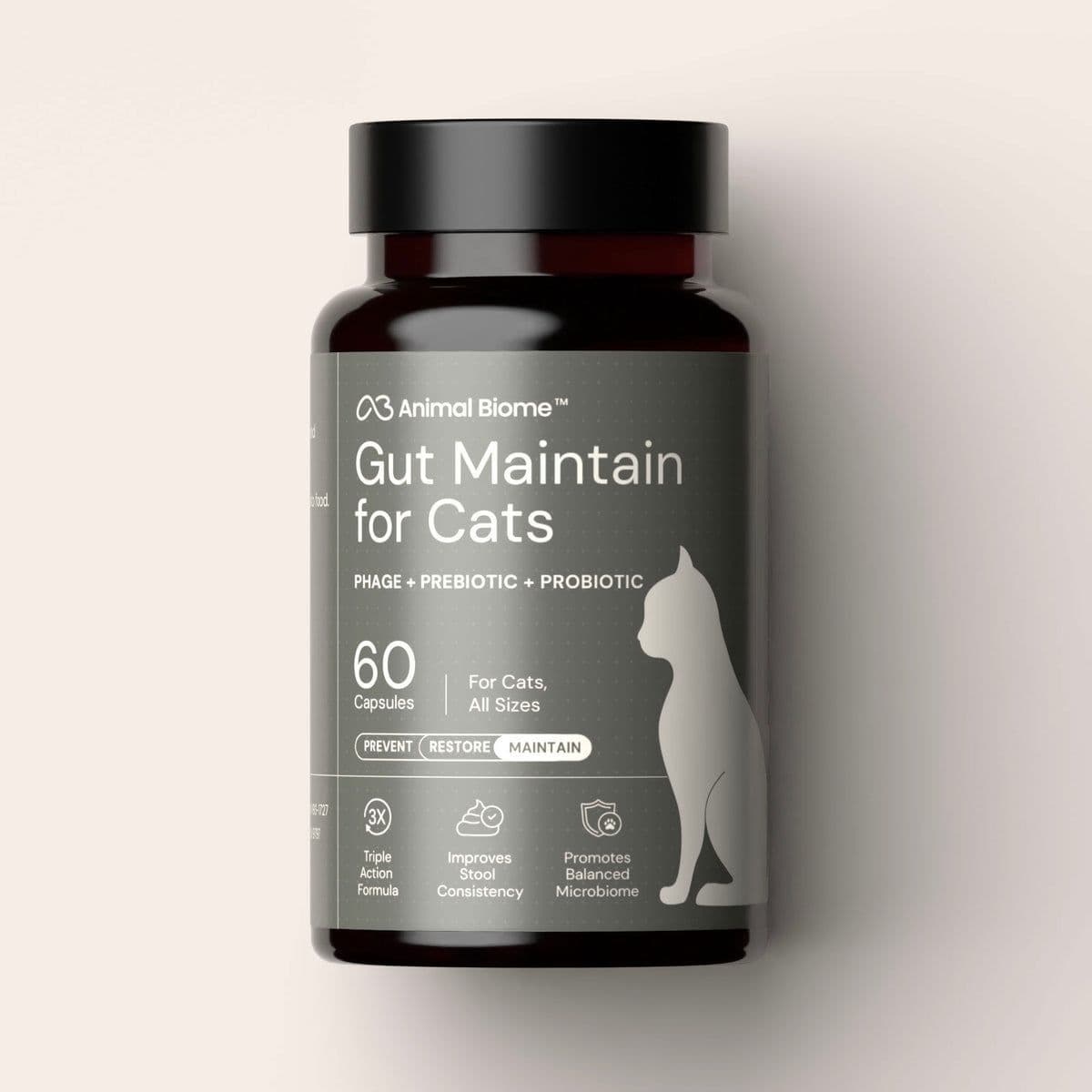
Daily microbiome maintenance after the immediate concern is addressed.
Petful may earn a commission when you click through to Animal Biome, at no extra cost to you.
Product-specific evidence is the useful comparison:
- A randomized trial in 16 healthy cats receiving clindamycin studied one synbiotic formulation against placebo and documented changes in intestinal microbes and metabolites.
- Clinical signs did not differ significantly between those treatment groups. Results from this tested formulation are not proof for all probiotic products or all cats receiving antibiotics.
- Animal Biome's powder has its own identified yeast strain and label directions. Its formulation and use should be assessed on that product's evidence.
For an ongoing routine, Animal Biome Gut Maintain for Cats combines S. boulardii, a prebiotic, and a phage blend. It is intended for digestive maintenance and occasional soft stools, a different goal from deciding what to do about a newly ill cat.
Before choosing support, clarify:
- Whether the aim is support during the current episode or ongoing maintenance.
- Which ingredients your cat already receives in other products.
- How to administer the selected formulation.
- What change would prompt stopping the supplement and contacting the clinic.
Follow the chosen supplement's administration directions when adding it to food, and check that your cat continues to eat the meal. Gut Maintain capsules may be opened, and S. boulardii powder is mixed into food. Gut Restore capsules have different directions and must be given whole. Record any food left behind so the clinic knows whether the intended supplement amount was actually eaten.
When ongoing diarrhea needs a broader workup
Continuing diarrhea is not automatically evidence of ongoing antibiotic damage. The original illness may still need attention, the medication may be one contributor, or a separate intestinal condition may be present. Reassessment helps avoid treating the timing as the diagnosis.
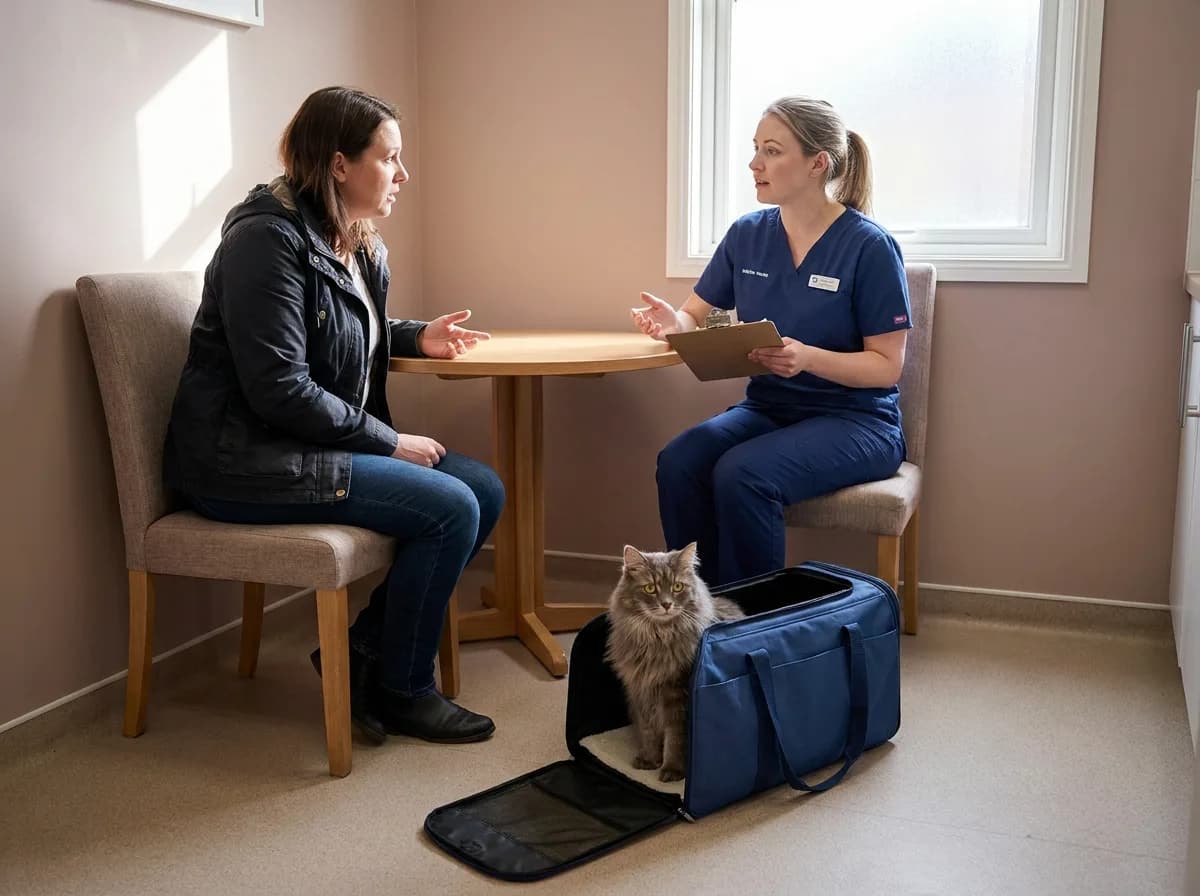
Your veterinarian may revisit the history and examination, assess hydration and weight, and select tests based on the findings. Fecal testing may investigate intestinal parasites in cats. Blood tests, imaging, or other investigations may be appropriate when the problem persists or other signs suggest a broader illness.
An Animal Biome bacterial microbiome profile can add information about bacterial composition. Share the medication timeline with the interpreting team, since the sample reflects the circumstances when it was collected. Do not stop a prescribed medicine just to prepare a test sample unless the prescribing veterinarian directs that change.
If your cat has constant diarrhea or develops chronic diarrhea after antibiotics, the next step is a broader investigation rather than assuming the medication explains every episode. Our guide to chronic diarrhea in cats explains that workup. Bring the antibiotic timeline to the appointment so ongoing illness, treatment effects, and unrelated causes can be considered together.
- Bring the original prescription instructions and dates of treatment to the recheck.
- Include earlier test results, noting which parasite tests were performed.
- Add your stool and appetite record, with food and supplement changes marked.
Together, these records show what has already been tried and what changed afterward.
Track recovery without changing several things at once
Use the medication-to-symptom record throughout recovery. You do not need a complicated scoring system. A few consistent observations make a follow-up conversation more useful than a collection of impressions made at different times.
Record the same essentials each day:
- Food offered and approximately how much was eaten.
- Stool frequency and whether it is formed, soft, or watery.
- Vomiting, blood, mucus, or visible discomfort.
- Medicines and supplements actually given.
- New foods, treats, or other changes.
If several people care for your cat, agree on one place to record doses and meals. This is especially helpful when a cat grazes, food is shared with another cat, or a supplement is mixed into only part of a serving.
How recovery is judged
How long a cat takes to recover from diarrhea depends on the cause and response to treatment. Cornell describes many episodes as short-lived, but persistent or recurrent diarrhea may need investigation. A fixed number of days would hide those differences.
Judge progress by several observations:
- Stool frequency and consistency moving toward your cat's usual pattern.
- Comfortable bowel movements without repeated urgency.
- Adequate eating and drinking.
- A return to usual activity and behavior.
One formed stool is encouraging, but it is only one observation.
Ask the clinic which changes it expects and when it wants a report. A cat who improves steadily may follow a different plan from a cat whose stool briefly firms and then becomes watery again. Continued symptoms after treatment warrant an update even if the initial concern was thought to be a side effect.
Keep the agreed food and support plan stable enough to interpret that trend. When a change is needed, record the date and reason. This does not mean withholding a necessary adjustment; it means making the sequence understandable.
Stool improvement and microbiome recovery are different
The time it takes for bowels to return to normal after antibiotics cannot be read from a microbiome result alone. Visible stool improvement and microbiome recovery are different measurements: formed stool cannot show whether every bacterial population has returned to its earlier level, and a bacterial profile does not directly measure comfort or appetite. There is no universal recovery deadline for both.
Choose the follow-up question first:
- For clinical recovery, assess stool, appetite, hydration, comfort, and behavior with the veterinarian.
- For a microbiome question, explain when the sample was collected relative to medicines, diet, and supplements so the report has context.
The clindamycin study found that some microbial and metabolic changes persisted at later follow-up. That finding does not supply a countdown for bowel recovery in an individual pet or mean a cat will remain ill for the same period.
There is therefore no single number of days when every cat's bowels and microbiome are “back to normal” after antibiotics. Follow clinical progress with your veterinarian, and use any further testing to answer a specific question rather than to chase an assumed universal baseline.
Questions about recovery after antibiotics
Yes, diarrhea may become apparent after the last dose, but symptom onset alone cannot prove what caused it. Report the dates of treatment and the first abnormal stool, including whether food or another medicine changed at the same time. That chronology helps the clinic decide what to investigate.
Contact the prescribing veterinarian for treatment instructions rather than independently skipping, reducing, or doubling a dose. Tell the team when the next dose is due and how your cat is doing. If serious signs develop or you cannot obtain timely advice for an unwell cat, seek urgent veterinary guidance.
Follow the product directions. Animal Biome's S. boulardii powder can be mixed into food, and Gut Maintain capsules can be opened. A small portion of usual food may help you see whether the supplement was eaten, provided that fits the label and feeding plan. Gut Restore capsules have different instructions and should remain whole.
No single timing rule applies to every formulation. A bacterial probiotic may be affected by an antibacterial drug differently from a yeast probiotic such as S. boulardii. Give the clinic both product names and follow its advice and the labels rather than imposing an arbitrary separation interval.
Continued appetite loss means recovery is incomplete and needs prompt veterinary advice. Report what your cat actually consumed, including treats or gravy, and whether nausea or vomiting continues. Do not wait for diarrhea to return before updating the clinic or assume the formed stool makes poor intake harmless.
No. A microbial profile describing bacterial composition and parasite testing answer different questions. Animal Biome's microbiome test does not diagnose Giardia or worms. Your veterinarian can advise which tests fit the symptoms and whether a bacterial profile would add useful information to the clinical assessment.
There is no reliable deadline for every cat after the last dose. The cause, severity, other illnesses, and response to care influence the course. Ask the prescriber when to report progress, and update them sooner for persistent or worsening diarrhea or new illness instead of waiting for a promised recovery date.
BVMS, MRCVS
Dr. Pippa Elliott, BVMS, MRCVS, is a veterinarian with nearly 30 years of experience in companion animal practice. Dr. Elliott earned her Bachelor of Veterinary Medicine and Surgery from the University of Glasgow. She was also designated a Member of the Royal College of Veterinary Surgeons. Married with 2 grown-up kids, Dr. Elliott has a naughty Puggle named Poggle, 3 cats and a bearded dragon.
Sign up for expert-backed reviews and safety alerts all in one place.
A Final Word (Disclaimer)
At Petful, our review integrity is paramount; we never exchange special treatment in our reviews for monetary or material rewards.
Nonetheless, when our readers click through to online merchants (including Chewy or Amazon), we receive a referral commission. This supports the running of our free blog, and we appreciate your backing.