Best Dog Food for Cockapoos: A Practical Feeding Guide
Compare four JustFoodForDogs choices for Cockapoos and build one measured daily ration that covers meals, training rewards, mixed foods, puppy needs, and practical storage.

A Cockapoo watches its owner reach into a training pouch outdoors.
Petful is reader supported. As an affiliate of platforms like Amazon and Chewy, we may earn a commission when you buy through links on this page. There is no extra cost to you.
This article is sponsored by JustFoodForDogs. Petful maintains editorial control and may earn a commission from qualifying purchases, at no extra cost to you.
The best dog food for cockapoos is a complete and balanced recipe for the dog's life stage, served in an amount that includes everything eaten throughout the day. Breakfast, a training pouch, a spoonful of fresh food, and dinner all belong in the same calculation.
That practical detail matters more than finding a recipe with a Cockapoo on the bag. A useful feeding plan should work when you are home, when someone else handles dinner, and when a training session uses more rewards than expected. The four JustFoodForDogs options below offer different ways to build that routine.

Sign up for expert-backed reviews and safety alerts all in one place.
Start with a complete food and a routine you can repeat
Cockapoo food needs vary with the individual dog. Size, age, current body condition, and everyday activity are more useful starting points than an assumption that every Cocker Spaniel and Poodle mix needs the same bowl. Petful's Cockapoo size and temperament guide provides breed background, but your dog's feeding amount still needs an individual starting point.
The best Cockapoo food for your household should meet nutritional requirements and be practical to serve consistently. Dry food can be convenient for measured training rewards. Fresh or wet food may work well for meals you can portion and refrigerate. A mixed diet can also work when both foods qualify for the appropriate life stage and their calories are counted together.
- 1Choose complete and balanced food for the correct life stage
- 2Treat meals and training food as one daily ration
- 3Replace calories when adding another complete food
- 4Measure noncomplete extras together, not separately
Read the nutritional adequacy statement before comparing recipe names. The FDA explains complete and balanced pet food through recognized nutrient profiles or feeding trials. The statement identifies whether the food is appropriate for growth or adult maintenance. An appealing ingredient list does not replace that information.
Use these checks to narrow your choices:
- Life stage: A growing puppy needs food appropriate for growth. An adult-maintenance-only recipe is not the puppy's complete diet.
- Calorie density: Find the recipe's calories per kilogram, gram, ounce, or measured cup. Use the same unit when calculating portions.
- Practical serving: Choose a format you can measure, store, and serve reliably.
- Actual response: Track what your dog eats and how weight and body condition change.
- Household consistency: Make the plan clear enough for another person to follow without estimating.
For more help interpreting the label, see Petful's guide to what “AAFCO approved” dog food actually means. AAFCO does not approve individual products. The useful information is the exact adequacy statement on the food you buy.
Petful may earn a commission when you click through to JustFoodForDogs, at no extra cost to you.
Four JFFD choices for a practical Cockapoo feeding plan
These choices are compared using their current recipe information and practical feeding requirements. Each can fill a different place in a Cockapoo feeding plan. Two are appropriate for growth as well as adult maintenance; two are adult-only options.
| Food | Life-stage fit | Calories per gram | Practical reason to consider it |
|---|---|---|---|
| JustFoodForDogs Chicken & Rice | All life stages, including growth | 1.530 | A grain-inclusive fresh option for a puppy or adult routine |
| JustFoodForDogs Fish & Sweet Potato | All life stages, including growth | 0.922 | A fish-based option with a larger gram portion for the same calories |
| JustFoodForDogs Beef & Russet Potato | Adult maintenance | 1.559 | A complete beef recipe for an adult dog's measured meals |
| JustFoodForDogs JustFresh Home-Cooked Chicken | Adult maintenance | 1.254 | An adult option with convenient unopened shelf storage |

JustFoodForDogs Chicken & Rice
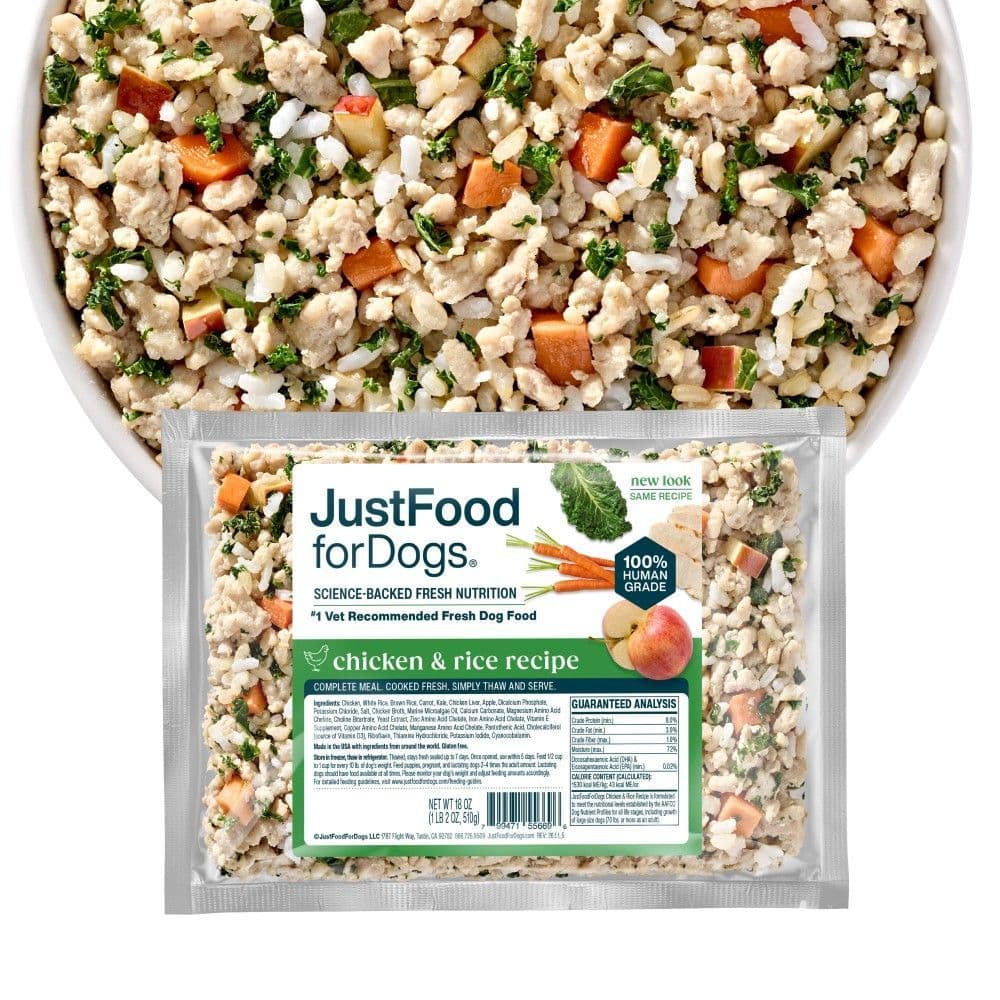
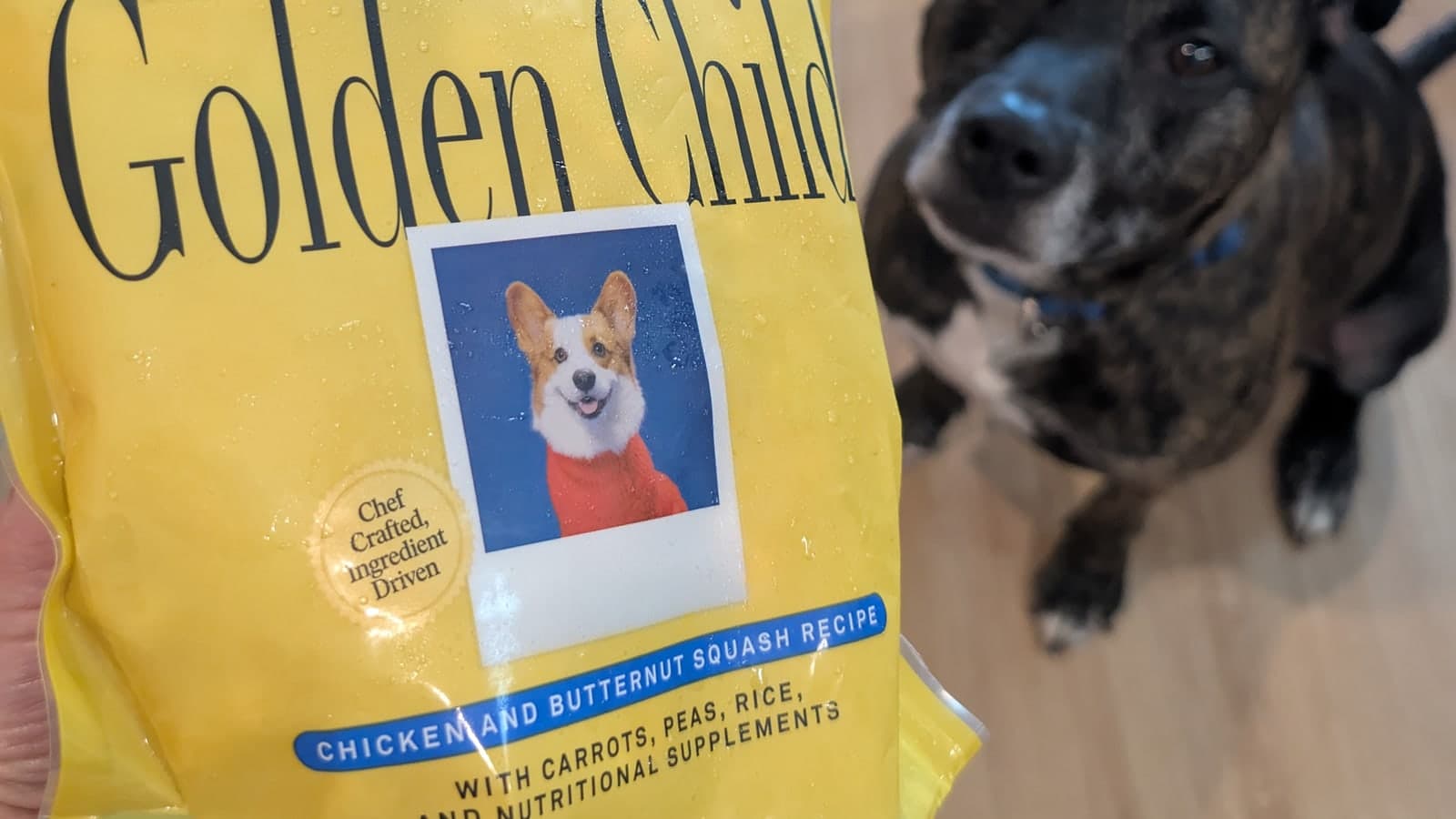
JustFoodForDogs Chicken & Rice is a useful starting candidate when you want a grain-inclusive fresh recipe that can fit a puppy or adult feeding plan. Its current formulation includes chicken and both white and brown rice, with a nutrient blend that belongs to the complete recipe.
The manufacturer's recipe information lists 1,530 kcal/kg, equivalent to 1.530 calories per gram. Its adequacy statement covers all life stages, including growth. That makes it different from an adult-only food, even when two packages appear similar from the front.
- Practical fit: A household that can manage refrigerated portions and wants one growth-appropriate recipe to consider.
- Measurement point: A 100-gram portion contains approximately 153 calories. That is a calorie illustration, not a daily serving recommendation.
- Training point: If the dog's meals include this recipe and training uses another food, count both before dividing the day into meals.
Do not confuse this recipe with a homemade bowl of chicken and rice. Matching the headline ingredients does not recreate the formulated nutrient balance. Use the commercial recipe's current feeding information for the commercial food.
JustFoodForDogs Fish & Sweet Potato
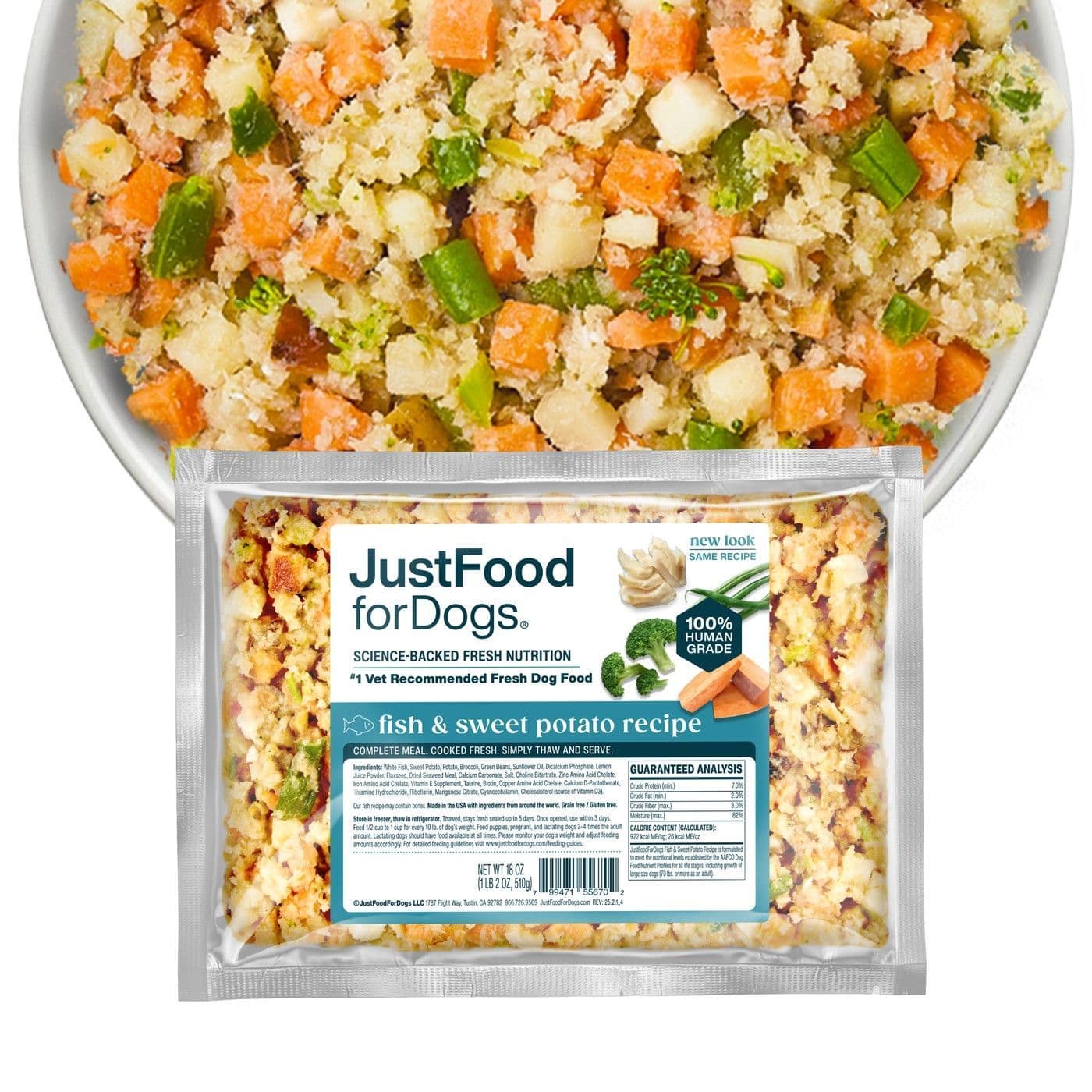
JustFoodForDogs Fish & Sweet Potato offers a different protein profile for a puppy or adult whose individual feeding needs fit the recipe. The current fish blend contains cod, pollock, and haddock. It should not be described as an exclusively cod-based food.
At 922 kcal/kg, or 0.922 calories per gram, this is the least calorie-dense of these four choices. For the same calorie allocation, you will serve more grams than with Chicken & Rice or Beef & Russet Potato. The current recipe page identifies it as appropriate for all life stages, including growth.
- Practical fit: A measured fresh-food routine where a fish-based recipe is suitable.
- Measurement point: A 100-gram portion provides approximately 92 calories.
- Switching point: Keeping the old recipe's gram amount would change the calories supplied.
Its lower calorie density is useful information for portion planning, not proof that it is a weight-loss diet. Nor does a fish ingredient make it an allergy treatment. Choose it for its actual formulation and individual fit, then recalculate the ration.
Petful may earn a commission when you click through to JustFoodForDogs, at no extra cost to you.
JustFoodForDogs Beef & Russet Potato
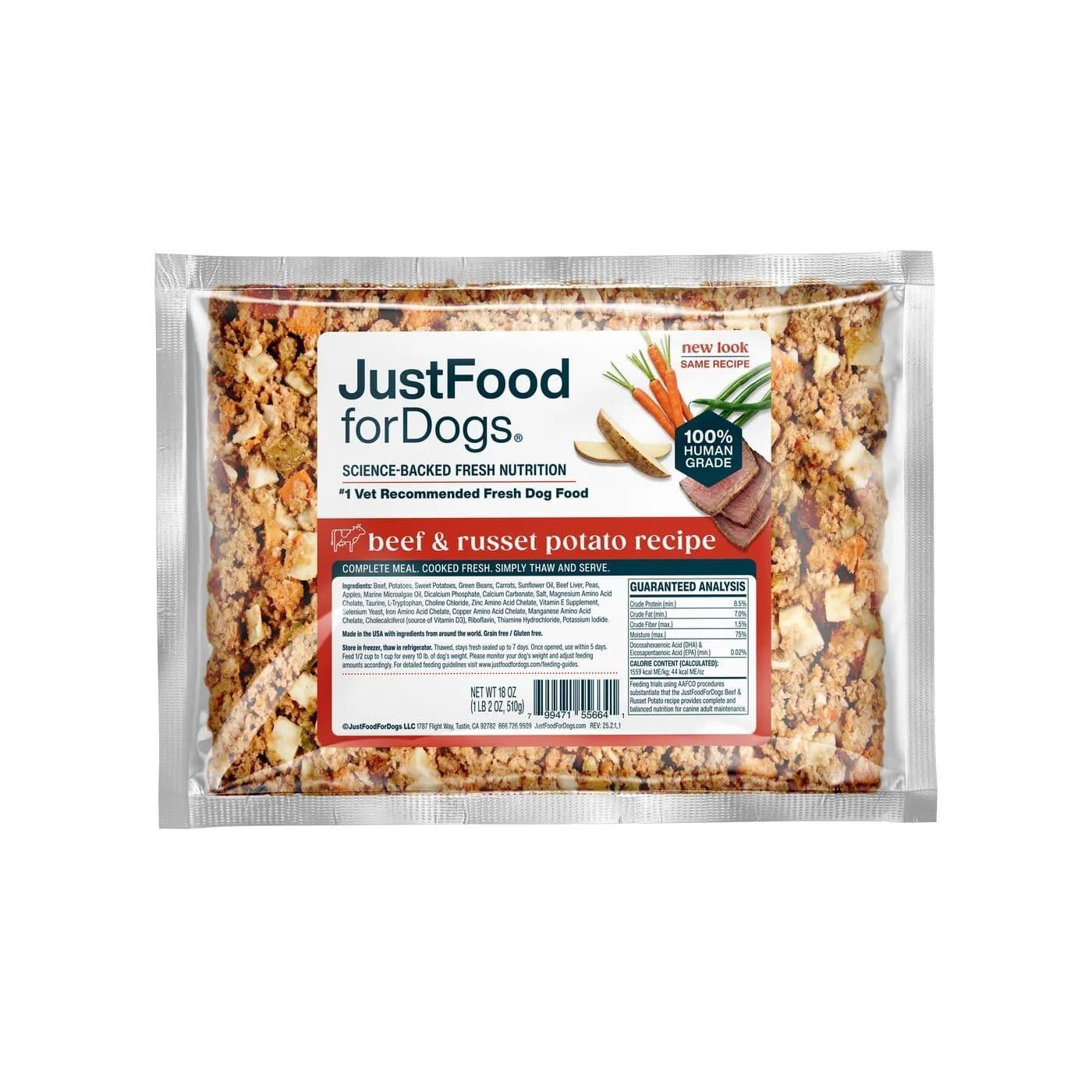
JustFoodForDogs Beef & Russet Potato is an adult-maintenance option. Its life-stage distinction is the most important decision here: this recipe is not intended to be the complete food for a growing Cockapoo puppy.
The manufacturer lists 1,559 kcal/kg, or 1.559 calories per gram, with adult-maintenance adequacy substantiated through feeding trials using AAFCO procedures. Its calorie density is fairly close to Chicken & Rice, but that similarity does not make their portions or life-stage labels interchangeable.
- Practical fit: An adult Cockapoo whose established feeding plan suits a complete beef recipe.
- Measurement point: A 100-gram portion contains approximately 156 calories.
- Household point: Label premeasured containers clearly if a puppy and adult dog share the home.
A single feeding station can make two dogs' meals look interchangeable. Keep the recipe name and the intended dog's name on the serving instructions, especially when another family member feeds them. The correct portion of the wrong life-stage food still creates the wrong routine.
JustFoodForDogs JustFresh Home-Cooked Chicken
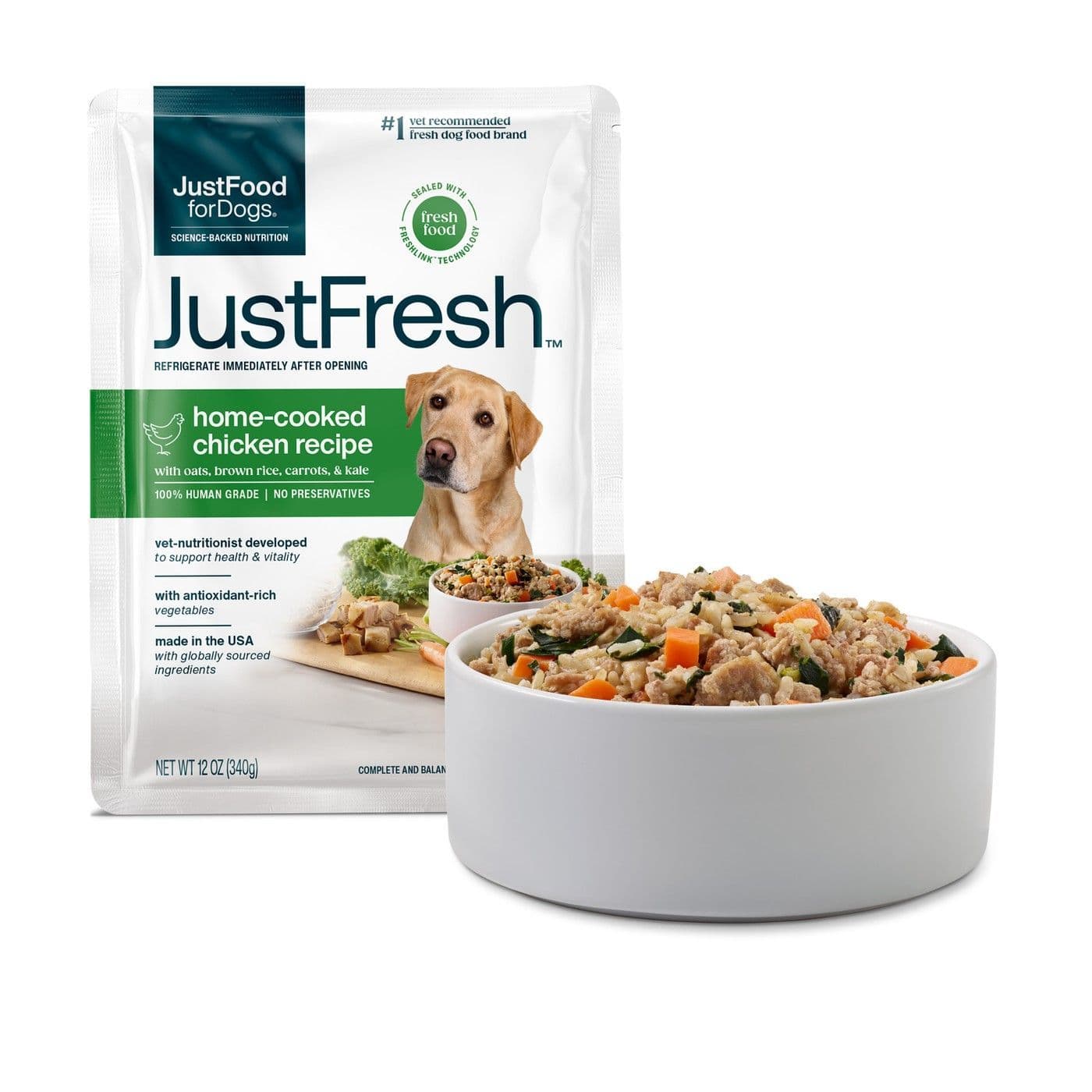
JustFoodForDogs JustFresh Home-Cooked Chicken is another adult-maintenance choice. Its unopened shelf-storage format can make it easier to keep a planned supply on hand when freezer space is limited.
The current recipe information lists 1,254 kcal/kg, or 1.254 calories per gram. This formulation includes oats and brown rice. It is a different product from fresh-frozen Chicken & Rice, with a different calorie density and a different life-stage statement.
- Practical fit: An adult dog's routine when unopened shelf storage is convenient.
- Measurement point: A 100-gram portion provides approximately 125 calories.
- Planning point: Shelf storage applies to the unopened package. Opened food needs refrigeration and a timely use plan.
This distinction matters when shopping by the word “chicken.” Record the full product name rather than writing only “chicken food” on a household feeding note. That makes it easier for a second feeder to use the right portion instructions.
After choosing a recipe and format, Petful's guide to where to buy JustFoodForDogs can help you compare shopping routes. Check the current package label when your food arrives, particularly if you are changing products or replenishing an older supply.
Turn a Cockapoo food calculator into one daily ration
A Cockapoo food calculator provides a starting estimate, not a fixed prescription for every dog with the same breed name. Start with an appropriate daily calorie allowance, ideally informed by your veterinarian and your dog's current condition. Then convert that allowance into the actual foods you serve.
The WSAVA healthy-adult calorie guide is intended as a starting point for healthy adults in ideal condition. It should not be treated as a puppy growth chart or a weight-loss prescription. How much to feed a Cockapoo puppy requires a growth-appropriate estimate that changes as the puppy develops.
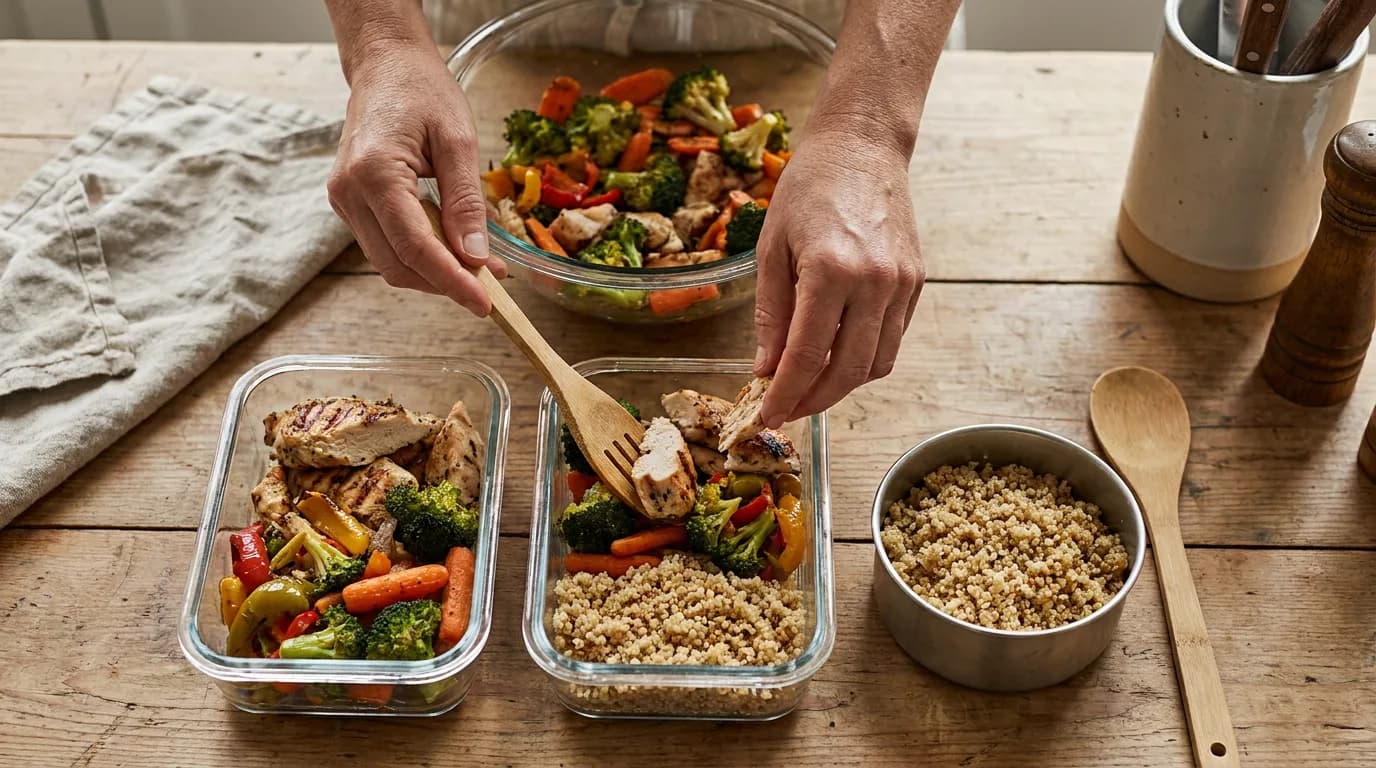
The central rule is simple: make one daily ration. The household allocation method below assigns portions across meals, training, and mixed food formats before anyone starts serving. Write down each allocation so a second feeder can see what remains for the day. A training pouch or a second complete recipe uses part of the same total, rather than becoming an additional menu.
Use this daily worksheet:
- Write the total calorie allowance. Use the allowance established for your dog, not a number selected from an example.
- Count noncomplete extras. Include treats, chews, table food, and food used to give medication.
- Subtract those calories. The remainder is available for complete and balanced food.
- Divide complete-food calories between recipes. Do this before converting the amounts into grams.
- Reserve training food. Training rewards come from the day's allowance.
- Divide the remaining meal food. Use the meal schedule appropriate for the individual dog.
- Record what was actually eaten. Food offered and food consumed are not always the same amount.
For general feeding, keep all noncomplete extras combined within 10% of daily calories. That is a ceiling, not a target to fill. AAHA identifies larger contributions from noncomplete foods as a nutritional risk. A dog's medical or weight-management plan may call for tighter limits.
- Measure the day's training food before preparing meals. Food used as a reward still counts toward the same daily allowance, even when it never touches the dinner bowl.
A worked adult example
Imagine a healthy adult whose established allowance is 500 calories per day. This number is solely for demonstrating the worksheet. It is not a Cockapoo feeding recommendation.
Suppose the planned day includes 25 calories of noncomplete treats. The remaining 475 calories will come from complete foods, with 100 calories assigned to a growth- or adult-appropriate dry recipe used for training and 375 calories assigned to Chicken & Rice meals.
- Total daily allowance: 500 calories.
- Noncomplete treats: 25 calories.
- Complete dry training food: 100 calories.
- Chicken & Rice meals: 375 calories.
- Check: 25 + 100 + 375 = 500 calories.
Chicken & Rice supplies 1.530 calories per gram. Divide 375 by 1.530 to get approximately 245 grams for the day's meals. If that adult eats two equal meals, each would contain about 122.5 grams of Chicken & Rice in this example.
For the training food, use its own calorie density. If a hypothetical dry recipe supplies 4 calories per gram, 100 calories equals 25 grams. Weigh that amount into the day's training container before the first session.
| Part of the example day | Calories | Illustrative amount |
|---|---|---|
| Noncomplete treats | 25 | Determined from the treat label |
| Hypothetical complete dry food at 4 kcal/g | 100 | 25 g |
| Chicken & Rice | 375 | About 245 g |
| Total | 500 | One day's combined allowance |
The 25 grams of dry training food are already part of the food plan. They do not need to come out of the 245 grams of Chicken & Rice a second time. Conversely, they should not be added to a full 500-calorie meal allowance.
When the training session changes
A planned training portion gives you a clear boundary without requiring every day to unfold identically. If your dog eats only half the reserved complete-food training ration, the unused portion can remain available for a later meal, provided it has been handled safely. Log that transfer so another feeder does not replace it again.
A longer class does not automatically mean your dog needs extra daily calories. Many training sessions involve repeated rewards with modest physical activity. Start by changing the distribution of the existing ration. Reassess the total if the dog's overall activity and body condition support a genuine adjustment.
Petful may earn a commission when you click through to JustFoodForDogs, at no extra cost to you.
Helpful ways to manage the training supply include:
- Prepare smaller individual reward pieces within the measured quantity.
- Divide the training ration into separate containers for different handlers.
- Use part of an appropriate complete dry food when practical.
- Track calorie-containing enrichment food alongside ordinary meals.
- Return only safely handled unused food to the meal plan.
- Record additional treats given by a trainer or family member.
There is no need to make the worksheet elaborate. A refrigerator note or shared phone note can list the daily food weights, reserved rewards, and meals already given. The important feature is that everyone is working from the same total.
Use the same measurement unit every day
Food labels sometimes present calories in several units. If you portion with a gram scale, divide kcal/kg by 1,000 to get calories per gram. Then divide the calories assigned to that recipe by its calories per gram.
For example, Fish & Sweet Potato's 922 kcal/kg becomes 0.922 kcal/g. A 150-calorie allocation would be about 163 grams. The same 150 calories from Chicken & Rice would be about 98 grams. Equal-looking portions would not deliver equal energy.
- Place the empty bowl on the scale.
- Tare the scale so the bowl's weight is excluded.
- Add the measured food portion.
- Record any second recipe separately.
- Keep the written plan in grams if grams are what you measure.
Round sensibly for the scale you use. A practical daily routine does not need laboratory precision, but it does need to avoid switching casually between heaped spoonfuls, volume cups, and food weight.
Choose puppy food before choosing a feeding format
The best dog food for a Cockapoo puppy must first be suitable for growth. The choice between dry, wet, and fresh food comes after that check. A puppy-shaped illustration, small pieces, or a soft texture does not establish nutritional adequacy.
A complete dry food can support puppy growth when its label qualifies. A complete wet food can do the same. A fresh recipe also needs the appropriate statement. In this comparison, Chicken & Rice and Fish & Sweet Potato are growth-appropriate options; Beef & Russet Potato and JustFresh Home-Cooked Chicken are adult-maintenance-only choices.
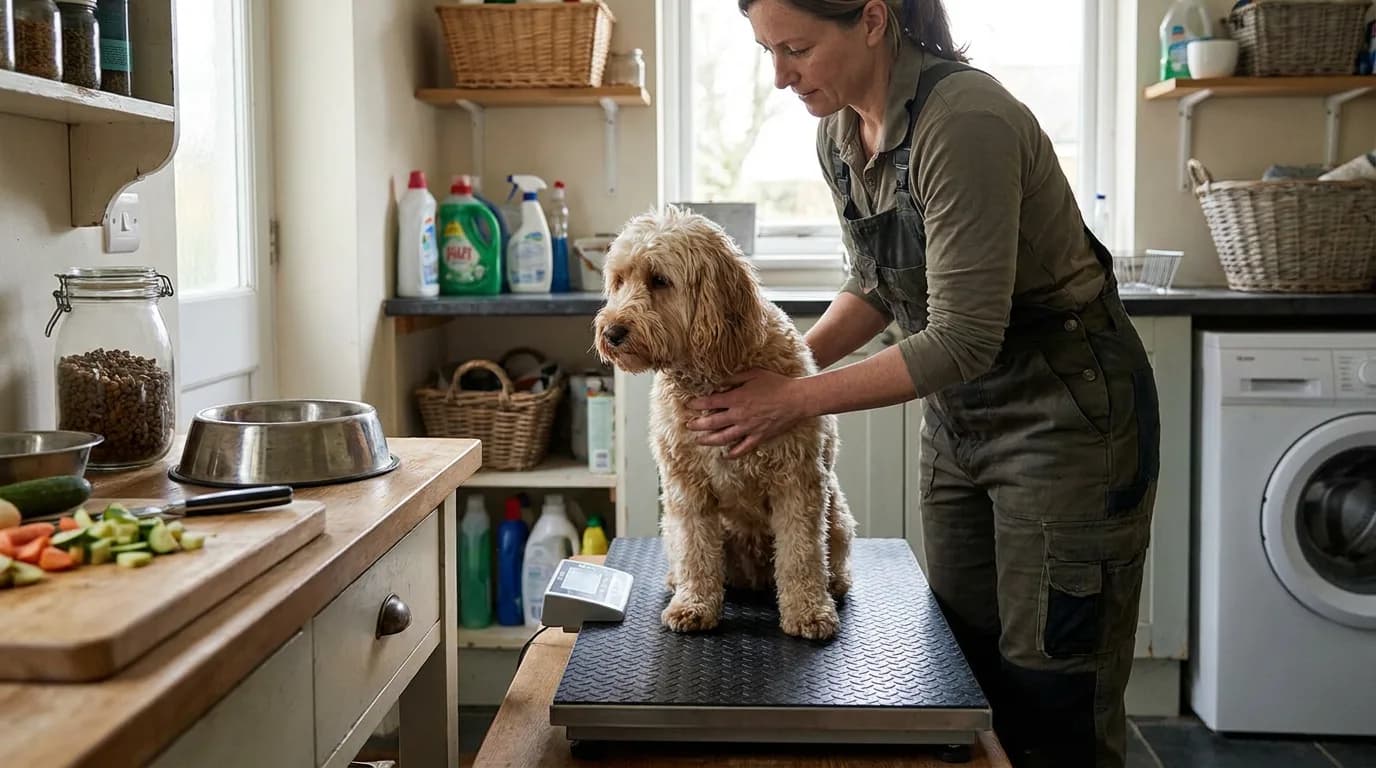
When choosing between the best dry food for your Cockapoo puppy and a suitable wet or fresh option, compare how each will work in daily life:
- Dry: Consider whether the piece size is manageable and whether measured pieces work for training.
- Wet: Check that it is a complete growth diet, then plan the opened container around the puppy's meals.
- Fresh: Check the exact recipe's growth statement, calorie density, and refrigerated-use instructions.
- Mixed: Confirm that each food used as a substantial part of the diet is appropriate for growth.
A puppy portion should change with growth rather than remaining fixed because an earlier bag or calculator produced a convenient number. Keep a current weight record and have body condition assessed alongside weight gain. The aim is appropriate development, not the fastest possible increase.
- Dry, wet, and fresh describe food formats. The nutritional adequacy statement tells you whether the specific recipe can provide the puppy's complete diet.
Which puppy food do vets recommend?
There is no single puppy food that every veterinarian recommends for every Cockapoo. A useful recommendation identifies an exact recipe that meets growth needs and fits the puppy's health, expected adult size, feeding history, and household routine.
When discussing a food with your veterinarian, bring the package or a clear photograph of its nutritional adequacy statement and calorie information. That allows a specific recommendation instead of a discussion based only on the brand name.
Petful may earn a commission when you click through to JustFoodForDogs, at no extra cost to you.
Ask for a plan that answers:
- Which exact food is appropriate now?
- What is the starting daily amount?
- How should the amount be divided into meals?
- How much complete food can be reserved for training?
- When should weight, body condition, and the portion be reassessed?
- When will it be appropriate to consider an adult-maintenance diet?
If you already have a puppy doing well on a complete growth food, a new product does not need to be introduced immediately. Keep the current food available while you plan any transition. Avoid changing food, treats, meal frequency, and serving amounts all at once, because that makes the puppy's response harder to interpret.
Do Cockapoos have sensitive stomachs?
Some individual Cockapoos experience digestive problems, but the breed mix alone does not establish a sensitive stomach or identify the right diet. A change in stools after a new food, a large treat day, or an abrupt routine change is useful history. It does not, by itself, prove an ingredient allergy.
Look at the whole feeding day before assuming the main food is responsible. A careful record is more informative than rapidly switching between recipes advertised for sensitivity.

Record the details that would help explain a change:
- The full names of the foods and treats served.
- Approximate amounts and the time they were given.
- Any recent food transition.
- Access to another pet's bowl or unplanned food.
- Changes in appetite, stool, or usual behavior.
- Medication or supplement changes.
Persistent or recurrent symptoms deserve veterinary assessment. Repeated vomiting, bloody stools, marked lethargy, or a dog unable to keep water down should not be managed by shopping for another flavor. A puppy with poor intake or digestive illness also needs prompt advice.
Food allergies and sensitive digestion are different questions
Cockapoo food allergies require an individual diagnosis. The best dog food for a Cockapoo with allergies depends on the ingredient involved and the clinical plan, rather than a general preference for chicken, fish, or grain-free food.
VCA's food-allergy guidance describes a controlled elimination diet followed by a food challenge as the diagnostic approach. Ordinary retail recipe switching cannot establish the same answer. Regular recipes in this guide are not treatment diets.
For a household managing a veterinarian-directed food trial, use only the foods allowed by the trial instructions. Check every extra before offering it:
- Training rewards and treats.
- Chews and flavored products.
- Food used to give medication.
A small extra can interfere with the trial even when it fits the usual calorie allowance.
Keep your notes factual. “Ate this amount, then had this change” gives your veterinarian something usable. “Allergic to chicken” is a conclusion that should follow the diagnostic evidence.
Are Cockapoos picky eaters?
Some Cockapoos have individual food preferences. Others leave food because the day's treats have reduced their appetite, the portion is too large, the serving routine has changed, or they are unwell. The breed label does not explain a new loss of interest in meals.
Before adding another topper, check what your dog has actually eaten. A household can accidentally create a substantial second menu through training, chews, and small bites given by several people.
Try a consistent routine for an otherwise well dog:
- Measure the complete-food ration instead of repeatedly topping up the bowl.
- Keep a record of extras given by every feeder.
- Serve food using the product's handling instructions.
- Note whether food is left at every meal or only after treat-heavy periods.
- Keep texture changes measured so the calorie total remains clear.
- Investigate a meaningful appetite change instead of treating it as a personality trait.
A fresh recipe may suit a dog's preferences, but no format guarantees that the dog will eat or solves every cause of refusal. A dog that suddenly avoids chewing, drops food, or approaches the bowl and walks away deserves attention to the change itself.
Avoid an escalating sequence in which every refused meal leads to a larger or richer addition. That can make both the feeding amount and the dog's actual preference harder to understand. If appetite remains reduced or other symptoms appear, contact your veterinarian rather than trying to wait the dog out.
Keep mixed meals and training days nutritionally balanced
Mixed feeding can be straightforward when complete foods replace one another by calories. The mistake is to treat every second food as a harmless addition to the original full ration.
Suppose a Cockapoo's plan assigns 200 calories to dinner. You decide to provide 60 calories from a fresh recipe and 140 calories from an appropriate complete dry food. Those are two parts of the same 200-calorie meal. The fresh portion is not added to 200 calories of dry food.
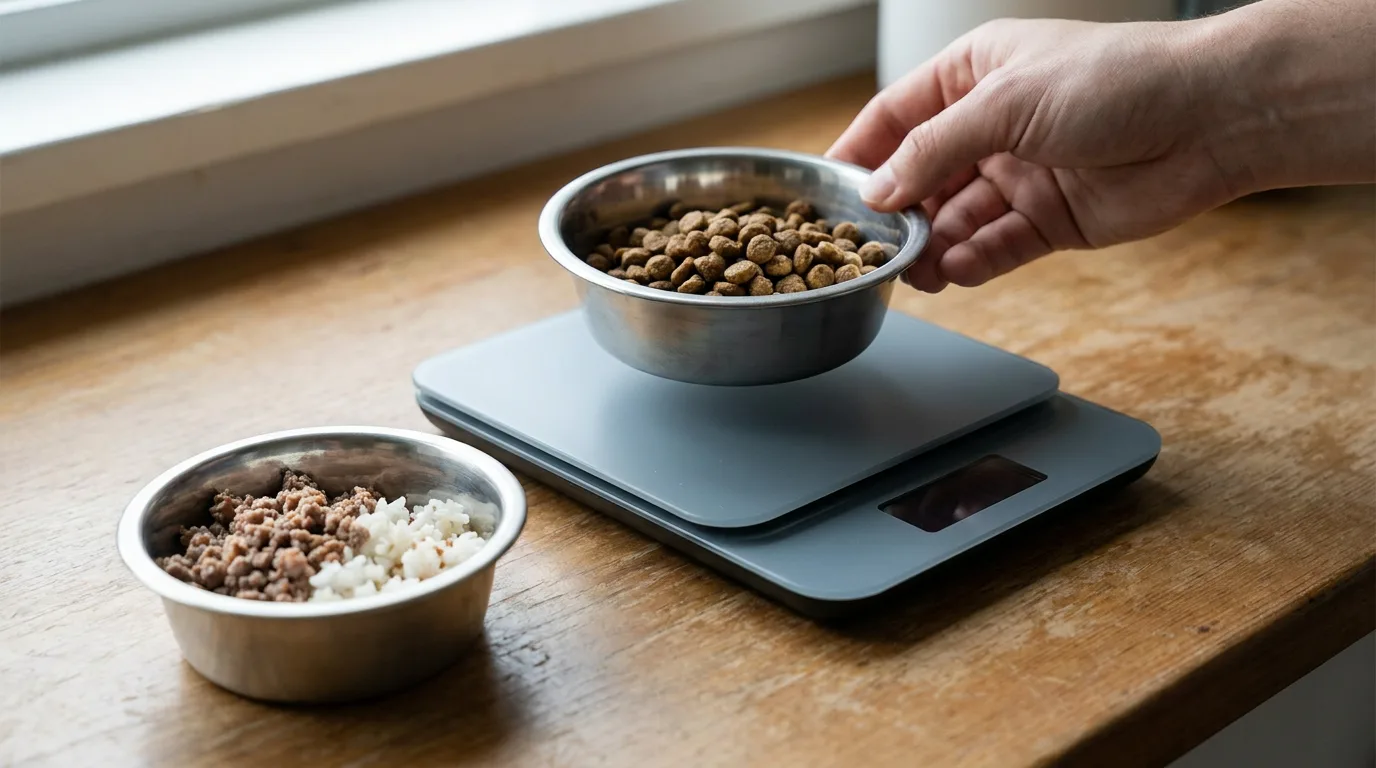
At Chicken & Rice's calorie density, 60 calories is about 39 grams. For a hypothetical dry food containing 4 calories per gram, 140 calories is 35 grams. These quantities demonstrate the calculation only. Use the calorie allocation and label information appropriate to your dog.
Keep these two situations distinct:
- Two complete foods for the same life stage: Divide the planned calories between them, then calculate each portion.
- A complete food plus an incomplete extra: Keep the extra within the shared noncomplete-food allowance.
The word “topper” describes how food is served, not necessarily its nutritional status. A complete recipe used in a small amount still contributes complete-food calories when appropriate for the dog. Plain meat, egg, rice, and many commercial toppers may be noncomplete extras. Read the specific label.
- Adding a second complete food means replacing some of the original food's calories. Noncomplete toppers and treats share one combined allowance.
What should Cockapoos not eat?
Cockapoos share the same major food-toxicity risks as other dogs. Keep chocolate, grapes and raisins, onions and garlic, alcohol, and products containing xylitol out of reach. Check ingredients in any food considered for training. The FDA's guide to potentially dangerous items for pets provides examples. If you suspect ingestion, contact your veterinarian or an animal poison-control service promptly with the product, estimated amount, and time. Do not wait for symptoms or attempt home treatment without professional instructions.
Plan the handoff between home and training
A feeding plan becomes more reliable when it follows the dog. If a trainer uses food during a session, provide the measured portion and ask for unused food or a note about what was given. If a dog sitter uses a different treat, leave its calorie information with the instructions.
A short handoff can include:
- The dog's total daily food allocation.
- The measured amount reserved for that session.
- The recipes or treats permitted.
- Which meals have already been served.
- How to record additional food.
- What to do with safely stored leftovers.
Do not rely on an empty bowl as evidence that a meal was missed. Someone may already have fed and washed it. Likewise, the presence of food in a training pouch does not tell the next person whether it is the original ration or a refill.
Keep fresh portions safe throughout the day
Follow the JustFoodForDogs storage instructions for the exact recipe. The current opened refrigerated windows are five days for thawed non-fish fresh-frozen recipes, three days for fish recipes, and three days for JustFresh. Keep track of thawing as well as opening; a new container does not make older food new again.
For meal preparation, the FDA recommends prompt refrigeration or disposal of unused canned or pouched food, with the refrigerator at 40°F or below. Clean bowls and utensils are part of the routine.
- Write the opening date where every feeder can see it.
- Prepare only the portions you can store and use appropriately.
- Keep perishable training food cold until needed.
- Avoid returning handled leftovers to the main package.
- Follow the specific product instructions when discarding or saving food.
The best routine is one you can repeat accurately. Once the recipe suits the dog, consistency with the amount, the training allowance, and storage usually provides more useful information than changing several foods in search of a universal favorite.
Cockapoo feeding questions
A dog that tolerates egg can have plain thoroughly cooked egg as a small extra within the shared allowance. Prepare the dog's portion without butter, salt, onion, or other additions from a human breakfast. Count it alongside treats and other noncomplete foods. Scrambled egg is optional; it is not needed to complete an already complete and balanced recipe.
Small pieces of cooked egg can be an occasional extra for a dog that tolerates them. Remove the shell and choose the portion according to the dog's remaining extra-food allowance rather than automatically offering a whole egg. Egg alone is not a complete meal. For a small dog, a whole egg may use a substantial share of the available daily calories.
Rice can be part of a formulated complete recipe, including Chicken & Rice. Its presence is not enough to judge the recipe because an ingredient does not determine the whole diet. Look at the food's nutritional adequacy and calorie information. Plain rice served separately has a different role from rice included in a complete formulation.
Added rice changes calories and nutrient balance, so do not replace a substantial part of complete food with it. If your dog tolerates a small amount, count it with all other noncomplete extras. Routine rice additions are unnecessary when the existing food already meets the dog's needs. Follow individual veterinary instructions if rice is part of a short-term medical feeding plan.
Premeasure the daily ration and use a shared record of meals and training rewards. Mark a meal when it is served, including the time and feeder's initials. If a sitter or trainer gives additional food, record that too. A note beside the food is more reliable than guessing from an empty bowl or asking the dog whether dinner has happened.

Coreen Saito is a pet writer and longtime shelter volunteer with more than a decade in animal rescue. She covers cat behavior, breed care, and the small, ordinary science of sharing a life with companion animals, with a particular focus on honest takes about the products and decisions that actually matter. At home in Arizona, she's outranked by Mac (a dog with the loudest opinion in the house), Rebel (a cat who governs by quiet authority), and Meri (an orange tabby who runs the late shift and the laundry basket). She writes about all three, plus the rescues that keep coming through her life, at LifeWithMinty.com.
Sign up for expert-backed reviews and safety alerts all in one place.
A Final Word (Disclaimer)
At Petful, our review integrity is paramount; we never exchange special treatment in our reviews for monetary or material rewards.
Nonetheless, when our readers click through to online merchants (including Chewy or Amazon), we receive a referral commission. This supports the running of our free blog, and we appreciate your backing.