Best Dog Food for Australian Cattle Dogs: Feeding a High-Energy Herding Breed
Match an Australian Cattle Dog's meals to its actual workload, life stage, and training routine. Compare JFFD recipes and calculate portions that include reward calories and changes in activity.
Petful is reader supported. As an affiliate of platforms like Amazon and Chewy, we may earn a commission when you buy through links on this page. There is no extra cost to you.
Sponsored by JustFoodForDogs. We may earn a commission from purchases made through links in this article.
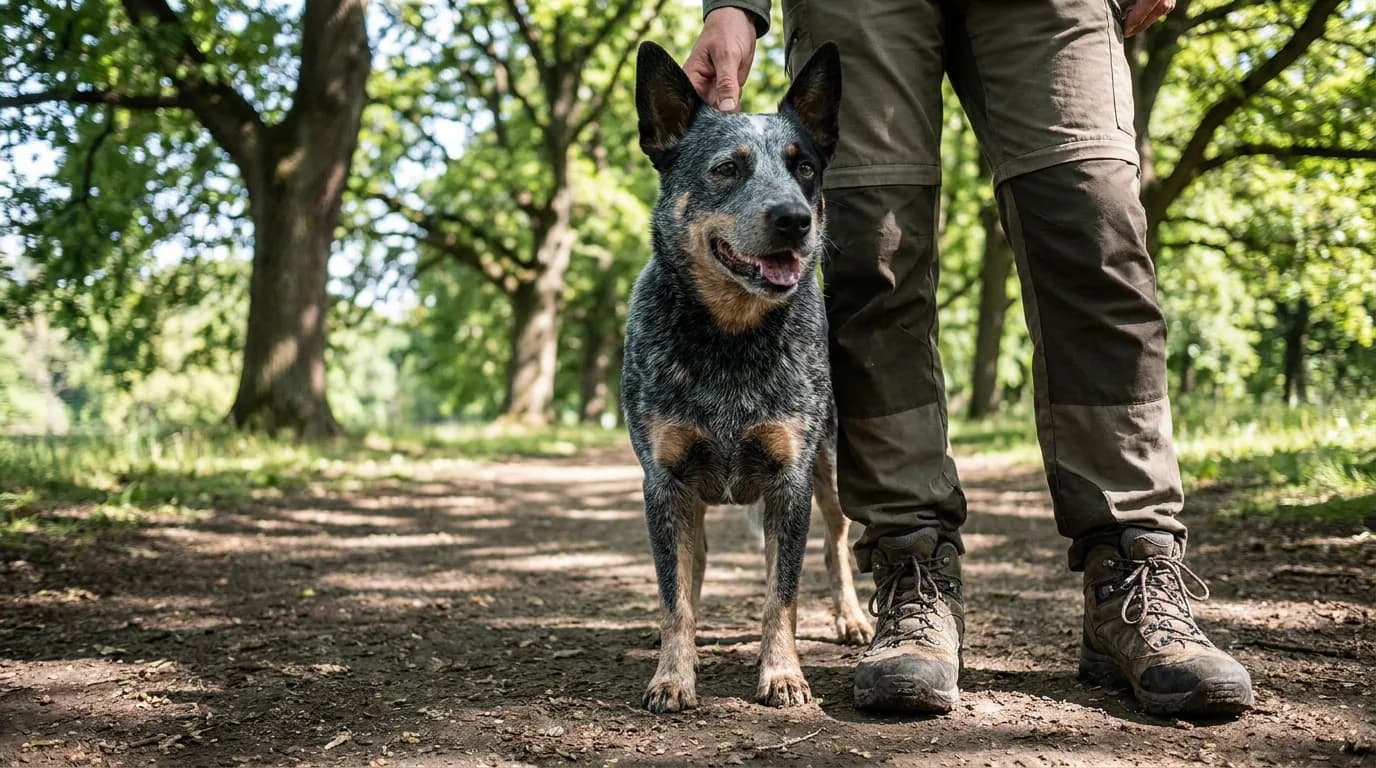
The best dog food for Australian Cattle Dogs matches the dog's life stage and actual workload. An active companion that enjoys walks and training has different feeding demands from a dog performing sustained farm work. Both need complete nutrition, measured meals, and a plan that accounts for the calories offered as rewards.
JustFoodForDogs has fresh recipes for both growing puppies and adult dogs. Chicken & Rice and Fish & Sweet Potato currently cover all life stages, including growth of large-size dogs. Beef & Russet Potato and Turkey & Whole Wheat Macaroni are adult-maintenance options. Choosing among them starts with nutritional eligibility, then moves to daily calories and a routine you can maintain.

Sign up for expert-backed reviews and safety alerts all in one place.
Choosing Food for an Australian Cattle Dog
An Australian Cattle Dog's energetic reputation does not provide a serving size. Start with its age, current weight, body condition, and usual activities. Include what the dog actually does during an ordinary week, rather than only its busiest afternoon. This gives you a useful starting point for discussing food with your veterinarian.
The same approach applies whether you search for Australian Cattle Dog food, blue heeler dog food, or food for red heelers. Those descriptions do not establish separate nutritional requirements. Our Australian Cattle Dog breed profile explains the breed's background, while the individual dog's routine should guide its feeding assessment.
- 1Match the food's life-stage statement to the dog's current needs.
- 2Establish an individual daily calorie target that reflects actual activity.
- 3Include training rewards and other extras before calculating measured portions.
Before selecting a recipe, gather a few details that change the decision:
- Current measured weight and whether the dog is still growing.
- A description of typical work, walks, play, and training.
- The exact current food and amount offered.
- Calories from rewards, chews, and other extras.
- Any veterinary instructions affecting ingredient or nutrient selection.
Weight is useful when interpreted with body condition and the dog's history. A single number cannot show whether a dog has gained excess body fat, lost muscle, or simply grown. Bring previous weights and a realistic feeding record to the appointment so your veterinarian can help set an appropriate starting allowance.
For a dog whose needs fit the formulation, Chicken & Rice offers a grain-inclusive fresh option with growth eligibility. Its current calorie density is 1,530 kcal/kg. That number allows you to calculate a portion after establishing the dog's calorie needs; it is not a breed-specific feeding recommendation by itself.
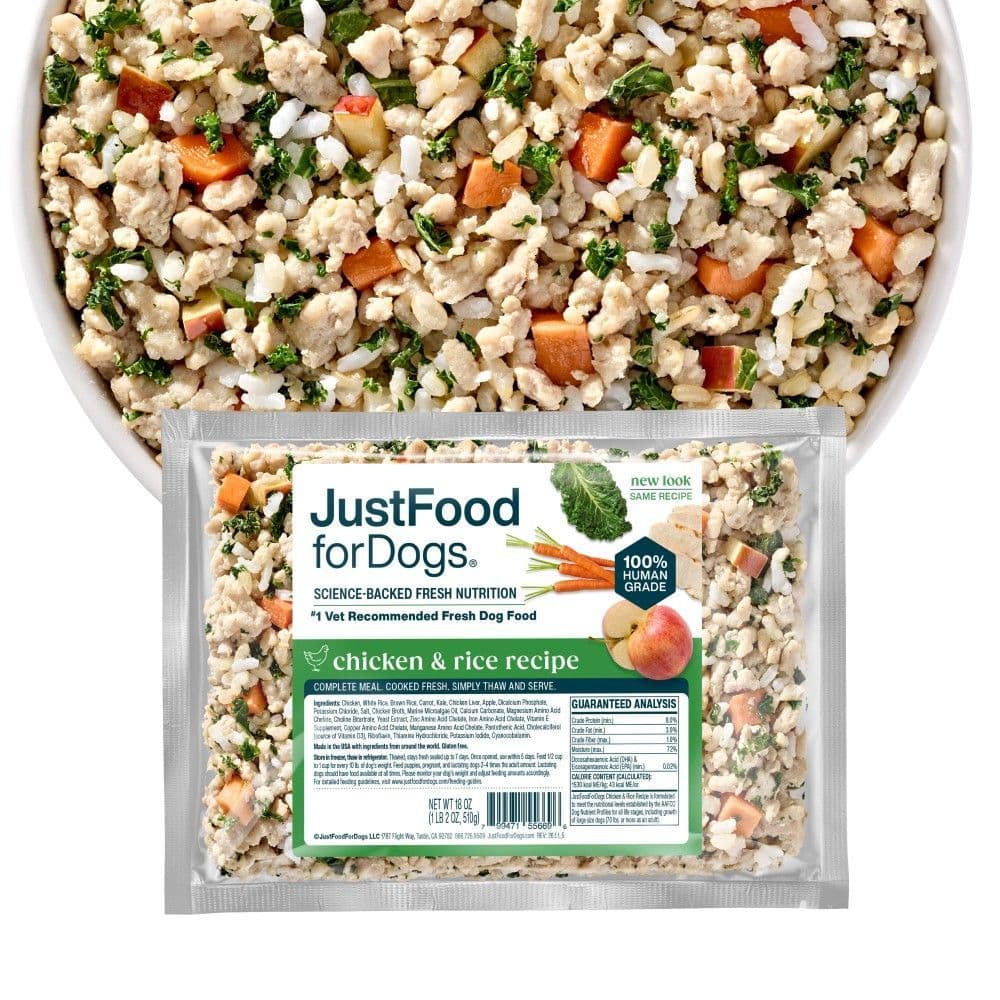
Check the current Chicken & Rice recipe, portions and ordering options.
Petful may earn a commission when you click through to JustFoodForDogs, at no extra cost to you.
If you are weighing protein sources, WebVet’s guide to fish-based dog food explains what a complete fish recipe looks like.
JFFD Choices for Puppies and Adults
The best food for an Australian Cattle Dog puppy must support growth. Feeding more of an adult-maintenance food does not change its adequacy statement. Current Chicken & Rice and Fish & Sweet Potato include growth, including growth of large-size dogs expected to reach 70 pounds or more as adults.
When choosing food for a blue heeler puppy, check the exact current label and discuss expected adult size with your veterinarian. Beef & Russet Potato and Turkey & Whole Wheat Macaroni are adult-maintenance recipes. They can enter the comparison after growth is complete, rather than replacing the puppy's growth-qualified main food.
The four recipes differ in both growth eligibility and calorie density:
- Chicken & Rice: all life stages including large-size growth; 1,530 kcal/kg.
- Fish & Sweet Potato: all life stages including large-size growth; 922 kcal/kg.
- Beef & Russet Potato: adult maintenance; 1,559 kcal/kg.
- Turkey & Whole Wheat Macaroni: adult maintenance; 1,741 kcal/kg.
For an adult, the calorie differences affect how much food supplies the day's allowance. Fish & Sweet Potato requires more grams than Turkey & Whole Wheat Macaroni for an equal calorie contribution. That comparison concerns serving quantity, not which recipe makes a dog perform better.
Fish & Sweet Potato's current whitefish blend includes cod, pollock, and haddock. It should not be described as a single-cod recipe or assumed to address an allergy simply because it contains fish. Compare the full ingredients with the dog's history, then use the recipe's own calorie value when weighing meals.
Our guide to puppy food versus adult food and when to switch explains the transition between life stages. Make that decision around the individual dog's development, rather than changing food because a package is empty or an adult housemate eats something different.
Feeding a Working Dog Versus an Active Companion
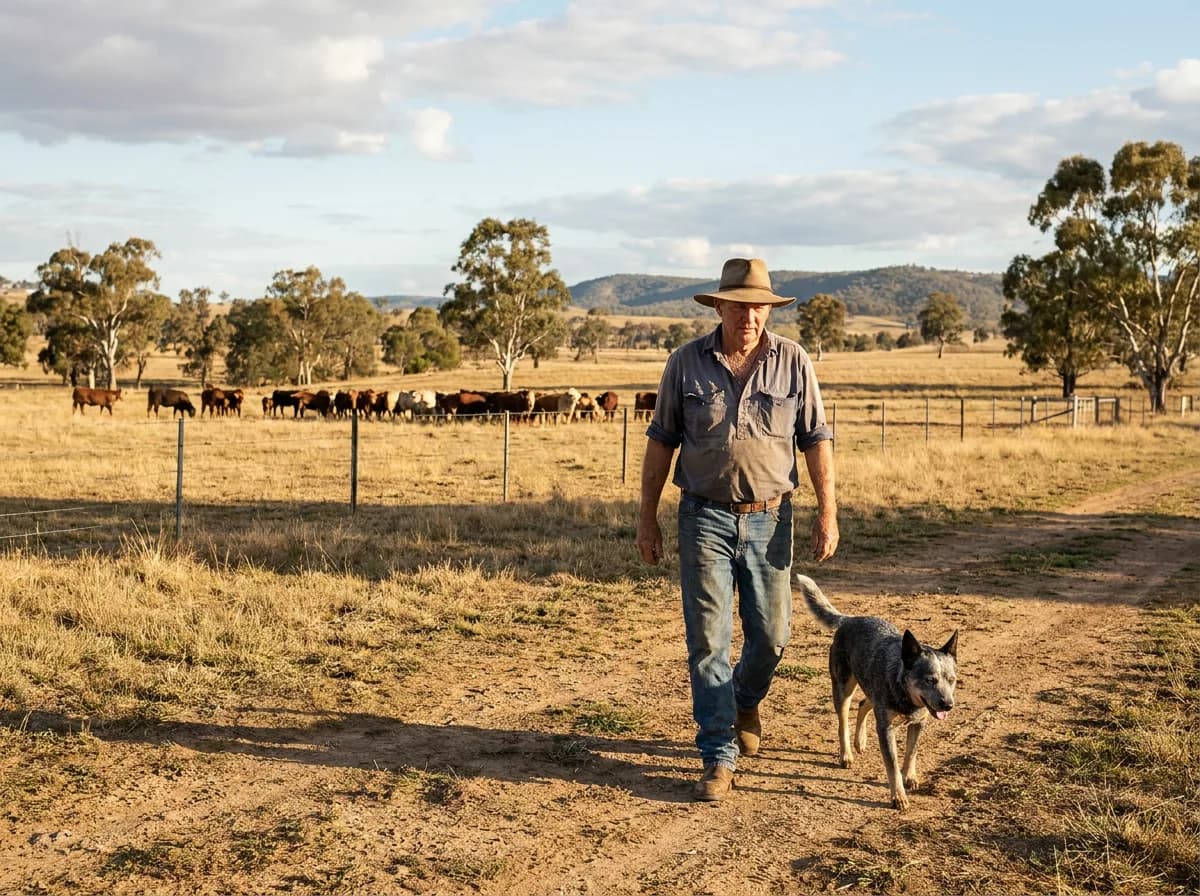
Choose complete food for the dog's life stage, then assess actual workload and individual energy needs. An active companion can be athletic and enthusiastic without doing sustained work every day. A dog accompanying its owner outdoors is not automatically using the same energy as one working livestock for extended periods.
The AAHA nutrition and weight management guidelines use calorie calculations as starting estimates that require individual adjustment. That distinction matters for this breed: an activity label cannot replace monitoring the dog's weight, condition, and actual intake over time.
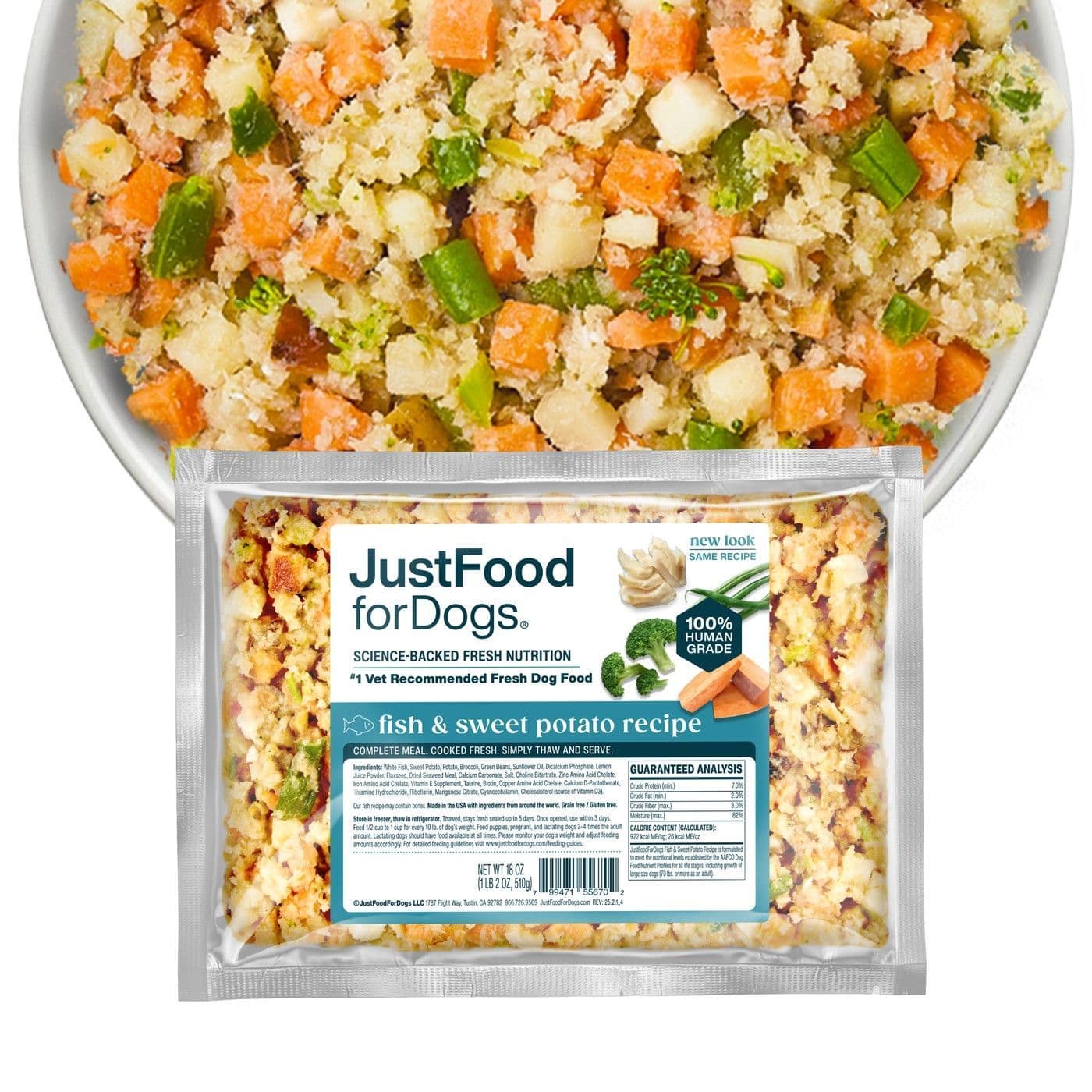
Check the current Fish & Sweet Potato recipe, portions and ordering options.
Petful may earn a commission when you click through to JustFoodForDogs, at no extra cost to you.
Consider the pattern across several ordinary days. A companion might have two walks, short training sessions, and play in the yard. A working dog might spend prolonged periods moving across a farm. A weekend hiking dog can have a demanding Saturday followed by quieter weekdays. Those routines call for different conversations about daily intake.
| Routine | Feeding decision | What to monitor |
|---|---|---|
| Active companion with walks, play, and training | Establish an individual maintenance allowance and count rewards | Weight trend, body condition, actual intake |
| Sustained work or substantial endurance activity | Discuss workload-specific energy needs and meal planning with the veterinarian | Ability to maintain appropriate condition, intake, and changes in work |
| Quieter period with reduced activity | Reassess changing activity before continuing the old feeding plan unchanged | Treat use, meal amounts, and weight trend |
| Growing puppy | Keep growth adequacy separate from activity estimates | Current weight, development, body condition, and growth-qualified food |
Describe the work before changing the food
A useful workload record does not need a fitness tracker or a complicated scoring system. Write down the activity, approximate duration, and how often it occurs. Distinguish a sustained task from several brief bursts of play. Include days off, because the feeding plan needs to make sense across the actual schedule.
Record details such as:
- Whether the dog is walking, running, herding, or doing brief training.
- How long the activity lasts and how much rest occurs.
- Whether the routine repeats daily or only occasionally.
- Changes in meal intake, body weight, or condition.
- Rewards and food offered during the activity.
This record helps avoid two common mistakes. One is choosing a large serving because the breed is considered energetic. The other is adding a second meal after every exciting outing without considering the day's existing food allowance. Both can disconnect the amount offered from the dog's actual needs.
For a healthy adult that is maintaining an appropriate condition on a consistent routine, the current intake provides useful information. If the routine changes substantially, that previous amount becomes a reference point for reassessment. It should not become an unchangeable rule, but neither should it be discarded without knowing what changed.
Consider the amount the dog must eat
Calorie density affects the practical size of a fresh-food ration. At an equal calorie allowance, a lower-density food requires more grams. That matters when planning refrigerator space, portion containers, and how much food to bring for a day away from home. It does not establish a universal best recipe for working dogs.
For example, 900 calories supplied entirely by Chicken & Rice would require approximately 588 grams. The same calories from Fish & Sweet Potato would require approximately 976 grams. Those are illustrative comparisons of the current formulas, not a recommended allowance for all Australian Cattle Dogs.
Use the Chicken & Rice product information to confirm the current adequacy statement, ingredients, and energy density. If an adult dog needs a substantial quantity, discuss whether the proposed recipe and feeding schedule are practical for that individual.
Plan storage and transport for the daily ration
- Calculate the approximate grams needed per day.
- Check how that quantity divides among meals.
- Estimate how quickly each package will be used.
- Confirm enough freezer and refrigerator space.
- Plan temperature-controlled transport if meals leave home.
A product's marketing language cannot answer these household questions for you. The useful choice is the nutritionally suitable recipe that the dog can eat consistently and that you can portion and store reliably. Workload, food quantity, and logistics should fit together.
Keep performance expectations realistic
Food supplies the nutrition and energy that accompany conditioning, training, and rest. Match the feeding plan to the dog's actual work and ability to maintain appropriate condition. If the dog becomes less able to perform its usual activities, seek veterinary assessment before simply increasing dinner.
Describe changes in workload and intake together. A sustained increase in work, reduced appetite, or a change in body condition gives the veterinary team a specific reason to reassess the plan.
Training Treats and Daily Meal Portions
Training can make an otherwise carefully measured Australian Cattle Dog diet difficult to track. A reward offered after each successful repetition may look small, but several sessions and several handlers can create a substantial total. The solution is to count rewards before deciding what belongs in the meal bowl.
An Australian Cattle Dog feeding chart is most useful when its assumptions are visible. A table based only on body weight can hide the effects of age, activity, body condition, and extras. The example below instead begins with an already established daily calorie target and shows how rewards change the meal portion.
Build one daily food budget
AAHA recommends that complete and balanced food supply at least 90 percent of daily calories, with treats and other extras generally limited to no more than 10 percent. The 10 percent is a ceiling, not a requirement to give that many treats. If fewer are offered, the feeding plan can reflect the smaller amount.
For an illustrative adult with a 1,000-calorie daily target, reserving 100 calories for rewards leaves 900 calories for complete meals. The same 900 calories require different gram amounts with the four JFFD recipes. This example is for an adult whose allowance has already been established; it is not a default ration for the breed or for puppies.
| Daily calorie target | Rewards and extras | Complete-food calories | Recipe kcal/kg | Grams per day |
|---|---|---|---|---|
| 1,000 calories | 100 calories | 900 remaining meal calories | Chicken & Rice: 1,530 | About 588 |
| 1,000 calories | 100 calories | 900 remaining meal calories | Fish & Sweet Potato: 922 | About 976 |
| 1,000 calories | 100 calories | 900 remaining meal calories | Beef & Russet Potato: 1,559 | About 577 |
| 1,000 calories | 100 calories | 900 remaining meal calories | Turkey & Whole Wheat Macaroni: 1,741 | About 517 |
| Puppy | Individually planned rewards | Individually assessed growth allowance | Growth-qualified recipe only | Calculate from the puppy's current plan |
The formula is meal calories divided by recipe kcal/kg, multiplied by 1,000. The result is the total daily grams from that recipe. Divide those grams among the planned meals. Do not accidentally serve the daily quantity at every feeding, and do not add all four example quantities together.
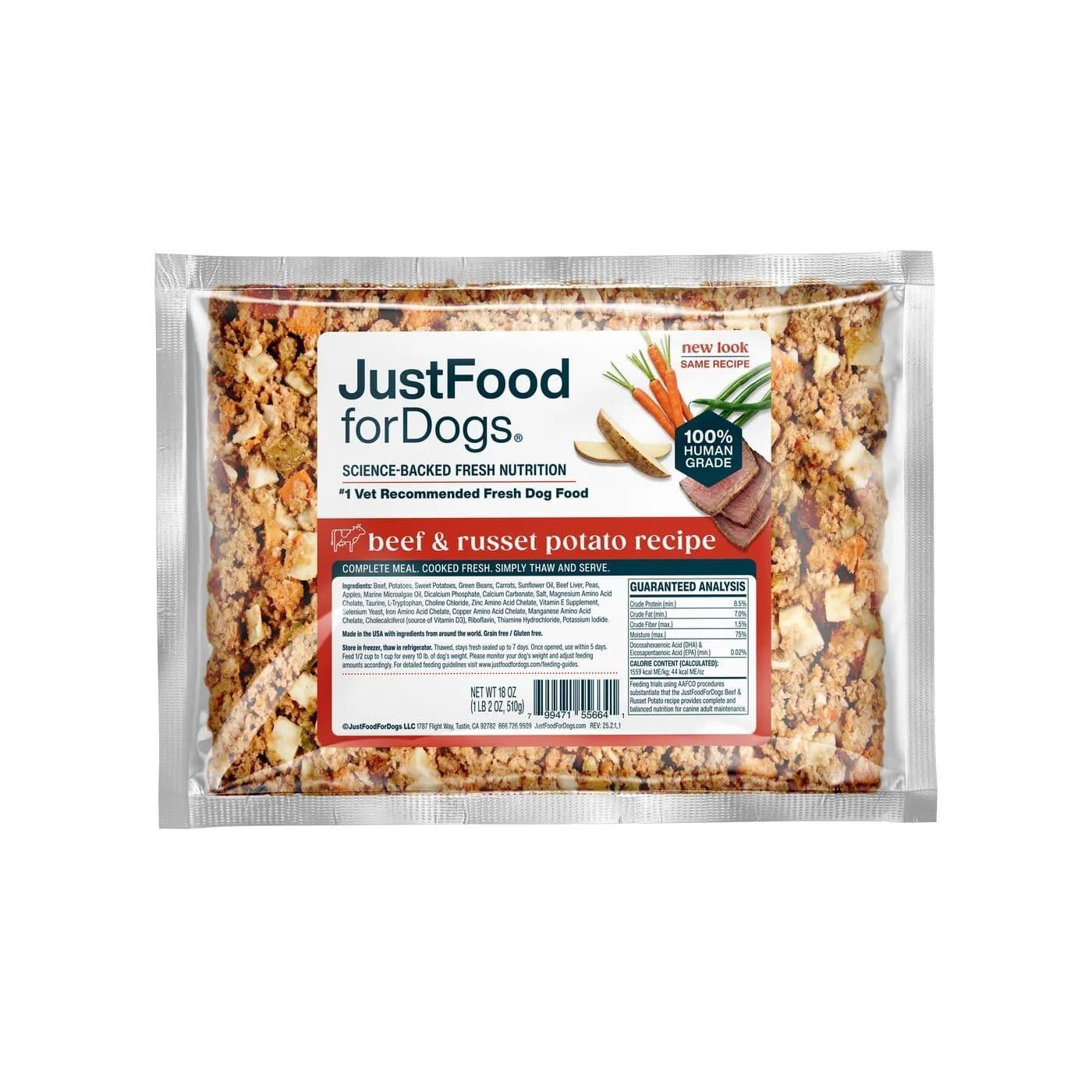
Check the current Beef & Russet Potato recipe, portions and ordering options.
Petful may earn a commission when you click through to JustFoodForDogs, at no extra cost to you.
For an adult whose ingredient history fits the recipe, Beef & Russet Potato supplies 1,559 kcal/kg. Its adult-maintenance statement makes it relevant to this adult example. It does not make the same table appropriate for a growing puppy that happens to need a similar number of calories.
Measure a training day step by step
The most useful routine is one that every caregiver can repeat. Keep the daily target, exact recipe, and resulting portion in one place. If the dog attends a class or works with a second handler, send the reward allowance along with the instructions rather than letting each person start a separate treat budget.
- Confirm the dog's current daily calorie target.
- List the rewards, chews, and extras planned for the day.
- Subtract reward calories to find the remaining meal calories.
- Use the exact recipe's energy density to calculate grams.
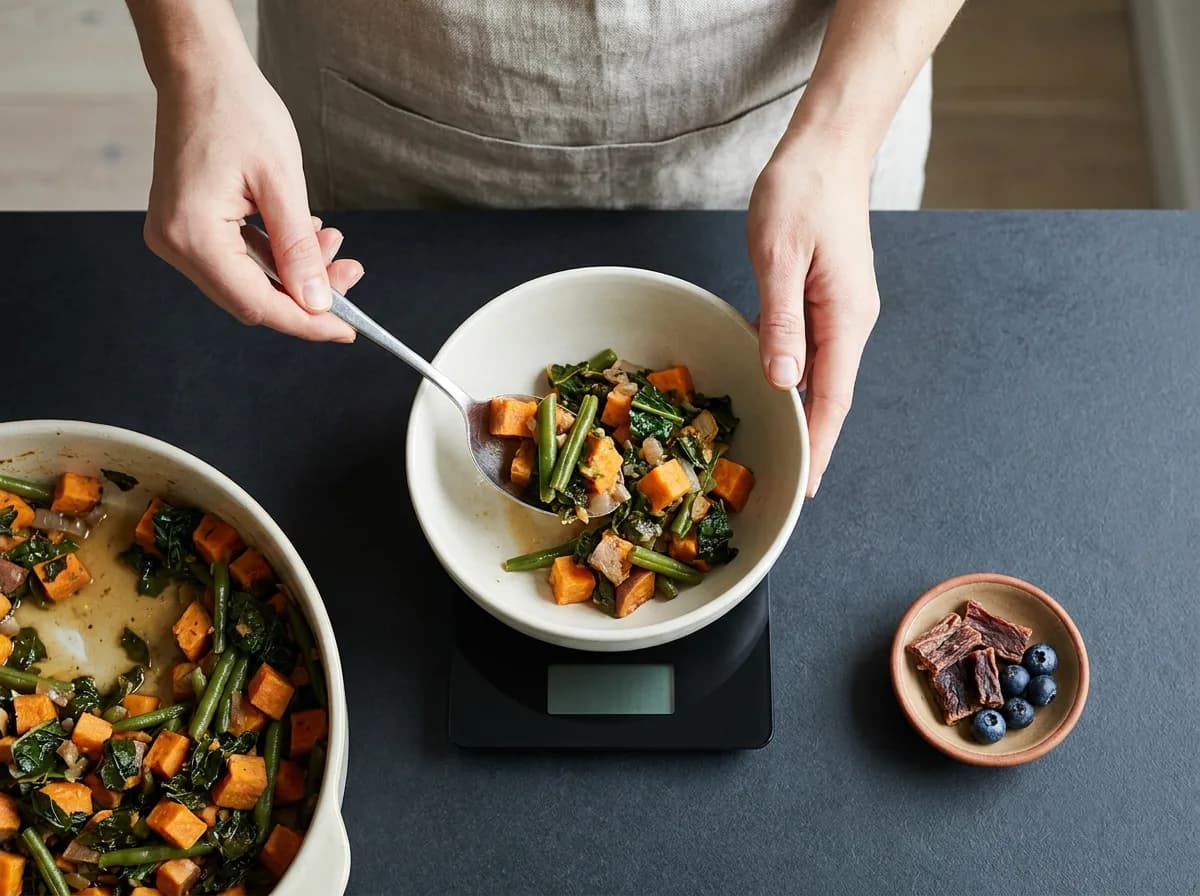
- Zero the scale with the empty bowl, then weigh the meal portion.
- Set aside any food intended for later meals or training.
- Record meaningful changes in intake or routine.
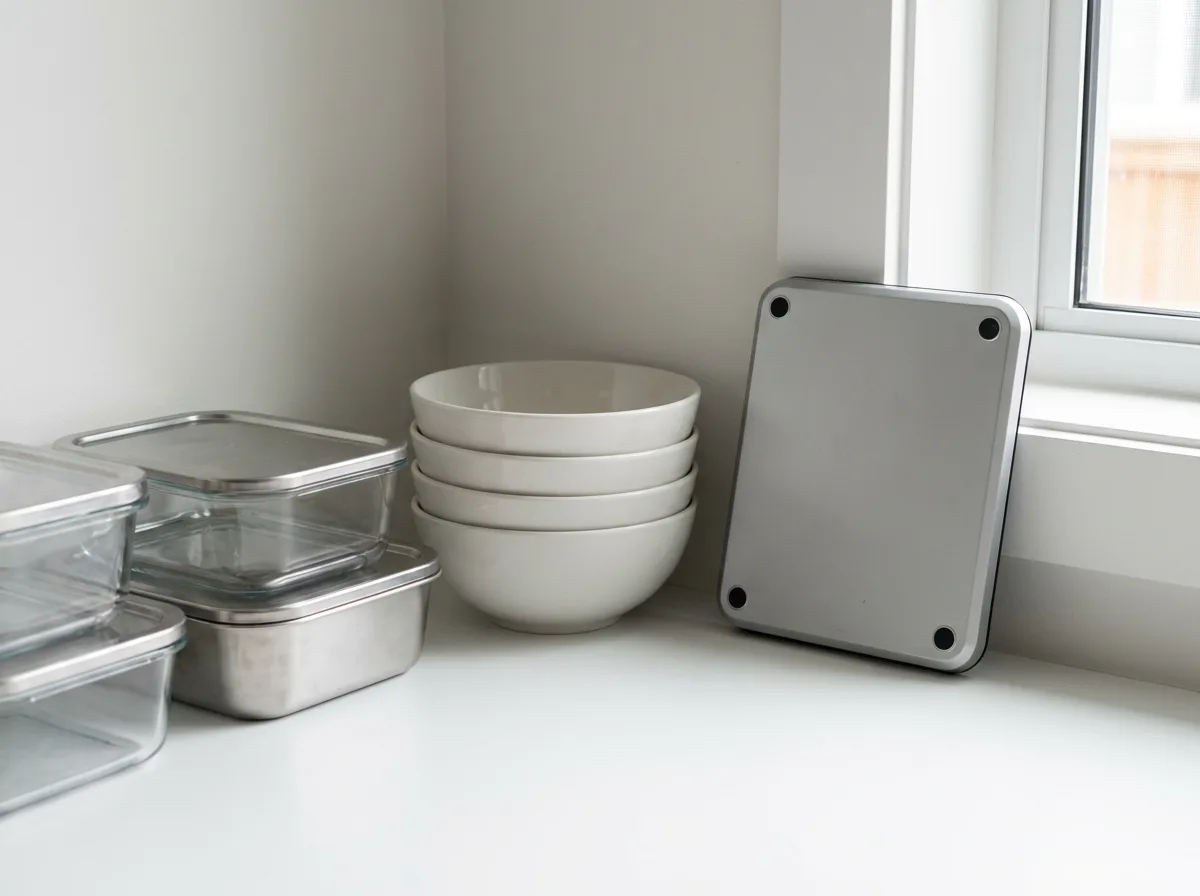
A kitchen scale can make this easier than measuring a soft food by scoop volume. Leveling, packing, and the size of individual pieces can change how much fits into a cup. Weighing also helps when dividing a daily ration among meals or preparing labeled portions for another caregiver.
If you use part of the complete food as a training reward, remove it from the measured daily ration before dividing the rest into meals. It remains complete-food calories rather than an additional allowance. Handle fresh-food rewards according to the food's storage instructions, particularly when training away from home.
Make rewards count without losing track
Small rewards can support frequent practice without requiring a large amount of extra food. Check the calorie information for the exact treat, because pieces that look similar can differ in energy. Petful's guide to dog training treats provides broader context for choosing practical rewards.
A shared reward container can prevent accidental duplication:
- Fill it with the day's planned extras.
- Have each handler take rewards from that supply.
- Account for a chew before offering it later.
- Keep unplanned table food out of the routine.
- Note when food rewards replace part of the measured main diet.
Suppose the example adult's training session uses 70 calories of its 100-calorie extra allowance. That leaves 30 calories for other extras under the same plan. A chew supplying more than those remaining calories cannot simply be added without changing the day's allocation. This is why counting only the obvious training treats can miss a meaningful part of intake.
On a day with little food-based training, you do not need to give the unused reward allowance as random snacks. Decide how the complete meals will supply the intended daily calories. Keep changes consistent and documented rather than alternating between a restricted meal plus no rewards and a full meal plus many rewards.
Keep puppy calculations separate
“How much should I feed my Australian Cattle Dog puppy?” needs an individual growth assessment. The adult example above does not become a puppy plan by changing the recipe name. Current weight, age, growth, body condition, and veterinary guidance inform the calorie allowance, while expected adult size informs the growth label check.
For a puppy, keep these details together:
- Current measured weight and age.
- Expected adult size and appropriate growth statement.
- The calorie allowance and date it was assessed.
- The exact recipe and daily grams.
- The meal schedule and training-reward plan.
As the puppy grows, revisit the calculation. If a portion written down weeks earlier is still being used, confirm that it remains appropriate. Training rewards need to stay within the overall plan even when a young dog is practicing many new skills.
Recalculate when the recipe changes
An adult switching from Fish & Sweet Potato to Turkey & Whole Wheat Macaroni cannot keep the same gram quantity and expect equal calories. The current values are 922 and 1,741 kcal/kg respectively. At 500 grams, Fish supplies 461 calories, while Turkey supplies about 871 calories.
If Turkey & Whole Wheat Macaroni fits the adult's needs, its greater calorie density means fewer grams are required for the same food allowance. Make the conversion before the transition, then measure each food separately while both are being served.
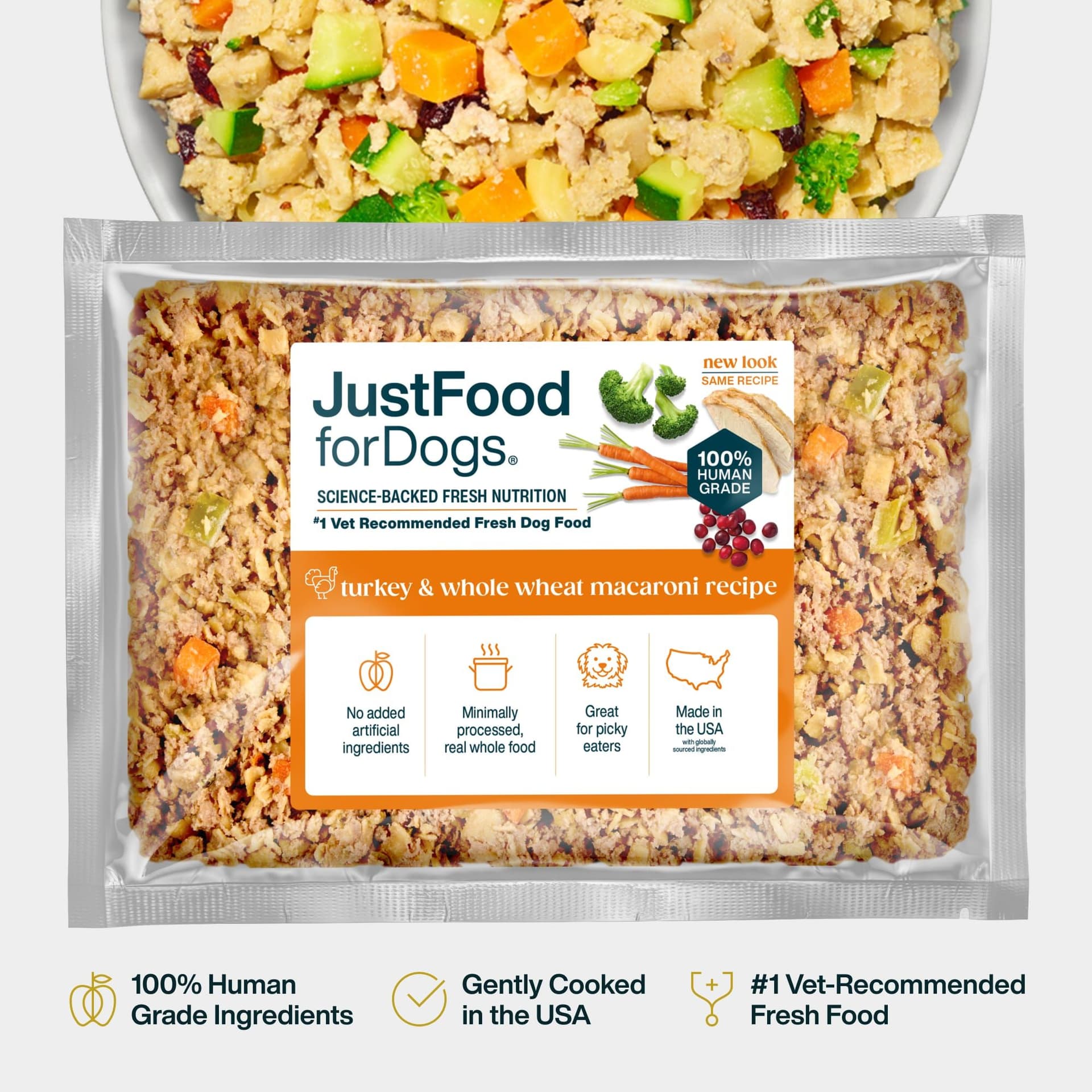
Check the current Turkey & Whole Wheat Macaroni recipe, portions and ordering options.
Petful may earn a commission when you click through to JustFoodForDogs, at no extra cost to you.
The Fish & Sweet Potato recipe details can help confirm its current formulation and feeding information. Keep that information with the portion record so a different household member does not assume that yesterday's weight applies to today's food.
Adjusting Food When Activity Changes
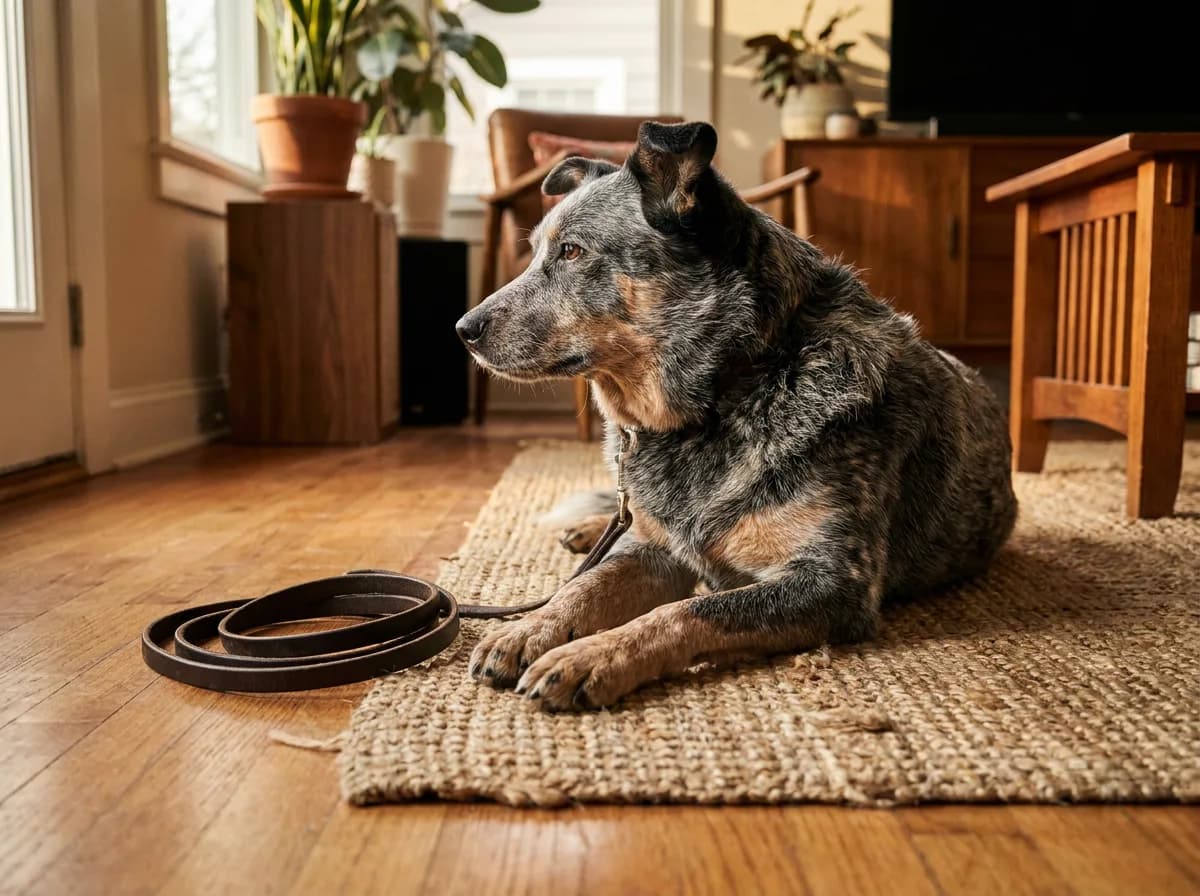
Changes in routine are a reason to reassess the feeding plan, not to apply a fixed percentage automatically. There is no universal rest-day reduction for Australian Cattle Dogs. A quiet afternoon after a normal week is different from several weeks without the dog's usual work, and a growing puppy's needs cannot be treated like those of a mature adult.
Start by defining the change. Did sustained farm work stop for the season? Did a daily long outing become a brief walk? Is the dog receiving more treats during indoor training even though total physical activity fell? The answers identify which parts of the feeding plan deserve attention.
Compare the new routine with the old one
Before changing the meal quantity, review the complete daily intake. A smaller dinner may have little effect if treats and chews increased at the same time. Conversely, removing a regular training session can reduce reward calories even if the main meals stay unchanged.
Use a brief comparison:
- What activity changed, and how long will the change last?
- Did food rewards increase, decrease, or stay the same?
- Is the dog finishing its usual food?
- Has measured weight changed over time?
- Does your veterinarian recommend a revised calorie allowance?
For a healthy adult, recorded weight and body-condition trends can help assess whether the current intake still fits. Ask your veterinarian how often to check those measures and what changes should prompt contact. Avoid trying to judge the whole feeding plan from one photograph or one weigh-in taken under different conditions.
A planned review is especially useful after a schedule change. Write down the new routine, the portion being served, and the date you will reassess. That is more informative than making small, undocumented changes every few days and later trying to remember which amount produced which result.
Change one feeding variable at a time
If the calorie allowance needs adjustment, convert the revised number into grams of the same recipe first. Changing the food, treat type, meal schedule, and portion simultaneously makes the result harder to interpret. A simple record helps you see what was actually changed.
For example, if an adult's agreed meal allocation changes from 900 to 800 calories, Chicken & Rice would change from about 588 to 523 grams daily at its current energy density. That example shows how to implement a revised target. It does not prescribe a 100-calorie reduction for a rest day or a particular activity change.
Keep the revised instructions concrete:
- New daily calorie target and extra-food allowance.
- Exact recipe and daily gram amount.
- Number of meals and quantity per meal.
- Date of the change and planned reassessment.
If activity decreased because the dog is injured, recovering, or unwell, ask the treating veterinarian to guide feeding changes. Do not assume that every dog resting more needs the same reduction. Recovery, growth, and medical circumstances can alter the decision.
When work resumes, reassess again rather than automatically returning to an old amount from a different season or body weight. The previous record remains useful, but the current dog and current workload should determine the plan.
Food Tolerance, Switching, and Storage
A food needs to suit both the dog and the household's handling routine. Introduce a new recipe gradually, account for its calorie density, and keep other feeding changes limited while you observe tolerance. Our guide to switching dog food gradually explains the general process.
Breed identity does not diagnose an allergy or a sensitive stomach, and changing food is not a cure for persistent symptoms. Avoid breed-wide allergy assumptions when selecting a recipe. If your dog develops ongoing digestive symptoms, itching, or another concern, record the complete food history and seek veterinary assessment rather than repeatedly changing proteins without a plan.
Useful information to record includes:
- The exact old and new recipes.
- Amounts served and the timing of the transition.
- Treats, chews, supplements, and other extras.
- Symptoms and when they appeared.
- Any changes in appetite or activity.
Keep calories consistent during a transition
When two foods have different calorie densities, equal gram quantities do not make an equal-calorie exchange. If a meal contains a planned share from each food, calculate each share separately. This keeps the transition from unintentionally increasing or decreasing the day's food calories.
For example, replacing 100 calories of Chicken & Rice means replacing about 65 grams. Supplying those 100 calories with Fish & Sweet Potato takes about 108 grams. The visual size of the mixed meal may change even though the intended calorie contribution stays the same.
Follow the manufacturer's transition guidance and your veterinarian's instructions for the individual dog. If symptoms occur, ask how to proceed rather than repeatedly speeding up, stopping, and restarting the change without a consistent plan.
Plan refrigeration around the recipe
During a gradual transition, smaller servings can make an opened package last longer. Check the current storage instructions for each recipe before deciding how much to thaw.
The current JustFoodForDogs FAQ gives Fish & Sweet Potato a five-day refrigerated window when sealed and thawed, and three days once opened. For the other fresh-frozen proteins discussed here, general guidance is seven days sealed and thawed, or five days opened. Follow the actual package instructions, including any shorter limit.
Opening food does not restart its earlier storage clock. Label both thawing and opening dates, and use the applicable earlier deadline. Thaw food in the refrigerator according to the manufacturer's instructions rather than leaving packages out while you finish other chores.
Organize food for home and work
- Thawing only the amount you expect to use in time.
- Keeping opened food covered and refrigerated.
- Washing hands, utensils, and bowls appropriately.
- Checking package size against daily consumption.
- Keeping meal transport temperature-controlled when away from home.
This can matter for a working day spent away from the kitchen. Decide in advance how meals will remain refrigerated or otherwise within the manufacturer's handling instructions. A long day outdoors does not make a fresh meal suitable for storage in a warm vehicle or an uncooled equipment bag.
For a pet sitter or second handler, provide written feeding and storage instructions. Include the recipe, grams per meal, reward allowance, opening date, and use-by deadline. A consistent plan is easier to follow than a general instruction to “feed extra if the dog worked hard.”
Frequently Asked Questions
Start with complete food for life stage, then match portions to actual workload and individual energy needs. The plan should include rewards, chews, and other extras, with body-condition adjustment guided by veterinary assessment. Bring a typical week's routine and feeding record to the conversation. That is more useful than choosing a recipe solely because the breed is known for energy.
There is no universal number-one food for every puppy. Choose a complete recipe whose nutritional adequacy statement covers growth and the puppy's expected adult size. Current JFFD Chicken & Rice and Fish & Sweet Potato qualify for growth. Beef & Russet Potato and Turkey & Whole Wheat Macaroni are adult-maintenance recipes, so they should not replace a puppy's complete main diet.
No. Sustained work can change feeding needs, but an active companion's routine should not automatically receive a working dog's allowance. Assess individual energy needs using the actual schedule, current intake, weight, and body condition. A food's calorie density determines the grams required; it does not establish how many calories every dog of the breed should receive.
Subtract reward calories from the planned total to calculate remaining meal calories. If rewards come from the dog's already measured complete food, set them aside before dividing meals so they are not served twice. Keep a shared reward allowance when more than one person trains the dog, and remember that chews and other extras count too.
There is no universal rest-day percentage. Consider the actual activity change, its duration, and whether reward intake also changed. A prolonged reduction in work warrants reassessment, while a single quiet day does not supply enough information for a breed-wide rule. Use the dog's current feeding record and veterinary guidance to decide whether a revised allowance is needed.
The current recipes have different energy densities: Fish & Sweet Potato supplies 922 kcal/kg, while Turkey & Whole Wheat Macaroni supplies 1741 kcal/kg. More grams of Fish are needed to provide an equal calorie amount. That difference affects portion weight and package use, but it does not establish that either recipe is universally better for Australian Cattle Dogs.

Coreen Saito is a pet writer and longtime shelter volunteer with more than a decade in animal rescue. She covers cat behavior, breed care, and the small, ordinary science of sharing a life with companion animals, with a particular focus on honest takes about the products and decisions that actually matter. At home in Arizona, she's outranked by Mac (a dog with the loudest opinion in the house), Rebel (a cat who governs by quiet authority), and Meri (an orange tabby who runs the late shift and the laundry basket). She writes about all three, plus the rescues that keep coming through her life, at LifeWithMinty.com.
Sign up for expert-backed reviews and safety alerts all in one place.

A Final Word (Disclaimer)
At Petful, our review integrity is paramount; we never exchange special treatment in our reviews for monetary or material rewards.
Nonetheless, when our readers click through to online merchants (including Chewy or Amazon), we receive a referral commission. This supports the running of our free blog, and we appreciate your backing.