Anti-Inflammatory Foods for Dogs: Which Nutrients Support Joints and Skin
Anti-inflammatory foods for dogs start with omega-3s from fish, antioxidant produce, and a lean body weight. Here is which nutrients support joints and skin, what to limit, and how to choose a diet safely.

BVMS, MRCVS
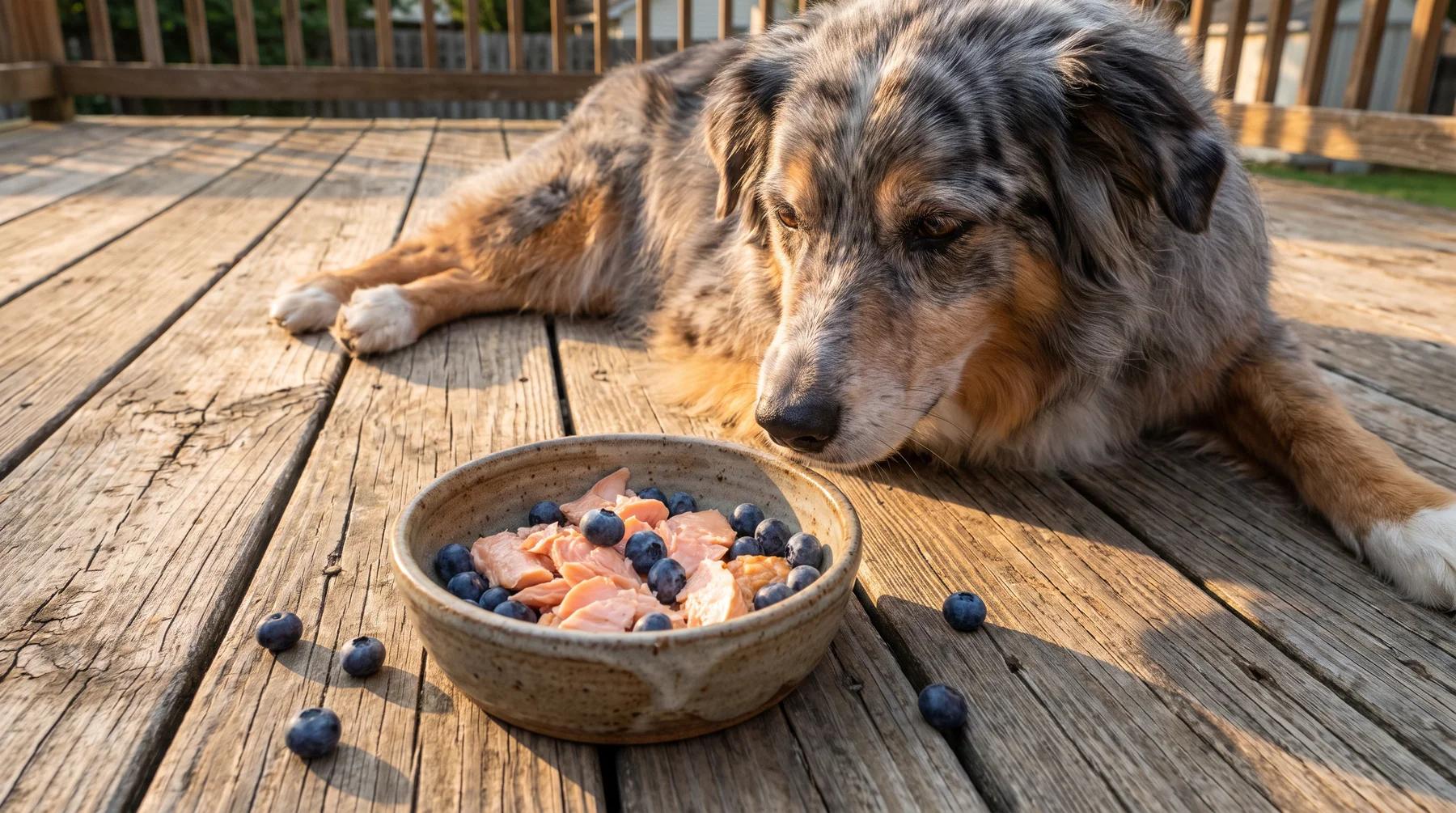
Fish and berries are two of the easiest ways to add omega-3s and antioxidants to an older dog's meals.
Petful is reader supported. As an affiliate of platforms like Amazon and Chewy, we may earn a commission when you buy through links on this page. There is no extra cost to you.
Sponsored by JustFoodForDogs. This article draws on published veterinary and nutrition sources. Petful may earn a commission through links in this article.
Anti-inflammatory foods for dogs are foods whose nutrients can help support a dog's body when inflammation lingers, most often in stiff, arthritic joints and itchy, irritated skin. The best-studied are marine omega-3 fatty acids (EPA and DHA) from fish, antioxidant-rich produce such as blueberries and leafy greens, and enough quality protein to keep muscle on, all fed at a calorie level that keeps the dog lean.
That last point matters more than any single ingredient. Extra body fat is itself a source of inflammatory signals, so a well-portioned complete diet usually does more than a sprinkle of a trendy spice. Whole-food recipes that list their omega-3 levels on the label, such as JustFoodForDogs Sensitive Skin, make it easier to see what your dog is actually getting. This guide explains which nutrients matter for joints and skin, which foods and habits work against them, how to choose or cook a diet safely, and when inflammation needs a veterinarian rather than a menu change.

Sign up for expert-backed reviews and safety alerts all in one place.
What are anti-inflammatory foods for dogs?
- 1The nutrients with the most clinical evidence in dogs are omega-3 fatty acids, specifically EPA and DHA from marine sources such as fish.
- 2Keeping a lean body weight is the strongest dietary step for joint inflammation, and it costs nothing extra.
- 3Antioxidant produce like blueberries, kale, and cooked carrots adds support but cannot replace a complete and balanced diet.
- 4Limping, swelling, or itching that does not settle needs a veterinary exam, and human pain relievers must never be given to a dog.
Inflammation is the body's normal repair response. It becomes a problem when it does not switch off, as in osteoarthritis or allergic skin disease. No food switches it off on command, but certain nutrients influence the chemical messengers the body makes, and a diet built around them can help support comfortable joints and healthy skin over time.
If you want the short version, the top 3 anti-inflammatory foods for most dogs are:
- Omega-3 rich fish, cooked and boneless, such as salmon, sardines, and whitefish, which supply EPA and DHA, the omega-3 forms dogs use directly.
- Antioxidant produce such as blueberries, kale, spinach, and cooked carrots, which add vitamins C and E, carotenoids, and polyphenols.
- Lean, high-quality protein fed in the right amount, because it preserves the muscle that stabilizes sore joints while the total calories keep the dog at a lean body weight.
Natural anti-inflammatory foods work as part of a complete diet, not as add-ons to an unbalanced bowl. The most useful ones fit into a recipe meeting AAFCO nutrient profiles, so the dog gets its omega-3s and antioxidants without losing calcium, zinc, or vitamin balance elsewhere. A fresh, whole-food recipe or a balanced home-cooked plan can both get there; what matters is the nutrient levels and the portion.
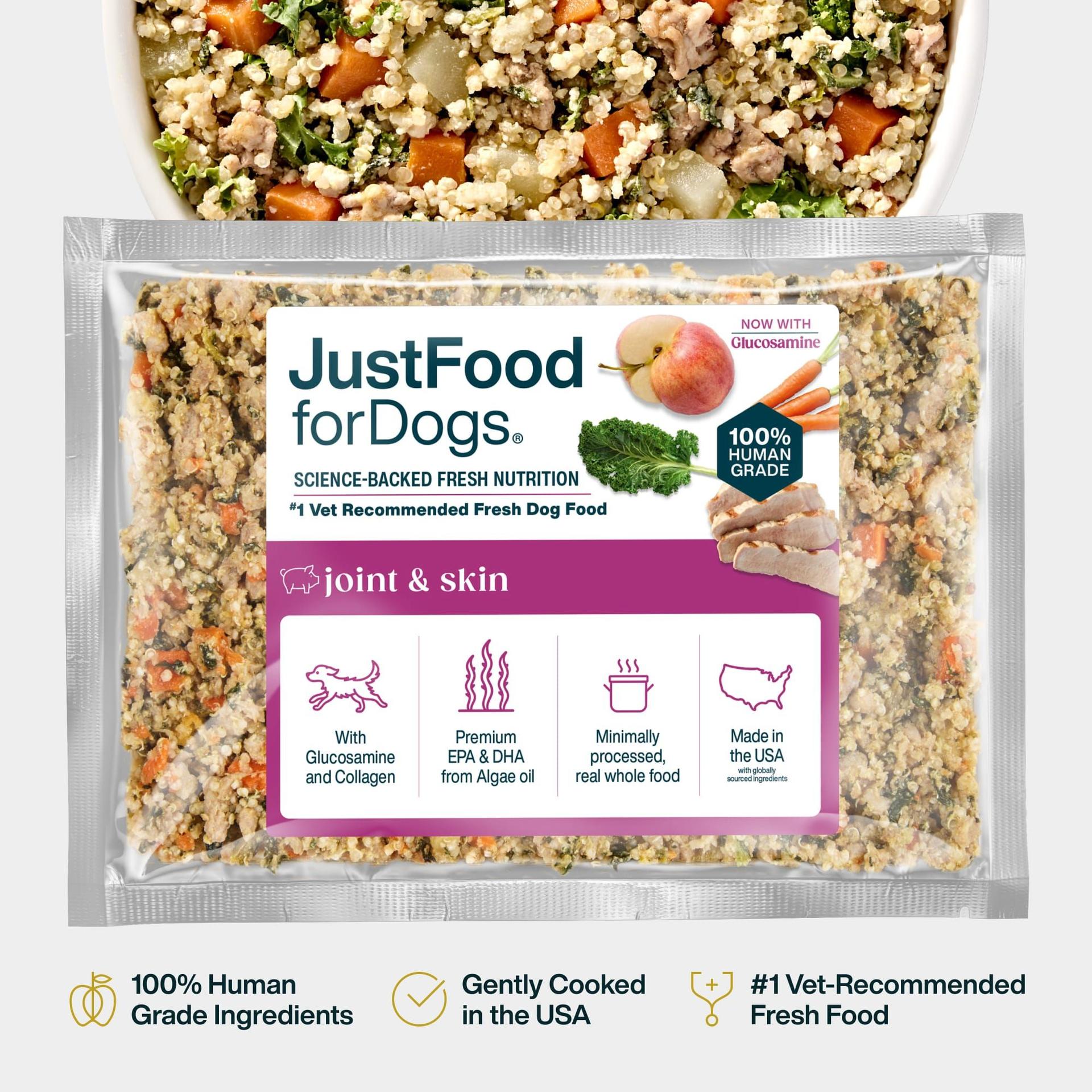
A fresh, lower-fat pork and quinoa recipe that lists EPA and DHA plus glucosamine on its label, formulated to help support joint health and skin.
Petful may earn a commission when you click through to JustFoodForDogs, at no extra cost to you.
What causes inflammation in dogs?
Short bursts of inflammation after a sprain or a cut are healthy. The kind owners worry about is chronic, low-grade inflammation that keeps going for months. In dogs, the most common drivers are:
- Osteoarthritis, where worn cartilage and an unstable joint keep the joint lining irritated. Hip and elbow dysplasia, old ligament injuries, and simple aging all feed into it.
- Allergic skin disease, from environmental allergens or a food allergy, which shows up as itching, licking, red skin, and ear trouble.
- Excess body fat, which releases inflammatory signaling molecules and adds load to every joint.
- Dental disease and chronic gut problems, which keep the immune system busy in the background.
Dog pain and inflammation tend to feed each other. A sore dog moves less, gains weight, loses muscle, and puts more strain on the same joint. That loop is why nutrition, weight, and gentle exercise are usually discussed together.
Are there foods that cause inflammation in dogs? Not in the sense that one ingredient sets a healthy dog's joints on fire. The problems are patterns: too many calories, a diet heavy in omega-6 fats from cheap vegetable oils and fatty scraps with little omega-3 to balance them, or a protein the individual dog is allergic to. For an itchy dog with a suspected food allergy, the trigger is specific to that dog, and only a veterinarian-guided diet trial can identify it.
Skin inflammation is where diet choices are most personal. The skin barrier depends on dietary fats, and a good marine omega-3 level helps support it alongside whatever allergy plan your dog already has. For many itchy dogs, a change of recipe sits alongside other allergy care, and a whitefish-based recipe with a stated omega-3 level is one sensible option.
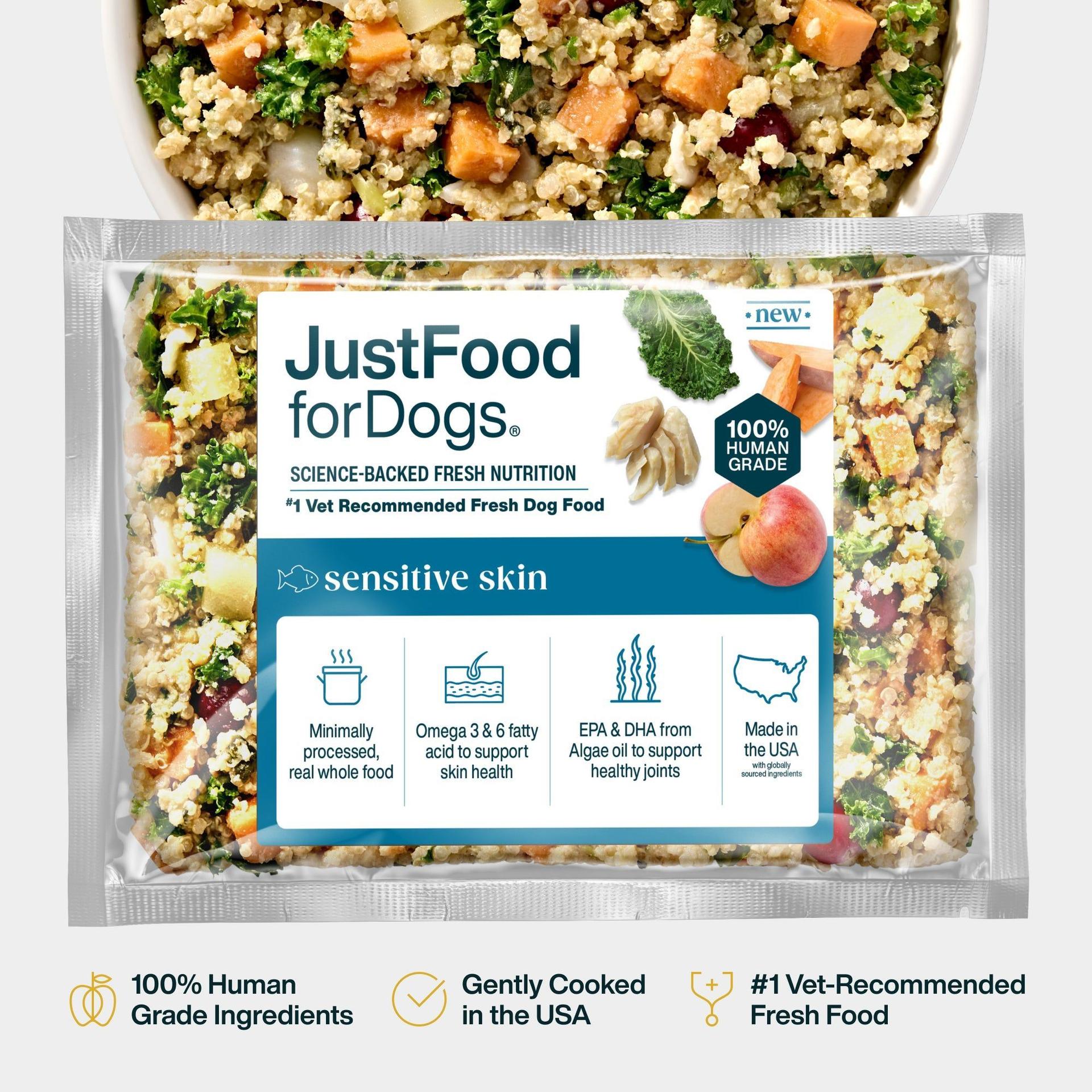
Whitefish with sweet potato, quinoa, and kale, with EPA and DHA from omega marine microalgae oil listed on its label: a fresh option for dogs with delicate skin and coats.
Petful may earn a commission when you click through to JustFoodForDogs, at no extra cost to you.
Nutrients that support joints and skin: omega-3s, antioxidants, and protein
The nutrient with the strongest evidence in dogs is the marine omega-3 pair, EPA and DHA, and the most practical food source is fish. Plant omega-3 from flaxseed (ALA) is useful but dogs convert little of it into EPA and DHA, so fish and algae oils carry the weight. The map below pairs each goal with the nutrient, the dog-safe foods that supply it, and the number to look for on a label.
| Goal | Nutrient to look for | Dog-safe food sources | Label number to check |
|---|---|---|---|
| Stiff, arthritic joints | EPA and DHA (marine omega-3s), plus enough protein for muscle | Salmon, sardines, whitefish, lean turkey or pork | EPA and DHA minimum on the guaranteed analysis; crude protein minimum |
| Itchy skin and dull coat | EPA and DHA, vitamin E, zinc | Whitefish, sardines, eggs, leafy greens | EPA and DHA minimum on the guaranteed analysis; an AAFCO statement for the life stage |
| Extra body weight | Calorie density and fiber for fullness | Lean protein, green beans, pumpkin, squash | Calories per cup, ounce, or kilogram; crude fiber maximum |
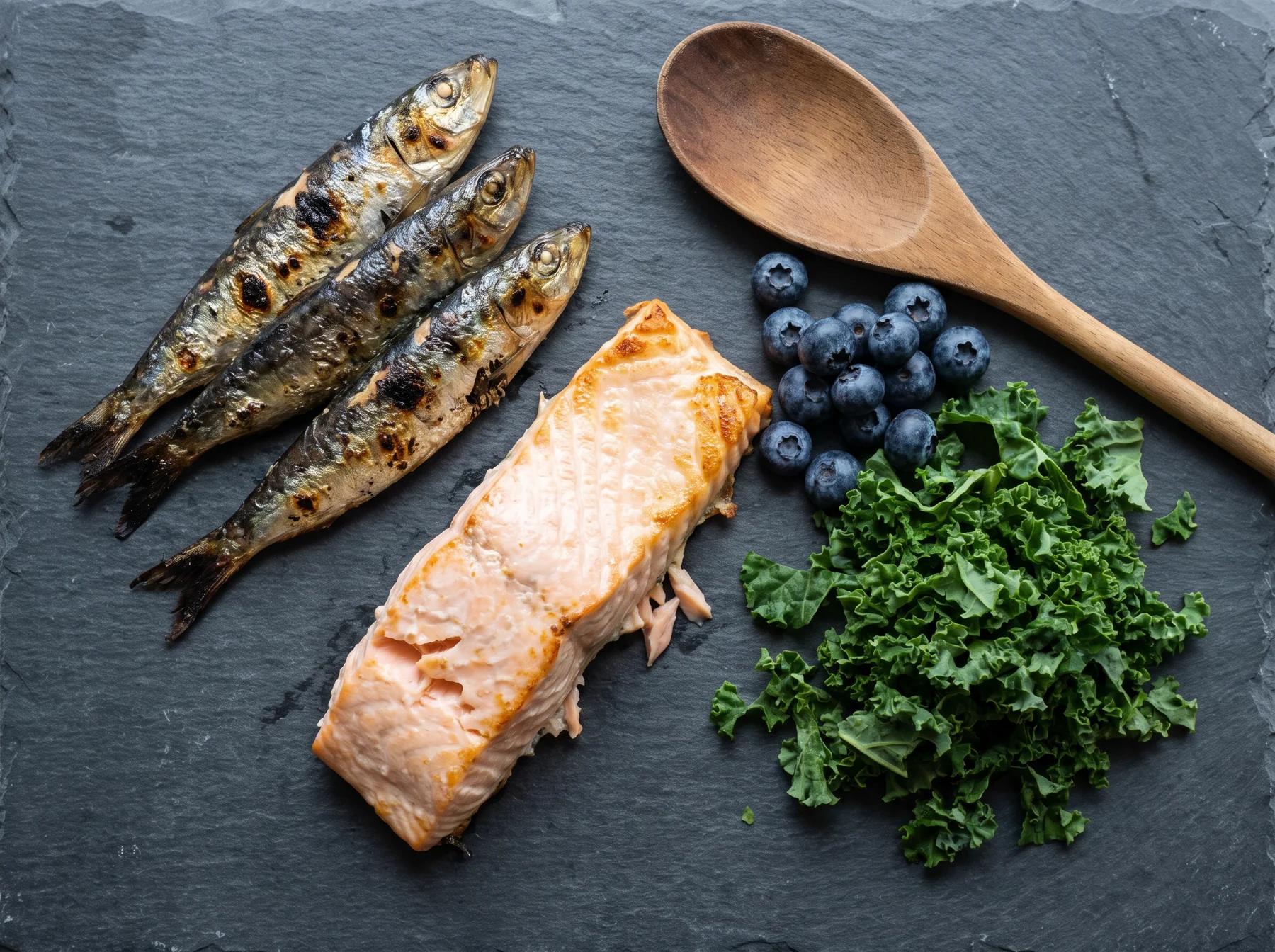
Omega-3 fatty acids EPA and DHA for joints and skin
EPA and DHA become part of cell membranes and shift the body toward less aggressive inflammatory messengers. In arthritic dogs, controlled trials of foods heavily enriched with fish-oil omega-3s have shown three kinds of benefit:
- Weight bearing: in a force-plate trial, 82 percent of dogs on the enriched food bore more weight on their worst leg after 90 days, against 38 percent on a typical food.
- Mobility at home: in a multicenter trial published in JAVMA, owners reported that dogs rose and played more easily within 6 weeks and walked better at 12 and 24 weeks.
- Less pain medication: in a third trial, dogs already on carprofen had their dose lowered faster when fed the enriched food.
For skin, omega-3s help support the skin barrier and a healthy coat, which is why they appear in many veterinary skin plans.
As a label example, JustFoodForDogs Joint & Skin Support lists an EPA and DHA minimum of 0.06% alongside glucosamine at 500 mg/kg, and JustFoodForDogs Venison & Squash lists DHA and EPA minimums of 0.07% each. These are label minimums, not doses or typical levels, and the trial foods above were enriched far beyond everyday recipes, so a label minimum is not the same thing as a study dose.
Antioxidants from dog-safe produce
Inflamed tissue produces oxidative stress, and antioxidant nutrients such as vitamin E and the polyphenols in berries help support the body's own defenses. Good vegetables for dogs, served plain and cooked or finely chopped, include:
- Kale and spinach, for vitamin E, vitamin C, and carotenoids.
- Broccoli and green beans, as low-calorie fillers with antioxidants.
- Cooked carrots, sweet potato, and butternut squash, for beta-carotene.
Blueberries and cranberries add color and polyphenols in small amounts; Petful's guide to blueberries for dogs explains safe serving sizes.
Protein that protects joints
Protein for a dog with inflammation is less about a magic meat and more about quality and amount. Lean fish, turkey, venison, and pork supply amino acids that maintain the thigh and shoulder muscles holding an arthritic joint steady. For an itchy dog, the best protein may simply be one it has not reacted to before, chosen with your veterinarian.
How to read EPA and DHA on the guaranteed analysis
A list of foods helps, but only when you can tie it to label numbers you can check, such as an omega-3 figure. Most labels list crude protein, fat, fiber, and moisture. Recipes that add marine omega-3s often also print an EPA and DHA minimum on the guaranteed analysis, sometimes as one combined figure. That number is a floor, not the typical level, so compare recipes on it rather than on front-of-pack claims. If a food that promises joint or skin support lists no omega-3 figure at all, ask the company for it or ask your veterinarian whether a separate fish oil product makes sense.
Anti-inflammatory nutrition for dogs with arthritis
What not to feed a dog with arthritis? Start with excess calories. Any food that keeps an arthritic dog heavy works against the joint, so fatty table scraps, rich chews, and extra snacks added on top of full meals are the first things to cut. After that, keep out the foods that are unsafe for any dog:
- Grapes and raisins, which can cause kidney failure.
- Onions, garlic, leeks, and chives, which damage red blood cells.
- Anything sweetened with xylitol, including some peanut butters.
Keeping a dog at a healthy weight is the most powerful dietary step for sore joints, and the best-documented dietary lever for joint inflammation in dogs. In a study of dogs with hip osteoarthritis, losing about 11 to 18 percent of body weight clearly improved lameness, and the lifelong Labrador feeding study found that dogs kept lean developed hip osteoarthritis later and less often than their heavier littermates. Ask your veterinarian for a body condition score at each visit; on the common nine-point scale, a 4 or 5 is the lean target, where you can feel the ribs easily and see a waist.

For a dog with arthritis, the diet then layers the nutrients in on top of the right calories: marine omega-3s at a meaningful level, enough protein to hold muscle, and antioxidant produce. Some fresh recipes add joint-friendly ingredients too. JustFoodForDogs Joint & Skin Support is made with pork stock that JFFD says contains a natural derivative of type II collagen, and it lists glucosamine on the label; JFFD describes the recipe as formulated to help support joint health, not as a medicine.
Arthritic dogs also benefit from non-food basics:
- Short, frequent walks on soft ground instead of long weekend outings.
- Ramps or steps for the car and the sofa.
- Non-slip rugs on smooth floors.
- A warm, padded bed away from drafts.
If your dog's joint problem started young, read about hip dysplasia in dogs or Vetstreet's guide to early signs and care options for hip dysplasia.
Home cooking can also work well for a sore dog when a veterinary nutritionist writes it, because the recipe can be built around lean protein, fish, and vegetables at a measured calorie level. The homemade section below explains why the balancing step cannot be skipped.
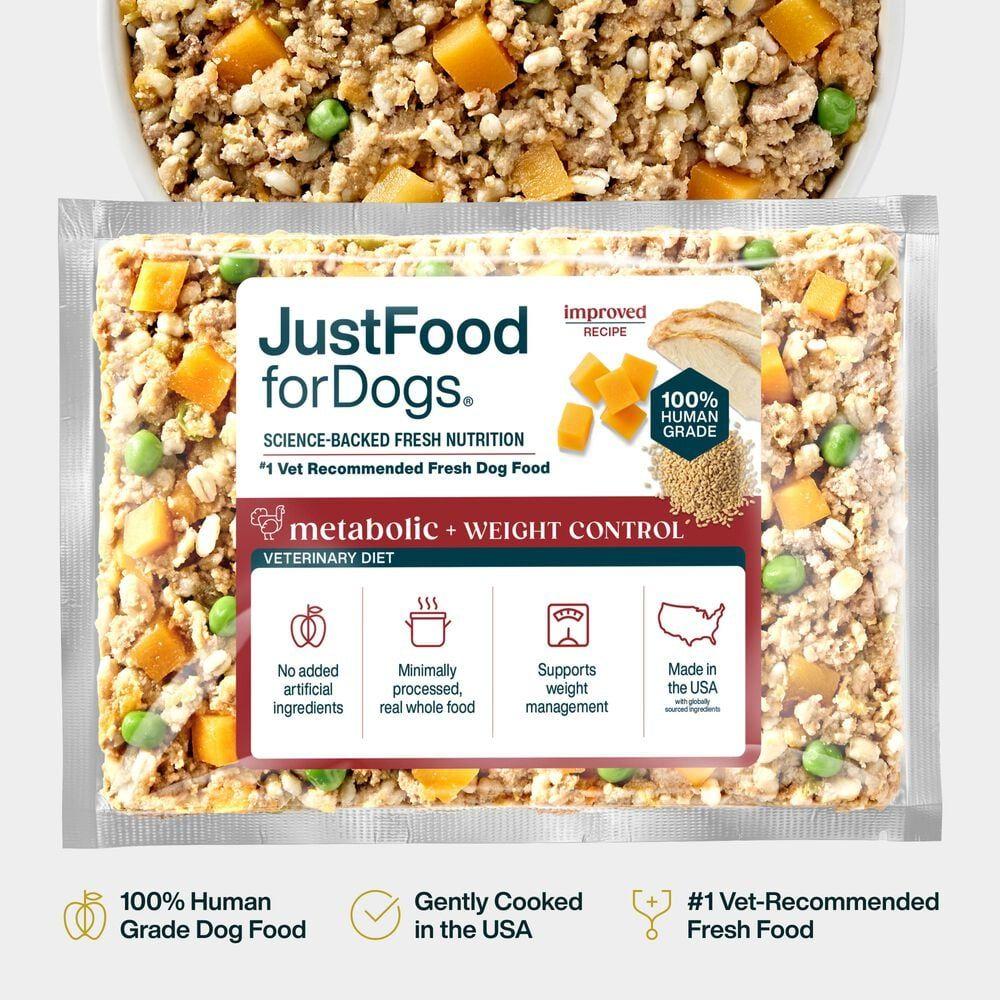
A vet support diet with a balanced fiber profile for dogs that need help reaching a healthy weight, as determined by a veterinarian. JFFD asks owners to check with their vet before ordering.
Petful may earn a commission when you click through to JustFoodForDogs, at no extra cost to you.
Foods and habits that can make inflammation worse
Foods and habits that worsen inflammation are mostly about excess and imbalance:
- Overfeeding of any food, including healthy ones, because body fat adds inflammatory load and joint strain.
- Fatty table scraps such as bacon, sausage, and meat trimmings, which add calories and omega-6 fat and can trigger pancreatitis.
- An omega-6 heavy diet with little omega-3, such as a food built on corn oil or soybean oil with no fish source.
- Too many snacks, which quietly push daily calories past what the dog burns.
- Inactivity, which weakens the muscles that protect joints.
Is rice inflammatory for dogs? No. Plain cooked white or brown rice is a digestible carbohydrate that many complete dog diets use, and there is no good evidence that rice drives joint or skin inflammation in dogs. The issue is quantity: a bowl padded with extra rice adds calories, and calories that become body fat are what matter for an arthritic dog. A dog with a confirmed allergy to a specific grain is the exception, and that is identified with your veterinarian.
The same logic applies to grains in general and to potatoes. Starches are not inflammatory in themselves; they become a problem when they replace protein or push the total calorie count too high.
Choosing an anti-inflammatory diet for your dog
What foods can I feed my dog to help with inflammation? A complete and balanced diet that supplies marine omega-3s at a stated level, includes antioxidant vegetables, offers good-quality protein, and is fed at a portion that keeps your dog lean. Toppers of plain cooked fish, blueberries, or green vegetables can be added, as long as they stay small, around 10 percent of daily calories.
The practical question is which recipe gives a dog with chronic inflammation the right nutrients without guesswork. Fresh whole-food recipes that print their omega-3 levels make that comparison easier.
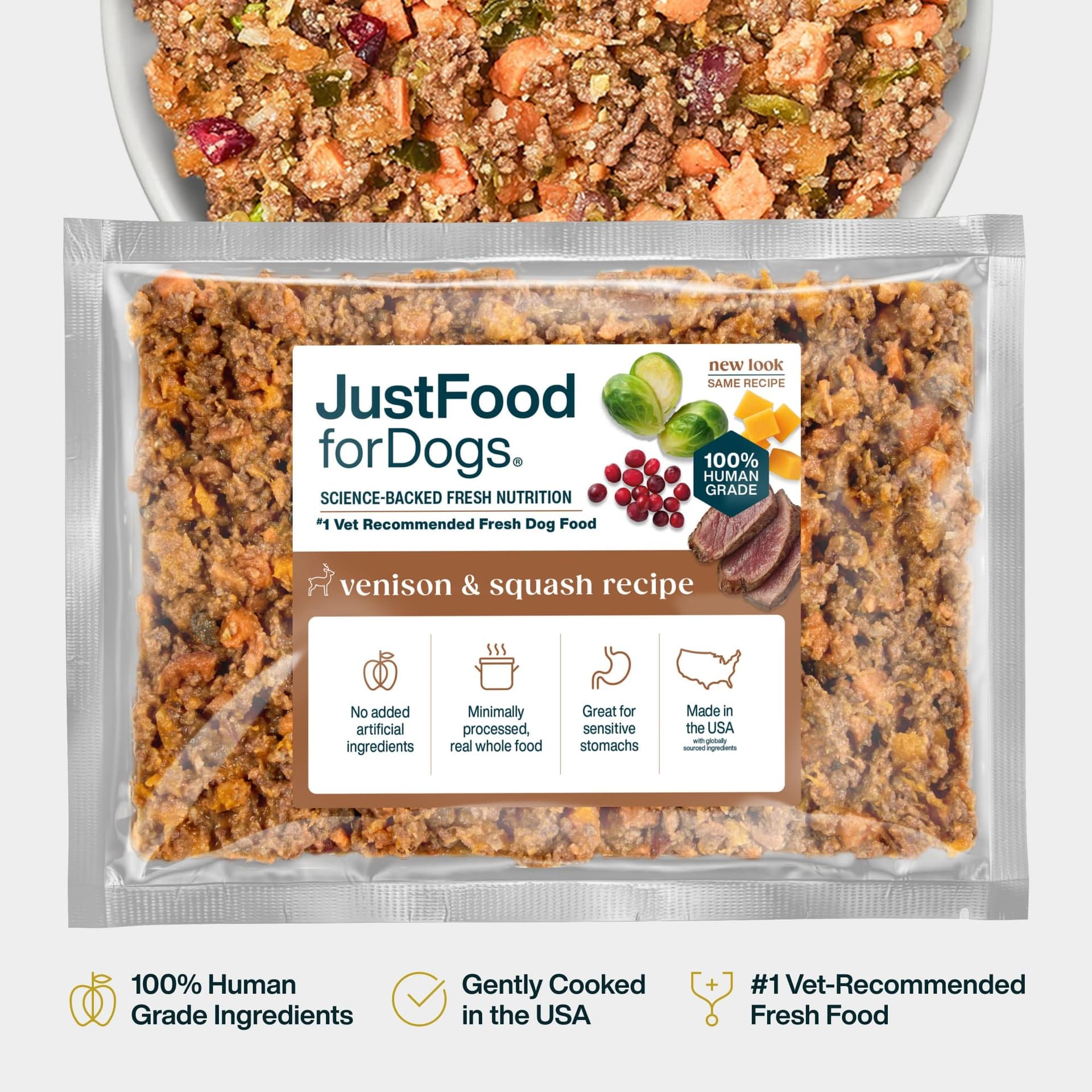
Venison with butternut squash, sweet potato, and Brussels sprouts for adult dogs, with DHA and EPA listed on its label and healthy skin and coat named among its uses.
Petful may earn a commission when you click through to JustFoodForDogs, at no extra cost to you.
Use a short checklist when comparing foods:
- An AAFCO nutritional adequacy statement for your dog's life stage.
- An EPA and DHA minimum, or a named marine oil, on the label.
- Whole-food protein and vegetables you can recognize in the ingredient list.
- A calorie figure, so you can portion to your dog's ideal weight.
- A fat level that suits your dog, especially if it has a sensitive stomach.
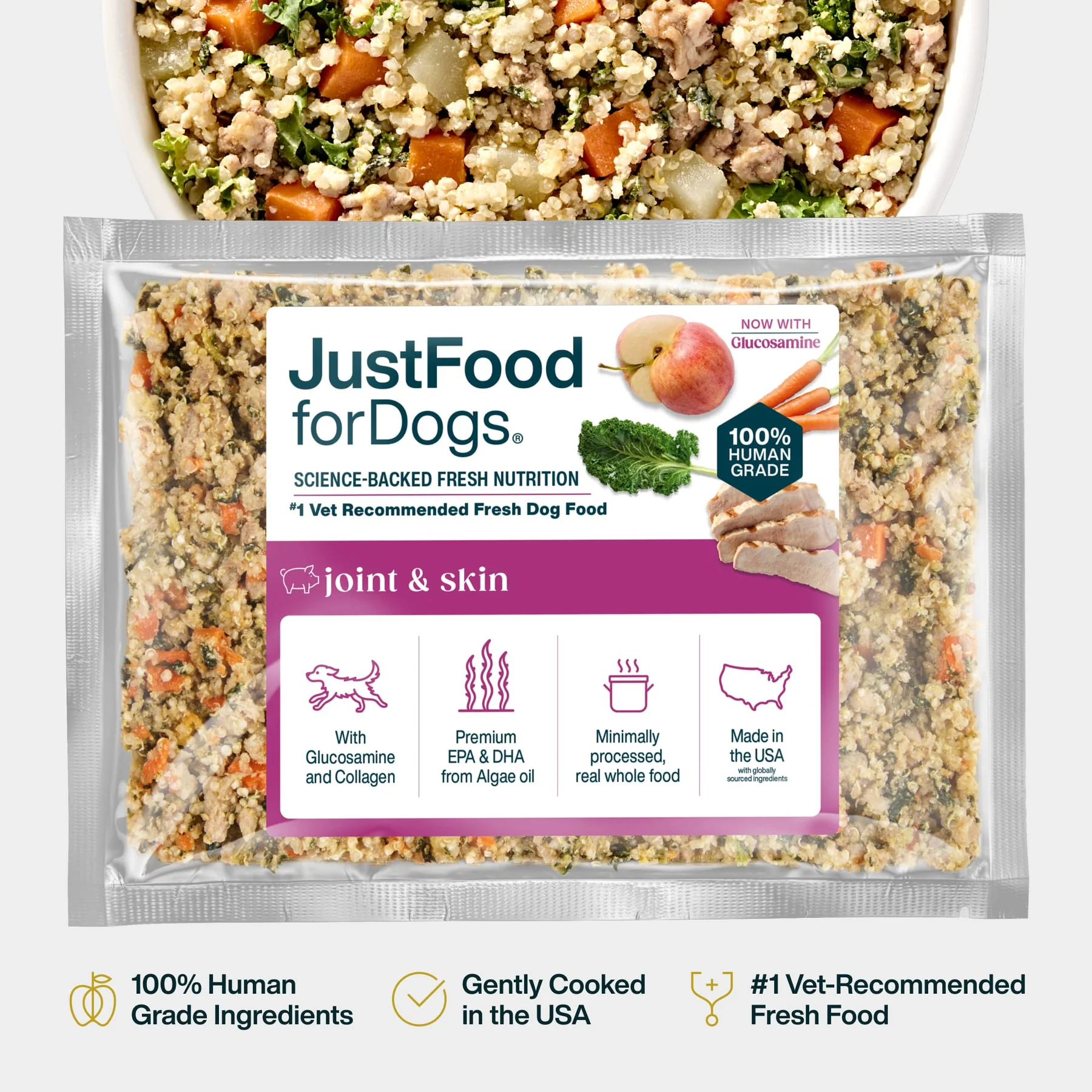
JustFoodForDogs Joint & Skin Support fits that checklist as a fresh, whole-food option. It is built on ground pork and quinoa with vegetables and fruit, plus flaxseed and omega marine microalgae oil for omega-3s, and JFFD says its lower fat level suits adult dogs with sensitive stomachs. Its label states that it "is formulated to meet the nutritional levels established by the AAFCO Dog food Nutrient Profiles for maintenance," so it is an adult recipe, not a puppy food.
If weight is the main issue, a veterinarian may recommend JustFoodForDogs Metabolic + Weight Control, a vet support diet with a balanced fiber profile designed for healthy weight management; JFFD asks owners to review it with their vet first. Petful's guide on helping an overweight dog lose weight explains how to set a safe pace for weight loss.
Some owners assume a species-appropriate diet has to be raw. Dogs thrive on cooked, balanced diets, and gently cooked fresh food avoids the bacterial risks of raw feeding that the FDA and veterinary groups warn about. Vetstreet's article on food for joint health covers more of the joint-focused feeding questions owners raise.
Homemade anti-inflammatory dog food: what to know before you cook
Homemade anti-inflammatory dog food appeals because you choose every ingredient. The catch is balance. A study of 200 published home-cooked recipes for dogs found that most fail to meet basic nutrient requirements, often for nutrients such as calcium, zinc, vitamin D, and choline, which are hard to get right from meat and vegetables alone.
What are some ingredients in homemade anti-inflammatory dog food? A typical vet-written recipe includes:
- Lean cooked protein such as turkey, whitefish, or salmon.
- A cooked carbohydrate like sweet potato, quinoa, or rice.
- Vegetables such as kale, green beans, and carrots.
- A fish or algae oil for EPA and DHA.
- A vitamin and mineral supplement made for that exact recipe, which is the part people most often leave out.
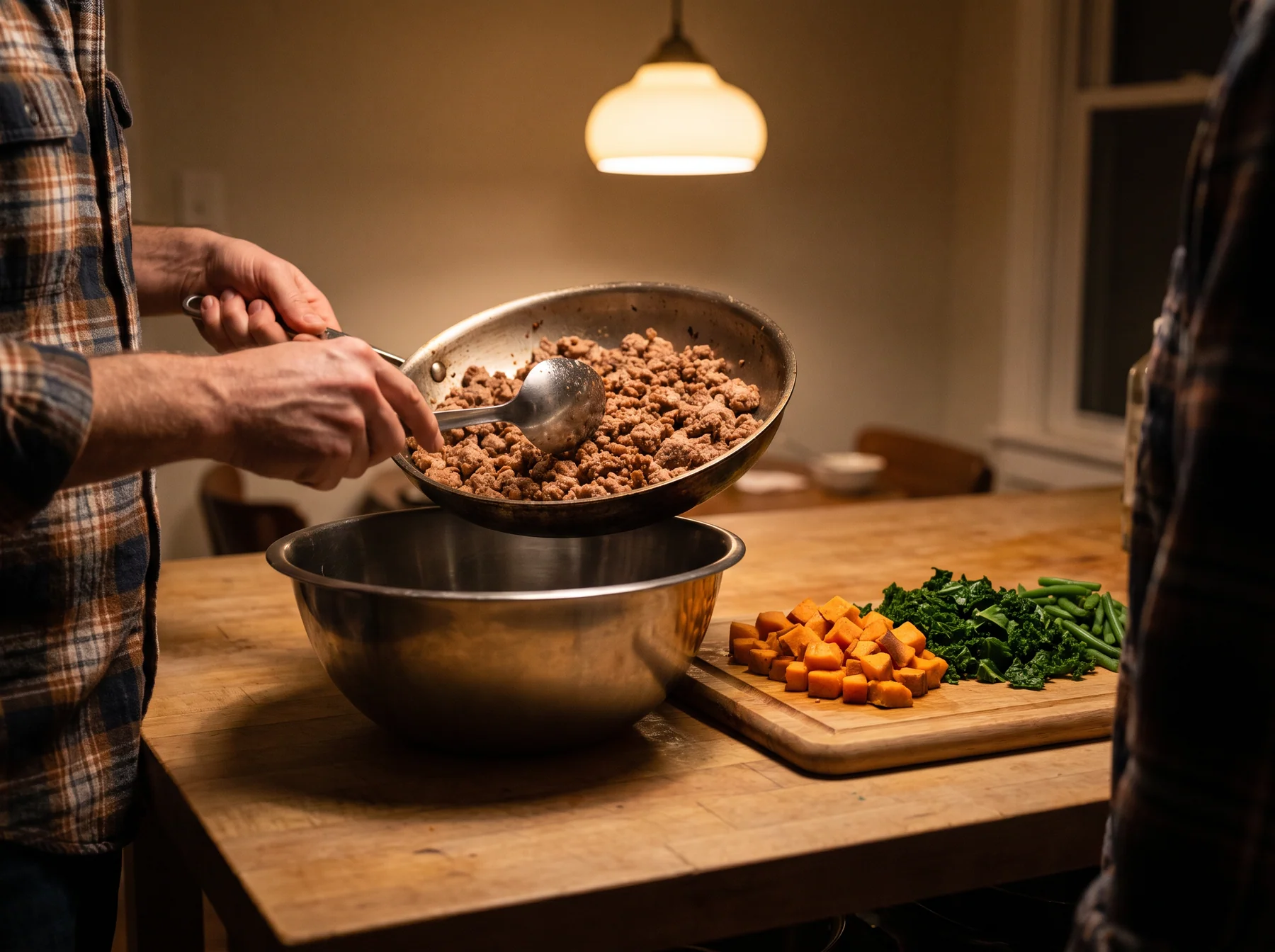
- Any homemade diet fed as your dog's main meals needs a complete and balanced recipe written by a board-certified veterinary nutritionist, including the exact supplement it calls for.
Recipes found online rarely say who formulated them, and a "vet approved" label on a blog is not a guarantee. The WSAVA Global Nutrition Guidelines suggest asking who formulated a diet and how it was tested; the same questions apply to any homemade diet. If you want the control of home cooking without the formulation risk, ready-made fresh recipes like JustFoodForDogs Sensitive Skin, built on whitefish, sweet potato, quinoa, and kale, are an alternative to recipes you have to balance yourself.
Natural anti-inflammatories and supplements for dogs
What are natural anti-inflammatories for dogs? The honest answer separates options with clinical evidence in dogs from options that are popular but thinly studied.
Strong evidence in dogs:
- Marine omega-3s (fish or algae oil). Several controlled trials in arthritic dogs show improved weight bearing and mobility. This is the best-supported natural option for dogs.
- Weight loss. In overweight dogs with osteoarthritis, weight loss improves mobility and lameness, and it reduces the strain on every joint.
Some evidence, mixed results:
- Green-lipped mussel shows modest benefits in a few small canine trials.
- Glucosamine and chondroitin are widely used joint supplements, but studies in dogs give inconsistent results.
- Undenatured type II collagen has small positive studies, often industry funded.
Limited evidence in dogs:
- Turmeric (curcumin). It is the most popular herbal option, but curcumin is poorly absorbed and canine trials are few and small. Turmeric paste for inflammation in dogs, sometimes called golden paste, is a home remedy with little dog-specific data, and turmeric can interact with blood thinners and some other drugs.
- Boswellia, ginger, and other herbs. Promising in lab work, with very little clinical evidence in dogs.
- MSM. MSM is a common ingredient in joint chews, but published canine evidence is sparse.
At home, the proven steps come first: a lean body, regular gentle exercise and omega-3s at a meaningful level. A complete recipe that already lists omega-3s and glucosamine, such as JustFoodForDogs Joint & Skin Support, means fewer separate products to add. Any product sold as a natural alternative to medicine still deserves a conversation with your veterinarian, because supplements are lightly regulated, doses vary, and some interact with prescription pain relief.
A supplement can be a reasonable addition when your veterinarian helps choose the product and dose. Any home remedy deserves the same test: useful if safe and proven, a distraction if it delays a diagnosis.
Anti-inflammatory medication vs food: when to call your vet
Food and supplements support the body over weeks. Medicine works faster and is the right tool when a dog is in pain. If your dog is limping, struggling to rise, has a hot or swollen joint, or is scratching itself raw, the first step is a veterinary exam, not a new bowl. The right treatment depends on the cause, so the diagnosis comes first.
What is the safest anti-inflammatory for a dog? One prescribed by a veterinarian for that dog after an exam and, for long-term use, bloodwork. Dog-specific nonsteroidal anti-inflammatory drugs (NSAIDs) such as carprofen, meloxicam, and grapiprant are the usual first choice for osteoarthritis, and veterinarians also use newer options such as monthly anti-nerve growth factor injections for arthritis pain. Petful's guide to arthritis medicine for dogs compares these options.
- Ibuprofen, naproxen, aspirin, and other human pain relievers can cause stomach ulcers, kidney damage, and liver injury in dogs. If your dog has swallowed one, call your veterinarian or an animal poison control line right away.
Over-the-counter human pain relievers are not safe for dogs, and products sold online as non-prescription anti-inflammatories for dogs are usually supplements rather than true medicines. The ASPCA Animal Poison Control Center lists human pain medications among the most common pet poisonings.
Long-term pain control is possible with veterinary monitoring. Many arthritic dogs take a prescription NSAID or other pain medication for years, with checkups and blood tests. Diet and weight then work alongside medication, and some dogs end up needing a lower dose. Treating inflammation in dogs works best as a combined plan, and the best plan is the one your veterinarian builds, combining the right medication with a lean body and a nutrient-rich diet. That keeps food in its proper role as support, and the Merck Veterinary Manual section on bone, joint, and muscle disorders of dogs is a good reference if you want to read further about the conditions behind it.
Questions readers ask
There is no single winner, but leafy greens such as kale and spinach, green beans, broccoli, and cooked carrots or sweet potato are all good choices when served as plain cooked vegetables without butter, salt, or seasoning. Keep onions and garlic out of the bowl entirely, because they damage a dog's red blood cells, and keep added vegetables to a small share of daily calories.
Extra body weight is the biggest factor, followed by high-impact exercise such as ball chasing and jumping, slippery floors, long gaps between gentle walks, and cold, damp sleeping spots. Skipping prescribed pain medication can also let a dog lose muscle because it moves less. Talk with your veterinarian about a weight target and an exercise plan.
For dogs, marine omega-3 fatty acids, EPA and DHA from fish or algae oil, are the best-studied option, with controlled trials showing better mobility in dogs with osteoarthritis. Weight loss in an overweight dog is equally powerful. Ask your veterinarian about a dose, since the foods used in studies were enriched with far more fish oil than everyday recipes contain.
Turmeric has limited evidence in dogs. Its active compound, curcumin, is poorly absorbed, and the few canine studies are small. It is generally safe in small food amounts, but it can interact with some medications and may upset sensitive stomachs, so ask your veterinarian before giving it regularly.
No human medicine should be given without your veterinarian's direction. Ibuprofen and naproxen are toxic to dogs even at modest doses and can cause ulcers and kidney failure, and aspirin is risky too. If your dog seems sore, call your veterinarian for a dog-safe prescription instead.
Expect several weeks. Omega-3 studies in arthritic dogs found the first changes at about 6 weeks, with further gains measured at 12 and 24 weeks, and weight loss takes months to reach its full effect. Make any switch with a gradual transition over about ten days, mixing the new food into the old, so the dog's stomach adjusts while you wait for results.
BVMS, MRCVS
Dr. Pippa Elliott, BVMS, MRCVS, is a veterinarian with nearly 30 years of experience in companion animal practice. Dr. Elliott earned her Bachelor of Veterinary Medicine and Surgery from the University of Glasgow. She was also designated a Member of the Royal College of Veterinary Surgeons. Married with 2 grown-up kids, Dr. Elliott has a naughty Puggle named Poggle, 3 cats and a bearded dragon.
Sign up for expert-backed reviews and safety alerts all in one place.


A Final Word (Disclaimer)
At Petful, our review integrity is paramount; we never exchange special treatment in our reviews for monetary or material rewards.
Nonetheless, when our readers click through to online merchants (including Chewy or Amazon), we receive a referral commission. This supports the running of our free blog, and we appreciate your backing.