Air-Dried Dog Food vs Kibble vs Fresh: What Is the Difference?
Air-dried food, kibble, and cooked fresh meals differ in moisture and feeding routine. Learn how to compare cooking, complete nutrition, calorie-based portions, and ongoing cost.
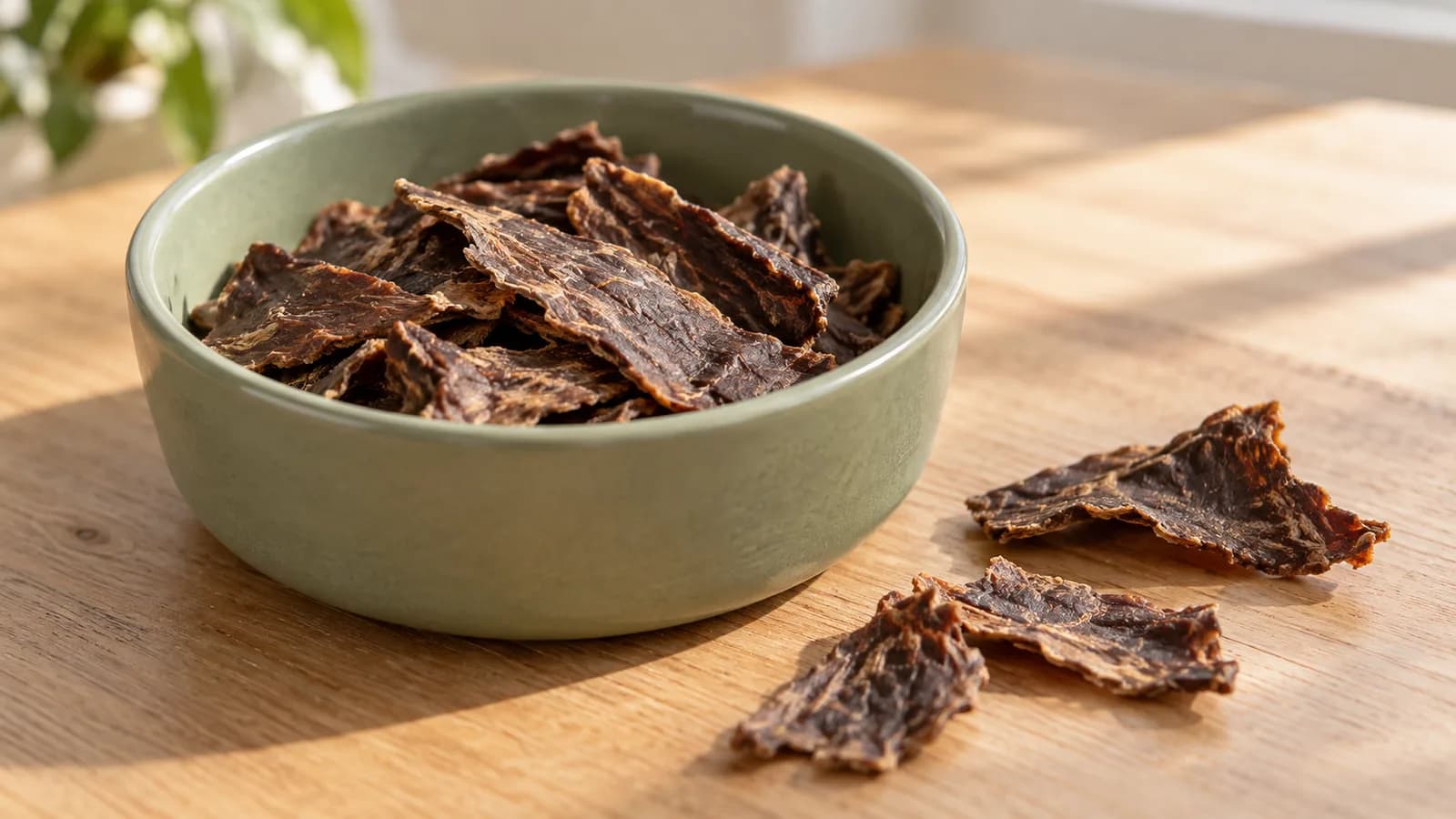
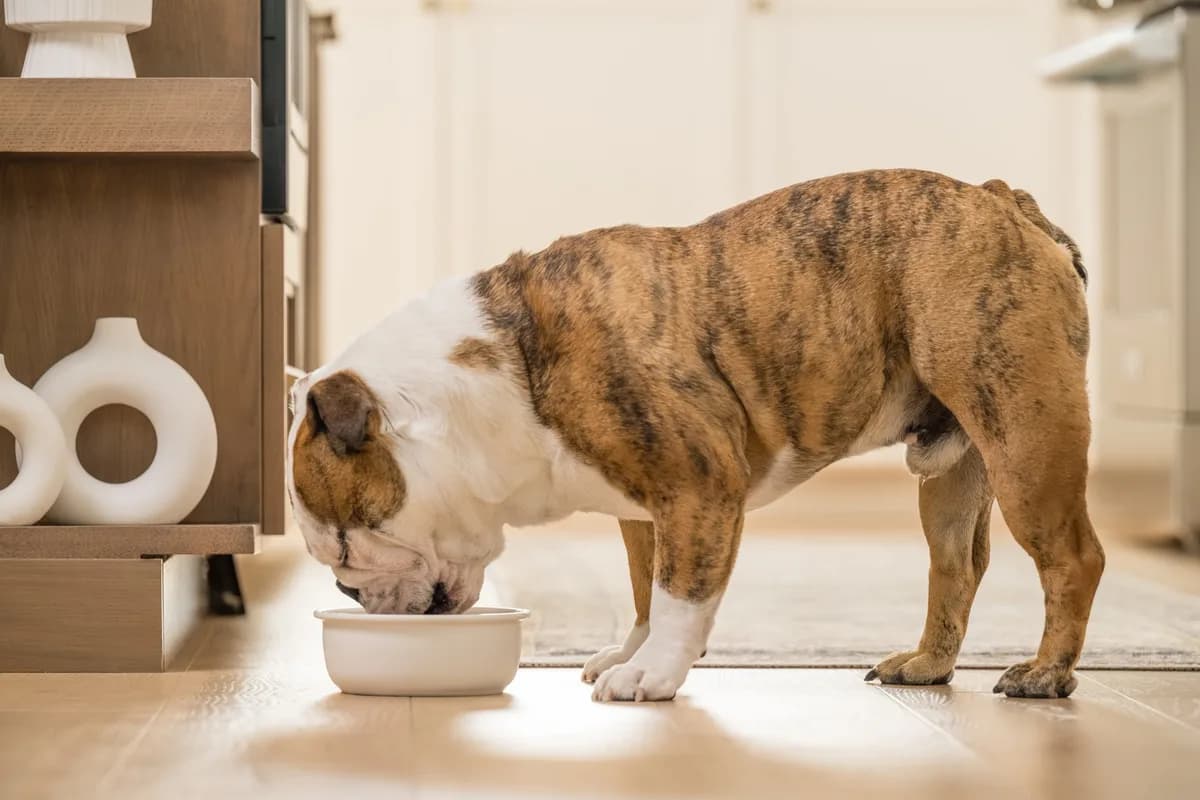
Illustrative scene; food portions shown are not feeding recommendations.
Petful is reader supported. As an affiliate of platforms like Amazon and Chewy, we may earn a commission when you buy through links on this page. There is no extra cost to you.
This article is sponsored by JustFoodForDogs. Petful maintains editorial control and may earn a commission from qualifying purchases, at no extra cost to you.
Air-dried dog food has moisture removed through a drying process, producing a concentrated food that is often convenient to store and serve. That makes it different from a moist cooked fresh meal, but the phrase “air-dried” does not tell you everything about cooking, safety, or nutrition.
To compare it with kibble and fresh food, read beyond the format name. Check whether there is a validated cooking step, whether the finished recipe is complete for your dog, and how much food supplies the planned daily calories. Those answers are more useful than deciding that one texture is automatically superior.

Sign up for expert-backed reviews and safety alerts all in one place.
What is air-dried dog food?
- 1Air-dried describes moisture removal, not a complete nutritional assessment.
- 2Confirm cooking and food-safety details for the exact product.
- 3Choose a complete and balanced recipe for the right life stage and measure a calorie-based portion.
Air-dried foods use moving air to reduce moisture. Manufacturers may use different temperatures, processing sequences, and safety controls. The result may be small dense pieces or a softer, leathery texture, depending on the recipe. You cannot identify the full process from the shape of a piece of food.
The category also includes products with different intended uses. A bag of dried meat treats and a complete air-dried daily diet can look similar while serving very different nutritional roles. Always check the label before using a dried product as the main meal.
Read three descriptions together
- Processing: What happens to the ingredients before and during drying?
- Adequacy: Is the food a complete diet, a complementary topper, or a treat?
- Handling: How should unopened, opened, and prepared food be stored?
An attractive ingredient list cannot replace these checks. Neither can words such as premium, natural, or gently prepared. Ask for specific information about the finished food when a product description leaves an important question unanswered.
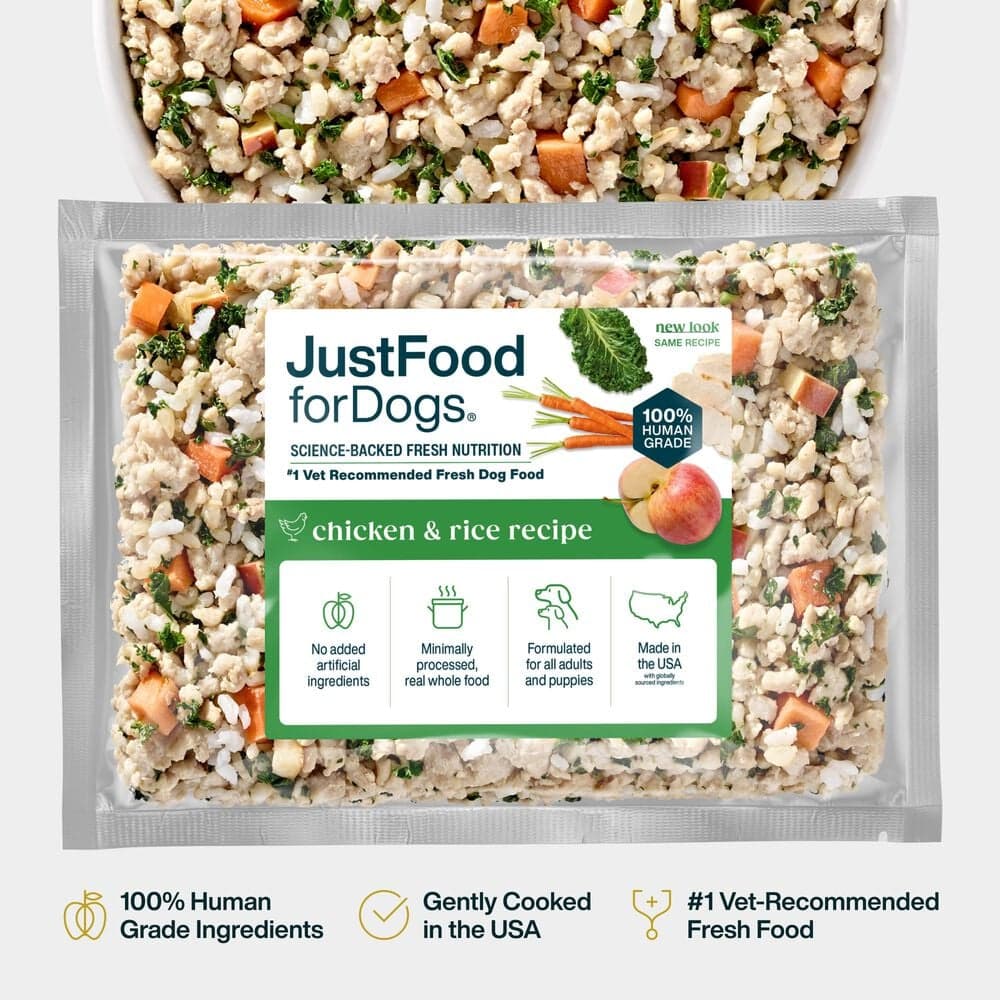
For owners whose main goal is a cooked meal with visible food texture, JustFoodForDogs Fresh Frozen meals offer a different approach. They retain moisture and use a freezer routine rather than removing water to create a dry product.
Is air-dried dog food better than kibble? An air-dried recipe may suit a dog and household, but air drying does not by itself demonstrate better nutrition than a complete kibble. Dry convenience is useful only after the exact food meets the dog’s requirements. Compare the label, cooking details, and calorie-based portion before choosing by processing terminology.
- #1 vet-recommended fresh food
- 10+ years of feeding trials & studies
- Recipes for all breeds, needs and life stages
Petful may earn a commission when you click through to JustFoodForDogs, at no extra cost to you.
Air-dried, kibble, and fresh: what actually changes
The biggest everyday differences are moisture, serving weight, preparation, and storage. Kibble usually comes as dry pieces formed during manufacturing. Air-dried food is also dry but may have a different texture and process. Cooked fresh meals retain water and tend to occupy more storage and bowl space for a given calorie allowance.
The nutrition comparison is separate. Any of these formats needs an appropriate complete-diet formulation if it is supplying the dog's main nutrition. A high-meat marketing claim or a fresh appearance does not show whether all essential nutrients are present in the necessary amounts.
| Feature | Air-dried | Kibble | Cooked fresh |
|---|---|---|---|
| Moisture | Reduced by drying | Low after manufacture | Retained in the meal |
| Texture | Often dense or leathery; varies by recipe | Usually crunchy pieces | Soft and moist |
| Cooking question | Confirm the exact process | Commonly cooked during manufacture | Cooked by definition |
| Storage | Follow dry-food package instructions | Follow dry-food package instructions | Usually chilled or frozen; shelf-stable options differ |
| Portions | Use recipe-specific calories and units | Use recipe-specific calories and units | Use recipe-specific calories and units |
| Nutrition | Verify adequacy and life stage | Verify adequacy and life stage | Verify adequacy and life stage |
Air-dried vs freeze-dried dog food
Air drying and freeze-drying remove moisture in different ways. Freeze-drying removes water from frozen material under reduced pressure, while air drying uses a flow of air. Their textures may differ, but neither category name should be used to infer whether a product began with raw meat or included cooking.
Both can be convenient to store in their dry state. Both still need their own portion calculations and handling directions. If water is added before feeding, follow the prepared-food instructions rather than assuming the unopened dry bag's shelf life applies to a wet meal.
What fresh changes in the bowl
A cooked fresh meal brings moisture with it. Some owners prefer its soft texture or find prepared packs simpler than assembling a home-cooked recipe. The tradeoff is managing cold storage for frozen or refrigerated products and keeping track of opened portions.
For example, JustFoodForDogs Chicken & Rice is a Fresh Frozen recipe you can compare with an air-dried diet. Use the current package's calorie and adequacy information, since a cup of moist food and a cup of dry pieces are not equivalent meals.
Is air-dried dog food raw or cooked?
Air-dried dog food can involve different processing systems, so ask the manufacturer rather than assuming. Drying may be combined with other steps, and different products make different raw or cooked claims. You need the details for the exact recipe you intend to feed.
The question “Is air-dried dog food safe?” also requires more than a process name. Ingredient controls, a validated cooking step where used, finished-product checks, packaging, and correct handling all contribute to food safety. A dry feel does not independently establish the absence of harmful organisms.
A practical manufacturer question
Ask: “Is this food raw or cooked, and what validated process controls pathogens in the finished product?” If the answer only repeats phrases such as gently dried or minimally processed, ask for clarification. A description of texture or a marketing philosophy does not answer the safety question.
The WSAVA manufacturer-selection questions include quality-control and finished-product testing considerations. They are useful for evaluating a dried food and a cooked fresh food on a comparable basis.
When a raw-food claim matters
If a product is raw, consider the handling implications even when it is shelf-stable in its unopened dry form. Cornell's raw-food advice explains why raw animal ingredients raise concerns for dogs and people in the household. Drying or freezing should not be assumed to substitute for cooking.
- Wash hands and food-contact surfaces as directed.
- Keep pet-food preparation separate from human food preparation where practical.
- Follow the product's bowl-cleaning and leftover-food guidance.
- Discuss raw-food exposure before choosing it for a household with vulnerable people.
Adding water at serving time does not resolve that distinction. Nor should an owner improvise a cooking process for a commercial raw product and assume the altered food retains its intended formulation. If you want cooked food, choosing a diet designed and formulated to be fed cooked is a clearer route.
- Chicken with rice and whole-food ingredients
- Fresh Frozen recipe
- View the recipe and feeding guide
Petful may earn a commission when you click through to JustFoodForDogs, at no extra cost to you.
How to compare nutrition and portions
First determine whether the product is a complete diet for the correct life stage. Then find its calorie density and use those numbers to set a calorie-based portion. Dry foods can concentrate a substantial amount of energy into a small weight, so an unfamiliar-looking serving may still provide the intended calories.
The FDA's complete-and-balanced guide explains the role of nutrient profiles and feeding trials. AAFCO is not a product-approval agency. Look for the actual nutritional adequacy statement instead of an “AAFCO approved” claim in promotional copy.
A portion calculation you can repeat
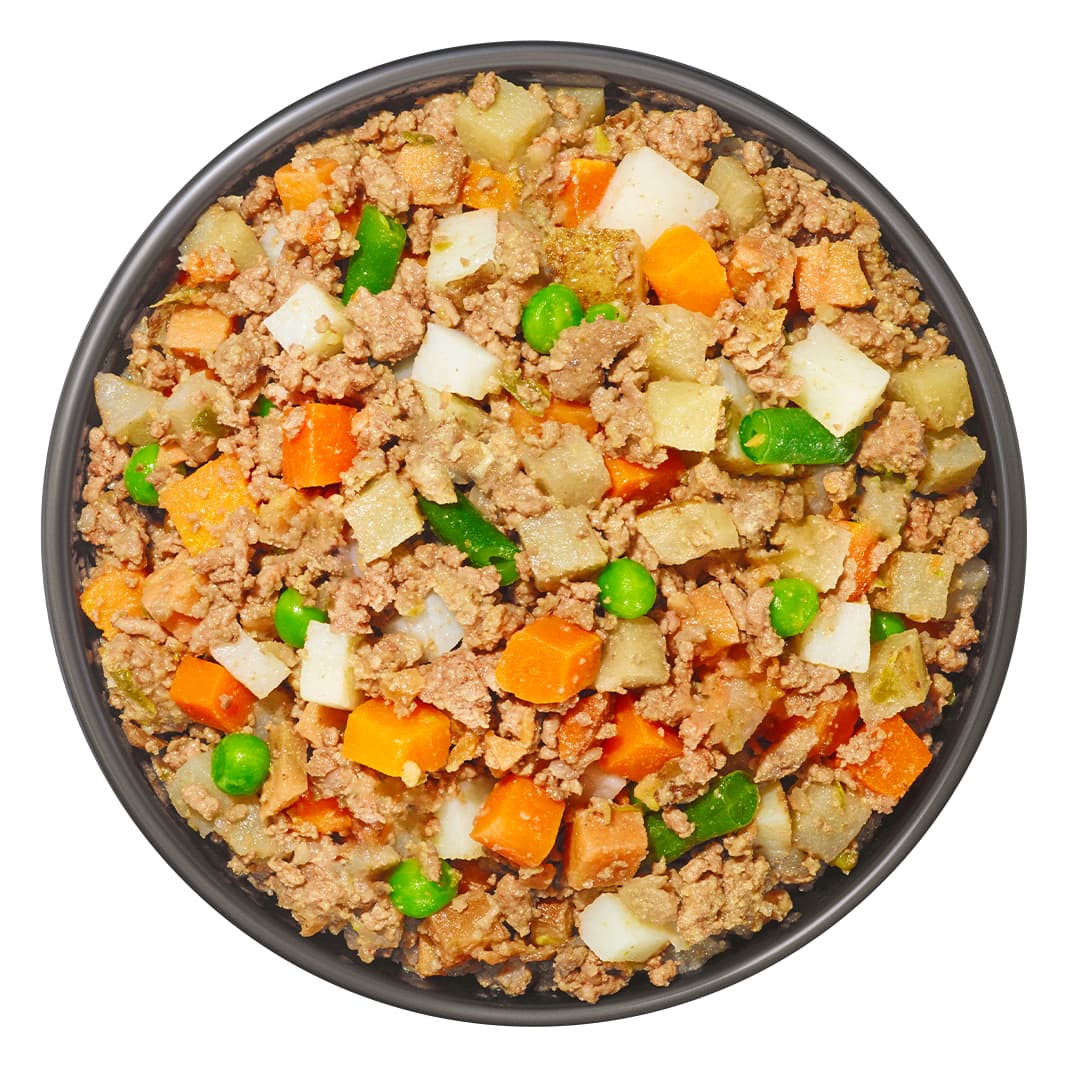
Suppose a hypothetical dry food provides 450 calories per 100 grams. That equals 4.5 calories per gram. A 225-calorie meal would require 50 grams. A second hypothetical moist food at 1.5 calories per gram would require 150 grams for the same 225 calories.
The food weights differ threefold, but the energy supplied is the same. These are illustrative values, not label figures for the foods photographed or for a particular JFFD recipe. Use your dog's actual calorie target and the actual recipe's units to calculate a serving.

How much air-dried dog food to feed
- Start with the manufacturer's feeding guide and your veterinarian's advice for the individual dog.
- Check whether the guide assumes full-diet feeding or a topper amount.
- Convert the planned calories into grams, ounces, or the manufacturer's stated serving unit.
- Measure consistently and account for treats and other foods.
- Monitor body condition and adjust the starting estimate when necessary.
For a puppy, the growth statement and expected adult size need attention before the serving calculation. For a dog with a medical condition, your veterinarian may need more detailed nutrient information than the package's guaranteed analysis provides. Do not select a diet solely because its dry-matter protein percentage looks high.

Protein percentages need context
A dry food's as-fed protein percentage and a moist food's as-fed percentage reflect different water contents. Comparing those numbers directly can make the moist recipe look artificially low. Request a typical nutrient analysis if you need a more precise comparison, particularly for a medical reason.
The same caution applies to interpreting fat. A food that suits one dog's energy needs may not suit another dog's prescribed nutritional plan. Choose the recipe first for adequacy and individual requirements, then decide whether its portion size and feeding routine are workable.
Keep mixing decisions measurable
If you use two complete foods, allocate one daily calorie allowance between them. A quarter of the bowl by volume is not necessarily a quarter of the calories. The same principle applies when you crumble air-dried food over fresh food: decide whether it is part of the complete-diet calorie share or a limited supplemental addition.
Avoid casual additions to a therapeutic diet without veterinary guidance. A small-looking amount of an energy-dense dried food can make a meaningful nutritional difference, and the purpose of the prescribed diet may depend on keeping that formulation consistent.
What grains do and do not tell you
Air-dried dog food with grains can be evaluated using the same finished-recipe checks as an air-dried food without grains. The presence of a grain does not tell you whether the diet has the right overall nutrient balance, and its absence does not establish superior quality. Look at the complete formulation and the individual dog's requirements rather than assigning a health score from one ingredient category.
- Home-cooked chicken recipe
- Shelf-stable pouches before opening
- Fresh-food convenience without freezer space
Petful may earn a commission when you click through to JustFoodForDogs, at no extra cost to you.
Likewise, a high percentage of meat on the front of a package is not a substitute for the adequacy statement. The body needs a balance of nutrients, including some supplied in small quantities. A food can use attractive ingredients yet still be intended only as a topper. Read the detailed label before turning a product description into a daily feeding plan.
A hypothetical portion calculation
Suppose a dog's main-food allowance is 600 calories per day. An example dry recipe supplying 120 calories per ounce would provide that energy in five ounces. A different example cooked meal supplying 40 calories per ounce would provide it in fifteen ounces. These are hypothetical numbers to demonstrate the calculation, not the calorie values or serving directions of a named product.
The difference in food weight does not mean the second dog is receiving three times the energy. It means the foods have different calorie densities. This is particularly useful when the portion of concentrated dried food looks unexpectedly small. Use the correct label and daily target instead of increasing the serving until the bowl looks familiar.
Compare nutrients on an appropriate basis
Water also complicates comparisons of nutrient percentages. A moisture-rich food can show a lower as-fed protein percentage than a dried food while supplying substantial protein relative to its dry matter or calories. Directly comparing the two front-label percentages can therefore give a misleading impression. Ask the manufacturer or veterinarian for comparable nutrient information when a specific nutrient matters to your decision.
For medical restrictions, the comparison needs the units and limits your veterinarian uses. A general format description cannot establish that a particular air-dried or fresh recipe meets a dog's fat, mineral, or other clinical requirement. Avoid replacing a therapeutic food simply because a new package looks less processed. The clinical purpose of the diet remains the first constraint.
Why air-dried dog food can cost more
An air-dried bag can look expensive because its price reflects a concentrated finished food, its ingredients, and its manufacturing and distribution model. How much each factor contributes varies by product. The format name does not reveal the manufacturer's costs or prove better value.
To answer why air dried dog food is so expensive for your household, calculate what the dog will actually consume. A small package might contain more days of food than expected, or it might be an expensive full-diet choice despite looking economical as a topper. Read the complete feeding directions before comparing the price tag.
Compare recurring daily cost
Divide the package price by its total calories, then multiply by the planned daily calories. Use the same calorie target for the air-dried, kibble, and fresh options. Separate an introductory promotion from the price you would pay on future orders.
- A small topper portion and a complete daily ration are not equivalent purchases. Give each complete food the same daily calorie assignment before comparing cost.
Include the practical extras
- Delivery: Is shipping included at the quantity you will actually order?
- Storage: Does the food require freezer space or a different delivery interval?
- Waste: Can you finish opened or prepared food within the stated limits?
- Consistency: Will the ongoing price work after any trial discount ends?
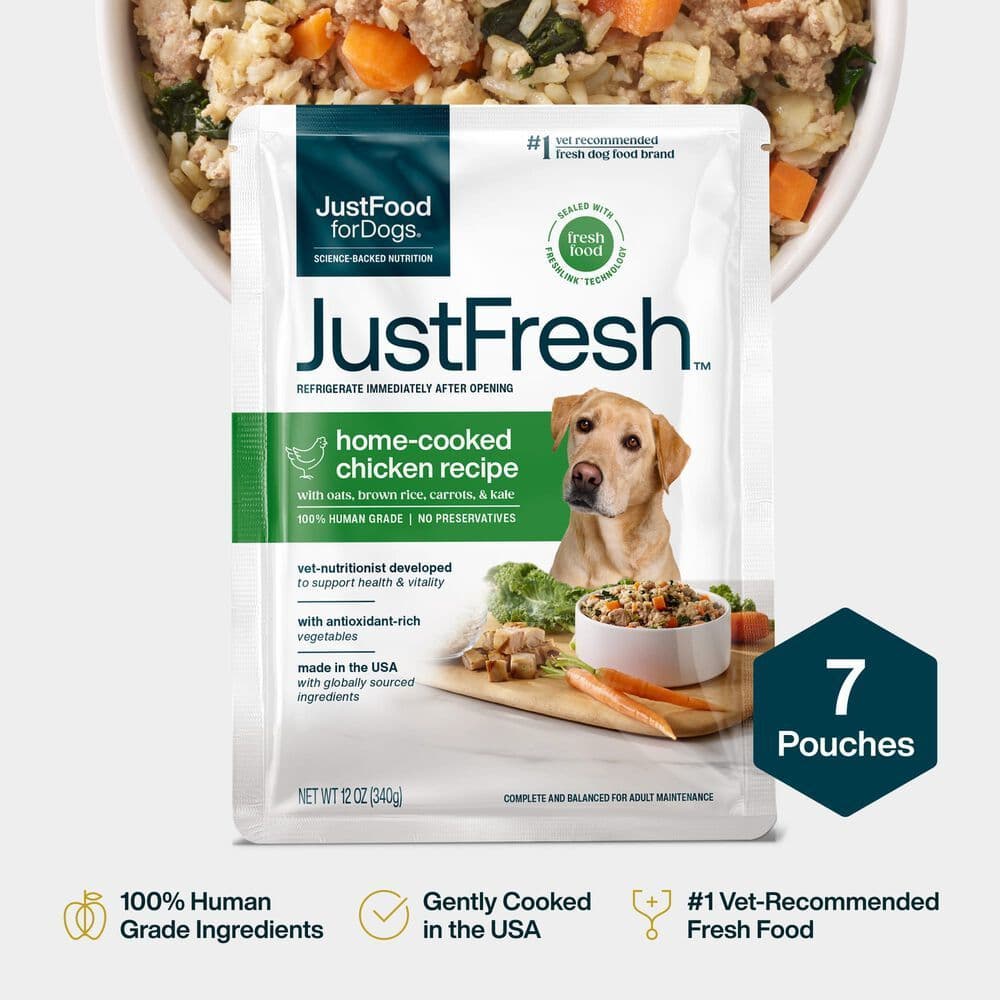
For owners who want cooked meals with less reliance on freezer space, JustFoodForDogs JustFresh Chicken is a shelf-stable option to compare. Check the unopened and opened storage directions separately, along with life-stage suitability.
- Enter your dog’s weight and activity
- Compare fresh-food feeding options
- Use your vet’s calorie target for medical needs
Petful may earn a commission when you click through to JustFoodForDogs, at no extra cost to you.
You do not need to buy the most expensive format to feed responsibly. The useful question is whether the extra cost buys something valuable for your dog or household, such as a particular texture, a suitable formulation, or a preparation routine you can sustain.
Calculate the bag's usable feeding days
For a hypothetical $45 bag containing 3,000 calories, the food costs 1.5 cents per calorie. If it supplies 600 calories per day, it lasts five days and costs $9 per day. The same bag used for 150 calories per day as part of an appropriate mixed plan would last twenty days and contribute $2.25 to the daily food bill. The rest of the day's food still has a cost.
This is why a product advertised as costing a small amount per day may not represent full feeding. Check the assumed dog size and whether the plan covers all meals. A topper calculation is not necessarily wrong, but it answers a different question from the price of a complete daily ration. Keep those assumptions visible in your comparison.
Look beyond a cheap air-dried dog food listing
A cheap air-dried dog food listing may involve a smaller package, an introductory promotion, or a product intended for supplemental use. Compare like with like before calling it a saving. Start with an appropriate complete recipe, then calculate its recurring price for the calories you need. A sale price is useful only if it applies to the quantity and product you will actually buy.
Package size can matter, but buying the largest bag is not automatically the best choice. Consider how quickly your dog will use it and follow the storage directions after opening. If a lower unit price leads you to keep food longer than recommended or waste part of the bag, the expected saving may disappear.
Account for a mixed plan accurately
When air-dried food supplies a portion of a complete mixed diet, calculate that portion by calories. If it supplies a quarter of the day's energy, the other suitable food supplies the remaining three quarters, adjusted for treats and other extras. Do not assume a quarter of the bowl by volume equals a quarter of the calories.
For a commercial topper that is not complete and balanced, a different limit may be appropriate. Ask your veterinarian how much can fit into the overall diet without displacing essential nutrition. Puppies and dogs on therapeutic diets need particular care with substitutions. The lower price of a partial plan does not remove the need to understand the product's intended role.
Choosing air-dried or fresh food for daily feeding
Choose on the basis of nutrition, process clarity, and everyday fit. Air-dried food may appeal when dry storage is a priority. Cooked fresh food may appeal when a moist meal and a clear cooking step matter most. Kibble remains another format to evaluate with the same attention to the finished recipe.
The best air dried dog food for a particular dog is not established by a general ranking or a promise of minimal processing. Ask whether the food meets that dog's nutritional needs, how the company supports its claims, and whether you can feed and store it correctly. Our human-grade dog food guide explains another common label distinction without making it a substitute for adequacy.
Match the routine to the household
Consider a household that travels frequently with its dog. Dry storage may simplify packing, but the owner still needs clean water, accurate portions, and the manufacturer's handling instructions. A cooked shelf-stable food may be another practical option, provided its label suits the dog and opened portions can be stored correctly.
Now consider a household that already has freezer space and feeds predictable meals at home. Fresh Frozen may fit comfortably into an ordinary weekly thawing routine. The more useful choice is the one that removes friction from consistent feeding, rather than the one with the most persuasive format slogan.
Make the transition observable
- Change gradually using the manufacturer's or veterinarian's guidance.
- Keep the total calorie allowance consistent rather than adding an entire new meal.
- Track stool quality, appetite, weight, and body condition.
- Ask for advice if problems persist instead of cycling through multiple new foods.
The JustFoodForDogs feeding calculator can help estimate a fresh-food starting portion. Use the result as a starting point to assess alongside the dog's condition and other calorie sources, especially if you plan mixed feeding.
Air-dried and fresh are not nutritional opposites. They are different ways of preparing and preserving food. Once you separate moisture removal, cooking, adequacy, and portion size, the choice becomes a manageable comparison of real recipes and routines.
Match the format to the everyday job
Imagine an owner who has limited freezer space but can reliably measure small dry portions. An appropriate air-dried recipe may fit that routine. Another owner may prefer a moist prepared meal and have plenty of frozen storage but little interest in preparing or rehydrating food. A suitable cooked fresh recipe may be more convenient for that household. Neither example establishes a medical advantage; each identifies a practical requirement.
Travel can produce a different choice from home feeding. Before a trip, check whether the destination has suitable refrigeration, whether the food can be transported as directed, and whether the caregiver understands the serving amount. A shelf-stable option may be useful, but introduce any appropriate diet change thoughtfully instead of using the first travel day as a sudden food trial.
Make the handoff easy for another caregiver
- Write the exact product and recipe name, including whether it is the main diet or a topper.
- Record the daily amount and how to divide it between meals.
- Specify whether to add water and which preparation directions apply.
- Explain opened-package storage and bowl cleaning.
- Leave contact details for questions or changes in appetite.
Those instructions are especially useful when a concentrated dried portion looks small to someone used to wet meals. Without the calorie context, a well-meaning sitter may add more food. Keep the manufacturer's feeding information and the dog's individualized plan together so visual impressions do not replace the measured amount.
Judge the transition by useful observations
After a change, observe more than enthusiasm at the bowl. Note the amount actually eaten, stool changes, body weight, and whether the handling routine works. A single meal does not establish long-term suitability. Persistent digestive changes, reduced appetite, or a change in condition are reasons to contact the veterinarian rather than repeatedly switching formats in search of an instant answer.
Keep the plan simple enough to repeat. Using several toppers, treats, and alternating foods can make it difficult to identify the source of a change in intake or tolerance. An appropriate main diet with clearly measured additions is easier to evaluate. If you adjust the amount, record the change so everyone feeding the dog follows the same plan.
The best air-dried dog food decision is therefore a recipe-level decision. You should be able to explain why the food is nutritionally appropriate, what its processing involves, how much the dog will eat, and what it costs after promotions. If a cooked fresh meal better meets those requirements, choose that route for its specific benefits rather than treating drying terminology as the deciding factor.
Keep a backup feeding plan
Before committing to a delivery schedule, decide what happens if a shipment is delayed or a caregiver cannot follow the usual routine. Keep enough of the established suitable food available and ask the veterinarian how to handle an unexpected substitution. An emergency change should not depend on guessing that an equal scoop of a different format supplies equal calories.
Save the current product label and feeding instructions where the household can find them. If the manufacturer changes the recipe or package size, review calories, nutritional adequacy, and preparation again. Familiar branding can remain while practical feeding details change.
Frequently asked questions
A veterinarian may consider an air-dried product when it has an appropriate formulation for the dog and its food safety information is clear. The format name alone is not a recommendation. Bring the exact label, the intended daily amount, and the manufacturer's processing information to the discussion. Life stage, medical needs, calorie intake, and household exposure concerns all matter when choosing the finished food.
You need to rehydrate air-dried dog food only when the specific recipe’s manufacturer instructions call for that preparation. Some products are designed to be served without rehydration; others may offer different preparation options. Use clean water if the directions call for it, and follow the rules for prepared leftovers. Do not assume that adding water cooks a raw product or allows it to remain at room temperature for the unopened bag's shelf life.
Depending on the recipe, drawbacks can include a high daily cost, unfamiliar small portions because of calorie density, or unanswered questions about processing. A topper may also be mistaken for a complete meal. These are reasons to inspect the exact product rather than reject every air-dried food. Compare adequacy, safety information, servings, and ongoing price before making it the main diet.
The least amount of “chemicals” is not a useful goal for dog food: water and essential nutrients are chemicals too. Focus instead on whether ingredients are appropriate, the finished diet is balanced, and the manufacturer has sound food safety controls. A long nutrient name does not make a food harmful, and a short ingredient list does not prove completeness. Ask specific questions about the ingredient or concern you have.
Neither air-dried nor freeze-dried dog food is automatically better for every dog. Compare the cooking step, the moisture removal process, nutritional adequacy, portion size, and preparation directions for the exact products. Raw status remains important in either category. The more suitable option is the complete recipe whose safety information and feeding routine fit the dog and household, rather than whichever drying term sounds gentler.
An air-dried recipe can be a suitable choice, but its format does not establish superiority over an appropriate complete and balanced kibble. Evaluate the individual dog, the manufacturer's evidence, and practical differences such as texture, calories, and cost. A successful switch should have a clear purpose, such as finding a suitable recipe or a more manageable feeding routine, rather than relying on a blanket anti-kibble claim.
Fresh cooked meals, canned food, and some dried formats are made without forming conventional kibble. That processing distinction does not establish their nutritional adequacy or medical suitability. Read the complete-diet statement and cooking details for the specific recipe. If your goal is a moist cooked meal, evaluate a food designed for that use instead of treating “never kibbled” as a health guarantee.

Coreen Saito is a pet writer and longtime shelter volunteer with more than a decade in animal rescue. She covers cat behavior, breed care, and the small, ordinary science of sharing a life with companion animals, with a particular focus on honest takes about the products and decisions that actually matter. At home in Arizona, she's outranked by Mac (a dog with the loudest opinion in the house), Rebel (a cat who governs by quiet authority), and Meri (an orange tabby who runs the late shift and the laundry basket). She writes about all three, plus the rescues that keep coming through her life, at LifeWithMinty.com.
Sign up for expert-backed reviews and safety alerts all in one place.

A Final Word (Disclaimer)
At Petful, our review integrity is paramount; we never exchange special treatment in our reviews for monetary or material rewards.
Nonetheless, when our readers click through to online merchants (including Chewy or Amazon), we receive a referral commission. This supports the running of our free blog, and we appreciate your backing.