Best Cat Scratching Posts: 6 Picks Cats Actually Use
Six Chewy scratchers across tall sisal posts, a horizontal lounge, cardboard and wall-mounted styles, plus the height, placement and training fixes that get a cat to use the post instead of your sofa.
Petful is reader supported. As an affiliate of platforms like Amazon and Chewy, we may earn a commission when you buy through links on this page. There is no extra cost to you.
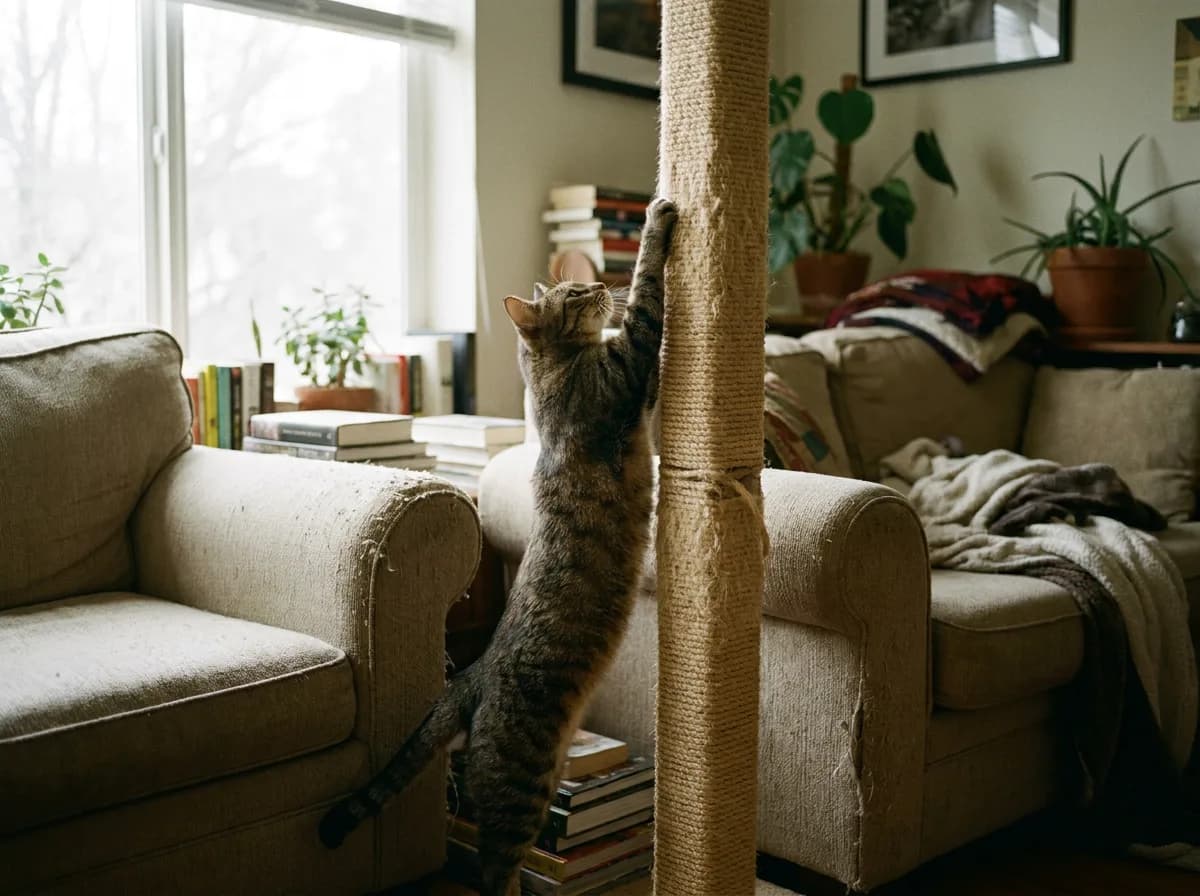
The best cat scratching post is covered in sisal, tall enough for a full stretch, set on a sturdy base, and placed where your cat already scratches. Get those four things right and most cats switch from the sofa to the post within a few weeks.
The catch is that cats do not all scratch the same way. Some reach up the arm of a couch, some rake the rug, and some shred a door frame. This guide compares six Chewy scratchers across vertical sisal, horizontal lounge, cardboard and wall-mounted formats, then covers why a cat ignores a new post and the training and placement fixes that turn it around.

Sign up for expert-backed reviews and safety alerts all in one place.
Compare the cat scratching posts
Here is the short version: the SmartCat Ultimate Scratching Post is the best overall vertical post, the TSCOMON 37.4-in Sisal Cat Scratching Post, Green/Brown is the tallest for big cats, and the other four cover lounging, cardboard, wall and floor scratching. The best cat scratcher for your home is the one that will match the scratching style your cat already shows you.
Every pick here is tall enough for a full stretch or built for a cat that scratches low, and each has a sturdy base or mounts to the wall. The table lists the exact Chewy model, format, material, size and catalog price at the time of writing, so you can compare them side by side and match a scratcher to the spot in your house that takes the most damage.
| Exact model and variant | Best for | Format | Material | Size or height | Catalog price | Why it earned the spot |
|---|---|---|---|---|---|---|
| SmartCat Ultimate Scratching Post | Most cats that scratch upright furniture | Vertical post | Woven sisal | 32 in, 16 x 16 in base | About $69.99 | Tall enough for a full stretch on a wide, stable base |
| TSCOMON 37.4-in Sisal Cat Scratching Post, Green/Brown | Long-bodied and large cats | Vertical post | Sisal rope, plush base | 37.4 in | About $35.99 | Tallest post in the set, with a hanging toy |
| NonoPets Lounge Chair Cat Scratcher with Freestanding Wooden Frame, Large | Cats that scratch and then nap | Horizontal lounge | Sisal on a wood frame | Large, 110 lb load capacity | About $40.99 | A scratcher that doubles as a raised bed |
| Mau Cardboard Cat Scratcher, Medium | Design-minded homes and cardboard lovers | Flat, angled or upright | Corrugated cardboard in a wood frame | Medium | About $39.00 | Refillable pad with three positions |
| FUKUMARU Wall Mounted 60-in Scratching Posts Modern Cat Scratcher | Corner and door-frame scratchers | Wall-mounted post | Sisal | 60 in, 20 kg static load | About $39.79 | Saves floor space and covers the corner itself |
| FUKUMARU Horizontal Sisal Cat Scratcher Mat, Brown, 2 count | Carpet and floor rakers on a budget | Flat mat | Natural sisal | Two mats | About $20.79 | Lowest price in the set, two mats per pack |
- 1Match the scratching style your cat already uses before you buy anything.
- 2Look at where your cat scratches now: tall furniture points to a vertical post, carpet points to a flat mat, corners point to a wall-mounted post.
- 3The format to try first is the one that copies the surface your cat is already ruining.
Our cat scratching post picks
The six picks below come from a research-based comparison of Chewy listings, label details and documented features. Each one covers a different scratching style, so read the "best for" line first.
Best overall sisal post: SmartCat Ultimate Scratching Post
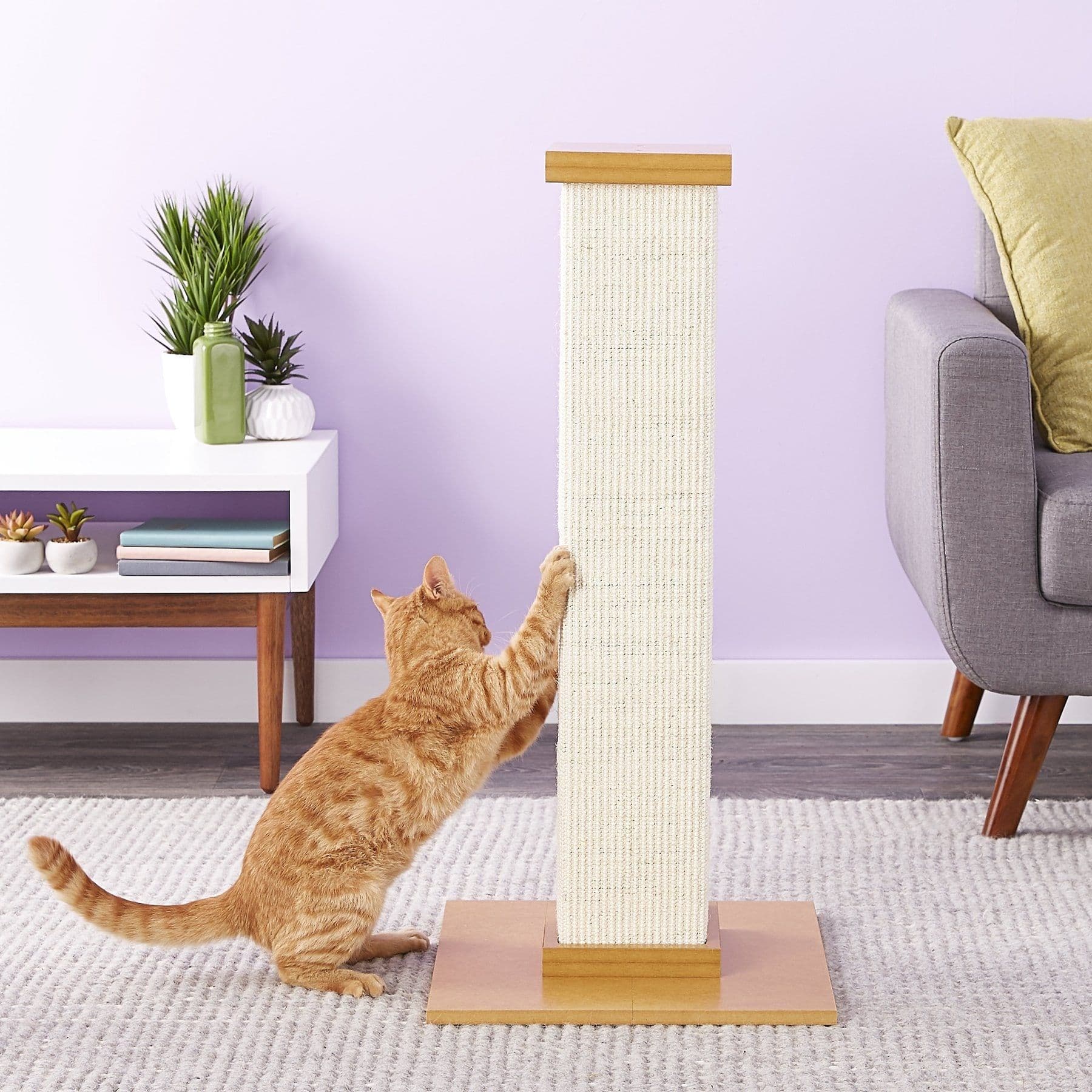
A 32-inch post covered in woven sisal with a 16 x 16 inch base, per the listing. The height lets most cats stretch fully and the wide base is the stability feature that keeps a cat from abandoning a post that tips.
Petful may earn a commission when you click through to Chewy, at no extra cost to you.
The SmartCat Ultimate Scratching Post is the sisal cat scratching post most readers should start with. Made by SmartCat under the Pioneer Pet name, it stands 32 inches tall and is covered in woven sisal, which gives claws a rough, shreddable texture that cats prefer over soft carpet wrap.
The real reason it holds its place is the 16 x 16 inch base. A post that tips or wobbles mid-scratch frightens a cat, and a frightened cat goes back to the sofa. The wide footprint of the SmartCat Pioneer Pet Ultimate Scratching Post keeps it planted while an adult cat leans its full weight into it.
- Height: 32 inches, enough for most adult cats to stretch fully
- Cover: woven sisal fabric, not loose rope
- Base: 16 x 16 inches for stability
- Price: about $69.99 at Chewy at the time of writing
One honest limitation: this SmartCat post is the priciest pick here, and it is a plain post with no perch or bed. If you want a resting spot too, pair it with a lounger or look at a cat tree instead.
Best for large cats: TSCOMON 37.4-in Sisal Cat Scratching Post
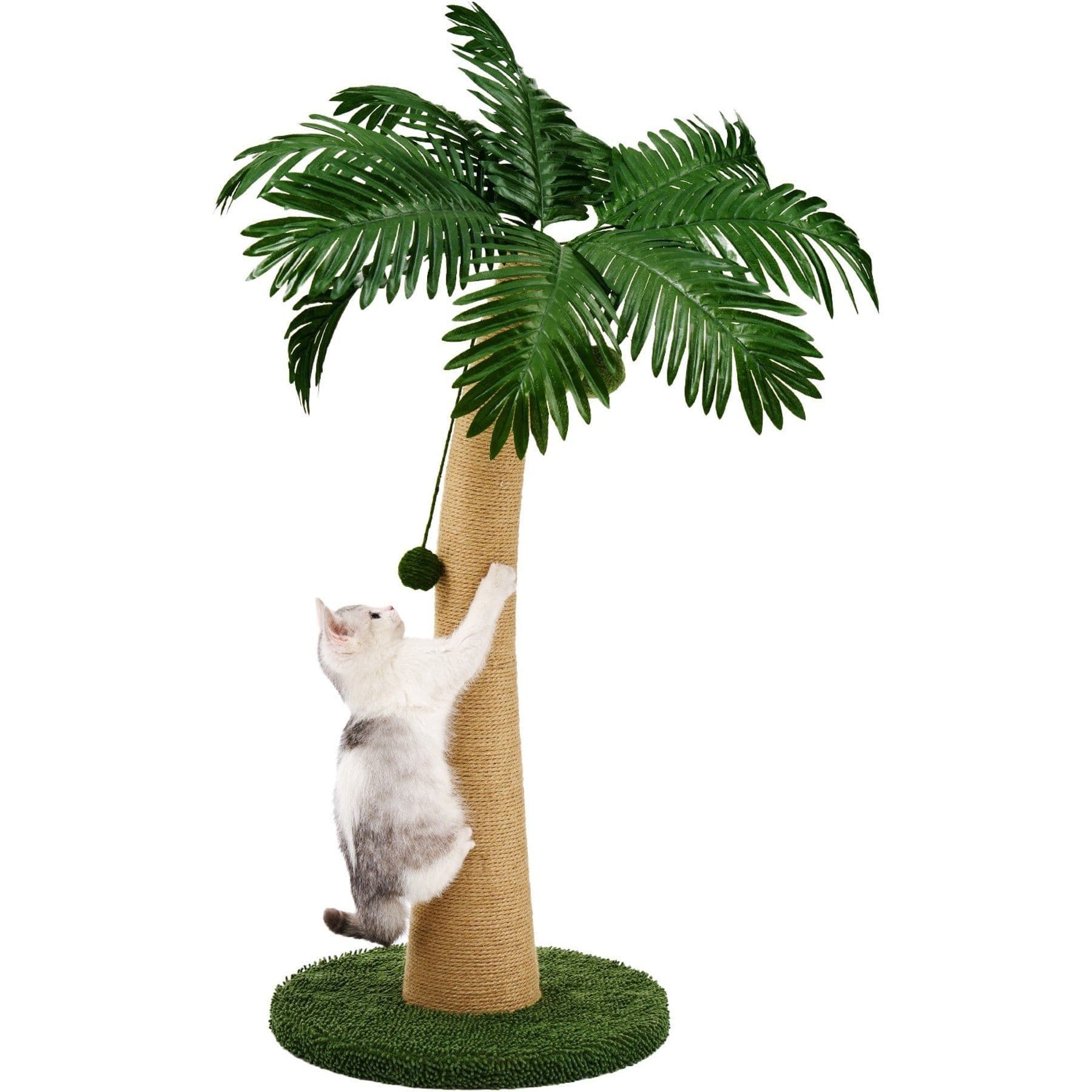
The tallest post in the set at 37.4 inches, wrapped in sisal rope with a large plush paw-shaped base for stability and a hanging toy. The listing gives no weight rating, so the page treats it as a tall-post pick, not a proven heavy-duty...
Petful may earn a commission when you click through to Chewy, at no extra cost to you.
The TSCOMON 37.4-in Sisal Cat Scratching Post, Green/Brown is the extra tall cat scratching post in this set, and height is what a long-bodied cat needs most. A Maine Coon or a big British Shorthair can stretch nearly three feet from back paws to front claws, and a short post makes them hunch, which defeats the point.
At 37.4 inches, TSCOMON gives a large cat room to reach full extension on sisal rope. The base is a large plush paw shape for stability, and a hanging toy gives playful cats a reason to visit the post between scratching sessions.
- Height: 37.4 inches, the tallest post in the comparison
- Cover: sisal rope
- Base: large plush paw-shaped base
- Extra: hanging toy
- Price: about $35.99 at Chewy at the time of writing
Be realistic about what "heavy duty" means here. The listing gives no weight rating, so treat this as a tall post that suits big cats, not a proven heavy duty scratcher. If you share your home with a very heavy, enthusiastic scratcher, set it against a wall or in a corner so it cannot rock. For an extra large scratching post with a perch, a sturdy cat tree is the better tool.
Best horizontal lounge: NonoPets Lounge Chair Cat Scratcher
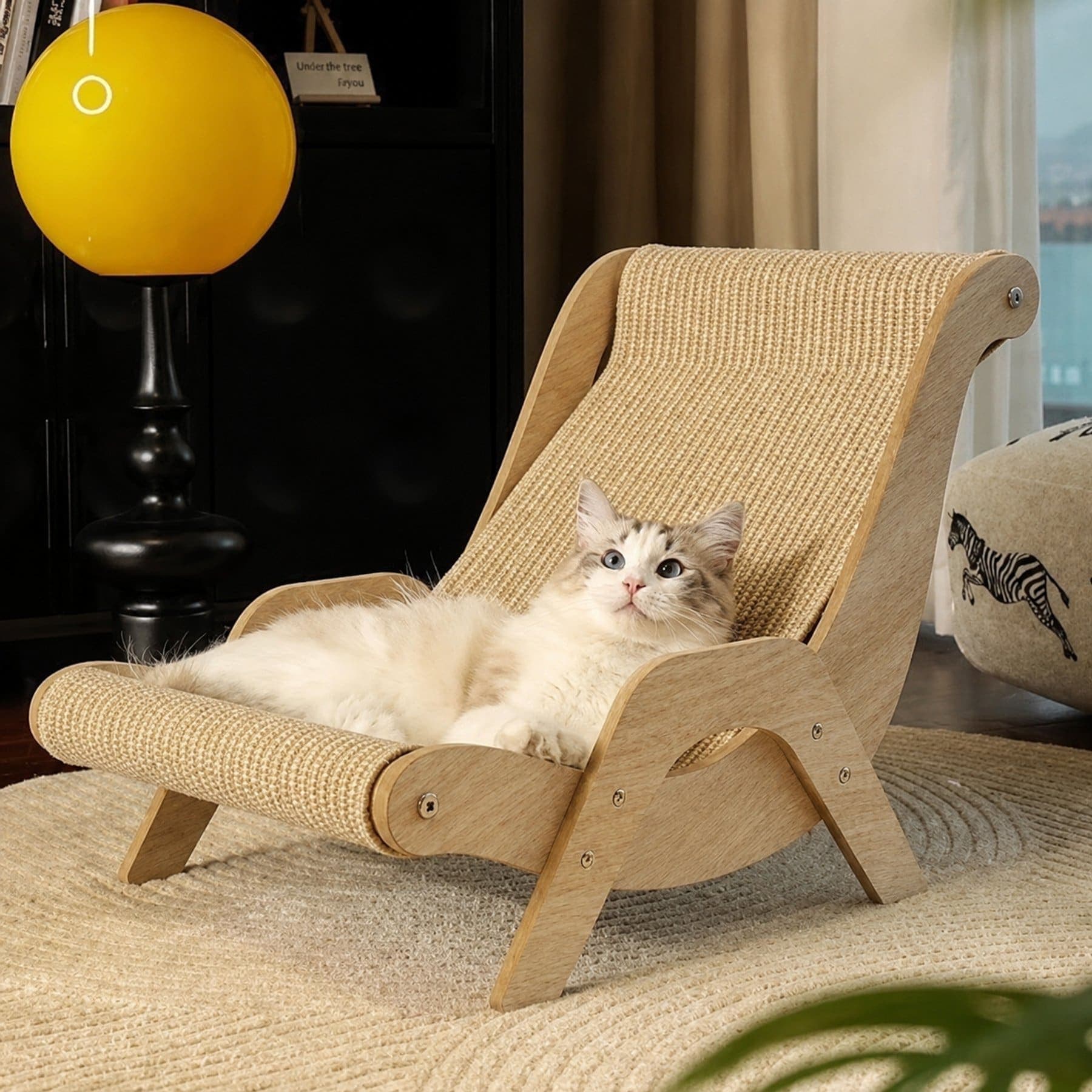
An elevated sisal lounger on a natural wood frame, listed with a 110 lb load capacity, for cats that scratch outward or like to rest on what they scratch.
Petful may earn a commission when you click through to Chewy, at no extra cost to you.
The NonoPets Lounge Chair Cat Scratcher with Freestanding Wooden Frame, Large is a cat scratcher lounge for cats that like to scratch outward and then flop down on the same surface. It is a horizontal cat scratcher raised on a natural wood frame, so it reads more like a small cat scratching chair than a pet product.
The sisal bed is listed with a 110 lb load capacity, which means even two cats can pile on. For cats that knead and scratch the cushion they nap on, a cat scratcher bed like this redirects both habits to one place.
- Format: elevated horizontal lounger
- Cover: sisal on a wooden frame
- Load capacity: 110 lb, per the listing
- Price: about $40.99 at Chewy at the time of writing
The limitation is obvious: there is no vertical stretch. A cat that reaches up the side of a couch will not get what it wants from a lounger, so treat this as a second scratcher next to a post rather than a replacement for one.
Best cardboard scratcher: Mau Cardboard Cat Scratcher
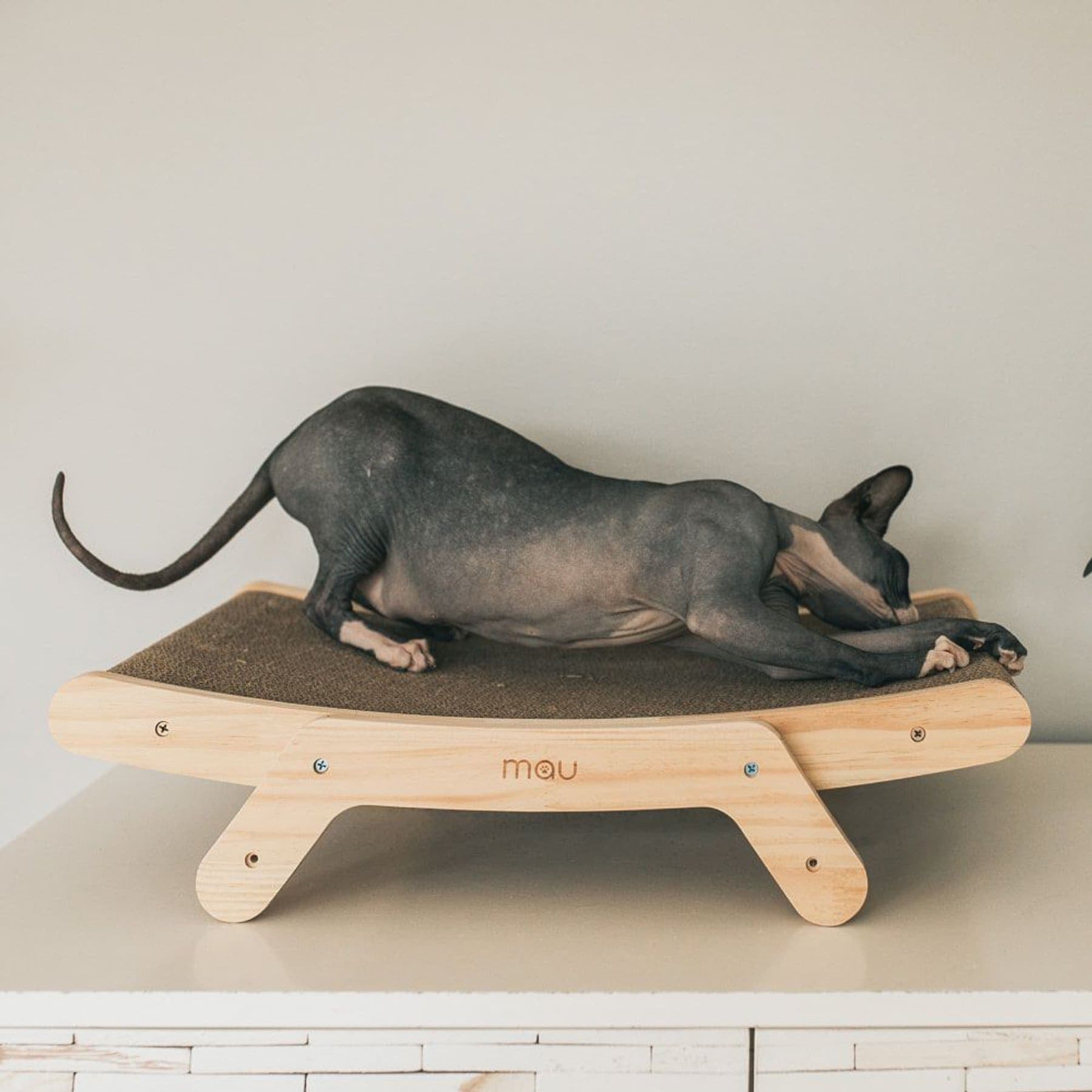
A rounded, replaceable cardboard pad in an adjustable wooden frame that props up in three positions, so it works as a flat, angled or upright scratcher and the pad can be refilled.
Petful may earn a commission when you click through to Chewy, at no extra cost to you.
The Mau Cardboard Cat Scratcher, Medium is the modern cat scratcher for homes where the scratcher sits in the living room and has to look good. A rounded corrugated cardboard pad sits in an adjustable wooden frame, and the clean curve gives it more of a cat scratcher art feel than the usual flat box.
The frame props up in three positions, so the same piece works flat, angled or upright. That flexibility helps when you are still learning whether your cat prefers to scratch down or up. When the pad wears out, you replace only the pad, so cardboard refills cost far less than buying a whole new scratcher.
- Format: flat, angled or upright, three positions
- Material: corrugated cardboard in a wooden frame
- Refillable: replaceable pad
- Price: about $39.00 at Chewy at the time of writing
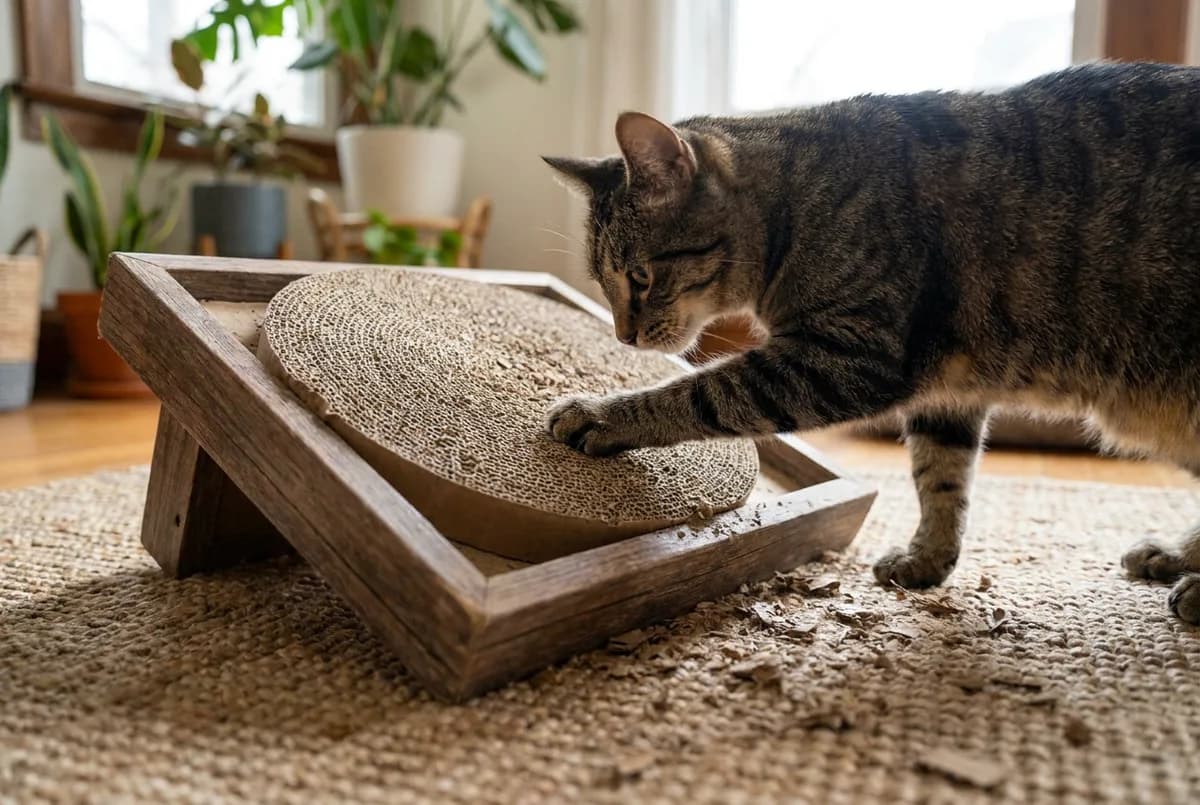
Expect some mess. Cardboard sheds small fibers and crumbs as cats shred it, so a curved scratcher like this does best on a hard floor you can sweep. If you already own a round frame from another brand, check the pad size before ordering a refill, since pads are rarely interchangeable.
Best wall-mounted scratcher: FUKUMARU Wall Mounted 60-in Scratching Post
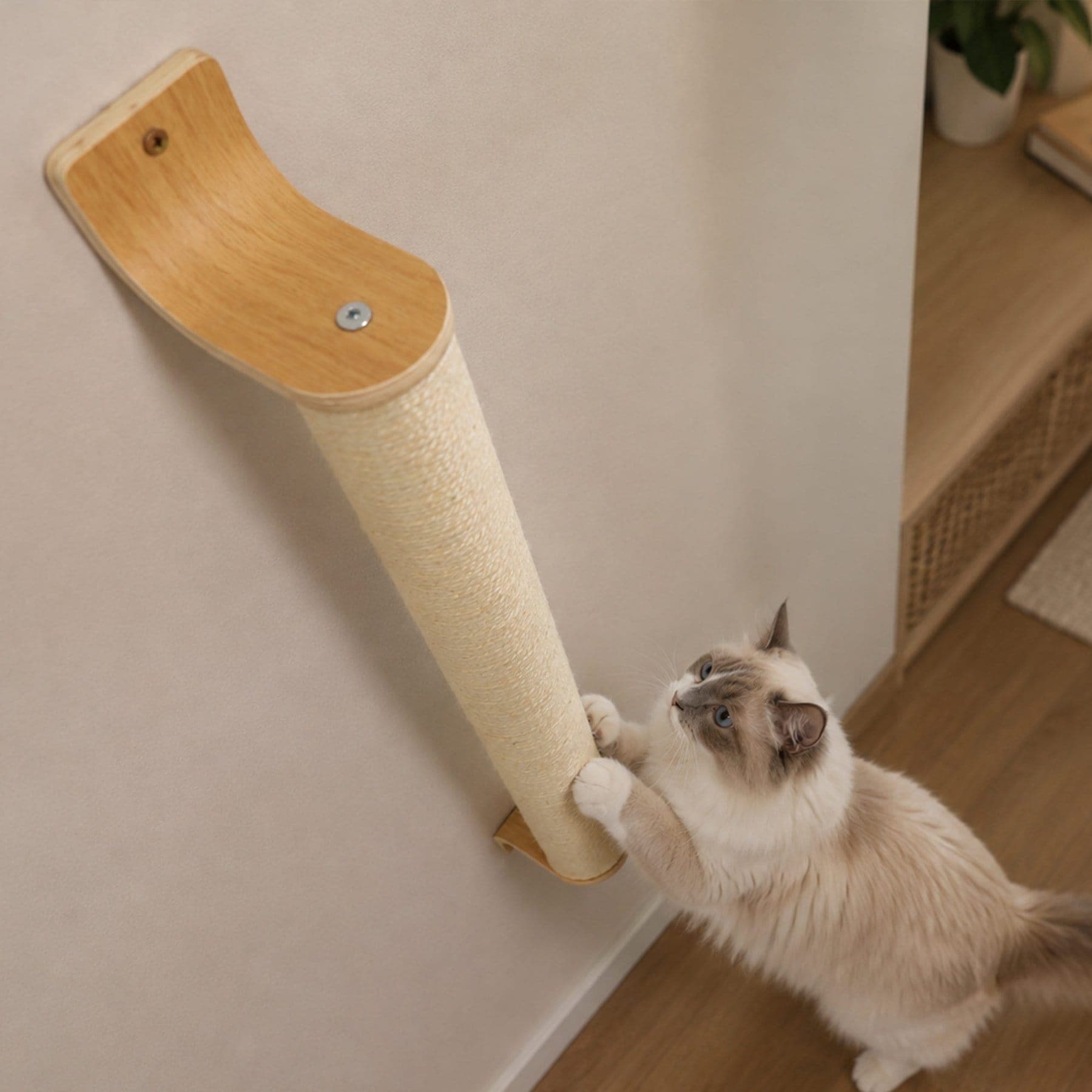
A slim 60-inch sisal-wrapped post that mounts to drywall studs or solid walls, fits corners, door frames and window sides, and is listed as tested to a 20 kg static load.
Petful may earn a commission when you click through to Chewy, at no extra cost to you.
The FUKUMARU Wall Mounted 60-in Scratching Posts Modern Cat Scratcher is a cat scratching post wall mounted to studs or a solid wall, so it cannot tip at all. A wall-mounted option like this suits small homes. At 60 inches of sisal, it gives even the tallest cat a full vertical reach without taking up any floor space.
Because it mounts flat, it can cover the exact spot a cat is already destroying. Fixed beside a door, it protects the door frame; fixed on an outside corner, it becomes a corner scratcher that shields the paint and drywall behind it.
- Height: 60 inches of sisal
- Mounting: drywall studs or a solid wall
- Load: listed as tested to a 20 kg static load
- Price: about $39.79 at Chewy at the time of writing
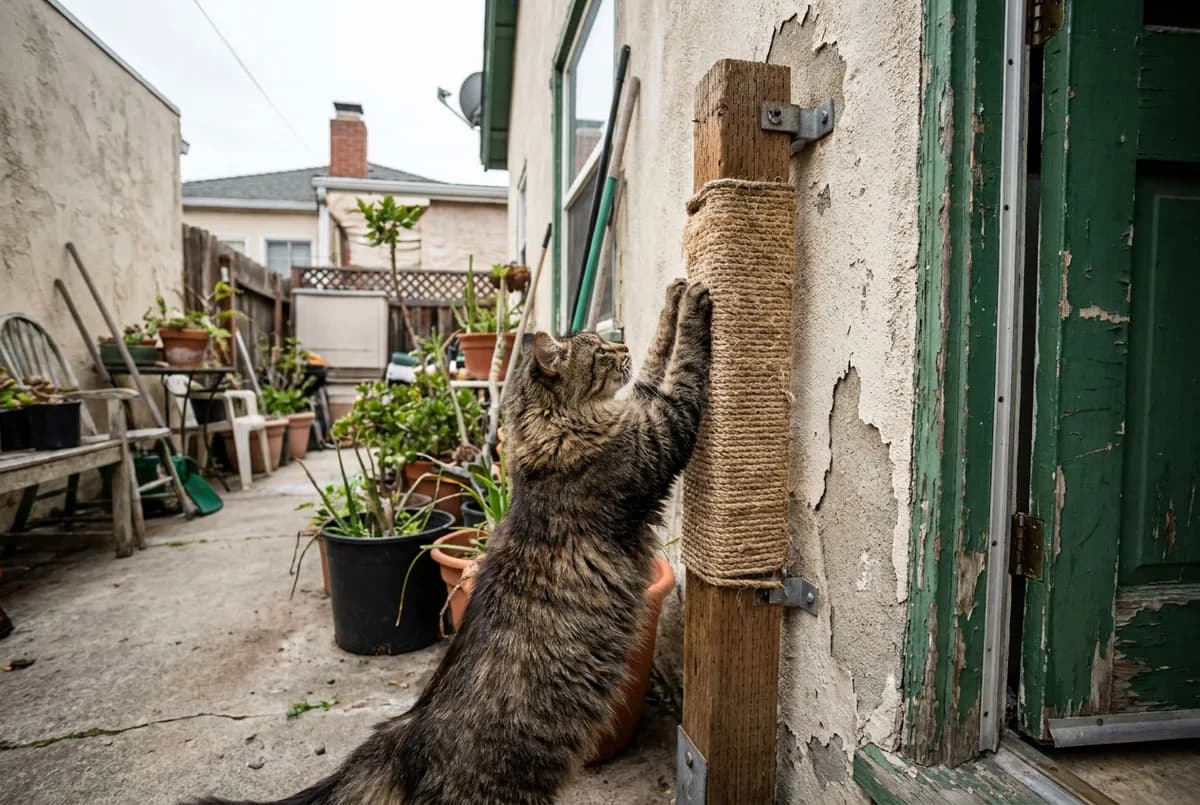
The trade-off is installation. You need to find a stud or a solid wall, drill, and accept a few screw holes, which rules it out for many renters. If drilling is not an option, a tall freestanding post with a wide base is the next best choice.
Best budget floor scratcher: FUKUMARU Horizontal Sisal Cat Scratcher Mat
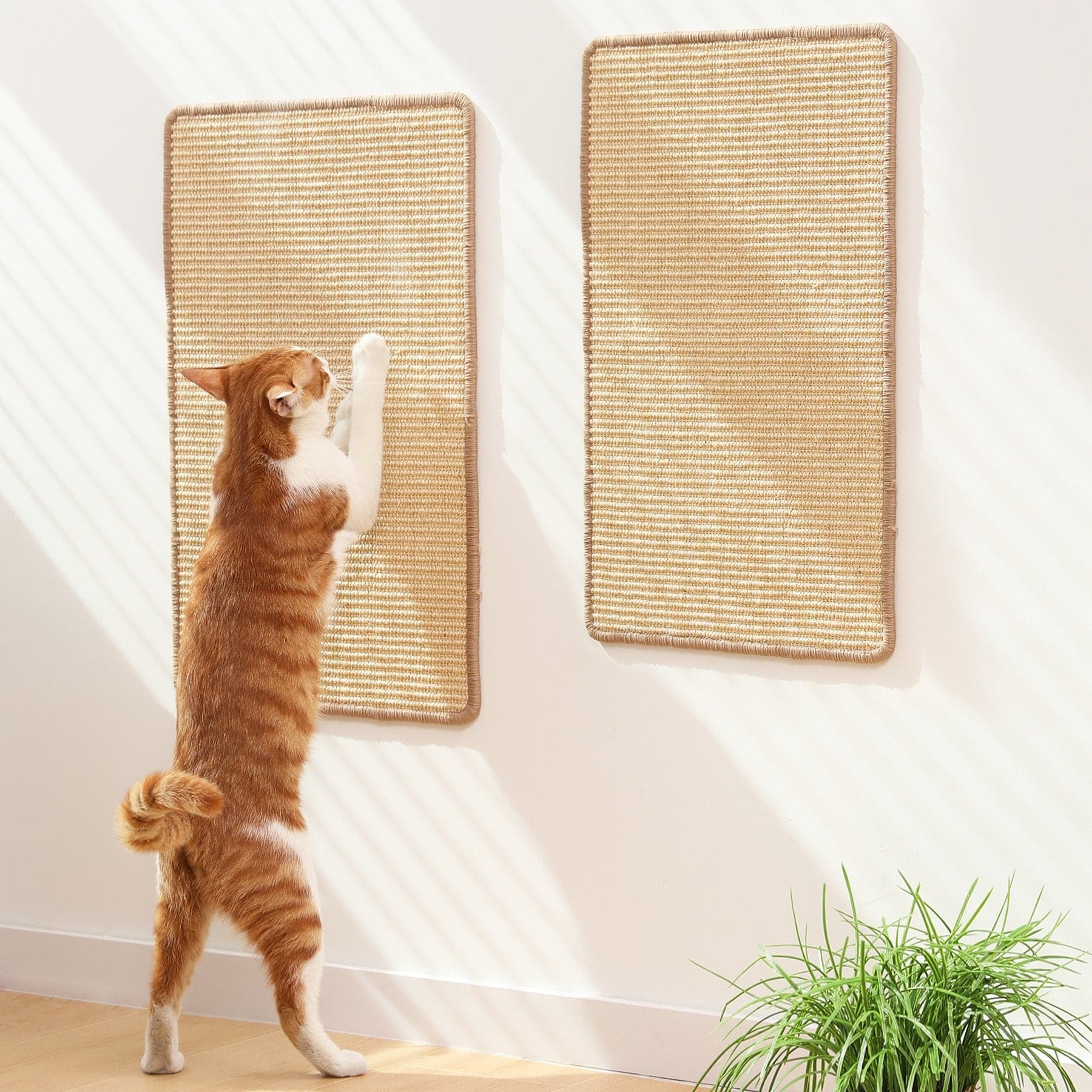
Two natural sisal mats at the lowest price in the set, usable flat on the floor or taped to a wall or furniture, aimed at cats that rake carpet or the floor.
Petful may earn a commission when you click through to Chewy, at no extra cost to you.
The FUKUMARU Horizontal Sisal Cat Scratcher Mat, Brown, 2 count is the best cheap cat scratching post alternative in this list, and it comes as a pair. At about $20.79 at Chewy at the time of writing, it is the lowest price in the set.
This cat scratching mat is natural sisal and can lie flat on the floor or be taped to a wall or the side of a piece of furniture. It suits cats that rake the carpet and would rather scratch the floor than anything upright.
- Format: two flat sisal mats
- Use: on the floor, or taped to a wall or furniture
- Best for: carpet rakers and floor scratchers
- Price: about $20.79 at Chewy at the time of writing
A thin mat can slide on smooth floors, so lay it on a rug or tape the corners down. It will not replace a tall post for a stretcher, but two mats let you cover a pair of problem spots for less than the cost of one post.
How to choose the best cat scratching post
The fastest way to choose is to match the scratching style your cat already has. Watch for a day or two and note where your cat scratches now and in which direction, then pick the format to try that copies that surface.
- Where your cat scratches now: sofa arm or tall furniture. Format to try: a tall vertical post. Pick: SmartCat Ultimate, or TSCOMON for a big cat.
- Where your cat scratches now: carpet, rugs or the floor. Format to try: a flat horizontal scratcher. Pick: the FUKUMARU sisal mats.
- Where your cat scratches now: a door frame or wall corner. Format to try: a wall-mounted post. Pick: the FUKUMARU 60-in wall post.
- Where your cat scratches now: the bed or couch cushion it naps on. Format to try: a lounger. Pick: the NonoPets lounge chair.
- Not sure yet. Format to try: an adjustable scratcher. Pick: the Mau, which works flat, angled or upright.
International Cat Care's cat advice library makes the same point: scratching is normal behavior, and a post works best when it is tall, stable and placed where the cat already scratches. WebVet's overview of cat trees and scratching posts is a useful second read if you are weighing a full climbing setup.
What scratchers do cats like the most?
Most cats like a sturdy, rough-textured scratcher they can sink their claws into, with sisal and corrugated cardboard the clear favorites. Vertical sisal posts tall enough for a full stretch suit the most cats, while floor rakers prefer flat cardboard or sisal mats. The surface your cat already scratches is the best clue to its favorite.
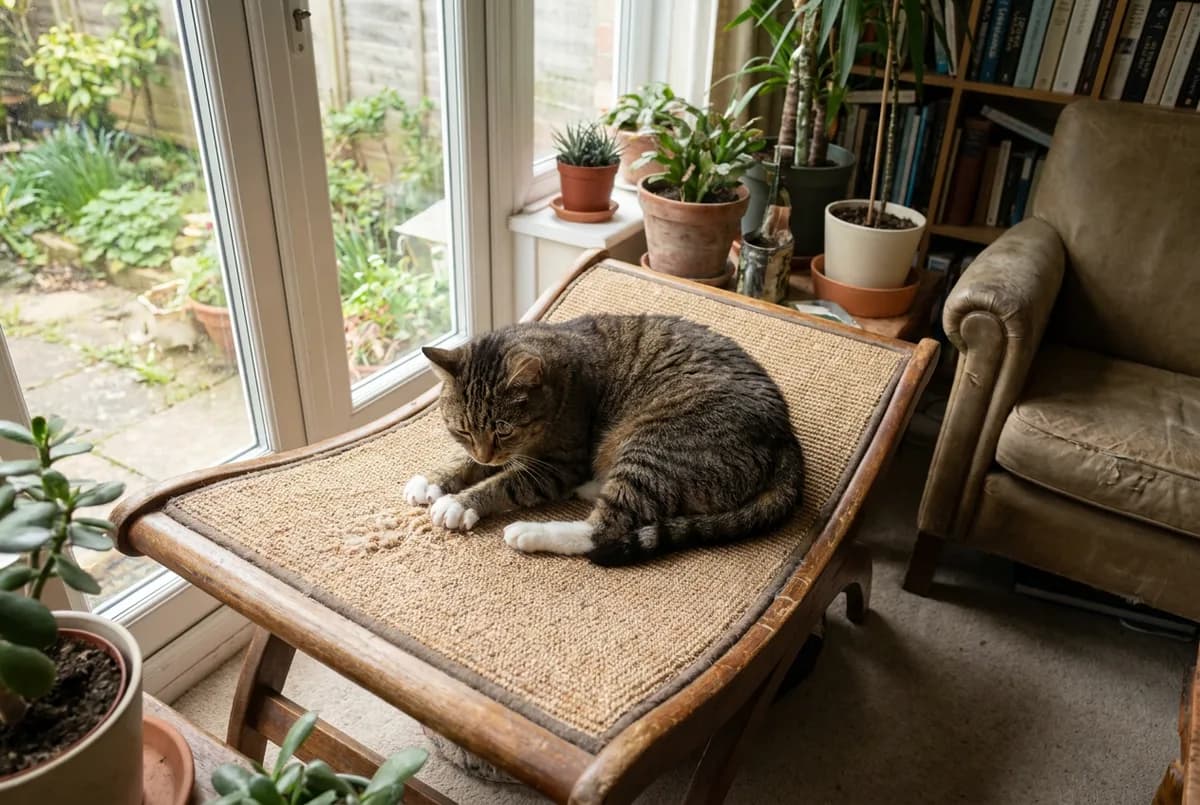
A few patterns hold for most households:
- Vertical stretchers want height and a base that does not move.
- Horizontal scratchers want a low, wide surface they can rake while standing.
- Loungers and kneaders like a scratcher they can also lie on.
- Many cats use more than one style, depending on mood and time of day.
What is the best material for scratching posts for cats?
Sisal is the best material for a cat scratching post for most cats. It is rough, durable and shreds in a satisfying way, so claws catch and the outer sheath sheds cleanly. Corrugated cardboard is a close second and a favorite for horizontal scratching, though it wears out faster and makes more mess.
Choose sisal over carpet whenever you can. Carpet-covered posts feel soft, and claws snag in the loops instead of shredding, which is why many cats ignore them. Worse, a carpet post can teach a cat that carpet is for scratching, which is not a lesson you want near your rugs.
- Sisal fabric (woven): the best type of cat scratching post cover for durability, as on the SmartCat.
- Sisal rope: rougher texture, can loosen over time, as on the TSCOMON and FUKUMARU wall post.
- Corrugated cardboard: cheap to refill and loved by floor scratchers, as on the Mau.
- Carpet: avoid as the main scratching surface.
How tall should a cat scratching post be?
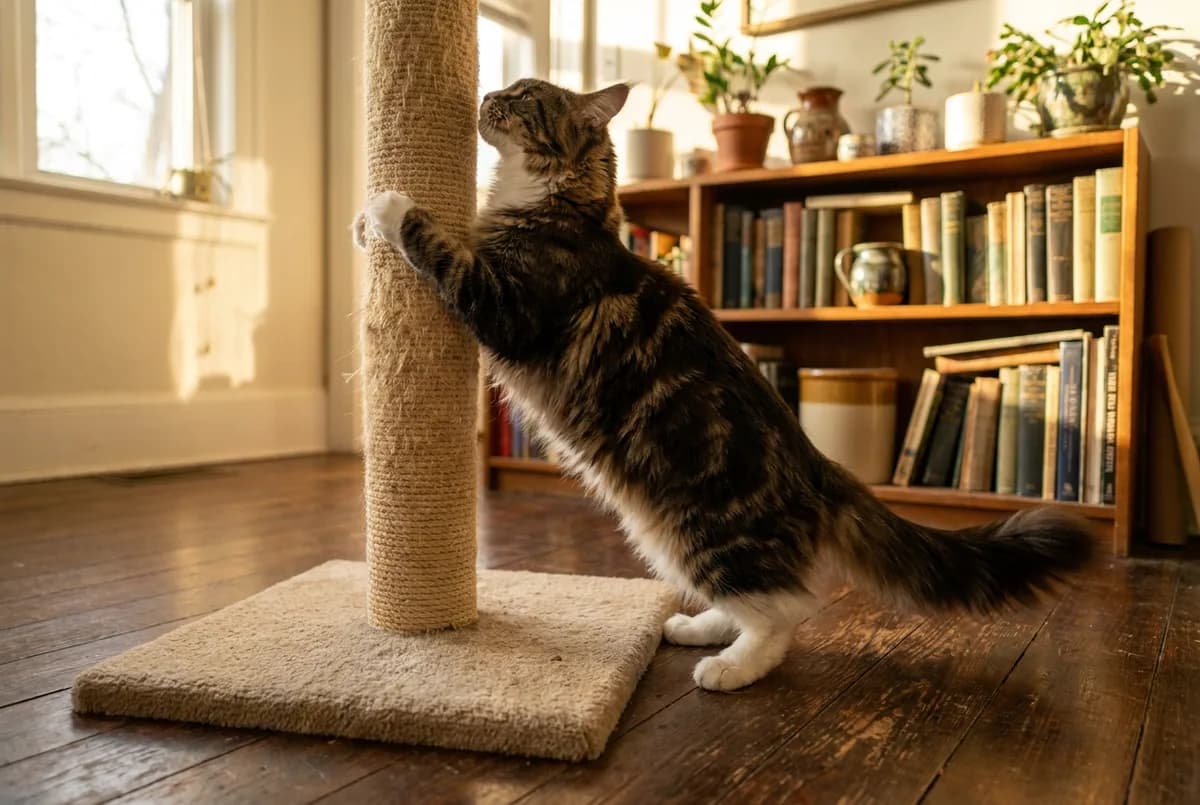
A cat scratching post should be tall enough for your cat to stretch out fully with its front paws high on the post and back paws on the floor. For most adult cats that means at least 30 inches; long-bodied breeds do better with 36 inches or more.
- Stand the post up and watch your cat use it once. If its front paws reach the top before its body is fully stretched, the post is too short. Measure your cat from back paws to outstretched front paws and add a few inches. A post that passes the full-stretch test and has a sturdy base gets used far more often.
Height only works with a sturdy base. A tall post on a small footprint will rock, and one wobble can put a cat off for good. Look for a wide, heavy base, or mount the post to a wall, as with the FUKUMARU 60-in.
What is a cat scratching post that looks like furniture?
A cat scratching post that looks like furniture is a scratcher built with real wood, clean shapes and neutral materials so it blends into a living room instead of looking like a pet accessory. The Mau and NonoPets picks are each a furniture-style scratcher: one is a curved cardboard pad in a wooden frame, the other a sisal lounger on a wood chair frame.
If you want a scratching post that looks good enough for the living room, judge the design after the function. Even the most striking post still has to pass the basics: stable, rough-textured, and the right orientation for your cat. A beautiful scratcher your cat ignores is just decor.
Scratching post or cat tree?
A plain scratching post is the right choice when the goal is protecting furniture in one spot. A cat tree makes sense when your cat also wants height, a perch and a hideout, or when you have several cats sharing space.
- Choose a post for targeted scratching where your cat already damages furniture.
- Choose a scratching post with perch or a full tree for cats that climb, watch from up high, or need more territory.
- Many homes use both: a tree in the main room and a post or wall scratcher at each problem spot.
For tall multi-level options, see our guide to the best cat towers, which covers sturdier frames for active and large cats.
Why your cat won't use the scratching post
A cat that won't use the scratching post you bought is almost always telling you something about the post, not being stubborn. The usual causes are a post that is too short, too wobbly, covered in the wrong material, or parked in a spare room far from where the cat actually spends its time.
Do cats need a scratching post?
Yes, cats need a scratching post or another approved scratcher, because scratching is a normal, necessary behavior, not a bad habit. Why do cats scratch? It sheds the worn outer layer of the claws, stretches the shoulders and back, and leaves scent from glands in the paws as a territory marker. A cat with no approved surface will use your furniture instead.
That is also why cats like scratching posts once they find a good one. Why do cats scratch scratching posts so eagerly when the post is right? Because a tall, rough, stable surface does every job at once:
- Claw care: pulling the claw through sisal strips the old sheath.
- Stretching: a full-length reach works the back and shoulders.
- Scent marking: paw glands leave a "this is mine" message.
- Stress relief: many cats scratch after waking, after play, or when excited.
So why do cats scratch stuff around the house even when a post exists? Usually because the furniture does those jobs better than the post on offer. Fix the post, and the furniture loses its appeal.
Why won't my cat use the scratching post?
If your cat ignores one post after another, or refuses the one you just set up, run through this checklist before buying another:
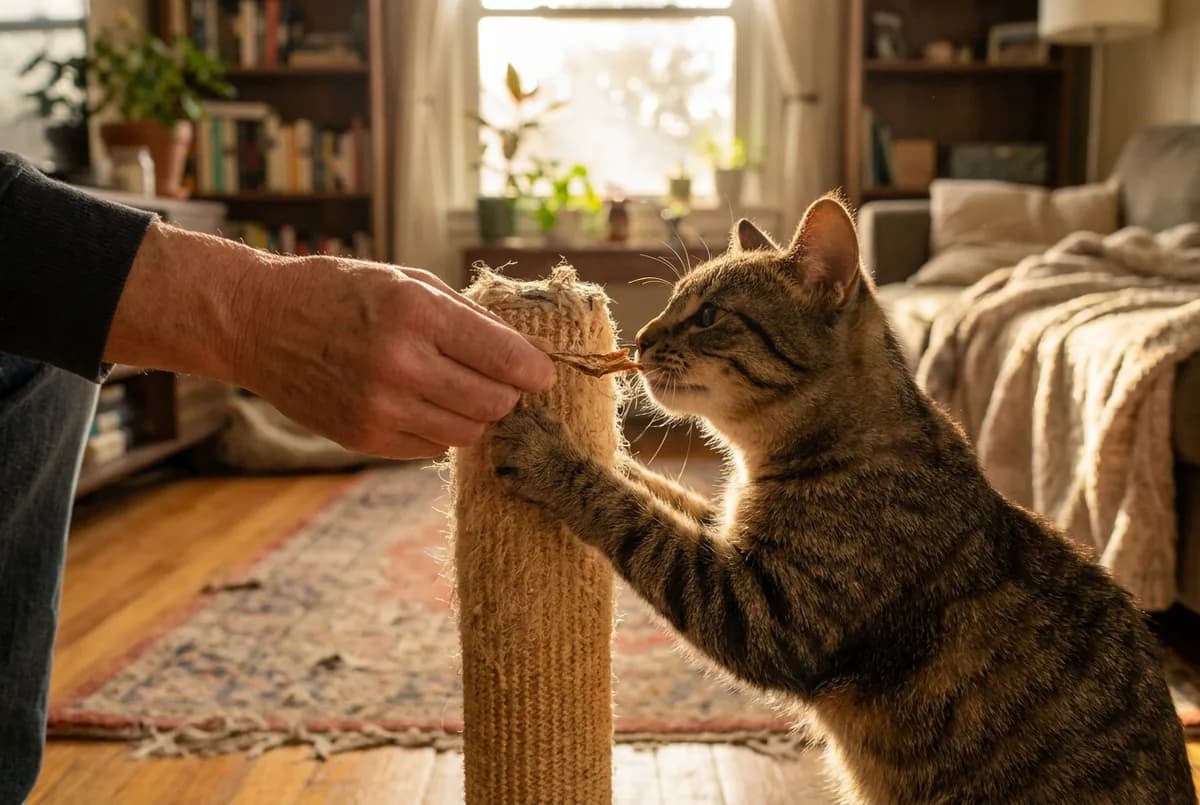
- Too short: the cat cannot get a full stretch, so the sofa arm wins.
- Wobbly: a post that moves even slightly can scare a cat off for weeks.
- Wrong material: carpet or smooth wrap gives nothing to grip; sisal is the fix.
- Wrong direction: a floor raker will not use a vertical post, and vice versa.
- Wrong place: a post in a back room does nothing for a cat that scratches the couch.
- Worn out: a shredded, slick post has stopped doing its job. Knowing when to replace a post matters as much as buying the right one.
WebVet has a helpful walkthrough on what to do when your cat won't use the scratching post, including how to read your cat's preferences.
How to make your cat use the scratching post?
To make your cat use the scratching post, place it right next to the furniture they already scratch, then make the post rewarding with treats and catnip while making the furniture unappealing. Most cats switch within a few weeks when the post is tall, stable and sisal-covered.
A simple routine to get a cat to use a scratching post:
- Put the post directly beside the spot your cat scratches now.
- Rub catnip or silvervine into the sisal to draw your cat in.
- Drag a wand toy up the post so claws catch the sisal during play.
- Reward any scratch on the post with a treat or praise right away.
- Cover the old spot with double-sided tape or a throw for a few weeks.
- Once the habit sticks, move the post a little at a time if you need to.
- Yelling, spraying water or swatting does not teach a cat where to scratch. It only teaches the cat to scratch when you are not around and can damage your bond. Reward use of the post instead and make the furniture less appealing.
Training a cat to use a scratching post is mostly about timing. Cats tend to scratch right after waking, so place a post near where your cat sleeps and offer it then.
Where to put a scratching post so your cat uses it
Good scratcher placement is half the battle, since cats ignore posts in the wrong spot. Put the scratching post near the furniture they already scratch, in a room where your cat spends time, not tucked in a corner nobody uses. Cats scratch to mark territory, so the post needs to be in a visible, social spot.
- Next to the sofa arm, chair or rug corner that takes the damage.
- Near sleeping spots, since many cats scratch right after waking.
- By doorways and room entrances, where cats like to mark.
- Close to a window or cat window perch where your cat already likes to watch the yard.
More than one scratcher is often the real answer, especially in multi-cat homes. One post per problem spot, plus one near each favorite resting place, beats one expensive post in the wrong room.
How to stop a cat from scratching furniture
To stop cats from scratching furniture, give them a better option right beside it and make the furniture temporarily unpleasant. Why do cats scratch furniture in the first place? Couches are tall, stable and textured, exactly what a cat wants, so the post you offer has to match or beat that.
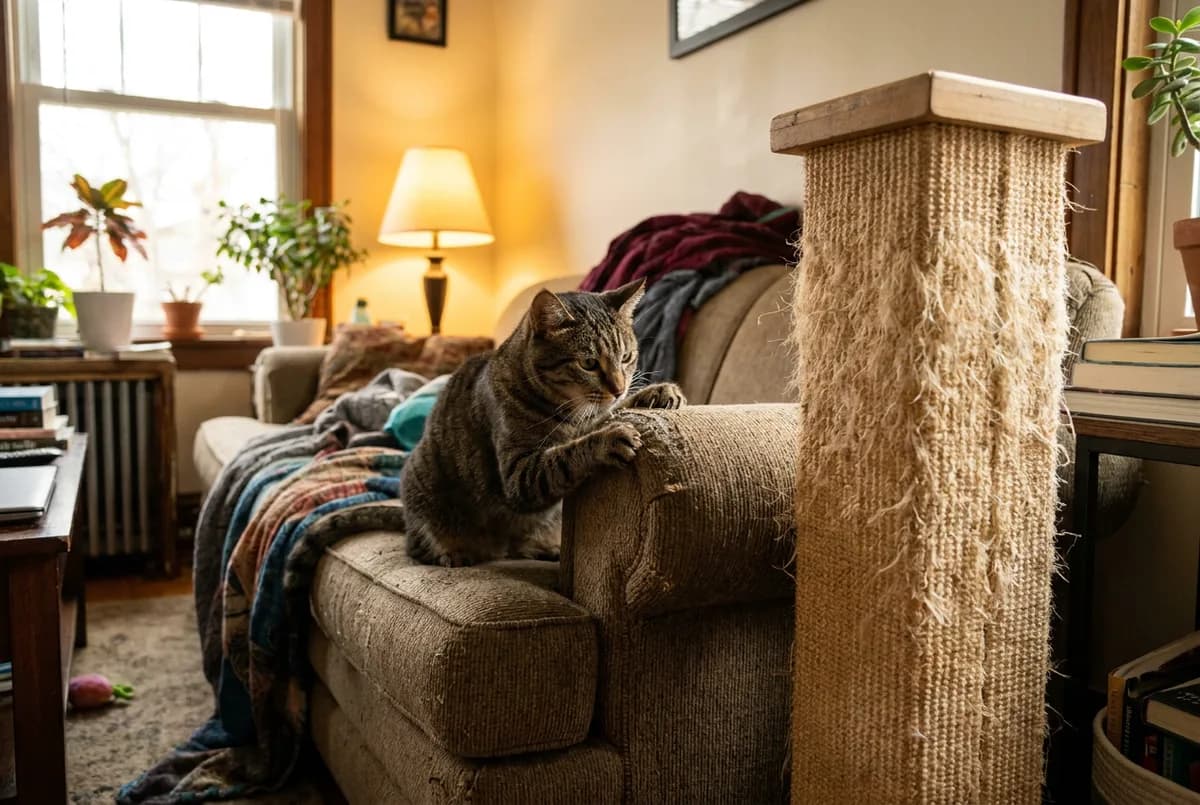
A practical plan to keep cats from scratching furniture:
- Block the target: clear furniture protector sheets or double sided tape on the sofa arm make that spot feel wrong under the paws.
- Cover it: a fitted couch cover protects the fabric while the new habit forms.
- Deter with scent: a citrus-based spray can help; test it on a hidden patch of fabric first.
- Offer the swap: stand a tall sisal post directly in front of the protected spot.
- Reward the switch: treat every scratch on the post.
The ASPCA's cat care guidance backs this redirect-and-reward approach to destructive scratching. To stop a cat from scratching the couch for good, keep the deterrent on until your cat has used the post reliably for a few weeks, then remove it gradually.
Carpet, doors and walls
Different targets call for different scratchers, so match the fix to the surface.
- Carpet: to get a cat to stop scratching carpet, lay a flat sisal mat or cardboard scratcher over the damaged patch, then cover the bare spot with a rug runner nearby.
- Doors: to get a cat to stop scratching a door, mount a scratcher on or beside it. Cats often scratch a closed door to get attention, so a scratcher there gives the habit a home.
- Door frames: to stop a cat scratching a door frame, a wall-mounted post fixed alongside the frame covers the exact edge.
- Walls: to stop a cat from scratching walls, mount a sisal post over the damaged corner and use double-sided tape on nearby bare sections.
Nail trims and why declawing is not the answer
Regular nail trims reduce the damage scratching does while your cat learns to use its post. Our guide on how to trim cat nails covers the routine step by step, and the best cat nail clippers roundup helps you pick a tool. Vinyl nail caps such as Soft Paws are another humane option for cats that keep damaging furniture.
For nail care, the best scratching post is a rough sisal one your cat uses daily. Scratching works like a natural nail file, helping shed the old outer sheath, but it does not replace trimming. No post will blunt the sharp tips, so keep trims on the calendar.
- Declawing is the amputation of the last bone of each toe, not a nail trim. The AVMA policy position says it should be considered only after attempts to prevent destructive scratching have failed, and the AAFP opposes it as an elective procedure. Posts, trims and nail caps solve the problem without surgery.
The AAFP's Cat Friendly Homes resources and the AVMA policies both treat good scratching surfaces as the first line of defense. For the full picture, read why declawing is harmful to cats.
Cat scratching post questions
These are the remaining questions readers ask before they buy, answered once here.
Most cats do best with more than one scratcher. A good rule is one scratcher near each favorite spot: beside the furniture your cat targets, near where it sleeps, and in the main living area. Multi-cat homes need extra, since some cats will not share. Mixing formats, such as one tall sisal post and one flat cardboard or sisal mat, covers both vertical and horizontal habits for a modest cost.
Replace a scratching post when the sisal is shredded through to the core, the surface has gone smooth and stopped catching claws, or the post wobbles even after you tighten it. A worn or unstable post quietly sends cats back to the furniture. Cardboard scratchers wear fastest, so refill the pad when it is flattened. Sisal rope posts can often be rewrapped, but a wobbly base usually means it is time for a new one.
Big, heavy cats like a Maine Coon or a solid British Shorthair need a tall post with a wide base. Look for at least 36 inches of sisal so the cat can stretch fully, and a footprint that will not tip under its weight. The TSCOMON 37.4-in post offers the height, and the FUKUMARU 60-in wall post cannot tip at all because it mounts to the wall. Push freestanding posts into a corner for extra support.
Yes. Scratching posts are good for kittens and senior cats, but the format matters. Kittens learn quickly, so introducing a post early builds the habit before furniture becomes a target. Senior cats with stiff joints often prefer a low horizontal scratcher or an angled pad they can use without a big stretch. The Mau's adjustable positions and the FUKUMARU floor mats suit older cats well, while a short post works fine for a small kitten.
Yes, catnip is safe for cats and is one of the easiest ways to draw a cat to a new post. Crumble dried catnip in your hand and rub it into the sisal so the scent works into the fibers, then refresh it every few days. Not every cat reacts to catnip, and young kittens often ignore it. If yours does not respond, try silvervine or simply play with a wand toy on the post.

Gayle Hickman has been researching and writing about pet behaviors since 2011. In addition to Petful, her articles have appeared on Reader's Digest, YAHOO Shine and WebVet, to name a few.
Sign up for expert-backed reviews and safety alerts all in one place.