Best Cat Water Fountains: 5 Top Picks for Healthier Hydration
Not all cat water fountains are worth it. We compared the best cat water fountains across stainless steel, ceramic, and budget picks so you can pick the right one to keep your cat hydrated and support urinary and kidney health.
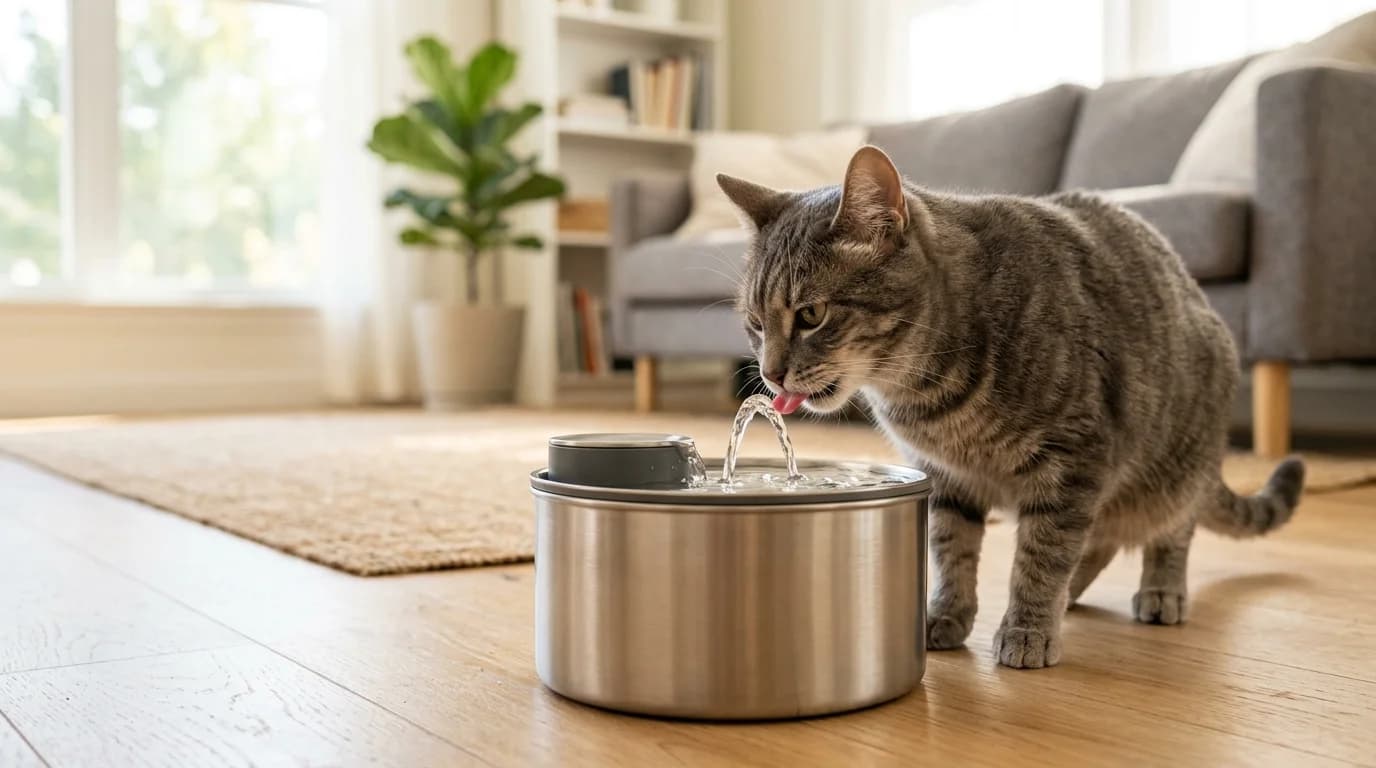
A stainless steel fountain keeps water moving, which encourages cats to drink more than they would from a still bowl.
The best cat water fountain is one your cat will actually use: made from easy-to-clean stainless steel or ceramic, quiet enough to run all day, and simple to take apart for weekly cleaning. Cats evolved as desert animals with a naturally low thirst drive, so many chronically under-drink. A 10-pound cat needs roughly 7 to 9 ounces of water a day (about one cup), and cats fed mostly dry food often fall short, which the Cornell Feline Health Center links to a higher risk of urinary and kidney disease. A recirculating cat water fountain encourages drinking by keeping water moving, filtered, and fresher than a still bowl. After comparing the most-recommended models on material, noise, capacity, and ease of cleaning, our top overall pick is the Petlibro Dockstream 2, with four more picks below plus honorable mentions for stainless steel, multi-cat homes, and tight budgets. If your cat shows signs of dehydration or urinary strain, contact your veterinarian before relying on a fountain alone.
- 1The best cat water fountain is the one your cat uses consistently; material, noise, and easy cleaning matter more than smart features.
- 2Stainless steel and ceramic are more hygienic than plastic and resist the biofilm that can trigger feline chin acne.
- 3Our top overall pick is the Petlibro Dockstream 2; the Pioneer Pet stainless steel fountain is the best stainless steel option and the Catit Flower is the best budget buy.
- 4Fountains help cats on dry food, seniors, and cats with a history of urinary or kidney issues drink more water.
- 5Refresh the water every day or two, deep clean weekly, and replace filters every 2 to 4 weeks.

Sign up for expert-backed reviews and safety alerts all in one place.
Do Cats Really Need a Water Fountain?
Most cats benefit from a fountain, and some need one. Because cats descend from desert-dwelling ancestors, they get much of their moisture from prey in the wild and have a weak thirst response. Cats on dry kibble take in far less water than cats eating wet food, and chronic under-hydration is linked to urinary crystals and stones, cystitis, and chronic kidney disease. A fountain helps because moving water is more appealing to cats than a stagnant bowl, the constant filtration keeps it cleaner, and many cats simply drink more when water is fresh and oxygenated.
A fountain is most worth it if your cat eats mostly dry food, is a senior, has had urinary problems, or tends to ignore still water. If you are not sure your cat is drinking enough, learn the signs of feline dehydration and how how and when you feed affects water intake. A fountain is a helpful tool, not a treatment: a cat already showing lethargy, straining to urinate, or going off food needs a veterinarian, not just a new water bowl.
- Introduce the fountain next to the old bowl for a few days before removing the bowl. Start on the quietest flow setting; some cats are startled by a strong stream or pump hum at first.
How We Chose the Best Cat Water Fountains
We ranked these cat water fountains on the four factors that decide whether a fountain works in real life: material and hygiene, noise level, water capacity, and how easy each one is to fully take apart and clean. Hygiene led our criteria, because a fountain that grows biofilm is worse than a plain bowl, so we favored stainless steel and ceramic over plastic. Rather than relying on marketing claims, we weighed published veterinary guidance on feline hydration and bowl hygiene, aggregated feedback from thousands of verified owner reviews, and long-running evaluations from independent reviewers who handle these fountains directly.
- Petful may earn a commission when you buy through links on this page. That never changes which fountains we recommend or how we rank them.
What Are the Best Cat Water Fountains?
Each of these five picks is widely available and wins a different use case, from the best overall to the best stainless steel cat water fountain and the best budget option. The comparison table sums them up, and detailed write-ups follow.
| Fountain | Best for | Material | Capacity | Approx. price |
|---|---|---|---|---|
| Petlibro Dockstream 2 | Best overall | Stainless top, plastic tank | 67 oz | $60 to $80 |
| PETKIT Eversweet Max 2 | Best smart / easy clean | BPA-free plastic | 67 oz | $60 to $100 |
| Pioneer Pet Stainless Steel | Best stainless steel | Stainless steel | 60 oz | $50 to $65 |
| PetSafe Drinkwell 360 | Best for multi-cat homes | Stainless steel | 128 oz | $40 to $75 |
| Catit Flower (steel top) | Best budget | Stainless top, plastic base | 100 oz | $25 to $35 |
1. Petlibro Dockstream 2: Best Overall
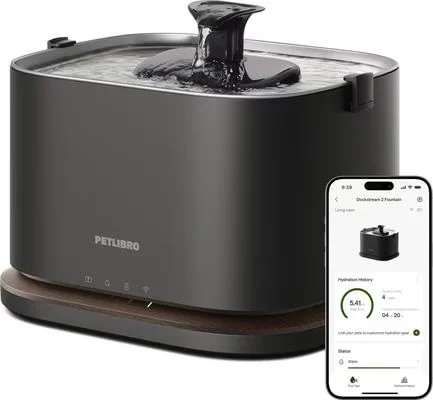
The Petlibro Dockstream 2 pairs a stainless steel drinking plate with a battery option, so you can place it anywhere without hunting for an outlet. It runs quietly, holds about 67 ounces, and a wireless pump keeps the noise down. The stainless surface is more hygienic than all-plastic fountains and wipes clean easily. It costs more than basic plastic models, and the rechargeable versions are pricier than corded ones, but for most single-cat and two-cat homes it is the best balance of hygiene, quiet operation, and convenience.
2. PETKIT Eversweet Max 2: Best Smart Fountain
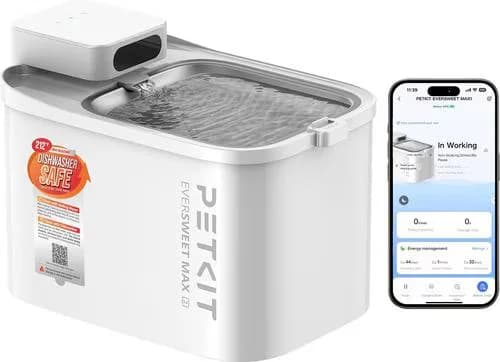
The PETKIT Eversweet Max 2 is the pick for owners who hate fiddly cleanups. It is cordless, breaks down into just a few parts, and the wireless pump is close to silent. It adds UV-C sterilization and an app that tracks battery and filter life. The trade-off is a plastic body, which is less hygienic than steel or ceramic and needs more diligent cleaning, plus the filters and app features add to the running cost. If simple maintenance and smart monitoring matter most to you, this is the one.
3. Pioneer Pet Stainless Steel: Best Stainless Steel
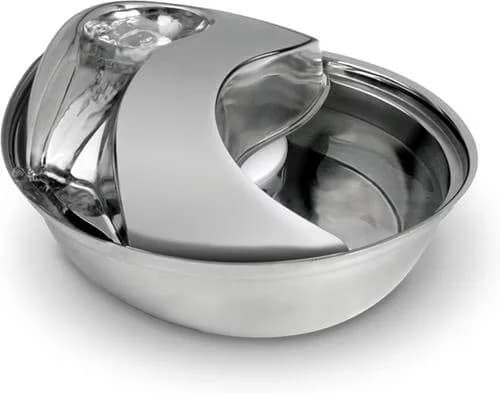
If hygiene and durability top your list, the Pioneer Pet stainless steel fountain is the best stainless steel cat water fountain on this list. The brushed steel basin resists bacteria and the biofilm that builds up in plastic fountains, it is easy to scrub, and Pioneer Pet has a long buy-it-for-life reputation among cat owners. The downsides are minor: steel shows water spots, and it is corded rather than battery-powered. For a low-maintenance fountain that lasts years, it is hard to beat.
4. PetSafe Drinkwell 360: Best for Multi-Cat Homes
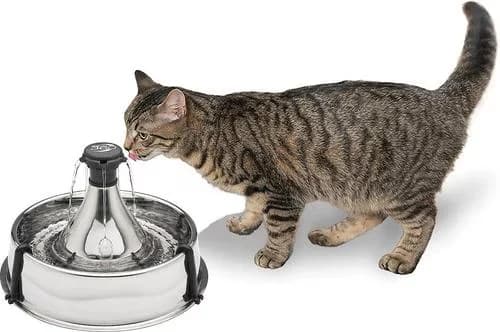
The PetSafe Drinkwell 360 is built for households with several cats. Its stainless steel tower holds a generous 128 ounces and offers up to five adjustable streams with 360-degree access, so more than one cat can drink at the same time without crowding. With more parts comes a slightly longer cleaning routine, but the capacity and multi-cat access make it the standout for busy, multi-pet homes.
5. Catit Flower (Stainless Steel Top): Best Budget
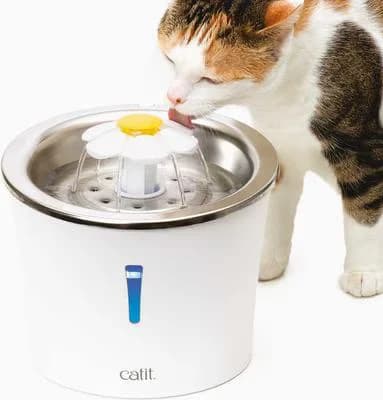
The Catit Flower is the most popular entry-level pick for a reason: it is inexpensive, holds about 100 ounces, offers multiple flow settings, and is sold almost everywhere. This stainless steel top version adds a metal drinking surface that is more hygienic than the original all-plastic Flower, though the base reservoir is still plastic and needs regular cleaning. If you are trying a fountain for the first time or shopping on a budget, it is a sensible, low-risk place to start.
Other Cat Water Fountains Worth Considering
These did not make our top five but are strong choices for specific needs:
Pioneer Pet Big Max. The larger stainless steel sibling of our top stainless pick, with a high capacity that suits homes with several cats or a single heavy drinker.
Catit Pixi. An affordable, app-connected cat water fountain that runs quietly and is one of the most widely reviewed budget options available.
Casfuy Cordless. A battery-powered, motion-activated fountain that runs only when your cat approaches, which saves power and keeps noise to a minimum.
What Types of Cat Water Fountains Are There?
Cat water fountains differ most in three ways: material, power source, and flow style. Knowing the categories makes the choice much easier.
By material: stainless steel, ceramic, or plastic
A stainless steel cat water fountain is the most durable and the easiest to keep hygienic, which is why it is the go-to for low-maintenance owners. A ceramic cat water fountain is heavier, tends to run very quietly, and many basins are dishwasher safe. Plastic is the cheapest and lightest, but it scratches over time and is the material most associated with feline chin acne. If your cat has had chin breakouts or any history of lower urinary tract disease, choose steel or ceramic and clean it often.
By power: corded or cordless
Corded fountains run continuously and never need recharging, so they suit a permanent spot near an outlet. A cordless or wireless cat water fountain runs on a rechargeable battery, so you can place it anywhere, and this is the fastest-growing premium category. Cordless models trade a few weeks of battery life for that freedom.
Automatic fountains versus water dispensers
An automatic cat water fountain uses a pump to recirculate and filter the water around the clock. A gravity cat water dispenser is different: it simply refills a bowl from a sealed tank as your cat drinks, with no pump. A dispenser is quieter and cheaper, but it does not filter or aerate the water, so it does little to encourage a reluctant drinker. For hydration, a true fountain is the better tool.
How Do You Choose the Right Cat Water Fountain?
Beyond type, four practical factors separate a fountain your cat loves from one that ends up in a closet. Noise matters because a loud pump scares a sensitive cat away, so look for a wireless or noise-insulated pump. Capacity should match your household, with larger reservoirs for multi-cat homes or for owners who travel. Filters keep the water clean but add an ongoing cost, so check how often each one needs replacing. Ease of cleaning is the factor most people underrate: a fountain with fewer parts gets cleaned more often, which is what actually protects your cat.
Whatever you choose, the same hygiene rules that apply to keeping your cat's water bowl clean apply to fountains, only more so, because pumps and filters create extra surfaces for buildup.
- A neglected fountain grows biofilm and bacteria faster than a simple bowl. If you will not commit to weekly cleaning and regular filter changes, a fountain may do more harm than good.
How Often Should You Clean a Cat Water Fountain?
Refresh the water every one to two days, give the fountain a quick rinse and wipe every few days, and do a full deep clean once a week. A weekly clean means disassembling the unit, scrubbing every part (including the pump and any narrow tubing where slime hides) with a brush and mild soap, and rinsing thoroughly. Replace carbon filters every two to four weeks, or sooner if you have multiple cats. Running costs are low: most fountain pumps draw only about 1.5 to 3 watts, so the electricity adds up to just a few dollars a year.
Frequently Asked Questions
For most cats, yes. Fountains encourage cats to drink more by keeping water moving and fresh, which is especially valuable for cats on dry food, senior cats, and cats with a history of urinary or kidney issues. The key is choosing a hygienic material and cleaning it regularly.
Vets tend to favor stainless steel or ceramic fountains over plastic for hygiene, and they emphasize regular cleaning over any specific brand. The best fountain is one made of an easy-to-sanitize material that your individual cat will actually drink from.
Both are better than plastic because they are non-porous and resist bacteria and biofilm. Stainless steel is the most durable and easiest to scrub; ceramic is heavier, very quiet, and often dishwasher safe. Avoid plastic if your cat has chin acne.
For encouraging a cat to drink, yes. An automatic fountain recirculates and filters moving water, which appeals to cats; a gravity water dispenser only refills a still bowl and does not filter or aerate. Choose a dispenser only if quiet, low-cost refilling is your main goal.
A cordless fountain is worth it if you want to place it away from an outlet or hate visible cords. The trade-off is recharging every few weeks. Performance is otherwise similar to a corded model of the same brand.
Refresh the water every one to two days, wipe the fountain down every few days, and deep clean it weekly. Replace the carbon filter every two to four weeks, more often in multi-cat homes.
No. Most fountain pumps draw only about 1.5 to 3 watts, which costs just a few dollars per year to run continuously. The pump is designed to operate around the clock.
A cat water fountain is one of the simplest ways to support your cat's hydration, but it works best alongside a moisture-rich diet and regular veterinary checkups. If your cat's drinking habits change suddenly, in either direction, talk to your veterinarian.

Coreen Saito is a pet writer and longtime shelter volunteer with more than a decade in animal rescue. She covers cat behavior, breed care, and the small, ordinary science of sharing a life with companion animals, with a particular focus on honest takes about the products and decisions that actually matter. At home in Arizona, she's outranked by Mac (a dog with the loudest opinion in the house), Rebel (a cat who governs by quiet authority), and Meri (an orange tabby who runs the late shift and the laundry basket). She writes about all three, plus the rescues that keep coming through her life, at LifeWithMinty.com.
Sign up for expert-backed reviews and safety alerts all in one place.


