How to Keep Cats Happy and Healthy: A Complete Indoor Care Guide
A vet-informed guide to keeping cats happy and healthy indoors: nutrition, preventive vet care, enrichment and play, vertical space, litter-box setup, how to entertain a single cat while you are away, and the signs of a happy cat.
Petful is reader supported. As an affiliate of platforms like Amazon and Chewy, we may earn a commission when you buy through links on this page. There is no extra cost to you.
Your cat sleeps 14 hours a day, hunts an imaginary mouse at 3 a.m., and judges you from the top of the fridge. Behind that aloof routine is a sensitive animal whose physical health and emotional wellbeing are tightly linked. The good news: learning how to keep cats happy and healthy is mostly about a handful of daily habits, not expensive gear or guesswork.
Indoor cats live longer than their outdoor counterparts, but four walls can get boring fast, and boredom shows up as overeating, over-grooming, litter-box protests, and stress-related illness. This guide walks through everything that matters most, from food and weight to enrichment, vet care, keeping a single cat busy while you work, and reading your cat's mood, so you can build a home where your cat genuinely thrives.
- 1Feed measured, high-protein meals and watch the waistline. Roughly 60% of cats are overweight or obese (about 50% at the vet clinic, per Cornell).
- 2Book a wellness exam at least once a year (twice for seniors). Cats hide illness by instinct.
- 3Play with intent for 10 to 20 minutes, twice a day, to satisfy the hunt-catch-kill instinct.
- 4Add vertical space and a sturdy scratching post so your cat can climb, survey, and stretch.
- 5Follow the litter-box n+1 rule: one box per cat, plus one extra, scooped daily.
- 6Build indoor cat enrichment that runs without you: food puzzles, window views, and rotated toys for the hours you are at work.
- 7Learn the signs of a happy cat (slow blinks, upright tail) and the stress signals (hiding, flat ears) so you catch problems early.

Sign up for expert-backed reviews and safety alerts all in one place.
How do you keep cats happy and healthy indoors?
To keep cats happy and healthy indoors, meet five core needs daily: high-protein nutrition with portion control, interactive play, a clean private litter setup, vertical space, and preventive vet care. These mirror the five pillars of a healthy feline environment from the American Association of Feline Practitioners, and with roughly half of cats overweight, weight management is the single highest-impact habit.
Everything below expands on those pillars in plain English, with the specific numbers vets actually recommend, plus the questions owners ask most: how to keep an indoor cat happy in a small apartment, how to keep a single cat entertained while you work, and how to read the signs of a happy cat. Start with whichever section your cat needs most, then layer in the rest. Small, consistent changes beat one big overhaul.
What should I feed my cat, and how do I prevent weight gain?
Cats are obligate carnivores, meaning they need a meat-based, high-protein diet to thrive, with minimal carbohydrate filler. Feed a complete, life-stage-appropriate food (kitten, adult, or senior) that meets AAFCO nutritional standards, and measure portions rather than free-feeding. Obesity is the most common preventable health problem in cats, affecting roughly 60% of them by national surveys (Cornell sees about 50% in clinics), and it drives diabetes, arthritis, and urinary disease.
Hydration matters as much as the food bowl. Cats evolved from desert animals and have a low thirst drive, so many run mildly dehydrated, which stresses the kidneys and bladder. Wet food, a pet water fountain, and multiple water stations around the house all help. If your cat treats mealtime like an emergency or turns up its nose at the bowl, our guides on a cat who goes crazy for food and the picky-eater cat dig into the why and the fix.
- Most indoor adult cats need about 20 calories per pound of ideal body weight per day, but bodies vary. Ask your vet for a target calorie count at the next visit, then read the label and use a measuring cup or a kitchen scale instead of eyeballing it.
- Cats that stop eating or lose weight too fast can develop hepatic lipidosis (fatty liver disease), which is life-threatening. Cornell recommends losing no more than 1 to 2% of body weight per week under vet supervision, and a cat that refuses food for more than 24 hours needs to be seen.

63-inch multi-level cat tree with scratch posts, hammock, plush perches, and dangling toys. Vertical territory is non-negotiable for high-energy climbing breeds like the Bengal.
Petful may earn a commission when you click through to Chewy, at no extra cost to you.
How often does a healthy cat need to see the vet?
A healthy adult cat needs a wellness exam at least once a year, and senior cats (around 10 and up) benefit from twice-yearly visits, per AAHA and AAFP life-stage guidelines. Cats are masters at masking pain and illness, an evolutionary holdover that hides weakness from predators, so a yearly checkup often catches kidney disease, dental problems, hyperthyroidism, and weight changes long before you would notice symptoms at home.
Preventive care also means staying current on core vaccinations, parasite prevention, and dental health. Yes, indoor cats still need flea protection and dental care: fleas hitchhike in on people, dogs, and secondhand furniture, and most cats over age three show some dental disease. See our explainer on how indoor cats get fleas for the surprising routes.
Preventive-care checklist
- Annual wellness exam (twice a year for seniors and cats with chronic conditions).
- Core vaccines kept current on your vet's schedule (FVRCP and rabies at minimum).
- Year-round flea, tick, and worm prevention, even for indoor-only cats.
- Dental checks at each visit, plus at-home brushing or vet-approved dental treats.
- Microchip plus a collar with an ID tag in case your indoor cat ever slips out.
- A monthly at-home once-over: feel for lumps, check teeth and gums, weigh if you can.
- A male cat straining in the litter box and producing little or no urine is a medical emergency (a urinary blockage can be fatal within hours). Other red flags: not eating for over a day, labored breathing, sudden hind-leg weakness, or repeated vomiting. When in doubt, call your vet or an emergency clinic right away.

108-oz stainless steel pet fountain with quiet pump and water-level window. Bengals are notoriously water-obsessed; a flowing fountain encourages hydration and pulls them away from sinks and toilets.
Petful may earn a commission when you click through to Chewy, at no extra cost to you.
What enrichment and play does an indoor cat need?
Indoor cats need daily interactive play and environmental enrichment to satisfy their natural hunting instincts. Aim for two play sessions of 10 to 20 minutes using wand toys, feather teasers, or toy mice that let your cat stalk, chase, pounce, and catch, then offer a small treat or meal afterward to complete the hunt-catch-kill-eat sequence. Indoor cat enrichment prevents the boredom that fuels destructive scratching, aggression, and overeating.
Enrichment goes beyond toys. Rotate a handful of toys in and out so they feel new, scatter-feed or use food puzzles to make your cat work for kibble, and give a window view of birds and squirrels (cat TV is real). A dedicated play zone makes all of this easier. Our walkthrough on building an indoor cat play area shows how to set one up in any size home, and if you are weighing the indoor lifestyle itself, see how to keep a cat indoors safely and happily.
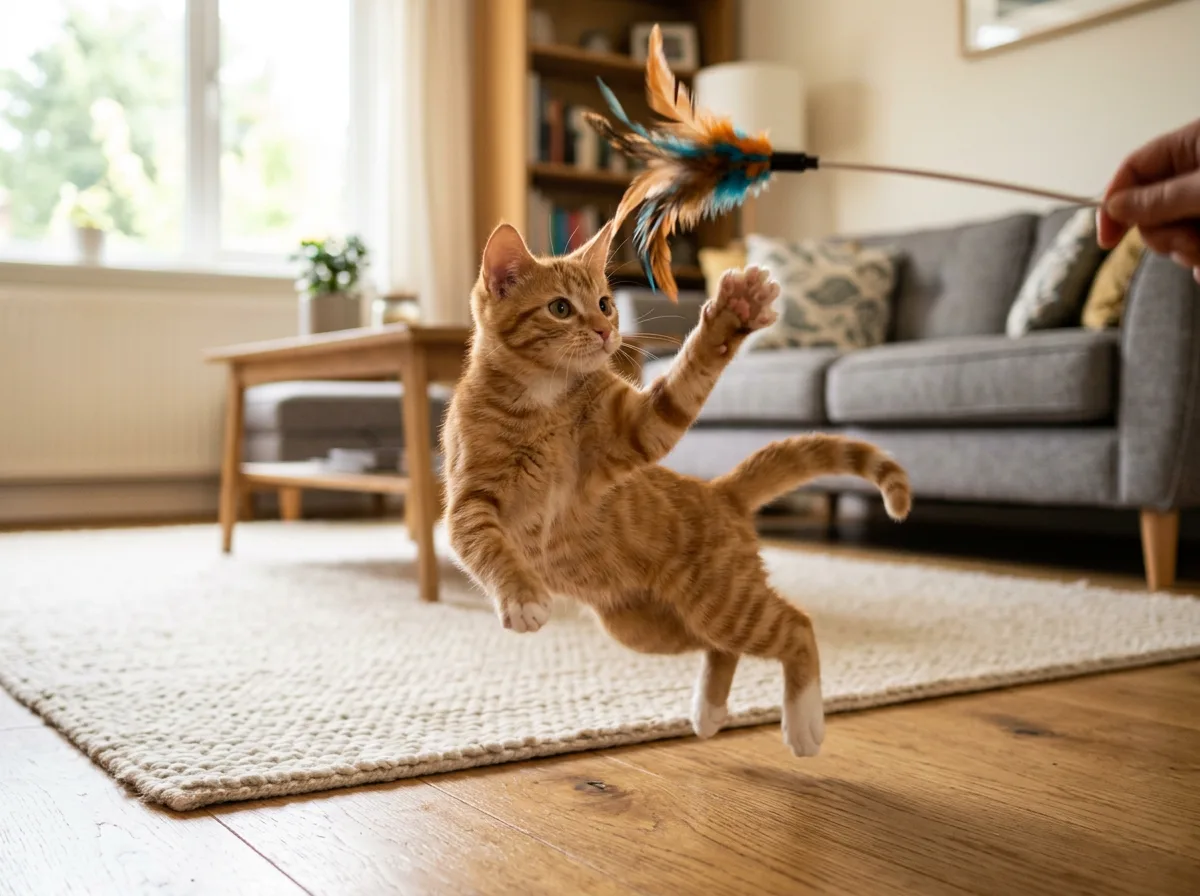
- Laser toys are great exercise but can frustrate a cat who never gets to catch the dot. Always end a laser session by landing the beam on a physical toy or treat so your cat gets a real catch, then put the laser away.
How to keep a cat entertained while you are at work or away
To keep a cat entertained while you are at work, set up enrichment that runs without you: a puzzle feeder or treat ball that doles out part of the daily ration, a window perch with a bird feeder in view, and two or three rotated toys left out for the day. The Ohio State Indoor Pet Initiative recommends hiding small portions of food around the house so a home-alone cat can forage, which turns an empty afternoon into a low-key hunt.
For longer stretches, build a predictable rhythm around the time you are gone. Do a real wand-toy hunt right before you leave so your cat naps through the quiet hours, leave a cracked blind for sun and a view, and consider a second cozy resting spot in a warm, safe room. Cat-specific videos or background TV can help some cats, though a window and a food puzzle reliably out-perform a screen for keeping an indoor cat happy and active all day.
- Square footage matters less than vertical and mental space. Go up the walls with shelves and a tall cat tree, give one good window perch, run two short hunts a day, and rotate toys weekly. A well-enriched studio beats a bare four-bedroom house for a cat.
How do I keep a single cat entertained and from getting lonely?
A single cat needs more of your direct engagement than a cat with a feline buddy, because you are the playmate. Keep a lone cat entertained with at least two interactive play sessions a day, a foraging puzzle for solo time, and a high window perch for stimulation, then bond through slow blinks and on-its-terms petting. Many cats are content as only cats; signs of loneliness include excessive meowing, clinginess, over-grooming, or destructive boredom.
Whether a second cat would help depends entirely on your cat's personality, not a rule. Some cats genuinely prefer to rule their territory alone, while social cats thrive with a compatible companion. Our guide to whether cats need friends walks through how to read your own cat before you adopt, and if loneliness is showing up at the food bowl, the cat who goes crazy for food piece covers boredom eating.

Color-changing crystal litter that flags pH shifts in your cat's urine, an early warning sign of UTIs, kidney issues, and more.
Petful may earn a commission when you click through to Chewy, at no extra cost to you.
Why do cats need vertical space and scratching posts?
Cats are climbers by nature, and vertical space lets them survey their territory, exercise, and retreat from stress, which is why a high perch is one of the AAFP's recommended environmental resources. Cat trees, wall shelves, and window hammocks turn a small apartment into a much bigger world for a cat, and they reduce conflict in multi-cat homes by giving each cat its own elevated real estate.
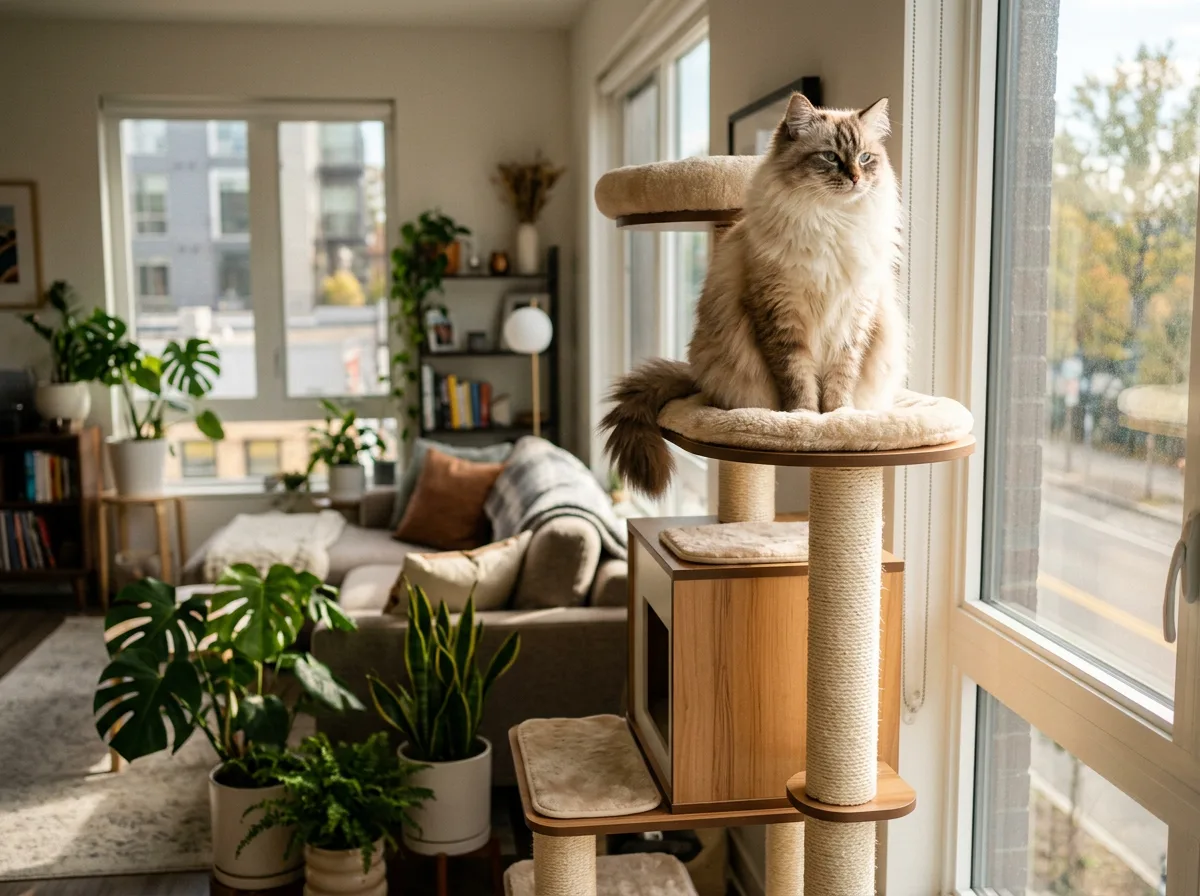
Scratching is not bad behavior; it is a biological need. Cats scratch to stretch their spine, mark territory with scent glands in their paws, and shed the outer sheaths of their claws. Give at least one sturdy, tall vertical post (tall enough for a full stretch) plus a horizontal option, since cats have individual preferences. Place posts near sleeping areas and any furniture your cat already targets, and redirect with praise and catnip rather than punishment.
- A scratching post that wobbles will be ignored. Choose a heavy-based, rigid post your cat can lean its full weight into, and anchor cat trees so they do not tip when an enthusiastic cat launches off them.
How many litter boxes do cats need, and how do I set them up?
The litter-box rule of thumb is n+1: one box per cat, plus one extra, so a single-cat home needs two boxes and a two-cat home needs three. Scoop at least once a day and do a full litter change regularly, because cats are fastidious and a dirty or crowded box is one of the top reasons they start eliminating elsewhere. Most cats prefer large, uncovered boxes with unscented clumping litter in a quiet, low-traffic spot.
Litter habits are also a health dashboard. Straining, frequent tiny trips, blood in the urine, or going outside the box can signal a urinary tract infection, crystals, or a blockage, so changes deserve a vet call rather than a scolding. For the behavior side, see what to do when your cat refuses the litter box and how a dirty box can lead to bladder infections.
- Cats experience smells far more intensely than we do, and strong floral or perfumed litters can drive a sensitive cat away from the box entirely. When in doubt, go unscented and let the daily scoop handle odor.
How do I keep my cat mentally stimulated?
Mental stimulation keeps an indoor cat's brain as fit as its body, and the easiest tools are food puzzles, training, scent variety, and a predictable routine. Feeding part of the day's ration through a puzzle feeder taps the foraging instinct, short clicker-training sessions (sit, target, high-five) build confidence, and new textures or cat-safe plants like cat grass add novelty. A steady daily rhythm of feeding, play, and rest also lowers anxiety, because cats find security in predictability.
Bonding is enrichment too. Many cats relax when you talk softly, slow-blink, and pet them on their terms, in the spots they actually enjoy. Learn the map of feline sweet spots in our guide to how to pet a cat so your affection lands as comfort rather than overstimulation.

Feathered teaser wand with catnip-stuffed bird. Pairs perfectly with the no-bite training policy: redirect Bengal play drive into a 10-minute interactive session with the wand.
Petful may earn a commission when you click through to Chewy, at no extra cost to you.
What are the signs of a happy cat versus a stressed cat?
The signs of a happy cat are relaxed, open body language and active engagement with its world, while a stressed cat hides, shrinks, or lashes out. The quickest tells are the eyes, ears, tail, and routine: a content cat offers slow blinks, an upright tail with a little hook, and a steady appetite, whereas a stressed cat keeps its ears flat, tail tucked, and may stop eating, over-groom, or avoid the litter box. Use the table below as a fast reference, and treat sudden changes as a reason to check in with your vet.
| Signal | Happy, content cat | Stressed or unwell cat |
|---|---|---|
| Eyes | Soft, slow blinks; relaxed half-closed gaze | Wide pupils; staring or avoiding eye contact |
| Ears | Forward and relaxed | Flattened, sideways, or pinned back |
| Tail | Upright with a gentle hook; loose and waving | Tucked low, puffed, or thrashing fast |
| Posture | Loose, lounging, exposing belly | Crouched, tense, or hiding away |
| Vocal and purr | Gentle purring, chirps, trills | Excessive meowing, growling, hissing, or silence |
| Appetite | Eating normally, drinking well | Skipping meals or sudden overeating |
| Grooming | Tidy, regular self-grooming | Over-grooming bald patches or stopping entirely |
| Litter habits | Consistent, in the box | Straining, accidents, or going outside the box |
One more framework worth knowing: the 3-3-3 rule for a new cat (about 3 days to decompress, 3 weeks to settle into a routine, and 3 months to feel fully at home). Give a newcomer a quiet starter room and patience, and the happy signals above will appear on their own timeline.
How to keep cats happy and healthy: putting it all together
Keeping a cat happy and healthy is not one grand gesture; it is the stack of small daily habits in this guide: a measured high-protein meal, two short play sessions, a clean box, a tall perch, enrichment that runs while you are at work, a yearly vet visit, and the attention to notice when something feels off. Cats reward that consistency with the slow blinks, head bumps, and lap naps that make sharing a home with them so good.
Pick one section to improve this week, whether that is portion control, an extra litter box, a foraging puzzle for the workday, or a real wand-toy hunt before bed. Layer in the rest over time, and you will have a cat that is not just surviving indoors but genuinely thriving.
The 3-3-3 rule is a rough timeline for a newly adopted cat adjusting to your home: about 3 days to decompress and feel safe (often hiding), 3 weeks to learn the routine and start showing personality, and 3 months to feel fully settled and bonded. Give a new cat a quiet starter room, predictable feeding and play times, and patience, and let it set the pace.
Increase your cat's happiness by meeting its core instincts every day: two short interactive play sessions, a measured high-protein diet, vertical space to climb, a clean litter box (n+1 rule), and a predictable routine. Add food puzzles for mental stimulation, give a window view, and bond through slow blinks and petting on your cat's terms. Consistency and respect for its space matter more than expensive toys.
Keep an indoor cat entertained while you are at work with enrichment that runs without you: a puzzle feeder that doles out part of the daily food, small portions hidden around the house to forage, a window perch with a bird feeder in view, and two or three rotated toys left out for the day. Run a real wand-toy hunt right before you leave so your cat naps through the quiet hours, and rotate the toys weekly so they stay novel.
A single cat relies on you as the playmate, so give a lone cat at least two interactive play sessions a day, a foraging puzzle for solo time, and a high window perch. Many cats are perfectly content as only cats; signs of loneliness include excessive meowing, clinginess, over-grooming, or boredom-driven destruction. Whether a second cat helps depends on your cat's personality, not a rule, so read your cat before adopting another.
The clearest signs of a happy cat are relaxed body language and engagement: slow blinks, an upright tail with a little hook, forward ears, a loose lounging posture (sometimes showing the belly), gentle purring and chirps, a steady appetite, tidy self-grooming, and consistent litter-box use. Hiding, flat ears, a tucked or puffed tail, over-grooming, or skipped meals point the other way and are worth a vet check.
Chronic kidney disease is often called a silent killer in cats because it progresses slowly and shows few obvious signs until significant kidney function is already lost. Heart disease and hyperthyroidism are similarly stealthy. This is exactly why yearly wellness exams (twice a year for seniors) matter: routine bloodwork and a physical can catch these conditions early, when treatment is most effective.
Spending calm time with a cat (gentle petting and a purring cat on your lap) is associated with lower stress and cortisol levels in many people, and a relaxed, predictable environment likewise lowers stress hormones in the cat. The wellbeing runs both ways: a secure, enriched home with reliable routines helps keep your cat's stress down, which supports both behavior and physical health.
Cats say "I love you" mostly through body language. The classic one is the slow blink, a slow, soft closing of the eyes that signals trust and affection; you can slow-blink back. Other signs of feline love include head bumps and cheek rubs (marking you with scent), an upright tail with a little hook, kneading, following you around, and choosing to nap near or on you.
Cats are most annoyed by dirty or crowded litter boxes, loud noises and chaos, heavily scented products, being petted in unwanted spots (especially the belly) or for too long, and abrupt changes to their routine or territory. Lack of personal space, missed meals, and being startled also stress them. Respecting their preferences and keeping a predictable, clean environment prevents most feline irritation.
Yes. Indoor cats still need at least an annual wellness exam, current vaccines, and year-round parasite prevention. Cats hide illness, so checkups catch problems like kidney and dental disease early. Fleas and other parasites reach indoor cats by hitching rides on people, dogs, and used furniture, so skipping prevention leaves even an indoor-only cat at risk.
For one cat, provide two litter boxes (the n+1 rule: one per cat plus one extra). Place them in separate, quiet, low-traffic locations, use large uncovered boxes with unscented clumping litter, and scoop at least once daily. Having more than one box reduces accidents and gives your cat options, which is especially important if one spot ever feels unsafe or too busy.

Coreen Saito is a pet writer and longtime shelter volunteer with more than a decade in animal rescue. She covers cat behavior, breed care, and the small, ordinary science of sharing a life with companion animals, with a particular focus on honest takes about the products and decisions that actually matter. At home in Arizona, she's outranked by Mac (a dog with the loudest opinion in the house), Rebel (a cat who governs by quiet authority), and Meri (an orange tabby who runs the late shift and the laundry basket). She writes about all three, plus the rescues that keep coming through her life, at LifeWithMinty.com.
Sign up for expert-backed reviews and safety alerts all in one place.