Top 6 Absolute Worst Dog Food Ingredients
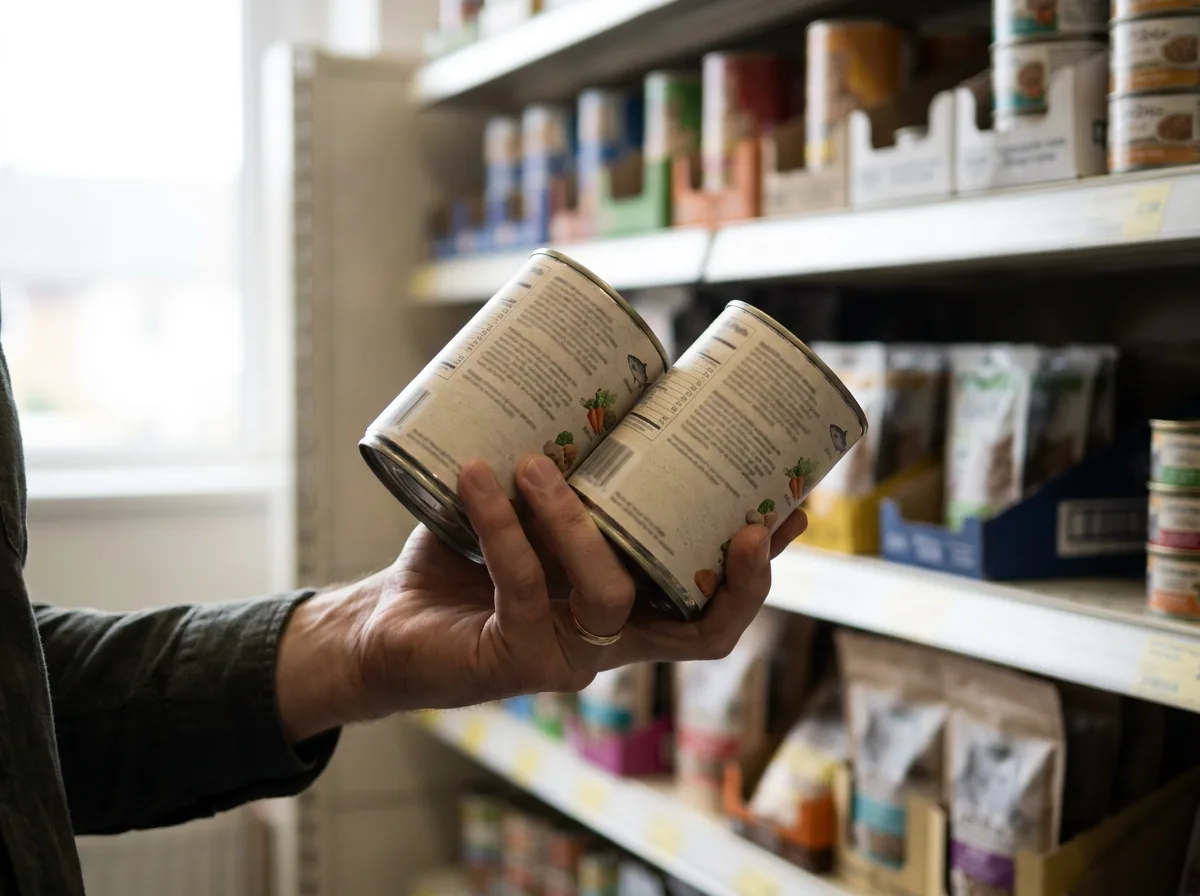
Take a look at your pet food label, and if you see any of the following phrases, put the bag or can down and move on to the next product.


1. Meat Byproducts
I'm nottalking about "chicken byproducts," "beef byproducts," etc., which come from specific, named animals. I'll give them a pass.
What I'm specifically pointing a finger at here is "meat byproducts" — written just like that on the pet food label. If you see this generic ingredient on the bag or can, think twice.
What kind of meatexactly did these "meat byproducts" come from? Personally, I'd like to know that information, but that information is not being shared with us.
By law, this generic "meat" may come only from cattle, pigs, sheep or goats. 1
But wouldn't you still like to know the exact meat?
In addition, “meat byproducts frequently include waste parts as well as rejected meats,” according to Dr. Michel Selmer, DVM.
Dr. Karen Becker, DVM, says, “There couldbe something beneficial thrown in, like the heart or gizzard — but because there's such potential for undesirable pieces and parts … it's better to avoid them altogether.”

2. Animal Fat
Next on the list of the worst dog food ingredients is animal fat.
“Again, there's no animal specified, so it’s anyone’s guess where the fat came from,” says Dr. Becker.
Not to mention, the chemical additives and preservatives used to process animal fats may cause chronic allergies and skin problems. With a premium dog food, you’ll get higher-quality fats.

3. Animal Digest
This is a common ingredient in the big-brand dog foods, and Purina calls it a “high-quality” ingredient. 2
Really — they actually say that. Which leaves me baffled, because animal digest is something I’d never want to see in my pet’s food.
“Animal digest is a boiled concoction made from unspecified parts of unspecified animals,” says dog nutrition expert Tracie Hotchner, author of The Dog Bible. 3
“The animals used for this broth can be obtained from any source, so there is no control over quality or contamination,” she adds. “Ingredients can come from restaurant and supermarket refuse, the dead, diseased, disabled or dying (‘4D’) animals raised for human food, other farm animals.…”

4. Ethoxyquin
Next on the list of the worst dog food ingredients is ethoxyquin — a poison that is currently permitted as a preservative in some commercial dog foods. 4,5
But ethoxyquin “should never be fed to any pet,” according to Dr. Becker.
Iams responds that “all studies conducted to date prove that ethoxyquin is safe for use in all animal foods when used at approved levels” 6
— but I have to ask the obvious question: What happens when our dogs eat it every single day, meal after meal?

5–6. BHA and BHT
Last on the list of the worst dog food ingredients are BHA (butylated hydroxyanisole) and BHT (butylated hydroxytoluene), which have been linked to cancer. 7
“You should look for natural preservatives, such as the herb rosemary or Vitamins E or C, instead of chemical additives like these,” says Dr. Selmer.
Even though there is more and more evidence now that these chemical-based preservatives may harm your pet’s health, it is still normal within the industry to slip them into various dog foods. 8
“These chemical additives and preservatives may lead to aggressiveness, mood swings, hyperactivity, and regurgitation after meals or skin allergies,” says Dr. Selmer.
My opinion? There are so many dog foods out there that have better quality ingredients, so don't even bother with products that have any of those 6 ingredients listed above.
Always read the labels on the packaging when deciding what the best dog food is for your dog.
References
- "What’s in the Ingredients List?" Association of American Feed Control Officials. https://talkspetfood.aafco.org/whatisinpetfood.
- "Myth: Animal Digest Is a Low Quality Ingredient." Purina Pro Club. https://www.purinaproclub.com/resources/dog-articles/nutrition/animal-digest.
- Hotchner, Tracie. The Dog Bible: Everything Your Dog Wants You to Know. Penguin Random House. 2005.
- Błaszczyk, Alina, PhD. "DNA Damage Induced by Ethoxyquin in Human Peripheral Lymphocytes." Toxicology Letters 163, no. 1 (May 5, 2006): 77–83. https://pubmed.ncbi.nlm.nih.gov/16266792/.
- "Labeling and Use of Ethoxyquin in Animal Feed." U.S. Food and Drug Administration. July 31, 2018. https://www.fda.gov/animal-veterinary/ingredients-additives/labeling-and-use-ethoxyquin-animal-feed.
- "Why Ethoxyquin Is Important to Your Dog’s Health." Iams. https://www.iams.com/pet-health/dog-life-stages/why-ethoxyquin-is-important-to-your-dog-s-health.
- "Butylated Hydroxyanisole," in Report on Carcinogens, 14th Edition. National Toxicology Program of the U.S. Department of Health and Human Services. Nov. 3, 2016. https://ntp.niehs.nih.gov/ntp/roc/content/profiles/butylatedhydroxyanisole.pdf.
- "Problems With Artificial Preservatives in Dog Food." Whole Dog Journal. April 24, 2019. https://www.whole-dog-journal.com/food/problems-with-artificial-preservatives-in-dog-food/.

Sign up for expert-backed reviews and safety alerts all in one place.

Dave Baker is a journalist and editor who has worked at The New York Times and The Nation magazine. He was also part of the 2006 Pulitzer Prize–winning team at The Times-Picayune newspaper of New Orleans. After the devastation of Hurricane Katrina, he moved to Brooklyn, New York, where Petful is now based. A longtime advocate for pet food safety, Dave tracked pet food recalls for nearly 15 years.
Sign up for expert-backed reviews and safety alerts all in one place.