Cat Separation Anxiety: Signs, Causes and Treatment
Cat separation anxiety is a real behavioral condition affecting social cats. Unlike dogs, cats often show signs only during longer absences. Learn the warning signs, causes, and how to help your anxious cat.

Veterinarian · BVMS, MRCVS
Petful is reader supported. As an affiliate of platforms like Amazon and Chewy, we may earn a commission when you buy through links on this page. There is no extra cost to you.
Cat separation anxiety is a real behavioral condition in which a strongly bonded cat becomes distressed when its owner leaves or is out of sight. It is far less common than the canine version, and cats usually show signs only during longer absences rather than the moment you walk out the door. According to the American Veterinary Medical Association (AVMA), separation anxiety in pets is rooted in the disruption of an attachment bond, not in spite or "acting out." If your cat urinates on your bed, cries when you grab your keys, or shadows you from room to room, this guide walks through the signs, causes, and evidence-based ways to help.
- 1Cat separation anxiety is a genuine behavioral disorder, not a cat being "dramatic" or vindictive
- 2Unlike dogs, cats often show signs only during longer absences and may hide distress while you are home
- 3Common signs include vocalization, urinating or defecating outside the litter box, overgrooming, and destructive scratching
- 4Always rule out medical causes (especially urinary disease) with a veterinarian before treating behavior
- 5Treatment combines environmental enrichment, routine, gradual desensitization, and sometimes pheromones or medication

Sign up for expert-backed reviews and safety alerts all in one place.
Do Cats Get Separation Anxiety?
Yes, cats get separation anxiety. It is an officially recognized feline behavioral disorder, though it is diagnosed far less often than in dogs. International Cat Care (ICC), a UK veterinary charity, notes that cats are capable of forming strong attachments to their owners and can experience real distress when separated, even though the popular image of the "aloof, independent" cat suggests otherwise.
The key difference is timing. Dr. Amy Marder, a veterinary behaviorist associated with Tufts University School of Veterinary Medicine, has long pointed out that cats with separation distress tend to react to extended absences (a workday, a weekend trip) rather than the brief departures that trigger many anxious dogs. A 2020 study in the journal PLOS ONE found that a meaningful share of cats displayed at least one separation-related behavioral problem, with destructive behavior and excessive vocalization among the most reported. So the condition is real, measurable, and worth taking seriously.
- Cats are often called low-maintenance and self-sufficient. That reputation is exactly why feline separation anxiety gets missed: an owner sees a wrecked blind or a wet duvet and assumes "bad behavior" instead of distress. Social cats can bond as tightly as any dog.
What Is Cat Separation Anxiety?
Cat separation anxiety is a stress response that occurs when a cat is separated from a person (or sometimes another animal) it is strongly attached to. The cat does not simply miss you. It experiences genuine physiological stress, and that stress drives the behaviors owners notice, such as house soiling, vocalizing, and overgrooming. The American Animal Hospital Association (AAHA) frames anxiety-related conditions in pets as treatable medical and behavioral problems, not character flaws, and stresses that punishment makes them worse.
Behaviorally, the condition sits on a spectrum. A mildly anxious cat might pace and meow for the first hour after you leave, then settle. A severely affected cat may refuse to eat, soil the home repeatedly, or groom a patch of fur down to bare skin. Understanding that this is an anxiety disorder, and not a discipline problem, is the foundation of every effective treatment plan.

 Sponsored
Want a vet's help with your cat's anxiety or behavior?
Talk to a licensed vet at Dutch over video, often the same day. They can recommend treatment and prescribe it when it's appropriate.
Use code Pets60
Plans start at $12/month · covers up to 5 pets
- Licensed vets in most states
- Rx for 150+ conditions
- 4.7 on Trustpilot
Signs and Symptoms of Cat Separation Anxiety
The signs of cat separation anxiety cluster around vocalization, inappropriate elimination, overgrooming, destructive behavior, and changes in eating. According to International Cat Care, excessive meowing or crying and urinating or defecating outside the litter box (often on the owner's bed or clothing) are among the most commonly reported separation-related signs in cats. Many of these behaviors happen while you are gone, so owners only see the aftermath.
Watch for these warning signs:
- Excessive vocalization: Loud, persistent meowing, yowling, or crying that starts around departure or continues while you are away.
- Urinating or defecating outside the litter box: Often on items that smell like you, such as a bed, laundry, or a favorite chair. This is a stress behavior, not protest, and it overlaps with other causes covered in our guide to a cat pooping outside the litter box.
- Overgrooming: Compulsive licking that creates bald patches or skin irritation, frequently on the belly or inner legs.
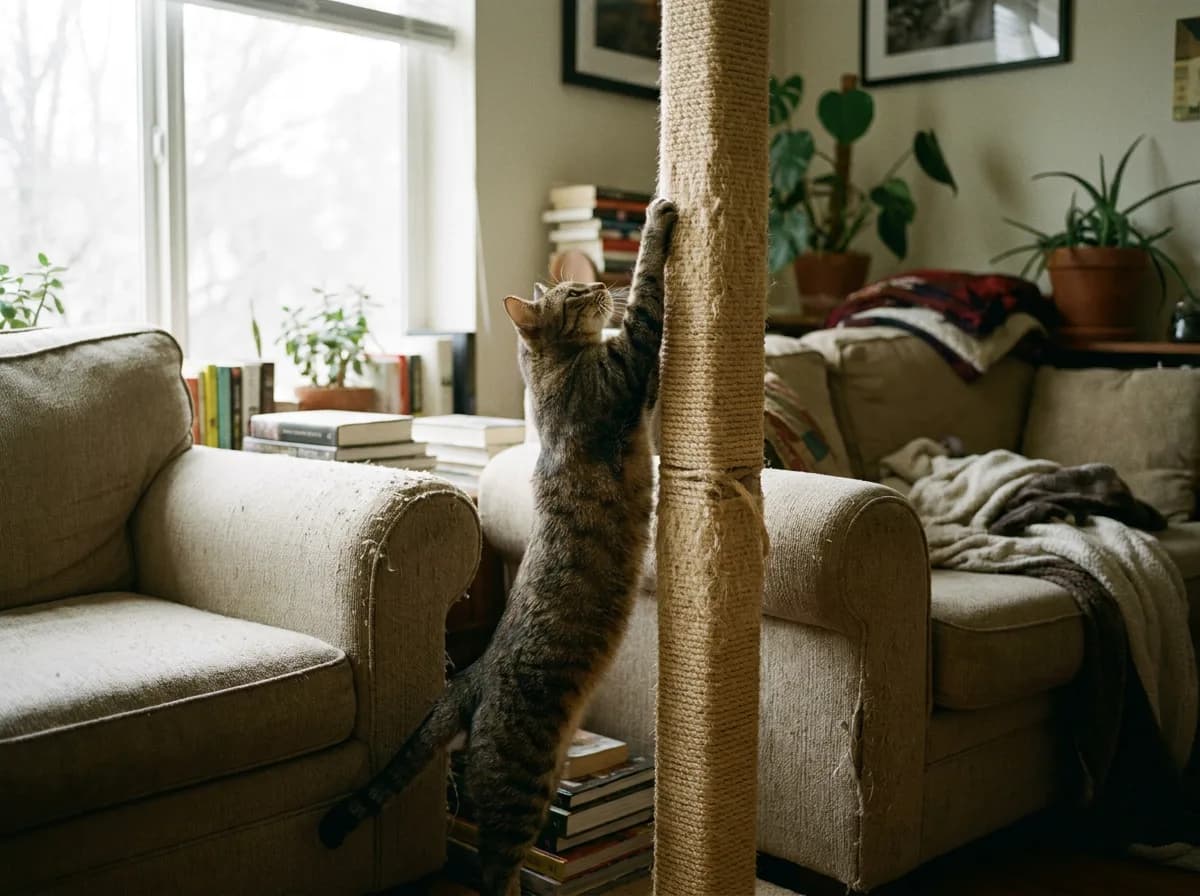
- Destructive behavior: Scratching at doors, windowsills, or carpet near exits, or knocking items off surfaces.
- Changes in appetite: Refusing to eat while alone, then eating only once you return.
- Clinginess and shadowing: Following you constantly, blocking the door, or becoming agitated when you pick up keys or a bag.
- Vomiting or hairballs: Stress can upset the digestive system, and overgrooming increases hairball frequency.
- A cat straining in the litter box, producing little or no urine, or crying while trying to urinate may have a urinary blockage, which is life-threatening, especially in male cats. Stress is a known trigger for feline lower urinary tract disease. If you see straining or no urine output, treat it as an emergency and call a veterinarian immediately, do not wait to "see if it passes."
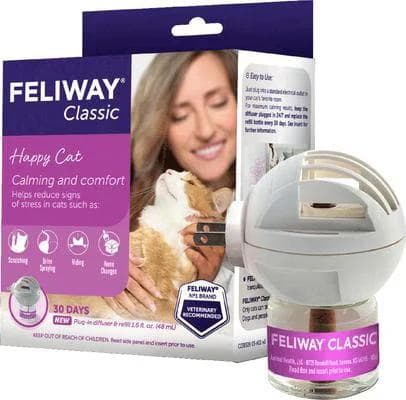
A plug-in feline pheromone diffuser intended for routine environmental support; use it as directed and not as a substitute for veterinary or behavior care.
Petful may earn a commission when you click through to Chewy, at no extra cost to you.
Common Triggers and Causes
Cat separation anxiety is usually triggered by a disruption to a cat's attachment or routine, such as a change in the owner's schedule, a move, the loss of a companion, or early life experiences that left the cat poorly socialized. The AVMA links separation-related distress to the strength of the pet-owner bond combined with a sudden change in availability. In other words, the more attached the cat and the more abrupt the change, the higher the risk.
Common contributing factors include:
- Schedule changes: A return to office work after a long stretch at home is a frequent trigger, a pattern many veterinarians reported widely after 2021.
- Early weaning or poor socialization: Kittens separated from the mother too young, or raised without gentle human handling, are more prone to anxiety. Building good habits early matters, which is why preventing behavior problems early pays off for life.
- Single-cat households with a strong bond: A cat with one primary human and no feline company can fixate on that person.
- Moving or environmental change: New homes, renovations, new furniture, or a new baby or pet can destabilize a cat's sense of territory.
- Loss of a companion: The death or departure of another pet or a family member can precipitate anxiety.
- A history of rehoming or abandonment: Rescue cats and frequently rehomed cats may carry heightened sensitivity to being left.
Breeds and Risk Factors
Some cat breeds are more prone to separation anxiety than others, and the common thread is sociability. Highly social, people-oriented breeds such as the Siamese, Burmese, and Oriental Shorthair form intense bonds and tend to dislike being alone. International Cat Care describes these "people-focused" breeds as more likely to seek constant human company, which raises the risk of separation-related distress when that company disappears.
The Siamese is the textbook example. Its vocal, velcro-like attachment style, detailed in our guide to Siamese cat personality and social bonding, is exactly the temperament that struggles most with long absences. Beyond breed, the biggest risk factors are an intensely bonded single-person relationship, an indoor-only lifestyle with little enrichment, a history of rehoming, and early-life stress. Age plays a role too: senior cats facing cognitive decline can develop new anxiety, and kittens that missed proper socialization windows may carry it into adulthood.
| Sign You Notice | Likely Driver | First Step |
|---|---|---|
| Crying or yowling when alone | Strong bond plus abrupt schedule change | Build a calm departure routine and enrich alone-time |
| Peeing on your bed or laundry | Stress targeting your scent for comfort | Rule out urinary disease with a vet first |
| Overgrooming or bald patches | Self-soothing through repetitive licking | Vet check, then increase play and enrichment |
| Scratching at doors and exits | Frustration at being shut away from you | Add scratching posts and vertical space |
| Not eating until you return | Anxiety suppressing appetite | Use puzzle feeders and food-based enrichment |
SponsoredVet care that's always there
Unlimited video calls and messaging with licensed vets for less than a typical vet visit. One membership covers up to five pets.
Use code Pets60
Plans start at $12/month · covers up to 5 pets
- Licensed vets in most states
- Rx for 150+ conditions
- 4.7 on Trustpilot
Diagnosing Cat Separation Anxiety
Diagnosing cat separation anxiety starts with ruling out medical problems, because many of its signs overlap with disease. The American Animal Hospital Association advises a full veterinary workup before any behavior is labeled "anxiety," since urinary tract disease, hyperthyroidism, kidney disease, arthritis pain, and gastrointestinal issues can all cause house soiling, vocalization, or appetite change. Stress and urinary issues in cats are especially intertwined, so a urinalysis is often a first step.
Once medical causes are excluded, your veterinarian builds the behavioral picture from your observations. Because the behaviors happen while you are away, two tools are invaluable: a home video or pet camera recording of your cat during an absence, and a written log of when signs occur relative to your departures and returns. A timeline that consistently links distress to your absence, and resolution to your return, is the hallmark of true separation anxiety rather than a general anxiety disorder or a litter-box aversion.
- Set up a phone or pet camera to film the first 30 to 60 minutes after you leave for a few days. Vets and veterinary behaviorists can learn more from two minutes of footage showing the cat crying at the door than from a page of secondhand description. It also helps separate separation anxiety from boredom or noise phobia.
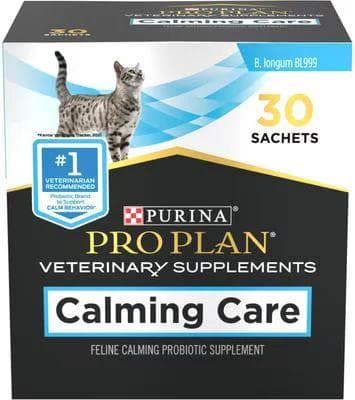
A vet-recommended probiotic supplement (B. longum BL999) that helps cats manage anxious behaviors and stay calm during stressful events and routine changes.
Petful may earn a commission when you click through to Chewy, at no extra cost to you.
Treatment and Management Strategies
Treating cat separation anxiety means lowering the cat's baseline stress and gradually teaching it that being alone is safe. International Cat Care emphasizes a combined approach: enrich the environment, keep routines predictable, and desensitize the cat to departure cues, rather than relying on any single fix. There is no overnight cure, but most cats improve steadily over weeks to a few months with consistency.
Core strategies include:
- Keep departures and arrivals low-key: Do not make a fuss when you leave or return. Calm comings and goings teach the cat that your absence is unremarkable.
- Desensitize departure cues: Pick up your keys, put on your coat, or open the door, then stay home. Repeating these "fake departures" without leaving drains them of their alarm value.
- Build positive alone-time: Offer a special treat-dispensing toy or puzzle feeder only when you leave, so being alone predicts something good.
- Protect the litter box: Provide one box per cat plus one extra, kept clean and in quiet locations, to reduce stress-driven accidents. Our guide on best cat scratching post tips also helps redirect destructive scratching toward acceptable outlets.
- Add a second source of comfort: For some cats, a companion animal helps, but introduce any new pet slowly, since a botched introduction can add stress rather than relieve it.
- Never punish: Punishment increases fear and worsens anxiety. The mess is a symptom, not defiance.
Environmental Enrichment and Prevention
Environmental enrichment is the single most powerful, lowest-risk tool for preventing and easing cat separation anxiety. The AAHA's environmental and behavioral guidance for cats stresses that a stimulating, predictable environment supports emotional wellbeing and reduces stress-related behavior. A bored, under-stimulated indoor cat with nothing to do all day is far more likely to fixate on your absence.
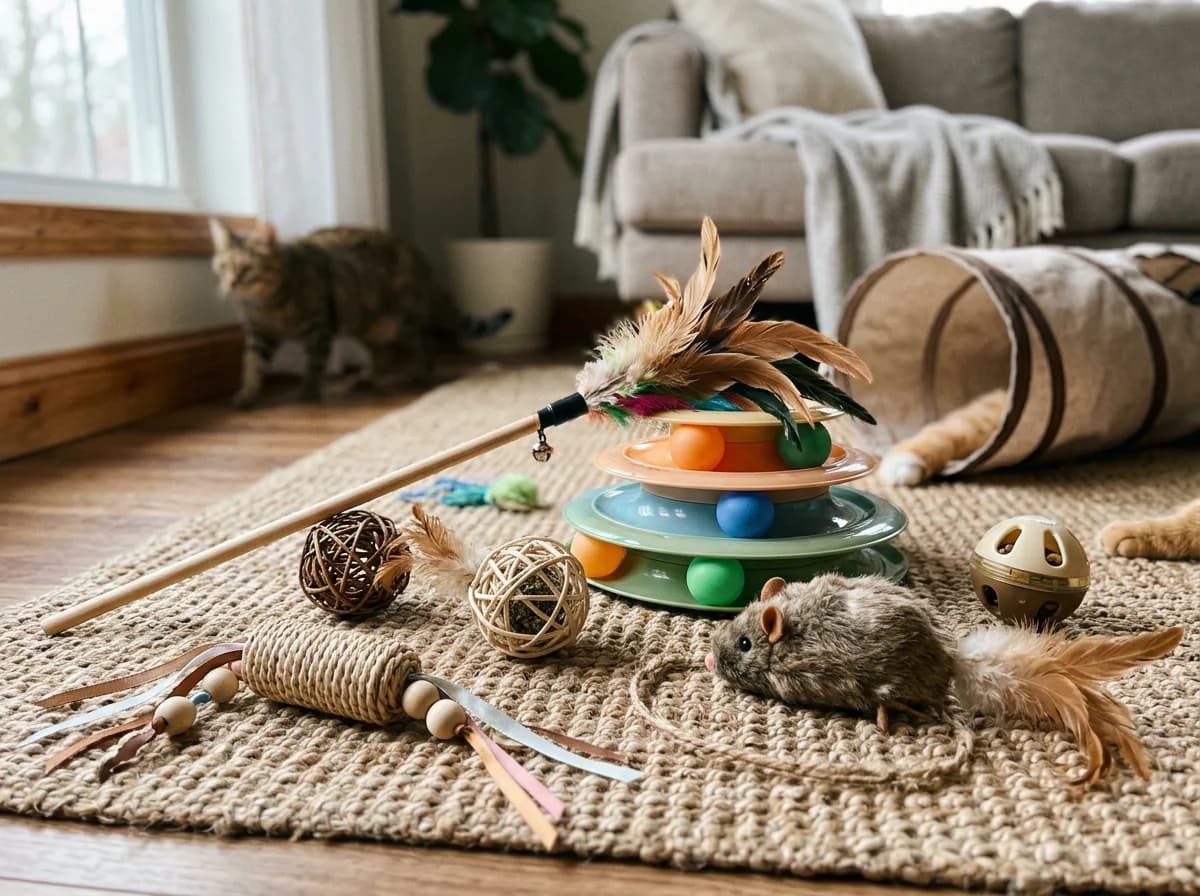
Build a richer world for your cat with these proven additions:
- Vertical territory: Cat trees, shelves, and window perches let cats climb, survey, and feel secure.
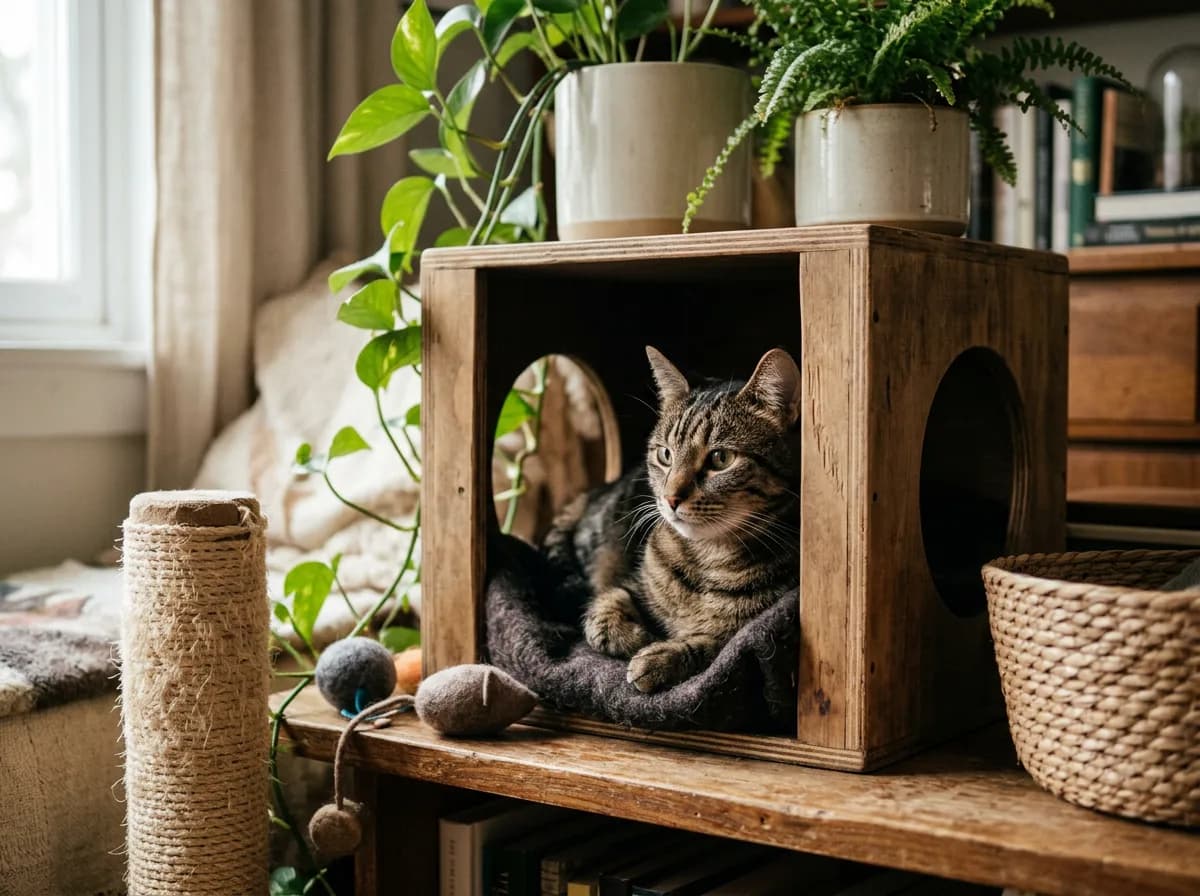
- Hiding spots: Covered beds, boxes, and cat caves give anxious cats a safe retreat.
- Food puzzles and foraging toys: Working for food mimics hunting and occupies the mind during alone-time.
- Rotating toys: Swap toys every few days so they stay novel; interactive wand play before you leave burns nervous energy.
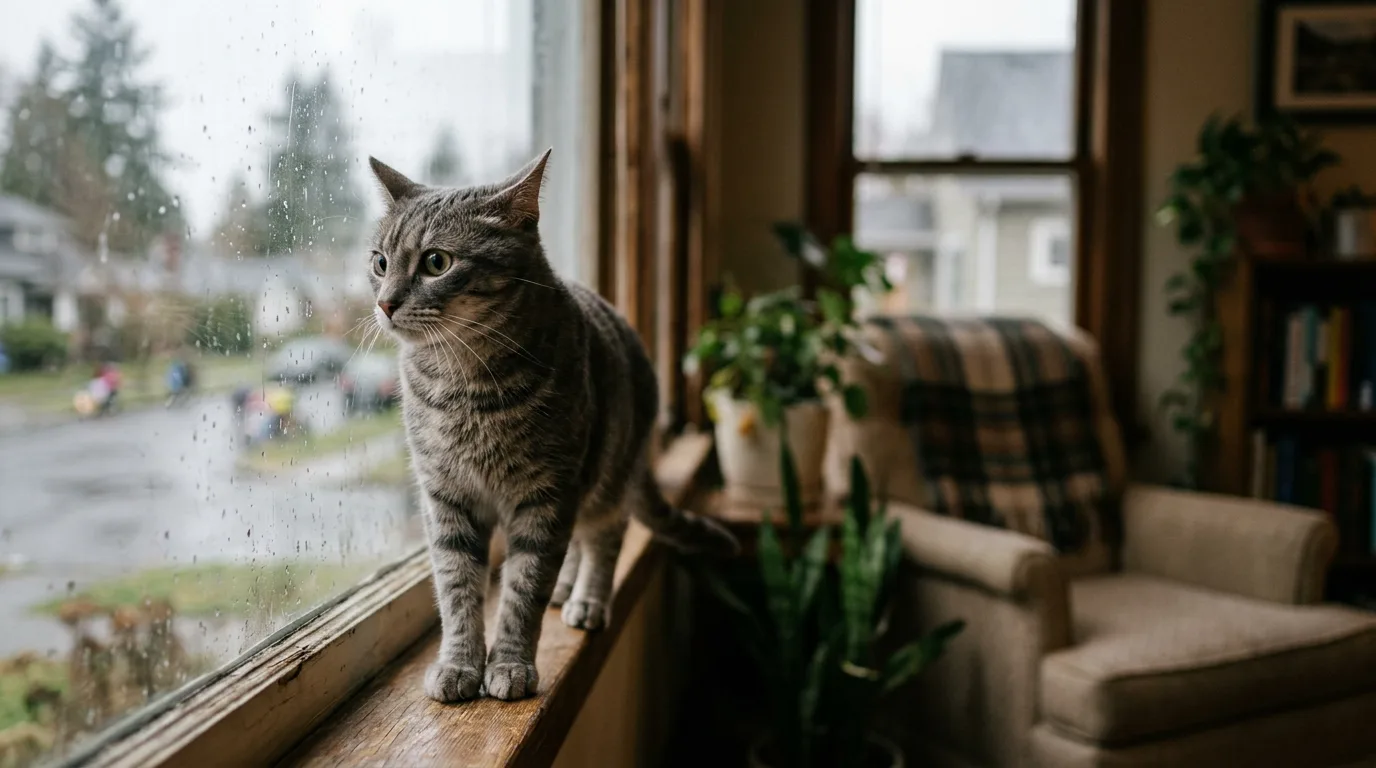
- A window view: A bird feeder outside a window provides hours of "cat TV."
- Scent and routine stability: Keep feeding and play on a consistent schedule so the day feels predictable.
Prevention starts in kittenhood. Gentle handling, gradual exposure to short alone-periods, and good early socialization all lower lifetime anxiety risk.

Lickable chicken-puree cat treats infused with the calming Feliway pheromone to create a positive, reassuring moment and ease everyday feline stress.
Petful may earn a commission when you click through to Chewy, at no extra cost to you.
Medication and Veterinary Options
When enrichment and behavior work are not enough, veterinary options including pheromones and prescription medication can help, but they should always be vet-directed. Synthetic feline pheromone diffusers (analogues of the natural facial pheromone cats use to mark safe territory) are widely recommended by International Cat Care as a first-line, drug-free aid, and they can be used alongside enrichment with no prescription needed. For anxiety signs beyond departures and absences, use Petful's broader cat anxiety guide.
For moderate to severe cases, a veterinarian may prescribe anti-anxiety medication. The most commonly used drug classes are SSRIs such as fluoxetine and tricyclic antidepressants such as clomipramine, both of which have veterinary behavioral support behind them. Dosing, suitability, and monitoring are decisions only your veterinarian can make based on your cat's health, so never give a cat human medication or a leftover prescription. Medication works best as a bridge that lowers anxiety enough for the behavior and enrichment plan to take hold, not as a standalone fix.
- Many human anti-anxiety and pain medications are toxic to cats, and even veterinary drugs require careful dosing and monitoring. Do not give your cat any medication, supplement, or "calming" product without first confirming it is safe and appropriate with your veterinarian.
Over-the-counter calming aids exist too. Calming treats and supplements often contain ingredients such as L-theanine, alpha-casozepine, or tryptophan. These are generally low-risk and can take the edge off mild anxiety, but evidence is mixed and they are no substitute for enrichment or, in serious cases, prescription care. Ask your vet which, if any, fit your cat.
Long-Term Outlook and Recovery
The long-term outlook for cat separation anxiety is good, with most cats improving substantially when owners commit to a consistent enrichment and behavior plan. International Cat Care notes that separation-related problems are usually manageable, though they often need ongoing attention rather than a one-time fix. Recovery is measured in weeks to months, not days, and progress is rarely a straight line.
Set realistic expectations. Many cats will always be sensitive to big disruptions like a move or a schedule overhaul, so maintaining enrichment, routine, and low-key departures is a permanent part of care, not a temporary protocol. Watch for relapse around predictable stressors (travel, new pets, renovations) and front-load extra enrichment before those events. With patience, the great majority of anxious cats become noticeably calmer and more secure, and the destructive or distressing behaviors fade as the underlying stress comes down.
Yes. Cat separation anxiety is a recognized behavioral disorder in which a strongly bonded cat becomes distressed when separated from its owner. It is less common than in dogs, and cats typically react to longer absences rather than brief departures, but the distress is genuine and treatable.
The most common signs are excessive meowing or yowling, urinating or defecating outside the litter box (often on the owner's bed or clothes), overgrooming to the point of bald patches, destructive scratching near doors and windows, and refusing to eat while alone. Many of these happen while you are away, so you may only see the aftermath.
Treatment combines environmental enrichment, a predictable routine, low-key departures and arrivals, and gradual desensitization to departure cues like picking up keys. Pheromone diffusers can help, and a veterinarian may prescribe anti-anxiety medication such as fluoxetine or clomipramine for moderate to severe cases. Always rule out medical causes first and never punish the cat.
Cat separation anxiety usually stems from a strong attachment combined with a disruption, such as a change in your work schedule, a move, the loss of a companion, early weaning, or a history of rehoming. Highly social breeds like the Siamese and indoor-only cats with little enrichment are at higher risk.
With a consistent enrichment and behavior plan, most cats improve over several weeks to a few months. Some sensitivity to major disruptions may persist for life, so ongoing routine and enrichment help prevent relapse. If signs are severe or you see no progress, ask your veterinarian about adding medication.
For any persistent or worsening signs, work directly with your veterinarian or a veterinary behaviorist. Separation anxiety is highly treatable, and a tailored plan beats trial and error.

T.J. Banks is the author of several books, including Catsong, which received a Merial Human–Animal Bond Award. A contributing editor to laJoie, T.J. also has received writing awards from the Cat Writers’ Association (most recently a Certificate of Excellence in 2019), as well as from ByLine and The Writing Self. Her work has appeared in numerous anthologies, including Chicken Soup for the Single Parent’s Soul and A Cup of Comfort for Women in Love, and T.J. has worked as a stringer for the Associated Press, as an instructor for the Writer’s Digest School and as a columnist.
Veterinarian · BVMS, MRCVS
Dr. Pippa Elliott, BVMS, MRCVS, is a veterinarian with nearly 30 years of experience in companion animal practice. Dr. Elliott earned her Bachelor of Veterinary Medicine and Surgery from the University of Glasgow. She was also designated a Member of the Royal College of Veterinary Surgeons. Married with 2 grown-up kids, Dr. Elliott has a naughty Puggle named Poggle, 3 cats and a bearded dragon.
Sign up for expert-backed reviews and safety alerts all in one place.