Can Dogs Hear Babies in the Womb? What We Know
Dogs may notice changes during pregnancy, but fetal-hearing claims remain unproven. Understand heartbeat and crying claims, behavior changes and practical ways to prepare your dog for a baby.
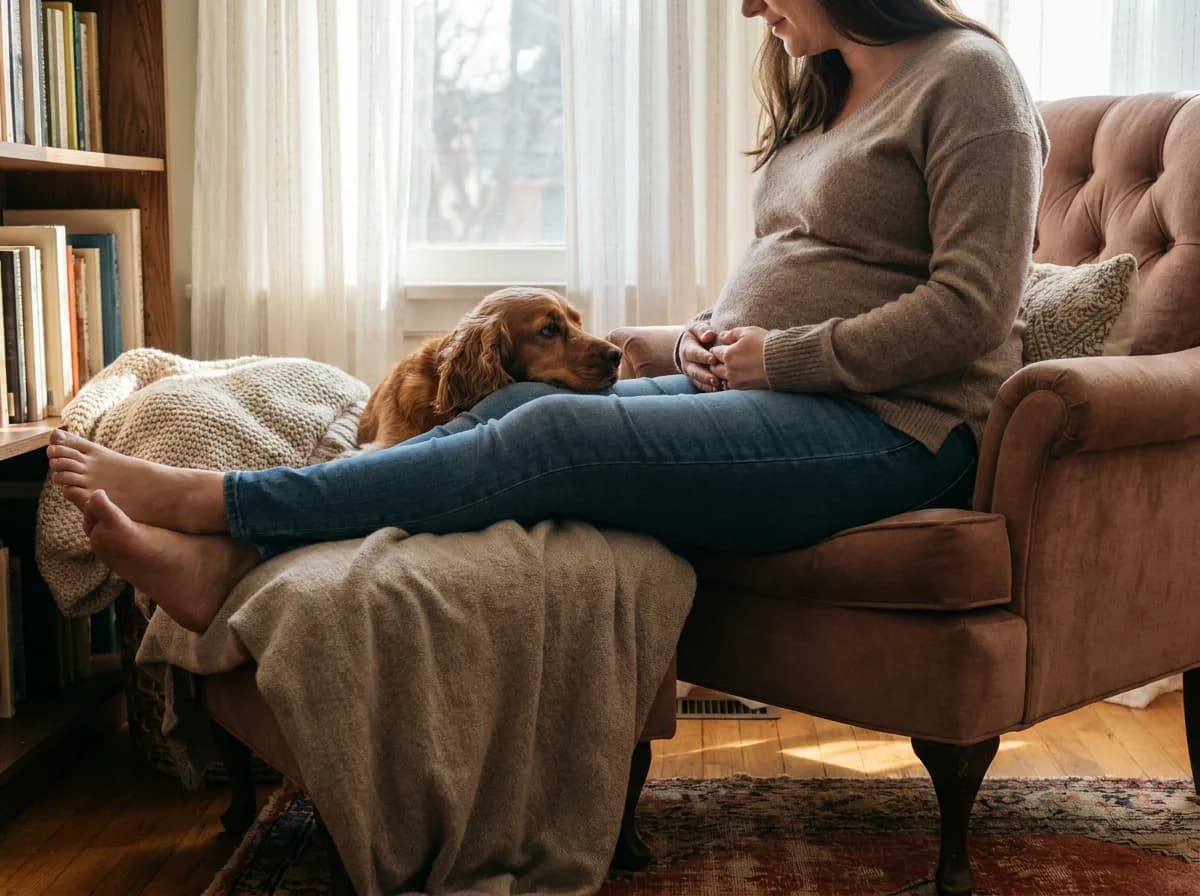
Spaniel resting its chin beside a pregnant person seated in an armchair
Petful is reader supported. As an affiliate of platforms like Amazon and Chewy, we may earn a commission when you buy through links on this page. There is no extra cost to you.
Can dogs hear babies in the womb? We do not have controlled evidence showing that a pet dog can hear an unborn baby’s heartbeat or movements through a pregnant person’s abdomen. Dogs hear some sounds humans cannot, but that ability does not establish that a particular sound reaches their ears at a detectable level.
Your dog may still behave differently during pregnancy. Changes in familiar smells, movement, daily routines and your responses can all give a dog something new to notice. None of those reactions proves that the dog knows a baby is developing, can assess the pregnancy or understands when birth will happen.

Sign up for expert-backed reviews and safety alerts all in one place.
Why Your Dog May Act Differently During Pregnancy
Describe the change you can actually see: following you from room to room, resting closer, avoiding a new piece of equipment or becoming unsettled by a changed walking schedule. “Protective” is an interpretation. A dog who blocks a visitor may be anxious or guarding access, rather than knowingly protecting an unborn baby. The response should follow the behavior, not the story we attach to it.
Reward Comfortable Choices Around You
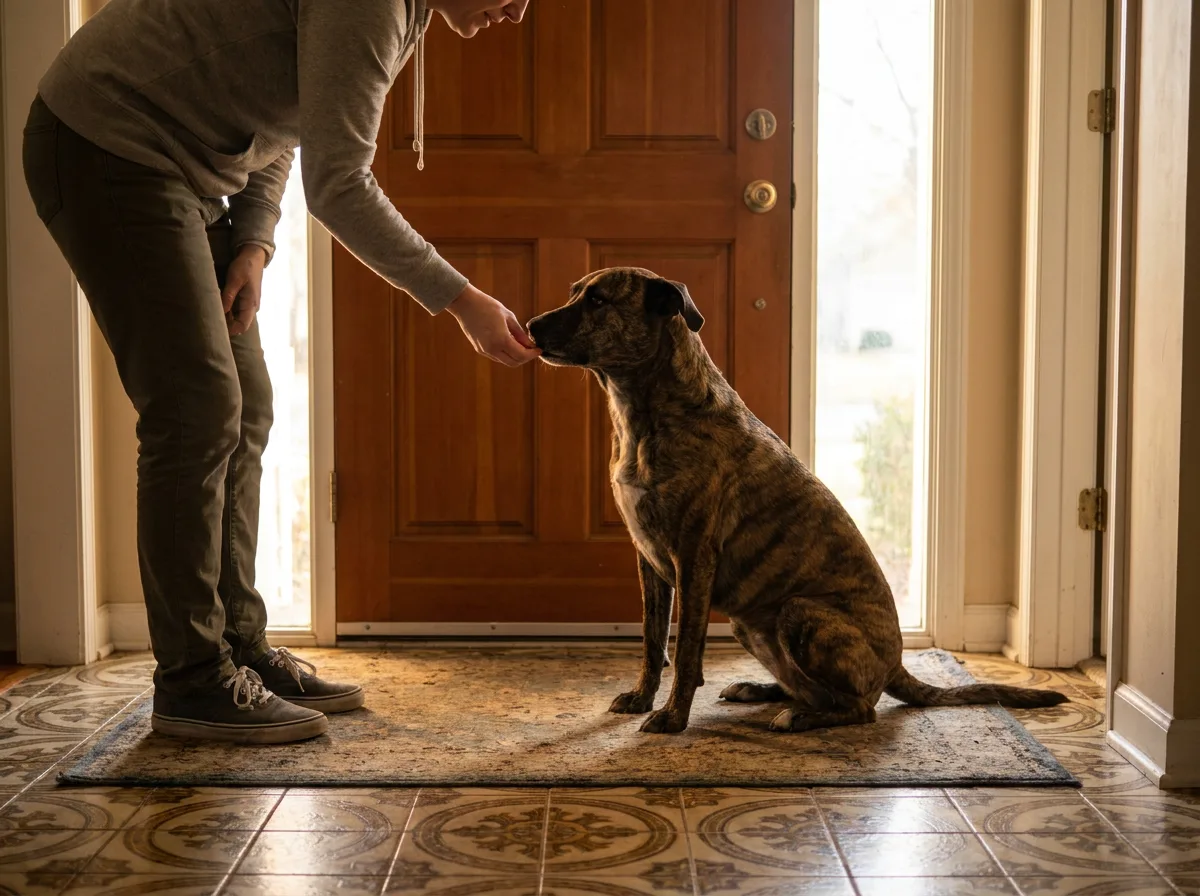
If your dog approaches gently, rests nearby or keeps four paws on the floor, reward that useful choice. Small food rewards such as Zuke’s Mini Naturals chicken treats can make brief practice convenient when the recipe suits the dog. Use appropriately sized pieces and count them within the daily food allowance. Reward beside you rather than encouraging paws or weight against your abdomen.

Small soft rewards for calm greetings and moving away on cue, with treats included in the daily food allowance.
Petful may earn a commission when you click through to Chewy, at no extra cost to you.
Dogs may become clingy when you are pregnant, but they do not all react alike. One may stay closer, another may seem unchanged, and another may need time to adjust to visitors or new furniture. There is no required set of canine “pregnancy signs.” Neither male nor female dogs have been shown by this evidence to reliably identify pregnancy in humans, and there is no validated timetable for a dog to know you are pregnant before you do. A dog’s behavior cannot confirm an early pregnancy, identify twins, reveal a baby’s sex or tell you that labor is imminent.
Dogs Trust’s pregnancy guidance discusses changes in scent and routine as things dogs may notice. A dog may sense that something is different when a woman is pregnant without knowing what the change means. That is different from establishing what the dog understands. If your dog sniffs your belly or follows you more often, respond to their comfort and the practical situation rather than using the behavior as a pregnancy test.
No breed is established here as the most clingy during pregnancy. Your dog’s usual attachment behavior, health and current routine are more useful than a breed ranking. If a dog will not leave you alone, arrange manageable periods of comfortable rest nearby and investigate persistent distress rather than assuming protection.
Teach a Comfortable Place to Settle
Give your dog an appealing place beside your usual chair or at another comfortable distance. Reward moving onto it, then gradually practice a brief rest and a release cue. Start with moments the dog can manage, and allow them to get up. A settle is a voluntary skill, not a way to hold an uncomfortable dog near your body.
A FurHaven Velvet Waves bed is one option when this Large version’s sleeping surface and access suit your dog. Place it where the dog can rest without being stepped over. A familiar bed may make an ordinary routine easier to maintain as the household changes; it does not make a dog detect or bond with a fetus.

A dog bed that fits your dog gives a consistent place to reward settling beside you without climbing onto your abdomen.
Petful may earn a commission when you click through to Chewy, at no extra cost to you.
If your dog normally lies across your lap, invite a comfortable position alongside you instead. A dog may lay its head on you for familiar contact. This does not prove the dog intends to protect pregnant women or their babies. You do not need to ban all calm closeness, but you should avoid pressure, jumping or contact that hurts. Move the interaction rather than waiting for discomfort to become a confrontation.
If your dog seems sad when you no longer let them sleep with you, the changed routine may be unsettling. That reaction alone does not establish sadness in the human sense. Introduce a comfortable nearby bed gradually and reward settling there; sudden isolation is not a necessary part of preparing for a baby.
Can Dogs Hear Babies in the Womb?
To answer this, separate hearing range from the strength of a sound. Frequency describes how rapidly a sound vibrates; intensity concerns its level. A dog’s ability to hear a high-pitched sound in a hearing test does not mean that every quiet sound, at every frequency, can be detected through intervening tissue and ordinary background noise.
Louisiana State University’s veterinary hearing information explains that hearing limits depend on frequency and intensity. Dogs’ wider high-frequency range is real, but it is not a measurement of fetal sounds reaching a dog beside a pregnant person. Claims that dogs can hear “four times better,” without specifying a sound and testing conditions, cannot settle this question.
A video of an attentive dog cannot isolate the cause of the reaction. A convincing test would need to distinguish:
- Hearing a sound from noticing a changed smell.
- Hearing from feeling movement through contact.
- Responding to a fetal cue from responding to the person’s own movement or reaction.
| Observation | What it supports | What it does not prove |
|---|---|---|
| Dogs hear a wider range of high frequencies | Hearing depends on both frequency and sound intensity | Detection of a particular fetal heartbeat through the abdomen |
| Dog sniffs or rests near a pregnant person | The dog notices or enjoys something in the situation | Understanding pregnancy, fetal health or labor timing |
| A Doppler speaker produces heartbeat-like sound | A device has processed ultrasound signals into audible output | The dog hears the same sound unaided |
| Ultrasound shows crying-like movements | A fetal behavioral pattern was observed | Audible crying outside the womb |
- 1There is no established week when a pet dog can hear a fetal heartbeat unaided.
- 2Sound intensity matters; audible output from a Doppler speaker is not unaided fetal hearing.
- 3Prepare safe spaces and predictable care instead of using behavior as a pregnancy test.
The claim-and-evidence table separates general hearing ability, Doppler output, fetal movements and observed dog behavior. Preparation remains useful regardless of the unproven hearing claim: teach calm choices, arrange separate spaces and plan who will care for the dog when your routine changes.
Prepare Your Dog for Life With a Baby
Whatever your dog can detect now, preparation is useful. Decide where the dog can rest, who will handle walks and meals, and how adults will maintain separation when they cannot actively supervise. Make changes in manageable steps before the new routine becomes unavoidable. There is no need to stage a dramatic test of whether the dog understands pregnancy.
- Identify the adult responsible for the dog during busy care routines.
- Prepare a resting area the dog can use without being disturbed.
- Check barriers and door routines before they are urgently needed.
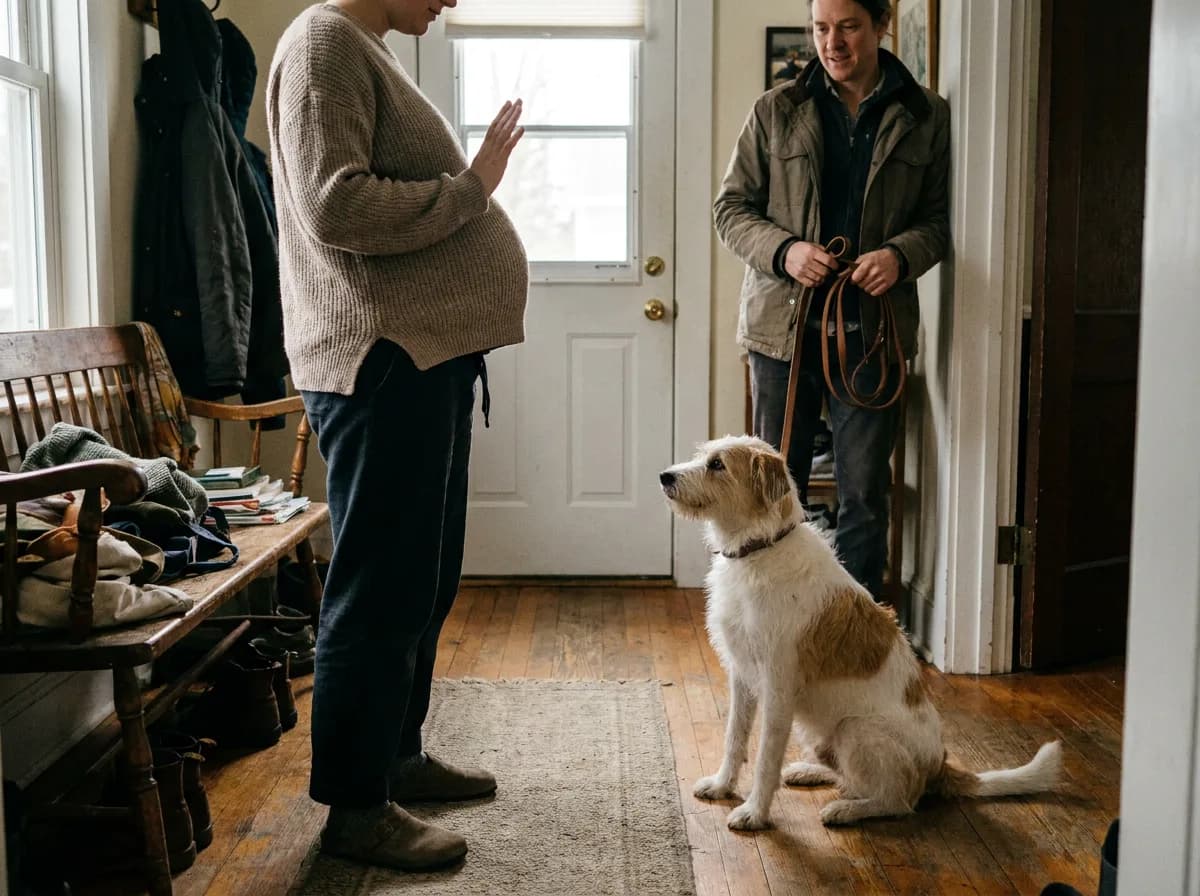
- Practice rewarding calm greetings without jumping or abdominal contact.
- Arrange familiar backup care for appointments, admission and recovery.
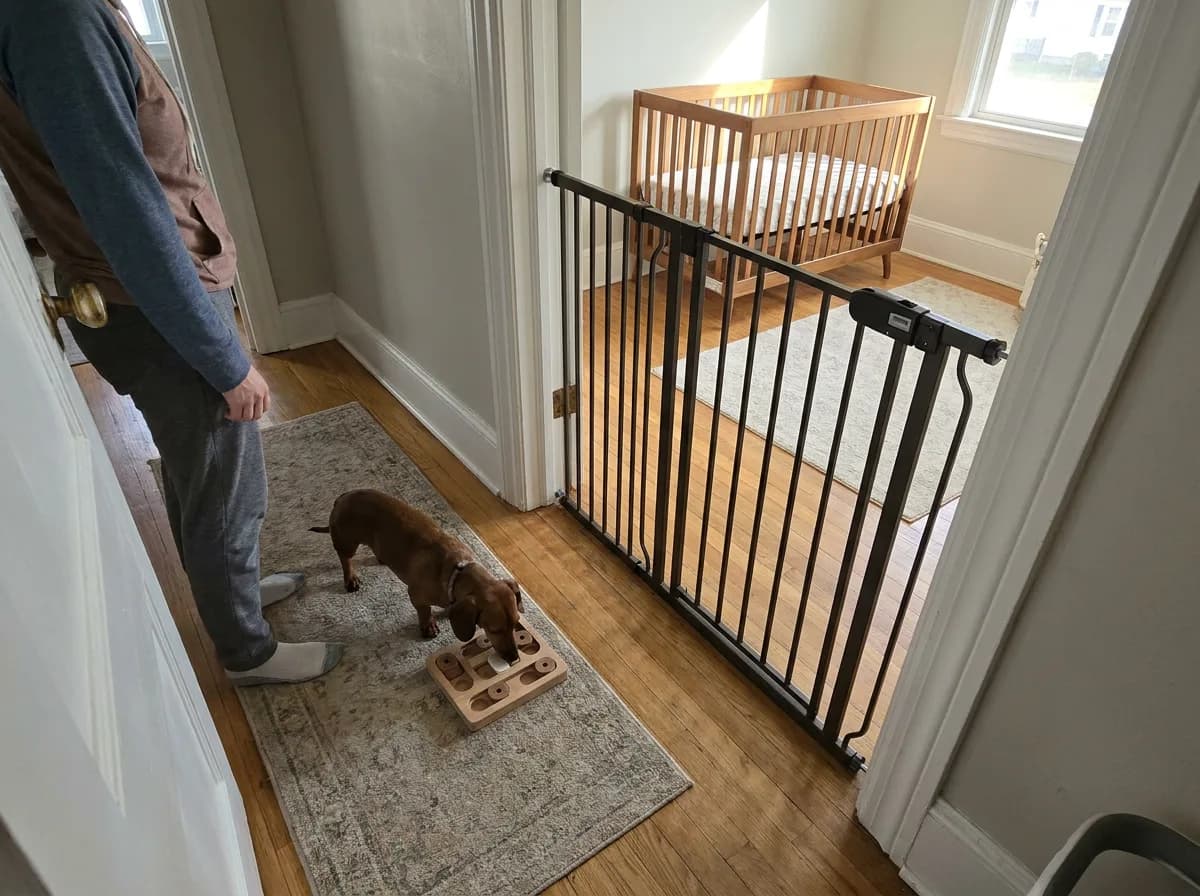
A securely installed Frisco configurable pet gate can help create separate spaces if its dimensions and design suit the doorway and the dog. Practice while adults are present, check that the dog cannot climb or push through, and provide comfortable rest on the other side. Choose an arrangement that actually contains your dog rather than relying on the product name alone.

A correctly fitted pet barrier can help organize separate spaces; it never replaces active adult supervision.
Petful may earn a commission when you click through to Chewy, at no extra cost to you.
Introduce Changes in Small Steps
Let the dog investigate new furniture from a comfortable distance before it is in frequent use. Reward calm behavior without requiring nose-to-nose contact with baby equipment. If the dog backs away, freezes or becomes agitated, reduce the intensity. Adding a stroller, unfamiliar sound and a crowded room at once makes it harder to see what needs adjustment.
Baby-sound recordings can be introduced quietly while the dog is comfortable, with the volume and duration kept low enough that the dog can remain relaxed. They are practice for a sound, not proof of how the dog will respond to a real baby. Stop or simplify if the dog becomes distressed; repeatedly playing crying at high volume does not teach comfort.
Practice the adult behaviors too. Can someone move through a doorway while the dog waits behind a barrier? Can the dog rest nearby while another person carries an ordinary object? Reward a manageable version first. For jumping or crowding, use reward-based greeting and settling practice instead of physical intimidation or demanding submission.
Practice Short, Calm Separate Activities
Introduce an activity the dog already enjoys in the resting area while you remain close enough to supervise. An Outward Hound Lickin’ Layers meal puzzle can hold part of an appropriate meal for a dog who uses it safely. Start at an easy level, clean it after feeding and put it away if the dog chews the pieces. It is an activity, not permission to leave a dog and baby unattended together.
Gradually practice brief periods in separate spaces without making separation predict a frightening event. If the dog cannot settle, shorten the period and reassess the setup rather than extending it until the dog gives up. Significant distress needs individual help. A food activity may be enjoyable, but it does not treat panic simply because it keeps some dogs busy.

A supervised meal puzzle for an established quiet routine; select a suitable difficulty and clean it after feeding.
Petful may earn a commission when you click through to Chewy, at no extra cost to you.
Plan for the Hospital Visit and First Days Home
Arrange a familiar, capable person to provide walks, meals, medication when prescribed and company during your hospital stay. Share ordinary routines and emergency contact details beforehand. Petful’s baby-preparation guide includes planning pet care while you are at the hospital, a concrete task you can complete before the admission date becomes uncertain.
Keep expectations modest when the household comes home tired. You do not need a ceremonial first greeting or to bring the baby within reach to prove trust. Follow a planned introduction at a comfortable distance, with an adult able to manage the dog and a separate adult attending to the baby. Relatedness, apparent affection and prior gentleness do not remove the need for active adult supervision.
Dogs Trust’s new-baby preparation guidance emphasizes gradual preparation and safe arrangements. Maintain the dog’s opportunities to rest, toilet, exercise and interact with familiar people. Predictability is useful even if the dog never showed any change during pregnancy.
Can Dogs Hear a Fetal Heartbeat at a Certain Week?
There is no established week at which a pet dog can hear a fetal heartbeat unaided. Claims naming six, eight, twelve, sixteen or twenty weeks should not be treated as verified canine hearing milestones. A gestational week reported for a medical device does not establish the same capability in an animal listening through the abdomen.
A Doppler device is especially easy to misunderstand. It sends ultrasound and processes returning signals associated with movement, producing an audible output through a speaker. The sound you and your dog hear from that speaker is device output. It is not evidence that the same sound was traveling through the room, at the same level, before the device was switched on.
The FDA’s ultrasound information describes ultrasound as medical imaging technology. Whether a clinician can detect cardiac activity using an appropriate examination is a medical question; whether a dog can hear an unaided sound is a separate sensory question. Do not use your dog’s attention, or lack of attention, as reassurance about fetal health.
Do Not Turn Listening Into a Home Test
Your dog might notice later abdominal movement through contact or changes in your posture. That possibility also does not establish what they understand. If a dog’s ear rests against you, we still cannot tell whether a reaction comes from movement, warmth, breathing, your heartbeat or another cue. Avoid pressing the dog against your belly to experiment.
Can Dogs Hear a Baby Crying in the Womb?
Researchers have described a fetal pattern resembling infant crying observed by ultrasound after a stimulus. The report concerned movements such as breathing-like activity and mouth opening. It was not a recording of audible sobbing that a dog could hear outside the pregnant person’s body.
That distinction matters when a headline says that babies “cry in the womb.” A movement pattern resembling crying and an audible cry are not interchangeable findings. The study does not establish that a dog listens to fetal crying, recognizes distress or can warn a caregiver that something is wrong. A dog reacting to a baby crying after birth is responding to a different situation with actual audible sound.
What a Baby Can Hear
The reverse question is different: whether a developing baby can hear a dog barking outside the womb. The American Academy of Pediatrics describes hearing internal sounds at around 18 weeks and some external sounds around 27 to 29 weeks in its fetal-hearing guidance. These are developmental guideposts, not a reason to create loud barking as a test. Sound traveling inward does not prove that a dog can hear the fetus.
What a dog thinks when a baby cries is not directly measurable from its reaction. After birth, crying can be novel or unsettling for a dog. Create space, keep interactions supervised and avoid punishing the dog for being worried. A dog who stares intensely, repeatedly approaches despite redirection, growls or cannot settle needs a safer arrangement and qualified advice. Do not keep repeating a close encounter in hopes that familiarity will overcome the warning signs.
Frequently Asked Questions
There is no established week. Canine hearing tests measure responses under specified conditions; they do not demonstrate that a dog hears a fetal heartbeat through a pregnant person’s abdomen. A Doppler’s audible speaker output is a different situation.
A dog in contact with your abdomen might notice movement, but we cannot know what the dog understands from that reaction. Avoid pressure and jumping, and invite the dog to rest alongside you instead of forcing belly contact.
A dog may be seeking familiar comfort, warmth or attention. Lying there is not proof of hearing a baby, knowing you are pregnant or protecting the fetus. Choose a comfortable position beside you that avoids abdominal pressure.
When a Change in Behavior Needs Help
A new behavior change deserves attention on its own merits. Restlessness, avoidance, irritability or altered tolerance for handling can have medical as well as environmental causes. Contact your veterinarian about a sudden or persistent change, especially alongside pain, appetite changes, unusual drinking or reduced activity. Pregnancy in the household is context, not a diagnosis for the dog.
If your dog guards you from a partner, growls at visitors, snaps or blocks movement, establish safe separation and seek veterinary and qualified behavior help before the baby arrives. Do not interpret aggression as proof of a protective bond that will keep the child safe. Describe the trigger, distance and sequence of events so the professional can assess the actual risk.
If a Dog Jumps on Your Pregnant Belly
If a dog has jumped or stepped on your pregnant belly or stomach area, bitten you or caused an injury, contact your pregnancy-care clinician or appropriate urgent service for medical advice about the event. Seek urgent care for significant injury or concerning symptoms. Your dog’s subsequent behavior cannot check the baby’s condition, and listening at home is not a substitute for medical assessment.

Gayle Hickman has been researching and writing about pet behaviors since 2011. In addition to Petful, her articles have appeared on Reader's Digest, YAHOO Shine and WebVet, to name a few.
Sign up for expert-backed reviews and safety alerts all in one place.