Senior Dog Health Monitoring: Daily Changes Worth Tracking Between Vet Visits
Senior dog health monitoring can turn small daily observations into a useful history. Learn which changes to track and when to contact your veterinarian.

BVMS, MRCVS
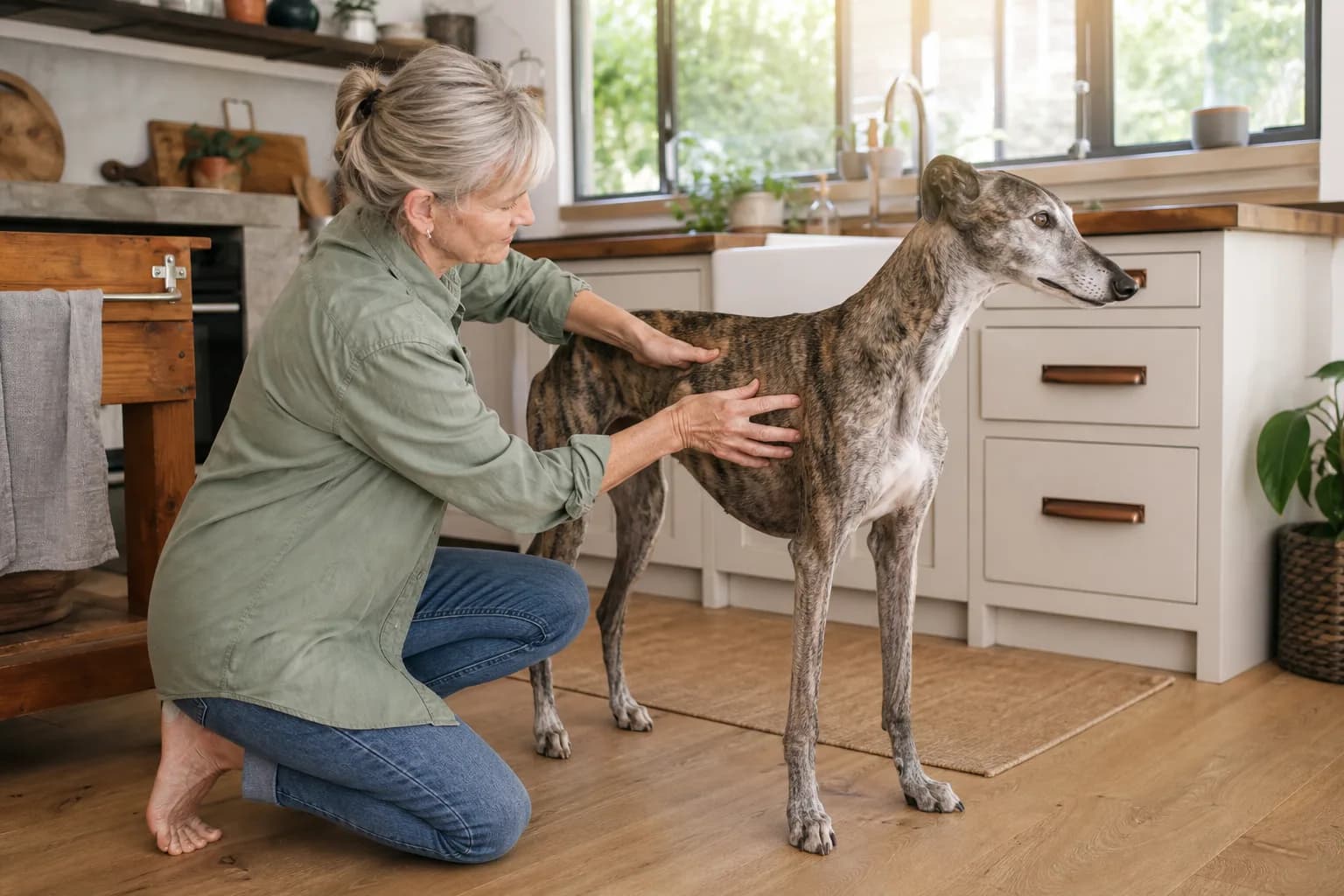
A calm daily routine makes gradual changes easier to recognize and describe.
Petful is reader supported. As an affiliate of platforms like Amazon and Chewy, we may earn a commission when you buy through links on this page. There is no extra cost to you.
Sponsored by Maven Pet.
Senior dog health monitoring is most useful when it turns small daily observations into a clear history for your veterinarian. Maven Pet can help families follow activity, rest, resting heart rate, resting respiratory rate, itching, and drinking behavior between appointments. It does not replace a physical exam, laboratory testing, imaging, or a veterinarian's diagnosis.
The goal is not to watch every number anxiously. It is to know your dog's normal routine, notice a sustained change, and share the right context at the right time. Appetite, weight, mobility, sleep, breathing, drinking, bathroom habits, and engagement with family are all worth tracking in a simple, consistent way.
For more context on using the service at home, read Petful's Maven Pet Smart Collar review.

A collar-mounted sensor and app for activity, rest, sleep, respiratory rate, heart-rate trends, itch behaviors, and more.
- Builds a personalized baseline over time
- Tracks trends between veterinary visits
- Generates a month-long shareable report
Health monitoring for dogs and cats
Petful may earn a commission when you click through to Maven Pet, at no extra cost to you.

Sign up for expert-backed reviews and safety alerts all in one place.
Why a personal baseline matters for senior dogs
- A baseline makes gradual change easier to recognize. Use home observations and trend data to support regular senior exams and timely calls, not to self-diagnose or delay care.
Aging is not a disease, but age increases the likelihood that a dog will develop more than one health concern. Consistent monitoring matters because slow changes can be hard to see when you live with a dog every day. A walk becomes a little shorter, the water bowl needs filling more often, or nighttime settling takes longer. Each event may seem minor until a pattern emerges.
A personal baseline is a record of what is typical when your dog is doing well. It can include:
- Usual appetite and meal enthusiasm
- Body weight and body condition
- Daily walk length, pace, and recovery
- Ease of rising, climbing stairs, and entering the car
- Normal sleep schedule and nighttime interruptions
- Comfortable resting breathing
- Drinking and urination patterns
- Interest in play, family contact, and familiar routines
- Skin, ear, and grooming behaviors
Petful's guide to senior dog health covers the broader veterinary, nutrition, mobility, and home-care needs of aging dogs. This article focuses on the observations that can make those veterinary visits more informative.
The daily changes worth tracking
You do not need a complicated spreadsheet. Choose a few categories relevant to your dog and record them consistently.
Appetite and weight
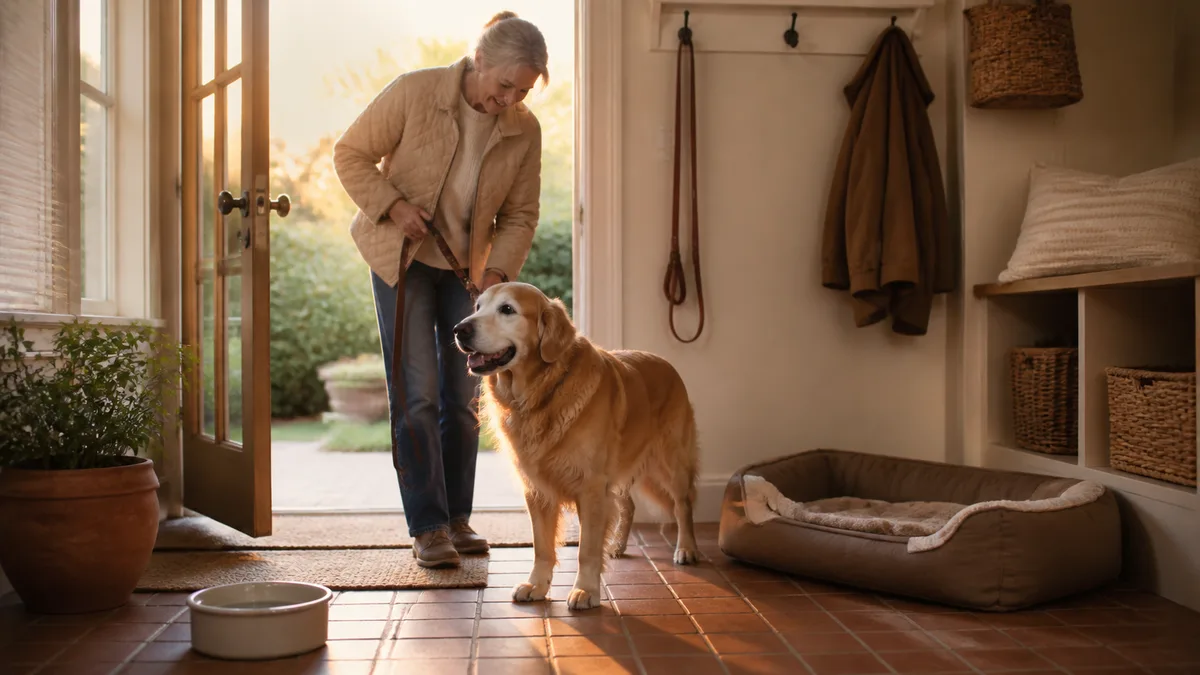
Note skipped meals, slower eating, trouble chewing, increased hunger, or a change in food preference. Weigh your dog on the same scale when practical. Unexplained weight loss or gain deserves veterinary attention even when appetite seems normal.
Mobility and activity
Record stiffness after rest, shorter walks, less play, slipping, limping, reluctance on stairs, and recovery after an outing. Sudden inability to stand or bear weight is urgent.
Sleep and nighttime behavior
Watch for repeated waking, pacing, vocalizing, difficulty getting comfortable, nighttime accidents, or reversal of the usual sleep-wake schedule. Pain, urinary problems, cognitive change, and other conditions can affect nighttime behavior.
Breathing and heart-related signs
Notice coughing, reduced exercise tolerance, fainting, and breathing that is faster or more effortful at rest. Labored breathing, collapse, or pale or blue gums are emergency signs.
Drinking and bathroom habits
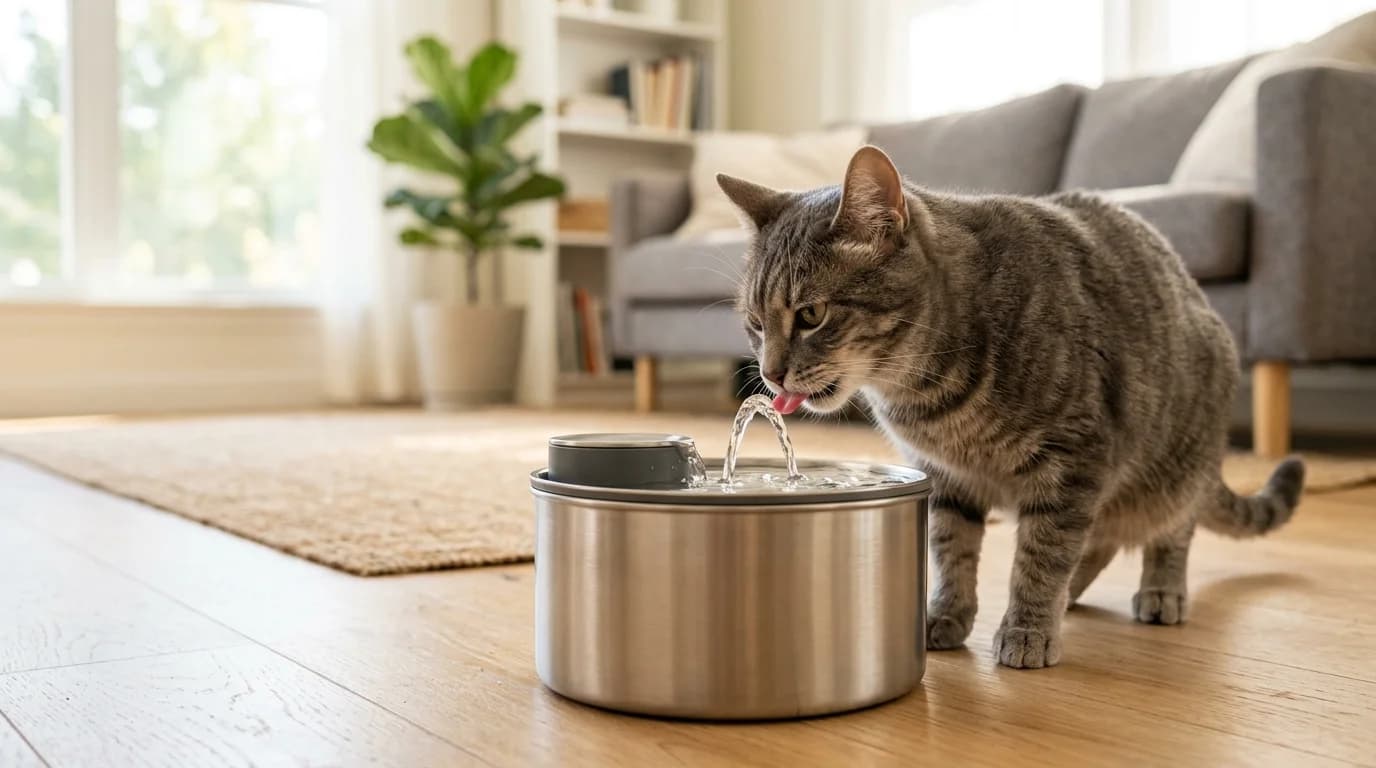
Record whether your dog visits the water bowl more often, drinks for longer, asks to go outside more, has accidents, strains, or produces unusual urine or stool. Increased thirst can have harmless explanations, such as heat or activity, but persistent change may accompany kidney, endocrine, urinary, or medication-related issues.
Behavior and engagement
Note withdrawal, confusion, irritability, new anxiety, staring, getting stuck, reduced greeting behavior, or loss of interest in familiar activities. Behavioral change can be associated with pain, sensory loss, cognitive dysfunction, or medical illness and should not automatically be dismissed as age.
Skin, ears, and grooming
Look for new lumps, wounds, hair loss, odor, repeated scratching, head shaking, or difficulty grooming. Photograph changes with a size reference and date, but do not rely on a photo instead of an exam.
A collar-mounted sensor and app for activity, rest, sleep, respiratory rate, heart-rate trends, itch behaviors, and more.
- Builds a personalized baseline over time
- Tracks trends between veterinary visits
- Generates a month-long shareable report
Health monitoring for dogs and cats
Petful may earn a commission when you click through to Maven Pet, at no extra cost to you.
How Maven Pet can support the routine
The Maven Pet dog health tracker follows selected health-related behaviors and vital-sign trends, compares them with the dog's personal baseline, and produces summaries that can be shared with a veterinarian. The practical benefit is continuity between appointments, especially when family members have different schedules or gradual changes are difficult to remember.
Maven Pet's senior dog care page reports an internal analysis of 2,538 dogs monitored between August 2025 and June 2026. Maven Pet says the analysis found age-associated shifts in activity, drinking behavior, and resting heart rate. These are company-reported population findings, not an independent diagnosis tool or a reason to assume a change is normal for a particular dog.
An individual baseline remains more useful than a population average. A tracker may show that something changed, but the veterinary team determines whether the change is expected, medication-related, or medically significant.
Tracker, owner, and veterinarian roles
Home monitoring works best when each participant has a clear role. Maven Pet can organize selected patterns, the family can add context that a collar cannot see, and the veterinary team can decide what the combined history means.
| Part of the picture | Useful contribution | Important limit |
|---|---|---|
| Maven Pet trend data | Selected activity and rest patterns, resting heart and respiratory rate trends, itching or head-shaking behavior, and drinking events | Does not diagnose disease, measure exact water volume, or explain why a trend changed |
| Owner observations | Appetite, gait, visible breathing effort, bathroom habits, medication timing, pain behaviors, and unusual events | Memory can miss gradual change, so brief dated notes are more useful than general impressions |
| Veterinary assessment | Physical examination, interpretation of the full history, diagnostic testing, and a condition-specific care plan | A clinic visit is a snapshot, which is why home context can be valuable |
What published Maven Pet research adds
A 2025 study of a mushroom-derived nutraceutical for canine cognitive decline used Maven Pet wearable data alongside owner questionnaires and exploratory biomarkers. Thirty senior dogs enrolled, 22 completed the single-arm study, and wearable data were available for a smaller subset. Activity, rest, and sleep information helped researchers observe behavior in the home environment.
The study demonstrates that wearable trends can be collected during senior-dog research. It does not prove that Maven Pet diagnoses cognitive dysfunction or that a change in sleep has one particular cause. The trial evaluated a nutraceutical, used an open-label design, and had no placebo control, so its findings should not be stretched beyond the research question.
For everyday monitoring, the useful lesson is narrower: objective home data can complement caregiver observations. Diagnosis still requires a veterinarian to review the history, perform an examination, and recommend appropriate tests.
A collar-mounted sensor and app for activity, rest, sleep, respiratory rate, heart-rate trends, itch behaviors, and more.
- Builds a personalized baseline over time
- Tracks trends between veterinary visits
- Generates a month-long shareable report
Health monitoring for dogs and cats
Petful may earn a commission when you click through to Maven Pet, at no extra cost to you.
A five-minute daily senior dog checklist
Caring for senior dogs becomes easier to describe when senior dog health monitoring follows a short, repeatable routine. Broad senior-care guidance rarely provides a five-minute daily baseline checklist that separates routine observation from preventive veterinary care. This checklist compares each dog's personal baseline, captures daily changes to report, and helps caring for a senior dog feel organized without turning normal home observations into a diagnosis.

- Look at the whole dog. Is your dog alert, comfortable, and interested in the normal routine?
- Watch movement. Notice the first steps after rest and a short walk on a safe, nonslip surface.
- Review food, water, and bathroom habits. Record a meaningful change rather than trying to measure every bite or ounce.
- Check comfort. Look for panting at rest, difficulty settling, repeated scratching, or a guarded posture.
- Add context. Note heat, unusual exercise, travel, visitors, medication changes, grooming, or missed doses.
- Review trends weekly. Look for a run of changed days rather than reacting to one isolated point, unless the symptom itself is urgent.
The checklist should stay short enough to repeat. Mark a category as usual, changed, or urgent, then add one sentence of context only when needed. That approach creates a usable record without turning ordinary time with an older dog into a constant examination.
| Personal baseline | Daily changes to record and report |
|---|---|
| Eats meals promptly and maintains a stable weight | Skipped food, slower chewing, increased hunger, or a measured weight change |
| Rises comfortably and completes the usual walk | Stiffness, limping, slipping, shorter distance, reluctance, or slower recovery |
| Sleeps on the usual schedule and settles easily | Pacing, repeated waking, accidents, vocalizing, or trouble getting comfortable |
| Breathes comfortably at rest without coughing | Faster or more effortful resting breathing, coughing, fainting, or reduced stamina |
| Has a familiar drinking and bathroom pattern | More frequent bowl visits, longer drinking, increased urination, straining, or accidents |
| Engages with family and familiar routines | Withdrawal, confusion, irritability, staring, anxiety, or reduced interest |
Use the same observation conditions when possible. For example, compare movement after a similar period of rest and review resting trends only when your dog is calm. Consistency makes a change easier to describe, but an emergency sign should never wait for a full week of data.
Petful's guide to pet wellness exams explains how routine examinations establish a clinical baseline. Home tracking works best as the bridge between those exams, not as a replacement for them.
A collar-mounted sensor and app for activity, rest, sleep, respiratory rate, heart-rate trends, itch behaviors, and more.
- Builds a personalized baseline over time
- Tracks trends between veterinary visits
- Generates a month-long shareable report
Health monitoring for dogs and cats
Petful may earn a commission when you click through to Maven Pet, at no extra cost to you.
How home tracking and preventive exams work together
Home notes answer questions about frequency and context: Did the cough happen once or every night? Is stiffness limited to the first steps after sleep? Did increased drinking begin before or after a medication change? A preventive exam adds information that cannot be collected safely at home, including a hands-on assessment, weight and body-condition review, oral examination, and any laboratory or imaging tests the veterinarian recommends.
Bring the personal baseline and the daily changes to report, but let the veterinarian decide which findings need an examination, bloodwork, urinalysis, imaging, or another test. Senior dog health monitoring is most useful when the home record and preventive care answer different questions: the record shows frequency and context, while the veterinary visit assesses causes, overall health, and next steps.
Do senior dogs need yearly bloodwork? There is no one testing interval that fits every older dog. AAHA senior-care guidance supports regular, individualized evaluation, while the veterinarian decides when bloodwork or urine testing is appropriate based on age, medical history, medications, examination findings, and earlier results. Some senior dogs need testing at least annually or more often; others need a different plan. A normal-looking home routine does not rule out changes that laboratory testing may find.
Turn the home record into a visit plan
Before each preventive visit, review the previous few weeks and identify the two or three most meaningful differences from baseline. Bring dates, short videos, medication changes, and Maven Pet summaries when available. Ask which measurements the clinic wants you to continue, what amount of change should prompt a call, and whether any result changes the follow-up schedule. This creates a practical loop: the veterinary plan guides home monitoring, and the home record helps the next veterinary decision.
One dog parent's experience
In a July 2026 Trustpilot review, Kristi Kloos described using Maven Pet with her 16-year-old dog. She valued having a baseline as her dog aged and said the device helped draw attention to ear issues. Her experience is anecdotal, but it shows how monitoring may prompt a closer look and a more specific conversation with a veterinarian.
When to call the veterinarian
Call promptly for a persistent or worsening change in appetite, drinking, urination, stool, mobility, sleep, behavior, weight, coughing, or energy. Senior dogs may have several conditions at once, so a new sign should not automatically be assigned to an existing diagnosis.
Seek emergency care for:
- Difficulty breathing or blue, gray, white, or very pale gums
- Collapse, inability to stand, or extreme weakness
- Seizures, loss of consciousness, or severe disorientation
- A swollen painful abdomen or repeated unsuccessful retching
- Suspected poisoning, medication overdose, or swallowed object
- Uncontrolled bleeding, major trauma, or severe pain
- Inability to urinate
- Repeated vomiting with weakness or inability to keep water down
Bring your medication list and records when seeking urgent care. Petful's guide to pet urgent care can help families prepare, but call the clinic when you are unsure about the appropriate destination.
Make the veterinary visit more useful
Before an appointment, prepare a one-page summary:
- The top two or three changes and when they began
- Whether each change is steady, intermittent, or worsening
- Current medications, supplements, and diet
- Weight history and appetite notes
- Short videos of mobility or behavior
- Photos of visible skin, eye, mouth, or body changes
- Maven Pet weekly or monthly summaries, if available
- Questions about which signs should trigger a same-day call
Ask the veterinarian which measurements matter for your dog's specific conditions. A dog with heart disease may have different home-monitoring instructions from a dog with kidney disease, arthritis, diabetes, or cognitive dysfunction.
Frequently asked questions
The schedule depends on age, health, medications, and previous findings. AAHA senior-care guidance supports individualized, regular evaluation, and many senior dogs benefit from visits more often than once a year. Ask your veterinarian to set both a routine schedule and clear reasons for an earlier visit. A new or worsening sign should be addressed when it occurs rather than saved for the next preventive appointment.
There is no single best metric for every senior dog. A sustained change from your dog's normal, especially when appetite, mobility, sleep, breathing, drinking, or engagement change together, is often more useful than one isolated number. Ask the veterinary team which category deserves priority for your dog's conditions. Emergency signs, including breathing difficulty, collapse, or inability to urinate, matter immediately even without a trend.
No. Maven Pet can help show changes in selected activity, rest, vital-sign, itching, and drinking-behavior trends, but it cannot explain their cause. Aging, weather, a disrupted routine, medication, pain, and disease can produce overlapping patterns. Share the trend with its dates and context. A veterinarian can then compare it with the examination and decide whether diagnostic testing or a change in care is warranted.
Ask your veterinarian, particularly if your dog has kidney disease, diabetes, an endocrine condition, or takes medication that affects thirst. Maven Pet describes drinking events and behavior trends rather than exact bowl ounces, hydration, or kidney function. If the veterinary plan requires measured intake or urine testing, follow those instructions. Never restrict a dog's access to water unless a veterinarian gives a specific medical direction.
Bring short videos, dated notes, and trend summaries from home. Intermittent limping, nighttime restlessness, coughing, or confusion may not appear during a short clinic visit, and some dogs behave differently in an unfamiliar setting. Show the clearest example and explain what is normal for your dog. The veterinarian can decide whether the home pattern changes the examination, testing, or follow-up plan.
Many senior dogs benefit from regular bloodwork, but the right interval is individualized. Age alone is not the only consideration. The veterinarian may consider chronic conditions, medications, physical-exam findings, weight changes, prior laboratory results, and new home observations. Ask what tests are recommended and why. Home tracking can highlight changes worth discussing, but it cannot replace blood or urine testing when those tests are indicated.
Sources
BVMS, MRCVS
Dr. Pippa Elliott, BVMS, MRCVS, is a veterinarian with nearly 30 years of experience in companion animal practice. Dr. Elliott earned her Bachelor of Veterinary Medicine and Surgery from the University of Glasgow. She was also designated a Member of the Royal College of Veterinary Surgeons. Married with 2 grown-up kids, Dr. Elliott has a naughty Puggle named Poggle, 3 cats and a bearded dragon.
Sign up for expert-backed reviews and safety alerts all in one place.

A Final Word (Disclaimer)
At Petful, our review integrity is paramount; we never exchange special treatment in our reviews for monetary or material rewards.
Nonetheless, when our readers click through to online merchants (including Chewy or Amazon), we receive a referral commission. This supports the running of our free blog, and we appreciate your backing.