Salmon Dog Food: An Omega-3 Buyer's Guide for Skin and Coat
Salmon dog food is prized for omega-3s that support skin and coat. Learn what EPA and DHA do, cooked vs raw safety, how to read a label, and which formats suit your dog best in this buyer's guide.
Petful is reader supported. As an affiliate of platforms like Amazon and Chewy, we may earn a commission when you buy through links on this page. There is no extra cost to you.
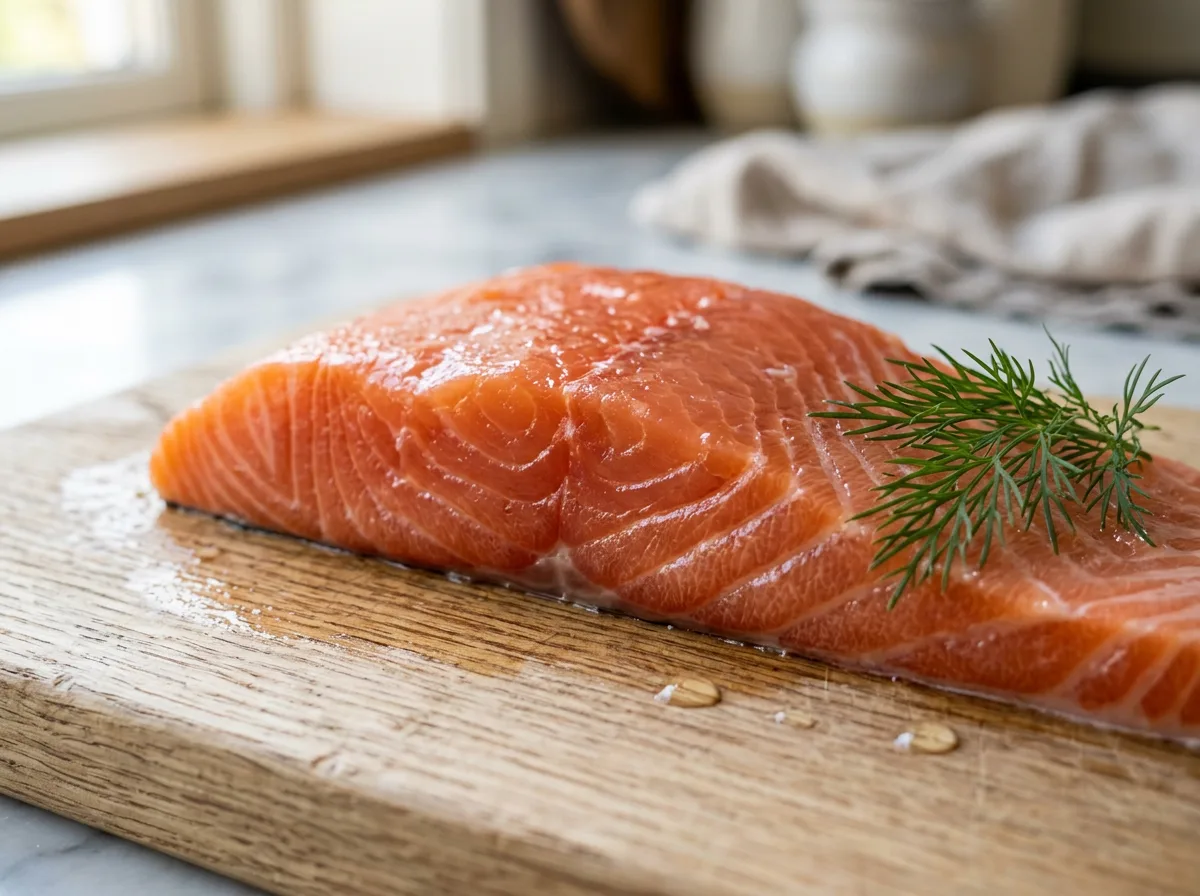
Salmon dog food has earned a permanent spot on pet-store shelves, and the reason comes down to one nutrient family: omega-3 fatty acids. When a dog's coat looks dull or their skin feels dry and flaky, a fish-forward recipe is often the first change a nutrition-minded owner reaches for, and for good reason.
This guide covers what salmon and other fish actually do for skin and coat, the difference between EPA and DHA, how to read a label, and the cooked-versus-raw safety details that matter more than most bags let on. By the end, you will know how to choose a formula with confidence.
- 1Salmon and other cold-water fish are among the richest natural sources of the omega-3s EPA and DHA, the fatty acids most linked to skin barrier health and a glossy coat
- 2Cooked salmon is safe and nutritious; raw or undercooked salmon carries a real parasite risk, so fish in commercial dog food is always cooked
- 3The best salmon dog food names a real fish first, is formulated to meet AAFCO profiles for your dog's life stage, and lists meaningful EPA and DHA, not just "fish oil" in trace amounts

Sign up for expert-backed reviews and safety alerts all in one place.
Why salmon and omega-3s matter for a dog's skin and coat
The skin is the largest organ your dog has, and it is also the one most visibly affected by diet. A healthy coat that reflects light, resists matting, and sheds on a normal cycle is a downstream signal of what is happening at the cellular level. Omega-3 fatty acids are a big part of that picture.
Salmon, along with sardines, mackerel, herring, and pollock, is loaded with long-chain omega-3s. These fats are incorporated directly into the membranes of skin cells, where they help maintain the skin's moisture barrier and support a normal, balanced inflammatory response. A well-supported skin barrier holds water in and keeps irritants out, and that shows up in the mirror as a softer, shinier coat.
Dogs do not produce these omega-3s efficiently on their own, so they have to come from the diet. Plant sources like flaxseed provide ALA, a shorter-chain omega-3, but dogs convert ALA into the active forms poorly. Marine sources like salmon deliver the active forms already assembled, which is why fish is the omega-3 ingredient most nutritionists point to first.
EPA and DHA: the two omega-3s doing the real work
When a label or a vet talks about the benefits of fish, they are almost always talking about two specific fatty acids: EPA (eicosapentaenoic acid) and DHA (docosahexaenoic acid).
EPA is the one most associated with skin and coat. It helps moderate the inflammatory pathways in the skin, which is why fish-based diets are so often recommended for dogs dealing with dryness, flaking, and seasonal itchiness. DHA plays a structural role, showing up in the brain, the eyes, and the nervous system, which is why it is emphasized in puppy formulas and in diets aimed at senior cognitive support.
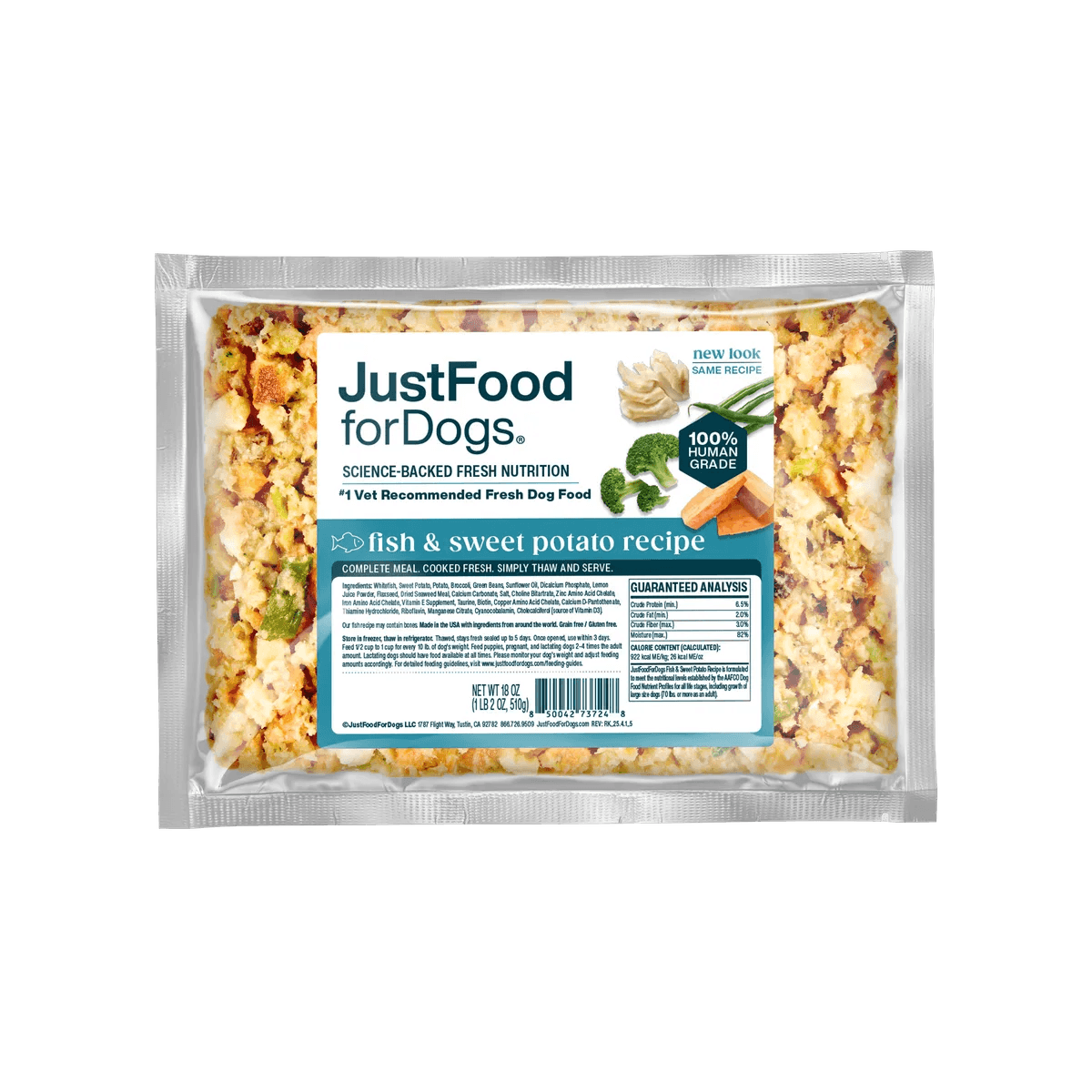
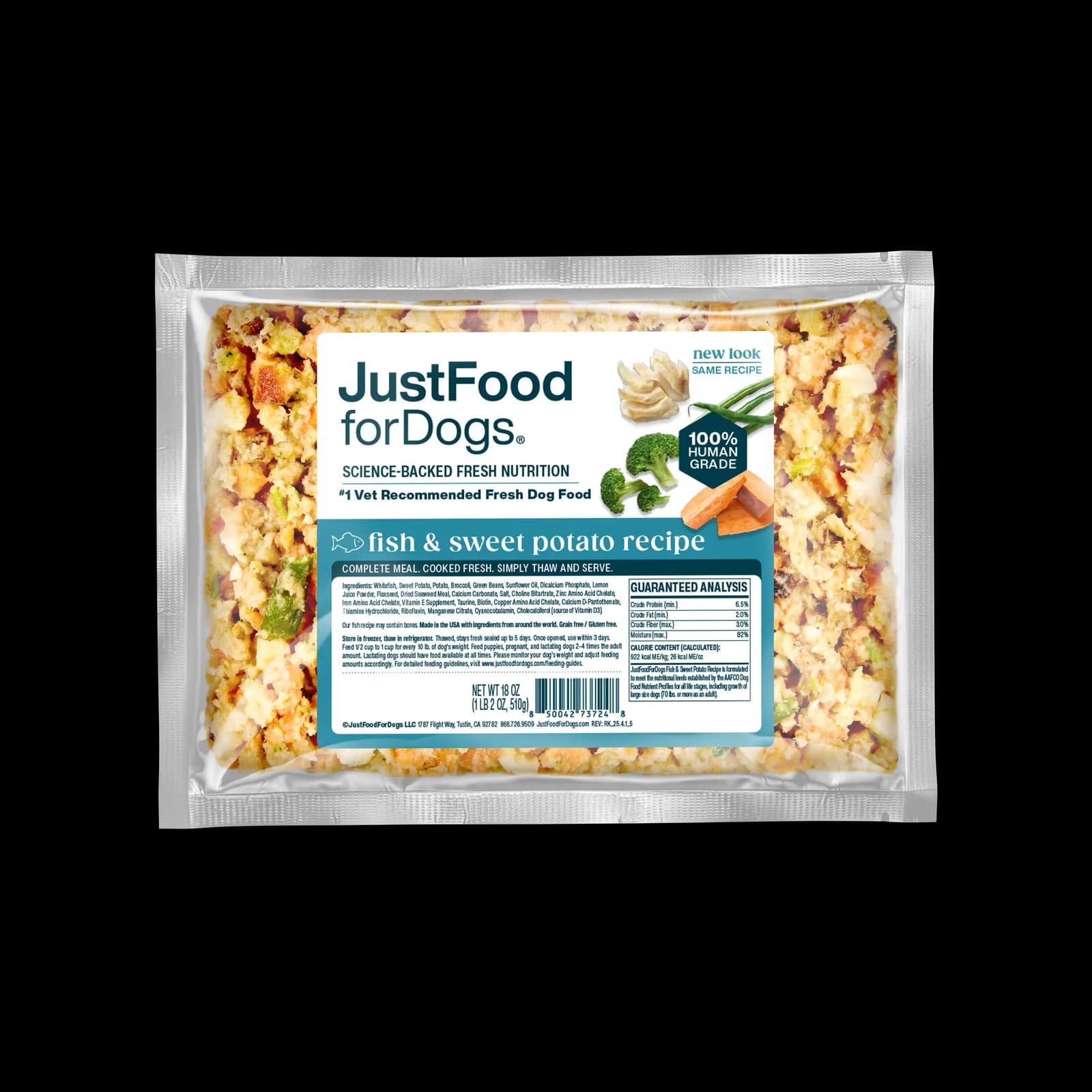
Explore the whitefish alternative discussed in this salmon-food guide and compare its full ingredient list.
- Whitefish with sweet potato
- Fresh Frozen meals with whole-food ingredients
- View the recipe and life-stage guidance
Petful may earn a commission when you click through to JustFoodForDogs, at no extra cost to you.
A recipe can say "salmon" on the front and still deliver very little EPA and DHA if the fish is present only in small amounts or heavily processed. This is the single most useful thing to understand as a buyer, and we come back to it in the label section below.
What omega-3s can help support
It is worth being precise here, because marketing language often overpromises. Diet is a supporting player, not a cure. With that framing, research and veterinary consensus associate adequate dietary EPA and DHA with support for several things:
- Skin barrier and coat quality. The most visible and best-established benefit. Owners frequently notice a softer, shinier coat within several weeks of improving omega-3 intake.
- A normal inflammatory response. Omega-3s can help support the body's ability to keep everyday inflammation in balance, which is relevant for skin comfort and for aging joints.
- Joint comfort in older dogs. Fish-forward diets are commonly used to help support mobility as dogs age, alongside veterinary guidance.
- Cognitive and eye development. DHA is a building block for the developing brain and retina, which is why it matters in puppies and pregnant or nursing dogs.
- Heart and overall condition. Omega-3s contribute to general cardiovascular and whole-body health as part of a complete, balanced diet.
None of this means a fish recipe treats or resolves a medical condition. If your dog has persistent itching, hair loss, or recurrent skin issues, that is a conversation for your veterinarian, because the root cause could be allergies, parasites, or an endocrine issue that food alone will not address.
Is salmon dog food good for a dog?
For most healthy dogs, yes, salmon dog food is a good choice, provided it is complete and balanced. A quality salmon recipe delivers highly digestible protein, a natural source of EPA and DHA, and, in the case of whole-fish formulas, a palatability that even picky eaters tend to accept. A fresh, fish-forward recipe like JustFoodForDogs Fish and Sweet Potato is one way to get that in a complete, balanced form.
Salmon is also a useful protein for dogs who do not do well on the usual suspects. Chicken and beef are the two most common canine food-sensitivity triggers simply because they are the proteins dogs eat most often. Fish sits outside that group for many dogs, which makes salmon and whitefish popular choices for owners looking to simplify a diet or rotate to something new. If you want the deeper picture on fish as a protein, our guide to whether dogs can eat fish breaks down the species-by-species details.
The important caveat is completeness. Salmon on its own, spooned over kibble as a treat, is a nice supplement, but it is not a diet. A dog needs the right balance of protein, fat, calcium, phosphorus, vitamins, and trace minerals. That balance is what separates a commercial salmon dog food formulated to meet AAFCO nutrient profiles from a plain fillet.
Cooked versus raw salmon: the safety part every owner should know
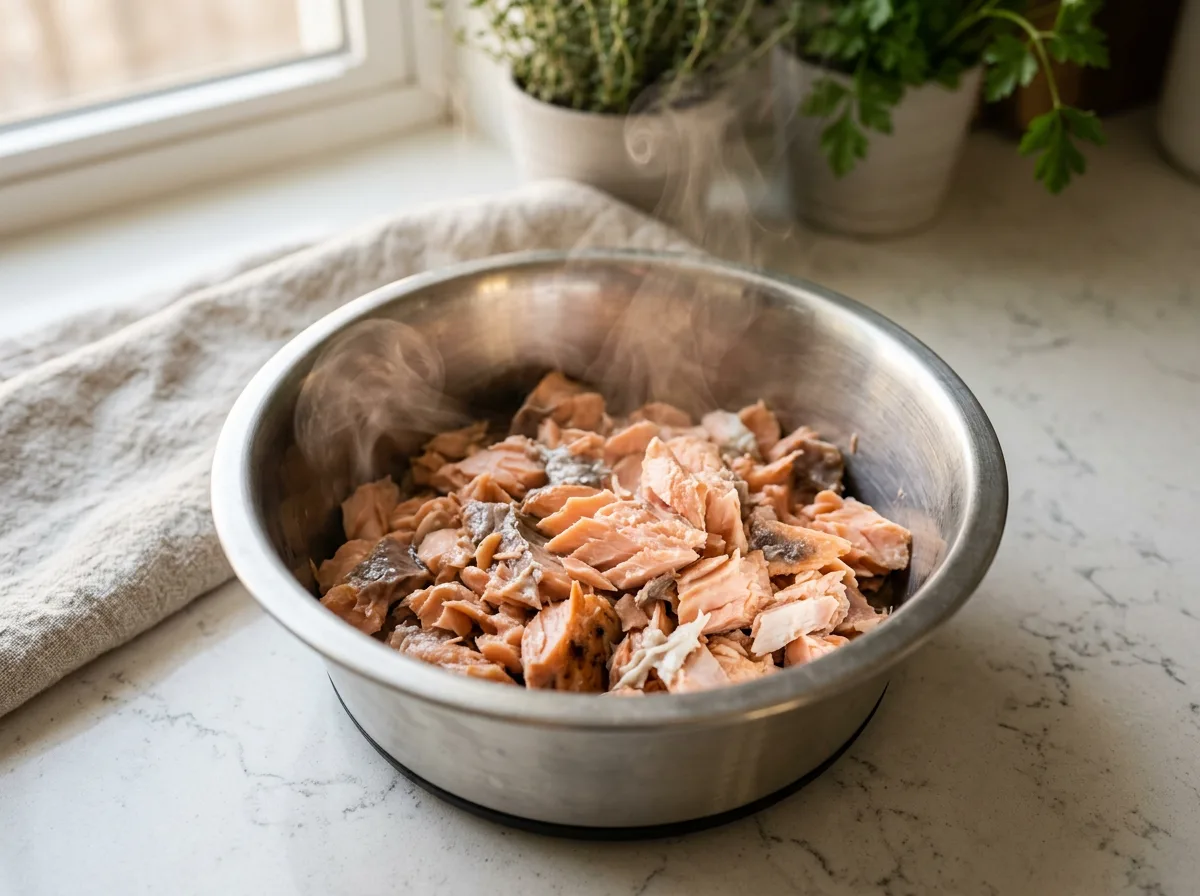
Here is where salmon needs an asterisk. Cooked salmon is one of the safest, most nutritious proteins you can feed a dog. Raw or undercooked salmon is a genuinely different story.
Raw salmon and other raw Pacific fish can carry a parasite that hosts a bacterium called *Neorickettsia helminthoeca*. In dogs, that bacterium can cause salmon poisoning disease, a serious and potentially life-threatening illness if it goes untreated. It is most associated with raw salmon, trout, and steelhead from the Pacific Northwest. The reassuring news is that thorough cooking destroys the parasite, which is exactly why every commercial salmon dog food, whether kibble, canned, or fresh, is fully cooked before it reaches your dog.
A few practical rules keep salmon safe at home:
- Always cook it. Plain, boneless, thoroughly cooked salmon with no oil, butter, salt, or seasoning is the safe way to share.
- Skip the bones. Cooked fish bones can splinter. Use boneless fillets.
- Avoid smoked and cured salmon. These are loaded with salt, and lox is not cooked in a way that reliably kills the parasite.
- Go easy on the skin. Salmon skin is edible when cooked and unseasoned, but it is fatty. Our note on whether dogs can eat salmon skin covers the portion sizing.
- Raw or undercooked salmon, trout, and steelhead can carry the organism behind salmon poisoning disease, which is serious in dogs. Cooking eliminates the risk, and all commercial salmon dog food is cooked. If your dog ever eats raw salmon and then shows vomiting, diarrhea, lethargy, or a fever, call your veterinarian right away.
What is the one meat to never feed your dog?
You will see this question asked a lot, and the honest answer is that no single meat is universally banned for every dog. That said, if there is one protein that vets most often single out to never serve raw, it is salmon and its cold-water relatives, precisely because of the salmon poisoning disease risk described above. Cooked, it is excellent. Raw, it is the fish to avoid. The broader rule is to steer clear of any raw or undercooked meat and fish, heavily seasoned or cured meats, and cooked bones of any kind.
Mercury, contaminants, and portion sense
Salmon is a relatively low-mercury fish compared with large predators like tuna, shark, or swordfish, which is one more reason it is a smart default. Wild-caught salmon in particular tends to be lower in accumulated contaminants than long-lived species higher on the food chain. This is part of why reputable fish-based dog foods lean on salmon, whitefish, and pollock rather than large predatory fish.
Contaminants are still worth a thought when fish is fed as a large share of the diet over years, which brings us to a question a lot of owners ask.
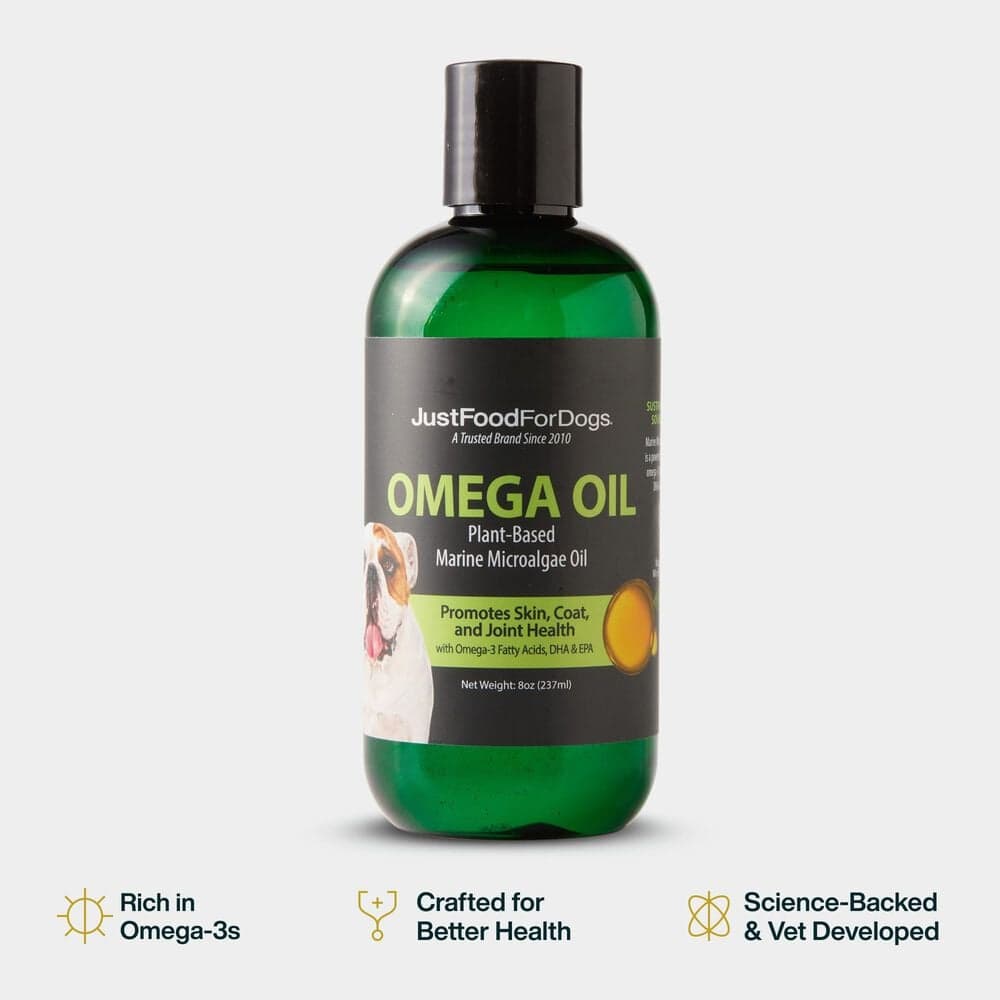
Want EPA and DHA without the mercury question? This algae oil delivers both omega-3s with no fish at all.
- Marine microalgae oil with vitamin E
- EPA 8% and DHA 36% minimum
- For supplemental feeding; dose by weight
Intermittent or supplemental feeding only.
Petful may earn a commission when you click through to JustFoodForDogs, at no extra cost to you.
Why can't dogs eat salmon every day?

The nuance here matters. A complete salmon dog food formulated to meet AAFCO profiles is designed to be fed every day, because the recipe is balanced with everything else a dog needs. That is different from feeding plain salmon fillets as the whole diet every day.
Feeding straight salmon daily runs into three problems. First, it is not nutritionally complete on its own, so a dog would slowly miss out on calcium, certain vitamins, and other essentials. Second, salmon is calorie- and fat-dense, and too much rich fish can upset the stomach or add unwanted weight. Third, even a low-mercury fish contributes some contaminant load, and variety across proteins keeps that exposure low. So the rule is not "salmon is dangerous daily." It is "plain salmon should be a topper or part of a rotation, while a balanced salmon-based food is fine as a daily meal."
What to look for in a salmon dog food
Not all salmon recipes are created equal. A front-of-bag salmon photo tells you almost nothing. Here is what actually separates a strong formula from a weak one.
- A real fish, named first. Look for "salmon," "whitefish," or "pollock" as the first ingredient, ideally a named whole fish rather than only a vague "fish meal" or "fish oil." Named whole proteins signal that fish is doing real work in the recipe, not just flavoring it.
- Meaningful EPA and DHA. The best labels state omega-3 content, or at least EPA and DHA, rather than burying "fish oil" near the bottom. If a brand is proud of its omega-3s, it will tell you the numbers.
- Formulated to meet AAFCO profiles. The bag should carry an AAFCO statement confirming the food is complete and balanced for your dog's life stage, whether that is growth, adult maintenance, or all life stages. This is non-negotiable for a food you feed daily.
- The right life stage. Puppies, adults, and seniors have different needs. A growth or all-life-stages formula suits a young dog; an adult maintenance formula suits most grown dogs.
- Whole-food quality. Recognizable ingredients, limited fillers, and a short, readable list generally point to a better-made food. Fresh and gently cooked options tend to score well here.
- Wild-caught where possible. Wild salmon is often lower in contaminants than some farmed sources, though responsibly farmed fish can also be a fine choice. Either way, sourcing transparency is a good sign.
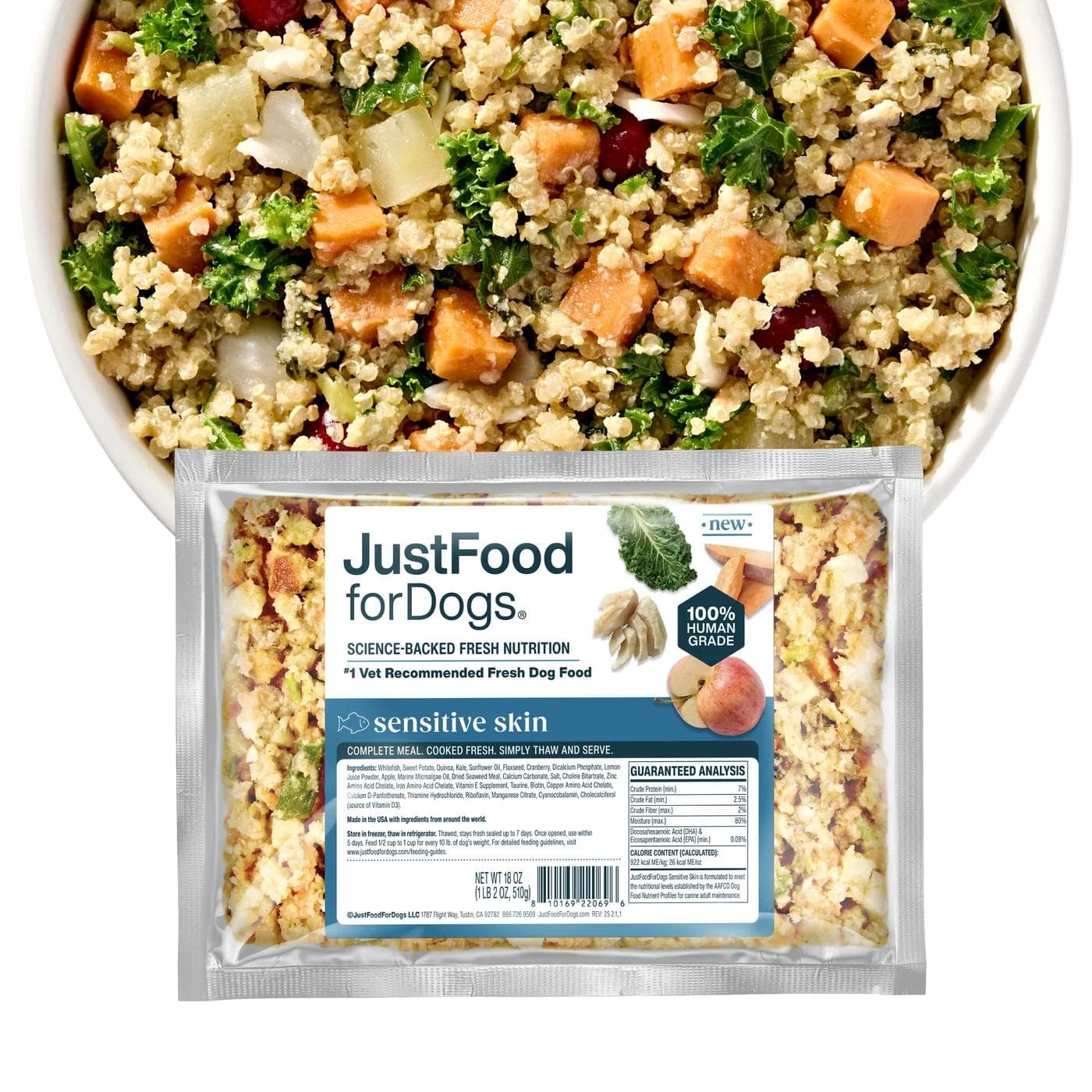
Explore the whitefish alternative discussed in this salmon-food guide and compare its full ingredient list.
- Whitefish-based Fresh Frozen recipe
- Made for adult dogs
- Review the full ingredient list with your vet
Choose a recipe around your dog’s known food triggers.
Petful may earn a commission when you click through to JustFoodForDogs, at no extra cost to you.
The table below sums up how the common salmon formats compare on omega-3 delivery and who each one suits.
| Format | Omega-3 (EPA and DHA) delivery | Best suited for |
|---|---|---|
| Fresh, gently cooked recipe | High and highly digestible; fish is a primary ingredient | Everyday feeding, picky eaters, skin and coat focus |
| Salmon kibble | Moderate; depends heavily on fish content and added fish oil | Budget-conscious daily feeding with a shelf-stable format |
| Canned or wet salmon food | Moderate to high; good moisture and palatability | Toppers, mixing, and dogs who prefer wet textures |
| Salmon oil supplement | High per drop, but adds no complete nutrition | Boosting omega-3s on top of an already balanced diet |
Who salmon and fish-based food suits best
Salmon dog food is a fine everyday choice for almost any healthy dog, but it shines for a few specific groups.
- Dogs with dull coats or dry, flaky skin. This is the classic use case. When the coat has lost its shine or the skin looks dry, boosting high-quality omega-3s is one of the first, gentlest levers to pull. Owners often report a visible difference in coat softness and gloss over a few weeks.
- Dogs who need a different protein. Because chicken and beef are the most common sensitivity triggers, fish is a go-to alternative protein. A whitefish or salmon recipe can serve as a novel protein for a dog who has reacted to the usual meats, though a true elimination diet should be run with your vet.
- Picky eaters. Fish is intensely palatable to many dogs. If your dog turns up their nose at their current food, a fish-forward recipe is worth a trial.
- Active and senior dogs. The omega-3s that support skin also help support joint comfort and general condition, which makes fish recipes popular for hardworking dogs and older ones alike.
The dogs who need a little more caution are those with a history of pancreatitis or those who need a strictly controlled fat intake, since some fish recipes run richer. For them, check the fat percentage and loop in your vet before switching.
Where JustFoodForDogs fits: the fresh omega-3 pick

If you want the omega-3 benefits of fish in a format that is as close to a home-cooked bowl as it gets, fresh food is the category to look at, and this is where JustFoodForDogs (JFFD) earns its place in this guide.
Explore the whitefish alternative discussed in this salmon-food guide and compare its full ingredient list.
- Whitefish with sweet potato
- Fresh Frozen meals with whole-food ingredients
- View the recipe and life-stage guidance
Petful may earn a commission when you click through to JustFoodForDogs, at no extra cost to you.
JFFD makes its recipes with human-grade, whole-food ingredients cooked in open kitchens, and its Fish and Sweet Potato recipe is the natural pick for skin and coat. It leads with wild-caught white fish, a lean protein that carries naturally occurring omega-3s, and pairs it with sweet potato and vegetables. The recipe is formulated to meet AAFCO nutrient profiles for all life stages, so it works as a complete daily meal rather than a topper. Fresh Frozen is the brand's everyday human-grade default, and this fish recipe is one of the more approachable ways into it.
For dogs whose skin needs the most support, JFFD also offers a Sensitive Skin recipe built around whitefish as a single novel animal protein and fortified with omega-3 and omega-6, including EPA and DHA, specifically to help support sensitive skin and a healthy coat. It sits within the brand's broader skin and coat support lineup. If your dog reacts to common proteins, the single-protein approach makes it easier to keep the ingredient list clean while still getting the fish-oil benefits.
The research behind JFFD's recipes
One point of credibility worth knowing: JFFD's approach is backed by five peer-reviewed studies plus a published abstract on its whole-food diets, which is more feeding research than most brands can point to. That does not make any food a medical treatment, but it is a reasonable signal of a company that takes formulation seriously.
- Any time you switch foods, mix the new recipe in gradually over 7-10 days, moving from mostly old food to mostly new. A slow transition gives your dog's digestion time to adjust and makes it easier to spot how they respond to the change.
Salmon oil versus whole-fish food, and how soon you will see results
Owners often ask whether they can skip the fish food and just add a salmon oil supplement instead. Salmon oil is a legitimate way to raise a dog's EPA and DHA, and it can be a smart, low-cost boost on top of a diet your dog already does well on. The catch is that oil adds omega-3s and calories but no complete nutrition, so it supplements a diet rather than being one. A whole-fish recipe, by contrast, delivers the protein, the omega-3s, and the balanced nutrition together in one bowl. Plenty of owners use both at different times: a fish-forward food as the everyday base, with a few pumps of salmon oil during dry-skin season.
As for timing, skin and coat changes are gradual, because the coat grows and replaces itself over weeks rather than days. Most owners who improve their dog's omega-3 intake start to notice a softer, shinier coat somewhere in the four-to-eight-week range, with reduced flaking often showing up first. If you have made a genuine change and still see nothing after a couple of months, treat that as a cue to check in with your veterinarian, since the underlying cause may need more than a dietary adjustment.
What fresh salmon dog food costs
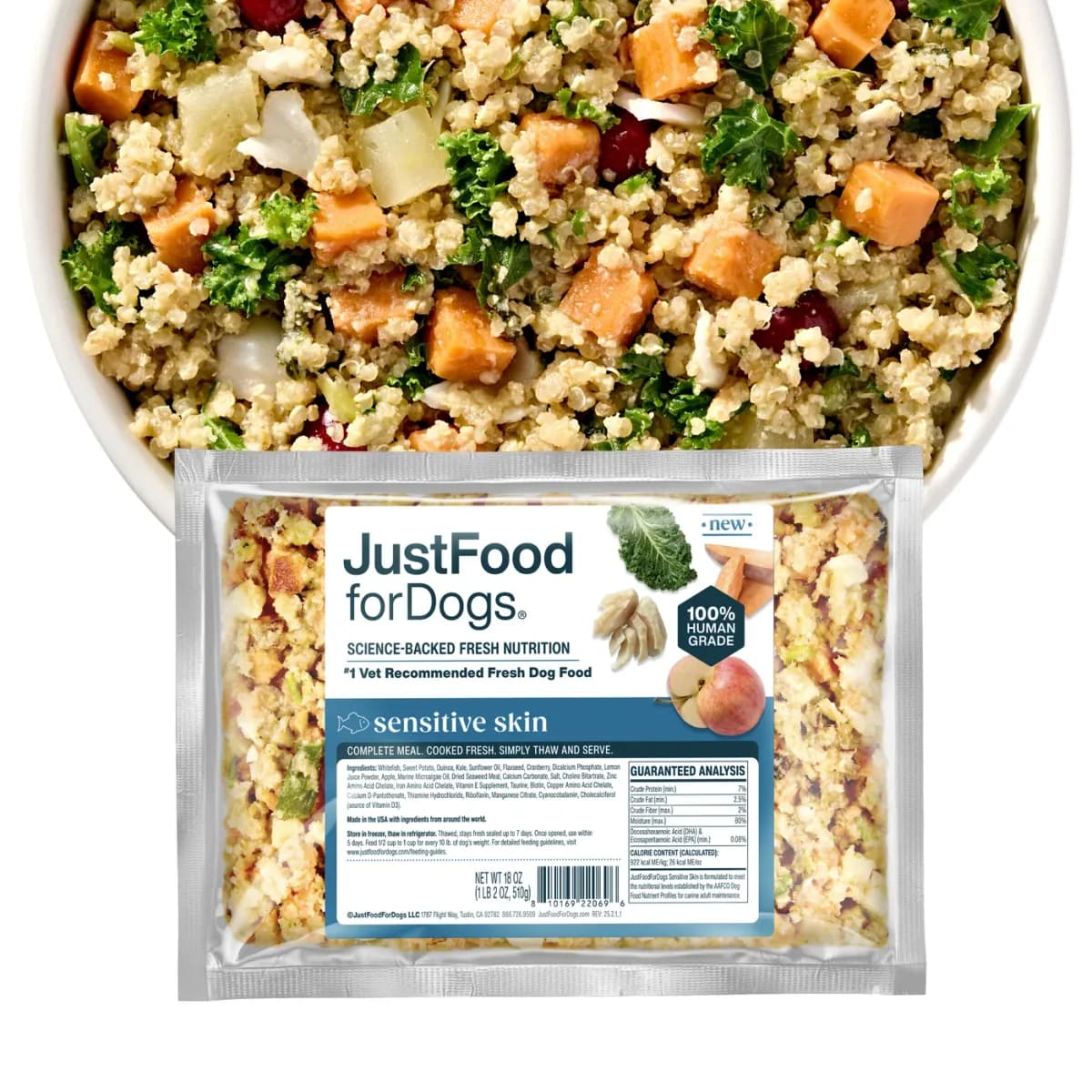
Honesty on price matters, because fresh, human-grade fish food is not the cheapest way to feed a dog. Fresh recipes made with human-grade whitefish and cooked in small batches cost more per serving than a bag of fish kibble, and the price scales with your dog's size, but that price buys human-grade ingredients, higher digestibility, and the stronger omega-3 delivery that shows up in a dog's skin and coat.
Whether that trade is worth it depends on your dog and your budget. If cost is a constraint, using a fresh fish recipe as a base or a partial mixer over kibble is a smart way to bring human-grade fish into the bowl, and many owners build from there toward feeding fresh as the everyday default. A salmon-forward kibble with added fish oil can also be a reasonable option when it provides appropriate EPA and DHA and meets your dog's nutritional needs. The point is to match the format to your dog and budget. For owners who value recognizable ingredients and a gently cooked format, a fresh, human-grade recipe like JustFoodForDogs is one option to discuss with their veterinarian.
- 1Cooked salmon is safe and rich in the EPA and DHA that support skin and coat; raw salmon is the one to avoid
- 2Feed a complete, AAFCO-formulated salmon food daily, and treat plain salmon as a topper rather than the whole diet
- 3Read past the front label: name a real fish first, look for meaningful omega-3s, and match the formula to your dog's life stage and needs
Frequently asked questions about salmon dog food
Salmon Oil for Dogs: Benefits, Dosage, and How Much to Give
Salmon oil is one of the most searched-for dog supplements for a simple reason: it is a concentrated, easy way to add the omega-3s EPA and DHA to a bowl your dog already likes. Where a whole-fish food builds those fatty acids into a complete meal, salmon oil delivers them by the pump or the spoonful, which makes it a flexible add-on for owners who want to raise omega-3 intake without changing the base diet.
Is salmon oil good for dogs, and what can it help support?
For most healthy dogs, salmon oil is a safe and useful supplement. The EPA and DHA it carries are the same fatty acids that make whole salmon valuable, and at adequate levels they can help support:
- A soft, shiny coat and a resilient skin barrier, the benefit owners tend to notice first.
- A normal, balanced inflammatory response, which matters for everyday skin comfort and for aging joints.
- Joint comfort and mobility in active and senior dogs, alongside veterinary guidance.
- Heart, brain, and eye health as part of a complete, balanced diet.
Salmon oil supports these areas; it does not treat or resolve a medical condition. Persistent itching, hair loss, or recurring skin trouble is a reason to see your veterinarian, since the cause may need more than a supplement can offer.
How much salmon oil to give a dog
Dosage depends on your dog's body weight and on the concentration of EPA and DHA in the specific product, which is why the numbers on two different bottles can look so different. The most accurate approach is to dose by the combined EPA and DHA content listed on the label rather than by the total volume of oil. As a rough, general starting point, many salmon oil labels suggest a daily amount along these lines:
| Dog's weight | Typical daily amount (label guide) | Good to know |
|---|---|---|
| Up to 20 lbs | About 1/2 teaspoon (roughly 2 mL) | Start low and watch stool quality for the first week |
| 20 to 50 lbs | About 1 teaspoon | Split across meals if your dog has a sensitive stomach |
| 50 to 90 lbs | About 2 teaspoons | Match the amount to the EPA and DHA on the label, not just the volume |
| Over 90 lbs | About 1 tablespoon | Larger dogs vary widely, so confirm the amount with your vet |
Treat that table as a conversation starter, not a prescription. Always follow the dosing directions on your specific product first, introduce the oil gradually over several days, and check with your veterinarian before starting, especially if your dog is on medication, is pregnant or nursing, has a history of pancreatitis, or needs a controlled-fat diet. Too much oil at once is a common cause of loose stools, and very high long-term doses should only be given under veterinary supervision.
- Two salmon oils can hold very different amounts of active omega-3s, so a teaspoon of one is not the same as a teaspoon of another. Read the combined EPA and DHA figure on the label, and when in doubt, ask your vet to help you land on the right daily amount for your dog's weight and needs.
Getting the most from salmon oil
A few habits keep salmon oil working the way you want. Buy a product that lists its EPA and DHA content and, ideally, its sourcing. Store it in a cool, dark place or the refrigerator, because fish oils turn rancid when exposed to heat, light, and air, and a sour or off smell means it is time to toss it. Add it to food just before serving rather than mixing big batches in advance. And remember what oil is and is not: it raises omega-3s and adds calories, but it carries no complete nutrition on its own. That is the core difference between a supplement and a whole-fish food like JustFoodForDogs Fish and Sweet Potato, which delivers the protein, the omega-3s, and balanced nutrition together in one bowl. Plenty of owners use both, leaning on a fish-forward food as the everyday base and a few pumps of salmon oil during dry-skin season.
Other Omega-3 Fish Beyond Salmon: Sardines, Pollock, and Whitefish
Salmon gets top billing, but it is far from the only fish worth knowing. Several other cold-water species deliver the same EPA and DHA, and some bring advantages of their own. If you are building variety into your dog's diet, these are the ones to look for.
Sardines are the quiet standout. These small, oily fish are packed with omega-3s, sit very low on the mercury scale thanks to their short lifespan and low spot on the food chain, and add a welcome hit of protein and micronutrients. Canned sardines make an easy topper as long as you choose ones packed in water with no added salt, and drain them well before serving. Their small size is exactly why sardine toppers and sardine dog food have caught on with omega-3-minded owners. A sardine or two a few times a week is a simple, affordable way to boost a dog's fish intake.
Pollock, whitefish, and other oily fish
Pollock is the mild, flaky whitefish behind a lot of fish-based dog food. It is generally considered a lower-mercury fish and provides lean protein, although tolerance and digestibility vary by dog. Whitefish, a general term that often covers pollock, cod, haddock, and similar species, is another lean, gentle protein that works well as a novel protein for dogs who react to chicken or beef. It carries naturally occurring omega-3s while staying lower in fat than salmon, which some richer-food-sensitive dogs appreciate. This is exactly the fish at the heart of JustFoodForDogs Fish and Sweet Potato, which leads with wild-caught white fish.
Herring, mackerel, and anchovies round out the family. All three are oily, omega-3-rich, low-mercury options that show up in quality fish formulas and can be offered in small, plain, cooked amounts. As with salmon, the same safety rules apply across every one of these fish: serve them fully cooked, boneless, and unseasoned, skip anything smoked or brined, and keep portions modest. For the full species-by-species breakdown of which fish are safe and how to serve them, see our guide to whether dogs can eat fish.
- 1Salmon oil is a concentrated way to add EPA and DHA, but it is a supplement, not a complete diet, so dose it by the omega-3 content on the label with your vet's input
- 2Sardines, pollock, whitefish, herring, mackerel, and anchovies all deliver omega-3s, and small, low-mercury fish like sardines make especially easy toppers
- 3Every fish follows the same rule as salmon: cooked, boneless, and unseasoned, with raw fish left off the menu
Yes, for most healthy dogs, as long as it is complete and balanced. Salmon delivers highly digestible protein and a natural source of the omega-3s EPA and DHA, which help support skin barrier health and a glossy coat. It is also a useful protein for dogs who do not tolerate chicken or beef well. The key is choosing a recipe formulated to meet AAFCO profiles for your dog's life stage, rather than feeding plain salmon as a stand-alone diet.
The best salmon dog food is the one that names a real fish first, states meaningful EPA and DHA content, is formulated to meet AAFCO nutrient profiles for your dog's life stage, and uses recognizable whole-food ingredients. "Best" also depends on the individual dog and your budget. Fresh, gently cooked recipes such as JustFoodForDogs Fish and Sweet Potato can be worth considering for skin and coat support because fish is a primary ingredient and the recipes provide omega-3 fatty acids, while a quality salmon kibble with added fish oil is a solid everyday option.
No single meat is banned for every dog, but the protein vets most often warn against serving raw is salmon and its cold-water relatives (trout and steelhead), because raw fish can carry the parasite behind salmon poisoning disease, which is serious in dogs. Cooked salmon is safe and healthy; raw salmon is the one to avoid. More broadly, skip all raw or undercooked meat and fish, heavily salted or cured meats, and cooked bones.
This is a veterinary decision, not a shelf purchase. A dog with a seizure disorder needs a diagnosis and a management plan from a veterinarian, and any therapeutic diet is chosen and prescribed by that vet. Some veterinary neurologists explore diets supplemented with medium-chain triglycerides (MCT oil) as a dietary adjunct that may help support dogs alongside prescribed medication, and purpose-built veterinary neurologic-support diets exist for this use. A salmon or fish recipe is not a seizure diet and should not replace veterinary care, so talk to your vet about the right prescription option.
There is no single official ranking, because the healthiest food is the one that fits the individual dog's life stage, size, and needs. Rather than chasing a fixed top-three list, look for three qualities: a recipe formulated to meet AAFCO nutrient profiles, named whole-food ingredients with a real protein first, and quality you can verify through sourcing transparency or feeding research. Fresh, human-grade options such as JustFoodForDogs, high-quality whole-ingredient kibbles, and balanced fish-forward recipes all meet those standards. Your veterinarian can help you match one to your dog.
A complete salmon dog food formulated to meet AAFCO profiles can be fed every day, because it is balanced with everything else a dog needs. The caution is about feeding plain salmon fillets as the entire diet daily. Straight salmon is not nutritionally complete on its own, it is rich and calorie-dense enough to upset the stomach or add weight in excess, and rotating proteins keeps any contaminant exposure low. So feed a balanced salmon-based food daily if you like, but treat plain cooked salmon as a topper or occasional addition.
Not automatically. Grain-free is a formulation choice, not a mark of quality, and wholesome grains like rice and oats are not inherently bad for most dogs. What matters is whether the recipe is complete and formulated to meet AAFCO nutrient profiles for your dog's life stage. It is also worth knowing that the FDA has been investigating a possible association between some grain-free diets, often those high in peas, lentils, and other legumes, and a heart condition called dilated cardiomyopathy, though the link is not proven. Unless your dog has a diagnosed grain sensitivity, which is uncommon, choose a salmon food based on overall balance and your vet's guidance rather than the grain-free label alone.
Yes, as long as it is formulated for growth. Salmon's DHA is a building block for the developing brain and eyes, which is why fish is often emphasized in puppy formulas. The key is choosing a recipe formulated to meet AAFCO nutrient profiles for growth or for all life stages, with the calcium and phosphorus balance a growing dog needs (large-breed puppies need extra care on that point). Plain cooked salmon can be an occasional topper, but a puppy still needs a complete growth diet as the base, so check with your vet before making it a regular part of the bowl.
Yes, in moderation they can be a great reward. Single-ingredient cooked or freeze-dried salmon treats are high-value and protein-rich, with a natural omega-3 bonus, and because they are fish-based they sit outside the common chicken and beef sensitivities. Keep treats to about 10 percent of your dog's daily calories, choose plain products with no added salt or seasoning, and steer clear of raw or smoked salmon treats. They are a reward, not a meal, so they do not need to be complete and balanced the way a daily food does.
Salmon and rice is a classic, easily digestible pairing: the salmon supplies protein and omega-3s while the rice adds a gentle, digestible carbohydrate that many sensitive stomachs handle well. It is a common base for commercial recipes and is often echoed in the bland diets vets suggest during a recovery. As with any salmon food, a complete salmon-and-rice recipe formulated to meet AAFCO nutrient profiles is what makes it appropriate as a daily meal, whereas a plain homemade mix can miss key nutrients, so keep any homemade version vet-guided.

Coreen Saito is a pet writer and longtime shelter volunteer with more than a decade in animal rescue. She covers cat behavior, breed care, and the small, ordinary science of sharing a life with companion animals, with a particular focus on honest takes about the products and decisions that actually matter. At home in Arizona, she's outranked by Mac (a dog with the loudest opinion in the house), Rebel (a cat who governs by quiet authority), and Meri (an orange tabby who runs the late shift and the laundry basket). She writes about all three, plus the rescues that keep coming through her life, at LifeWithMinty.com.
Sign up for expert-backed reviews and safety alerts all in one place.



A Final Word (Disclaimer)
At Petful, our review integrity is paramount; we never exchange special treatment in our reviews for monetary or material rewards.
Nonetheless, when our readers click through to online merchants (including Chewy or Amazon), we receive a referral commission. This supports the running of our free blog, and we appreciate your backing.