PetLabCo.® Probiotic Chews Review: Do They Really Work?
A vet-led review of PetLabCo.® Probiotic Chews, including the current label, a 31-day product-specific study, dosing, safety, and who may be a fit.

PetLabCo.® Probiotic Chews in the current package with one pork-flavored soft chew.
Petful is reader supported. As an affiliate of platforms like Amazon and Chewy, we may earn a commission when you buy through links on this page. There is no extra cost to you.
Sponsored content: This article was created in partnership with PetLabCo.®. Petful's veterinary author independently reviewed the current product information and the published evidence discussed below.
This PetLabCo.® Probiotic Chews review takes a close look at what is in the current formula, what the product-specific study actually found, and what remains uncertain. PetLabCo.® Probiotic Chews are daily pork-flavored supplements made with probiotics, prebiotics, and a postbiotic yeast blend to support normal digestive and immune function in dogs.
The short answer is encouraging but qualified. A small, company-funded, randomized, double-blind, placebo-controlled study found measurable changes in selected gut markers and bacteria after healthy Beagles received the formula for 31 days. It did not prove that the soft chews treat digestive disease, stop itching, or guarantee a noticeable result in an individual dog.
- Keep the current label, evidence quality, and your dog’s veterinary plan together when interpreting this part of the article.
For context on the company and its wider supplement range, see Petful's broader PetLabCo.® review.

Sign up for expert-backed reviews and safety alerts all in one place.
💡Key Takeaways
- 1Best evidence: A 31-day product-specific trial in 24 healthy adult Beagles found differences in selected fecal markers and bacterial populations.
- 2What the study did not show: It did not test dogs with diagnosed gastrointestinal disease or allergies, and it did not establish treatment of diarrhea, inflammatory disease, yeast infection, or itchy skin.
- 3Current formula: Each 4 g chew provides a proprietary blend totaling 3 billion CFU of three Bacillus species, plus FOS, GOS, and a heat-treated yeast blend.
- 4Serving: The label directs 1 soft chew daily for dogs under 25 lb, 2 for dogs from 25 to 75 lb, and 3 for dogs over 75 lb.
- 5Who may appreciate it: Owners looking for a shelf-stable, treat-style daily supplement for a dog at least 12 weeks old, with veterinary approval.
- 6Important limitation: Petful did not obtain or feed this product to a dog. This is an expert-analysis review based on the current label, published research, and veterinary guidance, not a hands-on product test.
- 7Our verdict: The formula has more product-specific research than many dog supplements, but the evidence supports a role in routine gut-health support, not disease treatment.
How we reviewed PetLabCo.® Probiotic Chews
Petful did not receive, purchase, handle, taste-test, or administer these soft chews. We therefore cannot make first-hand claims about odor, texture, palatability, packaging, stool changes, or how a particular dog responds.
Instead, this expert analysis used four decision factors:
- Label transparency: We checked the current active ingredients, inactive ingredients, serving directions, age guidance, storage instructions, and cautions.
- Product-specific evidence: We read the complete peer-reviewed study of the commercial probiotic, prebiotic, and yeast soft chew, including the methods, results, adverse events, limitations, funding, and author conflicts.
- Practical fit: We considered the soft chew format, weight-based serving, potential food sensitivities, use with medications, and cost.
- Claim discipline: We separated measured laboratory findings from benefits that were not directly tested.
Product at a Glance
| Feature | Current product information |
|---|---|
| Product type | Daily soft chew for dogs |
| Intended use | Support for normal digestive function, gut flora, and normal immune response |
| Active probiotics | Proprietary blend of Bacillus coagulans, Bacillus clausii, and Bacillus subtilis |
| Probiotic quantity | 3 billion CFU per 4 g soft chew |
| Prebiotics | Fructooligosaccharides (FOS), 100 mg; galactooligosaccharides (GOS), 100 mg |
| Postbiotic | Heat-treated blend of Saccharomyces cerevisiae and Cyberlindnera jadinii, 75 mg |
| Flavor and animal ingredients | Pork flavored; the current online label lists pork liver |
| Age | Dogs and puppies 12 weeks and older |
| Daily serving | 1 to 3 soft chews based on weight |
| Storage | Cool, dry place away from direct sunlight; reseal after use |
| Price checked August 25, 2026 | Official site displayed $37.44 for a tub and $29.95 with the shown 20% subscription discount |
| Review basis | Expert analysis; no Petful hands-on test |
Prices, promotions, and formulas can change. Check the current product listing and label before buying.
What is in each soft chew?
- Finished product evidence matters. Ingredient research or brand-reported findings do not prove treatment, guaranteed results, or replacement of veterinary care.
The active formula combines three ingredient groups that play different roles.
Three spore-forming probiotic species
Each chew supplies a proprietary blend totaling 3 billion colony-forming units:
- Bacillus coagulans
- Bacillus clausii
- Bacillus subtilis
Spore-forming Bacillus organisms are generally selected for their stability during manufacturing and storage and their ability to withstand passage through the stomach. The label provides the combined CFU count but does not disclose the amount of each species in the current commercial blend.
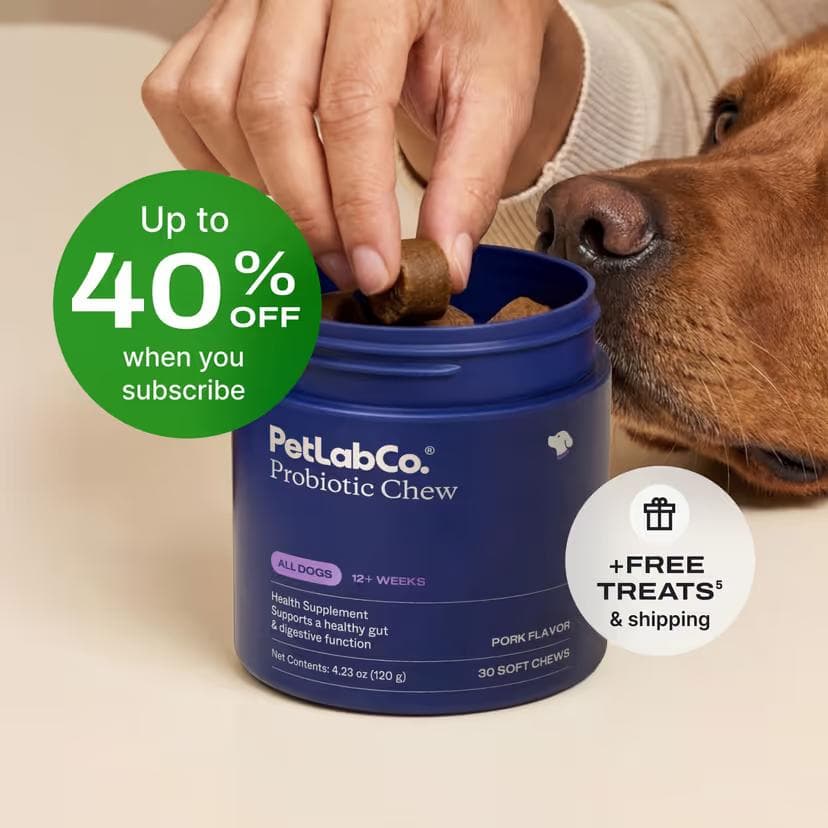
Compare the current probiotic formula with the ingredient breakdown in this review. See the label and directions before choosing a tub.
Petful may earn a commission when you click through to PetLabCo.®, at no extra cost to you.
The published study tested a chew with 500 million CFU of B. subtilis, 1 billion CFU of B. clausii, and 1.5 billion CFU of B. coagulans. Those amounts added to the same 3 billion CFU total shown on the current label. Because the current blend is proprietary, the study's species-by-species quantities should not automatically be treated as the guaranteed ratio in every current tub.
FOS and GOS prebiotics
The soft chew contains 100 mg each of fructooligosaccharides and galactooligosaccharides. Prebiotics are substrates that selected gut microbes can use. Their inclusion makes this more than a probiotic-only product.
Heat-treated yeast postbiotic
The 75 mg yeast blend contains Saccharomyces cerevisiae and Cyberlindnera jadinii. A postbiotic is made from inactivated microorganisms or their components rather than live organisms.
Review the full ingredient list, including inactive ingredients, when comparing this chew with your dog’s sensitivities.
Petful may earn a commission when you click through to PetLabCo.®, at no extra cost to you.
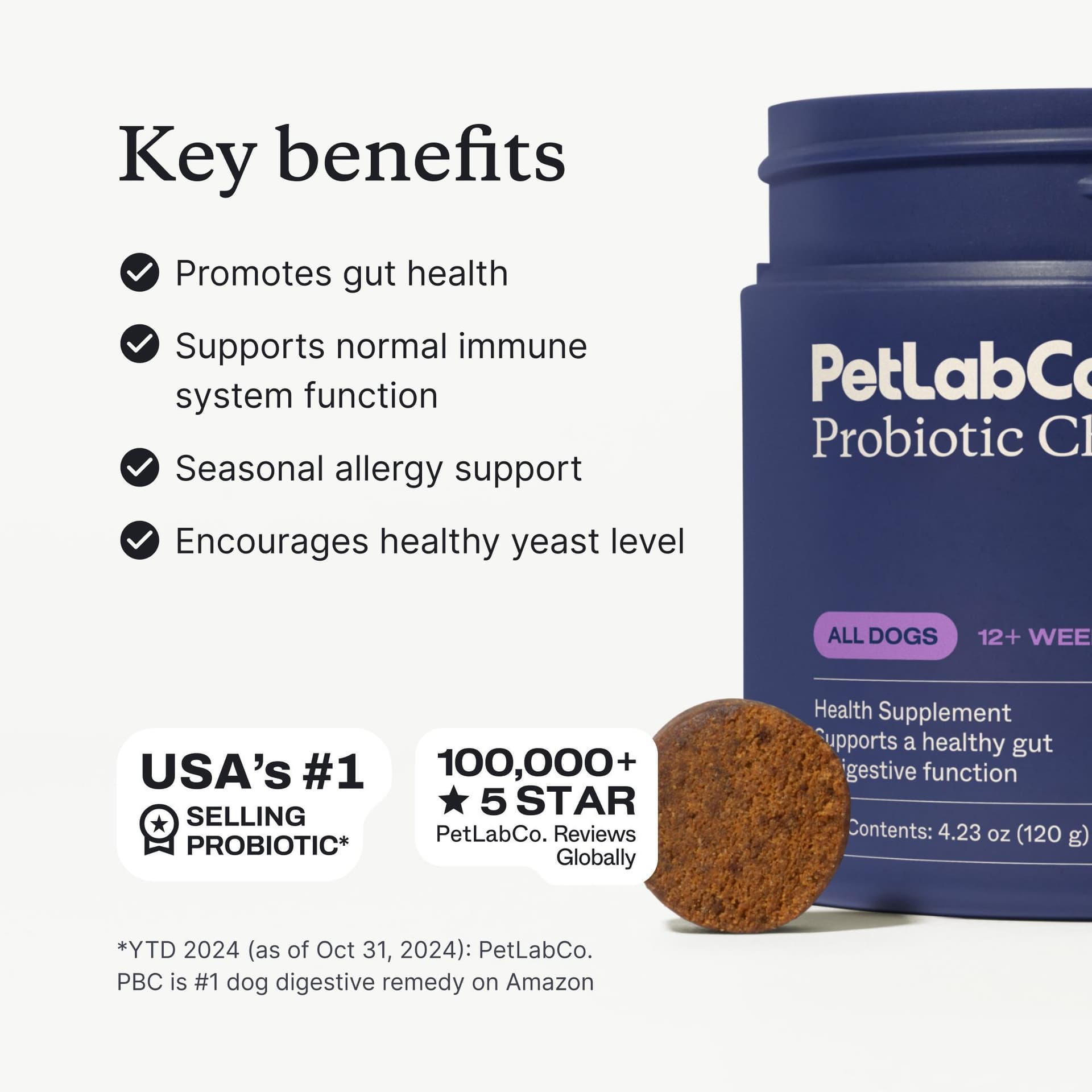
Inactive ingredients and sensitivities
The current online label lists apple cider vinegar, chickpea, coconut glycerin, coconut oil, dried brewer's yeast, hickory smoke flavor, lecithin, maltodextrin, pork liver, rosemary extract, sunflower oil, and sweet potato.
This matters if your dog is undergoing a veterinary elimination diet or has a known sensitivity to pork or another ingredient. A flavored supplement can interfere with a strict food trial. Show your veterinarian the current package label before starting it.
What did the 31-day clinical study find?
The most relevant evidence is a 2026 paper in the journal Pets: “Effect of a Supplement Containing Probiotics, Prebiotics, and Yeast Extract on Gut Inflammation, Microbiota, and Cytokines in Healthy Dogs.”
Study design
The researchers enrolled 24 healthy adult Beagles with a mean age of 5.17 years. Dogs were housed individually and randomly placed into two matched groups:
- 12 received the probiotic, prebiotic, and yeast chew.
- 12 received a control chew with the active ingredients removed.
The study was double-blinded and placebo-controlled. All dogs ate the same complete and balanced dry diet, and the researchers collected fecal and blood samples over 31 days. Dogs under 11.3 kg received one chew; dogs from 11.3 to 22.7 kg received two.
This is a stronger design than an owner survey or an uncontrolled testimonial. It is still a small study in a highly controlled population.
Fecal calprotectin
At the final time point, fecal calprotectin was lower in the supplement group than in the control group, with a reported p-value below .05. Calprotectin is a marker researchers use when assessing intestinal inflammatory activity.
There is an important qualifier: the change from each dog's baseline to the final measurement was not significantly different between groups, with p = .17. The fair summary is that the study found a final between-group difference in this marker, not that it proved the product treats intestinal inflammation.
Microbiome diversity
Within the supplement group, Shannon diversity increased by about 10% over the study, while it changed little in the control group. However, the overall between-group analysis of alpha diversity was not significant, with Shannon p = .42. The other reported diversity measures were also not significantly different between groups.
That distinction matters. It is accurate to say diversity increased within the group receiving the supplement. It is not accurate to say the study proved a superior diversity change versus placebo.
Bacterial populations
The three Bacillus species in the chew increased after supplementation. The paper also reported favorable changes in selected measures involving Blautia and Clostridium hiranonis.
These findings support the idea that the included organisms survived digestion well enough to be recovered in fecal analyses and influenced measured bacterial populations during use. They do not show that the organisms permanently colonized the gut after supplementation stopped.
The overall dysbiosis index was not significantly different at the final time point. Beta diversity also did not show significant clustering between groups.
Blood and immune markers
Blood C-reactive protein was not significantly different between groups at the end of the study. Its change from baseline showed only a statistical trend, p = .11.
Tolerance and adverse events
No serious adverse events were reported. Five vomiting events occurred in the supplement group, including two in one dog, compared with one event in the control group. Four loose-stool episodes occurred in the supplement group and three in the control group.
The authors described the events as mild and transient. Still, “no serious adverse events” does not mean that digestive upset is impossible or that the formula suits every dog.
What are the study's limitations?
Several limitations affect how far the results can be applied:
- Healthy dogs: The trial did not enroll dogs with chronic diarrhea, inflammatory bowel disease, food allergy, environmental allergy, or immune dysfunction.
- Small sample: There were only 12 dogs in each group.
- One breed and setting: Research-facility Beagles on the same diet do not represent the variety of breeds, diets, medications, and home environments seen in practice.
- Short duration: Thirty-one days can detect biological changes but cannot establish long-term outcomes.
- Laboratory outcomes: The study focused on biomarkers and microbiome measurements, not resolution of owner-noticed symptoms or improved quality of life.
- Funding and conflicts: PetLabCo.® funded the research. Most authors were company employees or consultants, and the company was involved in writing and revising the manuscript.
- Formula comparison: The active amounts in the study align with the current displayed formula, but some inactive ingredients listed in the paper differ from the current online label.
Industry-funded research can still be well designed and useful. The funding and author relationships should simply be disclosed so readers can interpret the evidence in context.
Do PetLabCo.® Probiotic Chews really work?
It depends on what “work” means.
If the question is whether the formula can reach the lower digestive tract and measurably affect selected gut markers and bacterial populations during use, the product-specific study provides encouraging evidence.
See the product behind the evidence discussed here. Compare its current label with the benefits and limitations in this review.
Petful may earn a commission when you click through to PetLabCo.®, at no extra cost to you.
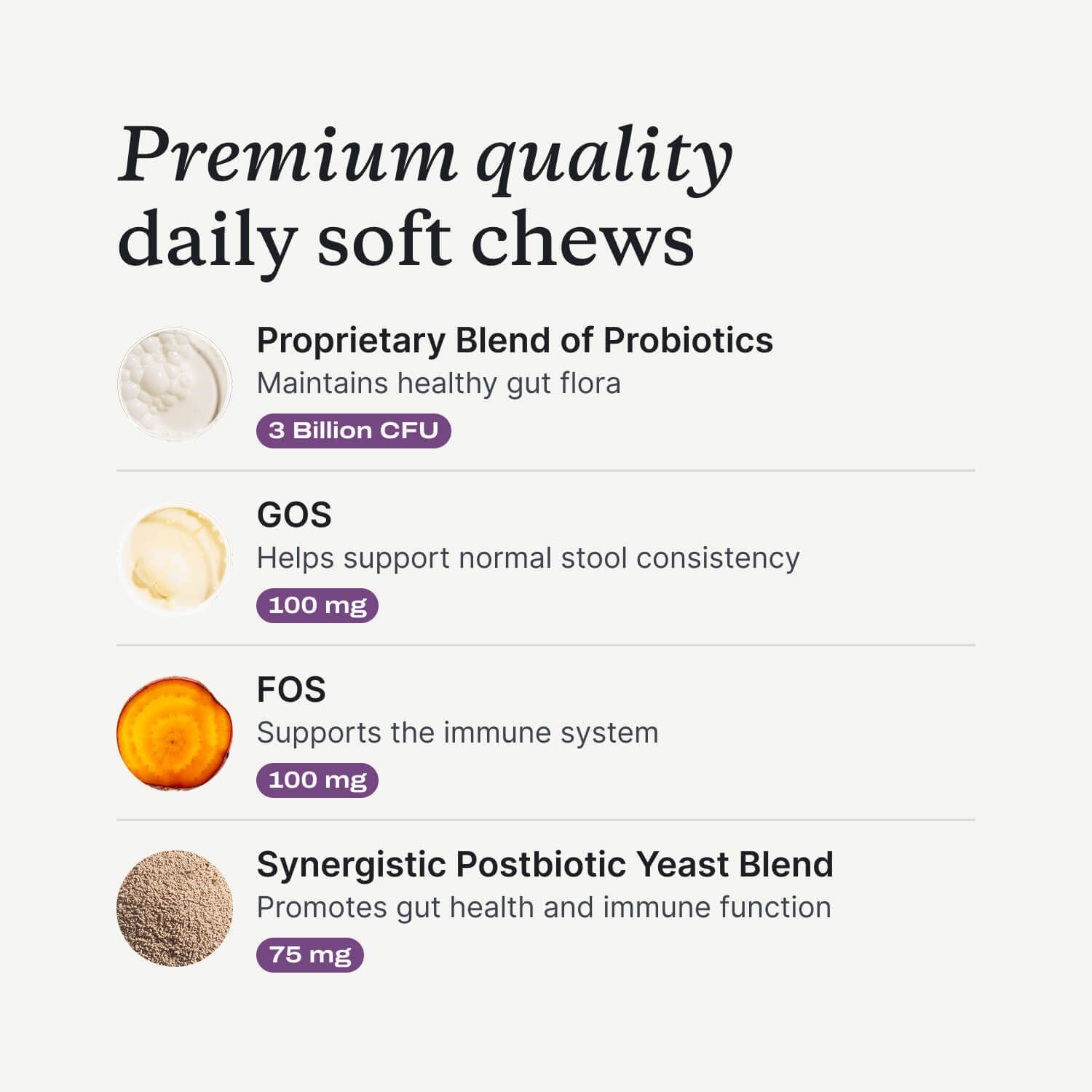
If the question is whether it will stop diarrhea, cure a yeast problem, treat allergies, or make every dog feel better, the available study does not answer that. Those outcomes were not tested in dogs with those conditions.
Set a practical goal before buying. For a healthy dog, that might mean adding a consistent, veterinarian-approved probiotic routine and watching tolerance. For a dog with symptoms, the first goal is diagnosis. Repeated diarrhea, vomiting, weight loss, blood in the stool, pain, or appetite change cannot be used as an at-home test of whether a probiotic is working.
The study makes this formula more evidence-informed than a chew supported only by general ingredient claims. It does not turn a biological signal measured in healthy Beagles into a promise of symptom relief for every dog.
Benefits and practical strengths
Based on the current label and evidence, the main strengths are:
- A clearly stated total CFU count and named probiotic species
- A combination of probiotics, prebiotics, and a postbiotic
- A product-specific randomized, double-blind, placebo-controlled study
- A shelf-stable soft chew that does not require measuring powder
- Weight-based directions for small, medium, and large dogs
- Suitability for dogs at least 12 weeks old when the label and veterinary guidance are followed
Those strengths matter most when they match the household's actual routine. A soft chew avoids measuring powder, and the three serving bands are easy to understand. The disclosed species and total CFU count also make the label easier to compare with another probiotic.
The product-specific study is the most meaningful differentiator, but it should be read together with its limits. A useful format and controlled trial can support a purchasing decision without implying disease treatment or guaranteed visible improvement.
Compare current purchase options and the daily serving for your dog before deciding whether this chew fits your routine.
Petful may earn a commission when you click through to PetLabCo.®, at no extra cost to you.
Reported benefits: label claims
- PetLabCo.® describes the following supportive roles for the formula and its ingredients. These are manufacturer claims, separate from the outcomes measured in the clinical trial:
- Supports normal digestive function and helps maintain a balanced gut microflora
- Helps maintain normal stool consistency and gut barrier integrity
- Supports a regular immune response
- Support for seasonal, environmental, or occasional allergy discomfort
- Support for normal skin and coat comfort
Drawbacks and points to consider
Potential drawbacks include:
- Large dogs require three soft chews daily, so a 30-count tub lasts only 10 days at the labeled serving.
- Pork liver and other flavoring ingredients may not fit every dog.
- A flavored soft chew can disrupt a veterinary elimination diet.
- Mild vomiting or loose stool is possible when introducing a new supplement.
- The label says absorption of drugs taken at the same time may be delayed.
- Safety has not been established in pregnant animals or animals intended for breeding.
- Evidence in dogs with diagnosed disease is not available from the product-specific trial.
- Subscription pricing may reduce the per-tub cost; confirm refill frequency and terms before enrolling.
Owners comparing formats can browse the company's dog probiotic collection, but the best choice depends on the dog's reason for use, diet, and veterinary plan rather than the largest strain count or strongest marketing phrase.
Who may be a good fit?
PetLabCo.® Probiotic Chews may be worth discussing with your veterinarian if:
- Your dog is at least 12 weeks old.
- You want a daily soft chew rather than a powder or capsule.
- Your dog is not on a strict elimination diet.
- The ingredient list fits your dog's known food tolerances.
- You understand that the goal is supportive care, not treatment of a disease.
- You are willing to use the product consistently and monitor stool, appetite, vomiting, and general comfort.
PetLabCo.® also offers an educational overview of signs a dog may need probiotic support. Signs such as repeated diarrhea, vomiting, weight loss, blood in the stool, pain, or lethargy should prompt veterinary care rather than self-treatment with a supplement.
Who should avoid it or ask a vet first?
Do not start the soft chews without veterinary guidance if your dog:
- Is younger than 12 weeks
- Is pregnant, nursing, or intended for breeding
- Has a compromised immune system
- Takes immunosuppressant medication
- Takes medication whose timing or absorption is important
- Has a known sensitivity to pork or another listed ingredient
- Is completing a diagnostic food trial
- Has persistent or worsening digestive signs
The label advises stopping administration and consulting a veterinarian if the animal's condition worsens or does not improve. In an accidental overdose, contact a veterinarian promptly.
How to give the soft chews
Follow the current weight-based product directions:
| Dog's weight | Daily amount |
|---|---|
| Under 25 lb | 1 soft chew |
| 25 to 75 lb | 2 soft chews |
| Over 75 lb | 3 soft chews |
Give only the labeled amount unless your veterinarian directs otherwise. Keep the tub sealed in a cool, dry place away from direct sunlight. Ask your veterinarian how to separate the soft chew from medications because the label warns that simultaneous drug absorption may be delayed.
Introduce only one planned dietary change at a time when possible. That makes vomiting, loose stool, appetite change, or another reaction easier to connect with the new product. Do not double a missed serving or increase the soft chew count because a result is not obvious.
Record the start date, daily serving, stool quality, vomiting, appetite, and any original reason for use. A short log gives the veterinarian more useful information than relying on memory, especially when medications, diet, or symptoms change during the same period.
Value for money
As checked on August 25, 2026, the official site displayed a regular tub price of $37.44 and a shown subscription price of $29.95, a 20% discount. Confirm the amount at checkout because promotions can change.
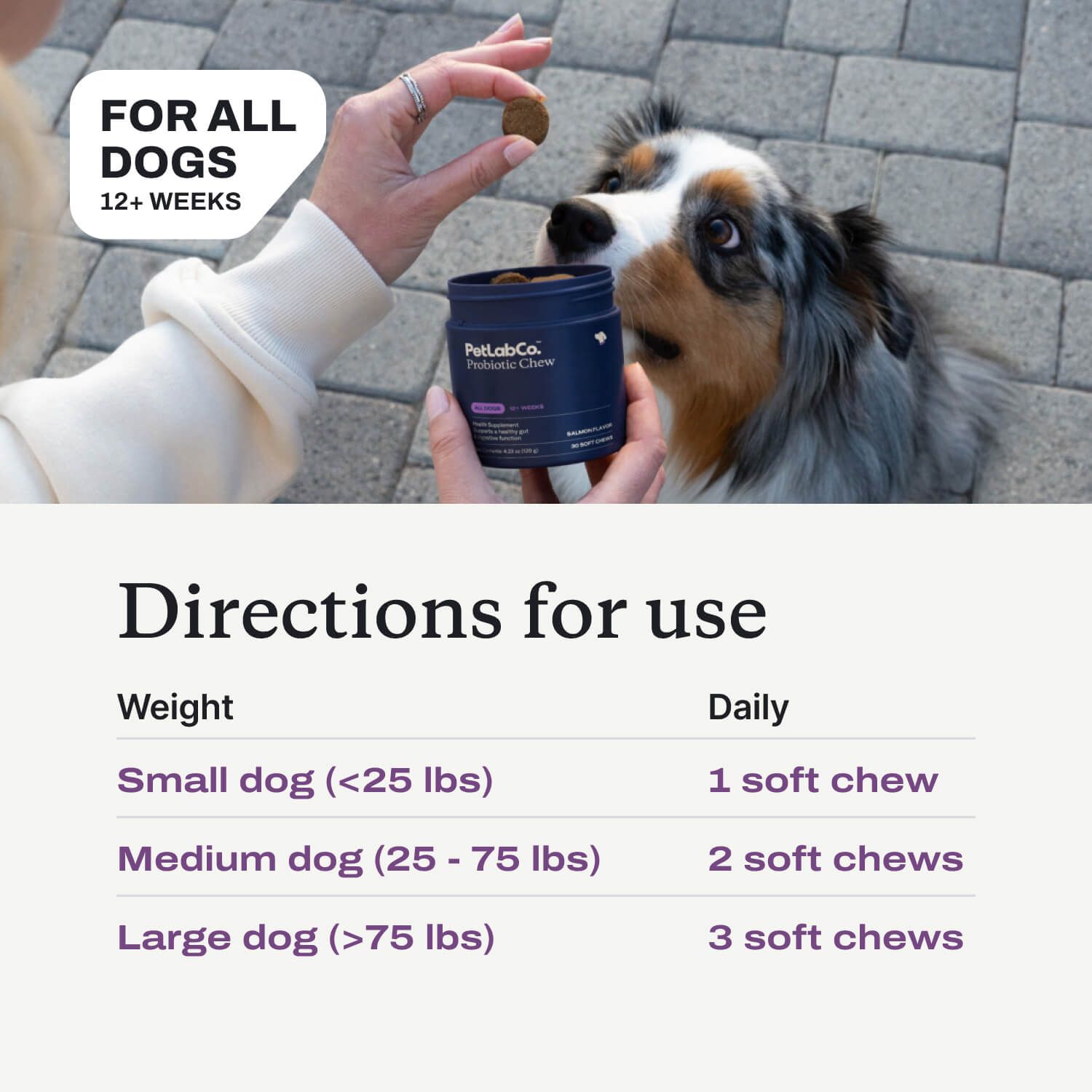
How long a tub lasts depends on the dog's weight:
- Under 25 lb: 30 days
- 25 to 75 lb: 15 days
- Over 75 lb: 10 days
That makes weight a major part of the value calculation. A large dog uses three times as many soft chews as a small dog at the labeled serving.
At the displayed prices, the approximate product cost is about $1.25 per day at the regular price or $1.00 with the shown subscription price for a dog under 25 pounds. It is about $2.50 or $2.00 per day for a medium dog and about $3.74 or $3.00 per day for a large dog. These rounded figures exclude shipping and tax and will change if the price or tub count changes.
Compare that daily cost with the reason for use and the strength of the evidence for that goal. Subscription savings are useful only when the refill pace matches the dog's serving and the product remains appropriate.
Tailored option and subscription savings
PetLabCo.® also offers size-tailored probiotic chews, which may simplify the daily routine. Follow that product's own weight-specific directions: its serving and active amounts differ from the original formula reviewed here. Subscription options may offer savings and automatic refills; check the selected size, current price, and delivery terms.
Our expert verdict
PetLabCo.® Probiotic Chews have a practical soft chew format, a transparent total CFU count, and a product-specific controlled study. Those are meaningful positives in a supplement category where evidence often stops at general ingredient claims.
The study supports a measured conclusion: the formula was associated with selected gut-marker and bacterial changes during 31 days of use in healthy Beagles. It does not prove treatment of digestive disease, allergies, or itching, and it cannot predict an individual dog's response.
For an otherwise healthy dog whose veterinarian agrees that probiotic support is appropriate, the soft chews are a reasonable option to consider. They should complement a complete diet and veterinary care, not replace either. Check the current PetLabCo.® Probiotic Chews label for formula, serving, warnings, and price before use.
Frequently Asked Questions
How long PetLabCo.® Probiotic Chews take to work varies by dog, and there is no guaranteed timeline for a visible result. The product-specific study measured biological changes over 31 days in healthy Beagles, while the company advises consistent use and says some owners may assess support over a longer period. Contact your veterinarian if your dog has ongoing symptoms instead of waiting for a supplement to work.
The current label says the soft chews are intended for puppies and dogs 12 weeks and older. Puppies with vomiting, diarrhea, poor growth, or low energy need veterinary assessment because they can become dehydrated quickly. For can puppies take petlabco.® probiotic chews?, the practical next step is to follow the current label and review the dog's individual health, diet, and medicines with a veterinarian. A supplement should not be treated as a diagnosis, treatment, or guaranteed result. Seek veterinary advice sooner if signs worsen or do not improve.
Digestive upset is possible with PetLabCo.® Probiotic Chews, including diarrhea or vomiting in some dogs. In the 31-day supplement study, mild vomiting and loose-stool events occurred in both the supplement and control groups, with more vomiting events in the supplement group. Stop and call your veterinarian if signs are persistent, severe, or accompanied by blood, pain, lethargy, or appetite loss.
Ask the prescribing veterinarian. The product label states that absorption of drugs taken simultaneously may be delayed. Your veterinarian can advise whether the supplement is appropriate and how to space it from medication. For Can I give probiotic chews with antibiotics or other medications?, the practical next step is to follow the current label and review the dog's individual health, diet, and medicines with a veterinarian. A supplement should not be treated as a diagnosis, treatment, or guaranteed result. Seek veterinary advice sooner if signs worsen or do not improve.
That has not been established by the product-specific trial. Itching, paw licking, ear problems, odor, and skin changes can have many causes, including allergies, parasites, bacterial or yeast infection, and other medical conditions. A veterinarian should identify the cause. For will these probiotic chews stop my dog's itching or yeast infections?, the practical next step is to follow the current label and review the dog's individual health, diet, and medicines with a veterinarian. A supplement should not be treated as a diagnosis, treatment, or guaranteed result. Seek veterinary advice sooner if signs worsen or do not improve.
Sources
- Zilinger A, et al. Effect of a Supplement Containing Probiotics, Prebiotics, and Yeast Extract on Gut Inflammation, Microbiota, and Cytokines in Healthy Dogs. Pets. 2026;3(1):1.
- PetLabCo.® Probiotic Chews for Dogs: current product facts, directions, and cautions. Accessed August 25, 2026.
PetLabCo.® products are not intended to diagnose, treat, cure, or prevent any disease. Consult your veterinarian before starting supplements, especially if your dog has a health condition, takes medication, is pregnant or nursing, or has persistent symptoms.

DVM
Athena Gaffud, DVM, is a board-certified veterinarian and writer based in the Cagayan Valley of the northern Philippines. She runs the website countryvetmom.com Dr. Gaffud earned her Doctor of Veterinary Medicine degree from the University of the Philippines Los Baños in 2011, ranking in the top 10 and receiving the Best Undergraduate Thesis Award in Large Animals. With over a decade of experience, she has worked as a researcher, a practitioner for small and large animals, and in veterinary technical sales, marketing, and pet insurance. A published author, Dr. Gaffud promotes responsible pet ownership and combats misinformation on animal care through her platforms, including the DocAthena Facebook Page and DocAthena YouTube channel. She is a writer and editor for various pet-related websites such as Total Vet, Honest Paws, PangoVet, Dogster, Catster, My Best PH, Paw Origins, Bully Max, Not a Bully, Paws and Claws CBD, many others. She was also cited in different pet-related media articles such as The Dog People, USA Today, Newsweek, New York Post, Reader’s Digest, Smithsonian Magazine, Woman’s World, Dog Time, Patch, Kinship, Martha Stewart, and many others. Moreover, she is also a published fiction author on Kindle.
Sign up for expert-backed reviews and safety alerts all in one place.


A Final Word (Disclaimer)
At Petful, our review integrity is paramount; we never exchange special treatment in our reviews for monetary or material rewards.
Nonetheless, when our readers click through to online merchants (including Chewy or Amazon), we receive a referral commission. This supports the running of our free blog, and we appreciate your backing.