Normal Respiratory Rate for Cats: How to Count Breaths and When to Worry
A cat's sleeping respiratory rate is easiest to count when the cat is relaxed and not purring. Use the number with effort, posture, symptoms, and a personal baseline.

BVMS, MRCVS
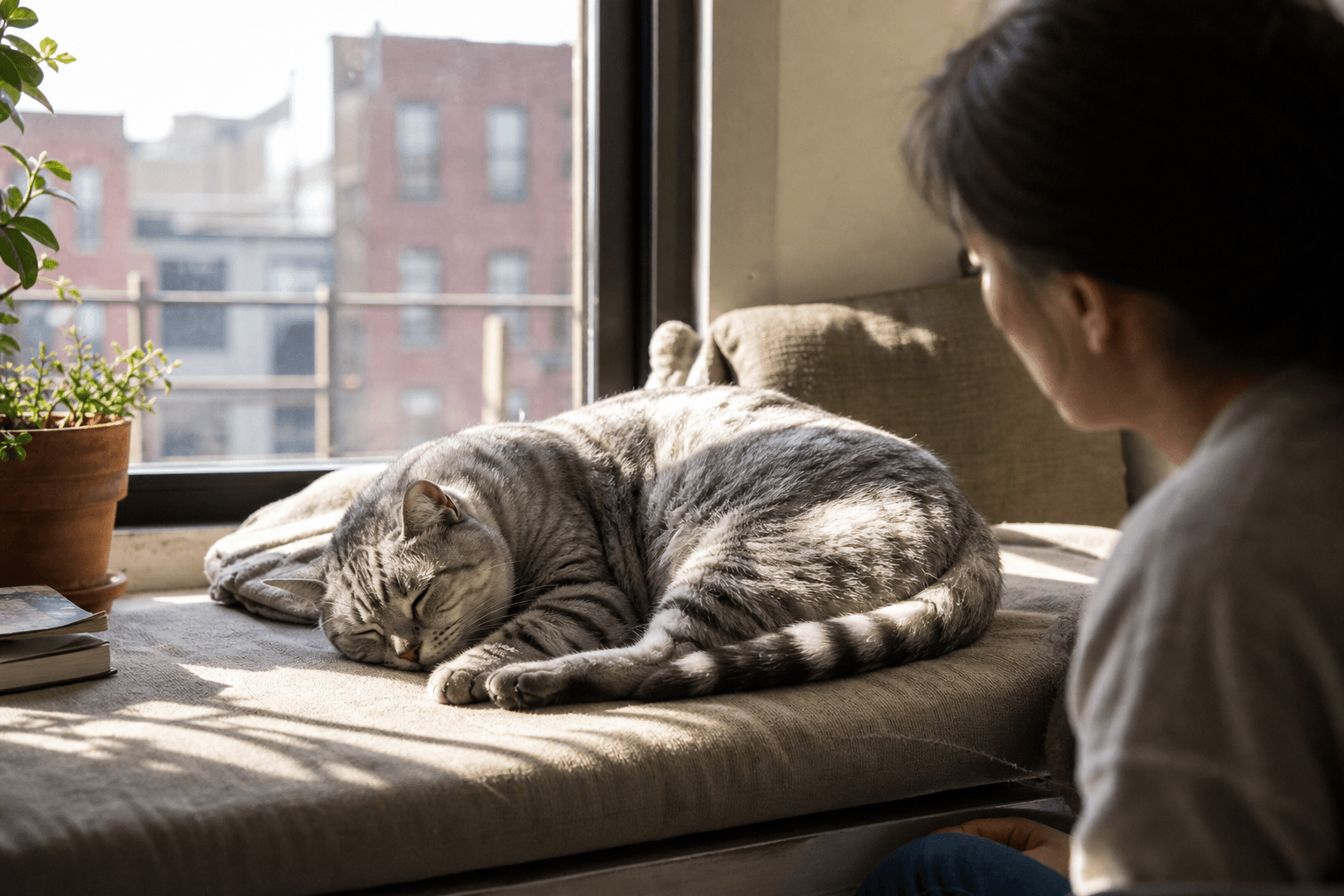
Count a cat’s breathing during quiet sleep without petting or triggering purring.
Petful is reader supported. As an affiliate of platforms like Amazon and Chewy, we may earn a commission when you buy through links on this page. There is no extra cost to you.
The normal respiratory rate for cats is best measured during quiet sleep, when a cat is relaxed, not purring, and not warm or stressed. One complete rise and fall of the chest equals one breath.
Cornell describes a normal resting rate of 15 to 30 breaths per minute and advises consulting a veterinarian when the resting rate is consistently above 35. Reference ranges vary, and a cat with heart or lung disease may have a different personal threshold. Always interpret the number with breathing effort, posture, gum color, behavior, and change from the cat's own baseline.

Sign up for expert-backed reviews and safety alerts all in one place.
Normal respiratory rate for cats at rest
- 1Count during deep quiet sleep when your cat is not purring.
- 2Use the rate with breathing effort, posture, symptoms, and a repeatable personal baseline.
- 3Open-mouth breathing, strong abdominal effort, abnormal gum color, collapse, or obvious distress needs emergency care.
A reference range helps organize observations, but it cannot prove that a cat is healthy. Cats often hide illness, and some serious breathing problems appear first as a change in rate, position, or willingness to move.
Healthy reference ranges vary. A cat respiratory rate should be compared with breathing effort and an individual sleeping baseline, not used as a stand-alone health verdict.
The conditions of the count matter. A cat that has just played, jumped onto furniture, become frightened, sat in a hot window, or purred through petting is not giving you a true resting measurement.

A collar-mounted sensor and app for activity, rest, sleep, respiratory rate, heart-rate trends, itch behaviors, and more.
- Builds a personalized baseline over time
- Tracks trends between veterinary visits
- Generates a month-long shareable report
Health monitoring for dogs and cats
Petful may earn a commission when you click through to Maven Pet, at no extra cost to you.
How to count a cat's respiratory rate
Choose a moment when your cat is sleeping in a natural position. Watch from a short distance so you do not trigger purring or cause the cat to change posture.
For owners learning how to count cat respiratory rate readings, the key is to wait for calm non-purring sleep and count one complete chest cycle at a time. A sleeping respiratory rate cat owners record at home is generally more useful than a hurried count made after handling, play, travel, or purring.
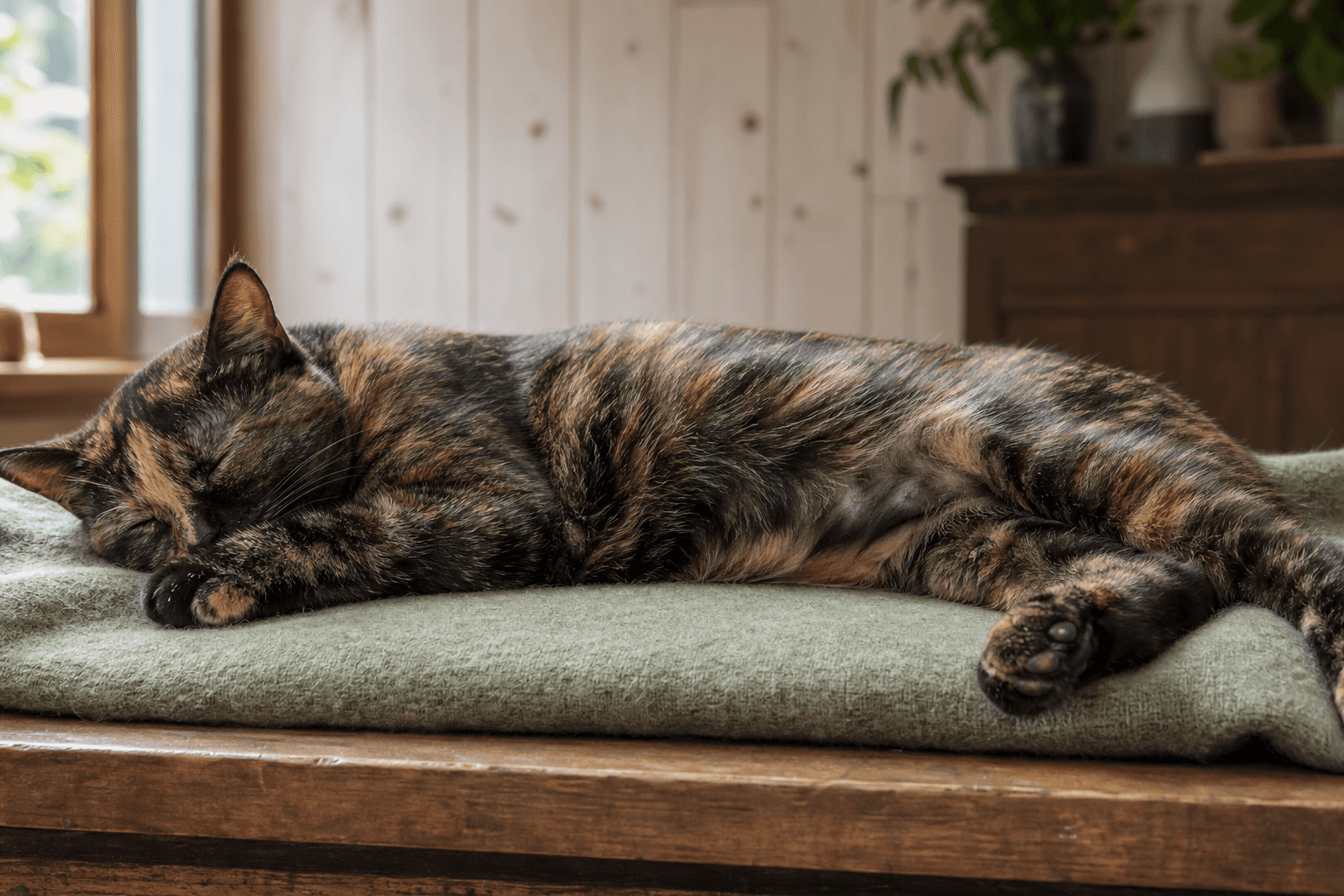
Follow these steps:
- Watch the chest or flank without touching the cat.
- Count one rise and fall as one breath.
- Count for 30 seconds and multiply by two.
- Count for a full 60 seconds if the rhythm is irregular.
- Wait several quiet minutes and repeat an unexpected result.
- Record the rate, time, sleep position, and anything that could have affected it.
Do not count the rise and the fall as two breaths. If long fur makes movement hard to see, change your viewing angle rather than placing a hand on the chest. A short side-on video may help you count later, provided the cat is comfortable and recording does not delay care.
The method also explains why clinic stress and purring can distort a count. It helps separate a reference range from an individual cardiology threshold because a general chart and a veterinarian's plan answer different questions. Use the chart to understand context, then use repeat calm-sleep measurements, visible effort, and the threshold set for that cat to decide whether to call.
Why purring changes the measurement
Purring alters chest and airway movement, making a resting count less reliable. Petting, talking, or moving closer can start purring even when a cat looked asleep moments earlier.
Wait for a naturally quiet sleep period. If your cat purrs whenever you approach, observe from farther away or use a brief video with the phone screen dimmed and no flash.
A collar-mounted sensor and app for activity, rest, sleep, respiratory rate, heart-rate trends, itch behaviors, and more.
- Builds a personalized baseline over time
- Tracks trends between veterinary visits
- Generates a month-long shareable report
Health monitoring for dogs and cats
Petful may earn a commission when you click through to Maven Pet, at no extra cost to you.
Build a sleeping respiratory baseline
A baseline is a series of comparable readings taken when your cat appears well. Collect several counts over a few days at similar times and under similar conditions. Use ordinary sleep, not a stressful veterinary visit, as the reference.
A study of 131 apparently healthy adult cats found that respiratory rates measured in the clinic differed from home resting and sleeping measurements. The result supports an important practical point: context and stress can change the number.
Record:
- Date and time
- Breaths per minute
- Sleeping or awake state
- Whether the cat was purring
- Body position
- Warmth, recent activity, or stress
- Medication timing
- Coughing, gagging, appetite change, hiding, weakness, or reduced activity
A few breaths of variation are expected. Focus on a persistent shift from the familiar pattern or a change that appears with effort or other symptoms.
Repeat measurements and trends are most useful when the sleep state, position, and room conditions are comparable. This creates a repeatable home baseline without treating normal variation as disease. Record normal periods as well as unusual ones, because several calm measurements show whether the cat has a stable pattern, a short-lived variation, or a persistent change that deserves veterinary advice.
What can change a cat's resting rate
Recent play, a warm room, stress, pain, fever, medication, and an unfamiliar sleeping place can all affect breathing. Note coughing, gagging, nasal discharge, reduced appetite, hiding, weakness, or reluctance to jump, because those details may change the veterinarian's assessment.
Body position matters too. A cat curled loosely on one side is different from a cat crouching with the neck extended and elbows held away from the chest. Do not move a cat into a preferred counting position when the cat resists or seems uncomfortable.
Age does not make open-mouth breathing or strong abdominal effort normal. Kittens and senior cats may have different health risks, but the same emergency signs still require prompt action.
A collar-mounted sensor and app for activity, rest, sleep, respiratory rate, heart-rate trends, itch behaviors, and more.
- Builds a personalized baseline over time
- Tracks trends between veterinary visits
- Generates a month-long shareable report
Health monitoring for dogs and cats
Petful may earn a commission when you click through to Maven Pet, at no extra cost to you.
When a cat respiratory rate is concerning
How many breaths per minute is concerning for a cat? A persistent rise from baseline or repeated calm-sleep readings above the veterinarian's threshold deserves a call. Cat respiratory distress signs such as effort, open-mouth breathing, abnormal color, collapse, or inability to settle need emergency care at any number. These feline respiratory distress signs are more important than finishing a timer, because a cat that is struggling may deteriorate quickly and should be transported with minimal handling.
| What you observe | What it may mean | Next step |
|---|---|---|
| One higher count after play, warmth, stress, or purring | The conditions were not truly resting | Let the cat settle into quiet non-purring sleep and repeat |
| A repeated rate above the cat's normal baseline with easy breathing | A meaningful trend may be developing | Record the pattern and contact your veterinarian promptly |
| Rapid breathing with open mouth, strong abdominal effort, abnormal gum color, collapse, or inability to settle | Possible respiratory emergency | Seek emergency veterinary care immediately |
Cornell advises calling a veterinarian when a cat's resting respiratory rate is consistently above 35 breaths per minute. “Consistently” matters, but it is not a reason to keep rechecking a distressed cat.
A cat breathing fast at rest but seeming fine may still need prompt advice when the change persists. Cats can compensate quietly before their condition becomes obvious. A normal appetite or a brief playful moment does not cancel a repeated resting change.
Fast breathing without obvious distress
Why is my cat breathing fast but seems fine? Recent activity, warmth, stress, pain, fever, medication, and early heart or lung disease are among many possible contexts. Repeat only during calm non-purring sleep, record the conditions, and contact a veterinarian when the change persists.
Cats with heart or lung disease need an individual plan
What is the breathing rate of a cat with congestive heart failure? There is no single expected rate for every affected cat. The useful threshold is the one a veterinarian or veterinary cardiologist sets for that individual, based on diagnosis, treatment, sleeping baseline, and other findings.
A rising sleeping rate can be important, but it does not diagnose heart failure. Possible associated changes include reduced appetite, hiding, lower activity, weakness, an unusual crouched posture, or difficulty breathing. Coughing is less common in feline heart failure than many owners expect and can point to other airway problems.
Ask the veterinarian to write down:
- When and how often to count
- The individual alert threshold
- Whether to repeat an unexpected reading
- Which other signs require a same-day call
- Which signs mean immediate emergency care
- How medication timing should be recorded
Do not change a heart, airway, or diuretic medication based on a home count unless the prescribing veterinarian has given a specific plan.
Early heart failure signs in cats
What are the first signs of heart failure in cats? Possible early changes include a rising sleeping respiratory trend, lower activity, reduced appetite, hiding, weakness, or an unusual resting posture. These findings are not specific, and some cats show few outward signs, so veterinary examination is necessary.
A collar-mounted sensor and app for activity, rest, sleep, respiratory rate, heart-rate trends, itch behaviors, and more.
- Builds a personalized baseline over time
- Tracks trends between veterinary visits
- Generates a month-long shareable report
Health monitoring for dogs and cats
Petful may earn a commission when you click through to Maven Pet, at no extra cost to you.
Emergency signs in cats
What are signs of cat respiratory distress? Open-mouth breathing, strong abdominal effort, an extended neck, elbows held away from the chest, abnormal gum color, collapse, and inability to settle are emergency findings.
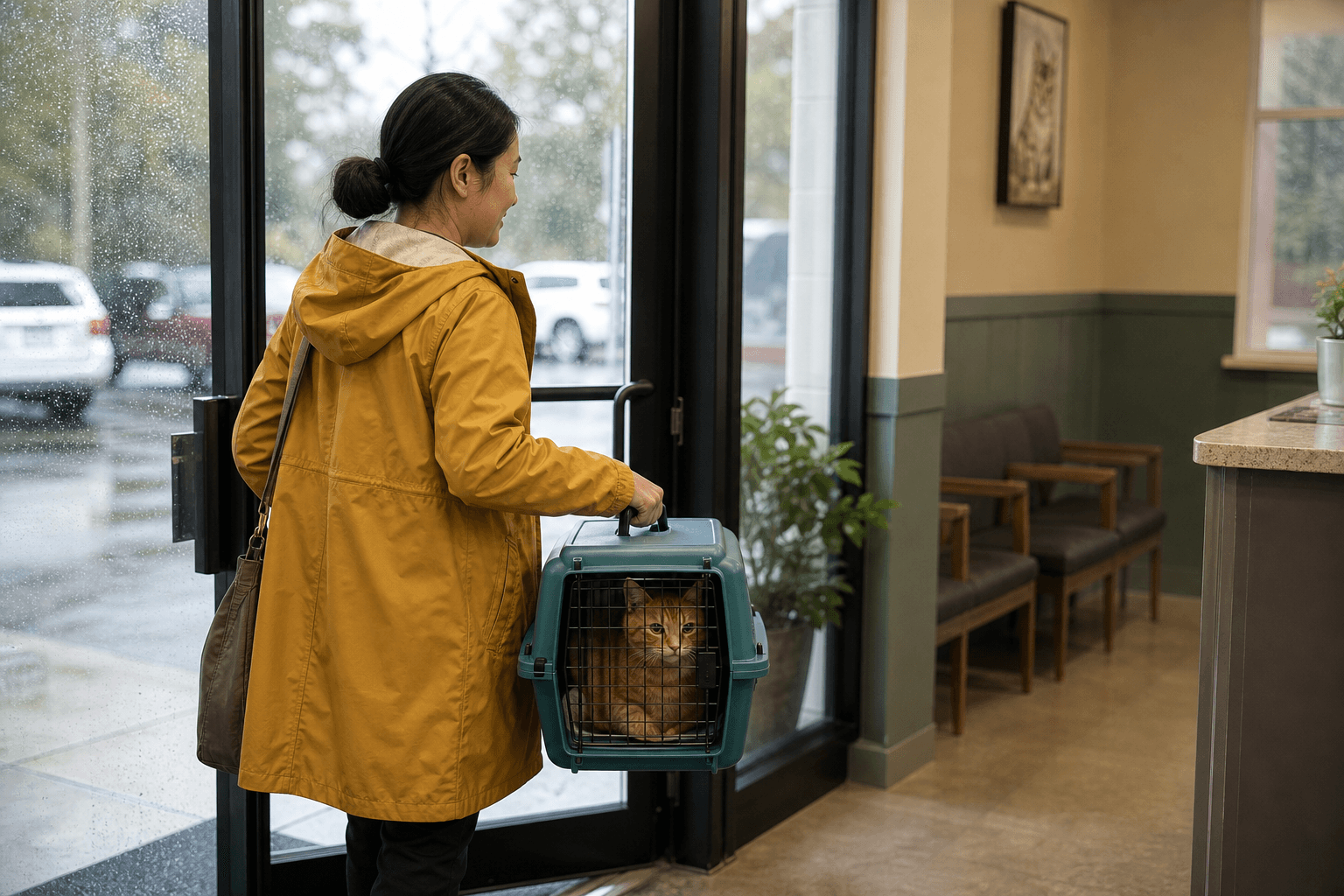
Cats with respiratory distress need minimal handling and rapid veterinary care. Warning signs include:
- Open-mouth breathing or panting at rest
- Strong abdominal movement with each breath
- Neck extended or elbows held away from the body
- Blue, gray, purple, or very pale gums or tongue
- Collapse, profound weakness, or altered responsiveness
- An inability to lie comfortably or settle
- Rapid worsening, especially with known heart or lung disease
Place the carrier nearby and keep the environment cool and quiet. Call the emergency hospital while preparing to leave. Do not force food, water, medication, or prolonged counting when a cat is struggling to breathe.
How a pet health tracker fits
Maven says its system can track activity, rest, sleep, heart-rate trends, itch behavior, and resting respiratory rate trends for dogs and cats, with information syncing over Wi-Fi. A Maven pet health tracker or Maven Pet smart collar trend can help organize a longer pattern, but the system is not a diagnostic device and does not create a veterinarian-client-patient relationship.
- The published Maven respiratory validation study involved healthy dogs, not cats. Do not extend that dog-only measurement study into a claim of feline validation, disease detection, or diagnostic accuracy.
For the current product features, practical setup, and limitations, see how Maven works for dogs and cats in Petful's review. A device trend should prompt observation and a veterinary conversation, not automatic treatment or reassurance.
Use the trend as context, not a verdict
Manual checks still matter. If an alert does not match what you see, look at the cat's effort, posture, color, and behavior. If the cat appears distressed, act on the cat, not the screen.
This purr-free sleep-count method plus an effort check gives cat owners a more reliable home baseline and a safer urgency decision. It also keeps the no feline Maven validation claim clear. We avoid extending dog-only device validation evidence to cats because the published measurement-agreement study involved healthy dogs, not feline participants. A cat-facing feature description therefore supports only what the current product says it tracks; it cannot establish feline validation, disease detection, diagnostic accuracy, or safe treatment decisions.
What to share with the veterinarian
Share a concise pattern with the veterinarian: the date range, calm-sleep conditions, typical rate, new range, other symptoms, medication timing, and any missing data. Keep the full export available, but put the clinical question first.
If your cat's appearance conflicts with a reassuring trend, trust the cat in front of you. A device history cannot rule out an acute change that began after the last valid reading.
Frequently asked questions
A persistent resting elevation above your cat's normal sleeping pattern is concerning, especially when it repeats under calm conditions or comes with behavior change. Cornell advises consulting a veterinarian when the resting rate is consistently above 35 breaths per minute, but your cat may have a different individual veterinary threshold. Visible effort, open-mouth breathing, abnormal gum color, collapse, or an inability to settle requires urgent care at any number.
There is no universal safe number for every cat with congestive heart failure. The useful sleeping respiratory baseline and alert threshold are the ones set for that individual by the veterinarian or veterinary cardiologist, based on diagnosis and treatment. Record calm sleeping counts as directed, but do not change medication from a number alone. Open-mouth breathing, strong effort, collapse, or rapid worsening requires emergency care regardless of the home threshold.
Open-mouth breathing, strong abdominal effort, an extended neck, elbows held away from the chest, abnormal gum color, collapse, and an inability to settle are signs of cat respiratory distress. The cat may also resist lying down or become less responsive. Minimize handling, place a carrier nearby, keep the environment cool and quiet, call the emergency hospital while preparing to leave, and seek care now rather than continuing to count.
Why is my cat breathing fast but seems fine? Heat, recent activity, stress, purring, pain, fever, medication, and heart or lung disease can all affect the rate before other signs become obvious. Make one repeat calm count during quiet non-purring sleep and compare it with the cat's baseline. Contact your veterinarian for a persistent elevation or repeated change. Any open-mouth breathing, strong effort, abnormal gum color, collapse, or inability to settle is an emergency even when the cat seemed normal moments earlier.
What are the first signs of heart failure in cats? Possible early changes include a rising sleeping respiratory trend, reduced activity or appetite, hiding, weakness, a change in resting posture, or difficulty breathing. Some cats show few outward changes, and these findings are not specific to heart failure. Record the timing and contact a veterinarian for examination. Open-mouth breathing, strong abdominal effort, collapse, abnormal gum color, or rapid worsening requires emergency care rather than further home monitoring.
BVMS, MRCVS
Dr. Pippa Elliott, BVMS, MRCVS, is a veterinarian with nearly 30 years of experience in companion animal practice. Dr. Elliott earned her Bachelor of Veterinary Medicine and Surgery from the University of Glasgow. She was also designated a Member of the Royal College of Veterinary Surgeons. Married with 2 grown-up kids, Dr. Elliott has a naughty Puggle named Poggle, 3 cats and a bearded dragon.
Sign up for expert-backed reviews and safety alerts all in one place.

A Final Word (Disclaimer)
At Petful, our review integrity is paramount; we never exchange special treatment in our reviews for monetary or material rewards.
Nonetheless, when our readers click through to online merchants (including Chewy or Amazon), we receive a referral commission. This supports the running of our free blog, and we appreciate your backing.