How Much Does a Puppy Cost? Purchase Price and First-Year Budget
Build a practical first-year puppy budget with purchase and delivery examples from PuppySpot, a cost worksheet, monthly planning tips, and a separate reserve for unexpected expenses.

BVMS, MRCVS
Petful is reader supported. As an affiliate of platforms like Amazon and Chewy, we may earn a commission when you buy through links on this page. There is no extra cost to you.
When you ask how much does a puppy cost, start with two separate numbers: the amount needed to bring your puppy home and the amount needed to care for them afterward. A purchase price can be clear while the first-year budget still needs work.
PuppySpot provides a useful example of how to compare those costs. Look at the individual puppy, confirm what comes with the purchase, and add delivery and your household's care expenses. The worksheet below helps turn that information into a plan you can actually use.

Sign up for expert-backed reviews and safety alerts all in one place.
How much does a puppy cost?
There is no single normal puppy price that fits every breed, breeder, location, and purchase arrangement. On November 3, 2026, PuppySpot's listing for Tanya, a Poodle puppy, showed a $3,549 bring-home fee. Adding its advertised $649 near-home delivery option produces a $4,198 subtotal before applicable taxes, supplies, ongoing care, or other selected services. That is one dated example, not an average PuppySpot price.
To answer how much does a puppy cost, separate the purchase price, first-year care, and money reserved for surprises. Compare complete budgets before choosing a puppy.
The cost to buy a puppy is different from the cost to raise one. Synchrony's 2025 Pet Lifetime of Care study reports yearly dog-care spending of $1,591–$2,770, equivalent to about $133–$231 per month. This is a broad dog-owner benchmark, not a puppy-specific estimate or a complete first-year quote.
Is $2,000 a lot for a dog? The figure alone cannot establish value or affordability. Consider what it includes and what remains to pay. A puppy's first year can include setup purchases and initial services that do not repeat each year. For a breed-specific comparison, our Morkie price guide explores another ownership budget.

Browse puppies from breeders across the U.S. and narrow your search by breed, color, gender and age.
- Search by breed, color, gender and age
- Puppies from breeders nationwide
- Reserve online or with a Puppy Concierge
Availability and pricing vary by puppy.
Petful may earn a commission when you click through to PuppySpot, at no extra cost to you.
What the purchase price includes
PuppySpot's observed listing identifies a microchip, veterinary health check, vaccinations and deworming, records, registration, breeder screening, and a Limited Health Warranty. It says the puppy will be current on vaccinations before departure. Read the individual listing and agreement to confirm your puppy's inclusions.
Use that information to ask practical questions:
- Which services have already been completed, and which remain?
- Does the total include the delivery option you selected?
- What records and registration information will you receive?
- Are any additional services optional?
PuppySpot's delivery page lists $649 for near-home delivery and $849 for door-to-door delivery. Breeder-area pickup is listed at $0 within ten miles or $199 between ten and twenty-five miles. Include your own travel expenses when comparing pickup with delivery. Our puppy shipping guide explains the options and handoff planning.
PuppySpot offers nationwide delivery, with door-to-door service, a meeting point near your home, or pickup near the breeder.
- Door-to-door delivery to your home
- Delivery to a meeting point near you
- Pickup near the breeder
Options and timing depend on puppy and destination.
Petful may earn a commission when you click through to PuppySpot, at no extra cost to you.
Plan your first-year puppy budget
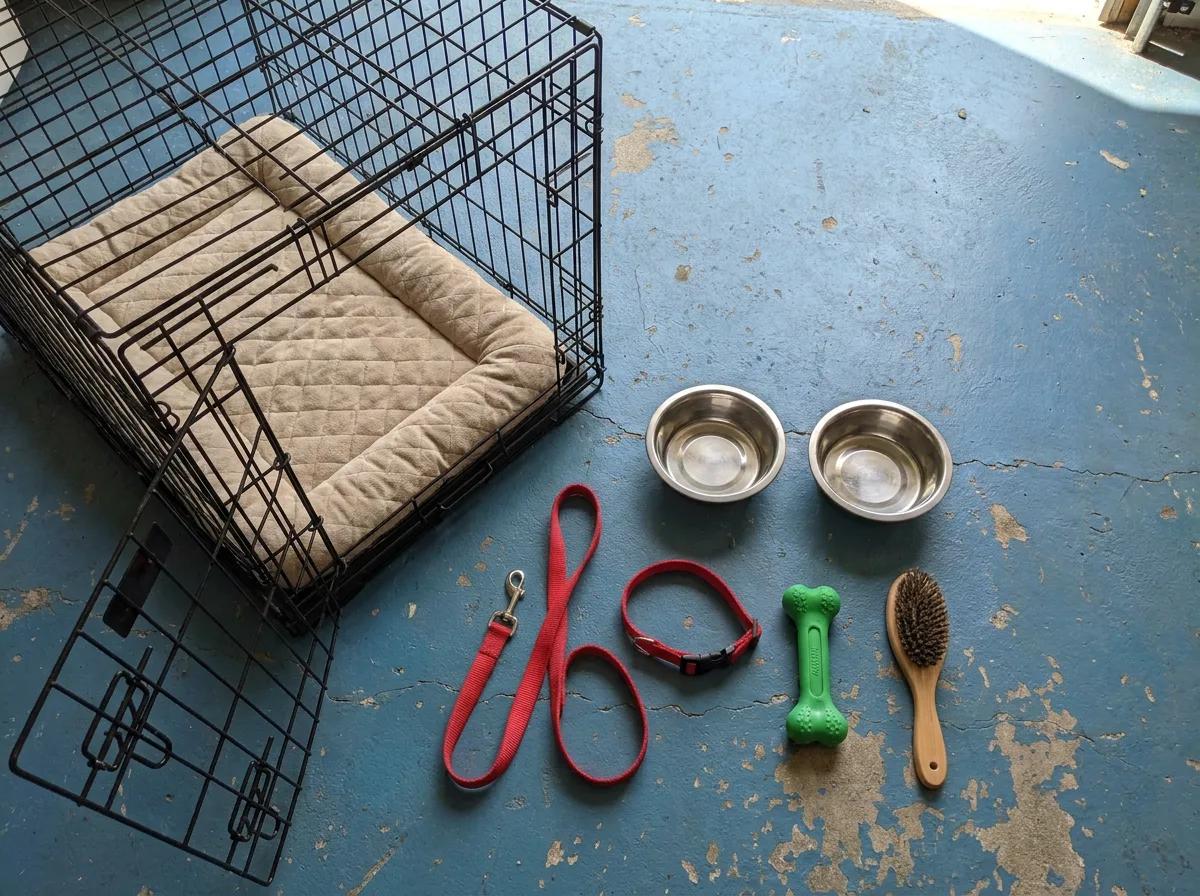
Build your first-year budget worksheet around your chosen puppy and your actual calendar. Start the year on the expected arrival date, then count twelve months of care. This makes it easier to compare quotes and avoid double-counting expenses that appear in both a package and an individual line item.
| First-year budget worksheet | What to enter | How to avoid double-counting |
|---|---|---|
| Puppy purchase | Individual puppy price and applicable taxes | Use the agreed total, not a second estimated purchase allowance |
| Delivery or pickup | Selected transport fee plus your own travel expenses | Add only the option you choose |
| Initial equipment | Crate, bowls, collar, leash, gates, bedding, cleaning supplies | Subtract suitable items you already own |
| Initial care | Quote for remaining examinations, vaccinations, identification, or other planned services | Confirm what is already completed or included |
| Training | Course price or session rate multiplied by sessions | Check whether materials are included |
| Food and consumables | Expected purchases over twelve months | Include the first bag within the annual total |
| Insurance | Premiums for the planned coverage period | Keep premiums separate from uncovered expenses |
| Grooming | Visits multiplied by quoted price, plus home supplies | Separate equipment purchases from appointments |
| Daytime help and boarding | Visits, days, or nights multiplied by the relevant rate | Count actual planned use |
| Emergency reserve | Cash you plan to keep available | Record savings separately from expected spending |
Price the essentials before the extras
Walk through the puppy's first ordinary day at home. Where will they rest, eat, and spend supervised time? What will you use for walks and cleanup? That exercise produces a more useful shopping list than buying every item marketed for a new puppy.
Choose equipment that fits the space and the puppy. Measure the planned crate area, check adjustable sizing where appropriate, and make sure bowls and bedding are easy to clean. Keep receipts for items whose fit you cannot confirm before arrival. A returnable purchase can be more economical than a cheap item you immediately replace.
- Buy the basic setup before arrival.
- List replacements separately, such as an outgrown collar.
- Start with a small selection of toys.
- Leave decorative accessories outside the essential total.
For veterinary budgeting, request a written estimate for the care still expected during the first year. Share the puppy's existing records so the practice can explain what is already documented. Ask whether an estimate includes examination fees and follow-up appointments. You are collecting a budget, not trying to decide medical needs from a price list. WebVet's dog vaccination cost guide can help you prepare questions about the remaining puppy shots.
Add services that fit your schedule
Training, grooming, and paid care deserve their own lines. A household with someone available during the day will have a different service budget from one arranging regular visits. Ask providers about puppy eligibility, appointment availability, cancellation terms, and what the quoted service includes.
Count usage before multiplying prices. If you expect to use a sitter during two trips, work from those dates. If a groomer recommends a recurring appointment interval, ask for the likely number of visits over your first twelve months. For training, distinguish a complete course from a single lesson.
Here is a calculation example using invented rates solely to demonstrate the method: a $25 visit twice a week for forty working weeks equals $2,000. It does not equal $50 per month. Replace those inputs with your provider's quote and your actual schedule.
- Set a reminder to check the dates as plans become definite. A quoted boarding stay may change if you add a night, and a daytime visit may be needed on a day you originally expected to work from home. Keep one person responsible for updating the shared budget so partners do not each assume the other has counted an expense.
- For any deposit, record both the amount paid and the balance still due. Subtract the deposit from that same purchase or service total. It is a payment toward the bill, not an additional expense. Keep the receipt with the quote so the remaining balance is easy to verify.
Check the total once, line by line
Add purchase, transport, initial equipment, remaining initial care, recurring purchases, and planned services. Then review every entry that contains words such as "package," "annual," or "included." Those are the places where overlapping costs can hide.
- A starter food purchase belongs within the year's food spending.
- An included microchip should not automatically become another insertion charge.
- A training package should not also be counted as separate lessons.
- A wellness package requires checking which individual services it covers.
Keep costs that remain uncertain visible. Mark them as amounts still to obtain rather than treating them as zero. A complete list with a few pending quotes is more useful than a confident total that leaves out the care you will need.
Share your shortlist and household priorities, then ask about the individual puppy you are considering.
- Guidance on choosing a puppy
- Answers about a specific listing
- Help reserving and arranging delivery
Confirm inclusions for your individual puppy.
Petful may earn a commission when you click through to PuppySpot, at no extra cost to you.
Turn annual costs into a monthly budget

An annual total answers how much you expect to spend. A monthly plan answers whether the money will be available when the bill arrives. You need both, because puppy expenses do not fall into twelve identical installments.
Separate monthly recurring costs from advance payments and occasional bills. Food and insurance may recur regularly; a training course or equipment order may be due all at once. Dividing every first-year expense by twelve can make the average look manageable while hiding a much larger arrival-month payment.
Use three groups:
- Before arrival: purchase, transport, initial supplies, and any required deposits.
- Routine spending: food, consumables, premiums, and regularly booked services.
- Upcoming bills: money set aside ahead of known appointments or planned travel.
Convert the billing unit correctly
Write the unit beside every quote. "Per visit," "per week," and "per course" are different commitments. A weekly service continues through more than four weeks in many months, so multiplying a weekly charge by four throughout the year understates its annual cost.
For a service used every week, multiply the weekly amount by fifty-two, then divide by twelve for a monthly average. For seasonal or occasional help, use the weeks you actually expect to book. If a provider charges a package price, use the package terms instead.
PuppySpot puppies receive a pre-delivery veterinary examination, and eligible purchases include a conditional 10-year Limited Health Warranty.
- Pre-delivery exam by a licensed veterinarian
- Veterinary Health Report with your puppy
- Conditional 10-year Limited Health Warranty
Warranty terms, exclusions and eligibility apply.
Petful may earn a commission when you click through to PuppySpot, at no extra cost to you.
A second calculation example: a hypothetical $480 annual bill requires $40 a month if you have twelve months to save. If the bill is due in three months and you have nothing allocated, the immediate saving target is $160 a month. The bill has not changed; the time available has.
- Review food spending after you know how quickly you use each bag. Record the purchase price and how long it lasts, then update your estimate as the puppy grows.
- Keep treats, waste bags, and cleaning supplies visible rather than allowing small repeat purchases to disappear from the budget.
Keep an emergency reserve separate
An emergency reserve is money available for an unexpected need. It is not a prediction that you will spend that amount. Record the reserve beside your expected costs so you can distinguish the money you anticipate using from the cash you want available.
For example, allocating a hypothetical $75 monthly to savings builds $900 over twelve months if nothing is withdrawn. It does not provide $900 on arrival day. Decide what you can set aside before the puppy comes home, then choose an ongoing contribution that fits your finances.
When considering insurance, compare more than the premium:
- The deductible and your share of eligible bills.
- Coverage limits and exclusions.
- Any waiting periods.
- How payment and reimbursement work.
Those details help you decide how much cash to keep accessible. Do not assume every expense will be covered or immediately reimbursed. Keep planned routine spending in the budget even when you also buy insurance.
- Keep known annual expenses separate from the emergency reserve, too. Money saved for a scheduled appointment already has a job; counting it again as emergency cash overstates what is available. Two labeled lines in the same budget are enough to make that distinction visible, even if you keep the money in one account.
- If you use the reserve, record the withdrawal and reconsider the next contribution. Do not count the original savings transfer and the later payment as two separate ownership expenses. One moved money into savings; the other paid a bill. That distinction keeps your spending history useful when you prepare next year's budget.
Revisit the plan after the first month and after substantial schedule changes. Replace guesses with receipts and confirmed bookings. The purpose is to improve the next month's estimate, not to make every month match the original spreadsheet.
Choose where to spend and where to save
Start with the puppy and household fit. A purchase you can afford today still needs to work with your available time, living space, and ongoing service needs. For example, a coat requiring regular professional upkeep should have a realistic grooming line before you make the commitment.
The American Kennel Club's financial-planning guide identifies size, coat, location, and service providers as cost variables. Use those differences to request relevant quotes. A neighbor's costs may provide questions to ask, but they do not replace estimates for your puppy.
Look for savings that preserve the function of the purchase:
- Compare sturdy, washable basics before premium finishes.
- Reuse suitable equipment you already have.
- Check measurements before ordering.
- Ask what a course or service package includes.
- Delay duplicate accessories until you know what you use.
Buying in bulk is not automatically a saving. Compare the unit price, storage requirements, and likely usage before committing. A large quantity of an item that does not suit your puppy can cost more than a smaller first purchase.
Secondhand equipment also needs a practical check. Inspect its condition, missing parts, and cleaning requirements. If the item cannot be used safely and appropriately as intended, a low asking price does not make it worthwhile.
Compare complete quotes
When two options differ in price, write the difference in services beside the numbers. One grooming quote might cover a different appointment type. One training price might include several meetings. One delivery option might require more of your own travel.
This is especially helpful when talking with a PuppySpot Concierge. Use your budget to explain which puppy you are considering, your preferred arrival arrangement, and the items you still need confirmed. A clear list makes the conversation more productive than asking only for the lowest initial price.
Before committing, run a simple affordability check:
- Can you cover the costs due before arrival?
- Does the routine monthly amount fit after existing household commitments?
- Have you included paid help for the time you are unavailable?
- Is some money accessible for an unexpected expense?
If the answer depends on leaving out a known expense, adjust the plan before reserving. You may be able to change an optional purchase, build savings first, or revise the care arrangement. The objective is a puppy budget that supports daily life together.
Puppy cost questions
If $2,000 is your entire available puppy fund, a $2,000 purchase would leave nothing for transport, setup, and care. Separate the purchase allowance from the total cash available. If it is only your purchase allowance, evaluate the individual puppy's documented inclusions and keep the rest of your ownership budget intact.
No. PuppySpot's current terms make its Limited Health Warranty conditional, including an insurance requirement during the first twelve months, and exclude ordinary ownership expenses. Read the agreement alongside the insurance policy rather than assuming they cover the same things. Our puppy health guarantee guide explains the distinction and the records to check.
Prioritize costs that could change your decision: the complete purchase and delivery total, expected initial veterinary care, insurance, and any recurring grooming or paid daytime help. Get the billing units and included services in writing. Then date each quote and note how long it remains valid, especially if arrival is several weeks away.
BVMS, MRCVS
Dr. Pippa Elliott, BVMS, MRCVS, is a veterinarian with nearly 30 years of experience in companion animal practice. Dr. Elliott earned her Bachelor of Veterinary Medicine and Surgery from the University of Glasgow. She was also designated a Member of the Royal College of Veterinary Surgeons. Married with 2 grown-up kids, Dr. Elliott has a naughty Puggle named Poggle, 3 cats and a bearded dragon.
Sign up for expert-backed reviews and safety alerts all in one place.


A Final Word (Disclaimer)
At Petful, our review integrity is paramount; we never exchange special treatment in our reviews for monetary or material rewards.
Nonetheless, when our readers click through to online merchants (including Chewy or Amazon), we receive a referral commission. This supports the running of our free blog, and we appreciate your backing.