Fresh Dog Food While Traveling: How to Pack, Keep Cold, and Serve on the Road
Feeding fresh dog food while traveling takes a plan: frozen pre-portioned packs, a cold cooler, hotel fridge thawing, flight rules, and a topper plan for long trips.
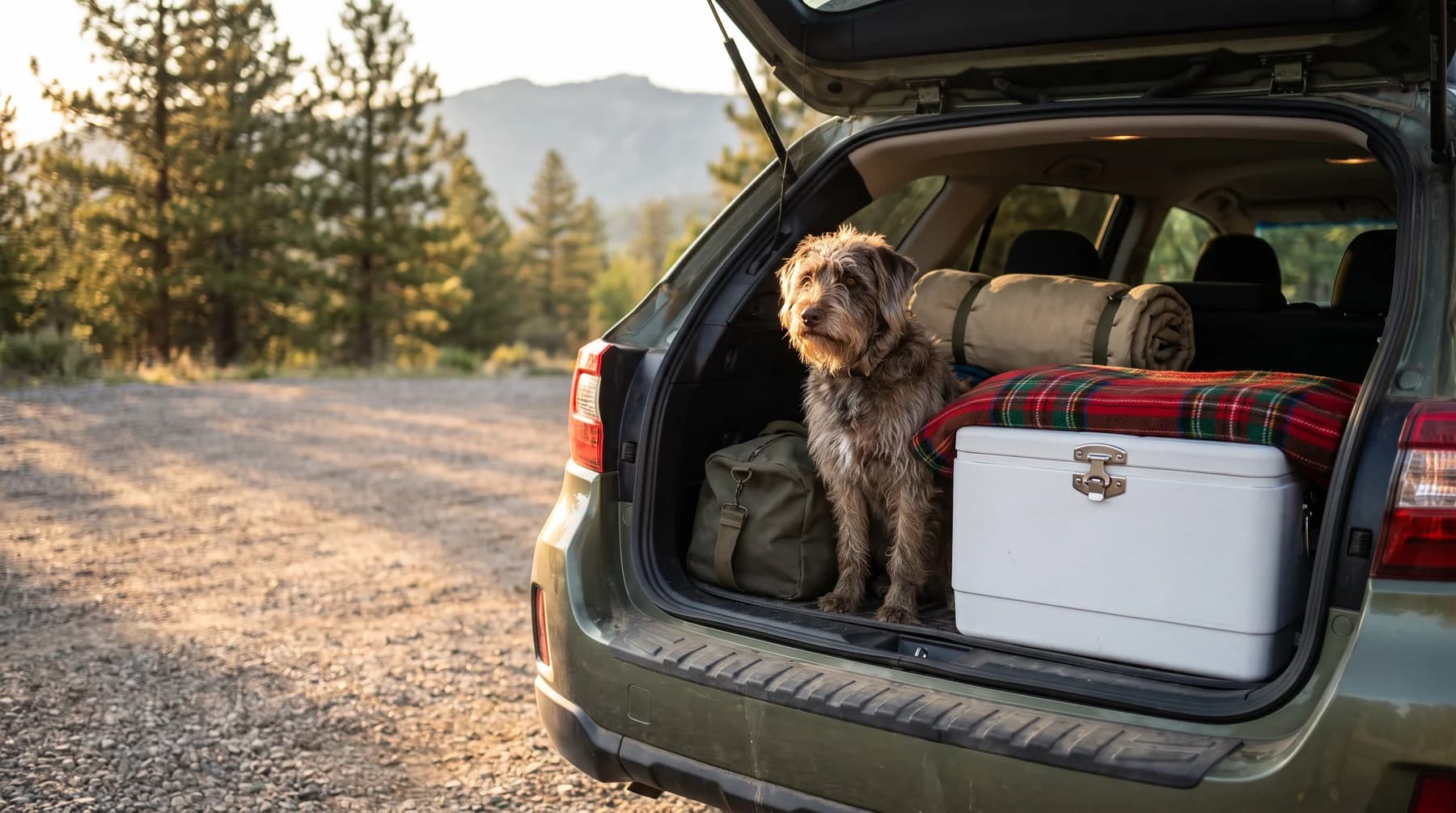
A cooler in the cabin or cargo area, out of direct sun, is the backbone of a road trip with fresh food.
Petful is reader supported. As an affiliate of platforms like Amazon and Chewy, we may earn a commission when you buy through links on this page. There is no extra cost to you.
- This article is sponsored by Get Real, the gently cooked fresh dog food sold at Chewy. Petful was paid for this placement and may earn a commission when you buy through links in this article. Product details come from Chewy's published information; the guidance and opinions are Petful's own.
Feeding fresh dog food while traveling is easier than it sounds. Fresh food that ships frozen in pre-portioned packs travels much like your own groceries: keep it frozen until the last practical moment, hold it cold in a cooler or fridge, and never let a served bowl sit out past the two-hour rule.
The harder part is choosing the right plan for the trip in front of you. A day at the lake, a weekend drive to a cabin, a week in a hotel and a flight across the country each call for a different approach. This guide covers all four, plus the trips where mixing fresh food over kibble is simply the calmer choice.

Sign up for expert-backed reviews and safety alerts all in one place.
Can you travel with fresh dog food?
Yes. You can travel with fresh dog food on almost any trip if you bring frozen pre-portioned packs, a well-packed cooler, and a firm habit of following the two-hour rule at mealtime. Frozen packs act as their own ice, portions are already measured, and nothing needs to be scooped or weighed in a parking lot.
- 1Freeze first: bring frozen pre-portioned packs straight from your freezer so they double as ice in the cooler.
- 2Pack cold: a full, closed cooler with ice packs and a thermometer keeps food at 40 degrees Fahrenheit or below.
- 3Watch the clock: the two-hour rule applies to every bowl, and the limit drops to one hour in heat above 90 degrees Fahrenheit.
- 4On long or complicated trips, a topper-on-kibble travel plan uses fewer packs and less cooler space.
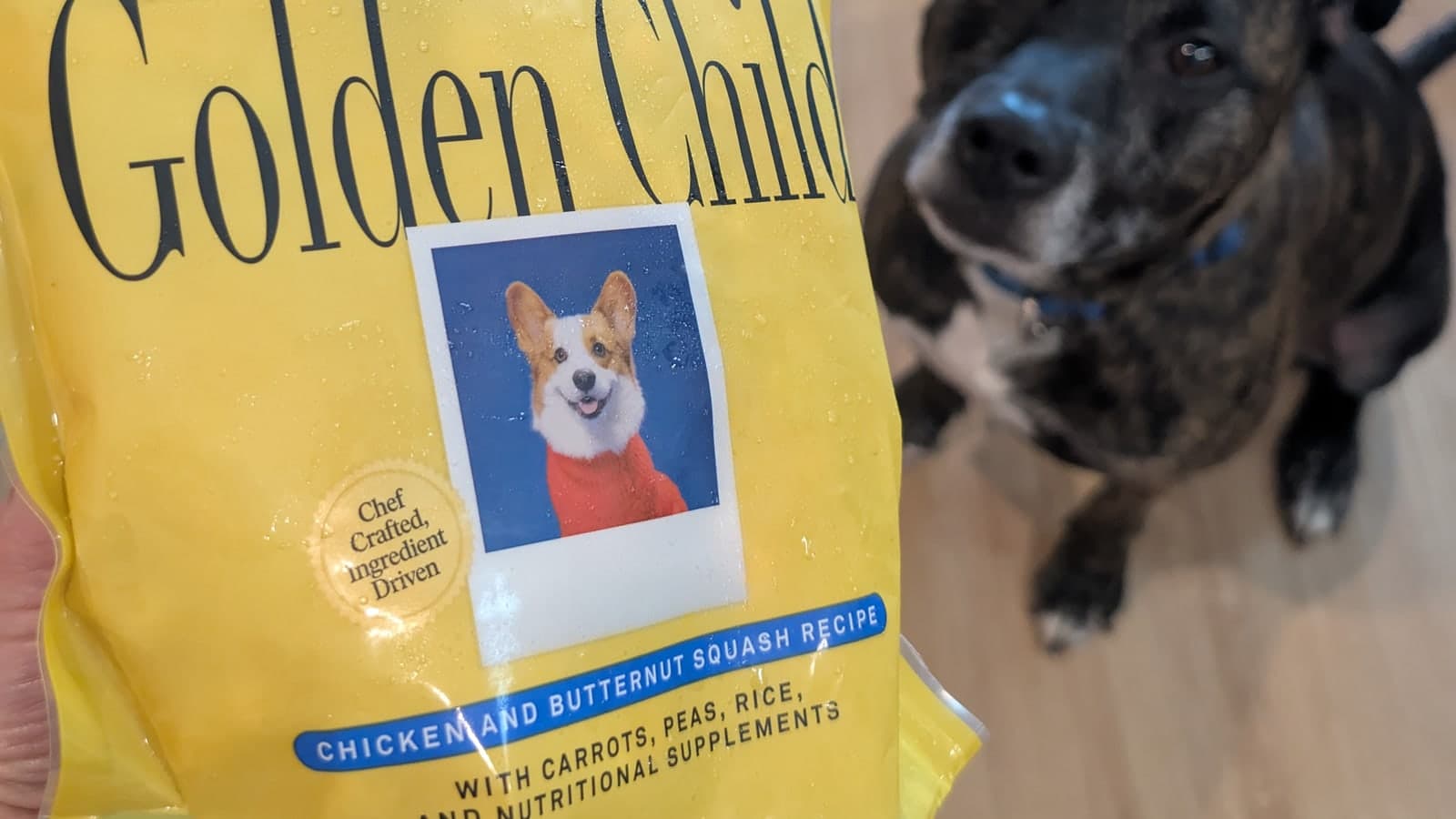
Get Real, the fresh dog food line sold only at Chewy, is a useful example of a travel-friendly format. Its recipes are gently cooked, then frozen, and come in 5 oz mixer packs plus 12 oz and 24 oz packs. Chewy's guidance is simple to carry on the road: keep packs frozen, thaw them in a refrigerator, use thawed food within 3 to 5 days, and discard food that smells bad or has sat at room temperature for more than two hours.

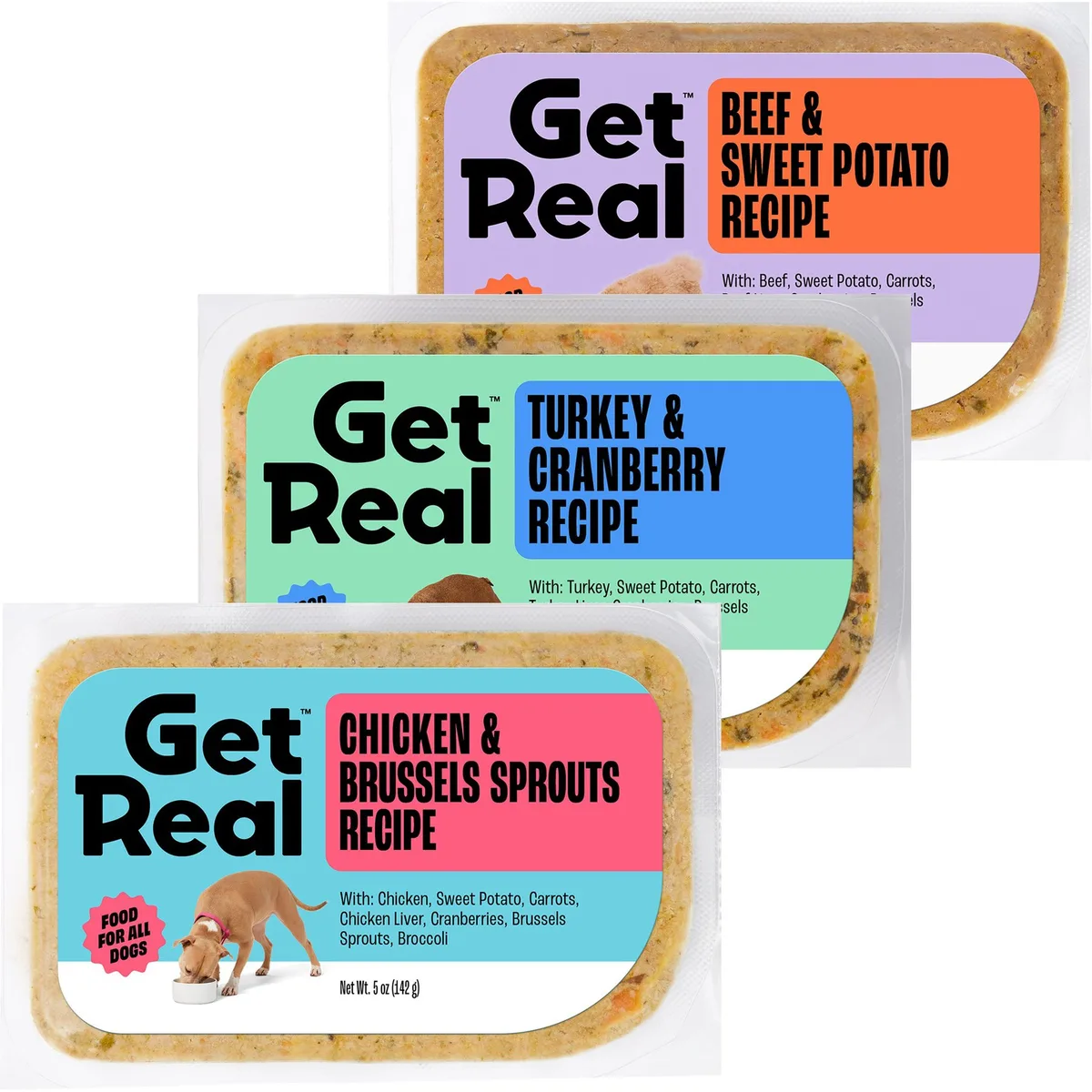
Frozen, pre-portioned packs are the easiest fresh format to pack for a trip. Get Real Chicken & Brussels Sprouts comes ready to thaw and serve, with no measuring at a rest stop.
Petful may earn a commission when you click through to Chewy, at no extra cost to you.
The trip-length decision guide below matches the length and type of trip to the plan that keeps your dog's meals consistent with the least stress. Use it to decide how many packs to bring, whether you need a cooler at all, and when a topper-on-kibble travel plan makes more sense than full fresh meals.
| Trip-length decision guide | Best fresh-food plan | Cold storage you need | What to pack |
|---|---|---|---|
| Day trip | Serve breakfast and dinner at home; bring a thawed portion only if a meal falls mid-trip | Small insulated bag with an ice pack | One portion, bowl, spoon, water |
| Weekend drive | Bring frozen packs for every meal, plus one spare | Hard cooler with ice packs, kept in the cabin | Frozen packs, thermometer, zip bags |
| Week with a hotel fridge | Bring frozen packs and thaw one or two at a time in the room fridge | Cooler for the drive, mini-fridge on arrival | Frozen packs, plate for thawing, marker |
| Flight | Bring a few frozen packs in carry-on or switch to a topper plan | Insulated bag with frozen packs or frozen ice packs | Packs, bag, copy of airline rules |
| Long trip or camping | Topper-on-kibble travel plan with a few fresh packs | Cooler refreshed with ice every day | Kibble, fewer packs, cooler, thermometer |
The short version: the longer the trip and the less reliable the cold storage, the more sense it makes to stretch your fresh supply as a topper. For a weekend drive or a hotel week with a working fridge, full fresh meals are very manageable. Anything involving a flight, a campsite, or several days without a freezer is where planning matters most.
Before you pack, count meals rather than days. A dog who eats twice a day on a three-day weekend needs six portions, plus a spare in case a pack tears or a travel delay adds a meal. Write that number down and pull the packs from the freezer the morning you leave.
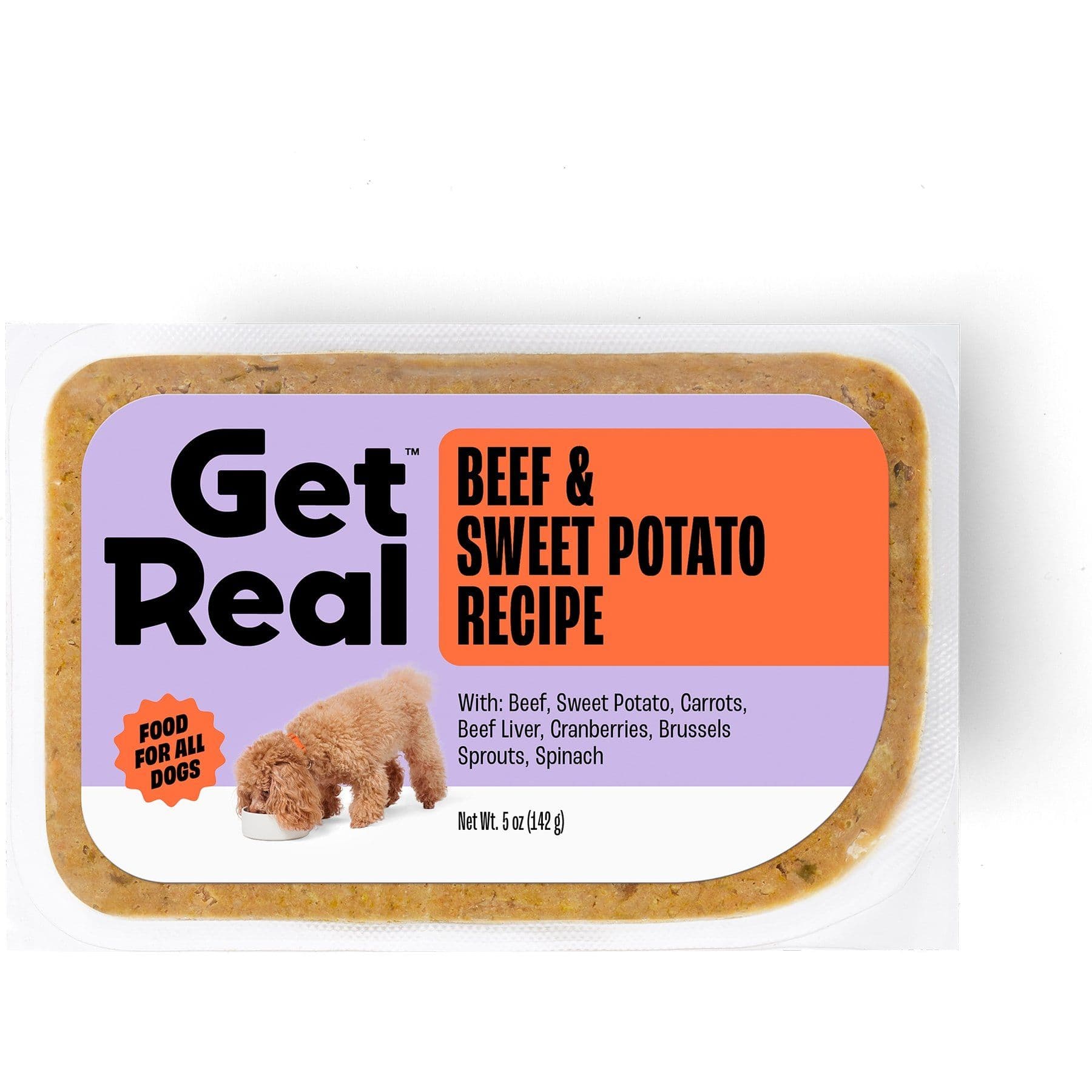
Counting meals for a weekend away is simple when every pack is already portioned. Get Real Beef & Sweet Potato is gently cooked, then frozen, so it rides in the cooler as its own ice.
Petful may earn a commission when you click through to Chewy, at no extra cost to you.
Road trips: packing a cooler that stays cold
A road trip is the easiest way to travel with fresh food because you control the cold chain the whole way. The goal is to keep every pack at 40 degrees Fahrenheit or colder from your freezer to your dog's bowl. That is the same refrigerator temperature the FDA recommends for pet food, and it is the line Chewy uses for deciding whether thawed food can go back in the freezer.
Cooler cold time depends on more variables than any single number can capture: the cooler's insulation, how full it is, how often you open it, and how hot the car gets. A packed hard cooler kept in an air-conditioned cabin will hold far longer than a half-empty soft bag left in a hot trunk. Rather than trusting a label claim, put an inexpensive fridge thermometer inside and check it at every stop.
Pack the cooler in layers so the coldest items protect the food:
- Pre-chill the cooler overnight with a few ice packs, then empty and repack it the morning you leave.
- Put frozen ice packs on the bottom, frozen food packs in the middle, and more ice packs on top.
- Fill empty space with extra ice packs or a folded towel, because air warms faster than frozen food.
- Seal each pack in a zip bag so condensation and melting ice never soak the packaging.
- Keep a separate cooler or bag for your own drinks so the dog food cooler stays closed most of the day.
Frozen pre-portioned packs help here because they lie flat and stack tightly. A 12 oz pack such as Get Real Chicken & Brussels Sprouts Recipe fits between ice packs without gaps, and the 5 oz mixer packs tuck into corners. For a long drive, the packs you plan to serve on day one can ride on top, where they will start to soften first, while day-two and day-three meals stay buried near the bottom.
Where the cooler rides matters too. Keep it in the cabin with you rather than in a trunk or truck bed, out of direct sun, and covered with a blanket on hot days. A parked car heats up fast, so if you stop for a meal or a sightseeing break, crack the cooler only once to grab what you need.
Dry ice can extend a cooler's cold time on a long drive, and Chewy ships Get Real orders insulated with dry ice for that reason. If you use it, follow the seller's handling directions:
- Wear gloves, since dry ice can burn bare skin.
- Keep it away from your dog and children.
- Never seal it in an airtight container.
- Keep the car ventilated, because dry ice releases carbon dioxide gas as it warms.
Plan refills before you need them:
- Gas stations and grocery stores sell bagged ice, and many hotels have ice machines.
- Keep bagged ice sealed in its own bag so meltwater stays contained.
- Swap out soft ice packs for frozen ones whenever you reach a freezer.
For the rest of the packing list, from leashes to water bowls, Petful's guide to dog road trip essentials covers the non-food side of the trip.
Hotels and rentals: fridge, freezer, and thawing on the go
Once you arrive, a hotel fridge or rental-home freezer takes over from the cooler. A full freezer is the best case: move your frozen packs into it and run your normal thaw-and-serve routine. A mini-fridge without a real freezer is more common, and it changes the math because packs will begin to thaw as soon as they go in.
It helps to call ahead and ask what the room actually has:
- Whether the room has a mini-fridge, and whether it has a working freezer compartment.
- Whether the front desk or kitchen can store a sealed, labeled bag of frozen pet food.
- Whether a rental home has a full-size refrigerator and freezer, which most do.
- Where the nearest ice machine is, so you can refresh the cooler during the stay.
A mini-fridge is a good place to thaw, not to store a week of food. Chewy's thaw times for Get Real are 12 to 24 hours in the fridge for 5 oz and 12 oz packs and 35 to 48 hours for 24 oz packs. That means a 12 oz pack moved from the cooler to the mini-fridge on arrival night will usually be ready by the next day, while the rest of your supply stays frozen in the cooler with fresh ice.
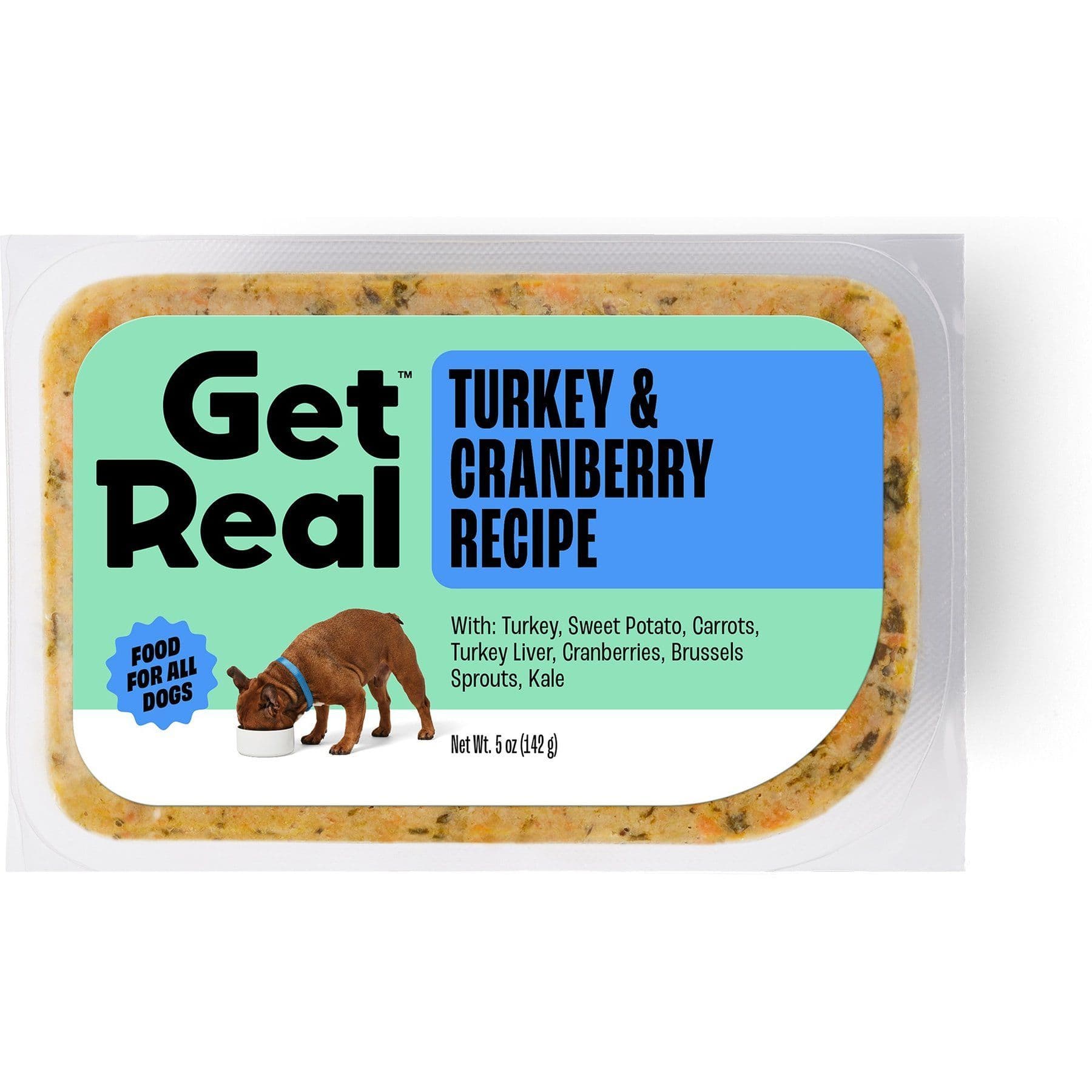
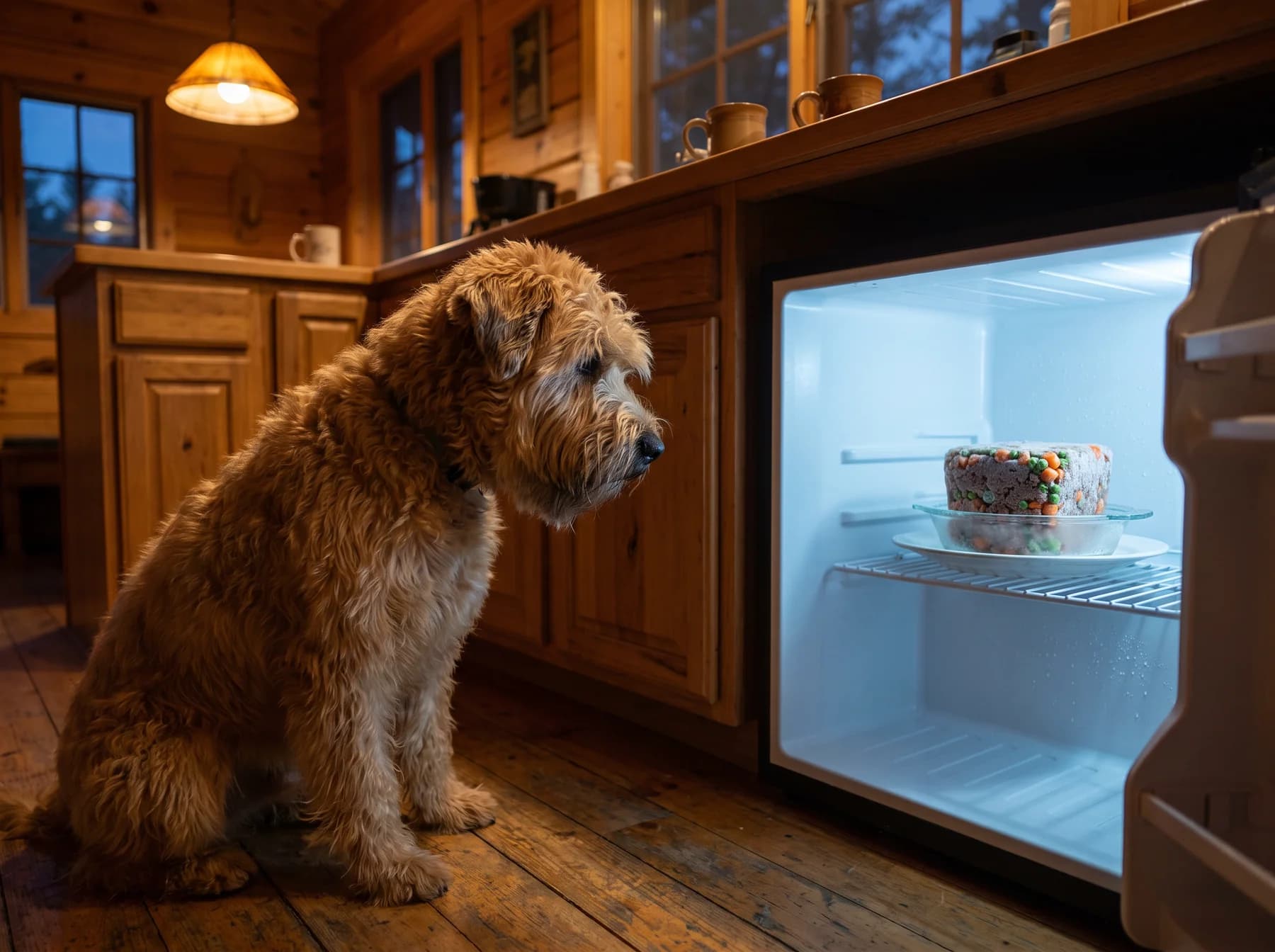
Thawing one pack at a time works well in a small hotel fridge. Get Real Turkey & Cranberry comes frozen in pre-portioned packs, so you only thaw what your dog will eat over the next few days.
Petful may earn a commission when you click through to Chewy, at no extra cost to you.
Set a thawing pack on a plate or in a shallow bowl to catch condensation, and write the thaw date on it with a marker. Hotel mini-fridges are often warmer than a home fridge, so turn the dial to its coldest setting and drop your thermometer inside. If the reading sits above 40 degrees Fahrenheit, treat the mini-fridge as a cooler and keep ice packs in it.
For a week-long stay, rotate packs on a steady rhythm. Each evening, move tomorrow's pack from the cooler or freezer to the fridge. A dog on full meals might move through a Get Real Beef & Sweet Potato Recipe 24 oz pack in a day or two, so pull large packs a day earlier than small ones. Use the oldest thawed pack first and finish each one within 3 to 5 days of thawing.
Checkout day has its own small routine:
- Refill the cooler with fresh ice from the hotel machine before you load the food.
- Pack the remaining frozen food back into the cooler last, right before you leave.
- Return thawed packs that stayed at 40 degrees Fahrenheit or below to the cooler, which Chewy's guidance allows; serve any pack that warmed above that soon or discard it.
- Repeat the same check at every overnight stop on the way home.
When a topper-on-kibble plan is the smarter travel option
A topper plan uses a small amount of fresh food over your dog's usual kibble, rather than serving fresh food as the full meal. On the road, that means fewer packs to keep cold, a smaller cooler, and more flexibility when a freezer is not guaranteed.
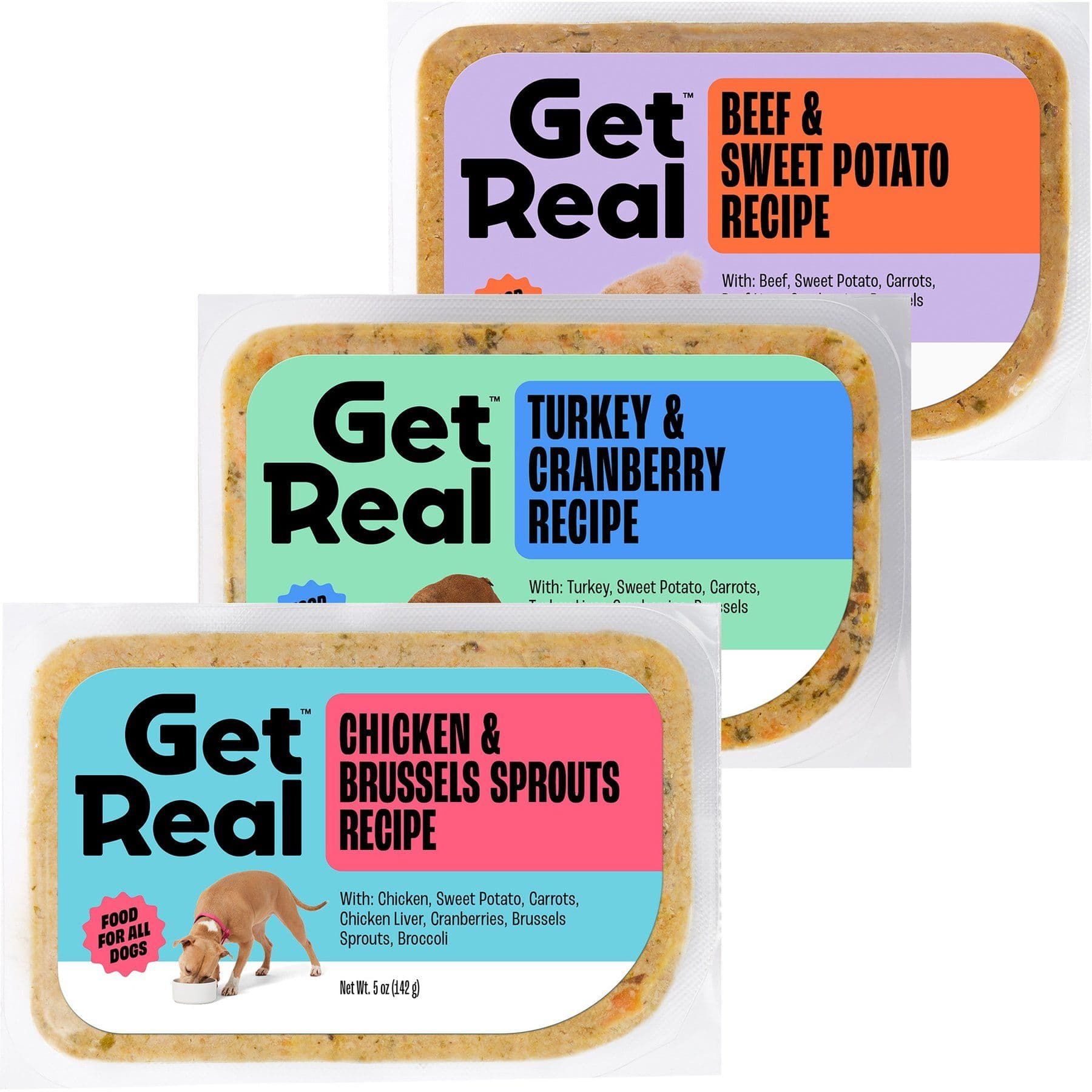
Planning a topper routine before a trip? The Get Real Sampler Pack holds two packs each of the Beef, Chicken, and Turkey recipes, so you can see which one your dog prefers over kibble.
Petful may earn a commission when you click through to Chewy, at no extra cost to you.
A topper-on-kibble travel plan tends to make sense when:
- The trip is long, and a full fresh supply would not fit in your cooler.
- You are camping, boating, or staying somewhere without a reliable fridge.
- You are flying and want to limit what you carry through security.
- Your dog already eats kibble with fresh food mixed in at home, so the routine stays the same.
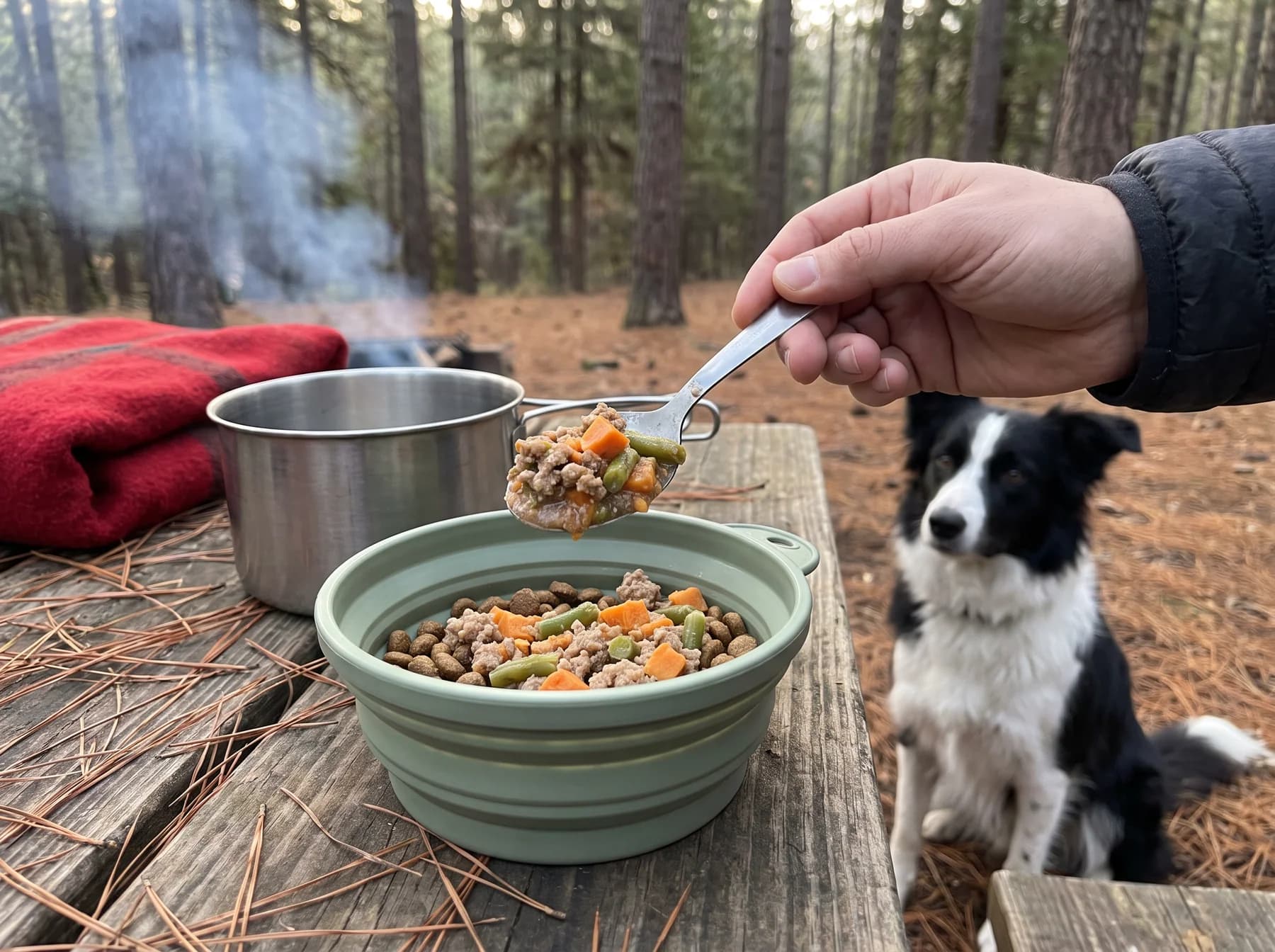
The key is that the plan should be familiar to your dog before you leave. If your dog already eats fresh food as a topper, travel changes nothing. If your dog eats full fresh meals at home, a few weeks before the trip is the time to start mixing in kibble, not the morning you pull out of the driveway. Chewy's guidance for switching to Get Real is to increase gradually over 7 to 10 days, or 10 to 14 days for sensitive dogs, and the same patience applies in the other direction.
Get Real's 5 oz packs are designed for exactly this role. Chewy calls them mixer packs: a portion meant for topping or blending with kibble, not a full meal. All three recipes are available as either a full meal or a topper, so a dog can stay on the same recipe at home and on the road. A small pack of Get Real Turkey & Cranberry Recipe spooned over kibble at a campsite takes up a fraction of the cooler space a week of full meals would need.
Topper portions are smaller, so adjust the kibble amount to keep total daily calories roughly where they are at home. Chewy's online plan sets portions by weight, breed, age, and activity level, which is the easiest reference point. If you are still getting your dog used to fresh food, Petful's guide to transitioning to fresh dog food covers mixing ratios and what to watch for during the switch.
Flying with frozen dog food
Flying with frozen food is possible, but it takes more planning than a road trip. Two questions decide the plan:
- What airport security and your airline will allow in the cabin and in checked bags.
- How long the food needs to stay cold, counting the drive to the airport, security lines, the flight, any layover, and the ride to your destination fridge.
Security rules for solid food are generally friendly to travelers. The TSA allows solid food in carry-on and checked bags, and frozen ice packs are allowed through the checkpoint when they are frozen solid at screening. Partially melted packs with liquid at the bottom fall under the liquids rules, so pack them frozen and pack them last. Expect officers to look more closely at food items, and allow extra time.
Dry ice is a different matter on planes. The FAA permits small amounts in carry-on or checked bags only with airline approval and in packaging that lets the gas vent, so check with your airline well before the trip rather than at the gate. Many travelers find that frozen ice packs plus frozen food in a well-insulated bag are enough for a domestic flight.
For flights, keep the plan simple:
- Bring only the packs you need for the first few days, and order the rest to your destination if delivery is available there.
- Pack food and ice packs in a soft insulated bag inside your carry-on so you can keep an eye on it.
- Freeze everything solid the night before and pack it right before you leave for the airport.
- On arrival, move packs straight into a fridge or freezer, then check the temperature.
Ordering to your destination can be the cleanest solution for longer stays. Get Real is sold only at Chewy and is available in select markets, so confirm that delivery reaches the address you are visiting before you rely on it. If it does, a scheduled subscription can be changed, paused, or skipped around a trip.
International travel adds another layer. Many countries restrict imported meat products, including pet food, so check the destination country's rules before packing any fresh food for an international flight. For a short trip abroad, a temporary topper plan or a locally purchased food is often the practical answer. Petful's dog travel kit guide covers documents, carriers, and other gear for flights.
Serving safely on the road: the two-hour rule
The two-hour rule is the single most important serving habit on any trip. Food safety agencies such as the USDA Food Safety and Inspection Service advise that perishable food should not sit out of refrigeration for more than two hours, or more than one hour when the air is above 90 degrees Fahrenheit. Chewy's Get Real guidance uses the same two-hour limit for room temperature.
- Follow the two-hour rule for every served bowl, and cut it to one hour in heat above 90 degrees Fahrenheit. A bowl left in a hot car, on a sunny patio, or at a campsite past that limit should be thrown away, not saved for later.
On the road, a few serving habits keep meals safe:
- Take out only the portion for the current meal, then close the cooler right away.
- Serve in a clean bowl, and wash it with hot soapy water or a travel wipe before the next meal.
- Pick up leftovers once your dog walks away, and discard them rather than returning them to the cooler.
- Keep a roll of bags and a small trash sack in the car for discarded food and wrappers.
Rest-stop meals work best with a little setup. Feed your dog in the shade, away from traffic and other dogs, and give the meal 15 to 20 minutes before you clear the bowl. A dog who is excited or carsick may eat less than usual, which is normal on travel days; smaller, more frequent portions often go down better than one large meal.
Keep a small mealtime kit within reach rather than buried in the trunk:
- A collapsible bowl for food and a second one for water.
- A spoon reserved for dog food, stored in a zip bag between meals.
- Paper towels and a few unscented wipes for quick cleanups.
- Fresh water from home, since a sudden change in water can upset some dogs.
Packs that have fully thawed in the cooler are fine to serve as long as the thermometer has stayed at 40 degrees Fahrenheit or below. Food that smells bad, looks slimy, or has been warm for an unknown amount of time should be thrown away. If your dog shows vomiting or diarrhea on a trip, contact a local veterinarian, especially for puppies, seniors, or dogs with health conditions.
Questions readers ask
Yes. Solid dog food is generally allowed through TSA screening in carry-on and checked bags, though officers may ask to inspect it. Ice packs must be frozen solid at the checkpoint; if they have started to melt into liquid, the liquids rules apply.
Cooler cold time varies with the cooler, how full it is, how often it opens, and the heat outside. A full hard cooler with ice packs above and below the food, kept closed in an air-conditioned cabin, holds much longer than a half-empty bag. Check a thermometer at each stop and refresh the ice daily.
Often, yes. Call ahead and ask whether the room has a mini-fridge with a freezer or whether the front desk can hold a sealed, labeled bag. Even with a hotel fridge, check that it stays at 40 degrees Fahrenheit or below.
Avoid an abrupt diet change right before or during travel, since stress and new food together can upset a dog's stomach. If you want a lighter travel load, start a topper plan with fresh food over kibble a week or two before you leave so the routine is familiar.
Check the thermometer. Food still at 40 degrees Fahrenheit or below can be served or refrozen. If it has been warmer than that for more than two hours, or you cannot tell how long, throw it away.

Coreen Saito is a pet writer and longtime shelter volunteer with more than a decade in animal rescue. She covers cat behavior, breed care, and the small, ordinary science of sharing a life with companion animals, with a particular focus on honest takes about the products and decisions that actually matter. At home in Arizona, she's outranked by Mac (a dog with the loudest opinion in the house), Rebel (a cat who governs by quiet authority), and Meri (an orange tabby who runs the late shift and the laundry basket). She writes about all three, plus the rescues that keep coming through her life, at LifeWithMinty.com.
Sign up for expert-backed reviews and safety alerts all in one place.
A Final Word (Disclaimer)
At Petful, our review integrity is paramount; we never exchange special treatment in our reviews for monetary or material rewards.
Nonetheless, when our readers click through to online merchants (including Chewy or Amazon), we receive a referral commission. This supports the running of our free blog, and we appreciate your backing.