Fresh Dog Food for Sensitive Stomachs: What to Look For and How to Switch
Choosing fresh dog food for a sensitive stomach? A veterinarian explains what to look for on the label, how the three Get Real recipes compare, and a gentle 10 to 14 day switch plan.

BVMS, MRCVS

A steady, measured fresh meal can suit dogs with sensitive digestion.
Petful is reader supported. As an affiliate of platforms like Amazon and Chewy, we may earn a commission when you buy through links on this page. There is no extra cost to you.
- This article is sponsored by Get Real, the gently cooked fresh dog food sold at Chewy. Petful was paid for this placement and may earn a commission when you buy through links in this article. Product details come from Chewy's published information; the guidance and opinions are Petful's own.
If you are weighing fresh dog food for sensitive stomach trouble, two label checks matter more than any marketing claim: a short ingredient list and one main protein. The third piece is the switch itself, because even an ideal food can cause loose stool if it arrives in the bowl too quickly.
Digestive comfort is one of the most common reasons owners try fresh food. Dogs tend to do best when owners pick a simple recipe, change one thing at a time, and know which symptoms belong with a veterinarian rather than a new bag of food. This guide covers all three.

Sign up for expert-backed reviews and safety alerts all in one place.
Why fresh food can be easier on a sensitive stomach
A "sensitive stomach" is a description, not a diagnosis. It usually means a dog who gets soft stool, gas, or an occasional vomit after diet changes, rich treats, or certain ingredients. Many of these dogs do better on food that is consistent, moderate in fat, and made from a small number of recognizable ingredients.
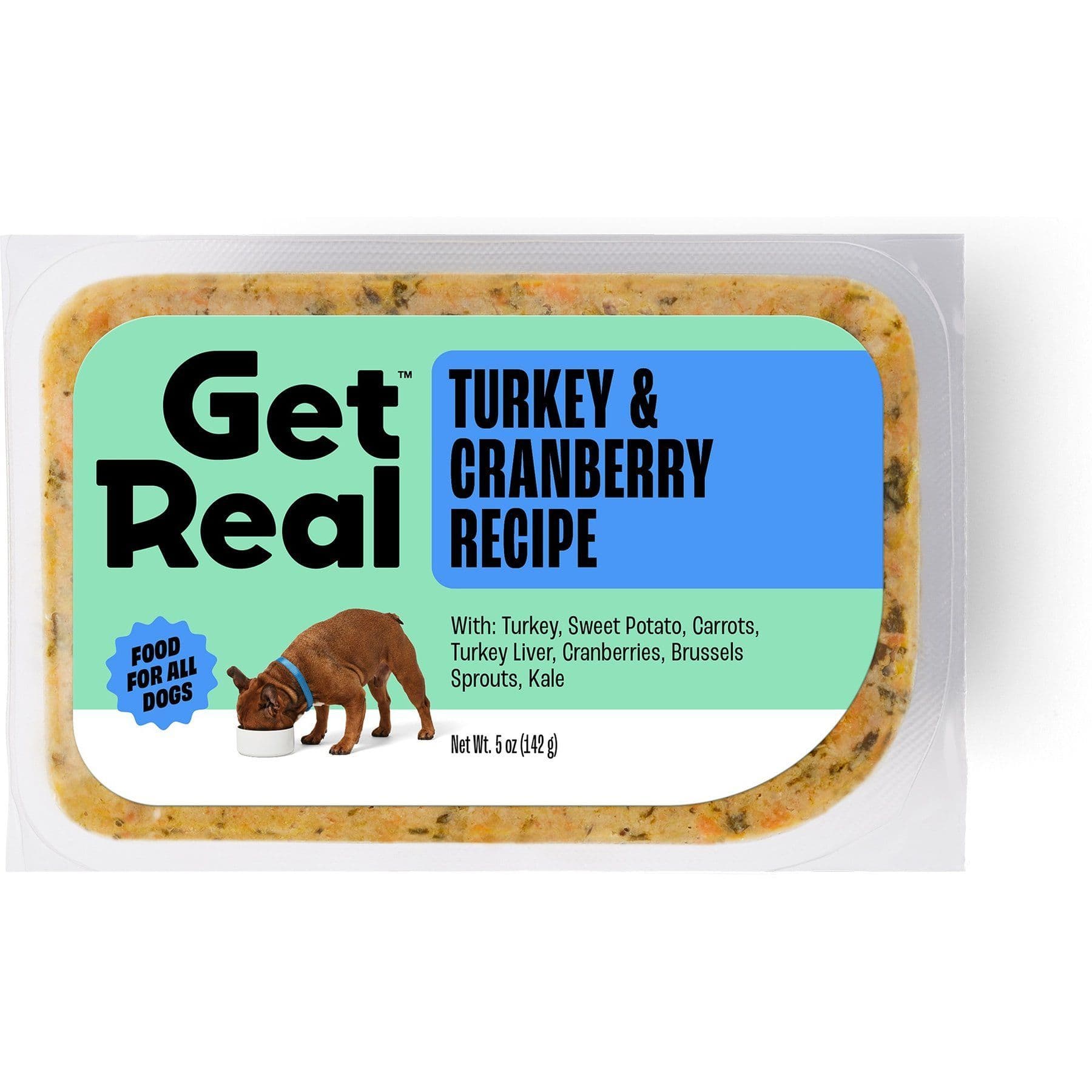
Looking for a simple place to start? Get Real Turkey & Cranberry is gently cooked, frozen in pre-portioned packs, and built on 10 ingredients or less plus vitamins and minerals.
Petful may earn a commission when you click through to Chewy, at no extra cost to you.
- 1Look for a short ingredient list, so there are fewer possible triggers to sort through.
- 2Choose one main protein, which makes it easier to tell what your dog tolerates.
- 3Make sure the food is complete and balanced for your dog's life stage under an AAFCO nutrient profile.
- 4Switch over 10 to 14 days for a sensitive dog, and slow down if stools soften.
- 5Repeated vomiting, blood in stool, or a quiet, painful dog needs a veterinarian before any diet change.
Gently cooked fresh food has a plausible digestive advantage. In a Journal of Animal Science study of dogs fed human-grade foods, healthy adult dogs fed mildly cooked human-grade diets digested them more completely than an extruded dry diet and produced less fecal output. That was a small study in healthy dogs, so it does not prove any food will settle a particular dog's stomach, but it supports the idea that cooking method and ingredient quality matter.
So what is the best fresh dog food for sensitive stomach issues? It is the one that meets three tests: complete and balanced nutrition, a short ingredient list, and one main protein your dog has done well on before. Get Real, Chewy's fresh dog food line, can be a possible everyday food once you know your dog's triggers, depending on your dog's individual needs. Each recipe is gently cooked and then frozen, made with human-grade ingredients, and described by Chewy as 10 ingredients or less plus vitamins and minerals. Each recipe is named for its main protein, such as Get Real Turkey & Cranberry Recipe, and all three recipes also contain fish oil.
There is no single vet recommended dog food for sensitive stomach problems, because there is no universal cause. The most useful recommendation is the one your own veterinarian makes after examining your dog, because the right choice depends on whether the problem is diet change, fat intolerance, a food allergy, parasites, or something else entirely.
What to look for: short ingredient lists and one main protein
A limited ingredient dog food approach is useful for a sensitive stomach for a practical reason: every ingredient you remove is one less variable. If your dog reacts, a short list makes the likely culprit easier to spot.
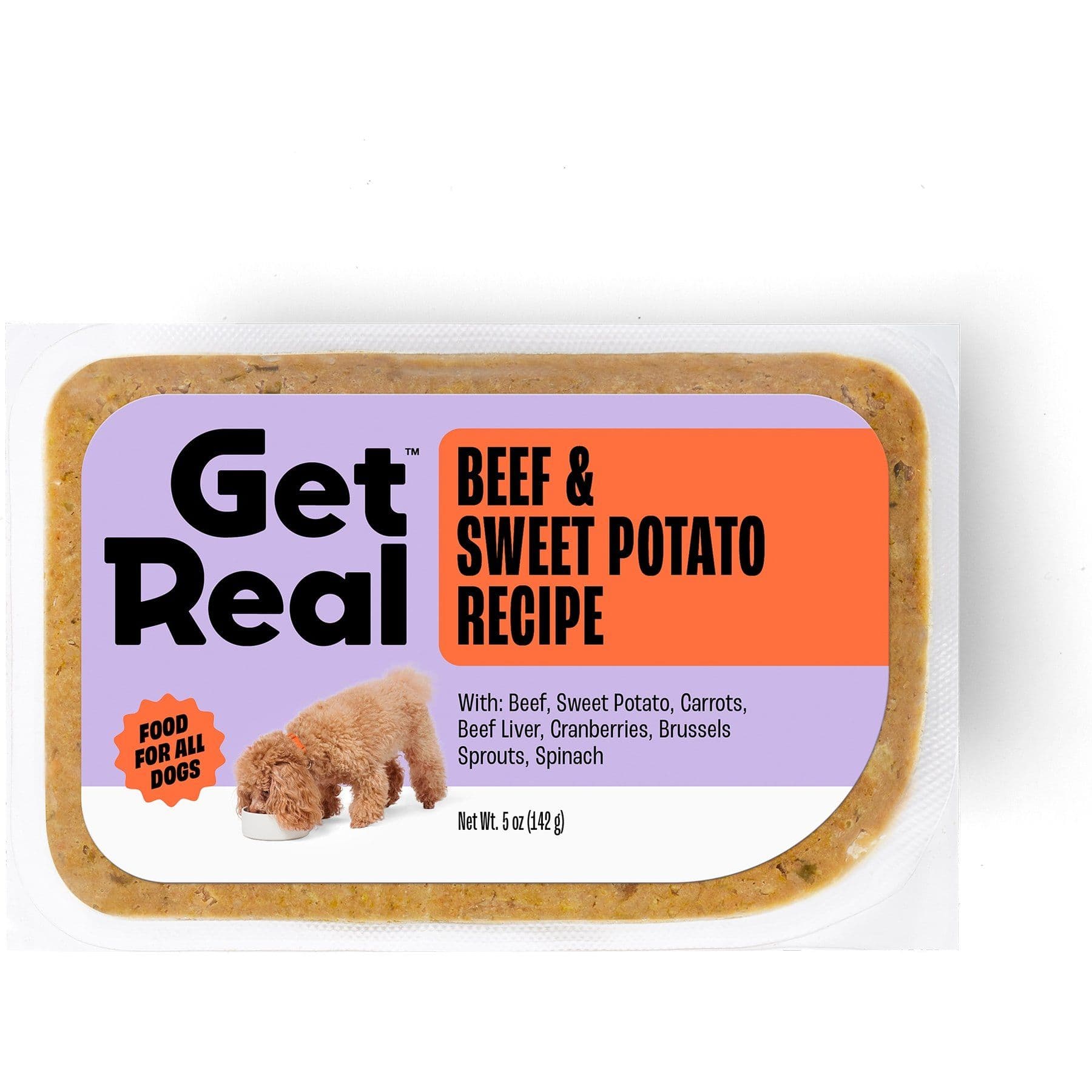
Want a complete and balanced everyday recipe once you know your dog tolerates beef? Get Real Beef & Sweet Potato meets AAFCO nutrient profiles for all life stages.
Petful may earn a commission when you click through to Chewy, at no extra cost to you.
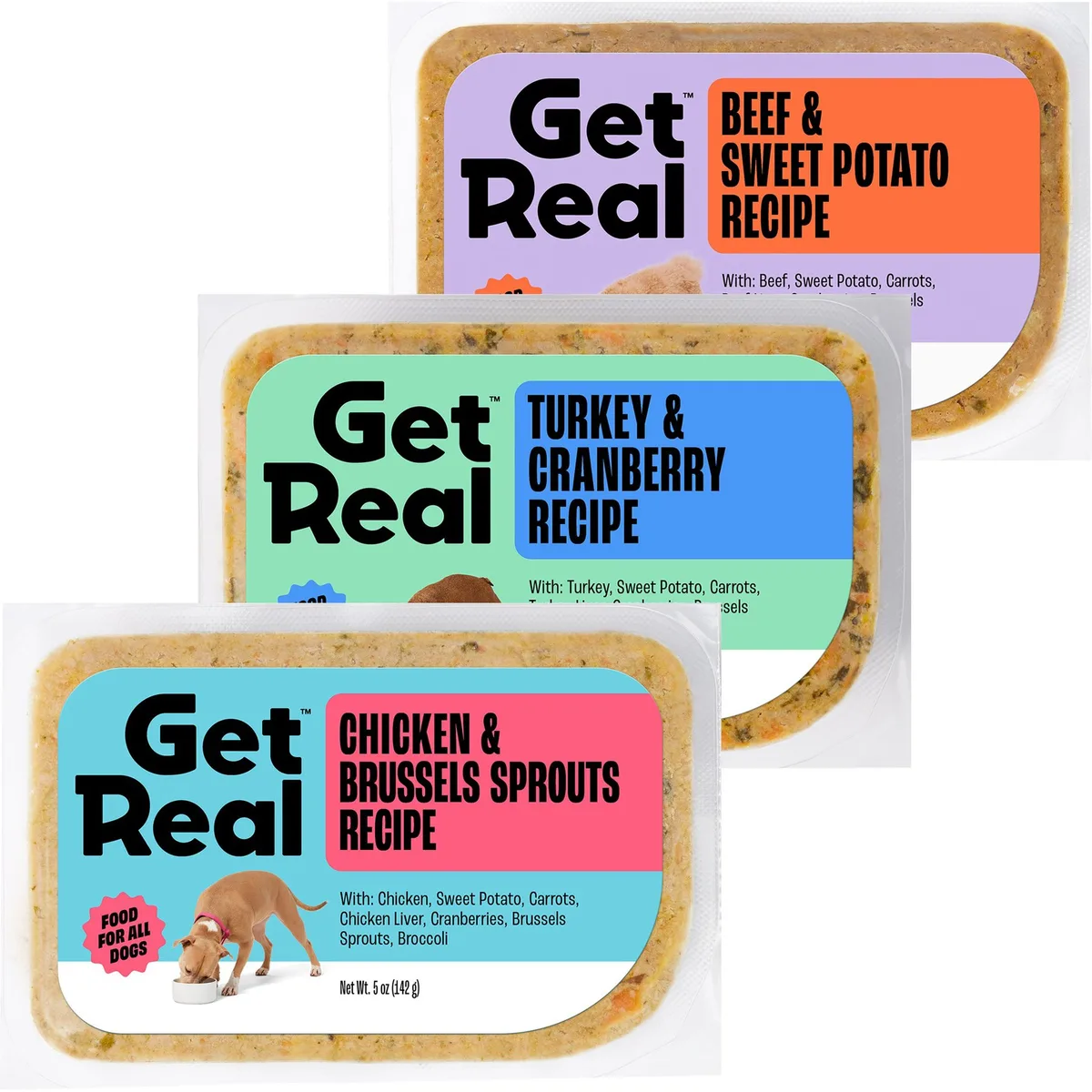
When you read a label, check these points in order:
- The nutritional adequacy statement says the food is complete and balanced for your dog's life stage under AAFCO nutrient profiles.
- One named animal protein leads the list, rather than several meats blended together.
- The ingredient list is short enough that you can name what each item is.
- Fat is moderate for your dog, especially if rich food has caused trouble before.
- Fiber comes from recognizable vegetables or other named sources.
The AAFCO statement is the one people skip, and it is the most important. Complete and balanced means the recipe alone supplies every nutrient AAFCO requires for the life stage on the label, so it can be fed as a full meal without supplements; a food that is not complete and balanced is meant only as a topper or intermittent feeding. AAFCO sets the nutrient profiles that most US pet foods use to claim a complete and balanced diet. Chewy states that all Get Real recipes meet AAFCO nutrient profiles for all life stages, including growth of large dogs that will weigh 70 pounds or more as adults.
Here is a recipe-by-recipe protein comparison of the three Get Real recipes, using the guaranteed analysis Chewy publishes. Guaranteed analysis figures are minimums for protein and fat and maximums for fiber and moisture.
| Recipe | Main protein | Guaranteed analysis protein (min) | Fat (min) | Fiber (max) | Moisture (max) |
|---|---|---|---|---|---|
| Chicken & Brussels Sprouts | Chicken | 10% | 8.5% | 1% | 75% |
| Beef & Sweet Potato | Beef | 9% | 7% | 1.5% | 75% |
| Turkey & Cranberry | Turkey | 8% | 10% | 1% | 75% |
Two things stand out. Beef & Sweet Potato has the lowest minimum fat and the highest maximum fiber of the three, which may suit a dog whose stool firms up with a little more fiber. Turkey & Cranberry has the highest minimum fat, so it is a good fit for a dog who already tolerates turkey and does well on a richer meal. For the beef recipe, the published ingredient list starts with beef, sweet potato, carrots, and beef liver, with fish oil included as a fat source. All three recipes contain fish oil, so a dog with a known fish sensitivity should get a veterinarian's input first.
If your dog has done well on beef before and fish is not a known trigger, the Get Real Beef & Sweet Potato Recipe can be a possible everyday food, depending on your dog's individual needs.
Choosing food for a dog with diarrhea or gas
For a dog with a sensitive stomach and diarrhea, the best food is usually not a new food at all in the first 24 hours. Mild, one-off diarrhea in an otherwise bright dog often settles with a short bland diet and then a slow return to the regular food. What helps most over the longer term is consistency: one complete and balanced recipe, fed in measured portions, with treats kept to a minimum.
When you are deciding what to feed a dog with diarrhea that keeps coming back, look for these traits in food for dogs with diarrhea:
- Highly digestible ingredients that are cooked, not raw.
- Moderate fat, since rich meals are a common trigger.
- A single main protein so you can rule ingredients in or out.
- Some fiber from named vegetables, which can help firm stool.
- A recipe you can feed consistently, without rotating flavors every week.
Portion size matters as much as the recipe. Overfeeding, even of a good food, pushes more undigested material into the large intestine and can loosen stool. Feed to your dog's ideal body weight, split the daily amount into at least two meals, and count treats and chews as part of the day's total.
Chronic or recurrent diarrhea deserves a veterinary workup, because parasites, infections, and inflammatory bowel conditions can look like a "sensitive stomach." Our guide to vomiting and diarrhea in dogs explains which causes need testing.
Gas is a different problem with overlapping fixes. For a dog with a sensitive stomach and gas, the most helpful food is usually highly digestible and moderate in fiber, because undigested food fermenting in the large intestine is what produces most of the smell. Fast eating also adds swallowed air. A slow-feeder bowl, smaller meals, and fewer table scraps often help as much as the food change itself. If you are trying fresh food for a gassy dog, the Get Real Chicken & Brussels Sprouts Recipe is an option to discuss if chicken is a protein your dog already tolerates. Introduce it in small amounts, since any new food or fiber source can briefly increase gas while the gut adjusts.

Is chicken already a protein your dog tolerates well? Get Real Chicken & Brussels Sprouts is gently cooked, pre-portioned, and easy to introduce a little at a time.
Petful may earn a commission when you click through to Chewy, at no extra cost to you.
Sensitive stomach and skin: when itching joins the picture
When a dog has loose stool and also scratches, licks paws, or gets recurrent ear infections, a food allergy moves higher on the list. Food allergies in dogs are most often a reaction to a protein, and they can show up in the skin, the gut, or both.
So what is the best dog food for a dog with itchy skin? Look for:
- A complete and balanced food.
- One main protein your dog has not reacted to before.
- A short ingredient list.
- A source of omega-3 fatty acids, such as fish oil.
Among the Get Real recipes, Beef & Sweet Potato is the recipe whose full ingredient list we could verify, so it is the easiest to check against known triggers. Because every Get Real recipe contains fish oil, none is a single-protein or novel-protein diet, and none is meant for an elimination trial.
When food allergy is suspected, the right choice is a diet trial food chosen with your veterinarian, usually a hydrolyzed or novel protein fed strictly for about eight weeks. Over-the-counter sensitive stomach and skin dog food can help some dogs but cannot replace that trial. Blood and saliva tests sold for food allergies are not reliable for diagnosis, as our look at the dog food allergy test explains. Seasonal itching or itching without stomach signs usually points away from food.
Signs that point toward a food reaction rather than a simple diet-change upset include:
- Itchy paws, face, ears, or rear end that continue year-round.
- Recurrent ear or skin infections.
- Soft stool or more frequent bowel movements alongside the itching.
- Symptoms that started at any age but do not follow the seasons.
Where does fresh food fit? For a dog whose itching and soft stool are mild and who has no confirmed allergy, a good choice for a sensitive stomach with skin allergies is often simply a complete and balanced recipe with one main protein the dog has not reacted to, fed consistently. Fresh food with a short ingredient list makes that easy to manage. Fish oil, which appears in all three Get Real recipes, supplies omega-3 fatty acids that support skin health, but a dog with a fish sensitivity should check with the veterinarian first.
If an elimination trial is planned, ask your veterinarian before starting any new commercial food, including fresh food, because a recipe your dog has already eaten cannot serve as a novel protein. Get Real is not an elimination-trial food. Once your veterinarian has helped identify the trigger, though, a short-list recipe built on a different protein can be a possible everyday food that makes long-term feeding much simpler.
Itching also has many non-food causes, from fleas to environmental allergies, so see our guide to dog itching with no fleas before blaming the bowl.
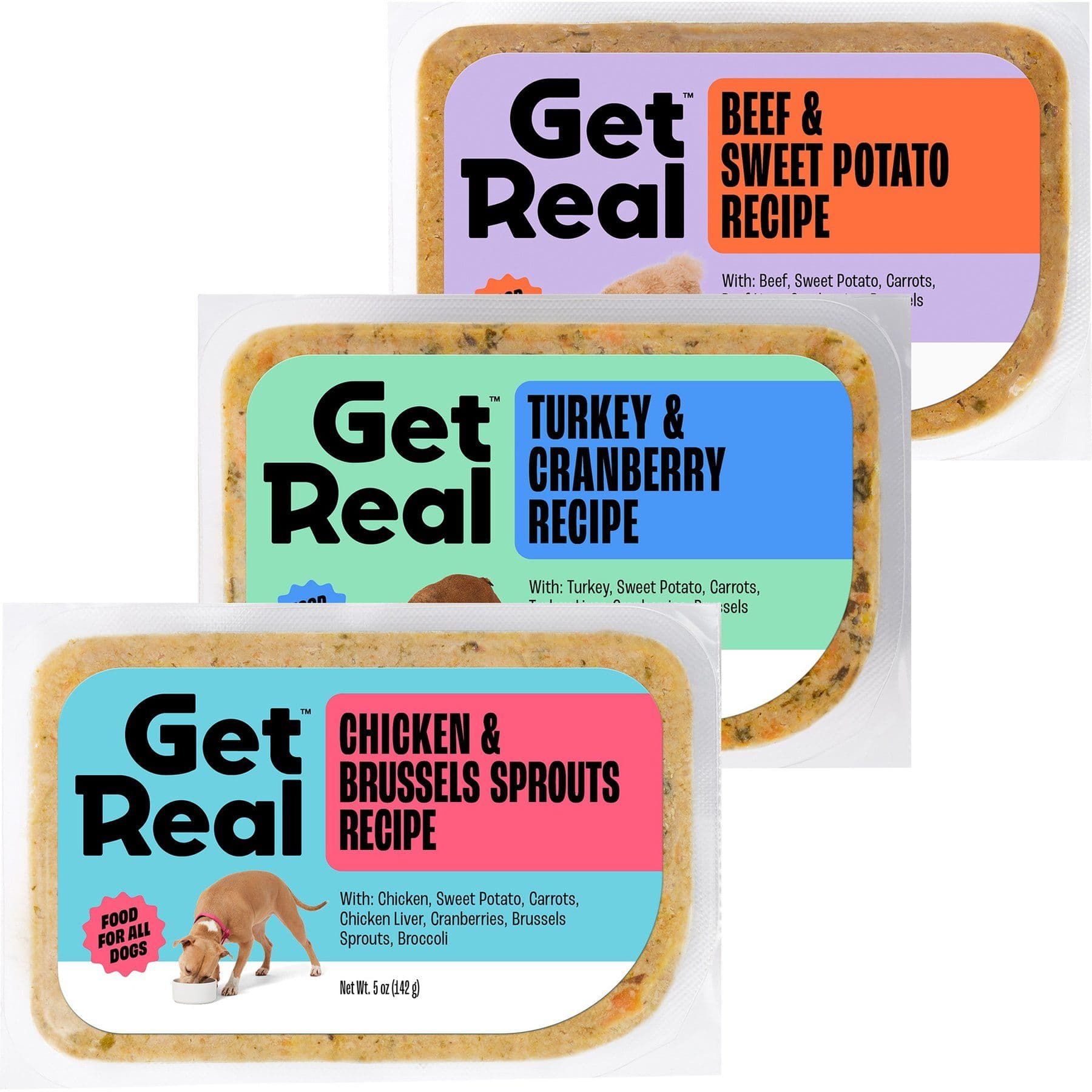
Already know which proteins your dog tolerates? The Get Real Sampler Pack lets you see which of the three recipes your dog prefers before you settle on one for the switch.
Petful may earn a commission when you click through to Chewy, at no extra cost to you.
How to switch a sensitive dog to fresh food over 10 to 14 days
Chewy recommends switching most dogs to Get Real over 7 to 10 days and sensitive dogs over 10 to 14 days. For a dog with a delicate stomach, the longer window is the safer choice. A gradual transition matters more for these dogs than for most. The general method in our guide to switch dog food gradually still applies; the difference is pace.
If you would like to compare proteins before you commit, the Get Real Sampler Pack includes the beef, chicken, and turkey recipes. Choose one protein for the switch itself rather than rotating between them.
Here is a day-by-day switch schedule for sensitive dogs, as a share of each meal:
- Days 1 to 3: about 10 percent fresh food, 90 percent current food.
- Days 4 to 6: about 25 percent fresh food, 75 percent current food.
- Days 7 to 9: about 50 percent of each.
- Days 10 to 12: about 75 percent fresh food, 25 percent current food.
- Days 13 to 14: fully on fresh food, if stools have stayed normal.
- If you see soft stool at any step, hold the current ratio for two or three days until stools firm up, then move forward again. Going back one step is fine; rushing ahead is what causes setbacks.
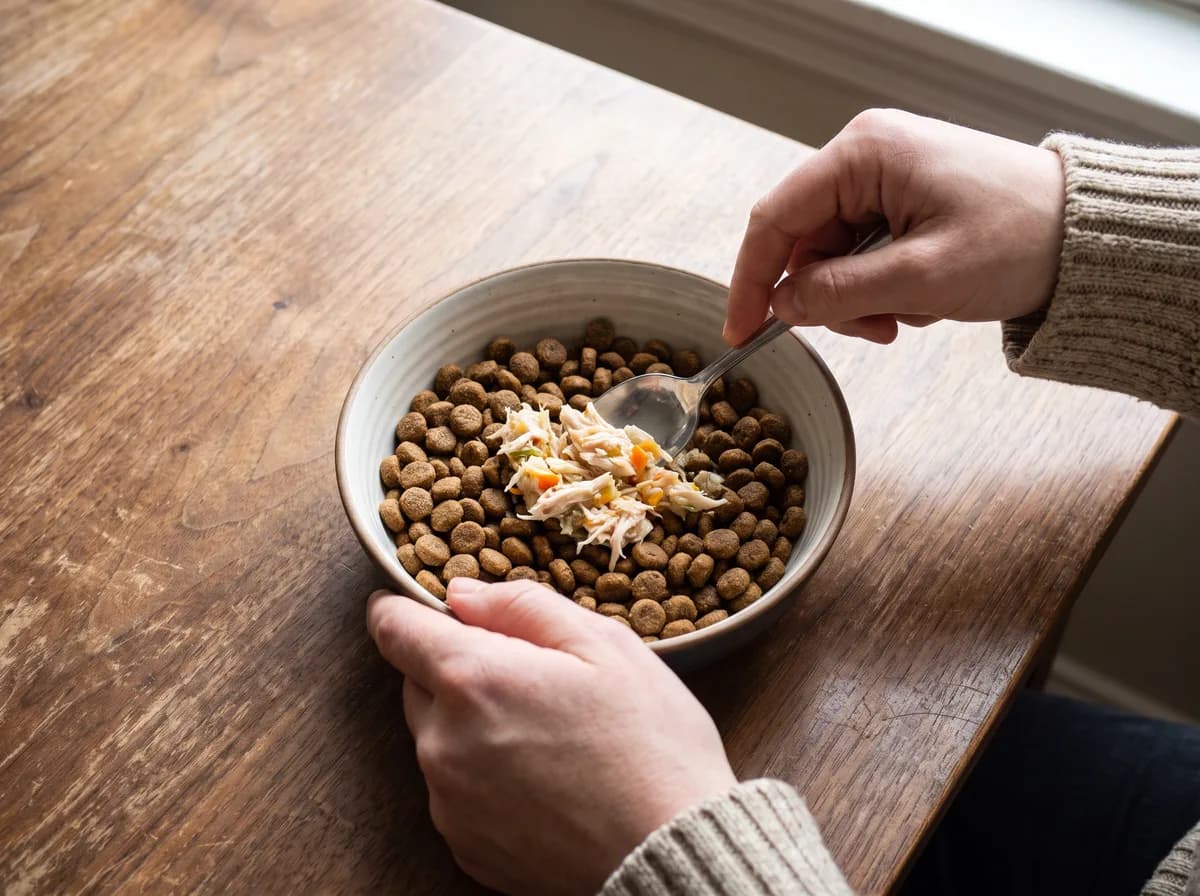
Watch stool consistency, appetite, and energy each day. Keep everything else the same during the switch: no new treats, chews, or supplements, so that you know any change came from the food. Chewy also notes that Get Real can be used as a topper or kibble mixer, and the pre-portioned 5 oz mixer pack suits the early days of the switch, when the fresh share is small. It is a mixer portion, not a full meal.
A few practical habits make the switch smoother for a sensitive dog:
- Weigh or measure both foods at every meal, so the ratio is what you think it is.
- Feed two or three smaller meals a day rather than one large one.
- Keep a simple log of each day's ratio and stool quality.
- Mix the fresh food thoroughly into the current food so your dog cannot pick out only the new portion.
Fresh food is far more moist than kibble, so the volume in the bowl will look larger and some dogs drink a little less water. Both are normal. Portions should follow your dog's weight, age, and activity level; Chewy sets Get Real portions through its online feeding plan rather than a published chart, and your veterinarian can help if your dog needs to lose or gain weight.
Thaw packs in the fridge for 12 to 24 hours (35 to 48 hours for the 24 oz size) and use thawed food within 3 to 5 days, so plan ahead during the slow weeks when you are using small amounts.
Vomiting or indigestion: when to call your vet first
Diet changes are for stable dogs. When a dog is vomiting, the first call is to a veterinarian rather than a food change, particularly if it is repeated or comes with other signs, as the Merck Veterinary Manual for dog owners advises for persistent vomiting.

- Call your veterinarian before changing food if your dog has repeated vomiting, blood in stool or vomit, a swollen or painful belly, lethargy, or cannot keep water down. Puppies, seniors, and dogs with medical conditions should be seen sooner.
What to give a dog for upset stomach and vomiting? For a single episode in an otherwise bright adult dog, many veterinarians advise a short pause from food, small amounts of water, and then a bland diet in small meals, as described in the Merck Veterinary Manual for dog owners. Do not give human anti-nausea or stomach medications unless your veterinarian tells you to, because some are unsafe for dogs.
Keep notes on what happened: when the vomiting started, how many times, what came up, and whether your dog ate anything unusual. That history often matters more to your veterinarian than any single symptom, and it helps separate a one-off dietary indiscretion from a pattern that needs testing.
Once your veterinarian has examined your dog, a diet change is reasonable to discuss when:
- Vomiting has stopped and your dog is eating and drinking normally.
- Tests have ruled out problems that need medication or a prescription diet.
- Your veterinarian agrees a gradual change to a new complete and balanced food makes sense.
- You can keep the new diet consistent for at least a few weeks to judge it fairly.
Mild dog indigestion is often linked to meal timing. Typical signs include:
- An occasional gurgling stomach.
- Grass eating.
- A single vomit of bile on an empty stomach.
Smaller, more frequent meals and a consistent recipe can help. When vomiting keeps recurring, the best dog food for a sensitive stomach depends on a diagnosis first, because the right diet for pancreatitis, gastritis, or a food allergy can be very different. Once your veterinarian has ruled out a medical cause, a complete and balanced fresh food with one main protein, introduced slowly, is a reasonable option to discuss.
Questions readers ask
A highly digestible food that your dog already tolerates, fed as a consistent single recipe, is least likely to cause diarrhea. The bigger risk is often a slow food switch done too fast, so introduce any new food over 10 to 14 days.
A small amount of plain cooked egg is easy to digest for many dogs and can be part of a short bland meal. Cook it with no butter or seasoning, and do not use egg as a long-term substitute for a complete diet.
A bland short-term meal, such as plain cooked chicken or egg with white rice, or a little plain canned pumpkin, can calm a mildly upset stomach for a day or two. After that, return to a complete long-term diet, because bland meals alone are not nutritionally balanced.
Some veterinarians are comfortable with fresh food for sensitive dogs, provided it is complete and balanced and introduced slowly. Ask your veterinarian before switching if your dog has a diagnosed condition or needs a prescription diet. The WSAVA global nutrition guidelines offer useful questions to ask about any brand.
It can, if the new food is more digestible and has a moderate fiber level that suits your dog. Eating speed matters too, so a slow-feeder bowl and smaller meals often reduce gas alongside the food change.
Most sensitive dogs adjust within about two weeks when the switch is gradual. Judge progress by stool consistency, and pause at the current mix whenever stools soften.
BVMS, MRCVS
Dr. Pippa Elliott, BVMS, MRCVS, is a veterinarian with nearly 30 years of experience in companion animal practice. Dr. Elliott earned her Bachelor of Veterinary Medicine and Surgery from the University of Glasgow. She was also designated a Member of the Royal College of Veterinary Surgeons. Married with 2 grown-up kids, Dr. Elliott has a naughty Puggle named Poggle, 3 cats and a bearded dragon.
Sign up for expert-backed reviews and safety alerts all in one place.


A Final Word (Disclaimer)
At Petful, our review integrity is paramount; we never exchange special treatment in our reviews for monetary or material rewards.
Nonetheless, when our readers click through to online merchants (including Chewy or Amazon), we receive a referral commission. This supports the running of our free blog, and we appreciate your backing.