Dog Food for Australian Shepherds: A Complete Nutrition Guide
Australian Shepherds are mid-sized athletes with big appetites for activity. Here is how to feed an Aussie at every life stage: protein and fat targets, joint and coat support, portioning for an active dog, and where fresh whole-food options fit.
Petful is reader supported. As an affiliate of platforms like Amazon and Chewy, we may earn a commission when you buy through links on this page. There is no extra cost to you.
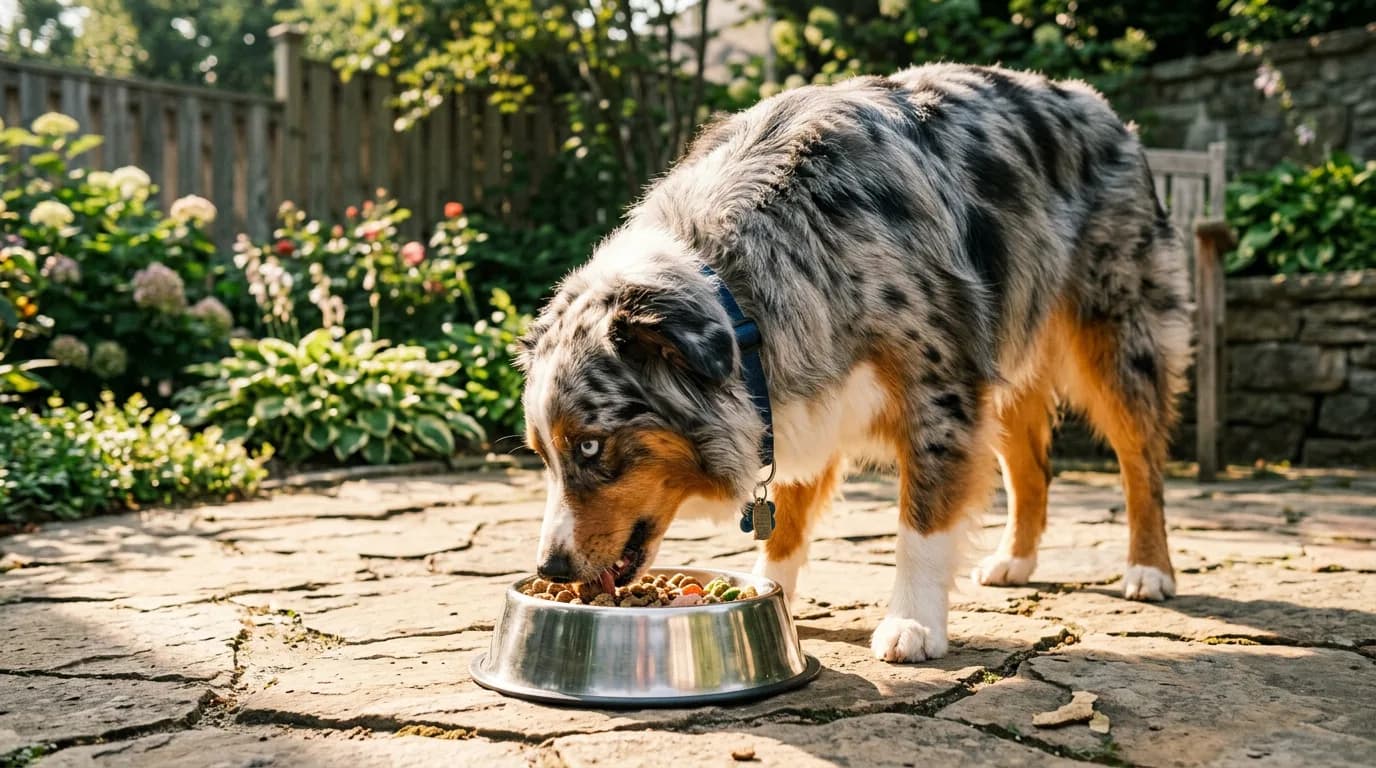
Choosing the right dog food for Australian Shepherds starts with respecting how much these dogs actually do in a day. Bred to herd from dawn to dusk, the Aussie is a compact powerhouse with a big engine, a weatherproof double coat, and joints that take real impact on every sprint, turn, and jump.
That active, working-breed wiring shapes everything on the label, from protein and fat to the omega fatty acids that keep that coat gleaming. This guide walks through what an Aussie needs at every life stage, how much to feed an active dog, and how fresh, whole-food options fit in. A gently cooked, whole-food diet like JustFoodForDogs Fresh Frozen is one way to feed an active Aussie.
- 1Australian Shepherds are high-energy working dogs that need protein-forward, calorie-dense nutrition
- 2Omega-3 fatty acids and joint nutrients support the double coat and hardworking joints
- 3Feed to life stage and body condition, adjusting portions up or down with real daily activity

Sign up for expert-backed reviews and safety alerts all in one place.
Understanding the Australian Shepherd's Nutritional Needs
The Australian Shepherd is a medium-sized herding dog with an outsized work ethic. Most adults weigh between 40 and 65 pounds, but the number on the scale only tells part of the story. This is a breed built for stamina: quick bursts of speed, tight directional changes, and hours of steady movement when there is a job to do. Even a family Aussie who never sees a sheep still carries that drive, which is why a bored, underexercised Aussie tends to invent work of its own.
All of that activity has to be fueled. Compared to a couch-friendly companion breed of the same weight, an Australian Shepherd generally burns more calories and needs a diet that delivers real nutritional density rather than filler. When you understand the dog in front of you, the label decisions get much simpler. You can learn more about the breed's temperament and history in our full Australian Shepherd breed profile, which pairs naturally with the feeding guidance here.
The energy demands of a working breed
Energy is the headline requirement. Active Australian Shepherds do best on food that concentrates calories into a reasonable serving size, so the dog is not forced to eat a huge volume just to keep up. Protein and fat are the two levers that matter most: protein rebuilds the muscle worked hard during exercise, and fat is the most concentrated source of usable energy for an endurance breed.
That does not mean every Aussie needs a performance diet. A working farm dog or a competitive agility partner has very different needs from a weekend hiking companion. The goal is to match the food's calorie density to how much the dog genuinely does, then fine-tune portions to keep the body lean. Active large-breed feeding follows similar logic across breeds, and our guide to the best dog food for Golden Retrievers walks through the same protein-first, activity-matched approach for another athletic dog.
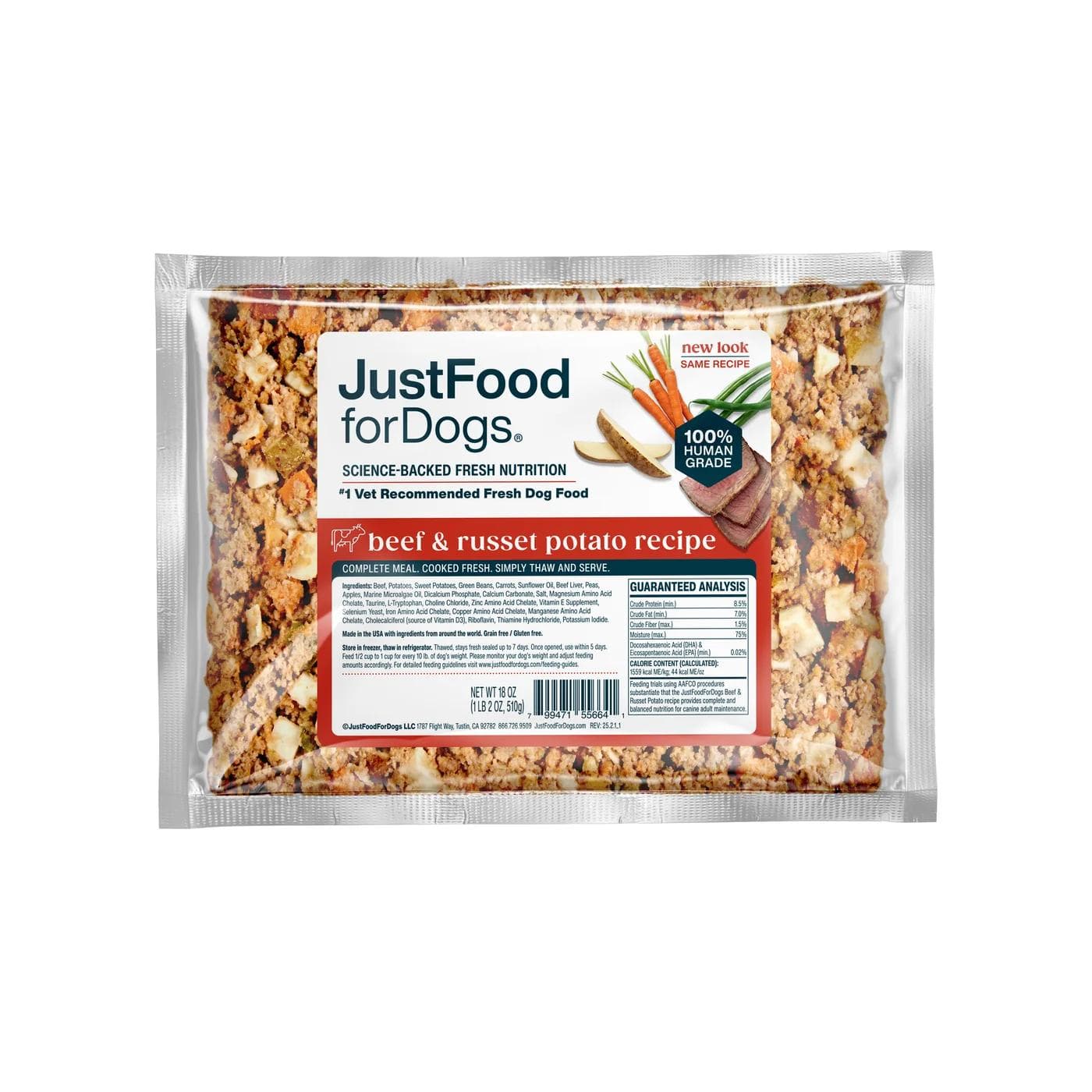
Compare the fresh recipe’s ingredients and feeding guide with your Australian Shepherd’s activity and life stage.
- Beef and russet potato recipe
- Gently cooked, then frozen
- View ingredients and feeding guidance
Petful may earn a commission when you click through to JustFoodForDogs, at no extra cost to you.
The double coat and skin
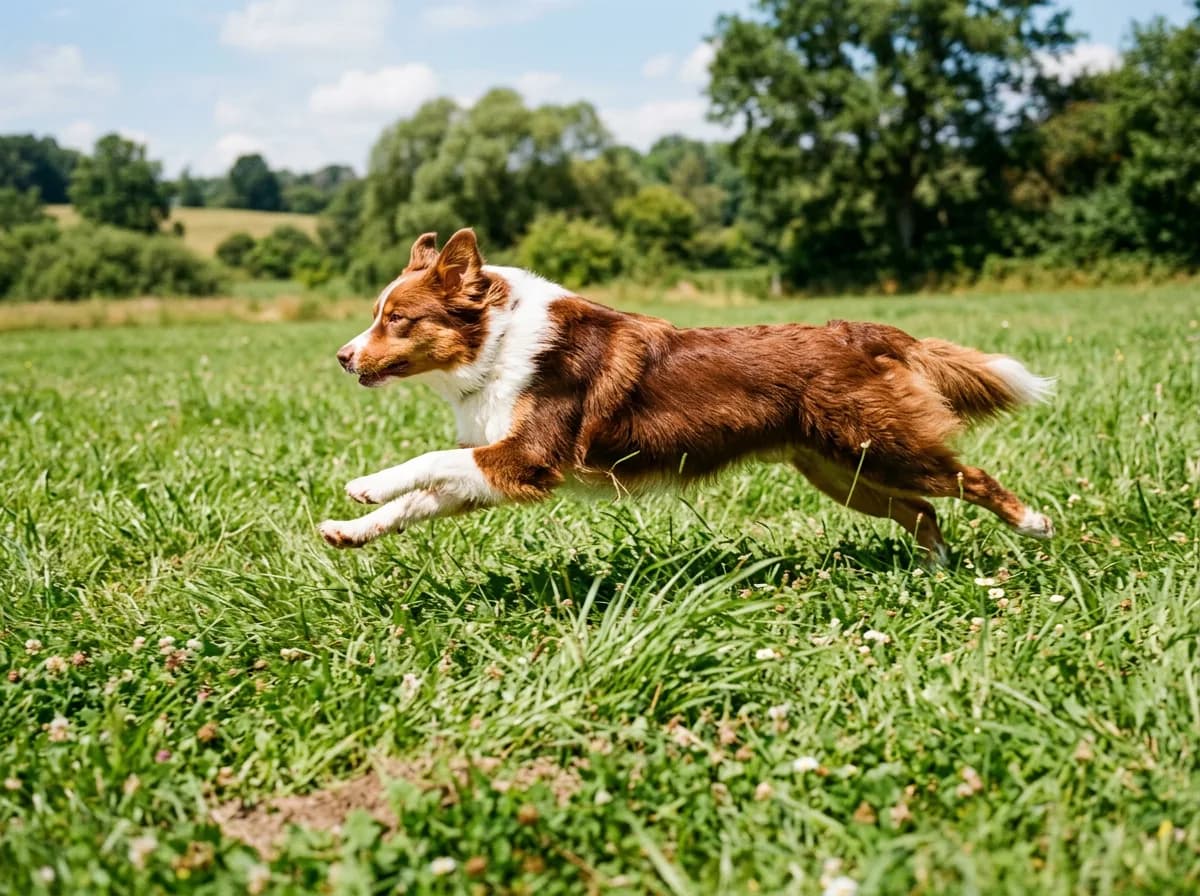
The Australian Shepherd's beautiful double coat is more than good looks. It insulates against heat and cold, and it needs the right raw materials to stay dense, glossy, and healthy. Omega-3 and omega-6 fatty acids, especially the omega-3s EPA and DHA from sources like fish, are the nutrients most closely tied to coat shine and skin comfort. A diet short on quality fats often shows up first in a dull, flaky coat.
Merle-coated Aussies and heavy shedders benefit especially from a food that supplies these fatty acids consistently. Skin and coat quality is a slow-moving signal, so give any diet change several weeks before you judge it.
Australian Shepherds shed heavily, particularly during seasonal coat blows, and good nutrition will not stop the shedding, but it does support the quality of the coat that grows in. If your Aussie's skin looks flaky or the coat feels coarse despite regular grooming, an omega-3 boost from fish oil or a fish-based recipe is often the first dietary lever worth trying, ideally alongside a check-in with your veterinarian to rule out other causes such as allergies or parasites.
How Much Protein and Fat Does an Australian Shepherd Need?
For a healthy adult Australian Shepherd, a protein level in the range of roughly 22 to 30 percent (dry matter) suits most active dogs, with working and sporting dogs sitting at the higher end. Fat in the range of about 12 to 18 percent supplies the endurance energy this breed thrives on. Puppies and highly active adults need more of both than a senior taking it easy.
Numbers on a bag are only a starting point, though. Two foods with identical protein percentages can differ enormously in quality depending on where that protein comes from. A named animal protein such as chicken, beef, turkey, or fish is far more useful to your dog than an equal percentage padded out with lower-value plant proteins. The same is true for fat: a named source like chicken fat or fish oil beats a vague "animal fat" every time.
- An Australian Shepherd's food needs to be nutrient-dense, but more calories than the dog burns still leads to weight gain. Match the amount to real daily activity, and reassess whenever exercise ramps up or slows down with the seasons.
Joint Support for an Athletic Breed
Every sprint, leap, and hard cut puts load through an Australian Shepherd's joints. Because this breed stays active well into its later years, joint-friendly nutrition earns its place in the bowl. Glucosamine and chondroitin are the two nutrients most associated with cartilage and joint cushioning, and many active-breed and senior diets include them. Omega-3 fatty acids, particularly EPA, are also valued for supporting comfortable movement.
No food prevents joint problems outright, and nutrition is only one piece alongside healthy weight, sensible exercise, and regular veterinary care. That said, keeping an Aussie lean is arguably the single most important thing you can do for its joints over a lifetime. Extra pounds multiply the stress on every stride, and even a few pounds over ideal weight on a 50-pound frame is a real percentage of added load carried through every jump and hard turn. Portion discipline, in other words, is joint care in disguise. A diet that supplies quality protein, balanced fats, and added joint nutrients can help support the hardworking joints this breed relies on, especially as your dog moves into its middle and senior years.
Feeding by Life Stage: Puppy, Adult, and Senior

An Australian Shepherd's needs shift dramatically from the fast-growing puppy months through the working adult years and into a calmer senior stage. Feeding the right food for the right stage is one of the easiest wins in canine nutrition.
Puppy nutrition
Australian Shepherd puppies grow quickly and need a diet built for growth: more protein, more fat, and carefully balanced calcium and phosphorus for developing bones. Look for a food that is labeled as complete and growth-substantiated, meaning it is formulated to meet AAFCO nutrient profiles for growth (or for all life stages). Most Aussie puppies do well on three measured meals a day, tapering to two as they mature. Avoid overfeeding a puppy toward fast growth; steady, moderate growth is easier on developing joints.
Adult maintenance

By around 12 months, most Australian Shepherds are ready to transition to an adult formula, though large or slow-maturing individuals may take a little longer. Adult feeding is all about matching intake to output: a protein-forward, appropriately calorie-dense diet, split into two meals a day, portioned to keep the dog lean and energetic. This is the stage where your dog's activity level should drive the amount in the bowl more than any chart on the bag.
Senior support
Australian Shepherds often stay sprightly into their senior years, but metabolism slows and joints have more mileage on them. Many seniors do well on slightly fewer calories to avoid creeping weight gain, alongside high-quality, easy-to-digest protein to preserve lean muscle and continued joint support. Keep an eye on body condition and appetite, and let your veterinarian help you time any switch to a senior-appropriate diet.
| Life Stage | Typical Focus | Feeding Approach |
|---|---|---|
| Puppy (to about 12 months) | Growth and development | Growth-substantiated food, measured meals 3 times daily |
| Adult (1-7 years) | Energy and maintenance | Protein-forward diet portioned to activity, usually twice daily |
| Senior (7+ years) | Joints and lean muscle | Adjusted calories, joint support, easy-to-digest meals |
What to Look For in a Dog Food for Australian Shepherds
Once you know what the breed needs, reading a label gets much less intimidating. A few reliable green flags separate a food worth feeding from clever marketing.
- A named animal protein (chicken, beef, turkey, lamb, or fish) as the first ingredient
- Named fat sources such as chicken fat or fish oil rather than vague "animal fat"
- An identifiable omega-3 source (fish oil, flaxseed, or fish) for coat and joint support
- Whole, recognizable ingredients concentrated near the top of the list
- A statement that the food is formulated to meet AAFCO nutrient profiles for the right life stage
- Appropriate calorie density for how active your individual dog is
Marketing terms like "premium," "holistic," and "natural" are not regulated in a meaningful way, so let the ingredient panel and the nutritional adequacy statement do the talking. If a food leads with a named meat, backs it with quality fats and omega-3s, and meets recognized standards for your dog's life stage, it is on the right track for an Aussie.
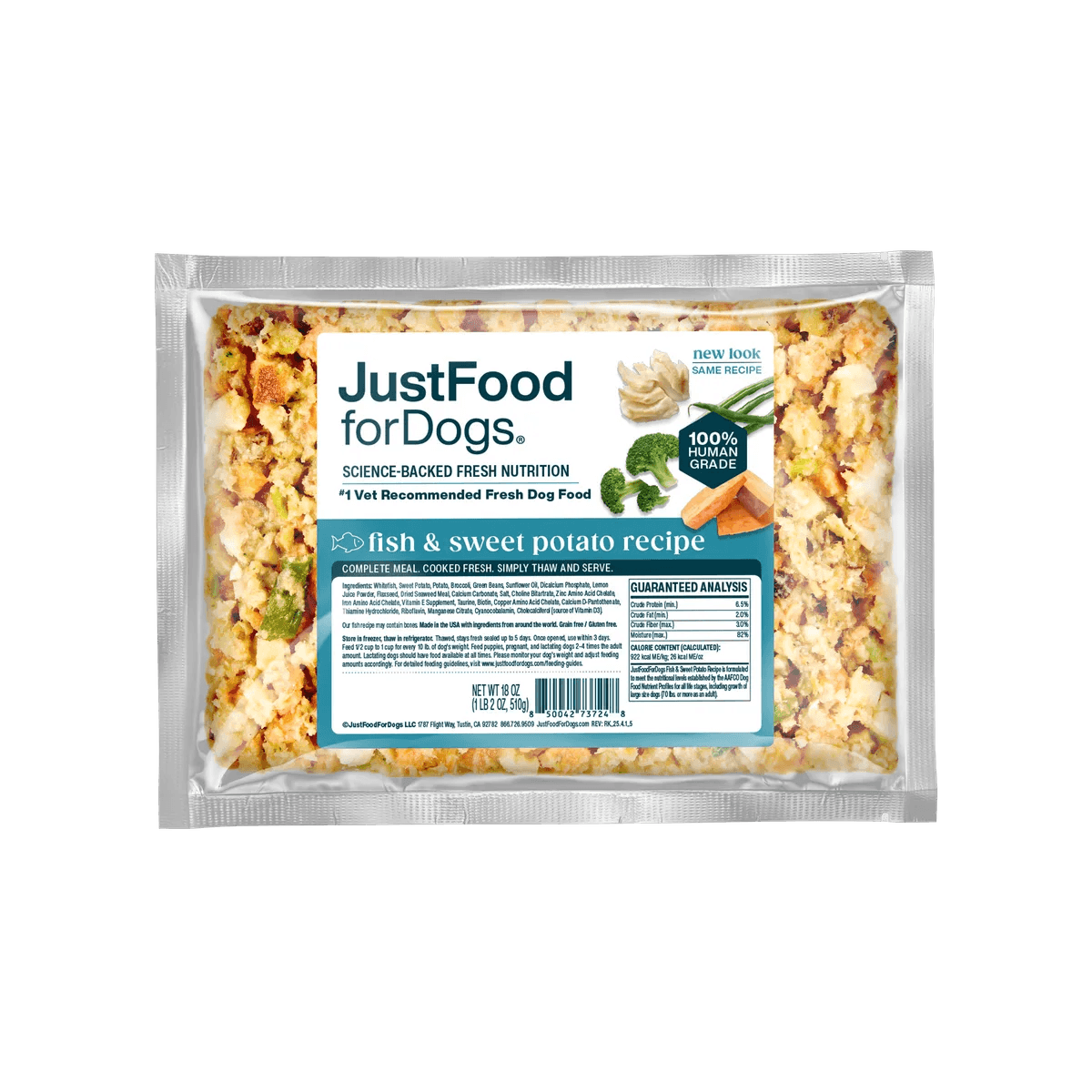
Compare the fresh recipe’s ingredients and feeding guide with your Australian Shepherd’s activity and life stage.
- Whitefish with sweet potato
- Fresh Frozen meals with whole-food ingredients
- View the recipe and life-stage guidance
Petful may earn a commission when you click through to JustFoodForDogs, at no extra cost to you.
Making sense of the guaranteed analysis
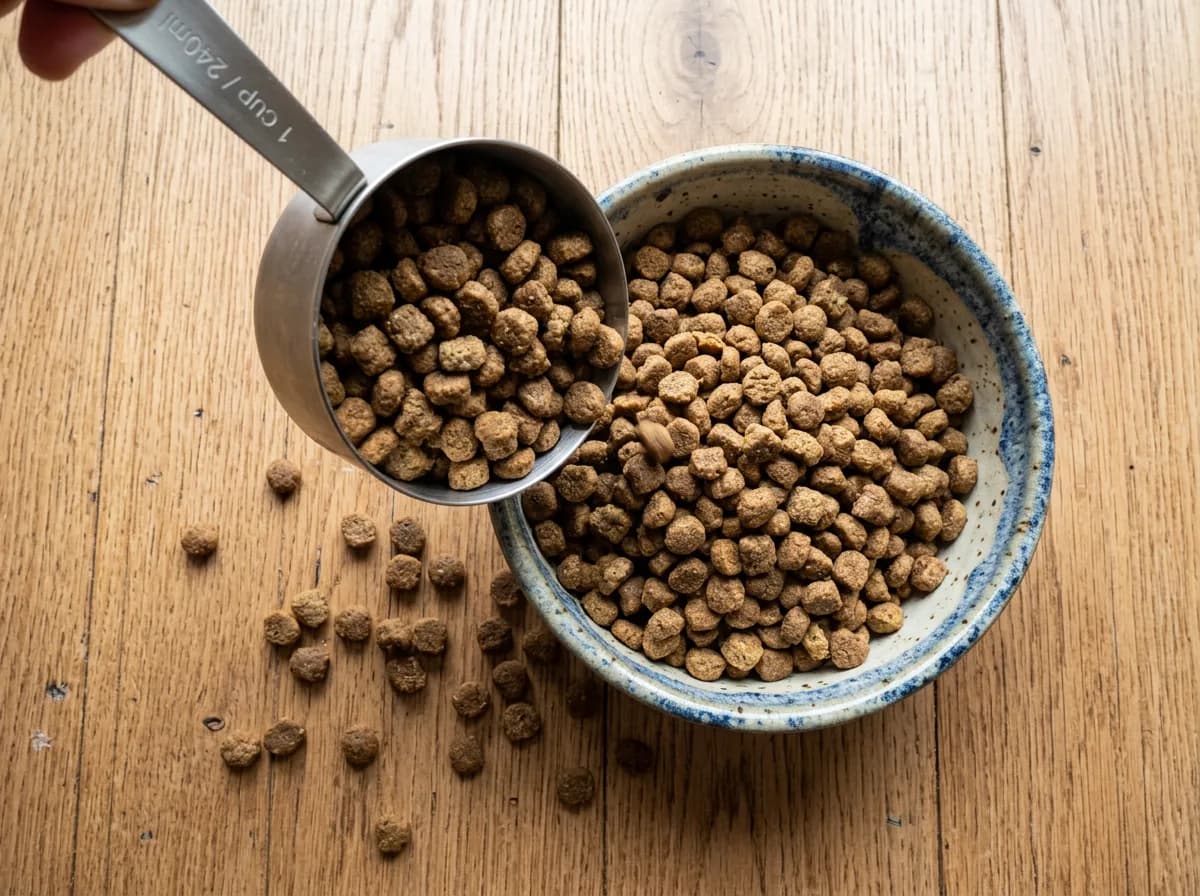
Every label carries a guaranteed analysis listing minimum protein and fat and maximum fiber and moisture. It is useful, but two numbers can be misleading on their own. Moisture is the big one: a fresh or canned food shows lower percentages simply because it contains more water, so it can look weaker than kibble while actually being richer once you compare on a dry-matter basis. When you want an apples-to-apples read across formats, compare foods on their dry-matter values or, better yet, on calories per serving. The nutritional adequacy statement (the AAFCO line) tells you whether the food is complete and balanced and for which life stage, which matters more than any single percentage on the panel.
- A named animal protein such as chicken, beef, or fish should lead the list. Whole ingredients near the top, named fat sources, and an added omega-3 source are strong green flags for an active breed like the Australian Shepherd.
| Nutrient | Why It Matters for an Aussie | What to Look For |
|---|---|---|
| Protein | Fuels working muscles and recovery | Named meat first, higher end of the range for active dogs |
| Fat | Concentrated energy for endurance | Named fat source with balanced omega-3 and omega-6 |
| Joint nutrients | Cushion hardworking joints | Added glucosamine, chondroitin, and EPA/DHA where suitable |
How Much to Feed an Active Australian Shepherd
Portioning is where most feeding mistakes happen, in both directions. The feeding guide on a bag or recipe is a starting estimate based on weight, but it cannot know how much your particular dog runs, herds, or hikes. The real gauge is body condition. You should be able to feel your Aussie's ribs easily under a light layer of covering, see a visible waist from above, and see a tuck in the belly from the side.
A hardworking farm or sport dog may need noticeably more food than the bag suggests, sometimes split across an extra meal on heavy days. A mostly-companion Aussie who gets a couple of good walks may need less than the chart says to avoid slow weight gain. Weigh your dog periodically, adjust in small steps, and let the mirror and the scale, not the printed chart, have the final say.
Water, treats, and meal timing
Fresh water matters just as much as food for an active breed, especially after hard exercise or in warm weather. And treats count: for a dog you are keeping lean, treats should stay under about 10 percent of daily calories, with the rest coming from a complete, balanced diet. Australian Shepherds are trained heavily, so if you use a lot of food rewards, subtract them from the day's meals rather than adding them on top.
Compare the fresh recipe’s ingredients and feeding guide with your Australian Shepherd’s activity and life stage.
- Beef and russet potato recipe
- Gently cooked, then frozen
- View ingredients and feeding guidance
Petful may earn a commission when you click through to JustFoodForDogs, at no extra cost to you.
Timing helps an active breed too. Avoid a large meal immediately before or after hard exercise, and give your dog time to rest and rehydrate around vigorous activity. Splitting the daily ration into two meals, morning and evening, suits most adult Aussies and keeps energy steady through a busy day.
Working dogs versus companion dogs
The single biggest variable in how much to feed an Australian Shepherd is what the dog actually does. A ranch dog moving stock for hours, or a competitive agility and flyball athlete, may burn well beyond what a standard feeding chart assumes and can need meaningfully more food, sometimes with an added meal on the heaviest days, to hold condition. A companion Aussie who enjoys daily walks and weekend adventures sits at the other end and is far easier to overfeed. Seasons matter too, since many dogs work and play harder in cooler months and ease off in summer heat. Treat the printed guide as a baseline for an average dog, then adjust up or down for the athlete or the couch companion in front of you.
Wet, Dry, Fresh, or Raw: Comparing Food Formats
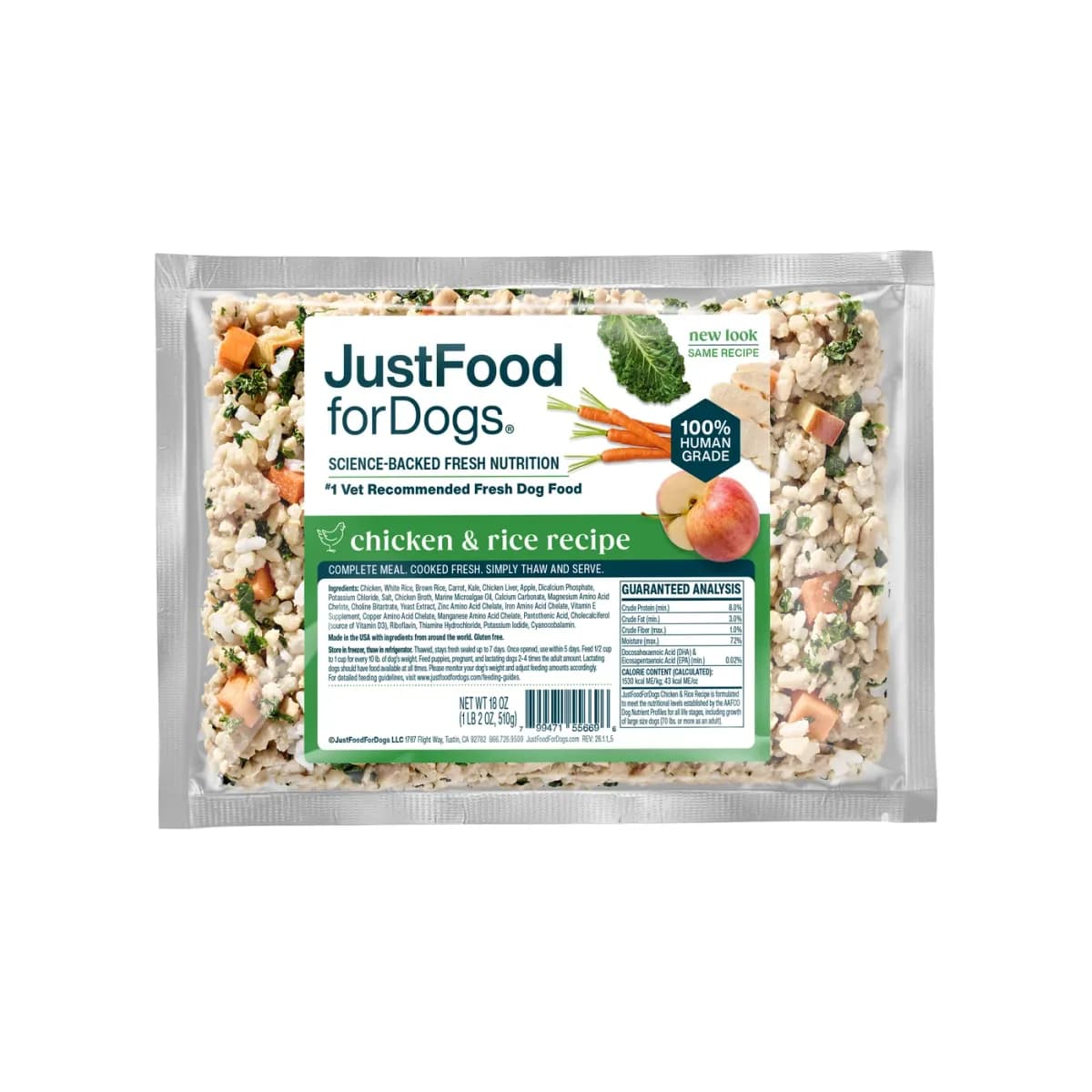
Australian Shepherd owners can feed the breed well in more than one format, and each has trade-offs worth understanding before you commit.
- Dry food (kibble) is convenient, shelf-stable, and cost-effective, and quality active-breed formulas can be nutritionally excellent. The trade-offs are low moisture and, in cheaper brands, more filler, so read past the marketing to the ingredient panel.
- Wet or canned food brings high moisture and strong palatability, which helps fussy eaters and hydration. It tends to cost more per calorie and is often used alongside kibble rather than on its own for a big, active dog.
- Fresh, gently cooked food uses whole, human-grade ingredients cooked at low temperatures and portioned for dogs. It offers high moisture, high palatability, and recognizable ingredients at a higher price point than kibble. Complete fresh diets are formulated to meet AAFCO profiles, so they can serve as a full diet or a topper.
- Raw diets appeal to some owners, but they carry food-safety considerations for both dogs and the people handling them, and a home-assembled raw diet can be nutritionally unbalanced without expert guidance. If you are drawn to raw, talk to your veterinarian first.
There is no universally correct format for the breed. Many Aussie owners settle on a high-quality kibble, a complete fresh diet, or a sensible combination, chosen around their dog's preferences, their budget, and how much they value moisture and whole-food ingredients. What matters more than the format is that the food is complete, balanced, and matched to your dog's life stage and activity.
Fresh, Whole-Food Options and Where JustFoodForDogs Fits
Kibble is not the only way to feed an Australian Shepherd well. Fresh, whole-food diets have grown quickly in popularity with active-breed owners who want human-grade ingredients and high palatability, and they can be a genuinely excellent fit for this breed's needs.
JustFoodForDogs makes gently cooked, human-grade meals designed around whole ingredients you would recognize in your own kitchen. Their Fresh Frozen daily meals come in a range of recipes, which makes it easy to match a protein to your dog: options like Beef & Russet Potato, Chicken & White Rice, Turkey & Whole Wheat Macaroni, and a Fish & Sweet Potato recipe that works nicely as a novel-protein choice for dogs that do better away from more common proteins. Because these meals are complete and formulated to meet AAFCO profiles, they can be fed on their own or used to top and enrich your dog's current food.
Targeted recipes and the research behind them
For Aussies with specific needs, the brand's targeted nutrition recipes include a Sensitive Skin recipe rich in omega-3s for coat and skin comfort, a Sensitive Stomach recipe built around easy digestibility, and a Joint & Skin recipe for active and aging dogs. These let you lean the diet toward whichever area your individual dog needs without giving up the whole-food approach.
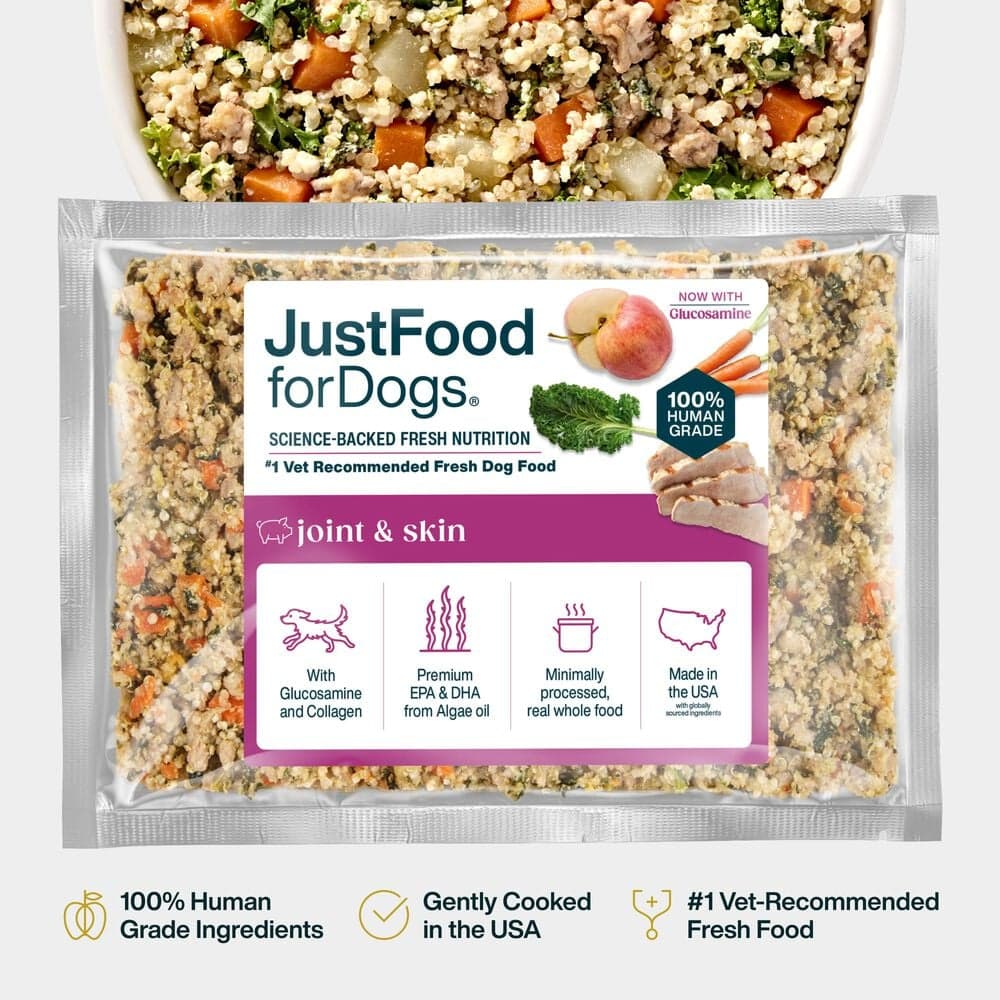
The Joint & Skin recipe named in this guide pairs single-protein pork with glucosamine and omega-3s for active and aging Aussies.
- Single-protein pork recipe with glucosamine
- EPA and DHA from marine microalgae oil
- 32 kcal per ounce, adult maintenance
Petful may earn a commission when you click through to JustFoodForDogs, at no extra cost to you.
What sets the brand apart for evidence-minded owners is that it stands behind its food with research. JustFoodForDogs points to five peer-reviewed studies plus one published abstract on its fresh, whole-food diets, which is a meaningful commitment in a category where marketing claims often outrun the data. For an owner who wants fresh food and proof that someone tested it, that combination is worth a look.
- Whole-food diets are simply complete recipes made from ingredients you would recognize, cooked and portioned for dogs. They can be fed on their own or mixed with your dog's current food to add moisture and palatability.
The Best Food to Feed an Australian Shepherd

There is no single "best" bag that suits every Aussie, and any guide that claims otherwise is oversimplifying. The best food to feed an Australian Shepherd is a complete, balanced diet built around a named animal protein, with enough fat for endurance energy, omega-3s for the coat, and support for hardworking joints, all portioned to your dog's real activity level.
That standard can be met by more than one kind of food. A high-quality kibble aimed at active or working breeds can be an excellent, convenient choice. A fresh, gently cooked, human-grade diet like JustFoodForDogs Fresh Frozen is an equally strong choice, with the added benefits of moisture and palatability. Some owners land on a mix of both. Both protein-forward active-breed formulas and fresh human-grade meals may suit some Australian Shepherds, but suitability matters more than format or popularity. Start from your dog's age, energy, and any sensitivities, and let those pick the food rather than the trend.
Foods and Feeding Habits to Avoid
Feeding an Australian Shepherd well is as much about what you leave out as what you put in. A few common missteps are worth avoiding.
- Overfeeding and free-feeding. Leaving a full bowl out all day makes it nearly impossible to keep an Aussie lean. Measured meals win.
- Fatty table scraps. Rich, greasy leftovers are hard on any dog's digestion and are a common trigger for stomach upset.
- Rapid diet changes. Switching foods overnight often causes loose stool, especially in sensitive dogs.
- Known toxic foods. Chocolate, grapes and raisins, onions, garlic, xylitol, and macadamia nuts should never be fed. When in doubt, look it up before you share.
On the meat question specifically, most experts advise steering clear of raw or undercooked meat (which carries a pathogen risk), and of fatty or heavily processed meats like bacon, sausage, and ham, which are simply too high in fat and salt for regular feeding. Plain, cooked, unseasoned lean meats such as chicken or turkey are far better if you want to add a little real meat to the bowl.
- Move to any new diet over 7-10 days, blending increasing amounts of the new food with the old. A sudden change is a common cause of loose stool, especially in dogs with sensitive stomachs.
Transitioning Your Aussie to a New Food
Whenever you change your Australian Shepherd's diet, whether to a new kibble or to a fresh option, do it gradually over about 7-10 days. A simple approach: days 1-3 feed roughly 25 percent new food mixed with 75 percent old, days 4-6 move to a 50/50 blend, days 7-9 shift to 75 percent new, and by day 10 or so feed the new food fully. Slow, sensitive-stomach dogs may need to stretch this out further.
Watch the stool and the appetite as you go. Firm, consistent stool and steady energy mean the transition is going well. If you see persistent digestive upset, slow the pace down or check in with your veterinarian. A calm, gradual switch protects your dog's gut and sets a new diet up to succeed.
The Bottom Line for Feeding an Aussie
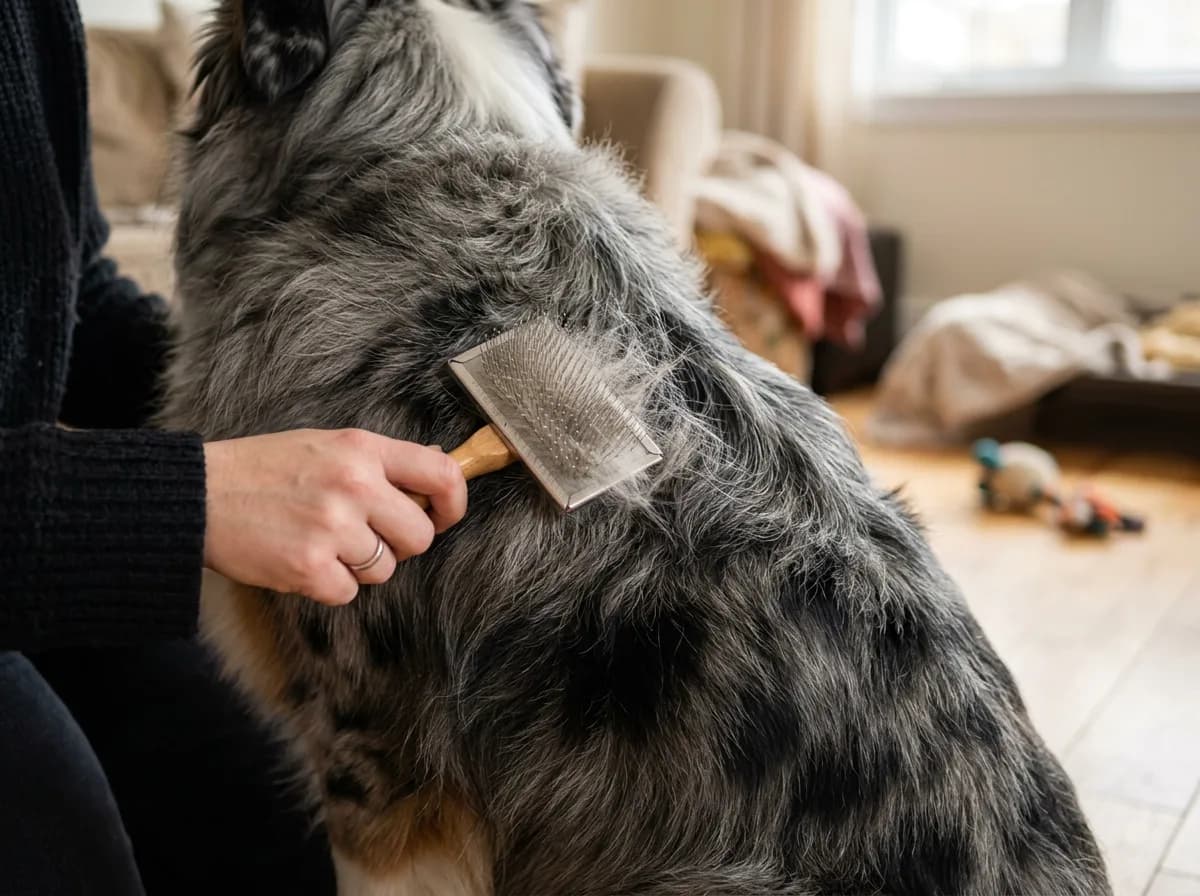
An Australian Shepherd is an athlete in a mid-sized package, and its food should respect that. Build the diet around a named protein, supply enough fat and omega-3s for endurance and coat, support those hardworking joints, and always portion to the individual dog rather than the printed chart. Feed to life stage, transition new foods slowly, and keep your Aussie lean, and you give this brilliant, tireless breed the fuel it needs to do what it loves.
Frequently Asked Questions
Feeding an Aussie's Busy Brain at Mealtime
An Australian Shepherd's mind never really clocks out, and that restless intelligence has a place at the food bowl too. For a breed wired to solve problems and stay busy, how your dog eats can matter almost as much as what goes in the dish. Turning part of the daily ration into a small job gives that herding brain something productive to chew on and can help support a calmer, more settled dog between activities.
Many Aussies also eat fast, especially the food-motivated ones, and a dog that bolts a full bowl in seconds gets none of the mental payoff of a meal. Slowing the pace down and adding a little challenge fixes both problems at once.
A few simple tools do most of the work:
- A slow-feeder or maze bowl that makes your dog work the kibble out in smaller mouthfuls
- A puzzle feeder or food-dispensing toy that trades a bit of nose-and-paw effort for each bite
- A snuffle mat that scatters part of the meal into folds of fabric to satisfy the urge to forage
- A portion of the daily ration set aside for training or scent games rather than served all at once
None of this changes the nutrition math. You are simply spending the same measured calories in a way that engages the dog. For an intelligent, easily bored breed, that small shift can help support better manners at dinnertime and a happier Aussie overall.
- If your Australian Shepherd inhales meals, a slow-feeder bowl or a scatter of kibble across a snuffle mat stretches eating time and turns a fast meal into a satisfying few minutes of work.
Australian Shepherd Feeding Chart: Cups and Calories by Weight
Once you know what to feed, the next question is how much. Most adult Australian Shepherds eat somewhere between about 1.5 and 3.5 cups of dry food per day, but that wide span exists for a reason: a lean 40-pound companion and a hardworking 60-pound ranch dog live at opposite ends of it. The chart below gives sensible starting points by body weight and activity level, which you then fine-tune to the individual dog.
A few notes before you read it. The calorie figures assume a typical active-breed dry food providing roughly 400 calories per cup, so always check your bag, since a calorie-dense performance kibble can run 500 calories per cup or more and shifts the cup counts down. These are daily totals, best split into two meals. And they are a baseline, not a verdict: body condition, covered earlier in this guide, always has the final say.
| Adult Weight | Low Activity | Moderate Activity | High Activity |
|---|---|---|---|
| 40 lb (18 kg) | about 2 cups / 800-900 cal | about 2.5 cups / 1,000-1,100 cal | about 3 cups / 1,250-1,450 cal |
| 50 lb (23 kg) | about 2.25 cups / 950-1,050 cal | about 2.75 cups / 1,200-1,350 cal | about 3.25 cups / 1,500-1,750 cal |
| 60 lb (27 kg) | about 2.5 cups / 1,100-1,250 cal | about 3 cups / 1,400-1,550 cal | about 3.5 cups / 1,800-2,050 cal |
So a moderately active 50-pound Australian Shepherd, a very common profile, lands around 2.75 cups and roughly 1,300 calories a day as a starting point. Weigh your dog every few weeks, watch the waistline, and adjust in small steps from there.
- Two foods at the same cup count can deliver very different calories. Before you trust any chart, find the calories-per-cup figure on your bag and portion to daily calories, not just scoops, so an energy-dense formula does not quietly overfeed your dog.
Feeding a Mini or Miniature Australian Shepherd
Miniature Australian Shepherds, now recognized by the American Kennel Club as the Miniature American Shepherd, are the same herding dog in a smaller package. A mini typically weighs about 20 to 40 pounds against the standard breed's 40 to 65, but the wiring is identical: high drive, real stamina, a weatherproof double coat, and joints that work hard. That means a mini Aussie needs the same nutritional profile as a standard, just scaled down.
In practice, scaling down means three things. First, smaller portions: many mini Aussies eat somewhere in the range of about 1 to 2 cups of dry food per day, guided by the same weight-and-activity logic in the chart above. Second, a smaller kibble size, which is easier for a smaller mouth to pick up and chew and encourages proper crunching rather than gulping. Third, the same emphasis on a named animal protein, quality fat, and omega-3s for that busy coat. What should not change is quality. A mini is still an athlete, so the food still needs to be nutrient-dense and matched to how much the dog actually does.
Because minis carry the same energy and coat demands, a complete fresh diet works just as well for them, and portioned fresh meals scale down cleanly to a smaller dog. Whatever format you choose, weigh your mini regularly, since a pound or two of creeping weight is a larger share of a small dog's frame than it is on a standard Aussie. You can read more about how the variety fits the broader breed in our Australian Shepherd breed profile.
- 1A mini or Miniature Australian Shepherd needs the same nutrient profile as a standard, just in smaller portions
- 2Choose a smaller kibble size for easier chewing and keep protein, fat, and omega-3s front and center
- 3Watch weight closely, since extra pounds count for more on a small frame
Feeding an Australian Shepherd Puppy: A Closer Look at Growth
Australian Shepherd puppies do most of their growing in the first year, and the food you choose during that window shapes how steadily they get there. The goal is not the biggest, fastest-growing puppy but a lean, evenly developing one, because controlled, moderate growth is easier on forming joints and can help support healthy skeletal development in an active breed.
Start with a food built for growth. Look for a recipe labeled complete and formulated to meet AAFCO nutrient profiles for growth, or for all life stages, which covers puppies too. Because the Australian Shepherd is a medium-sized breed rather than a giant one, a standard growth or all-life-stage formula generally suits it well. A large-breed puppy formula, with its tighter calcium and controlled calorie density, is aimed at dogs that will mature above roughly 50 to 70 pounds, so most Aussies do not require one. Whatever you pick, balanced calcium and phosphorus matter more than sheer protein for a growing skeleton.
Two nutrients are worth naming. DHA, an omega-3 fatty acid found in fish oil, can help support healthy brain and eye development in puppies, so it is a welcome sight on a puppy label. And appropriate, not excessive, calories keep growth on a steady curve. Feed most Aussie puppies three measured meals a day through the early months, tapering to two meals by around six months, and transition to an adult formula at roughly 12 months, a little later for slow-maturing individuals. A complete fresh diet formulated for all life stages, such as JustFoodForDogs Fresh Frozen recipes like Chicken & White Rice or Fish & Sweet Potato, can serve a puppy as well as an adult when you prefer whole-food meals.
- Resist the urge to overfeed a roly-poly puppy. You should be able to feel an Aussie puppy's ribs under a light covering. Steady, moderate growth is easier on developing joints than a fast sprint to full size.
The best food is a complete, balanced diet built around a named animal protein, with moderate to high fat for energy and omega-3 fatty acids for the coat and joints, portioned to the dog's activity level. Fresh whole-food diets like JustFoodForDogs Fresh Frozen, high-quality kibble, and gently cooked meals can all work well when they are formulated to meet AAFCO nutrient profiles for the right life stage.
Pancreatitis is a medical condition, so the diet should be chosen with your veterinarian, who usually points toward a lower-fat, highly digestible food. Some dogs do well on a prescription diet or a carefully portioned low-fat recipe chosen with your veterinarian. Never change the diet of a dog with pancreatitis without veterinary guidance.
There is no single meat that is universally toxic, but the one most often flagged to avoid is raw or undercooked pork, along with processed pork like bacon and ham, because of the risk of parasites and its very high fat and salt content. Cooked, unseasoned lean meats are the safer choice.
Australian Shepherds are affectionate, people-focused dogs that show attachment by shadowing you from room to room, leaning into you, making soft eye contact, bringing you toys, and settling calmly nearby. A relaxed body, a whole-rear-end wiggle, and eagerness to work alongside you are all good signs your Aussie is bonded to you.
High-protein active-breed formulas, premium kibble aimed at working dogs, and fresh human-grade options like JustFoodForDogs Fresh Frozen can all be appropriate choices. Pick the food that matches your dog's age, energy, life stage, and any sensitivities rather than following a trend.
Veterinarians generally recommend a complete and balanced diet appropriate for the dog's life stage rather than one specific brand, whether in Australia or anywhere else. In practice that means foods that meet recognized nutritional standards, use quality named ingredients, and suit the individual dog. Ask your own veterinarian for a recommendation tailored to your Aussie.
High-fat and greasy foods are generally considered the hardest on a dog prone to pancreatitis, including fatty meat trimmings, bacon, sausage, fried table scraps, and rich buttery leftovers. Because this is a medical concern, your veterinarian should guide what to avoid and what to feed.
The meats most often on the avoid list are raw or undercooked meat (a pathogen risk), fatty and processed meats like bacon, sausage, and ham (too high in fat and salt), and heavily seasoned or cured deli meats. Plain, cooked, unseasoned lean meats such as chicken or turkey are far better choices.
Feed an Australian Shepherd puppy a complete, growth-formulated food in three measured meals a day through the early months, tapering to two meals by around six months. The exact amount depends on the puppy's age, current weight, and the food's calorie density, so start with the feeding guide on the bag for your puppy's projected adult weight, then adjust to keep the puppy lean, with ribs easy to feel under a light covering. Steady, moderate growth is the goal, so avoid overfeeding toward fast size, and check with your veterinarian at wellness visits to confirm your puppy is growing on track.
Yes, you can feed an Australian Shepherd homemade food, but it needs to be complete and balanced, which is harder to get right than it looks. A bowl of plain cooked meat and rice, for example, is missing several nutrients an Aussie needs over time. If you want to cook for your dog, work from a recipe developed by a board-certified veterinary nutritionist, or use a fresh, gently cooked diet that is formulated to meet AAFCO nutrient profiles so the balancing is done for you. Either way, keep portions matched to your dog's activity and check in with your veterinarian, especially for a puppy or a dog with a health condition.

Coreen Saito is a pet writer and longtime shelter volunteer with more than a decade in animal rescue. She covers cat behavior, breed care, and the small, ordinary science of sharing a life with companion animals, with a particular focus on honest takes about the products and decisions that actually matter. At home in Arizona, she's outranked by Mac (a dog with the loudest opinion in the house), Rebel (a cat who governs by quiet authority), and Meri (an orange tabby who runs the late shift and the laundry basket). She writes about all three, plus the rescues that keep coming through her life, at LifeWithMinty.com.
Sign up for expert-backed reviews and safety alerts all in one place.



A Final Word (Disclaimer)
At Petful, our review integrity is paramount; we never exchange special treatment in our reviews for monetary or material rewards.
Nonetheless, when our readers click through to online merchants (including Chewy or Amazon), we receive a referral commission. This supports the running of our free blog, and we appreciate your backing.