Can Dogs Eat Cod? Preparation, Bones, Skin, and Serving Sizes
Learn how to cook cod, remove skin and bones, calculate a small portion within your dog's treat allowance, and distinguish plain fish from a complete and balanced fish recipe.

BVMS, MRCVS

Plain cooked cod can be offered as a measured extra.
Petful is reader supported. As an affiliate of platforms like Amazon and Chewy, we may earn a commission when you buy through links on this page. There is no extra cost to you.
This article is sponsored by JustFoodForDogs. Petful maintains editorial control and may earn a commission from qualifying purchases, at no extra cost to you.
Can dogs eat cod? Yes, many dogs can enjoy a small portion of plain, cooked cod with the bones and skin removed. Prepare it separately from seasoned human meals, inspect the cooled flakes carefully, and count the fish alongside every other extra your dog receives.

Sign up for expert-backed reviews and safety alerts all in one place.
Can dogs eat cod?
Cod fillets can be a convenient starting point because you can cook a small piece and separate it into manageable flakes. The benefits of cod for dogs include providing protein in a lean fish ingredient. That does not make cod essential for a dog already eating a suitable complete diet, or mean that a larger serving is better.
- 1Serve plain, cooked cod with bones and skin removed.
- 2Cook fish to 145°F, then cool and inspect the flakes.
- 3Cod shares the calorie allowance for all noncomplete extras.
- 4Plain fish is not a complete meal.
Think of cod fish as an optional extra, rather than a replacement for the regular meal. A complete commercial recipe has a different role. For example, JustFoodForDogs Chicken & Rice is formulated for all life stages, including growth of large dogs expected to weigh 70 pounds or more as adults. You can keep an appropriate complete food as the foundation while offering an occasional measured fish extra.
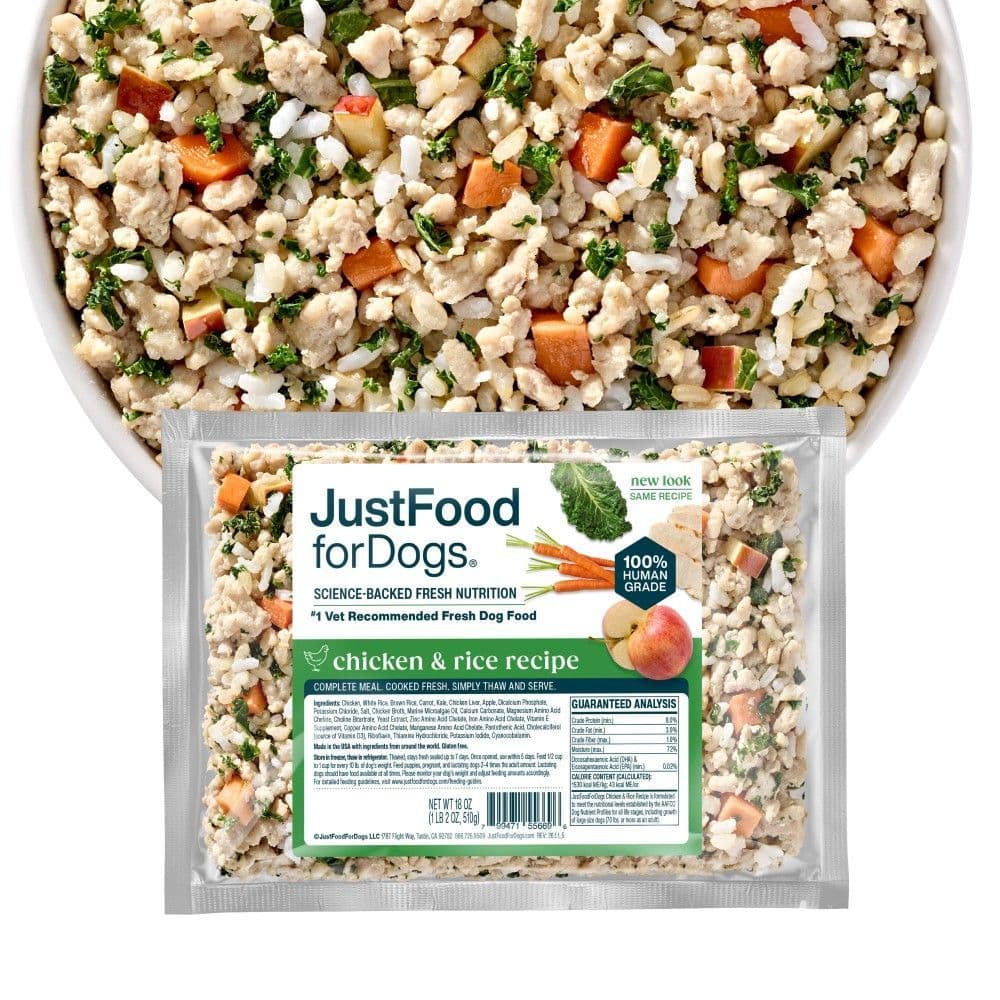
Petful may earn a commission when you click through to JustFoodForDogs, at no extra cost to you.
How to prepare cod for a dog
The simplest way to prepare cod for dogs is to cook an unseasoned fillet without added butter, oil, or sauce. The FDA's seafood handling guidance recommends an internal temperature of 145°F for fish. Check the thickest part with a food thermometer.
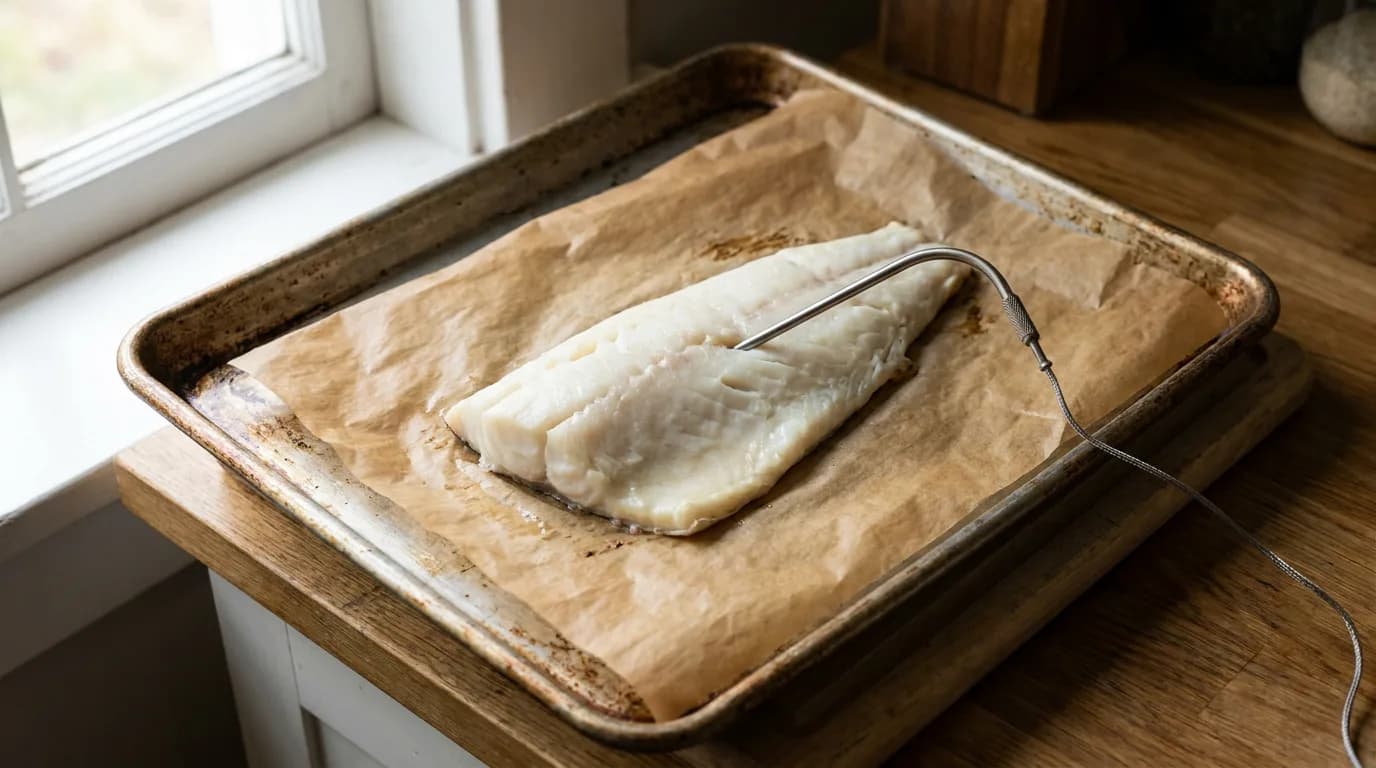
Both boiled and baked cod can work. The method matters less than keeping the ingredients plain and confirming that the fish is cooked through.
- To boil cod for dogs, gently simmer the fish in plain water. Avoid seasoned broth, and handle the fillet carefully as it begins to separate.
- To prepare cod in the oven, place it in a suitable baking dish and bake without a seasoned coating.
- Check the internal temperature instead of relying on a fixed cooking time, because fillet thickness and starting temperature vary.
- Move the cooked fish to a clean plate and let it cool before handling and serving.
Dogs can eat cooked cod prepared either way. A baked family dinner with butter and seasoning is a different dish, however. Reserve the dog's piece before adding ingredients, rather than trying to remove a sauce afterward.
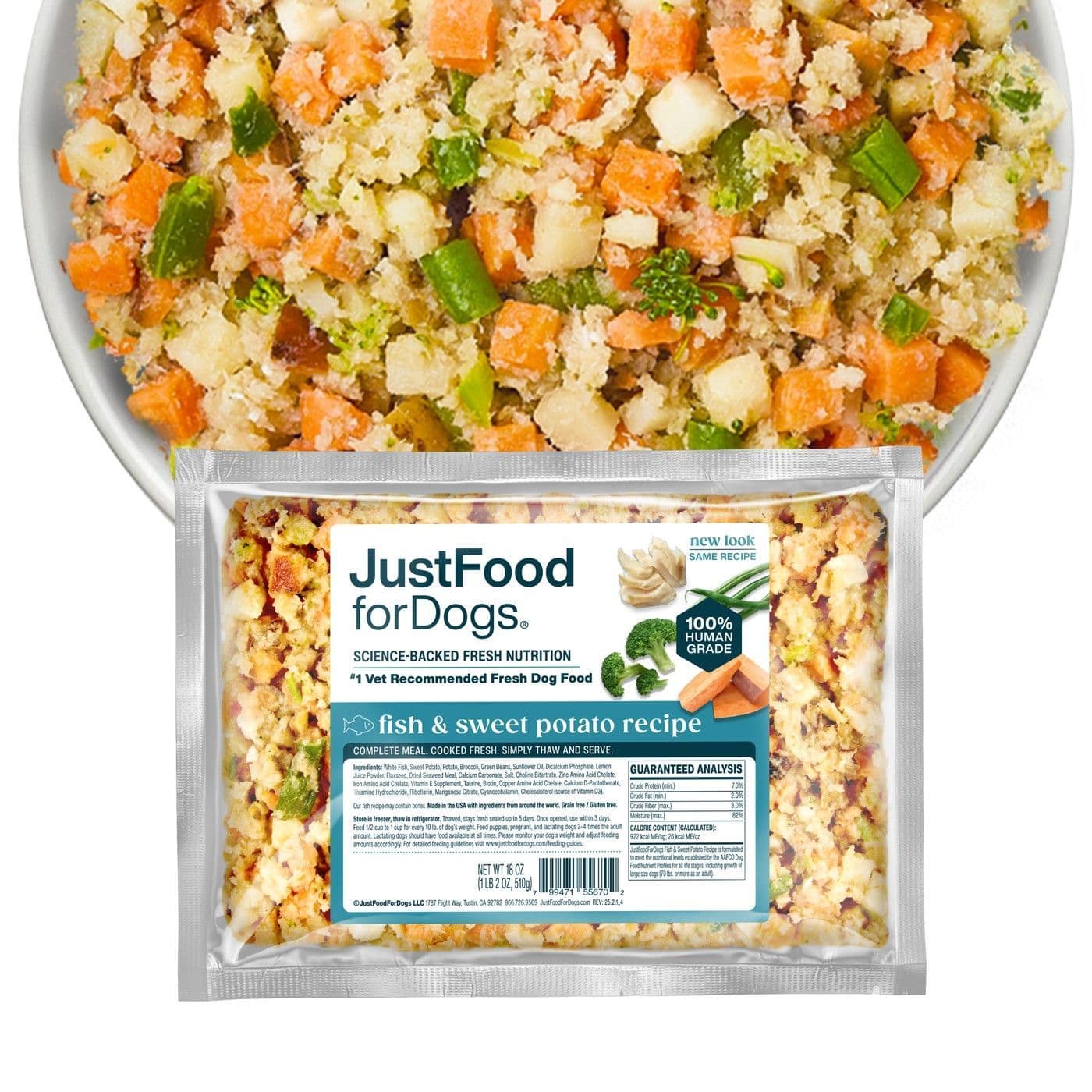
Petful may earn a commission when you click through to JustFoodForDogs, at no extra cost to you.
If you prefer a complete fish meal, JustFoodForDogs Fish & Sweet Potato is formulated for all life stages, including large-breed growth. It uses a cod, pollock, and haddock blend, rather than cod alone.
Remove cod bones and skin before serving
After cooking and cooling, remove skin before portioning, then flake and check for pin bones. A fillet is easier to inspect than a whole fish, but its shape or label should not replace your own check. Work through the portion in good light rather than dropping an intact piece into the bowl.
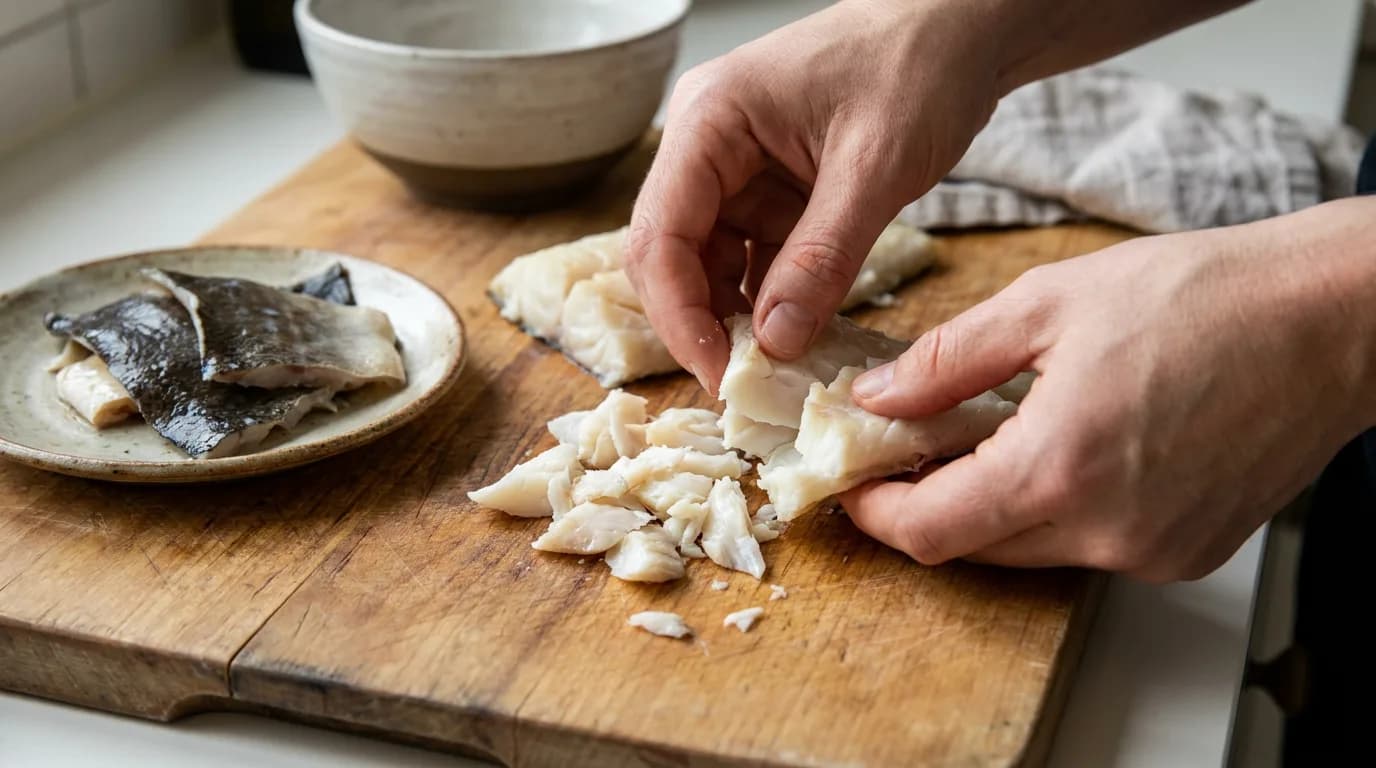
- Lift away the skin and put it aside.
- Separate the flesh into small flakes on a clean plate.
- Look and feel for small bones as you work through each piece.
- Discard any part you cannot inspect confidently.
- Weigh only the prepared flesh you intend to serve.
Can dogs eat cod skin? For an occasional home-prepared portion, the straightforward approach is to remove it. Texas A&M's veterinary guidance on pet-safe snacks recommends plain cooked whitefish without skin or bones. You do not need to include every part of the fillet to offer a useful small taste.
Keep the removed skin and bones out of reach. Preparing a safe portion is only helpful if your dog cannot also take the scraps from the counter or bin.
Which forms of cod should you skip?
When deciding what fish to avoid for dogs, preparation is as important as the species. Raw cod fillet, battered takeaway cod, and plain cooked cod are not interchangeable foods. Choose a preparation whose ingredients and handling you can identify.
- Raw cod: Skip raw cod fish for this occasional-extra approach. Cooking provides a practical food-safety step. The FDA's pet food handling guidance explains the bacterial risks associated with raw diets.
- Fried, battered, or breaded cod: These add ingredients and fat that make the portion different from plain fish. Cod from a chip shop is not the simple fillet described here.
- Cod fish fingers: Check the coating and other ingredients, but choose plain fish instead when preparing a deliberate dog treat.
- Smoked cod: Smoking and salting produce a different food. It is not the default choice for a plain, freshly cooked extra.
- Freeze-dried cod: Read the product's processing and feeding directions. “Freeze-dried” does not mean “cooked,” and a dried treat needs its own calorie information.
Removing the batter from a finished piece does not reliably recreate a plain cooked portion. Preparing a small piece separately is easier than estimating how much coating, oil, or seasoning remains. Petful's broader guide to whether dogs can eat fish covers the larger ingredient category.
Petful may earn a commission when you click through to JustFoodForDogs, at no extra cost to you.
How much cod can a dog eat?
There is no universal cod serving that fits every dog. Use the dog's daily calorie target and the calories in the specific cooked fish preparation. Under the AAHA nutrition guidelines, noncomplete extras should together supply no more than 10% of daily calories.
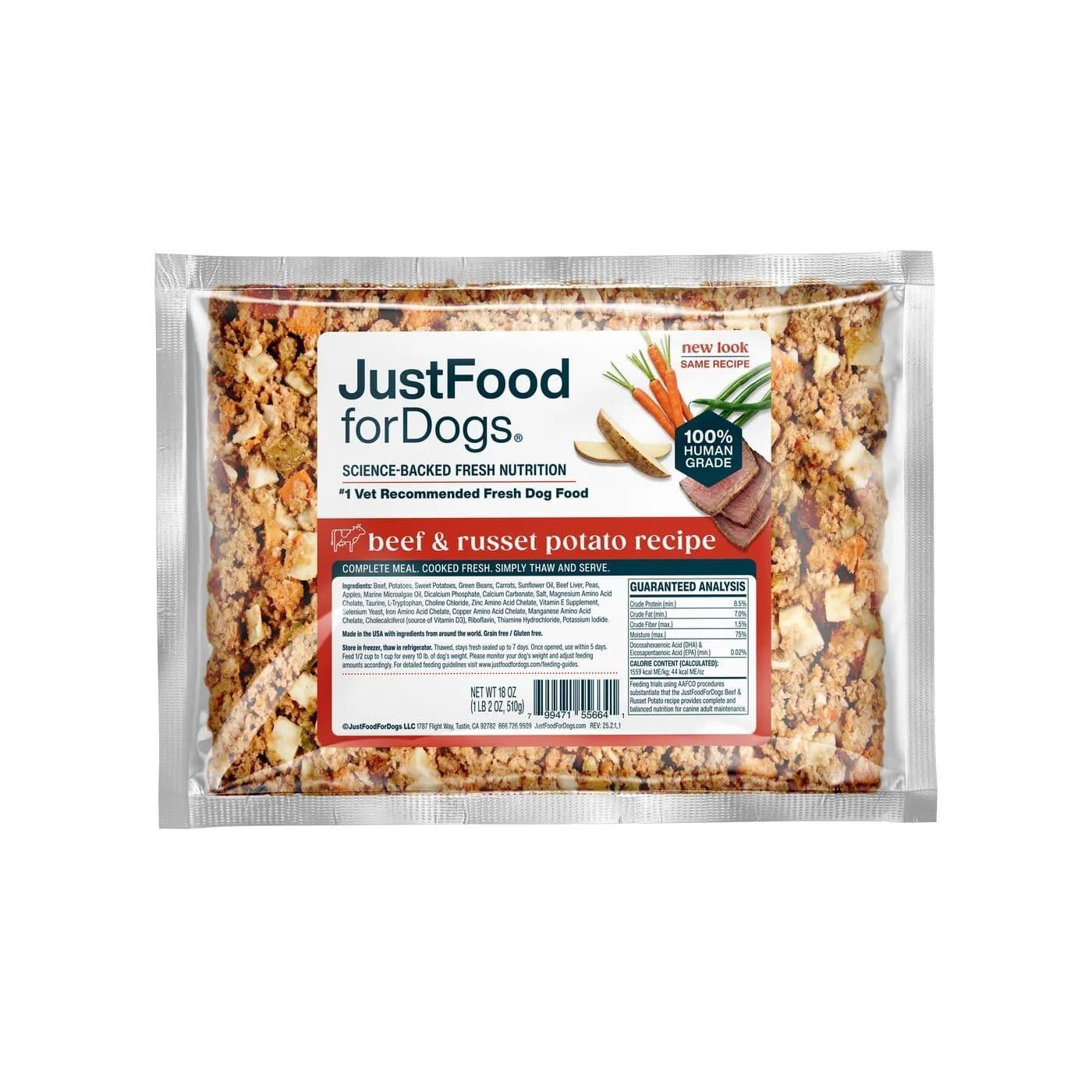
A complete main meal is a separate choice. JustFoodForDogs Beef & Russet Potato provides complete and balanced nutrition for adult maintenance, substantiated through feeding trials using AAFCO procedures. It is not intended for growing puppies. A dog eating an appropriate complete meal does not need a large fish addition to make the bowl balanced.
Calculate the shared allowance before weighing the fish:
- Multiply the daily calorie target by 0.10.
- Subtract calories from all other treats, chews, toppers, and table food.
- Divide the calories left by the cooked cod's calories per gram.
- Start below that ceiling when introducing cod for the first time.
For a hypothetical dog with a 500-calorie daily target, the maximum shared extras allowance is 50 calories. If other extras already account for 30 calories, only 20 calories remain for cod. That is a calorie ceiling, not a fixed number of spoonfuls. To convert it into grams, divide 20 by the energy density of your actual plain cooked cod.
Petful may earn a commission when you click through to JustFoodForDogs, at no extra cost to you.
| Step in this hypothetical example | Result |
|---|---|
| Daily target × 10% | 500 × 0.10 = 50 calories |
| Subtract other extras | 50 − 30 = 20 calories |
| Convert the remaining allowance to fish weight | 20 ÷ cooked cod calories per gram |
Do not use the calorie density of an entire commercial fish recipe for that calculation. JustFoodForDogs Fish & Sweet Potato lists 922 calories per kilogram, or approximately 26 calories per ounce. Those figures belong to the complete recipe, which contains more than fish. They are not a calorie reference for a plain cod fillet.
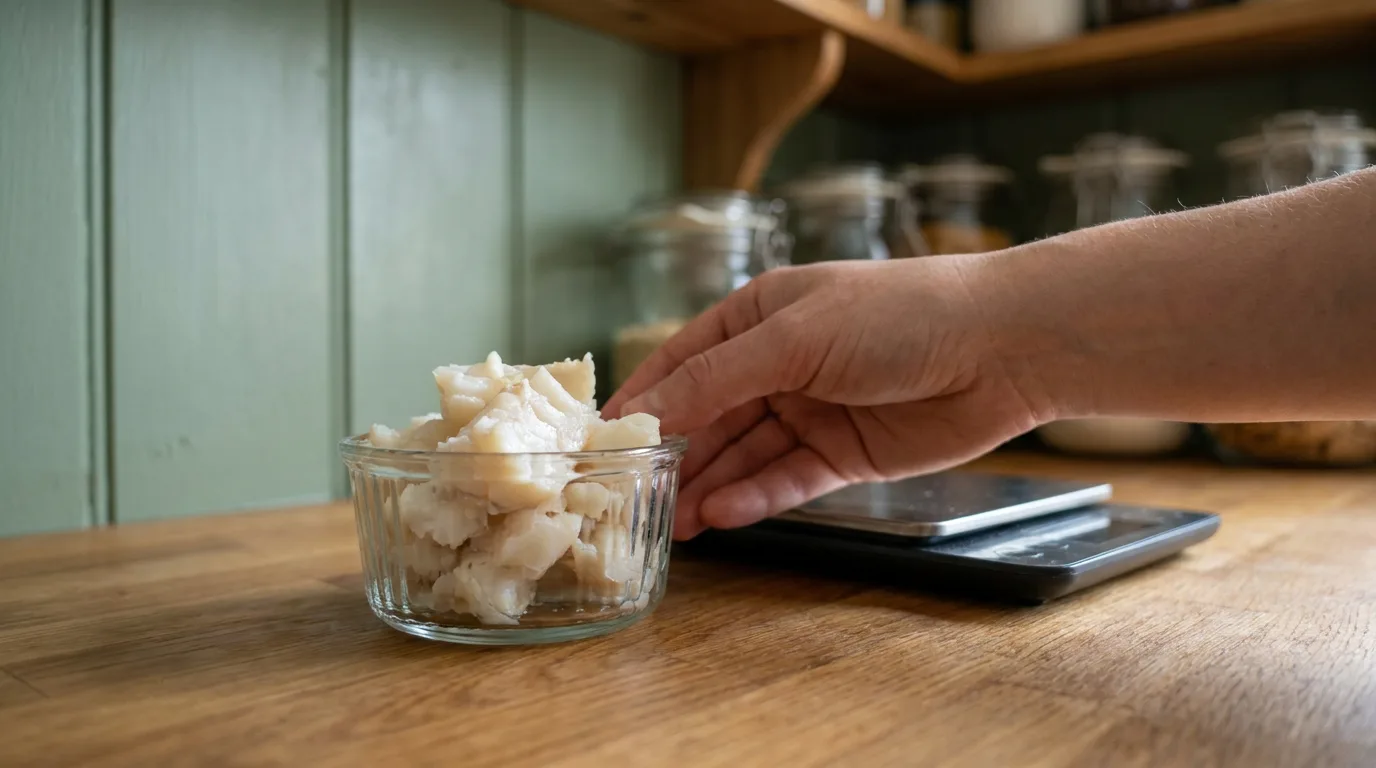
A kitchen scale makes the portion more repeatable than a spoon. Weigh the cooled flesh after removing skin and bones, and keep the same household allowance for everyone who gives treats.
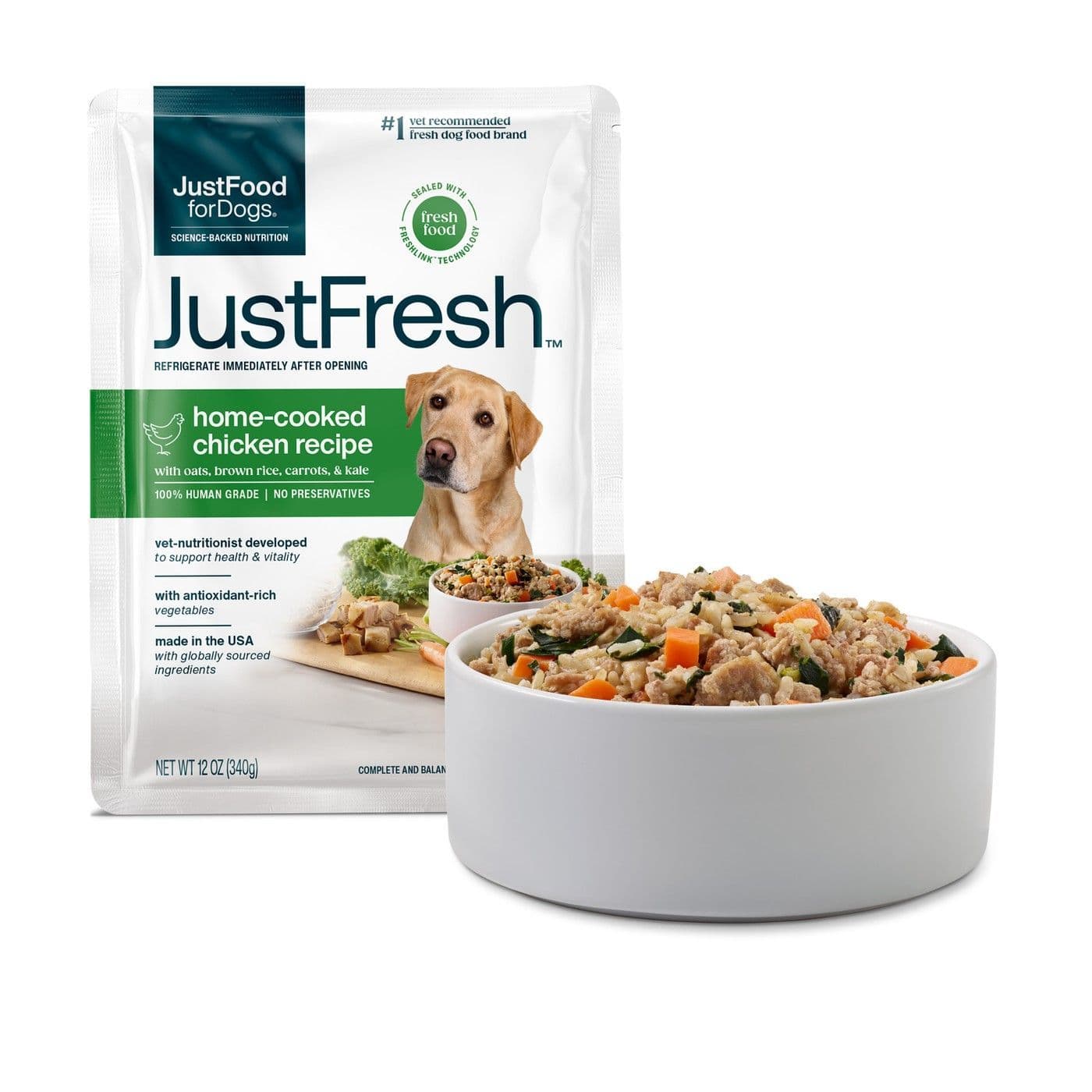
For owners considering a shelf-stable adult meal alongside fresh-frozen options, JustFoodForDogs JustFresh Home-Cooked Chicken is formulated for adult maintenance. It is not a complete growth diet for puppies. Once opened, refrigerate it and use it within three days.
Plain cod and a complete fish recipe serve different roles
Plain fish is not a complete meal. Neither adding rice nor offering several kinds of meat establishes that a homemade bowl provides every required nutrient in the right amount. If you want fish to be the foundation of the daily diet, choose an appropriate complete recipe or a professionally formulated home-prepared plan.
The FDA's explanation of complete and balanced pet food describes nutritional adequacy and life-stage statements. Petful's guide to what “AAFCO approved dog food” really means also explains why the wording on the actual label matters. AAFCO does not approve individual dog foods.
- Check the adequacy statement for the exact recipe, rather than assuming all products from one brand suit the same dogs.
- Match the daily portion to that recipe's calorie content.
- Keep occasional cod within the shared extras allowance.
- Follow the specific product's storage directions.
For JustFoodForDogs Fish & Sweet Potato, the fish-specific FAQ gives a refrigerated window of up to five days sealed in its thawed original package and three days once opened. Use that shorter fish-specific guidance rather than applying the longer window for non-fish recipes. The brand's FAQ provides handling instructions.
If you choose a ready-made recipe, Petful's guide to where to buy JustFoodForDogs explains the available shopping options. Keep the preparation distinction clear whichever route you take: an occasional piece of fish and a complete formulated meal have different jobs.
More questions about cod for dogs
Many dogs can have a small amount of plain cooked pollock with skin and bones removed. As with cod, deboned fish is an extra unless it is part of a complete formulated food. Pollock's presence in a commercial recipe does not mean a bowl of plain pollock has that recipe's nutritional balance.
Do not choose a human capsule or dose without your veterinarian's guidance. Cod liver oil is not cod flesh: it can contribute vitamins A and D as well as fatty acids. The supplement's concentration and the dog's existing diet matter. Being able to eat a little cooked cod does not establish that a human supplement is appropriate.
A puppy may be able to have a small fish extra, prepared plainly and counted within its feeding allowance. Its main nutrition must come from a complete growth diet appropriate to its expected adult size. Do not let an appealing fish topping displace the food that supplies the puppy's balanced daily nutrition.
No. Fish can also trigger reactions, so suitability depends on individual tolerance and the dog's established feeding plan. Do not introduce cod during a supervised elimination diet unless the veterinarian directing it approves. An unfamiliar protein is not automatically a safe protein for every dog.
There is no universal winner. Lean cod and fattier salmon have different nutritional profiles, but the useful choice depends on the dog's diet and the purpose of the serving. For daily feeding, assess the complete recipe and its calorie allowance rather than ranking the food by its named fish alone.
The University of Illinois veterinary guide to human supplements explains why supplement selection and dosing require care. For suspected food reactions, VCA's food allergy guidance describes the distinction between symptoms and a confirmed diagnosis.
BVMS, MRCVS
Dr. Pippa Elliott, BVMS, MRCVS, is a veterinarian with nearly 30 years of experience in companion animal practice. Dr. Elliott earned her Bachelor of Veterinary Medicine and Surgery from the University of Glasgow. She was also designated a Member of the Royal College of Veterinary Surgeons. Married with 2 grown-up kids, Dr. Elliott has a naughty Puggle named Poggle, 3 cats and a bearded dragon.
Sign up for expert-backed reviews and safety alerts all in one place.


A Final Word (Disclaimer)
At Petful, our review integrity is paramount; we never exchange special treatment in our reviews for monetary or material rewards.
Nonetheless, when our readers click through to online merchants (including Chewy or Amazon), we receive a referral commission. This supports the running of our free blog, and we appreciate your backing.