Best Probiotics for Dogs: A Vet's Guide to Gut Health
Probiotics are live microbes that can help support your dog's digestive balance. This vet-written guide explains the best probiotics for dogs, the strains that matter, when they help, and how everyday diet keeps the gut steady.

BVMS, MRCVS

Petful is reader supported. As an affiliate of platforms like Amazon and Chewy, we may earn a commission when you buy through links on this page. There is no extra cost to you.
If you have searched for the best probiotics for dogs, you are already thinking like an attentive owner. Probiotics are live, beneficial microbes that, given in the right amount, can help support a dog's digestive balance and general wellness. As a veterinarian, I get asked about them constantly, usually right after a bout of loose stool, a course of antibiotics, or a stressful house move.
This guide walks through what canine probiotics actually are, which strains have real research behind them, when they tend to help, and how to choose a quality product. We will also look at the everyday diet, because what goes in the bowl each day shapes the gut just as much as any supplement does. That is why a fresh, whole-food diet like JustFoodForDogs can help support everyday digestive balance alongside any probiotic.
- 1Probiotics are live beneficial microbes that can help support your dog's digestive balance, not a cure for any disease
- 2Strain matters more than brand name: look for named, researched strains and a CFU count guaranteed through the expiration date
- 3Probiotics tend to work best alongside a highly digestible, gently cooked diet
- 4Always check with your veterinarian before starting a dog that is very young, very ill, or immunocompromised

Sign up for expert-backed reviews and safety alerts all in one place.
What Are Probiotics for Dogs?
Probiotics are live microorganisms, mostly bacteria and a few beneficial yeasts, that offer a health benefit when your dog gets enough of them. A healthy canine gut already contains trillions of these microbes, collectively called the microbiome. They help break down food, produce certain vitamins, crowd out less friendly organisms, and communicate with the immune cells that line the intestinal wall. Roughly 70 percent of a dog's immune tissue sits in and around the gut, which is a big part of why digestive health and overall health are so tightly linked.
When that microbial community gets knocked off balance, a state sometimes called dysbiosis, dogs can show loose stool, gas, and general digestive unease. A probiotic supplement adds a temporary reinforcement of friendly microbes. It does not permanently colonize the gut in most cases, so the support tends to last only while you keep giving it. That is an important expectation to set: probiotics are a support tool, not a one-and-done fix.
Probiotics vs. Prebiotics vs. Postbiotics

These three terms get mixed up constantly, so here is the short version.
- Probiotics are the live beneficial microbes themselves, such as certain Lactobacillus, Bifidobacterium, and Enterococcus species.
- Prebiotics are the fibers and compounds that feed those microbes. Common examples include inulin, fructooligosaccharides (FOS), and the soluble fiber in pumpkin. Prebiotics are food for the good bugs.
- Postbiotics are the beneficial byproducts microbes make when they ferment fiber, including short-chain fatty acids that nourish the cells lining the colon.
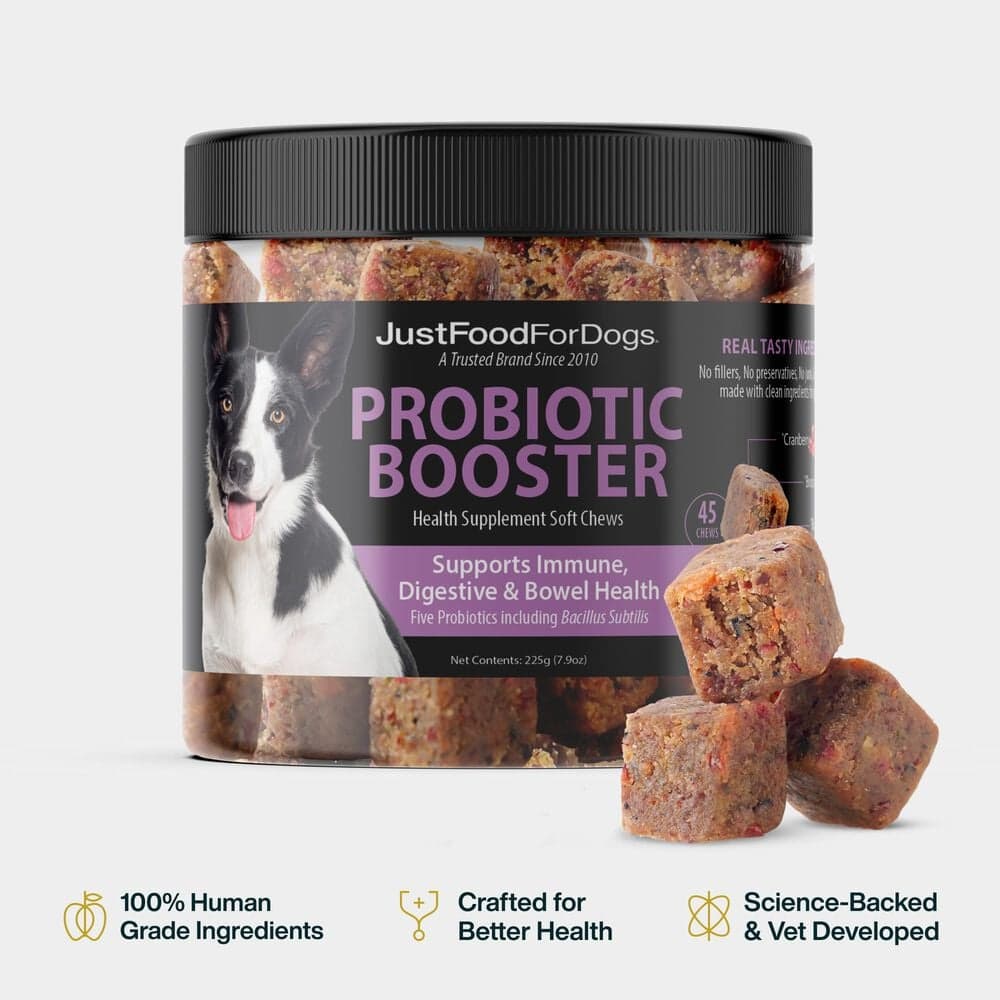
Shopping for a probiotic after the checklist? Compare this chew’s named strains and CFU count with the criteria in this guide.
- Five-strain probiotic blend, 5 billion CFUs per chew
- Adds MOS and inulin prebiotics
- Ask your vet which probiotic suits your dog
A supplement supports the gut; it does not replace veterinary care.
Petful may earn a commission when you click through to JustFoodForDogs, at no extra cost to you.
A product that combines a probiotic and a prebiotic is called a synbiotic. Many of the veterinary formulas I reach for are synbiotics, because feeding the good microbes tends to help them do their job.
Do Veterinarians Recommend Probiotics for Dogs?

Yes, many of us do, but in specific situations rather than as a blanket everyday must-have for every dog. In my own practice, probiotics come up most often around acute digestive upset, during and after a course of antibiotics, and through predictable stressors like boarding, travel, or a diet change. The veterinary evidence base has grown a lot over the past decade, and several strains now have peer-reviewed studies showing they can help support a faster return to normal stool during short bouts of upset.
Where I temper expectations is with sweeping claims. Probiotics are not a treatment for disease, and they are not a substitute for a proper veterinary workup when a dog is genuinely unwell. Persistent vomiting, blood in the stool, weight loss, or lethargy always deserve a real diagnosis first. Used thoughtfully, though, a good probiotic is a low-risk tool that can help support a dog through the rough patches, which is why it earns a spot in a lot of veterinary recommendations.
- CFU stands for colony-forming units, the standard way to measure how many live microbes are in a serving. Canine probiotic doses are often in the range of one billion to several billion CFUs per day, though the right number depends on the strain and your dog. A higher number is not automatically better; the specific strain and its research matter more.
What Are the Signs That Your Dog Needs Probiotics?

There is no lab test that flashes a light saying add probiotics, so we go by patterns. The signs that a dog might benefit from probiotic support usually cluster around the digestive system and the situations that stress it.
- Loose stool or intermittent diarrhea without a serious underlying cause identified by your vet
- Excess gas or a gurgly, rumbly belly after meals
- A recent or current course of antibiotics, which can flatten the good and bad microbes alike
- A diet change, travel, boarding, or another stressful event that lines up with digestive upset
- Frequent soft stool in an otherwise bright, healthy dog with normal appetite and energy
A quick word of caution here. These same signs can also point to parasites, dietary indiscretion (the sock, the trash, the neighbor's compost), food intolerance, or more serious conditions. Probiotics can help support recovery from garden-variety upset, but they are not a diagnosis. If the signs are severe, bloody, or lasting more than a day or two, that is a call to your veterinarian, not a bigger scoop of powder.
The Probiotic Strains That Matter for Dogs
Here is the single most useful thing to understand about probiotics: the effects are strain-specific. Two products can both say Lactobacillus on the label and behave completely differently, because benefits are tied to the exact strain, not just the genus and species. That is why researchers identify strains down to a code, like Enterococcus faecium SF68. When a company can point to studies on the specific strain in its product, that is a strong signal.
A few of the microbes with the most canine research behind them are below. This is not an exhaustive list, and I am describing what studies suggest, not promising a result for your individual dog.
| Strain | Where It Shows Up in Research | What Studies Suggest |
|---|---|---|
| Enterococcus faecium SF68 | Digestive upset and immune studies | May help support faster stool firming during short bouts of upset |
| Bifidobacterium animalis AHC7 | Acute diarrhea studies | Associated with shorter bouts of loose stool in some trials |
| Lactobacillus acidophilus | Gut microbiome studies | Commonly included; may help support a balanced microbial community |
| Saccharomyces boulardii | Beneficial yeast studies | A probiotic yeast studied for digestive support, including alongside antibiotics |
| Bacillus coagulans | Spore-forming probiotic studies | A hardy, spore-forming strain that survives storage and stomach acid well |
You do not need to memorize this. The practical takeaway is to favor products that name their strains and can point to research, over vague labels that just list a genus and a big CFU number.
When Probiotics Can Help Support Your Dog's Gut
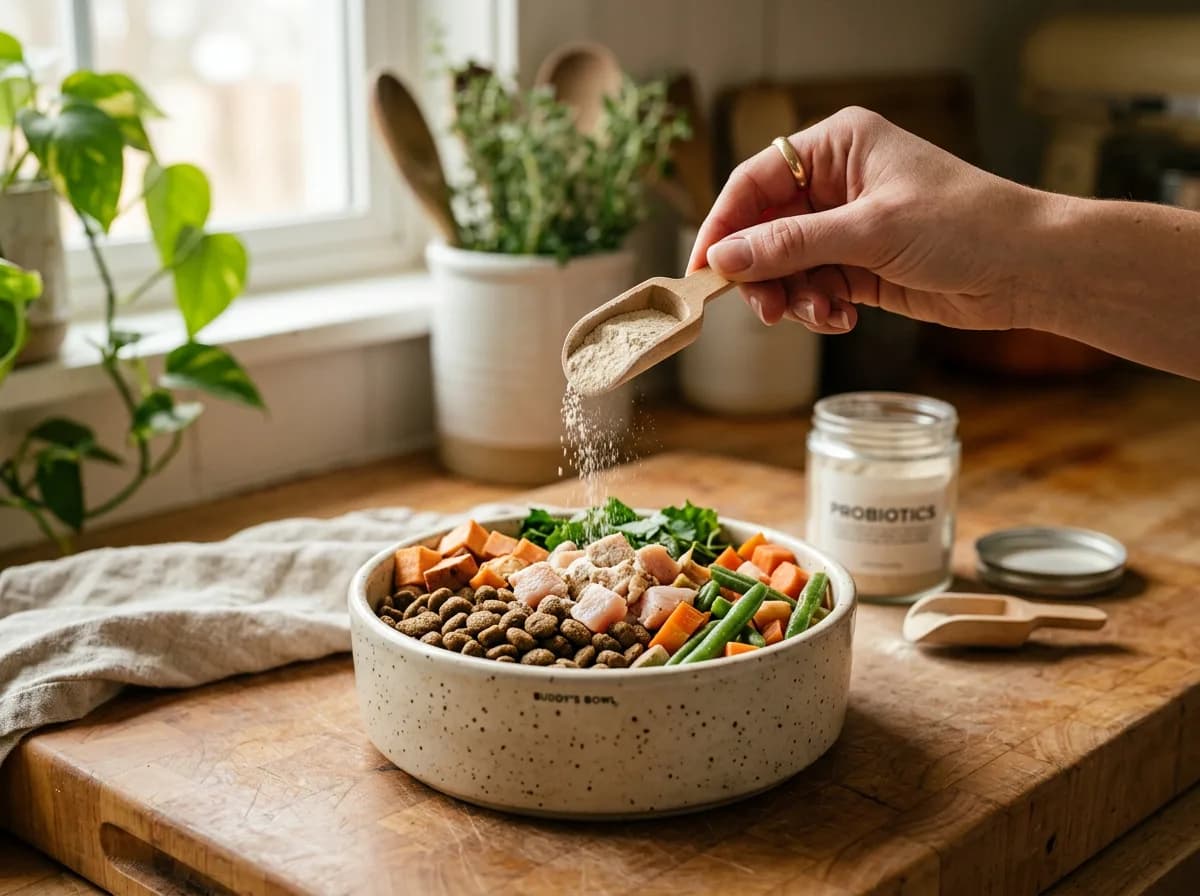
Timing matters. Probiotics tend to earn their keep in a handful of predictable situations rather than as an everyday sprinkle for a dog who is doing great.
Digestive Upset and Loose Stool
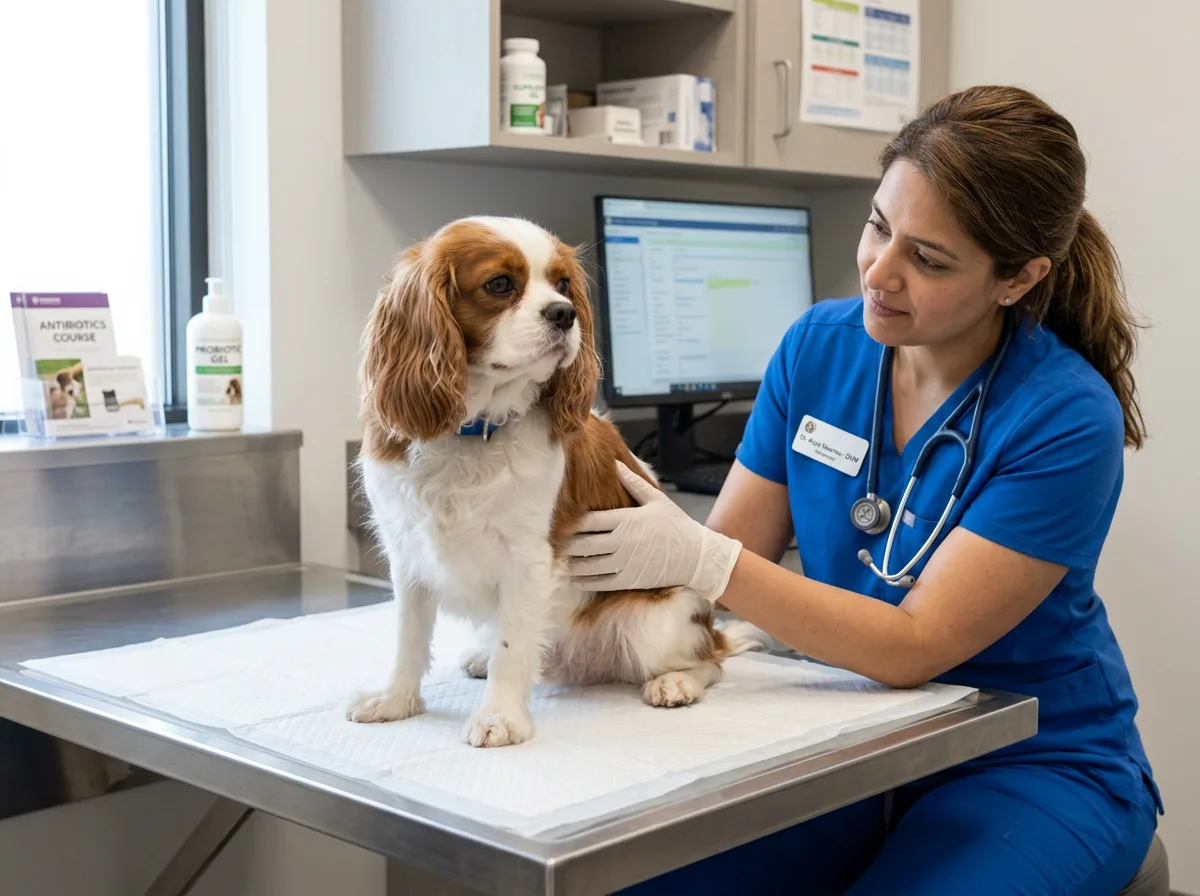
The most common reason owners reach for a probiotic is short-term loose stool. In several studies, specific strains helped support a quicker return to firm, normal stool compared with no supplement. Pair the probiotic with the boring basics your vet may recommend: plenty of fresh water, a temporarily bland and highly digestible diet, and small, frequent meals. Probiotics are a support here, working alongside good nursing care, not a standalone cure for diarrhea.
During and After Antibiotics

Antibiotics are sometimes necessary, but they do not discriminate between troublemakers and the helpful gut residents, so digestive upset is a common side effect. Giving a probiotic during and for a stretch after the course can help support the gut microbiome as it re-establishes. One practical tip: space the probiotic dose a couple of hours apart from the antibiotic dose so you are not handing the good microbes straight to the medication. Your veterinarian can tell you how long to continue afterward.
Shopping for a probiotic after the checklist? Compare this chew’s named strains and CFU count with the criteria in this guide.
- Five-strain probiotic blend, 5 billion CFUs per chew
- Adds MOS and inulin prebiotics
- Ask your vet which probiotic suits your dog
A supplement supports the gut; it does not replace veterinary care.
Petful may earn a commission when you click through to JustFoodForDogs, at no extra cost to you.
Stress, Travel, and Change

The gut and the nervous system talk to each other constantly along what researchers call the gut-brain axis. That is why a stressed dog so often gets a stressed stomach. Boarding, a long car trip, a new home, a new baby, or even fireworks season can trigger loose stool in a sensitive dog. Starting a probiotic a few days ahead of a known stressor, and continuing through it, can help support digestive steadiness while everything else is in flux.
Can Probiotics Help Allergies in Dogs?
This is one of the most common questions I get, and the honest answer is a careful maybe, in a supporting role. Research on probiotics and allergies in dogs is still emerging. Because so much immune tissue lives in the gut, and because the skin and gut are linked through what is often called the gut-skin axis, there is real scientific interest here. Some early studies, including work in puppies given probiotics early in life, suggest probiotics may be associated with a modestly calmer allergic response over time.
That said, I want to be clear and responsible: probiotics are not a treatment for allergies, and they will not replace the parasite control, diet trials, medicated baths, or veterinary medications that actually manage allergic skin disease. If your dog is itchy, licking their paws raw, or getting recurrent ear or skin infections, the plan needs to run through your veterinarian. A probiotic can be one supportive piece of a broader strategy that can help support the gut-skin connection, not the whole answer.
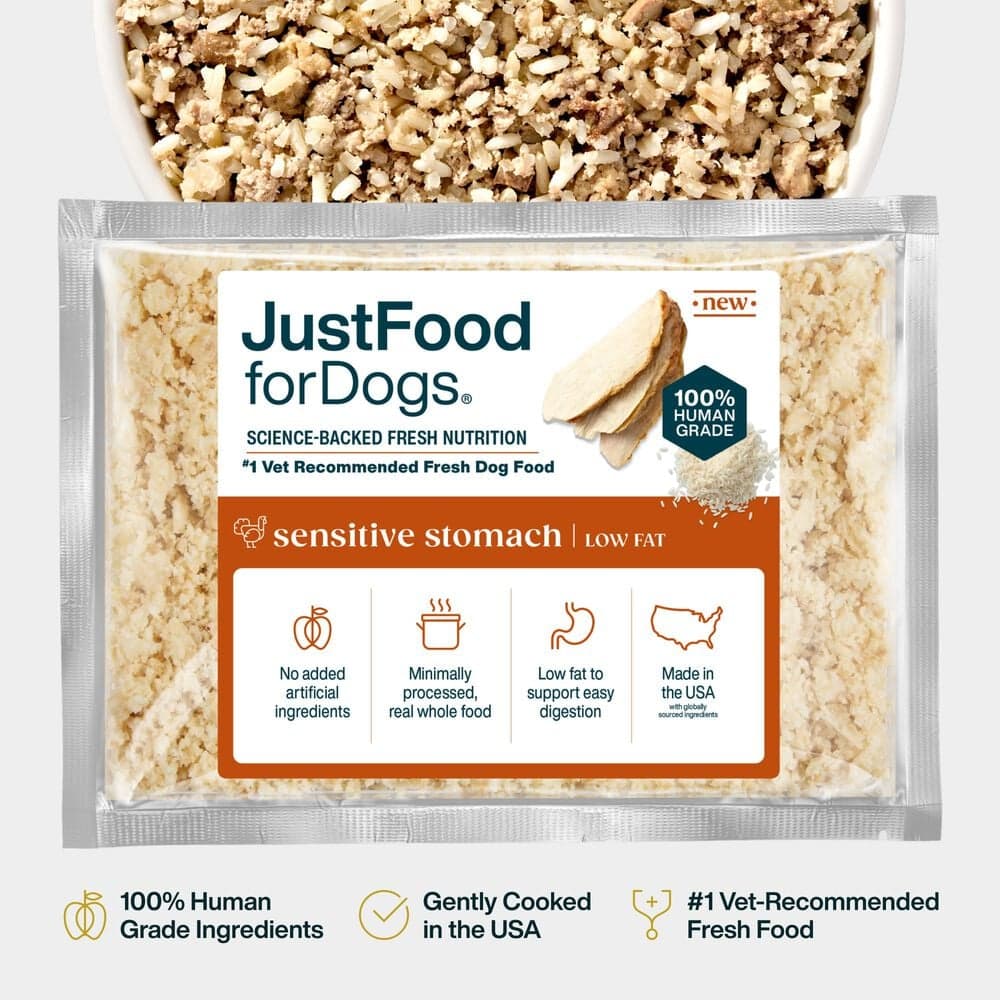
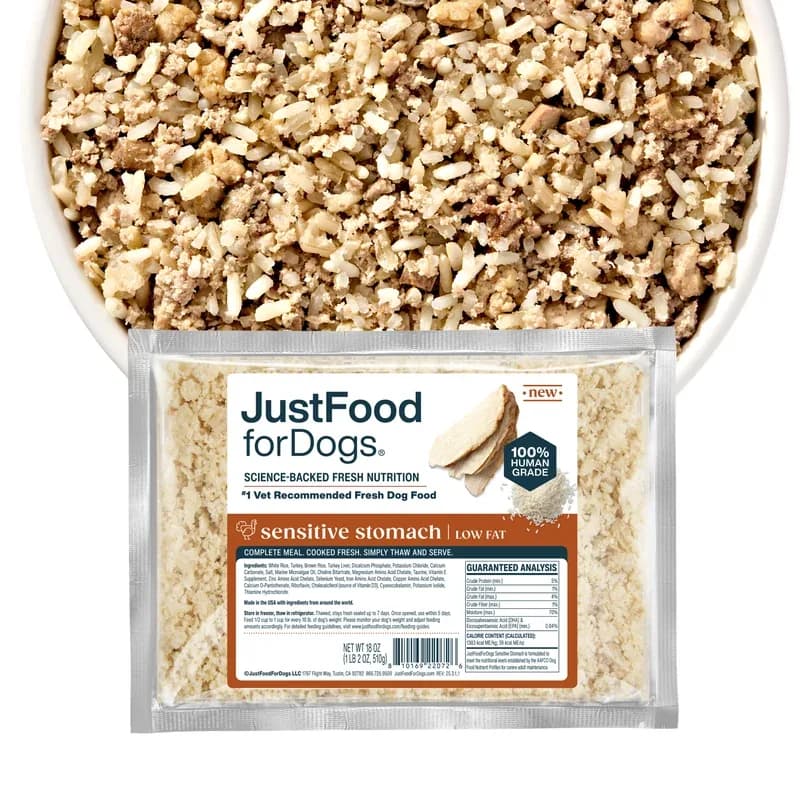
Shopping for the daily diet alongside a probiotic? Explore the Sensitive Stomach food featured here.
- Turkey with white and brown rice
- Gently cooked Fresh Frozen meals
- View the full recipe and feeding guidance
A fresh-food option to discuss with your veterinarian.
Petful may earn a commission when you click through to JustFoodForDogs, at no extra cost to you.
Food vs. Supplement: How Everyday Diet Shapes the Gut

A supplement gets a lot of the attention, but the single biggest daily influence on your dog's microbiome is the food in the bowl. Diet feeds the microbes, sets the fiber and moisture the gut works with, and determines how much undigested residue reaches the colon. A probiotic works best on top of a diet the gut can handle easily, which is why I treat food and supplement as partners rather than competitors. For a deeper look at feeding for a happy digestive system, our guide to gut health for dogs goes further.
Some dogs with sensitive stomachs may tolerate a complete, gently cooked diet well, but digestibility depends on the individual recipe and dog. This is where a fresh-food approach fits in. JustFoodForDogs makes gently cooked, human-grade recipes formulated to meet AAFCO nutrient profiles, and the company backs its food with five peer-reviewed studies plus one published abstract. To be completely clear, JFFD does not sell a standalone probiotic, and no food is a substitute for one. But pairing a quality probiotic with a digestible, limited-ingredient recipe such as their Sensitive Stomach fresh recipe can help support digestive comfort for dogs whose tummies are quick to grumble.
If you are curious how a dedicated probiotic brand approaches the same problem from the supplement side, our PetLab Co. review breaks down one popular option in detail.
Is Greek Yogurt a Good Probiotic for Dogs?
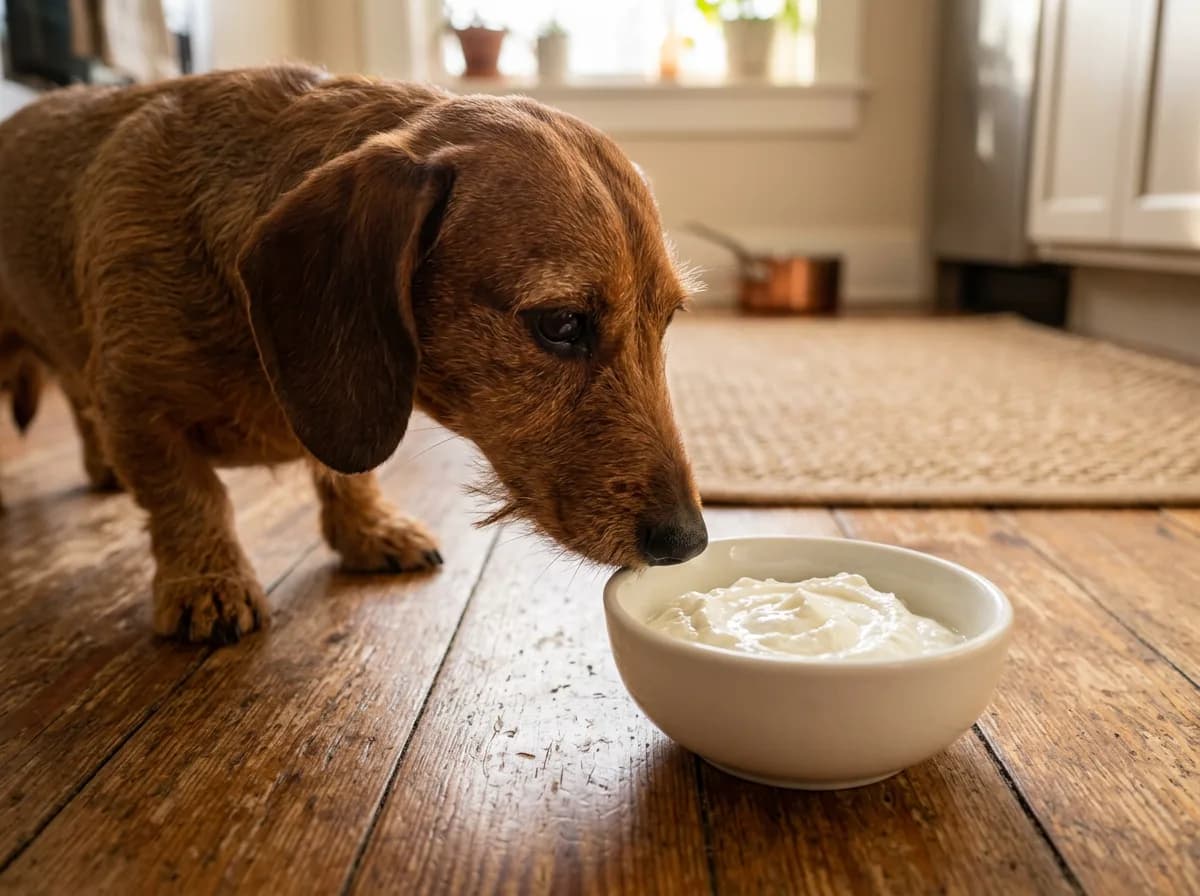
Greek yogurt gets suggested a lot as a home probiotic, and it is not a terrible snack in small amounts for a dog who tolerates dairy, but it is not a reliable probiotic. The live cultures in yogurt are limited, they are human-oriented strains rather than canine-studied ones, and the CFU count is both low and unmeasured compared with a real supplement. Many dogs also handle lactose poorly, so a big spoonful can cause the very loose stool you were trying to avoid. If you want to offer a lick of plain, unsweetened Greek yogurt as a treat, that is generally fine for most healthy dogs in moderation, but do not count on it as your probiotic strategy. And always skip any yogurt containing xylitol, which is toxic to dogs.
What Is Considered the Best Probiotic for Dogs?
Here is the slightly unsatisfying but honest truth: there is no single best probiotic for every dog. The best probiotics for dogs share a set of qualities rather than one magic brand name. When I evaluate a product, I am looking for named and researched strains, a guaranteed live count through the expiration date, a canine-specific formula, and a company that stands behind its quality. The right pick for a young dog after antibiotics may differ from the right pick for a senior dog with an occasionally sensitive stomach.
Use the checklist below the way I would in an exam room, then match it to your individual dog.
Shopping for a probiotic after the checklist? Compare this chew’s named strains and CFU count with the criteria in this guide.
- Five-strain probiotic blend, 5 billion CFUs per chew
- Adds MOS and inulin prebiotics
- Ask your vet which probiotic suits your dog
A supplement supports the gut; it does not replace veterinary care.
Petful may earn a commission when you click through to JustFoodForDogs, at no extra cost to you.
| Feature | Why It Matters | Quick Tip |
|---|---|---|
| Named strains | Benefits are strain-specific, not genus-wide | Look for genus, species, and a strain code, such as Enterococcus faecium SF68 |
| Guaranteed CFUs through expiration | Live counts fall over shelf life | Choose labels that guarantee CFUs at the end of shelf life, not just at manufacture |
| Made for dogs | Canine and human guts differ | Favor a canine-specific formula over a repackaged human product |
| Third-party quality checks | Supplements are loosely regulated | Prefer brands with independent testing or a recognized quality seal |
| Vet involvement | Every dog is individual | Ask your veterinarian which specific product fits your dog's situation |
- Start with a fraction of the recommended serving and build up to the full dose over about 5-7 days. A gradual introduction gives the gut time to adjust and makes it easier to spot how your individual dog responds. Give it a fair trial of two to four weeks before deciding whether it is helping.
How Long Should a Dog Stay on Probiotics?
This depends on why you started. For a specific, short-term reason, such as a bout of loose stool or a course of antibiotics, many dogs do well on a probiotic for the duration of the problem plus a week or two afterward while the gut re-establishes. For dogs with a chronically sensitive stomach or ongoing digestive fragility, your veterinarian may suggest a longer or even continuous course, since the support generally lasts only while you keep giving it. There is no need to keep a healthy, thriving dog on a daily probiotic just in case. If you have given a product a fair four-week trial and see no difference in stool quality, gas, or comfort, it is reasonable to stop, reassess, and talk with your vet about whether a different strain or a dietary change would help support your dog better.
Which Probiotic Do Vets Recommend for Dogs?
In practice, most veterinarians reach for veterinary-specific probiotics that carry documented strains and reliable CFU counts, rather than whatever is cheapest on the shelf. Product lines commonly found in veterinary clinics, such as Purina Pro Plan Veterinary Supplements FortiFlora, Nutramax Proviable, and Visbiome Vet, are popular precisely because they use researched strains and stand behind their live counts. I am describing categories vets tend to trust, not endorsing one brand for your dog. The best move is to ask your own veterinarian, who can match a specific product to your dog's history, current medications, and the exact reason you are considering a probiotic in the first place.
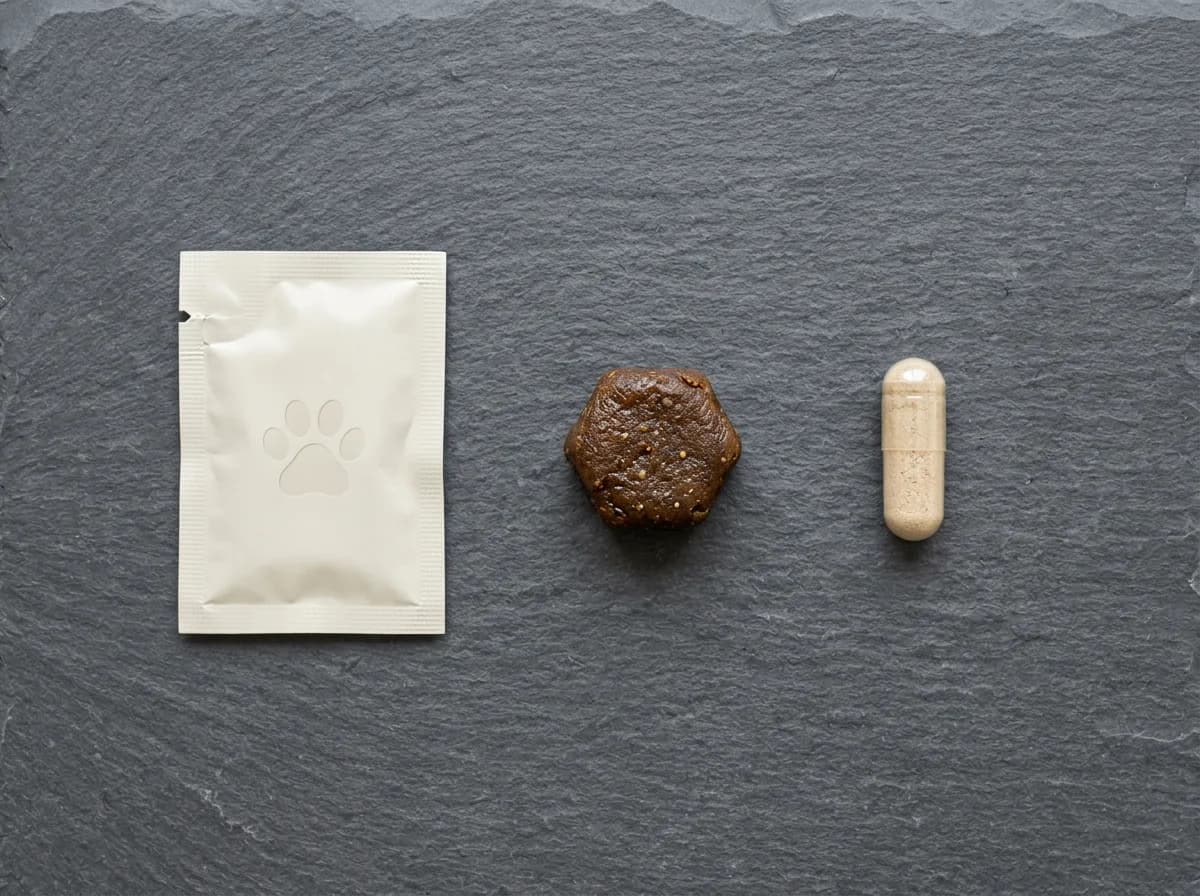
Probiotics also come in several forms, and the best one is often simply the one your dog will actually take. Powders sprinkle easily over food and let you fine-tune the dose. Chews are convenient and palatable but sometimes carry extra ingredients. Capsules are precise but can be a wrestling match. Match the format to your dog and your routine.
When Not to Give Probiotics to Dogs

Probiotics are low-risk for most healthy dogs, but low-risk is not no-risk, and there are times to pause and check with your veterinarian first. Hold off and get professional guidance if your dog is seriously ill, running a fever, vomiting repeatedly, passing blood, or acting lethargic, because those signs need a diagnosis rather than a supplement. Be especially cautious with very young puppies, dogs with a compromised or suppressed immune system, dogs on immunosuppressive medication, and any dog that is critically unwell, since introducing live microbes in those cases should be a veterinary decision.
Also watch the label. Skip probiotics that hide artificial sweeteners (never anything with xylitol), and be careful combining several new supplements at once, which makes it impossible to tell what is helping and what is causing a reaction. If your dog develops worse gas, bloating, or looser stool after starting a probiotic and it does not settle within a few days, stop and reassess with your vet. When in doubt, a quick conversation with your veterinary team beats guessing.
- Puppies, seniors with health issues, dogs with weakened immune systems, dogs on immunosuppressive drugs, and any dog that is acutely and seriously ill should only begin a probiotic under a veterinarian's direction. Live microbes are usually harmless, but in a fragile patient the decision belongs with your vet.
The Bottom Line
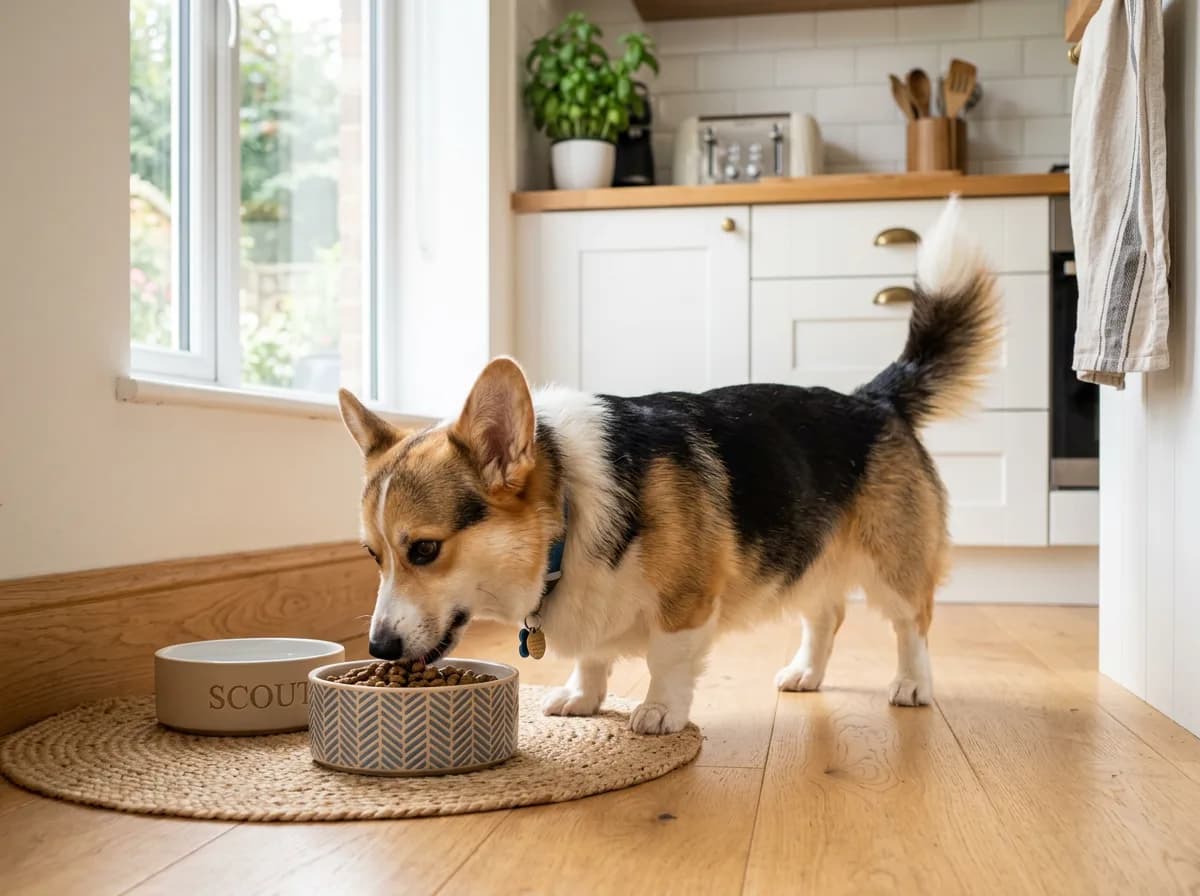
Probiotics are one of the more useful tools in a dog owner's kit, as long as you keep your expectations realistic. They are live, beneficial microbes that can help support digestive balance during the situations that tend to throw the gut off course: short bouts of loose stool, a course of antibiotics, and predictable stress. They are not a cure for any disease, and they are not a replacement for a real veterinary workup when a dog is truly unwell.
Choose on strain quality, guaranteed CFUs, and a canine-specific formula, then remember that the daily diet is doing the heavy lifting underneath. A digestible, gently cooked diet that the gut can handle easily, paired with a well-chosen probiotic, can help support the kind of steady, comfortable digestion that shows up as a happy dog and, frankly, easier walks. When you are unsure which product or approach fits your individual dog, your veterinarian is the best partner for that decision.
How Long Do Probiotics Take to Work in Dogs?
One of the first things owners ask after starting a supplement is how soon they should expect to see a difference. The honest answer is that it depends on why you reached for the probiotic in the first place, and the timeline looks different for a short flare-up than it does for an ongoing sensitive stomach.
For acute digestive upset, such as a sudden bout of loose stool or the days right after a course of antibiotics, many dogs respond fairly quickly. Some owners notice firmer stool within about 24 to 72 hours, and much of the research on specific strains measures improvement over a span of a few days rather than weeks. If your dog's belly settles in that window, the probiotic is doing what it is meant to do: help support the gut as it finds its footing again.
For chronic or recurring digestive fragility, patience matters more. Rebalancing a microbiome that gets thrown off easily is a slower process, so it is fairer to judge results over a couple of weeks of consistent daily dosing before drawing conclusions.
What Improvement Looks Like Day to Day
What does improvement actually look like day to day? Watch for a few practical signals rather than one dramatic change:
- Firmer, more consistent stool
- Less gas and fewer rumbly, gurgly bellies
- A steadier appetite and more comfort after meals
- Fewer flare-ups around the usual triggers like travel or a diet switch
Keep the rest of the routine steady while you watch, since a digestible everyday diet is quietly doing much of the work underneath the supplement. If you have given a quality probiotic a fair run and still see no movement in any of these signals, that is a sensible moment to reassess with your veterinarian, who can help support a better-matched strain or a dietary adjustment.
- Jot down your dog's stool quality, gas, and energy for a couple of weeks after starting a probiotic. A short daily note makes it far easier to spot a real trend and to tell your vet exactly what changed and when.
Probiotic Formats Compared: Powder, Chews, and Capsules
Canine probiotics come in three everyday formats, and the best one is often simply the format your dog will reliably take. A powder you can measure to the milligram does no good if your dog turns up their nose at dinner, and the tastiest chew in the world is wasted if it upsets a sensitive stomach. Here is how the common dog probiotic formats compare, so you can match the delivery method to your dog and your routine.
| Format | Pros | Best For |
|---|---|---|
| Powder | Mixes into food, lets you fine-tune the dose, usually carries few extra ingredients | Picky eaters, precise dosing, and dogs already eating wet or fresh food |
| Soft chews | Palatable and treat-like, no measuring, most dogs take them willingly | Dogs who refuse powders, travel days, and owners who want simplicity |
| Capsules | A precise pre-measured dose, often shelf-stable, minimal fillers | Dogs who will accept a pill or a pill pocket, and multi-supplement routines |
Dog probiotic powder tends to be the most flexible choice, because you can start with a fraction of a serving and build up, which is handy for a sensitive dog. Dog probiotic chews win on convenience and palatability, though it is worth scanning the ingredient list for added sugars or fillers. Capsules give you the cleanest, most exact dose if your dog is happy to take one. Whatever the format, the same quality rules apply: named strains, a CFU count guaranteed through the expiration date, and a canine-specific formula.
Probiotics for Dogs With Yeast or Itchy Skin
One of the questions I hear most in the exam room is whether a probiotic can help a dog who is constantly itchy, licking their paws, or battling recurrent yeasty ears. It is a fair question, because the gut and the skin are in constant conversation along what researchers call the gut-skin axis. When the gut microbiome is balanced, it helps regulate the immune signaling that eventually shows up at the skin, so it makes sense that owners of itchy, yeast-prone dogs go looking for gut support.
Here is the honest, responsible framing. A probiotic can help support a healthy gut environment, and a healthier gut may in turn support calmer, more resilient skin over time. What a probiotic cannot do is treat a yeast infection or resolve an itchy-skin condition on its own. Malassezia yeast overgrowth on the skin, in the ears, or between the paws is a veterinary diagnosis with its own targeted care, usually medicated washes, ear cleaners, or prescription medication. A probiotic is at best a supporting player in that broader plan, never the plan itself.
Diet matters here too. A complete, gently cooked diet may be one option for a dog with a sensitive stomach, but it should be chosen for the individual dog rather than assumed to be more digestible. If your dog is genuinely itchy or yeasty, start with your veterinarian for a diagnosis, then ask whether a probiotic and a diet review belong in the supporting cast.
- Persistent itching, paw licking, and smelly, waxy ears deserve a veterinary workup, not a supplement bought on a hunch. Yeast overgrowth and allergic skin disease have specific treatments. A probiotic can help support the gut alongside that care, but it is not a stand-in for it.
Probiotics for Puppies and Senior Dogs
Age changes the gut, so it is reasonable to ask whether puppies and seniors have their own probiotic needs. They do, in slightly different ways, and both groups can benefit from a thoughtful, vet-guided approach.
Puppies are all growth and change. They are weaning, meeting new foods, getting vaccinated, and often moving to a new home, and every one of those transitions can ripple through a developing gut. A canine-specific probiotic can help support digestive steadiness through those milestones, and some early research in puppies suggests probiotics given in the first months of life may be associated with a calmer immune response later on. Because a very young puppy is still fragile, this is a conversation to have with your veterinarian first, ideally choosing a product made for puppies and dosed for their size.
Senior dogs sit at the other end of the spectrum. The aging gut microbiome tends to become less diverse and less resilient, and older dogs are more likely to be on medications or managing an occasionally sensitive stomach. A probiotic can help support digestive comfort and regularity in a senior who tends toward soft stool. Seniors with existing health conditions, or those on immunosuppressive medication, should start only under veterinary guidance, since live microbes are a bigger decision in a medically complex patient. For a healthy senior with a grumbly gut, though, a well-chosen probiotic paired with a digestible diet is a gentle, low-risk way to help support steadier digestion.
Natural and Homemade Probiotic Sources for Dogs
Plenty of owners would rather reach into the fridge than buy a supplement, and there are a few natural, food-based sources of beneficial microbes that you can offer in small amounts to dogs who tolerate them. Just keep your expectations grounded: whole foods deliver live cultures that are variable and unmeasured, so they can complement a diet but should not be your main strategy for real probiotic support.
- Plain kefir. This fermented milk drink carries a broader range of live cultures than most yogurts. Offer a small spoonful of plain, unsweetened kefir to a dog who handles dairy, and watch for loose stool, since many dogs are sensitive to lactose.
- Plain, unsweetened yogurt. A lick of plain yogurt with live active cultures is a fine occasional treat for dairy-tolerant dogs, but the live counts are low and human-oriented, so treat it as a snack, not a supplement. Never offer any yogurt sweetened with xylitol, which is toxic to dogs.
- Fermented vegetables. A tiny amount of plain sauerkraut or other unseasoned fermented vegetables can add natural cultures and a little fiber. Choose versions with no added salt, and absolutely no garlic or onion, both of which are toxic to dogs.
If you like the idea of feeding the gut through the bowl, the most reliable move is a consistently digestible daily diet, which our guide to gut health for dogs covers in depth. Think of these homemade probiotic sources as occasional extras on top of that foundation, not replacements for a canine-specific product when your dog genuinely needs support.
Yes, many veterinarians recommend probiotics in specific situations, such as short bouts of loose stool, during and after a course of antibiotics, and around predictable stressors like travel or boarding. They are used as a support tool that can help support digestive balance, not as a cure for disease or a substitute for a veterinary workup when a dog is genuinely unwell.
Common signs a dog may benefit from probiotic support include loose or intermittent soft stool, excess gas and a rumbly belly, digestive upset after a diet change or stressful event, and a recent or current course of antibiotics. Because these signs can also point to parasites or more serious problems, see your veterinarian if they are severe, bloody, or last more than a day or two.
Possibly, but only in a supporting role. Research on probiotics and allergies in dogs is still emerging, and some early studies suggest probiotics may be associated with a calmer allergic response through the gut-skin connection. Probiotics are not a treatment for allergies and do not replace the diet trials, parasite control, and veterinary care that actually manage allergic skin disease.
Not really as a reliable probiotic. Plain, unsweetened Greek yogurt is an okay occasional treat for dogs that tolerate dairy, but its live cultures are limited, human-oriented, and unmeasured, and many dogs handle lactose poorly. Use a canine-specific probiotic supplement for real support, and never offer any yogurt that contains xylitol, which is toxic to dogs.
There is no single best probiotic for every dog. The best probiotics for dogs share the same qualities: named, researched strains, a live CFU count guaranteed through the expiration date, a canine-specific formula, and a reputable company. The right choice depends on your individual dog, so it is worth confirming with your veterinarian.
Vets often reach for veterinary-specific probiotics with documented strains and reliable CFU counts, such as the product lines commonly stocked in clinics (for example Purina Pro Plan FortiFlora, Nutramax Proviable, and Visbiome Vet). Rather than picking by price, ask your own veterinarian to match a specific product to your dog's history and needs.
Hold off and check with your veterinarian first if your dog is seriously ill, feverish, vomiting repeatedly, passing blood, or lethargic, and use extra caution with young puppies, immunocompromised dogs, and dogs on immunosuppressive medication. Also avoid probiotics that contain artificial sweeteners like xylitol, and stop if your dog's gas or loose stool worsens after starting one.
For specific situations, yes, the evidence is fairly encouraging. Several canine strains have peer-reviewed studies suggesting they can help support a faster return to normal stool during short bouts of digestive upset and around antibiotics or stress. They work best as a targeted support tool rather than an everyday cure-all, and results vary by the individual dog and the specific strain, so the named strain on the label matters more than the brand on the front.
It is better to use a canine-specific probiotic. Human and dog guts host different microbial communities, so human products are built around human-studied strains and doses that may not match your dog's needs. Some strains overlap and a human product is rarely dangerous for a healthy dog, but a probiotic made and dosed for dogs is the more reliable choice. Check with your veterinarian before using any human supplement, and never give one that contains xylitol.
BVMS, MRCVS
Dr. Pippa Elliott, BVMS, MRCVS, is a veterinarian with nearly 30 years of experience in companion animal practice. Dr. Elliott earned her Bachelor of Veterinary Medicine and Surgery from the University of Glasgow. She was also designated a Member of the Royal College of Veterinary Surgeons. Married with 2 grown-up kids, Dr. Elliott has a naughty Puggle named Poggle, 3 cats and a bearded dragon.
Sign up for expert-backed reviews and safety alerts all in one place.

A Final Word (Disclaimer)
At Petful, our review integrity is paramount; we never exchange special treatment in our reviews for monetary or material rewards.
Nonetheless, when our readers click through to online merchants (including Chewy or Amazon), we receive a referral commission. This supports the running of our free blog, and we appreciate your backing.