Best Dog Food for Shiba Inus: Portions, Preferences, and Life Stages
Compare four JustFoodForDogs recipes for Shiba Inus, calculate portions from calories, and use a practical feeding record to separate individual preferences from a new appetite change.
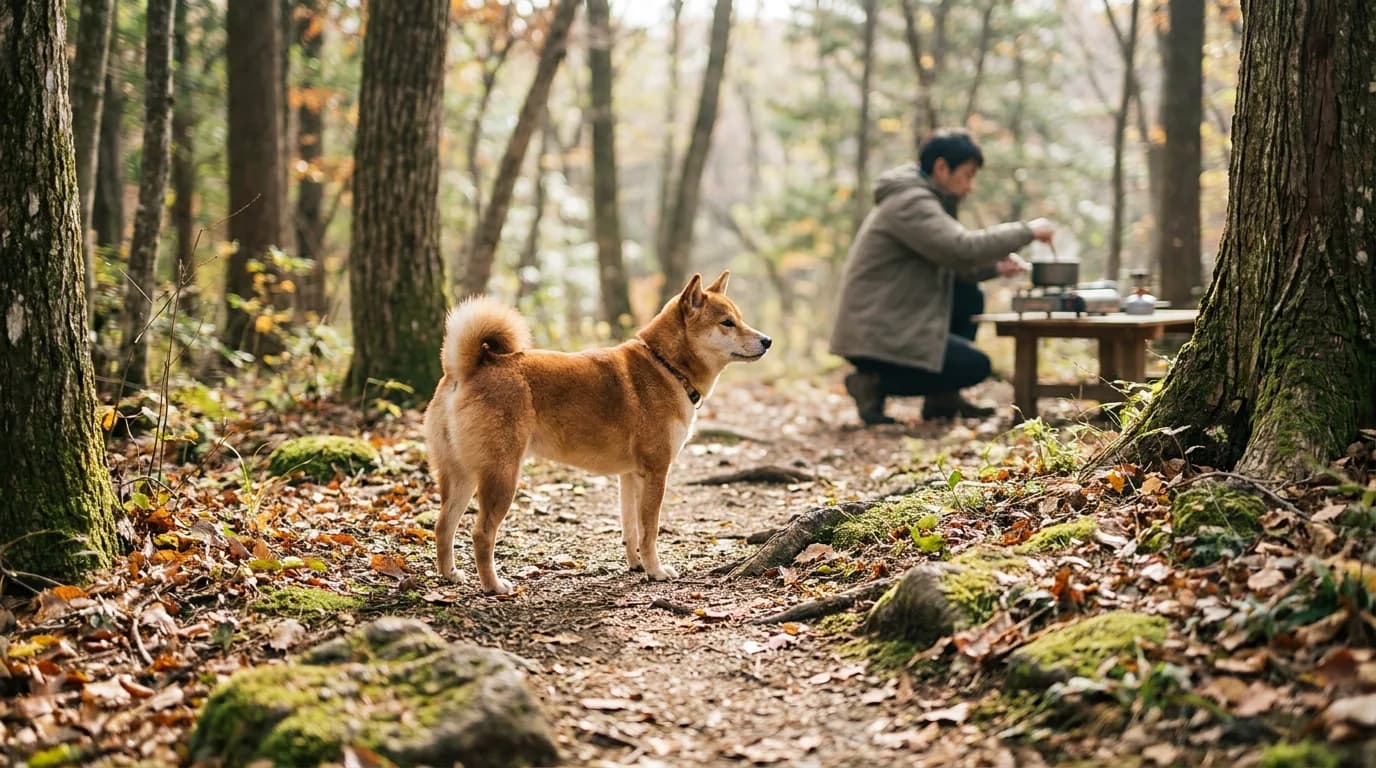
A Shiba Inu stands near its owner on a woodland walk.
Petful is reader supported. As an affiliate of platforms like Amazon and Chewy, we may earn a commission when you buy through links on this page. There is no extra cost to you.
This article is sponsored by JustFoodForDogs. Petful maintains editorial control and may earn a commission from qualifying purchases, at no extra cost to you.
The best dog food for shiba inus is a complete and balanced recipe that fits the individual dog's life stage, calorie needs, and established tolerance. Choosing it does not require assuming every Shiba is a picky eater, needs an allergy diet, or should eat the same portion.
JustFoodForDogs offers several useful options, but their differences matter. This guide compares four recipes, explains how to calculate portions, and provides a practical way to record what your Shiba actually eats before interpreting every leftover bite as a food preference.

Sign up for expert-backed reviews and safety alerts all in one place.
What is the best food to feed a Shiba Inu?
The best Shiba Inu food is an appropriate complete diet, served in a measured amount that supports the dog's needs. Start with nutritional adequacy and life stage, then consider calorie density, ingredients, texture, storage, and your dog's feeding history.
There is no single best dog food brand for every Shiba Inu. A brand can offer both growth-appropriate and adult-only recipes, as the JustFoodForDogs comparison below demonstrates. Choose the exact recipe rather than assuming that all products carrying the same brand name qualify for the same dog.
The FDA's complete and balanced pet-food guidance explains why the nutritional adequacy statement matters. Petful's guide to what “AAFCO approved” dog food means helps translate that statement into a shopping decision.
- 1Check the exact recipe's life stage before comparing ingredients or flavors.
- 2Use calories per gram to establish a repeatable portion.
- 3Record food offered, food left, and extras before deciding that your Shiba dislikes a recipe.
Put the dog's needs ahead of the format
A Shiba Inu food diet can use an appropriate complete dry, wet, or fresh recipe. The format describes how the food is prepared and served; it does not, by itself, establish completeness or suitability.
If you are looking for the best dry dog food for a Shiba Inu, apply the same checks used for a fresh recipe. Read the life-stage statement, identify the calories, assess whether the texture is manageable, and consider the dog's established tolerance. This fresh-food comparison does not establish a winning dry brand.
Similarly, “small breed” is not enough information to settle the choice. A food marketed for small dogs may offer a particular kibble size or feeding format, but the exact recipe must still suit the appropriate life stage. A soft texture also does not turn an adult-maintenance food into a puppy diet.
Choose the recipe in six steps
- Confirm whether your Shiba is growing or has reached adulthood.
- Read the exact recipe's nutritional adequacy statement.
- Check known ingredient restrictions and the dog's feeding history.
- Establish a daily calorie allowance and include extras.
- Calculate the food amount from that recipe's energy density.
- Choose a package size and storage routine you can maintain.
This sequence keeps a useful preference, such as liking a particular texture, in the right place. Preferences help choose among appropriate foods. They do not override a life-stage mismatch or remove the need to measure the ration.
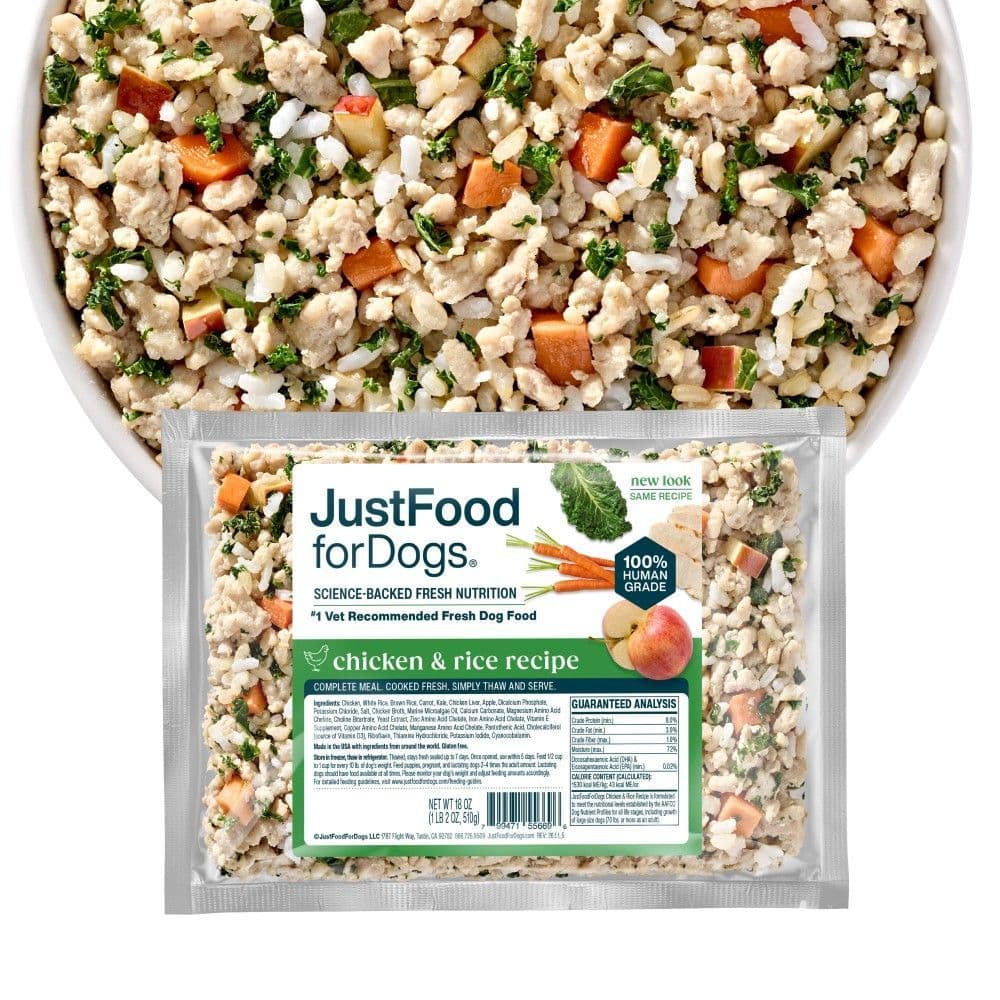
Petful may earn a commission when you click through to JustFoodForDogs, at no extra cost to you.
Gather a short feeding baseline
If your shortlist is dominated by sensitive-skin picks, first decide whether the problem is a diagnosed dietary condition or an everyday feeding question. Broad diet upgrades do not resolve a portion-and-preference problem by themselves. For a Shiba without an established restriction, record the amount offered, leftovers, extras, and recent appetite changes before replacing the current food. That baseline helps identify whether the useful next step is a portion adjustment, a practical recipe change, or assessment of new symptoms.
Record the exact recipe and format, a recent weight, the usual meal schedule, and the amount offered. Add treats, chews, toppers, and food used with medication. If more than one person feeds the dog, combine those contributions in one record.
A useful baseline includes observations you can verify:
- Whether the dog eats the full measured portion or leaves some.
- Whether leftovers occur at one meal or throughout the day.
- Whether meals follow substantial treats or training rewards.
- Whether the package has been stored and used according to instructions.
- Whether appetite, weight, activity, or other behavior has changed.
- Whether the dog is comfortable picking up and eating the food.
“Sometimes leaves 20 grams after an afternoon training session” is more informative than “Shibas are picky.” It gives you a specific routine to examine without assigning a breed-wide explanation.
Four JFFD options with different feeding and storage fits
These four recipes offer distinct combinations of life-stage eligibility, energy density, and storage. Chicken & Rice and Fish & Sweet Potato include growth in their current nutritional adequacy statements. Beef & Russet Potato and JustFresh Home-Cooked Chicken are adult-maintenance choices.
The comparison uses current manufacturer information. The calorie values describe these exact recipes, not every food made with chicken, fish, or beef. The practical recommendations below are based on labels and handling instructions, not a claimed hands-on taste test.

| Recipe | Life-stage eligibility | Calories per gram | Useful feeding or storage fit |
|---|---|---|---|
| JustFoodForDogs Chicken & Rice | All life stages, including large-dog growth | 1.530 | Grain-inclusive fresh recipe for a puppy or adult |
| JustFoodForDogs Fish & Sweet Potato | All life stages, including large-dog growth | 0.922 | Fish-based option requiring more grams per calorie |
| JustFoodForDogs Beef & Russet Potato | Adult maintenance | 1.559 | Adult-only fresh recipe |
| JustFoodForDogs JustFresh Home-Cooked Chicken | Adult maintenance | 1.254 | Unopened shelf storage with refrigeration after opening |
JustFoodForDogs Chicken & Rice
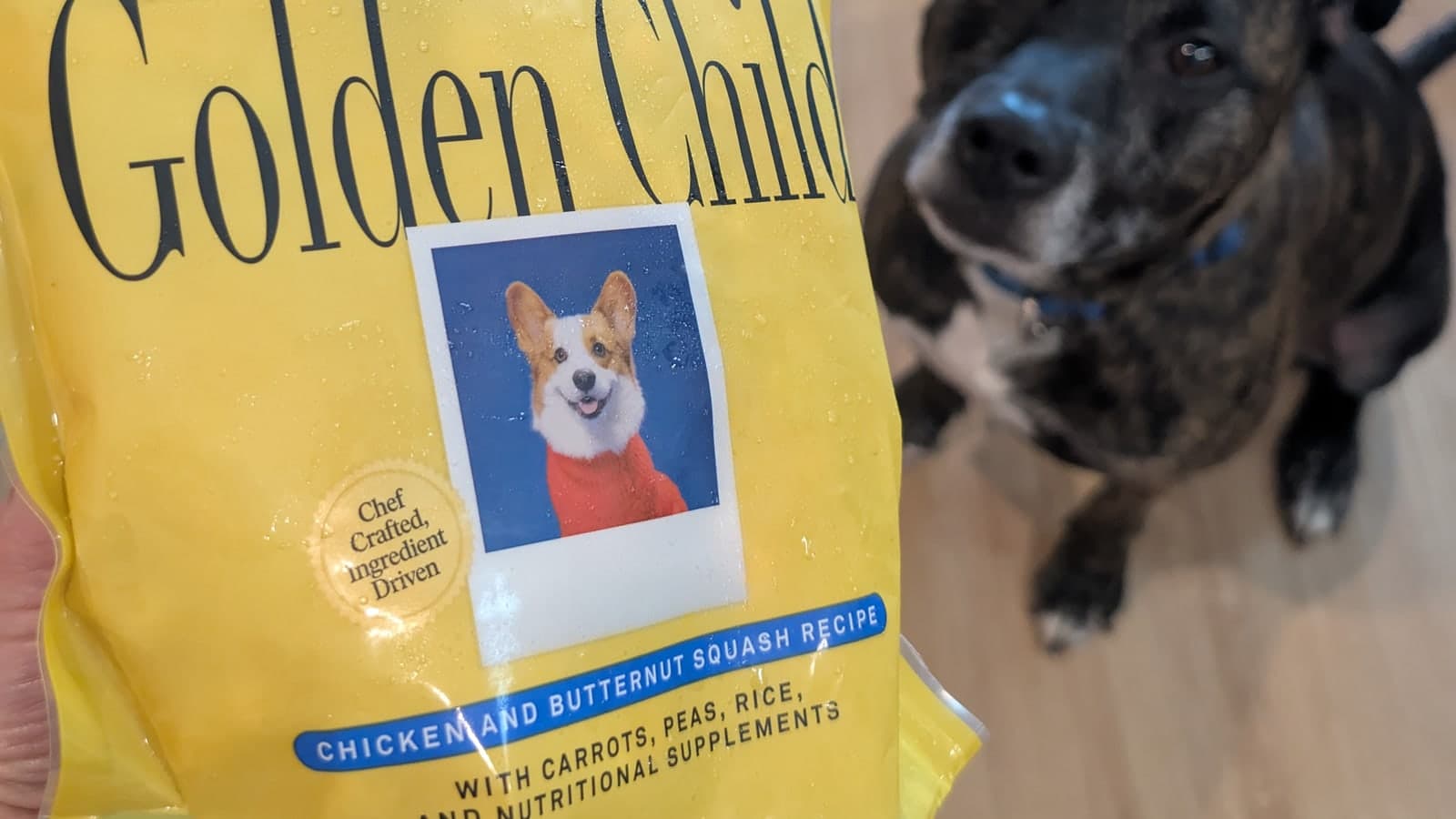
JustFoodForDogs Chicken & Rice is a grain-inclusive option for a growing Shiba or an adult that tolerates its ingredients. The current formula includes chicken, white and brown rice, chicken liver, vegetables, and a nutrient blend.
Its adequacy statement covers all life stages, including growth of dogs expected to weigh 70 pounds or more as adults. Its stated energy density is 1,530 kcal/kg, which converts to 1.530 kcal/g. The label also lists 43 kcal/oz.
For an explicitly hypothetical allocation of 450 calories from this recipe, the portion is 450 ÷ 1.530, or about 294 grams. That is a worked example, not a daily recommendation for all Shibas.
When Chicken & Rice fits
- A complete fresh food with growth eligibility.
- A grain-inclusive formula using rice.
- A portion you can weigh and divide across meals.
- A household routine that can accommodate frozen storage and refrigerator thawing.
Keep the formulated product separate from homemade chicken and rice. Similar ingredient names do not mean the foods have the same nutritional completeness. Also keep Chicken & Rice separate from JustFresh Home-Cooked Chicken, which has a different formula, calorie density, and adult-only statement.
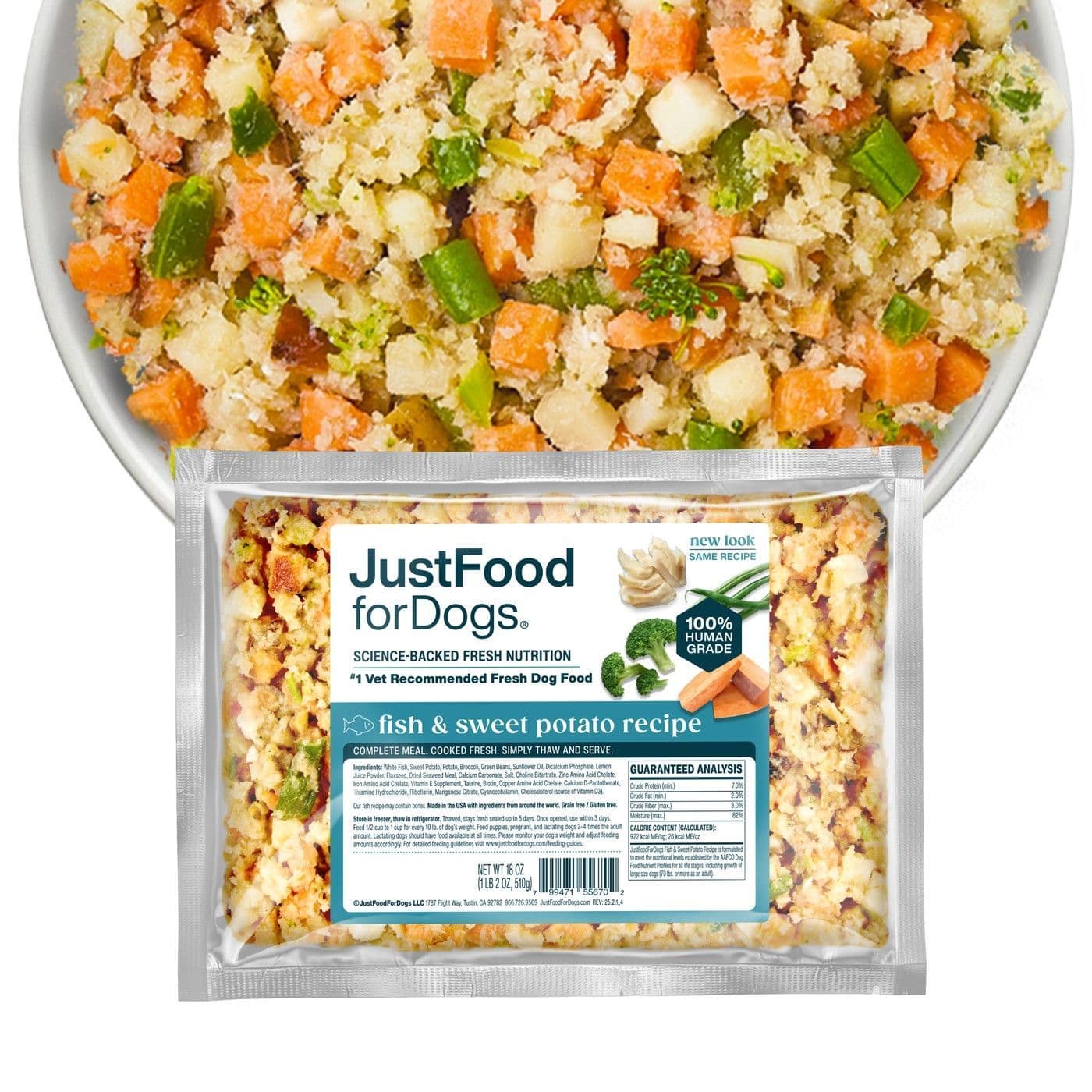
Petful may earn a commission when you click through to JustFoodForDogs, at no extra cost to you.
JustFoodForDogs Fish & Sweet Potato
JustFoodForDogs Fish & Sweet Potato is another growth-appropriate choice. The current recipe uses a cod, pollock, and haddock blend, so it should not be described as an exclusively cod formula.
Its energy density is 922 kcal/kg, or 0.922 kcal/g, with 26 kcal/oz listed on the label. A hypothetical 450-calorie allocation therefore requires about 488 grams. That larger portion reflects the recipe's calorie density, not a different calorie allowance for the dog.
Consider the practical consequences before comparing bowl appearance:
- The same calorie allocation requires more grams than the other three recipes here.
- A package may be used more quickly by weight.
- Refrigerator space and meal-container size may need adjustment.
- The fish-specific opened-use window is shorter than the non-fish fresh-frozen guidance.
The JustFoodForDogs FAQ gives fish-specific refrigerated guidance of five days sealed after thawing and three days after opening. Use that shorter fish guidance when planning.
Choose this recipe because its actual ingredients, eligibility, and handling fit your dog and household. A fish-based food is not automatically an allergy treatment or a solution to every refused meal.
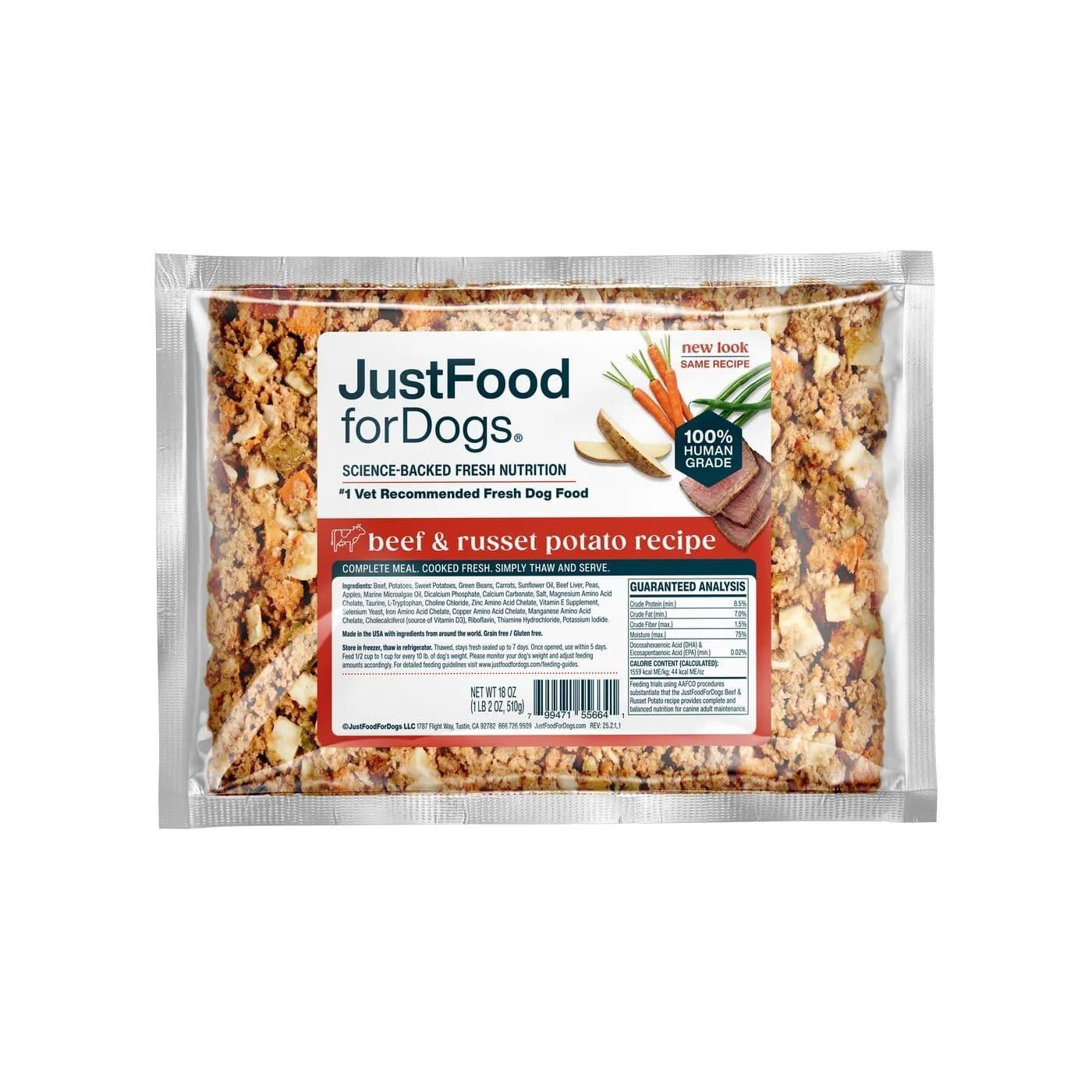
JustFoodForDogs Beef & Russet Potato
JustFoodForDogs Beef & Russet Potato is intended for adult maintenance. Its adequacy statement is supported by feeding trials using AAFCO procedures; it is not intended as a complete diet for growing puppies.
The recipe supplies 1,559 kcal/kg, or 1.559 kcal/g, and the label lists 44 kcal/oz. A hypothetical 450-calorie allocation is approximately 289 grams.
That calculated amount is close to the Chicken & Rice example. The two recipes' similar calorie densities are a reason to check the numbers, rather than assuming a beef food must always be dramatically richer than a chicken food.
- Useful fit: An adult Shiba with an established feeding routine whose ingredient history supports this recipe.
- Measurement point: Use 1.559 kcal/g for the current recipe rather than another food's scoop or gram amount.
- Life-stage boundary: A puppy's enthusiasm for the food does not make adult maintenance sufficient for growth.
If you have both a puppy and an adult at home, identify each dog's meal clearly. Shared storage can be convenient, but each dog still needs a qualifying recipe and its own measured portion.
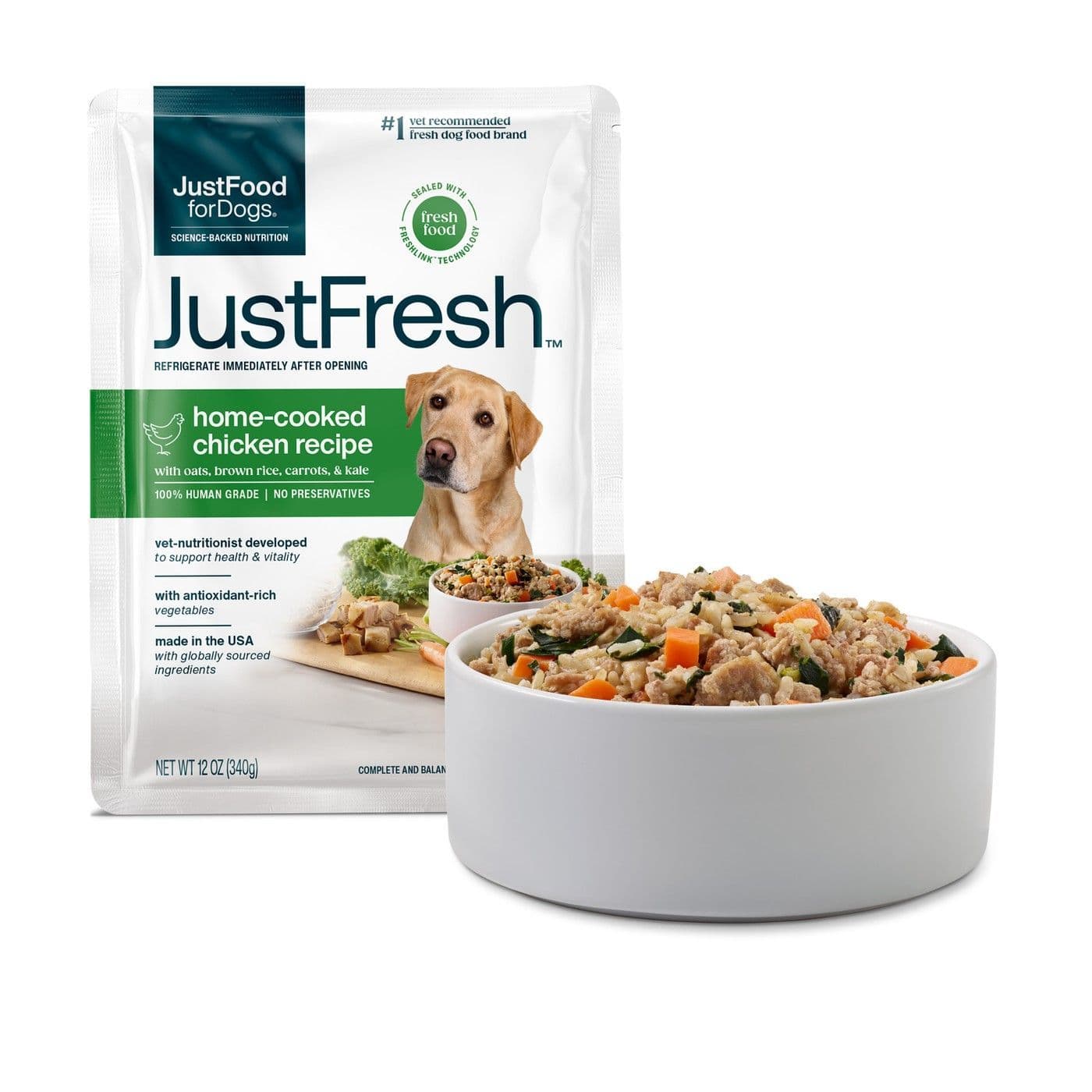
JustFoodForDogs JustFresh Home-Cooked Chicken
JustFoodForDogs JustFresh Home-Cooked Chicken is an adult-maintenance option for households that value unopened shelf storage. Its ingredients include chicken thighs, chicken liver, oats, and brown rice.
The current energy density is 1,254 kcal/kg, or 1.254 kcal/g. The label also lists 36 kcal/oz. A hypothetical 450-calorie allocation works out to about 359 grams.
Unopened shelf storage can simplify keeping food on hand or packing unopened meals for a trip. After opening, however, the food must be refrigerated and used within three days, according to the manufacturer's FAQ.
- Useful fit: An adult feeding routine where freezer capacity is limited.
- Measurement point: Recalculate the portion instead of borrowing the fresh-frozen Chicken & Rice amount.
- Storage boundary: An opened pouch is perishable even though the unopened package is shelf stable.
- Life-stage boundary: It is not a complete puppy diet.
Compare the package's net weight with the dog's actual daily amount before buying. The package that looks convenient on a shelf must also fit the refrigerator-use window once opened.
Build a Shiba Inu food chart from the recipe's calories
A useful Shiba Inu food chart converts an individual calorie allowance into the amount of the exact recipe being served. It should not assign one universal ration to every dog of the breed.
Begin with a current weight, life stage, activity pattern, and body-condition assessment. The WSAVA calorie guide for healthy adult dogs provides starting estimates for healthy adults. A puppy or a dog following a medical nutrition plan needs the corresponding individual guidance.
If an adult's weight and body condition are appropriate and stable, its actual measured intake is useful context. Record that intake rather than assuming an online calculator must be more accurate simply because it returns a precise number.
Calculate calories per gram
The calculation has two stages. First convert the recipe's energy declaration into calories per gram. Then divide the calories allocated to the food by that number.
For the four recipes here:
- Chicken & Rice: 1,530 ÷ 1,000 = 1.530 kcal/g.
- Fish & Sweet Potato: 922 ÷ 1,000 = 0.922 kcal/g.
- Beef & Russet Potato: 1,559 ÷ 1,000 = 1.559 kcal/g.
- JustFresh Home-Cooked Chicken: 1,254 ÷ 1,000 = 1.254 kcal/g.
Use the kcal/kg value consistently for gram calculations. Published kcal/oz figures are rounded, so switching between rounded ounce values and kilogram values can produce slightly different results.
Suppose a hypothetical adult has a 500-calorie daily allowance, with 50 calories reserved for noncomplete extras. That leaves 450 calories for its complete food. The resulting portions are examples for that allowance, not breed recommendations.
| Recipe | Calculation | Approximate daily portion | If divided into two equal meals |
|---|---|---|---|
| Chicken & Rice | 450 ÷ 1.530 | 294 g | 147 g |
| Fish & Sweet Potato | 450 ÷ 0.922 | 488 g | 244 g |
| Beef & Russet Potato | 450 ÷ 1.559 | 289 g | 144 g |
| JustFresh Home-Cooked Chicken | 450 ÷ 1.254 | 359 g | 179 g |
Rounded meal amounts can differ by a gram from the rounded daily total. The point is a consistent, sensible measurement, not a claim that a household scale can determine a dog's needs to the last gram.
Count extras in the same daily total
The AAHA nutritional-risk guidance identifies more than 10% of calories from treats or table food as a nutritional risk factor. Count noncomplete extras together rather than giving each category its own allowance.
In the hypothetical 500-calorie example, 50 calories represents 10% of the total. That is not an instruction to use the entire allowance, and it is not 50 calories to add on top of 500 calories of meals.
Commonly overlooked contributions include:
- Training rewards.
- Edible chews.
- Toppers added by different household members.
- Food used with medication.
- Bites shared during cooking.
- Treats offered by visitors or a pet sitter.
If you set aside some of the appropriate complete food for rewards, deduct it from the bowl portion. For example, reserving 20 grams from a 294-gram daily ration leaves 274 grams for meals. It does not create an additional 20-gram allowance.
- The daily feeding amount includes meals and extras. Write the complete-food ration and the extras allowance together so that every caregiver works from the same total.
Measure body condition beneath the coat
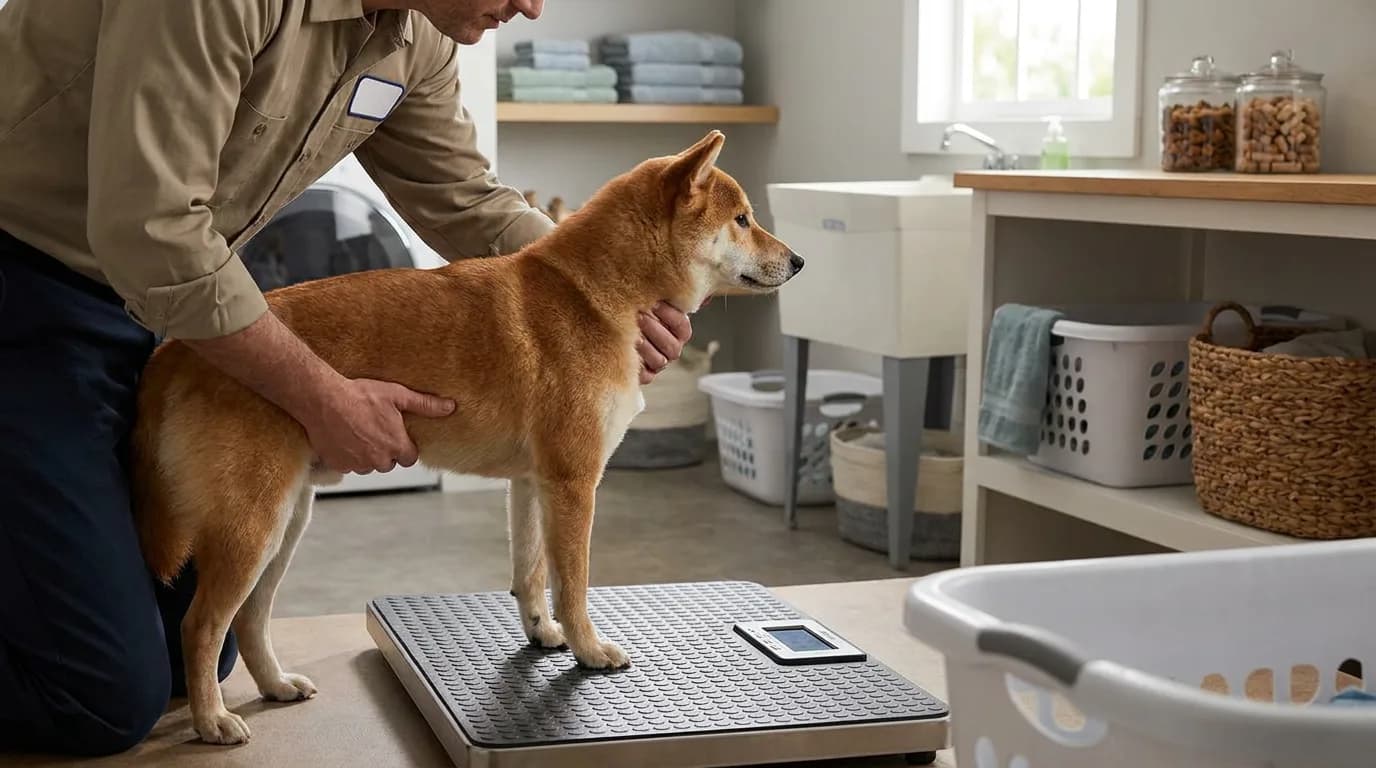
A Shiba's outline is not a complete body-condition assessment. Use your hands as well as your eyes, and compare the findings with weight trend rather than relying on coat volume.
The WSAVA body-condition chart describes an ideal score of 4–5 out of 9 using features such as readily felt ribs without excess fat covering, a waist, and an abdominal tuck. A veterinarian can demonstrate how those features feel on your individual dog.
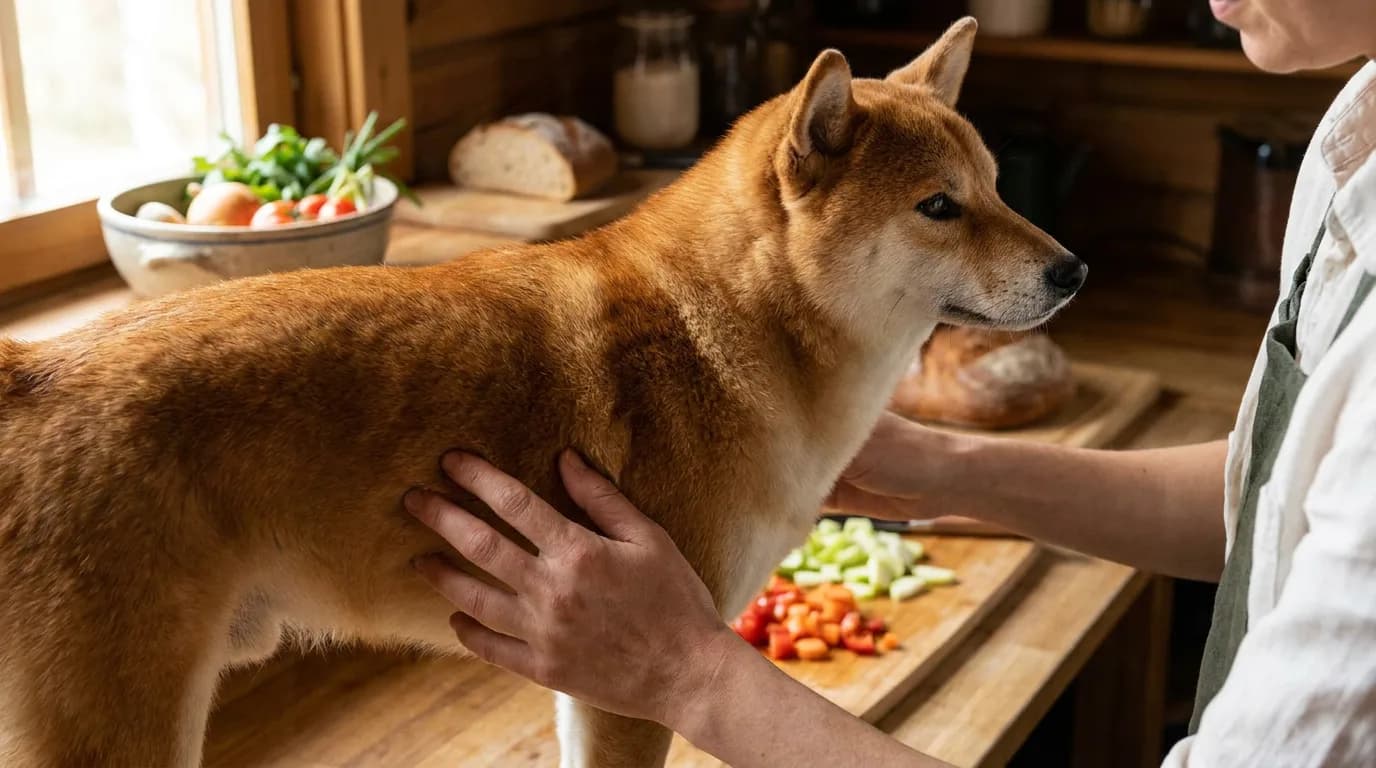
Body condition helps interpret the portion over time. An adult that repeatedly leaves food while maintaining an appropriate condition may need its offered amount reviewed. An adult losing weight or showing a new appetite change needs a different assessment.
Before changing the planned Shiba Inu food amount, check the record:
- Confirm the food and its current calorie density.
- Check that the scale is tared correctly.
- Combine all caregiver contributions.
- Include leftovers when estimating actual intake.
- Review sustained changes in activity.
- Compare current weight and body condition with earlier measurements.
This makes the next step more specific. You may discover that the portion was being copied from a different recipe, that two people were offering treats, or that the dog's ordinary routine has changed. Those possibilities should be checked before treating every discrepancy as a need for a new food.
Petful may earn a commission when you click through to JustFoodForDogs, at no extra cost to you.
Translate a daily portion into a shopping amount
Once the ration is established, multiply daily grams by the number of days you want to cover. A hypothetical 294-gram daily amount uses about 2.06 kilograms in a week. A 488-gram amount uses about 3.42 kilograms.
The calculation helps compare storage and package turnover. It does not identify which food is better. It shows what the selected recipe requires in your kitchen.
For package turnover, divide net package weight by daily consumption. A hypothetical 600-gram package used at 200 grams a day represents three days of food. Check that result against the product's opened-use instructions before relying on the package size.
Check puppy, adult, and senior needs separately
A life-stage check can settle a food choice before preferences or portions come into play. A growing dog needs a growth-appropriate complete diet. An adult-maintenance statement describes a different nutritional purpose.
Among the four JFFD choices here, Chicken & Rice and Fish & Sweet Potato qualify for growth under their current statements. Beef & Russet Potato and JustFresh Home-Cooked Chicken are adult-maintenance foods.
Use the current package and product information when changing recipes. Do not assume that a familiar brand, a shared protein name, or a moist texture means every option has the same life-stage eligibility.
For a Shiba puppy
Choose the growth-appropriate recipe first. Then establish a feeding amount using the puppy's age, current weight, expected adult size, and growth plan.
Growth changes the meaning of weight gain. A puppy is not supposed to maintain a fixed adult weight, so an adult-style “keep the number steady” approach is inappropriate. At the same time, a growing puppy does not need an unlimited amount of food.
A practical puppy record should include:
- Current age and recent weight.
- The exact growth-appropriate recipe.
- The daily amount and meal distribution.
- Training food and other extras.
- The date the portion was last reassessed.
- Any feeding or growth concerns.
Keep the meal schedule appropriate to age and the puppy's established care plan. Texas A&M's puppy-development guidance describes four to five small meals during weaning at about 5–6 weeks, transitioning to three meals daily by about 8–9 weeks. It does not supply a universal later switch date for every puppy.
A puppy that likes an adult-only recipe still needs a complete growth diet. Taste preference does not change the adequacy statement. If sharing food between dogs is important for household simplicity, select a recipe that qualifies for both and calculate their portions separately.
For an adult Shiba
An adult can be considered for an appropriate adult-maintenance recipe or an appropriate all-life-stages recipe, depending on individual needs. The next questions are how much to feed and whether the practical routine is working.
A stable adult routine makes changes easier to interpret. Keep the recipe, daily measurement, treat accounting, and caregiver instructions clear. When changing foods, calculate the new ration before the first full meal of the new recipe.
The adult assessment is more useful when it separates these observations:
- Weight trend: Has weight been stable, rising, or falling?
- Body condition: Does the amount of body fat appear appropriate on a hands-on assessment?
- Actual intake: How much of the measured portion is consumed?
- Activity: Has the normal weekly pattern changed?
- Health and appetite: Is there a new change that needs assessment rather than routine portion adjustment?
Do not automatically increase the ration because a food is enjoyable or decrease it because the bowl looks fuller. The fish recipe, for example, requires a larger gram portion for the same calories.
For an older Shiba
Age alone does not determine a fixed calorie reduction, an ingredient ban, or a required texture. Review the older dog's current activity, weight trend, body condition, ability to eat comfortably, and individual health needs.
An older adult that remains active and maintains an appropriate condition may need a different plan from one whose activity and intake have changed. A generic senior percentage cannot account for those differences.
Before changing a familiar recipe, identify the problem you are trying to solve:
- Is the portion too large for current calorie needs?
- Is the dog having difficulty eating the texture?
- Has appetite changed?
- Is a veterinarian recommending a specific nutritional approach?
Those questions lead to different actions. A texture issue is not solved by an arbitrary calorie reduction. A new appetite change is not explained merely by calling the dog a senior. An adult-maintenance food should be evaluated in the context of the dog's present needs.
Petful may earn a commission when you click through to JustFoodForDogs, at no extra cost to you.
Learn your Shiba's food preferences without chasing every refused bite
Preference is different from a new appetite change. The first is a pattern in how an otherwise assessed dog responds to food or routine. The second can signal that something has changed and deserves attention before you start a series of recipe experiments.
A measured observation record helps keep those situations separate. Record offered grams and leftovers, along with extras and meaningful routine changes. The goal is to understand actual intake, not to prove that Shibas are difficult eaters.
Start with a consistent recipe and portion that fit the dog's feeding plan. If you change the food, bowl location, meal timing, treat pattern, and serving texture at once, you will not know which change mattered.
Record what happened, not what you think it means
A feeding note can be brief. It should describe the meal in terms another caregiver could understand.
Useful entries include:
- Date and meal.
- Exact recipe and format.
- Grams offered.
- Grams left, measured promptly when practical.
- Extras given before or after the meal.
- Whether the food was within its storage window.
- Any relevant change in appetite, activity, or behavior.
“Offered 150 grams; 25 grams remained; training treats were given beforehand” is a useful observation. “Being stubborn again” is an interpretation that does not help calculate intake or identify a change.
For a single uniform recipe, subtracting leftovers from the offered amount gives an approximate amount consumed. If 150 grams were offered and 25 grams remained, the recorded consumption is about 125 grams. With Chicken & Rice at 1.530 kcal/g, that corresponds to roughly 191 calories from the meal.
The estimate becomes less reliable if the food is mixed with several components that the dog selectively eats. If all the leftover material is kibble while the fresh topping is gone, you cannot assume the leftovers have the same calorie density as the original mixture.
Keep the observation conditions sensible
A useful record does not require turning meals into a formal experiment. It requires enough consistency to make comparisons meaningful.
Keep the serving method and meal schedule reasonably stable. Make sure food is stored correctly and that all caregivers know whether treats have already been given. Change one routine variable at a time when a change is appropriate.
For example, if a dog leaves part of a meal after receiving several training rewards, first account for those calories. Do not immediately conclude that the main recipe has become unacceptable. If a package was opened beyond its use window, the food should not be served while you investigate preference.
Check eating comfort as well as willingness
- Does the dog approach the food normally?
- Can it pick up and chew the texture comfortably?
- Is the change limited to one presentation or present across meals?
- Are there other new signs or changes in behavior?
- Is weight or body condition changing alongside intake?
These observations are not a home diagnosis. They help describe the situation accurately and identify when a routine feeding question has become something that needs veterinary assessment.
- Do not delay assessment of a sudden or persistent appetite change to finish a preference log. The record helps describe what happened; it does not prove that a new problem is behavioral.
Avoid automatic topper escalation
Adding something new after each refused bite creates two problems: the calorie total becomes harder to track, and you lose a clear picture of what the dog is eating.
If you use a topper, decide its role and amount in advance. Record whether it is a complete food or a noncomplete extra. A complete fresh recipe can contribute part of a planned meal, while noncomplete additions belong within the extras allowance.
Calculate a mixed meal before serving it
For a mixed meal, weigh each component separately before combining them. That gives you a usable calorie total and makes the caregiver instructions repeatable.
Consider a hypothetical adult allocation of 400 complete-food calories. If 100 calories come from Chicken & Rice, that portion is about 65 grams. The other 300 calories must be supplied by the measured amount of the second eligible complete food. Adding 65 grams on top of an existing 400-calorie meal would instead increase the total to about 500 calories.
You do not need to eliminate every enjoyable addition. You need to know what it contributes and how it changes the rest of the ration.
Make a recipe change interpretable
If a new recipe is appropriate, preserve the useful parts of the routine while transitioning. Calculate the target portion, follow the product's transition guidance, and record the foods and amounts used.
Keep treats and other new foods consistent while you observe the response. That makes it easier to distinguish a recipe change from an increase in extras or an unrelated routine change.
A simple transition record contains:
- The old and new recipe names.
- The amounts served from each.
- The combined calorie allocation.
- Intake and leftovers.
- Any observed change that warrants slowing down or seeking advice.
- The final measured ration once the transition is complete.
The purpose is not to keep changing food until the dog finishes every bowl. It is to establish a suitable recipe and portion, then assess whether the feeding plan is working.
Give a pet sitter an actionable handoff
A sitter needs numbers and instructions, not a personality label. Provide the exact recipe, daily grams, meal amounts, extras allowance, and storage directions.
Also explain what to record if food is left and whom to contact for a meaningful appetite change. If the dog normally leaves a small amount at a particular meal, describe the established pattern without treating every future refusal as normal.
For preportioned food, label the details that prevent feeding mistakes:
- Whether the container holds one meal or a full day's ration.
- The recipe and measured amount.
- The package's opening date and applicable storage instructions.
This handoff preserves the parts of the routine that make intake understandable. It also prevents well-intended “just a little more” feeding from becoming an unrecorded second allowance.
What can Shibas not eat?
Shibas follow the same basic unsafe-food boundaries as other dogs. Avoid chocolate, grapes and raisins, onions and garlic, and xylitol-containing products. The Texas A&M guide to foods pets should avoid describes common household hazards.
That is different from inventing a breed-specific list of forbidden everyday ingredients. Chicken, rice, beef, or grains should not be excluded solely because the dog is a Shiba. Individual restrictions need an individual basis.
Also keep noncomplete extras from replacing a substantial part of the complete diet. A food can be individually edible without providing balanced nutrition as a meal.
Do not let food handling undermine the routine
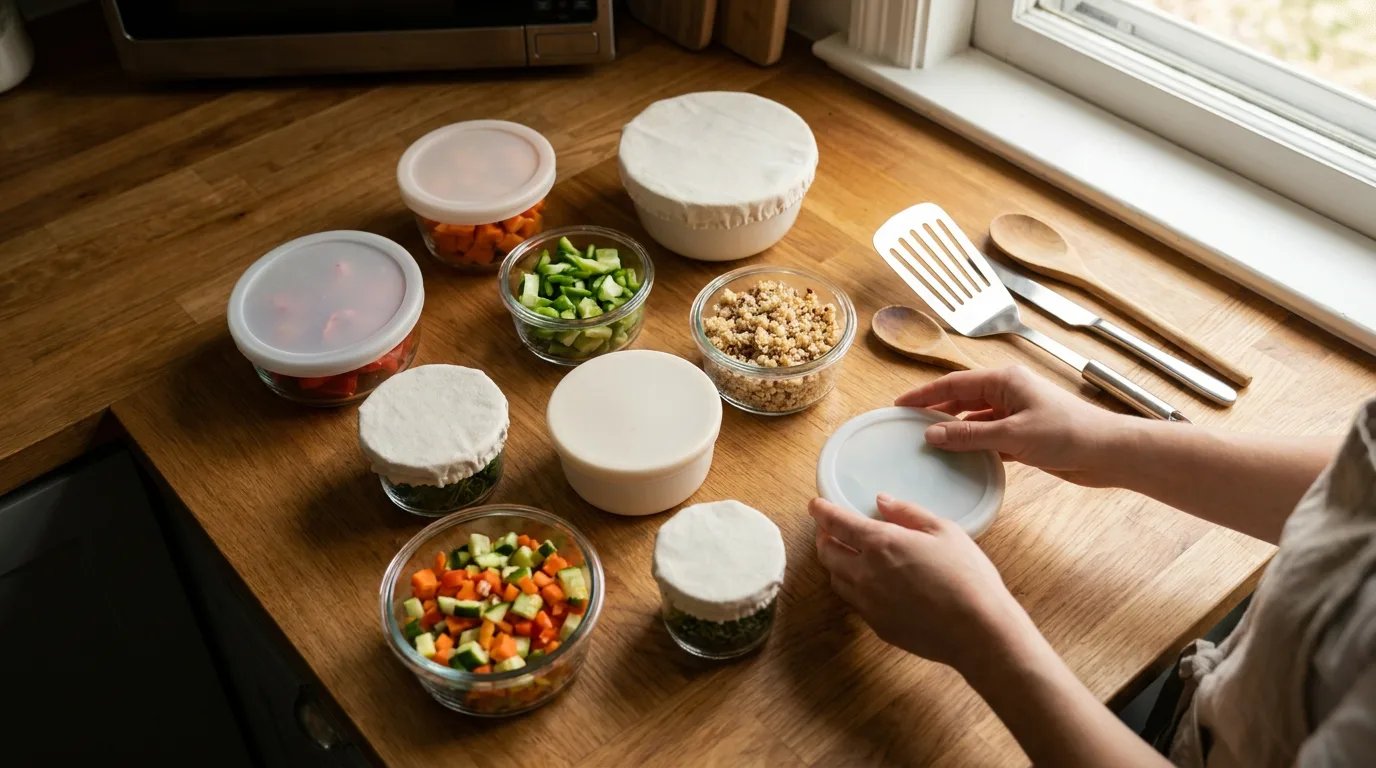
Fresh and opened moist foods require a storage plan. Use the manufacturer's current instructions for the exact recipe and format rather than assuming all products share one window.
The JustFoodForDogs FAQ distinguishes these refrigerated-use periods:
- Non-fish fresh-frozen meals: up to seven days sealed after thawing in the original package and five days after opening.
- Fish meals: five days sealed after thawing and three days after opening.
- JustFresh: refrigerate after opening and use within three days.
For refrigerator thawing, the FAQ allows up to 24 hours for an 18-ounce package and up to 48 hours for a 72-ounce package. Plan ahead so the next meal does not depend on an improvised thawing method.
The FDA's pet-food storage guidance advises promptly refrigerating or discarding unused canned or pouched food, keeping the refrigerator at 40°F or below, and cleaning feeding equipment.
- Mark when a package is opened and follow its specific use window. A shelf-stable unopened product still needs refrigeration after opening, and fish meals have shorter guidance than the non-fish fresh-frozen recipes.
Do not use food that has exceeded its stated storage window as a preference test. A dog's willingness to eat something does not establish that it was handled safely.
Once you have chosen an eligible recipe, calculated the portion, and checked package turnover, Petful's guide to where to buy JustFoodForDogs can help with the purchasing step.
What are Shibas allergic to?
Shiba Inu food allergies require an individual assessment, not a breed-specific ingredient blacklist. Recurring itching does not identify the current meal as the cause, and digestive symptoms do not establish that chicken, beef, or grains are responsible. Food and environmental causes differ, so choosing the best food for a Shiba Inu with allergies starts with understanding the diagnosis and feeding plan.
NC State's veterinary guidance explains that investigating a suspected food allergy may involve a supervised elimination diet and a subsequent challenge. A different everyday protein is not automatically an appropriate diagnostic diet.
Keep the feeding decisions separate:
- A preference record describes how much of a suitable food the dog eats.
- A portion review checks whether the amount and extras fit the calorie allowance.
- An allergy investigation follows a veterinary plan designed to evaluate a suspected reaction.
The four recipes in this comparison support ordinary complete-food selection. They should not be used as a treatment-food ranking or presented as proof that a particular ingredient will resolve symptoms.
Can I feed my Shiba Inu homemade meals?
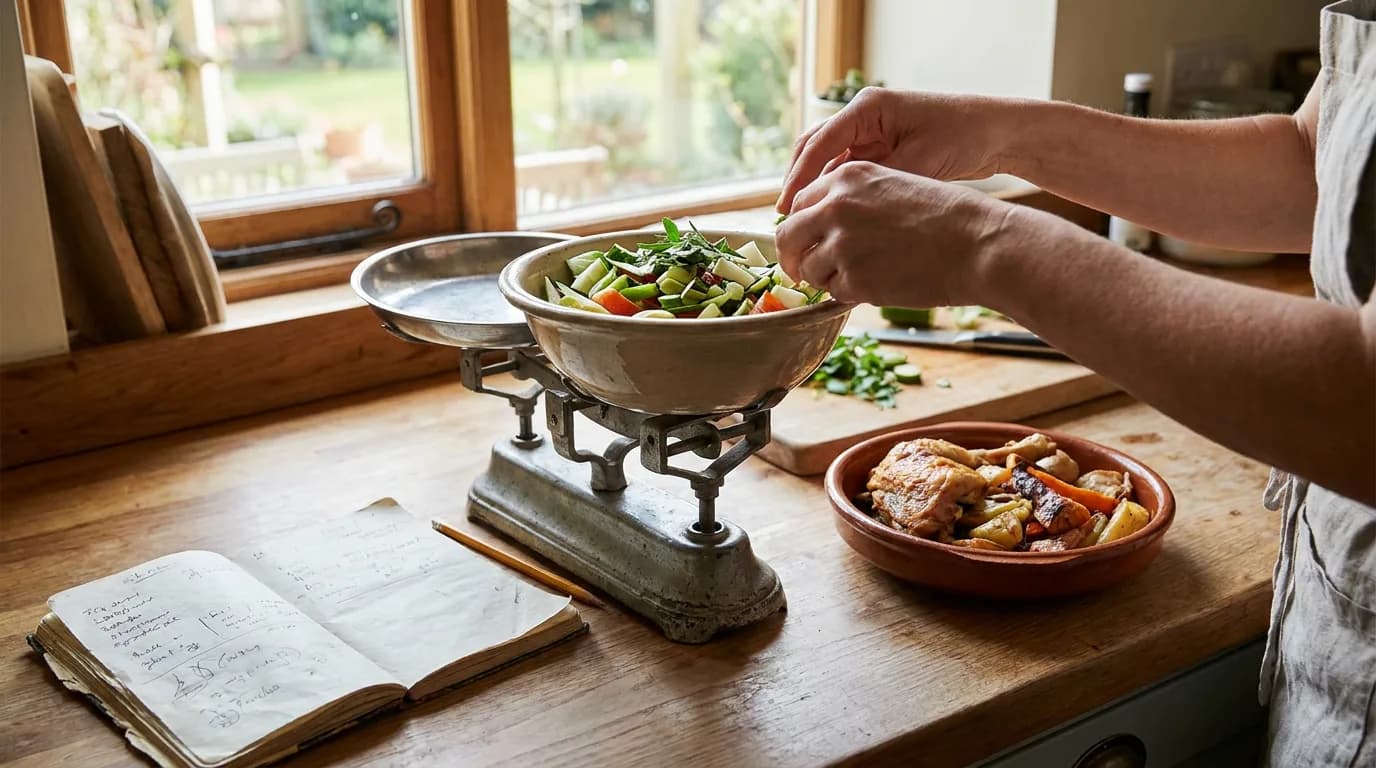
Homemade food for a Shiba Inu can be appropriate when it follows a professionally formulated complete recipe for the dog's life stage and individual needs. A collection of individually safe foods is not enough to establish nutritional adequacy. Familiar ingredients in a commercial recipe also do not make a simplified homemade imitation equivalent.
When evaluating Shiba Inu food recipes, check the instructions that determine whether the finished meal matches its formulation:
- The exact ingredients and amounts, including whether weights are raw or cooked.
- The required supplements, specified products, and doses.
- The preparation method and intended batch yield.
- The life stage and dogs for which the recipe was designed.
- The process for requesting an approved substitution.
Do not improvise mineral balance, omit a supplement, or exchange ingredients solely because their calorie values look similar. Cornell's nutrition guidance explains why home-prepared diets need a complete formulation. Work with a qualified veterinary nutrition professional when building an individualized home-cooked feeding plan.
Shiba Inu food questions
For an assessment, bring exact food labels, treats, chews, and a dated symptom history. Record what happened without declaring a cause: food and environmental causes differ, and the breed does not identify an allergen. Include previous recipes so the clinician has a useful dietary history.
Keep the professionally formulated complete recipe with your batch record, including the ingredient weights and required supplements. If an ingredient becomes unavailable, ask the formulator for a suitable substitution; do not improvise mineral balance. That preserves the recipe you were given instead of gradually creating a different diet.
Look first for the appropriate life stage and manageable texture. A small-breed formula may offer a useful format, but the size label is not sufficient evidence that it is the best choice for your dog. Confirm the adequacy statement, calorie density, individual tolerance, and measured feeding amount.
First record intake and recent extras rather than assuming a single refusal establishes dislike. A sudden or persistent appetite change is different from preference and needs assessment, especially with other changes. Do not repeatedly offer unmeasured alternatives while losing track of the day's actual intake.
Yes, when it fits the dog's feeding plan. Replace calories instead of simply adding the fresh portion to an unchanged full ration, and both complete foods must fit the life stage. Measure each contribution so the combined meal stays within the planned calorie allowance.
For further context, NC State explains how food allergies are investigated, and Cornell explains the nutritional limitations of improvised home cooking.

Coreen Saito is a pet writer and longtime shelter volunteer with more than a decade in animal rescue. She covers cat behavior, breed care, and the small, ordinary science of sharing a life with companion animals, with a particular focus on honest takes about the products and decisions that actually matter. At home in Arizona, she's outranked by Mac (a dog with the loudest opinion in the house), Rebel (a cat who governs by quiet authority), and Meri (an orange tabby who runs the late shift and the laundry basket). She writes about all three, plus the rescues that keep coming through her life, at LifeWithMinty.com.
Sign up for expert-backed reviews and safety alerts all in one place.
A Final Word (Disclaimer)
At Petful, our review integrity is paramount; we never exchange special treatment in our reviews for monetary or material rewards.
Nonetheless, when our readers click through to online merchants (including Chewy or Amazon), we receive a referral commission. This supports the running of our free blog, and we appreciate your backing.