Beef vs. Chicken Dog Food: How to Choose Between Complete Recipes
Compare JustFoodForDogs beef and chicken recipes by life stage, calories, ingredients, and daily portions, with practical guidance on tolerance, storage, and feeding cost.
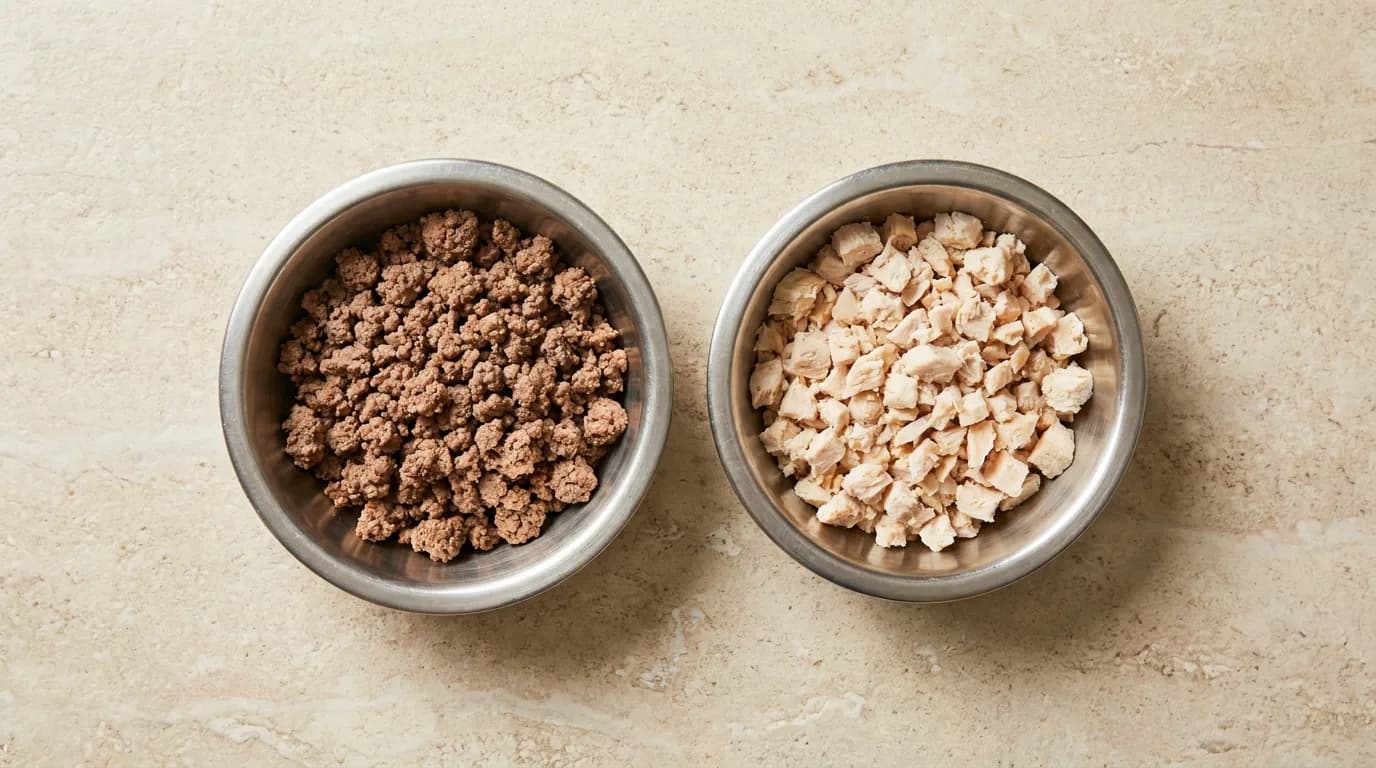
Separate bowls of plain cooked ground beef and chopped cooked chicken.
Petful is reader supported. As an affiliate of platforms like Amazon and Chewy, we may earn a commission when you buy through links on this page. There is no extra cost to you.
This article is sponsored by JustFoodForDogs. Petful maintains editorial control and may earn a commission from qualifying purchases, at no extra cost to you.
A useful beef vs. chicken dog food comparison starts with the complete recipes, not a general claim that one meat is healthier. Life-stage eligibility, calorie density, the full ingredient list, and your dog's established tolerance can matter more than the protein name on the front.
JustFoodForDogs Chicken & Rice and Beef & Russet Potato illustrate why. Their calorie densities are close, but their life-stage statements differ: Chicken & Rice includes growth, while Beef & Russet Potato is intended for adult maintenance.

Sign up for expert-backed reviews and safety alerts all in one place.
Is it better to feed your dog chicken or beef?
Neither chicken nor beef is automatically the better choice for every dog. Choose a complete and balanced recipe intended for the appropriate life stage, then assess its calories, ingredients, tolerance, and practical fit.
The question “What is the healthiest meat for dog food?” does not have a universal answer that settles the quality of a complete diet. A recipe includes more than its headline meat, and two products featuring the same meat can have different nutrient profiles and intended uses.
- 1Life stage can settle the choice before the meat name does.
- 2Compare the actual recipes' calories and ingredients.
- 3Use individual tolerance and a measured feeding routine instead of universal beef-versus-chicken rules.
Read the nutritional adequacy statement first. The FDA's complete and balanced guidance explains its role, and Petful's guide to AAFCO statements on dog food helps interpret the wording.
Petful may earn a commission when you click through to JustFoodForDogs, at no extra cost to you.
Compare two complete recipes side by side
These are facts about two specific JustFoodForDogs recipes. The figures do not describe all beef foods or all chicken foods, and the comparison does not claim hands-on taste testing.

| Label detail | JustFoodForDogs Chicken & Rice | JustFoodForDogs Beef & Russet Potato |
|---|---|---|
| Nutritional adequacy | All life stages, including large-dog growth | Adult maintenance |
| Calories per kilogram | 1,530 kcal/kg | 1,559 kcal/kg |
| Calories per gram | 1.530 kcal/g | 1.559 kcal/g |
| Stated calories per ounce | 43 kcal/oz | 44 kcal/oz |
| Crude protein minimum, as fed | 8% | 8.5% |
| Crude fat minimum, as fed | 3% | 7% |
| Moisture maximum | 72% | 75% |
| Selected ingredients | Chicken, white and brown rice, carrots, kale, chicken liver, apples, chicken broth, microalgae oil, nutrient blend | Beef, beef liver, russet and sweet potatoes, carrots, green beans, peas, apples, sunflower oil, microalgae oil, nutrient blend |
JustFoodForDogs Chicken & Rice
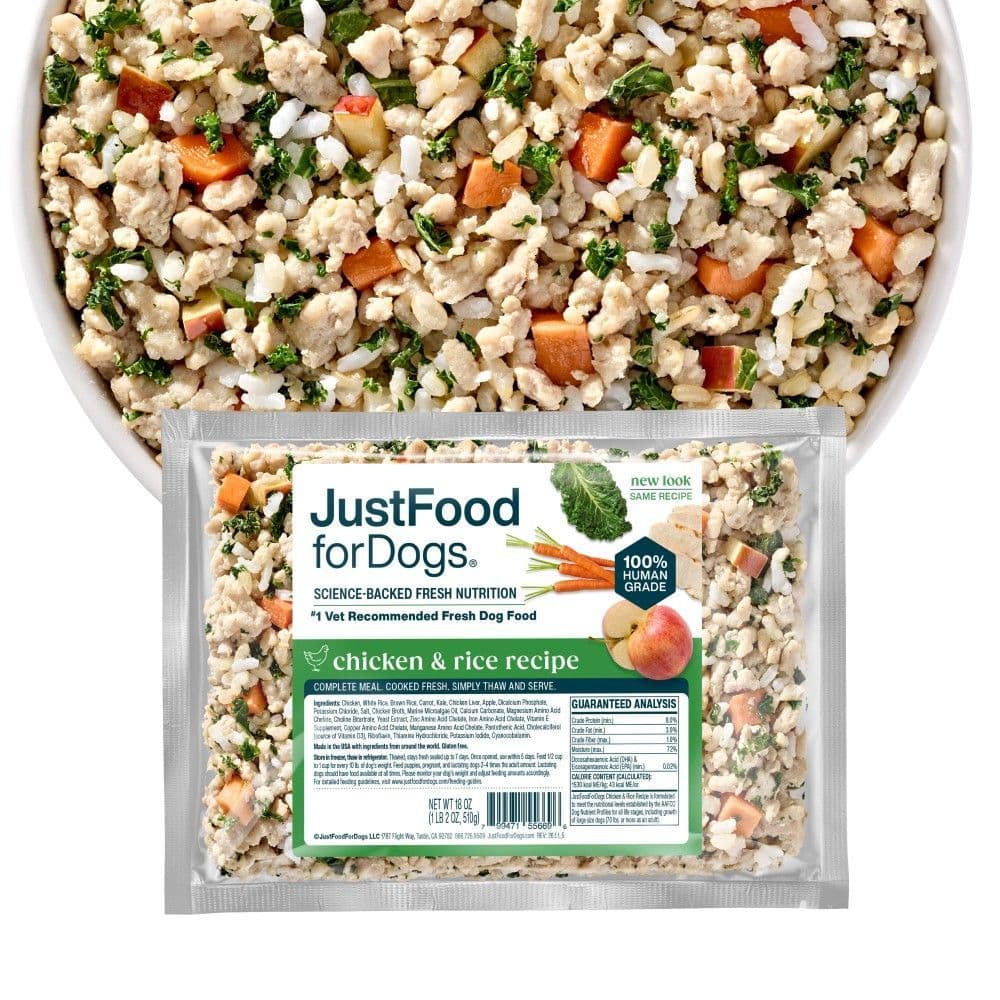
JustFoodForDogs Chicken & Rice is the growth-appropriate choice in this two-recipe comparison. Its current statement includes puppies expected to weigh 70 pounds or more as adults.
It is also an option for an adult whose feeding plan and ingredient tolerance fit. The presence of chicken does not, by itself, establish that the recipe is a weight-loss food or the best choice for every senior dog.
- Consider it for: A puppy or adult needing an eligible complete recipe.
- Check next: The individual calorie allowance and the complete ingredient list.
- Keep distinct: This formulated product is not nutritionally equivalent to plain homemade chicken and rice.
JustFoodForDogs Beef & Russet Potato
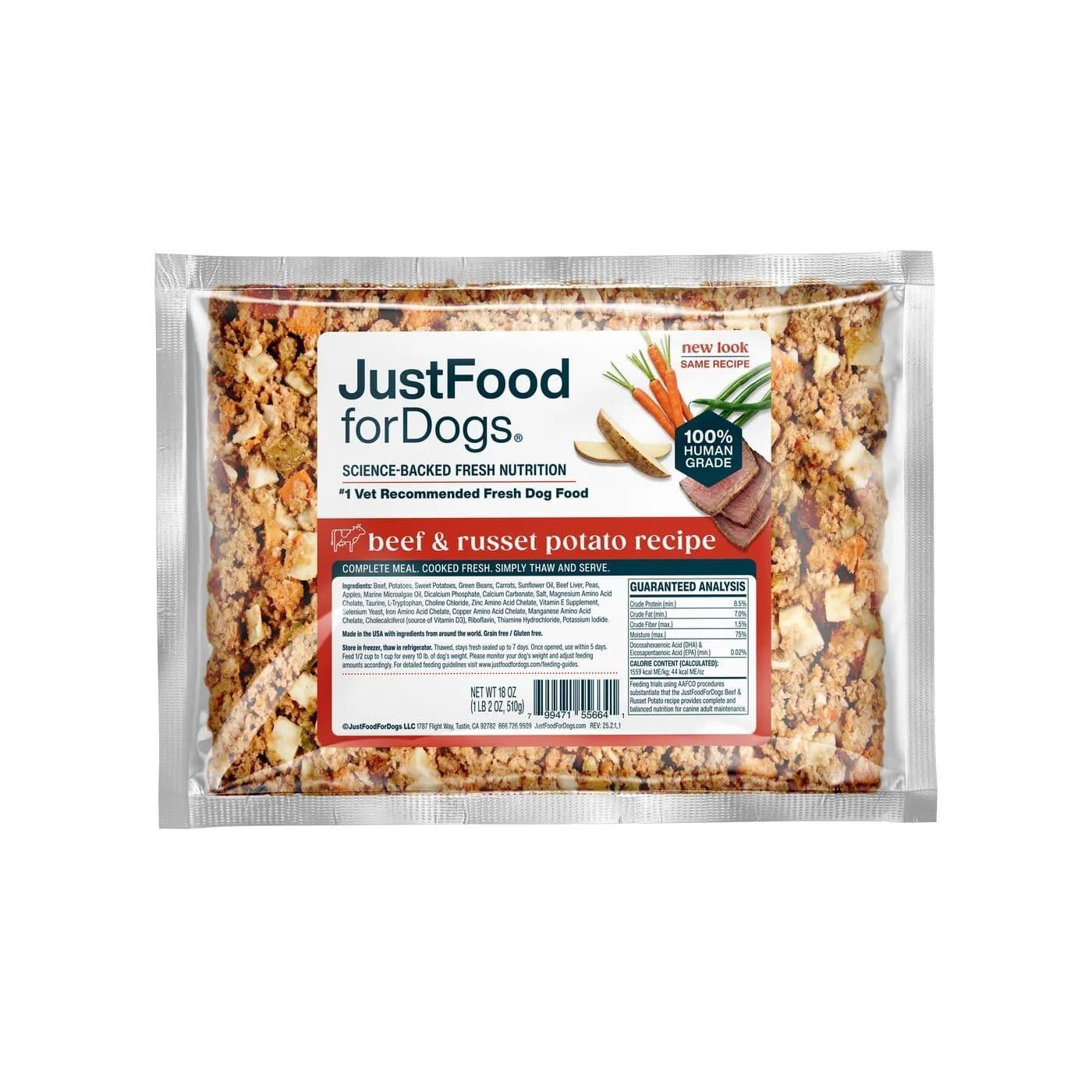
JustFoodForDogs Beef & Russet Potato is an adult-maintenance recipe. Feeding trials using AAFCO procedures substantiate its adequacy for that life stage.
Petful may earn a commission when you click through to JustFoodForDogs, at no extra cost to you.
Its calorie density is slightly higher than Chicken & Rice, but the difference is small: 1.559 versus 1.530 kcal/g. The beef name alone is not a reason to assign it only to very active dogs or assume it requires a dramatically smaller serving.
- Consider it for: An adult whose ingredient history and feeding routine fit.
- Check next: The measured daily portion and storage plan.
- Keep distinct: It is not intended as a complete puppy diet.
JustFoodForDogs JustFresh Chicken: another chicken format
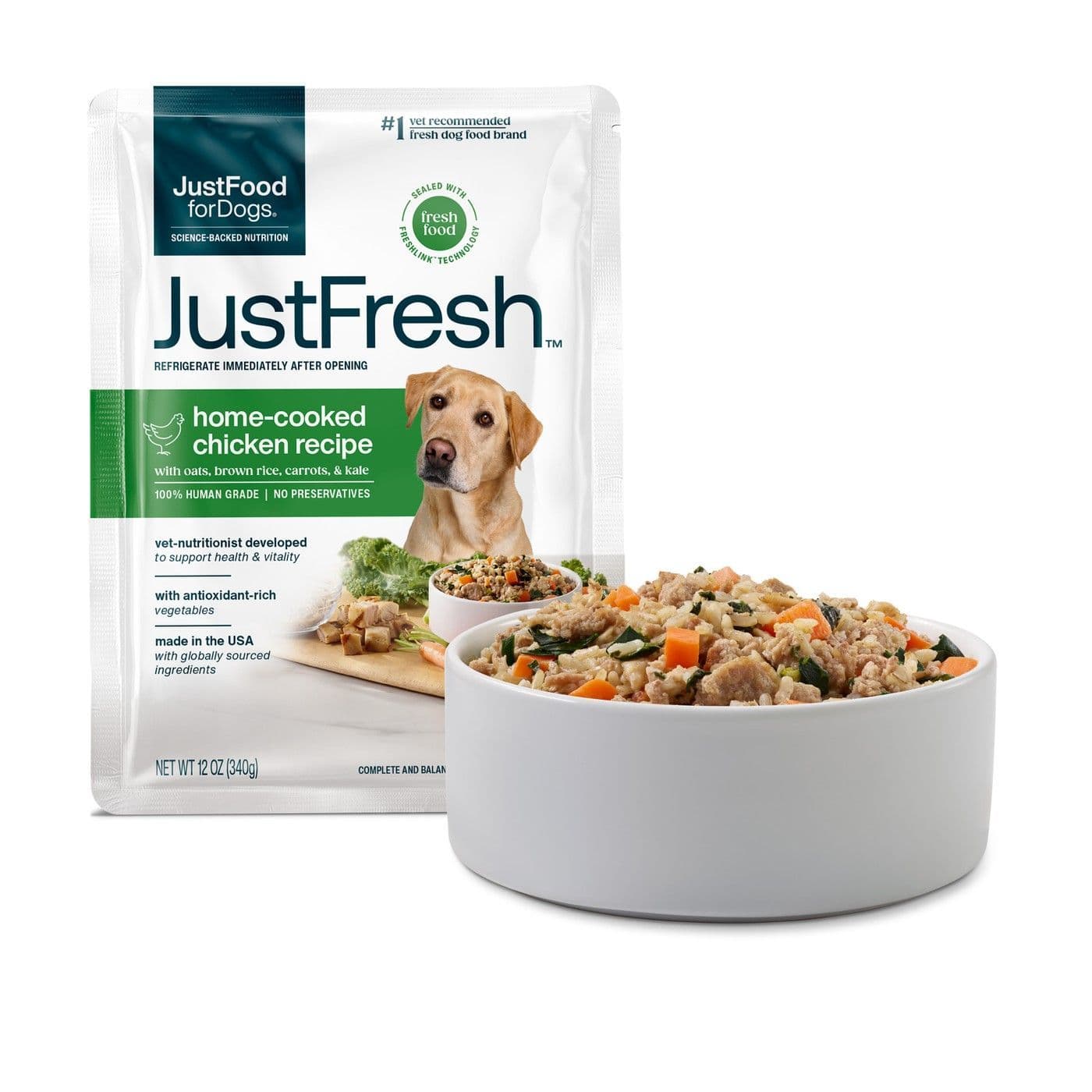
If chicken suits your adult dog but freezer space is limited, JustFoodForDogs JustFresh Chicken offers a different storage format. It is a complete adult-maintenance recipe, not the growth-eligible Chicken & Rice recipe compared above. Its unopened shelf life is up to two years; refrigerate after opening and use within three days, following the package instructions.
At 1,254 kcal/kg, it also needs its own portion calculation. Do not transfer the Chicken & Rice gram amount to this food simply because both feature chicken. Consider this option when adult eligibility, the full ingredient list and the opened-use window fit your household.
JustFoodForDogs Fish & Sweet Potato: an alternative to compare
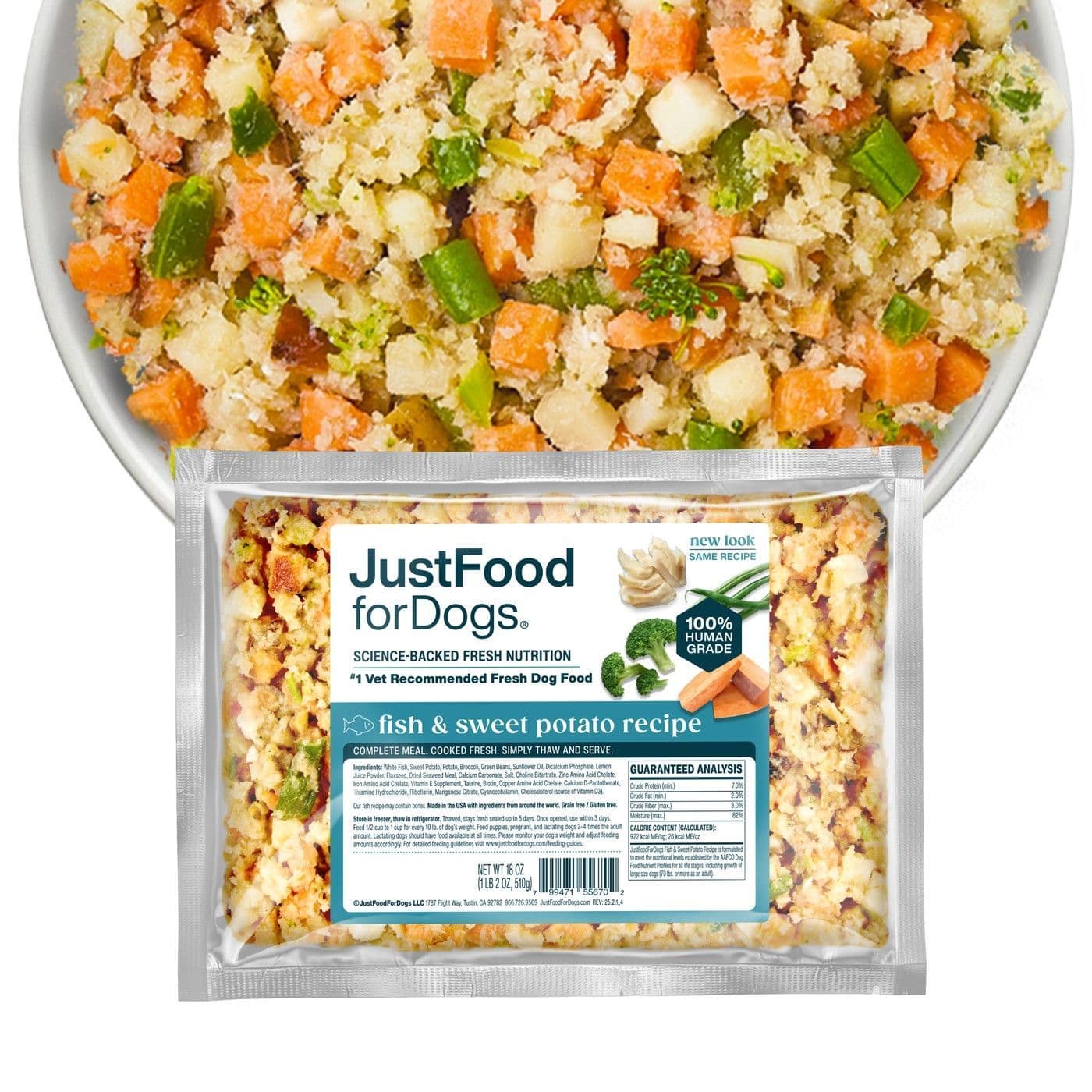
If neither of the two main recipes fits your everyday preferences, JustFoodForDogs Fish & Sweet Potato is another complete recipe to assess with the same label checklist. It uses cod, pollock and haddock and is formulated for all life stages, including large-dog growth. This fish option is outside the beef-versus-chicken comparison; it does not establish that fish is better or that switching proteins will resolve an allergy.
Its 922 kcal/kg calorie density is lower than either featured beef or chicken recipe, so calculate its portion separately. Its refrigerated handling window also differs: up to five days sealed in the thawed original package and three days after opening. Check those practical differences before choosing a package size.
Match the recipe to your dog's life stage first
Adult maintenance versus all life stages is the first meaningful distinction between these two foods. For a growing puppy, Chicken & Rice has the qualifying growth statement; Beef & Russet Potato does not.
That finding is recipe-specific. It does not establish that chicken is inherently a better puppy protein or that every beef recipe is adult-only. Another product would need its own label check.
For an adult, either may qualify if the complete formulation fits the dog's needs. Continue the comparison rather than treating the all-life-stages wording as an automatic advantage for every adult.
Apply the life-stage check before switching
- Confirm the dog's current life stage.
- Read the full adequacy statement.
- Check any individual dietary requirements.
- Compare calories and ingredients among the eligible choices.
- Establish the portion before switching.
If a puppy and adult share a household, the adult's food cannot automatically become the puppy's meal. Each dog needs a qualifying recipe and an individual ration.
Compare feeding amounts by calories, not equal scoops
Compare calories before equal scoops. Different recipes can pack differently into a measuring cup, and even equal food weights can supply different calories.
For an explicitly hypothetical 500-calorie allocation, divide 500 by each recipe's calories per gram:
- Chicken & Rice: 500 ÷ 1.530 = about 327 grams.
- Beef & Russet Potato: 500 ÷ 1.559 = about 321 grams.
The difference is approximately six grams for this allocation. That does not support a blanket assumption that beef dog food is always dramatically more calorie dense than chicken dog food.
Petful may earn a commission when you click through to JustFoodForDogs, at no extra cost to you.

The 500-calorie figure is a teaching example, not a recommendation for an individual dog. Establish the dog's actual allowance using its life stage, condition, activity, and feeding plan. Include treats and other extras before assigning calories to the complete recipe.
The table's fat and protein guarantees require separate interpretation. They are minimums on an as-fed basis, with different moisture maximums. They are not actual measured nutrient values and do not, by themselves, establish nutrient intake per calorie or suitability for a medical need.
Use the published calorie density for the portion calculation. If a decision requires precise nutrient comparison, request compatible typical analysis from the manufacturer rather than treating minimum guarantees as exact composition.
Read the full ingredient list and your dog's history
The front of a package highlights a few ingredients. The complete formula includes other sources of nutrients and the ingredients needed to make the diet complete.
For example, the chicken recipe includes rice, vegetables, chicken liver, broth, oil, and a nutrient blend. The beef recipe includes liver, potatoes, vegetables, oils, and its own nutrient blend. Comparing “chicken versus beef” alone leaves out much of what the dog actually eats.
What should top 3 ingredients be in dog food?
There is no universal three-ingredient combination that proves a dog food is complete, high quality, or suitable for your dog. Three familiar ingredients cannot substitute for the nutritional adequacy statement and full formulation.
Read the entire ingredient list when checking a known restriction. Then consider the appropriate life stage, calories, manufacturer information, and the dog's response.
A short ingredient-ranking rule also cannot tell you whether a food provides the right nutrient balance. Vitamins and minerals used in smaller amounts can be essential even when they appear later in the list.
Petful may earn a commission when you click through to JustFoodForDogs, at no extra cost to you.
Is chicken or beef better for dogs with allergies?
Neither protein is universally better for dogs with allergies. The answer depends on the individual dog's history and diagnosis. Choosing the best meat for dogs with sensitive stomachs likewise cannot be reduced to a general chicken-or-beef rule.
Recurring itching or digestive signs do not identify a specific food trigger on their own. Cornell's allergy guidance describes food elimination plans as part of investigating suspected food allergy.
Bring a complete feeding history to that assessment, including:
- Main meals and previous recipes.
- Treats and chews.
- Toppers and table food.
- Food used with medication.
- Dates of changes and observed signs.
An everyday chicken or beef recipe is not automatically an appropriate diagnostic diet. Keep routine recipe selection separate from a supervised investigation or a prescribed nutrition plan.
Choose a routine you can maintain
Once the recipe qualifies, compare the work of feeding it. A consistent portion, gradual transition, dependable storage, and clear caregiver instructions can make the chosen food easier to use.
Both foods in this comparison are fresh-frozen recipes. The JustFoodForDogs FAQ describes refrigerator thawing and, for these non-fish meals, up to seven refrigerated days sealed in the thawed original package and five days after opening.

Before changing foods:
- Calculate the new daily grams.
- Choose a package size that fits the opened-use window.
- Follow the product's transition guidance and individual care advice.
- Keep other feeding variables reasonably consistent.
- Record intake and any meaningful changes.
Compare cost using the amount you will actually feed. Divide the current package price by its usable grams, then multiply by the daily gram portion. Include relevant shipping costs and account for whether you can use an opened package in time.
A lower package price does not always mean a lower daily feeding cost, and the meat name does not settle the comparison. Petful's guide to where to buy JustFoodForDogs can help you find purchasing routes once the recipe and package size are chosen.
Do dogs prefer the taste of beef or chicken food?
There is no universal beef-versus-chicken dog food taste winner. The individual dog responds to a complete recipe, including its texture and serving routine, rather than an isolated meat name. This comparison uses label information and does not claim a controlled taste test.
To make an observation useful, keep the portion, meal timing, and extras reasonably consistent. Record what was offered and eaten instead of judging preference from one enthusiastic meal. Check the practical factors that can change the result:
- Was the food stored correctly and within its use window?
- Were substantial treats given before the meal?
- Could the dog comfortably pick up and eat the texture?
- Was the response repeated or limited to one meal?
Preference does not establish better nutrition or tolerance. A new or persistent appetite change also deserves assessment rather than being dismissed as a taste issue.
Can a complete dry beef or chicken food be an everyday diet?
Yes. Dogs can receive everyday nutrition from a complete dry beef or chicken food when the exact recipe suits their life stage and individual needs. Fresh food is a format choice, not a requirement for basic nutritional adequacy. Drinking water should remain available.
Use the same label checks for dry food as for the two fresh recipes compared here:
- Confirm the nutritional adequacy statement and intended life stage.
- Calculate the portion from that dry recipe's calorie density.
- Account for treats and other foods in the daily allowance.
- Follow its package storage instructions.
Do not transfer the fresh recipes' gram amounts or measuring-cup portions to a dry product. The 500-calorie examples above apply to those exact JFFD recipes. A dry food needs its own calculation even when the front of the package names the same meat.
Beef and chicken recipe questions
Keep a brief record of the exact recipe, amount offered, leftovers, and recent extras. That gives another caregiver or your veterinarian something concrete to assess. Do not turn one finished bowl into a universal recommendation or an unexplained appetite change into a preference label.
Yes, when both complete recipes suit the dog's life stage and individual needs. Calculate each food's calorie contribution and keep the combined ration within the planned allowance. An adult-maintenance recipe does not become a verified complete puppy diet simply because it is mixed with growth-appropriate food.
No. Compare current package prices, calories, daily portions, shipping, and likely waste. Foods with different energy densities or package sizes can have different daily costs even when their sticker prices look similar. No universal price advantage follows from the meat name.
An appropriate complete and balanced recipe is not incomplete merely because it uses one established protein source. Rotation is a separate preference or management choice, not a requirement created by feeding chicken or beef. Any change should preserve nutritional eligibility, measured calories, and individual tolerance.
Yes. If you later replace part of that dry ration with an eligible complete fresh food, calculate each food's calorie contribution and reduce the original ration accordingly. Adding a fresh portion on top of an unchanged full meal increases the day's calories.

Coreen Saito is a pet writer and longtime shelter volunteer with more than a decade in animal rescue. She covers cat behavior, breed care, and the small, ordinary science of sharing a life with companion animals, with a particular focus on honest takes about the products and decisions that actually matter. At home in Arizona, she's outranked by Mac (a dog with the loudest opinion in the house), Rebel (a cat who governs by quiet authority), and Meri (an orange tabby who runs the late shift and the laundry basket). She writes about all three, plus the rescues that keep coming through her life, at LifeWithMinty.com.
Sign up for expert-backed reviews and safety alerts all in one place.



A Final Word (Disclaimer)
At Petful, our review integrity is paramount; we never exchange special treatment in our reviews for monetary or material rewards.
Nonetheless, when our readers click through to online merchants (including Chewy or Amazon), we receive a referral commission. This supports the running of our free blog, and we appreciate your backing.