Best Dog Houses: Compare Materials, Sizes and Shelter
Compare four dog houses by construction, doorway measurements and cleaning access. Find practical guidance for small dogs, outdoor placement and choosing between plastic and wood.
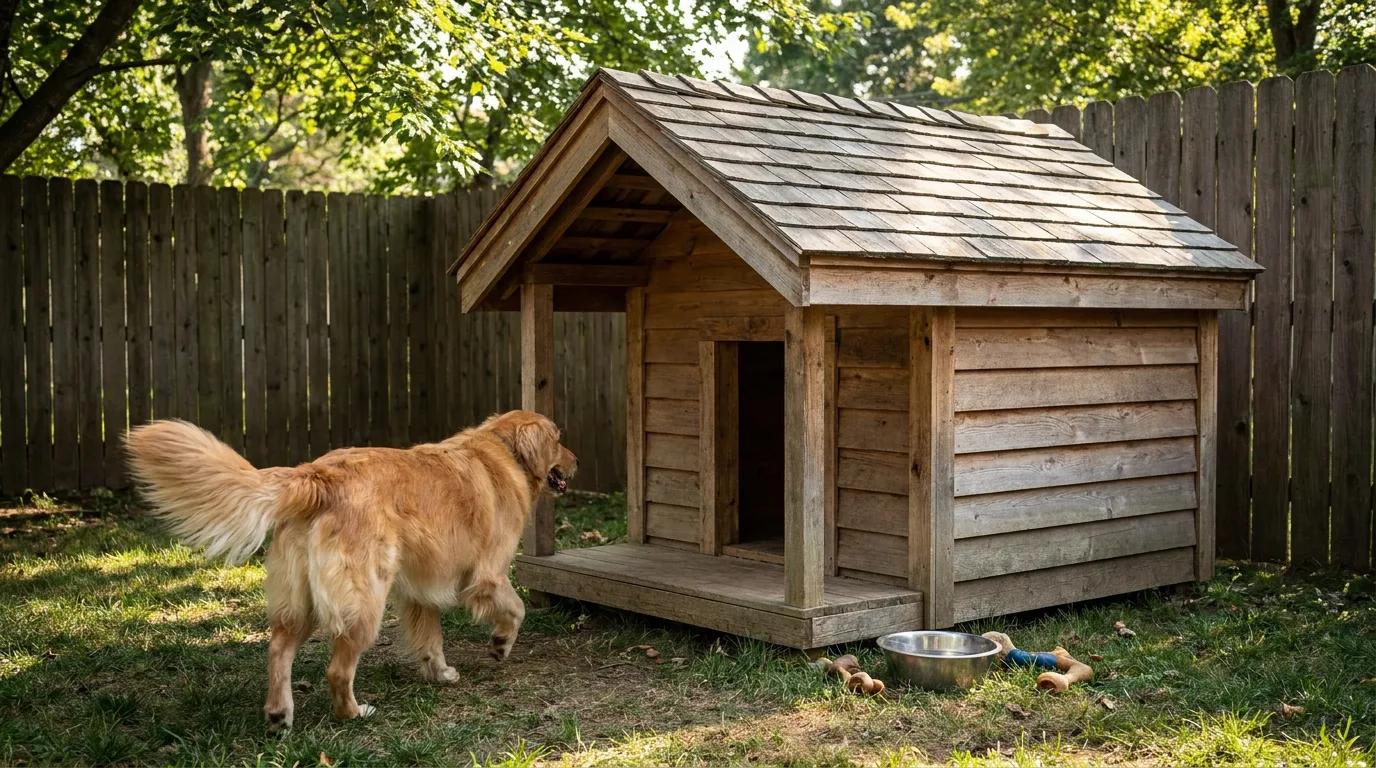
A dog house provides a sheltered retreat during outdoor time; its size, placement and construction all matter.
Petful is reader supported. As an affiliate of platforms like Amazon and Chewy, we may earn a commission when you buy through links on this page. There is no extra cost to you.
The best dog houses give your dog an accessible, appropriately sized retreat and give you a practical way to keep it clean. Start with the door opening and usable interior, then compare materials and weather protection. A “Large” label or an impressive exterior measurement cannot establish fit by itself.
We compared published specifications, manufacturer information and product manuals for four houses. We have not tested these products. The differences below explain what each offers, which measurements are available and what you should confirm before buying. For a basic plastic shelter with tool-free assembly, start with the Frisco Plastic Outdoor Dog House and confirm its door opening before ordering.

Sign up for expert-backed reviews and safety alerts all in one place.
Best dog houses at a glance
TRIXIE supplies a removable floor and published entrance dimensions. Lifetime offers an opening roof and a removable interior partition. Frisco and Petmate provide plastic alternatives, with important gaps in their published fit information. For small or medium dogs, those gaps matter just as much as they do for larger pets. If you prefer wood, the TRIXIE Log Cabin Dog House pairs pine construction with an asphalt-shingle roof and adjustable legs.
- 1Compare the door opening and usable interior separately from the outside dimensions.
- 2Choose cleaning access you can use regularly, such as a removable floor, opening roof or separable shell.
- 3Treat weather-resistant construction as a shelter feature, not a guarantee of safe outdoor temperatures.
Before comparing the cost of a pre-built dog house, check whether assembly is required and decide which features you actually need:
- Everyday upkeep: Include suitable bedding and replacement parts in the purchase budget.
- Construction: A steel-reinforced frame, as used by Lifetime, differs from a house made entirely of metal.
- Custom-made houses: Request specified interior and entrance measurements before paying for a design.
- Summer use: Prioritize shade, water and airflow. No house here has verified cooling performance.
- Value: A cheap sale price or high customer rating cannot compensate for a doorway your dog cannot use comfortably.
Compare shelter construction, entry fit for small dogs and cleaning access side by side. Missing interior and doorway dimensions stay marked as unconfirmed; do not substitute exterior measurements. No model earns an all-weather recommendation simply because its exterior resists rain.
| Dog house | Best reason to consider it | Construction and known dimensions | Door opening and interior | Cleaning access and main limitation |
|---|---|---|---|---|
| Frisco Plastic Outdoor Dog House, Large | Simple plastic shelter | Plastic; exterior 38.5 L × 33 W × 32 H inches | Door opening and usable interior not established | Tool-free assembly; confirm disassembly instructions for cleaning. Exterior measurements do not establish fit. |
| TRIXIE Log Cabin Dog House, Small | Wooden house with a removable floor | Manufacturer identity: natura Cottage 39530; pine and asphalt-shingle roof; overall 28 × 29.9 × 30.3 inches | Opening listed as 9.4 × 13.4 inches; usable interior not established | Removable floor and adjustable legs. Verify model 39530, not similarly named 39551. |
| Lifetime Deluxe Dog House, Gray, Large | Adjustable interior layout and roof access | Model 60328; HDPE with steel reinforcement | Opening listed as 18.9 × 12.8 inches, orientation unspecified; usable interior not established | Hinged roof with gas springs and removable partition. Heater sold separately. |
| Petmate Barnhome III Dog House, Small | Small plastic shelter with a separable shell | Barnhome III family has plastic construction, rear ventilation and a raised interior floor | Exact Small variant exterior, interior and doorway measurements require confirmation | Two-piece snap construction and hose cleaning. Family features do not resolve the Small variant’s fit. |
Small and medium dog houses: check the doorway first
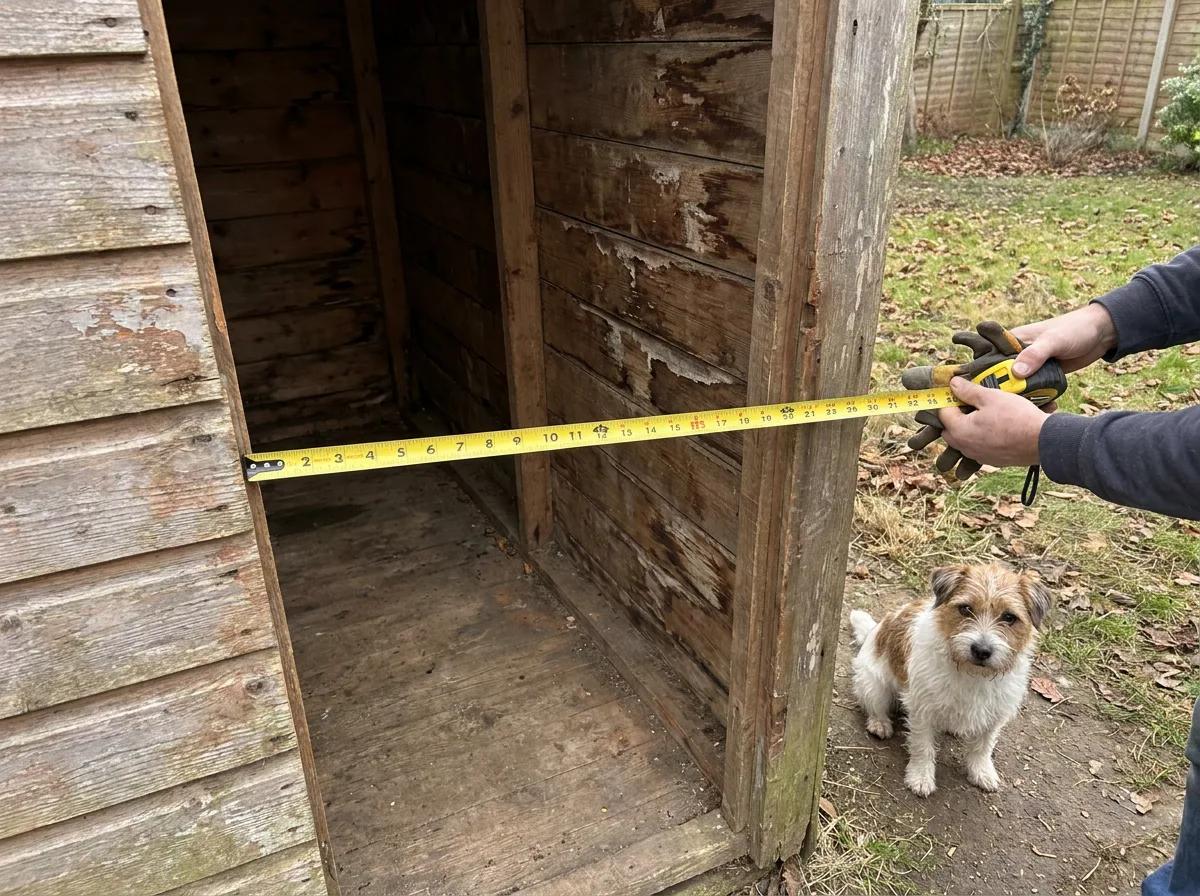
The entrance is the first fit check because a roomy-looking house can still have a restrictive opening. Measure your dog’s body width and height, then obtain the manufacturer’s entrance measurements with their orientation clearly identified. Also check the threshold: a small or less-mobile dog may struggle with a high step.
What is the best outdoor dog house for a small dog?
The best small dog house is one with a comfortable entrance, enough usable room for normal movement and cleaning access you can manage. TRIXIE’s model 39530 is worth comparing because its published 9.4 × 13.4-inch opening gives you a concrete starting point. Confirm the dimensions’ orientation and interior space before deciding.
Petmate Barnhome III, Small is another option, but its name alone does not establish fit. Ask for the exact variant’s measurements before ordering. Apply the same process to medium dogs:
- Check the clear entrance and step height.
- Confirm room to stand, turn and lie down naturally.
- Account for bedding and any interior partition.
Our dog house picks
Frisco Plastic Outdoor Dog House, Large
Simple plastic shelter
Petful may earn a commission when you click through to Chewy, at no extra cost to you.
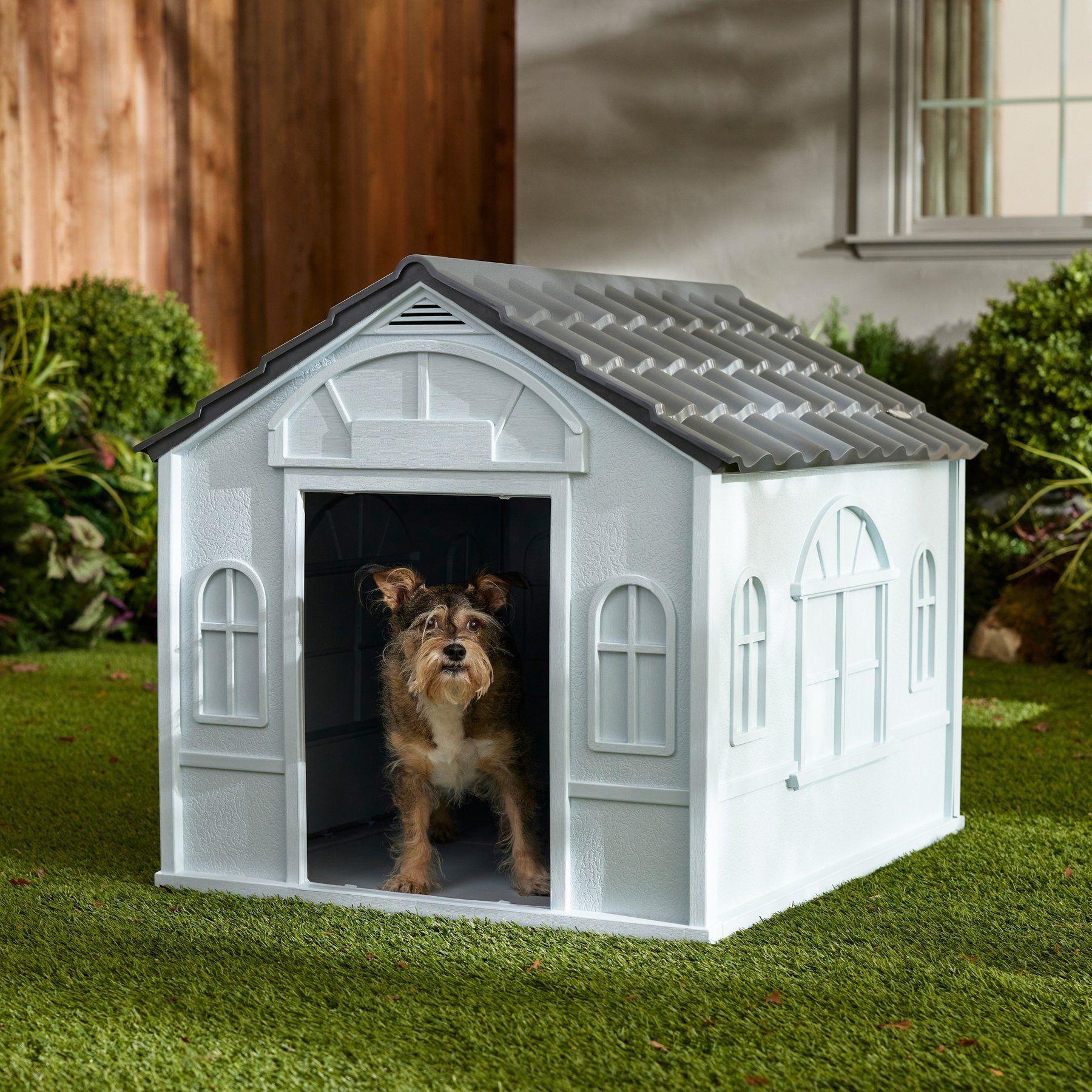
Frisco is a straightforward plastic option for buyers who want a basic shelter and tool-free assembly. The Frisco manual indexed by ManualsLib identifies SKU 370357 and lists exterior dimensions of 38.5 inches long, 33 inches wide and 32 inches high.
Those measurements help you plan where the house will sit. They do not tell you how much sleeping room remains inside, and we could not establish its doorway dimensions.
- Useful distinction: Simple assembly without a wooden finish to maintain.
- Before buying: Request the clear entrance and usable interior measurements.
- Cleaning consideration: Check the instructions before separating assembled panels.
TRIXIE Log Cabin Dog House, Small
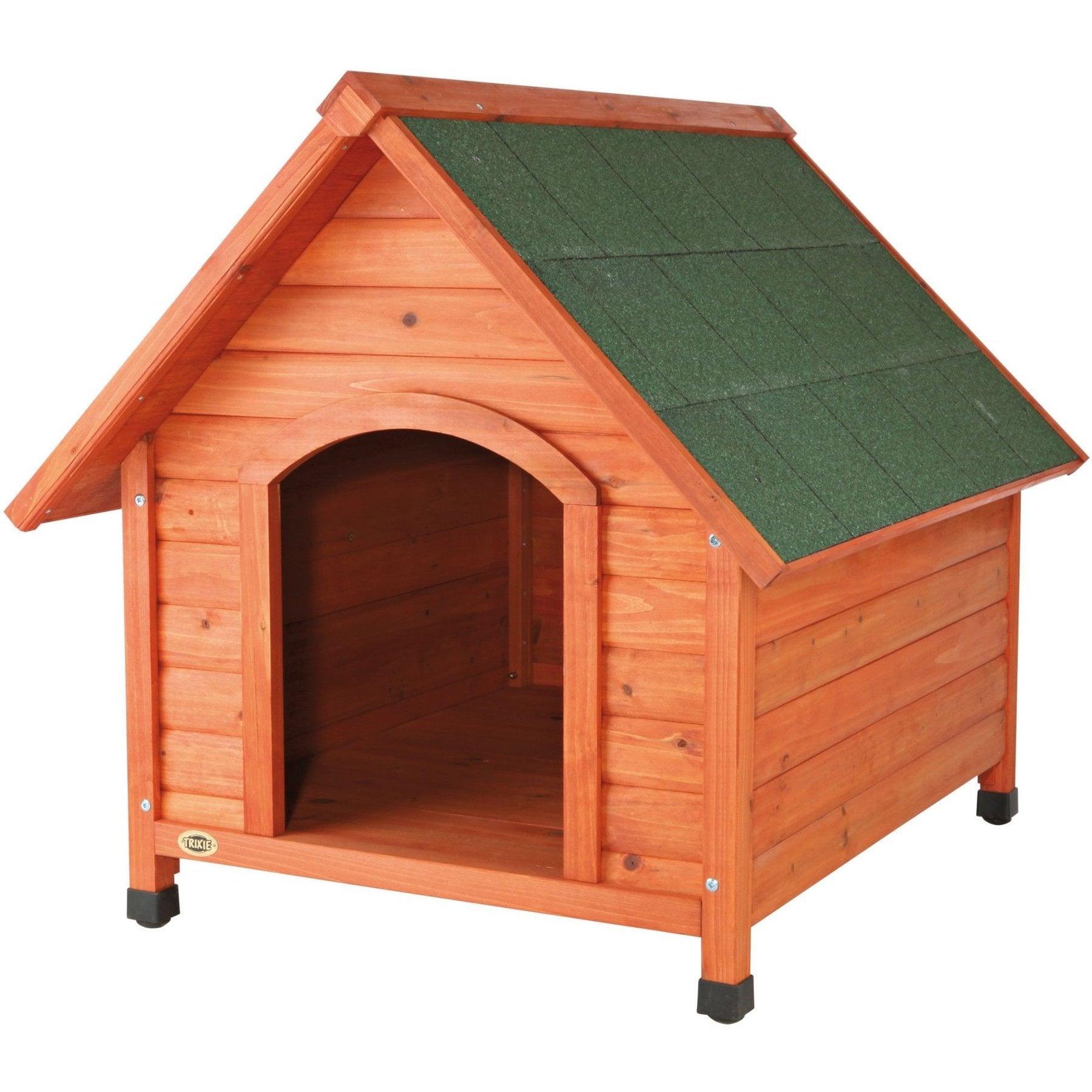
Small wooden shelter
Petful may earn a commission when you click through to Chewy, at no extra cost to you.
This listing needs a model check: the selected product corresponds to TRIXIE natura Cottage, model 39530, although the retail name says Log Cabin. TRIXIE’s manufacturer page describes pine construction, tongue-and-groove panels, an asphalt-shingle roof, adjustable legs and a removable floor.
The listed overall dimensions are 28 × 29.9 × 30.3 inches, with a 9.4 × 13.4-inch opening. The source does not label those measurements’ orientation.
- Useful distinction: The removable floor provides access to the base for cleaning.
- Before buying: Confirm model 39530 and its usable interior.
- Main tradeoff: Wood and its finish need inspection as they weather.
Lifetime Deluxe Dog House, Gray, Large
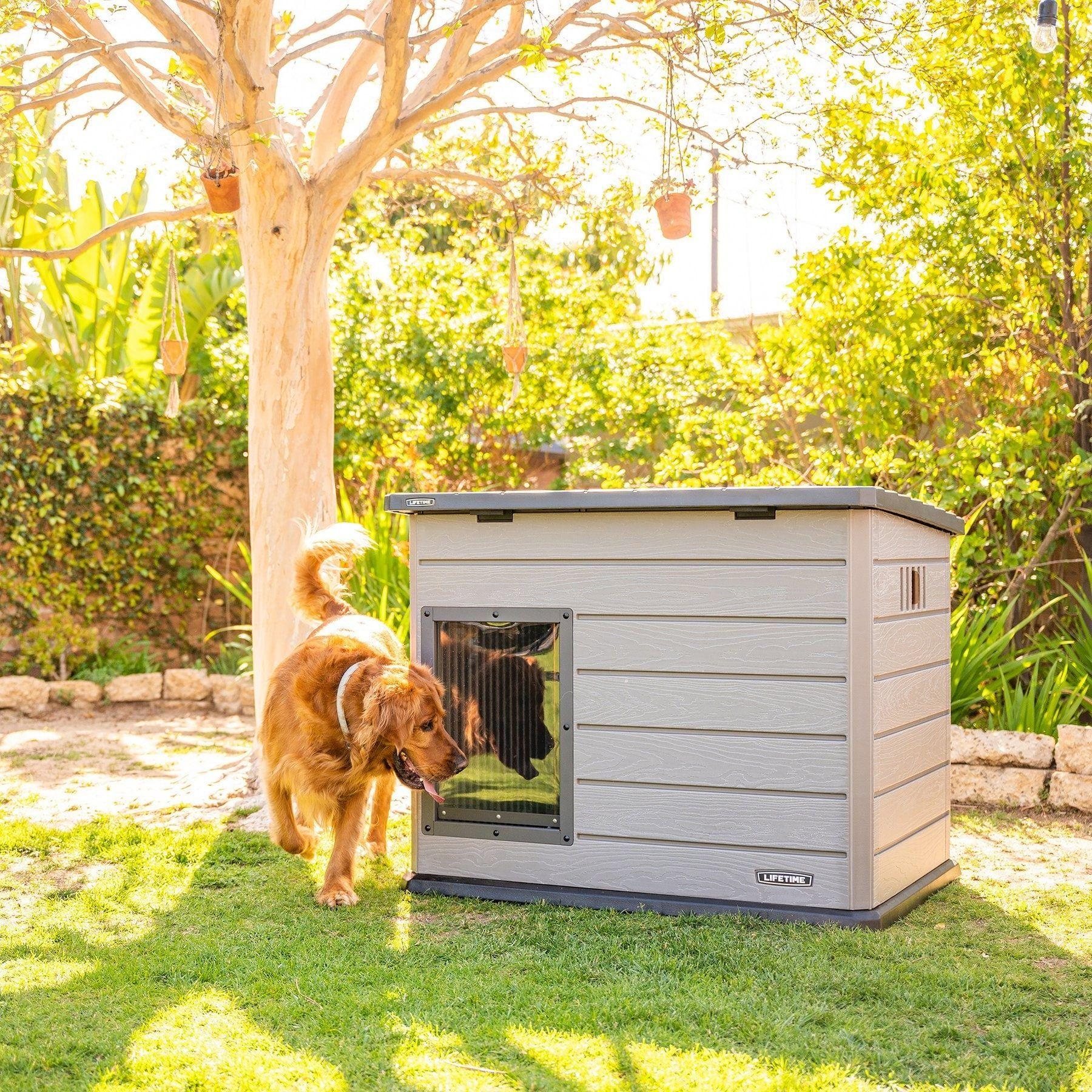
Adjustable interior layout and cleaning access
Petful may earn a commission when you click through to Chewy, at no extra cost to you.
Lifetime Deluxe Dog House, model 60328 offers the most flexible interior arrangement in this comparison. Its removable partition lets you change the layout, while a hinged roof with gas springs provides access from above. Lifetime also lists a raised base, adjustable side vents and a weighted vinyl flap.
The published opening is 18.9 × 12.8 inches, without a labeled orientation. Usable interior measurements remain unconfirmed.
- Useful distinction: Roof access and a removable partition.
- Before buying: Check the interior dimensions in your intended configuration.
- Heating limitation: The mounting bracket is included; the heater and heater-mounting hardware are not.
Petmate Barnhome III Dog House, Small
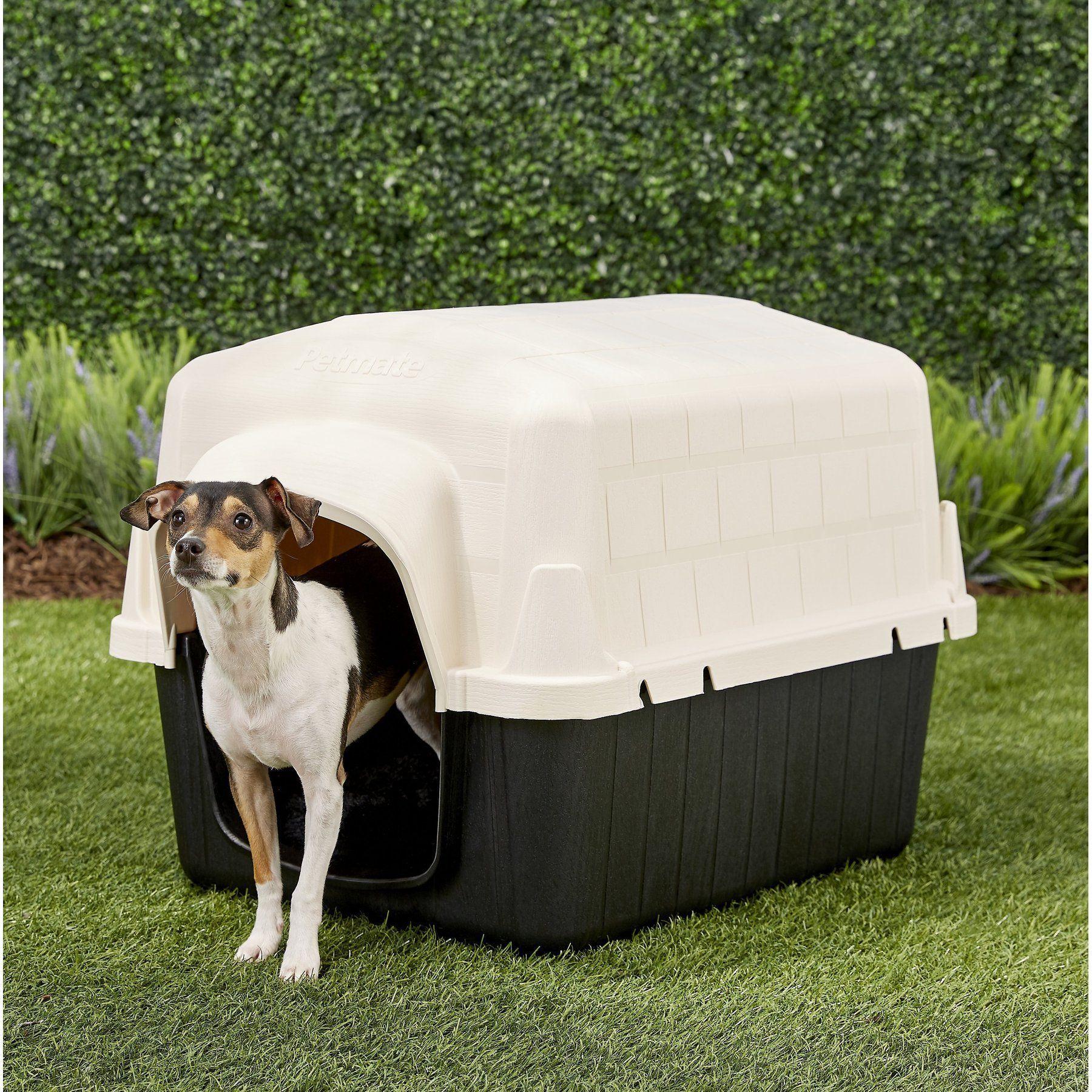
Small plastic shelter
Petful may earn a commission when you click through to Chewy, at no extra cost to you.
Barnhome III suits buyers interested in a compact plastic design that separates for cleaning. Petmate’s manufacturer information confirms the family’s two-piece snap construction, rear ventilation, raised interior floor and extended roof rim.
That source describes another Barnhome III size. It supports the family construction details, but it does not verify the selected Small variant’s dimensions. Do not substitute dimensions from an accessory door or another Barnhome size.
- Useful distinction: A separable shell that Petmate describes as hose-cleanable.
- Before buying: Confirm exterior, interior and entrance dimensions for the Small listing.
- Main tradeoff: The available fit information is less complete than the product name suggests.
Plastic dog houses for simple cleaning
Plastic is practical when you want surfaces that are straightforward to wipe or rinse. The design still determines whether you can reach the corners, remove damp bedding and dry the base. A smooth shell is less convenient if cleaning requires dismantling parts you cannot easily reconnect.
Barnhome III’s separable construction and Lifetime’s opening roof solve access differently. When comparing a Petmate Barnhome III Small, check both its fit and how much space you need around it to lift off the shell.
What material is best for a dog house?
Choose the construction that fits your maintenance needs and placement. Plastic offers washable surfaces; wood offers different panel and floor designs; steel reinforcement can support a plastic structure. None establishes insulation performance by itself.
Compare these practical details:
- Access to the entire sleeping floor.
- Joints and edges that remain intact.
- Replacement-part availability.
- The manufacturer’s cleaning and maintenance instructions.
Wooden dog houses and removable-floor designs
A wooden dog house can offer useful access features, but judge the actual construction rather than the cabin appearance. TRIXIE 39530’s removable floor is more relevant to everyday upkeep than its decorative shape. Check that you can lift the floor out, clean beneath it and replace it securely.
Wood also makes condition checks important. Inspect panel joints, exposed edges and the roof covering. A house that has developed gaps or rough surfaces needs attention even if the frame still looks sound.
What kind of wood should I use for a dog house?
For a ready-made house, choose a model whose manufacturer identifies the wood and supplies maintenance instructions. TRIXIE specifies pine for model 39530. Wood species alone does not establish weather resistance or suitability for chewing.
If you are considering a custom house, ask the builder to specify:
- The wood and finish used on surfaces your dog can reach.
- How the roof and joints shed rain.
- How the floor comes out for cleaning.
- Which components can be repaired or replaced.
Outdoor shelter: roof, raised floor and ventilation
A useful outdoor dog house needs more than a roof. Its design should help keep the resting area dry, allow airflow and provide an entrance your dog can use comfortably. These requirements apply to small and medium dogs as well as larger dogs. Among the picks, the Lifetime Deluxe Dog House lists a raised base, adjustable side vents and a weighted vinyl flap, which map to the floor, airflow and entrance checks below.
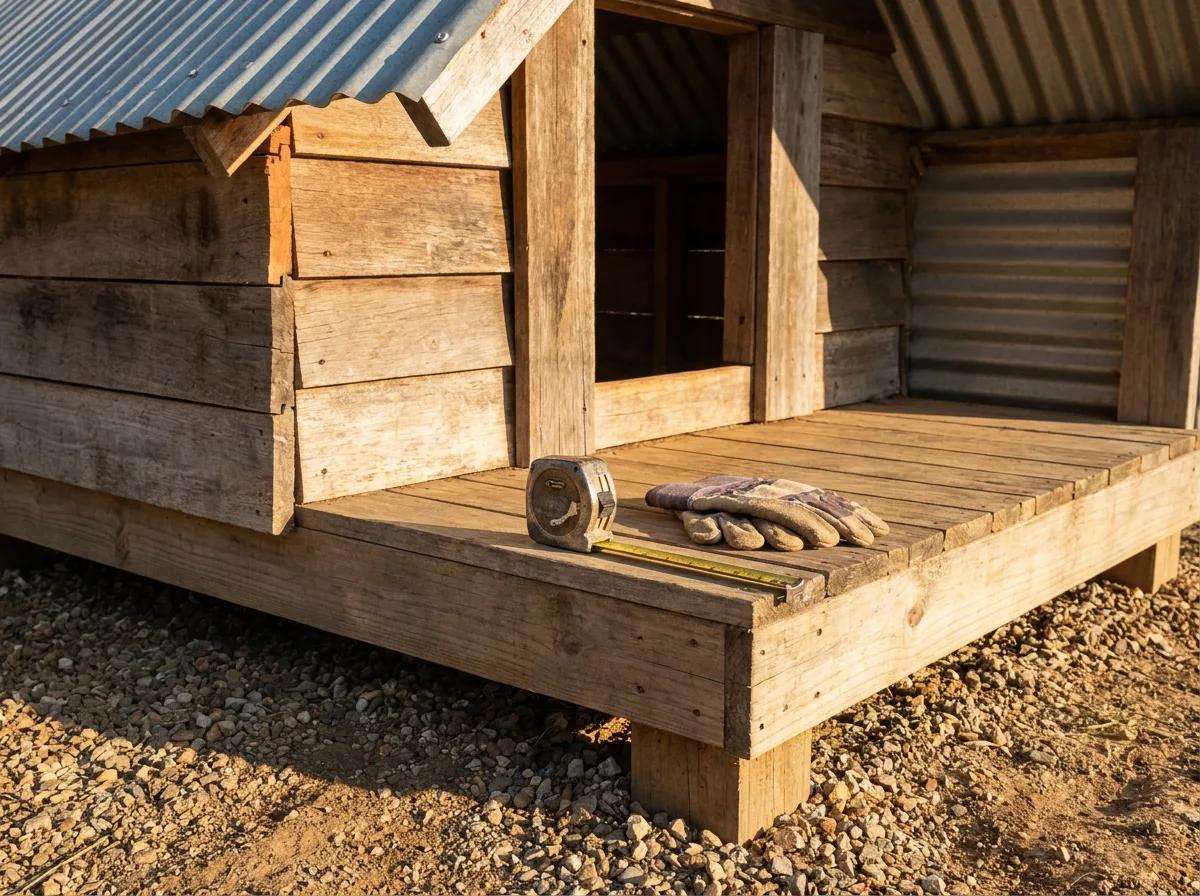
Inspect the placement and exterior together:
- Roof: Check overhangs, joints and where runoff lands.
- Floor: Keep the base stable and away from pooling water.
- Ventilation: Leave designed vents unobstructed.
- Access: Keep the approach clear and the threshold manageable.
“Waterproof” marketing does not establish performance at every seam or in driving rain. Check inside after wet weather rather than assuming the bedding stayed dry.
For summer use, AAHA’s heatstroke-prevention guidance emphasizes water, shade and ventilation. A house outside can become an unsuitable place to rest in heat. Do not treat its shaded roof as proof that the interior is adequately cool. WebVet’s guide to dog heatstroke signs explains what to watch for and when to seek urgent help.
Igloo dog houses: shape, entry and sizing
An igloo dog house has a rounded shell and an entrance arrangement that can differ substantially from a rectangular cabin. Compare the exact model rather than assuming “Medium” describes the same usable room across brands.
Petmate’s current Indigo product page lists the dimensions below. It labels them simply “Dimensions,” so they should not be treated as verified interior measurements or entrance clearance.
| Manufacturer size label | Listed dimensions, inches | Fit information still needed |
|---|---|---|
| Medium | 37.5 × 30.5 × 22.75 | Usable floor, headroom and clear entrance |
| Large | 43.75 × 34 × 25.75 | Usable floor, headroom and clear entrance |
| X-Large | 50.5 × 39.5 × 30 | Usable floor, headroom and clear entrance |
For a small dog, do not assume the smallest available igloo size is automatically the best fit. Ask how the entrance leads into the sleeping area and how the curved walls affect usable space. Check cleaning access as carefully as dimensions: you need to reach the back of the shell and remove bedding without difficulty.
Before purchasing an igloo house for sale, match the size chart to the exact model and current product page. Accessory listings can describe different revisions or sizes.
Indoor use and outdoor shelter serve different needs
An indoor dog house is primarily a resting-space choice. Inside your home, the important questions are whether your dog likes the enclosure, whether it fits the room and whether you can clean it. Outdoor roof construction adds little value if the house never encounters rain.
A luxury indoor dog house may function as furniture, while a fabric den emphasizes softness and portability. Neither should be assumed to provide outdoor protection. An open-entry house also does not perform the same containment role as a kennel or crate.
For small or medium dogs, compare:
- Usable space beneath any sloped roof.
- A clear entrance that does not obstruct a household walkway.
- Access for washing bedding and cleaning the floor.
- Materials suited to your dog’s chewing habits.
A practical indoor design should make resting easier without creating a bulky obstacle for you or an uncomfortable enclosure for your dog.
Choosing a house for a large dog
German Shepherds, Huskies, Labs and pit bulls vary in body shape and size. Breed names can help you begin shopping, but individual measurements determine which house fits. A long exterior may include wall thickness, an entry extension or space your dog cannot use for sleeping. Among the picks, the Frisco Plastic Outdoor Dog House lists exterior dimensions of 38.5 × 33 × 32 inches, which help with placement but not with judging interior room.
With interior dimensions not published in the sources we verified for these four picks, obtain measurements before ordering for a large dog. Our guide to large dog house dimensions and usable space compares additional models and explains how doorways, liners and partitions affect room to move.
Insulation and heat for colder weather
Warm dog houses depend on more than the shell’s shape. Insulation slows heat transfer; powered heating adds heat. Neither establishes a universally safe outdoor temperature. AAHA’s cold-weather guidance identifies small, senior and short-coated pets as especially sensitive to cold. For broader winter care, see Vetstreet’s guide to keeping outdoor pets warm.
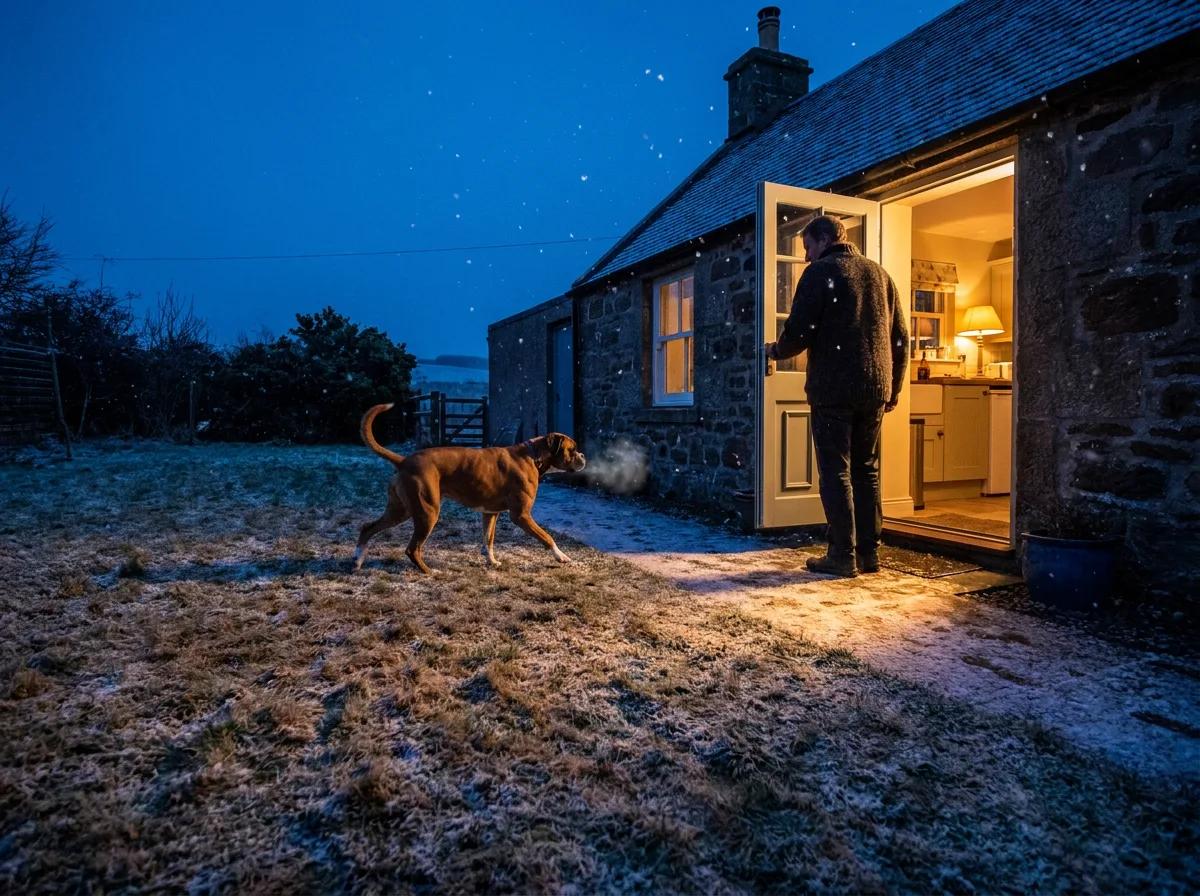
Use these distinctions when considering winter shelter:
- Do dog igloos really keep dogs warm? A rounded shell alone does not prove insulation performance or a safe interior temperature. For a veterinarian’s perspective, read Vetstreet’s answer on whether a winter dog house keeps a pet warm.
- How cold is too cold for a dog outside in a dog house? There is no single safe cutoff for every dog, exposure period and weather condition. For a general reference point, see WebVet’s cold-temperature chart for dogs, then adjust for your own dog.
- What is the warmest thing to put in a dog house? Bedding and heating equipment must suit the exact house and any manufacturer restrictions.
- What is the best dog house for cold weather? Compare verified insulation, included heating components, usable space and cleaning access. Of the picks, the Lifetime Deluxe Dog House includes a heater mounting bracket, but the heater and heater-mounting hardware are not included.
- Is it cruel to leave a dog outside in the winter? A house does not make prolonged cold exposure safe. Bring your dog indoors when conditions exceed their tolerance. WebVet’s guide to dog shivering from cold versus illness can help you judge when your dog has reached that limit.
- What temperature is too cold for a dog at night? Consider the individual dog and overnight conditions rather than relying on the house’s marketing label.
Our insulated and heated dog house comparison covers those equipment decisions together. Also review Petful’s cold-weather limits for dogs. Shivering, weakness or confusion calls for moving your dog indoors and contacting a veterinarian, not adding more bedding and waiting.
Dog house questions
Compare the complete project cost with the delivered price of a suitable ready-made house. Building requires materials and hardware, and possibly tools and weatherproofing supplies you do not already own. Include delivery, assembly time and future maintenance in both estimates. A custom build may solve a fit problem, but it is not automatically cheaper.
Some dogs enjoy an enclosed retreat; others prefer resting nearer their people or in a more open space. Look for voluntary entry and a comfortable fit rather than assuming every dog wants a house. Introduce it without forcing your dog inside, and observe whether they choose to rest there when conditions are comfortable.
A plastic house needs intact panels, secure assembly and surfaces without damage that could injure your dog. Check for chewing and broken edges. Ventilation and shade matter outdoors, but neither proves that the temperature inside is suitable. Inspect the house regularly and follow its assembly and care instructions.
Choose dry removable bedding that suits your dog and can be cleaned or replaced when damp or dirty. Check that its thickness does not reduce usable interior height or obstruct the entrance. For a house with a heating pad, follow the pad manufacturer’s covering instructions instead of adding arbitrary layers.
There is no universal elevation that suits every model and dog. Follow the house’s intended base design, allowing drainage beneath the floor while maintaining a stable accessible entrance. Raising a house further can create a difficult step or an unstable platform. Address poor drainage at the site rather than improvising an unsupported base.
Choose a position that reduces exposure to prevailing wind and driving rain while allowing seasonal shade and clear access. There is no compass direction that works for every yard. Watch how sun, runoff and wind affect the proposed location, then reassess after weather changes rather than relying on orientation alone.

Coreen Saito is a pet writer and longtime shelter volunteer with more than a decade in animal rescue. She covers cat behavior, breed care, and the small, ordinary science of sharing a life with companion animals, with a particular focus on honest takes about the products and decisions that actually matter. At home in Arizona, she's outranked by Mac (a dog with the loudest opinion in the house), Rebel (a cat who governs by quiet authority), and Meri (an orange tabby who runs the late shift and the laundry basket). She writes about all three, plus the rescues that keep coming through her life, at LifeWithMinty.com.
Sign up for expert-backed reviews and safety alerts all in one place.