Can Dogs Eat Squash? A Complete Guide
Can dogs eat squash? Yes, most cooked, plain varieties are safe in moderation. Learn which types are dog-friendly, how much to serve by weight, why to skip raw squash and seeds, and the seasonings that are toxic.


Veterinarian · BVMS, MRCVS
Petful is reader supported. As an affiliate of platforms like Amazon and Chewy, we may earn a commission when you buy through links on this page. There is no extra cost to you.
- 1Yes, dogs can eat squash safely when it is cooked soft, plain, and given in moderation as a treat, not a meal.
- 2Always remove the rind and seeds, and never feed raw squash. It is tough to digest and a choking or blockage risk.
- 3Most common varieties are dog-safe: butternut, acorn, pumpkin, yellow, summer, spaghetti, and zucchini.
- 4Skip all seasonings. Garlic, onion, and nutmeg are harmful, and only plain 100 percent pumpkin is safe, never sugary spiced pie filling.
- 5Keep squash and all treats to no more than 10 percent of your dog's daily calories under the vet 90/10 rule.
Can dogs eat squash? Yes. According to the AKC and PetMD, dogs can safely eat most squash varieties, including butternut, acorn, pumpkin, zucchini, and yellow squash, when it is cooked soft, served plain, and given in moderation. Always remove the skin and seeds, skip raw squash, and add no salt, butter, or toxic seasonings.

Sign up for expert-backed reviews and safety alerts all in one place.
Is squash safe for dogs?
Squash is safe for dogs in nearly every common form, as long as it is cooked, unseasoned, and served in moderation. Plain squash is not toxic to dogs the way grapes, onions, or chocolate are. It is a low-calorie vegetable packed with fiber, beta-carotene, vitamin A, vitamin C, and potassium, which is why so many vets and the AKC list it among the better people-foods to share. The caution is never the squash itself. It is how the squash is prepared.
Three rules keep squash firmly in the safe column. First, cook it until soft (steamed, boiled, baked, or roasted). Second, strip off the hard skin or rind and scoop out the seeds before serving. Third, serve it completely plain, with no butter, oil, salt, or seasonings. Get those three right and squash becomes one of the easiest, healthiest vegetables to add to your dog's bowl. If you like sharing veggies, squash sits comfortably alongside other dog-friendly picks like carrots and broccoli.
- Never feed raw squash. The dense raw flesh and tough rind are hard for dogs to digest and can cause stomach upset, choking, or even intestinal blockage. Always peel off the skin or rind and remove every seed before serving. Cook the flesh until it is soft enough to mash with a fork.
Is squash good for dogs? The nutritional benefits
Yes, squash is good for dogs in moderation. It is one of the few treats that delivers real nutrition rather than empty calories. Squash is low in fat and calories but high in soluble fiber, which supports healthy digestion and firmer stool. It also carries beta-carotene and vitamin A for eye and skin health, vitamin C and antioxidants that support the immune system, and potassium and magnesium for nerve and muscle function. Because it is so low in calories, it makes a smart treat swap for dogs watching their weight.
Can dogs have squash every day?
A small amount of squash every day is fine for most healthy dogs, provided it stays within the 90/10 rule (treats no more than 10 percent of daily calories). The bigger risk with daily feeding is too much fiber, which can cause loose stool, gas, or an upset stomach. If you want to make squash a regular topper, start small, watch your dog's stool, and check with your vet first if your dog is on a prescription or weight-management diet.
Is squash a laxative for dogs?
Squash is not a true laxative, but its soluble fiber and high water content can gently support regular digestion and help with mild constipation, much like plain pumpkin. The same fiber that firms up loose stool can also add bulk and moisture to help things move along. It works both ways because soluble fiber is a stool normalizer rather than a one-direction laxative. If your dog has ongoing constipation or vomiting and diarrhea, do not self-treat with squash. Talk to your vet, because persistent symptoms can signal a deeper problem.
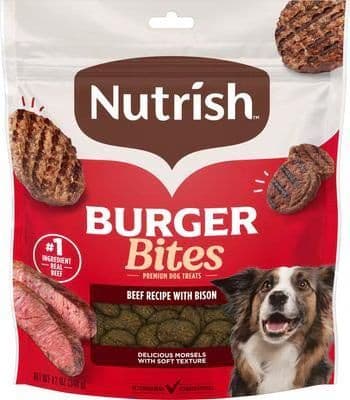
Soft, real-beef burger bites with bison, grain-free and sized for occasional training-treat sharing.
Petful may earn a commission when you click through to Chewy, at no extra cost to you.
Which types of squash can dogs eat?
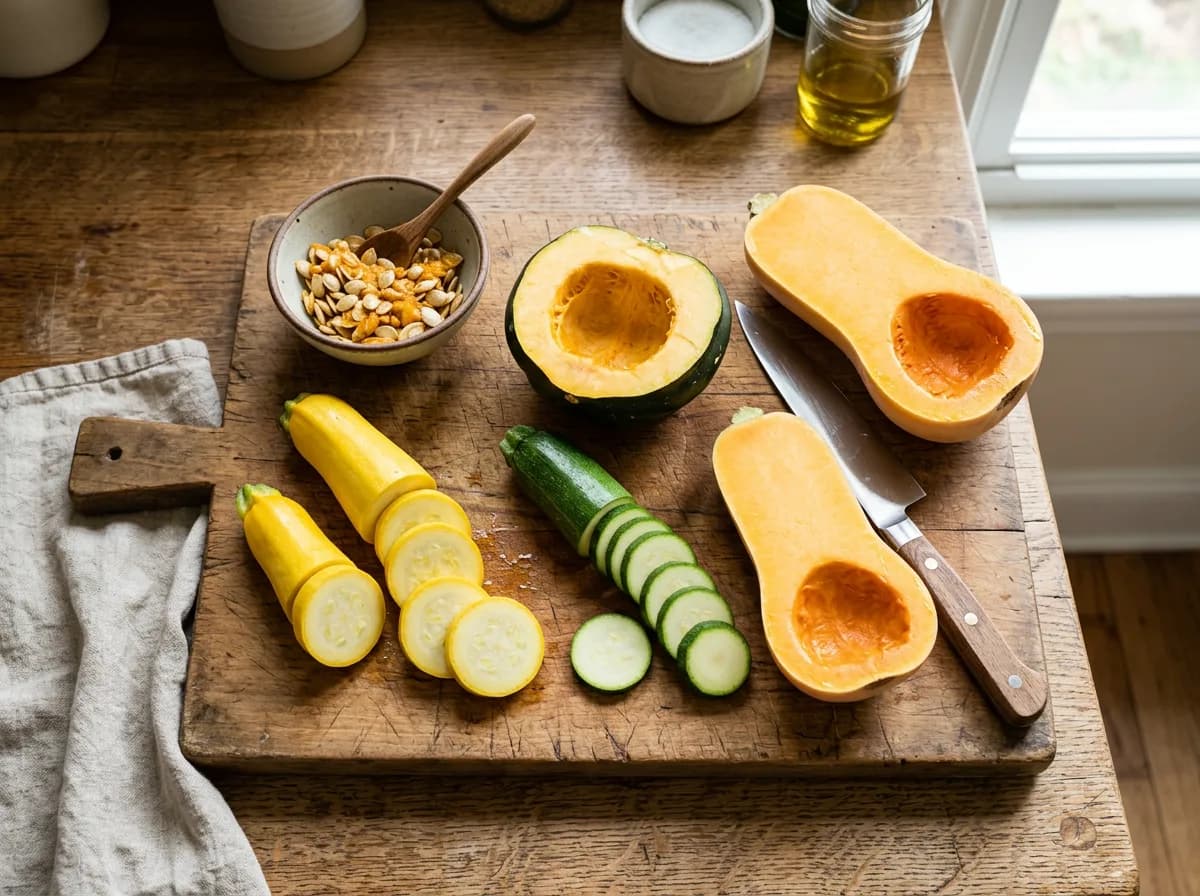
Nearly all of the squash you find at the grocery store is safe for dogs when cooked and prepared correctly. Both summer squash (thin skin, eaten young, like zucchini and yellow squash) and winter squash (hard rind, like butternut and acorn) are fine. The list below covers the most common varieties and how to handle each one. The golden rule applies across the board: cook it, peel hard rinds, remove seeds, and serve plain.
Can dogs eat butternut squash?
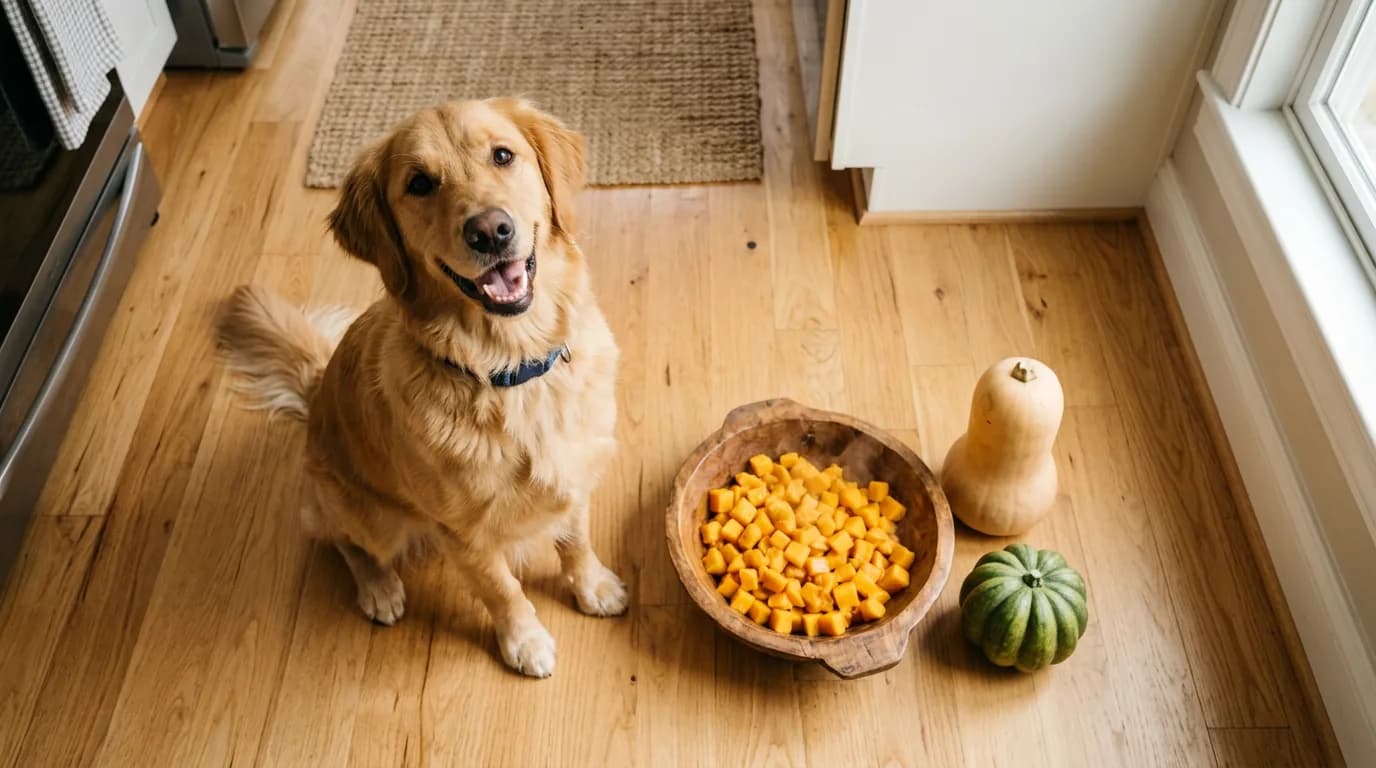
Yes, butternut squash is one of the best choices for dogs. It is naturally sweet, soft when cooked, and rich in vitamin A, fiber, and potassium. To prepare it, peel off the tough skin, scoop out the seeds, and roast, steam, or boil the flesh until soft, then mash or dice it. Dogs should not eat butternut squash skin or seeds, because the skin is hard to digest and the seeds pose a choking and blockage risk. Avoid raw butternut squash, which is too dense and fibrous to chew safely.
Can dogs eat yellow squash and summer squash?
Yes, yellow squash and other summer squash are safe and easy for dogs to eat. Yellow squash is not toxic to dogs, despite the common question. Because summer squash has a thin, tender skin, you can leave the peel on once it is cooked soft, though peeling it makes it even easier to digest. Cook it plain by steaming or simmering in water (no oil), and cut it into bite-sized pieces. Cooked is always the safer, more digestible choice than raw, especially for dogs with sensitive stomachs.
Can dogs eat zucchini and squash together?
Yes, dogs can eat zucchini and squash together. Zucchini is a summer squash and one of the most dog-friendly vegetables there is. It is very low in calories, hydrating, and gentle on the stomach. Serve it the same way as yellow squash: cooked plain, cut into small pieces, with no garlic, onion, butter, or salt. A simple mix of steamed zucchini and yellow squash makes an easy low-cal topper. Cool, crunchy vegetables like cucumber work well as treats in the same spirit.
Can dogs eat spaghetti squash?
Yes, dogs can eat spaghetti squash. Once cooked, the flesh pulls apart into soft strands that are easy to digest and simple to mix into food. Roast or bake it until tender, then scrape the strands away from the rind. Do not feed the seeds or the hard outer rind. Spaghetti squash seeds and skin are choking and blockage hazards and should be discarded. Serve the strands plain, with nothing added.
Can dogs eat acorn squash?
Yes, acorn squash is safe and nutritious for dogs once cooked. It is high in vitamin A, vitamin C, and fiber. Acorn squash has a thick, ridged rind that is hard to peel raw, so the easiest method is to halve it, scoop out the seeds, roast it until soft, and then scoop the cooked flesh away from the skin. Do not feed acorn squash skin or seeds. Cooking it makes it far more digestible than raw and is strongly recommended.
Can dogs eat pumpkin and other winter squash?
Yes. Pumpkin is a type of squash and is a well-known vet favorite for digestive support. Plain cooked pumpkin or 100 percent pure canned pumpkin (never spiced pie filling) is excellent for dogs. Other winter varieties like kabocha, delicata, buttercup, honeynut, and the Mexican calabaza or chayote are all safe when cooked, peeled if the rind is tough, and deseeded. For a deeper look at the most popular variety, see our full guide to whether dogs can eat pumpkin.
- Only feed plain, 100 percent pure pumpkin or squash. Canned pumpkin pie filling is not safe for dogs because it is loaded with added sugar, salt, and spices such as nutmeg and cinnamon that can upset a dog's stomach. Separately, watch for xylitol, a sugar substitute that is deadly to dogs even in tiny amounts and turns up in sugar-free and no-sugar-added human foods like some gums, peanut butters, and baked goods. It causes a rapid drop in blood sugar and can lead to liver failure, so always read the label before sharing anything sweetened.
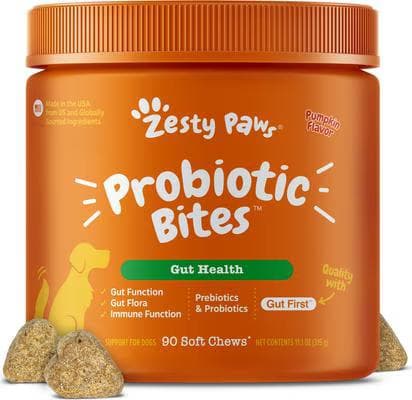
Pumpkin-flavored probiotic soft chews that support healthy gut flora and digestion in dogs.
Petful may earn a commission when you click through to Chewy, at no extra cost to you.
Can dogs eat raw squash or only cooked squash?
Dogs should eat cooked squash, not raw. While a small bite of raw summer squash like zucchini or yellow squash is unlikely to poison your dog, raw squash (especially dense winter varieties like butternut and acorn) is tough, fibrous, and hard to digest. Raw squash commonly causes gas, bloating, stomach upset, and in larger pieces, a choking or blockage hazard. Cooking breaks down the fiber, softens the flesh, and makes all the nutrients easier to absorb.
The same logic rules out fried squash. Frying adds oil, salt, and often batter or seasonings that are bad for dogs and can trigger an upset stomach or, with high fat, even pancreatitis. The safest cooking methods are steaming, boiling, baking, or roasting with nothing added. Let it cool, mash or dice it, and serve plain.
Can dogs eat squash skin, seeds, and leaves?
Can dogs eat squash skin?
It depends on the variety. The thin skin of cooked summer squash (zucchini, yellow squash) is generally fine and easy to digest once soft. The hard rind of winter squash (butternut, acorn, spaghetti, kabocha) should always be removed, because it is tough, hard to chew, and can cause digestive trouble or blockage. When in doubt, peel it off. Cooked, peeled flesh is the safest bet for every type.
Can dogs eat squash seeds?
It is safest to remove and discard squash seeds before feeding. Whole seeds from butternut, acorn, and spaghetti squash are a choking hazard and can contribute to intestinal blockage, especially in small dogs. While some owners roast and grind plain pumpkin-type seeds as an occasional treat, the easiest and safest practice is simply to scoop out and toss all seeds. Never feed seeds with salt, oil, or seasoning.
Are squash leaves toxic to dogs?
Squash leaves and vines are not classically toxic to dogs, but they are not recommended. The leaves are coarse, fibrous, and can be covered with garden pesticides or dirt, which can cause stomach upset or worse. There is no nutritional reason to feed squash leaves, so it is best to keep your dog away from the plant in the garden and stick to the cooked, peeled flesh.
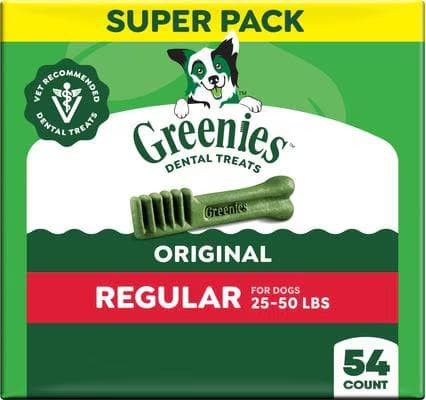
Daily dental chew that cleans teeth, freshens breath, and is accepted by the Veterinary Oral Health Council. Sized for dogs 25 to 50 lbs.
Petful may earn a commission when you click through to Chewy, at no extra cost to you.
How much squash can a dog eat?
How much squash your dog can eat depends on body weight. Squash, like all treats and extras, should make up no more than 10 percent of your dog's daily calories under the widely used 90/10 rule, with the other 90 percent coming from a complete, balanced diet. The serving guide below offers a safe starting range of cooked, plain squash by dog size. When introducing squash for the first time, start at the low end and watch for any soft stool or gas before working up.
Too much squash, even though it is healthy, can backfire. The high fiber content can cause loose stool, gas, or stomach upset if you overdo it. If your dog gets gassy after veggies, our guide to canine flatulence and gas explains what is normal and when to call the vet. Introduce squash gradually and keep portions modest.
Can puppies eat squash?
Yes, puppies can eat small amounts of plain, cooked, well-mashed squash once they are eating solid food, but it should be a tiny occasional treat, not a staple. Puppies need a complete, balanced growth diet, and treats (squash included) should stay under 10 percent of their daily calories. Their digestive systems are sensitive, so introduce just a teaspoon, cook it very soft, remove all skin and seeds, and watch closely for any tummy upset. Check with your vet before adding any new food to a puppy's routine.
| Dog size | Approx. weight | Safe serving of cooked, plain squash | Notes |
|---|---|---|---|
| Toy | 2 to 10 lbs | Up to 1 tsp | Start with a tiny amount and watch stool |
| Small | 11 to 25 lbs | 1 to 2 tsp | Mash well to avoid choking |
| Medium | 26 to 50 lbs | 1 to 2 tbsp | Dice or mash; introduce gradually |
| Large | 51 to 90 lbs | 2 to 3 tbsp | Keep within the 90/10 treat rule |
| Giant | 91 lbs and up | About 3 tbsp | Plain only; never add seasonings |
How to safely feed squash to dogs
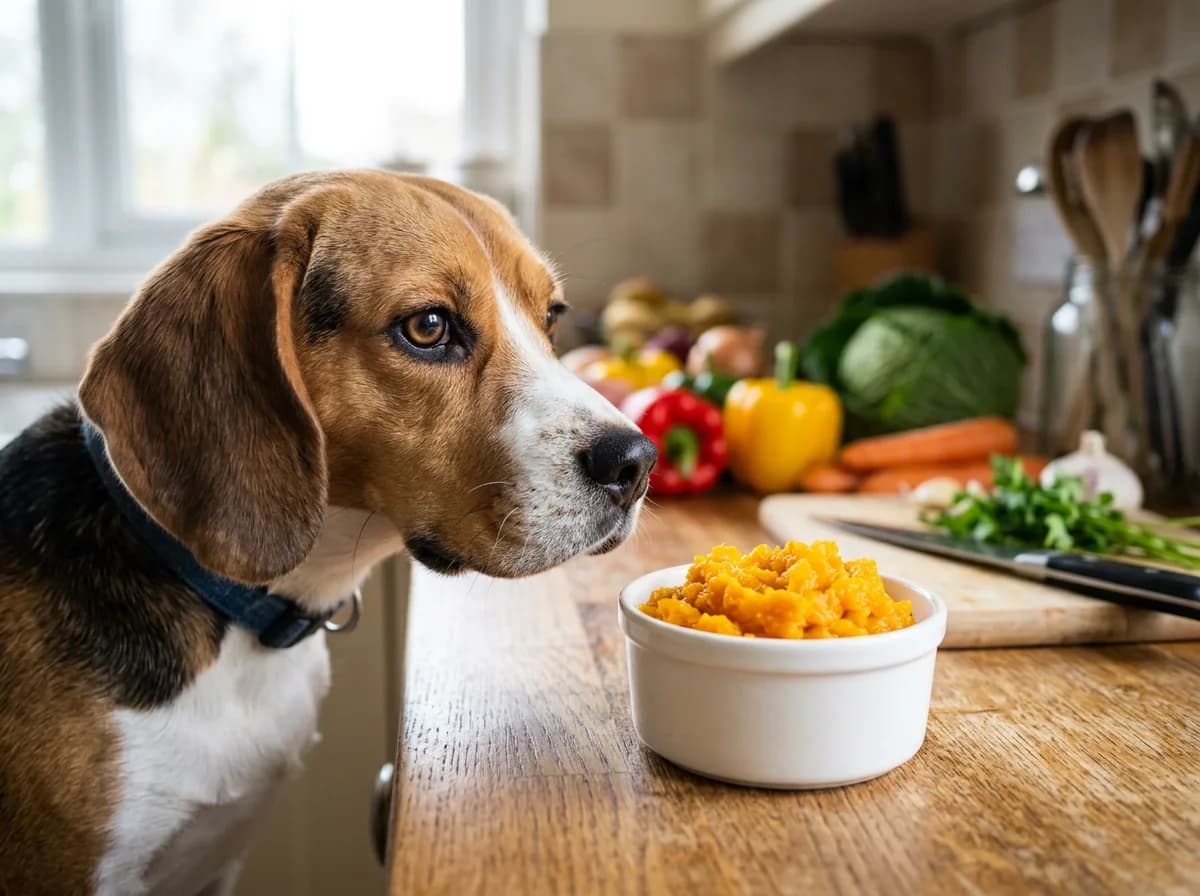
Preparing squash for your dog is simple. Choose a fresh squash, wash it, and cut it open. Scoop out and discard all the seeds and stringy pulp. Peel off the hard rind on winter varieties (the thin skin on summer squash can stay once cooked). Cut the flesh into chunks and cook it plain by steaming, boiling, baking, or roasting until soft enough to mash with a fork. Let it cool completely, then mash or dice it to a size that suits your dog, and serve a small portion mixed into food or on its own.
- Garlic, onions, leeks, and chives are toxic to dogs and can damage red blood cells, causing hemolytic anemia. Nutmeg contains myristicin, which is toxic in the amounts used in baking. Salt, butter, and oil add unhealthy fat and sodium. Always serve squash plain. Skip squash soups and casseroles too, since they usually contain onion, garlic, cream, or salt.
Two simple dog-safe squash recipes
- Simple squash puree: Steam or boil peeled, deseeded butternut or acorn squash until very soft. Mash it smooth with a little plain water (no salt, butter, or seasoning). Spoon a small portion over your dog's regular food as a topper.
- Frozen squash treats: Blend cooked, cooled plain squash into a smooth puree, spoon it into an ice cube tray or silicone mold, and freeze. Pop out one cube as a cooling summer treat in a dog-safe portion.
If you are weighing squash against other people-foods, our roundup of the best vegetables for dogs ranks the safest picks. And before sharing anything new, it is worth knowing the foods that can harm your pet so you can avoid a trip to the emergency vet.
When to call the vet
Plain cooked squash rarely causes problems, but watch your dog after any new food. Mild gas or a single soft stool usually passes on its own. Call your vet if your dog shows repeated vomiting or diarrhea, signs of an allergic reaction (itching, swelling, hives), retching or distress that could signal a swallowed seed or piece of rind, or any signs of pain or a bloated, hard belly that could indicate a blockage.
If your dog eats squash that was prepared with garlic, onion, or nutmeg, or any sweetened product that could contain xylitol, treat it as an emergency. Contact your veterinarian or an animal poison control line right away. Our guide to pet poison emergencies walks through the first steps to take while you get professional help.
Frequently Asked Questions
Dogs should eat squash cooked, not raw. Raw squash, especially dense winter types like butternut and acorn, is tough and hard to digest and can cause gas, stomach upset, or choking. Cooking it soft by steaming, boiling, or roasting breaks down the fiber and makes the nutrients easier to absorb. Always remove skin and seeds and serve it plain.
No, yellow squash is not toxic to dogs. It is a safe, low-calorie summer squash that dogs can eat when it is cooked plain and cut into bite-sized pieces. The thin skin is fine once soft, though peeling makes it easier to digest. Just skip the salt, butter, oil, garlic, and onion, which can upset the stomach or be harmful.
Squash is not a true laxative, but its soluble fiber and water content gently support digestion and can ease mild constipation, similar to plain pumpkin. The fiber works in both directions, firming loose stool and adding bulk to help things move. For ongoing constipation, see your vet rather than relying on squash, since persistent symptoms can signal a bigger issue.
Both can help, but plain canned pumpkin is the more common vet recommendation for mild dog constipation because it is high in soluble fiber and moisture and low in calories. Sweet potato also adds fiber but is higher in calories and sugar. Use either in small amounts and always plain. For repeated or severe constipation, consult your veterinarian.
No. Dogs should not eat butternut squash skin or seeds. The hard rind is difficult to digest and the seeds are a choking and intestinal-blockage risk. Peel the squash, scoop out all the seeds, and cook the flesh until soft before serving it plain. Cooked, peeled, deseeded butternut squash is one of the best squash choices for dogs.
Keep squash and all treats under 10 percent of your dog's daily calories under the 90/10 rule. As a rough guide, that is about 1 teaspoon for toy breeds, 1 to 2 tablespoons for medium dogs, and up to about 3 tablespoons for giant breeds of cooked, plain squash. Start small with any new food and watch for gas or loose stool.
Veterinarian · BVMS, MRCVS
Dr. Pippa Elliott, BVMS, MRCVS, is a veterinarian with nearly 30 years of experience in companion animal practice. Dr. Elliott earned her Bachelor of Veterinary Medicine and Surgery from the University of Glasgow. She was also designated a Member of the Royal College of Veterinary Surgeons. Married with 2 grown-up kids, Dr. Elliott has a naughty Puggle named Poggle, 3 cats and a bearded dragon.
Sign up for expert-backed reviews and safety alerts all in one place.