Abyssinian Cat: Personality, Colors, Price & Care Guide
Meet the Abyssinian cat: a playful, people-loving breed with a glowing ticked coat. Explore personality, colors, price, lifespan, health, grooming, and kitten care in one complete guide.

Veterinarian · BVMS, MRCVS

Petful is reader supported. As an affiliate of platforms like Amazon and Chewy, we may earn a commission when you buy through links on this page. There is no extra cost to you.
Abyssinian Cat: Personality, Colors, Price & Care Guide
The Abyssinian cat is a slender, short-haired breed famous for its glowing ticked coat, sky-high energy, and dog-like devotion to its people. Often called the "clown of the cat kingdom," an Abyssinian cat will follow you room to room, ride on your shoulder, and turn the top of the refrigerator into a personal lookout. Expect to pay roughly $900 to $2,000 from a reputable breeder (or $50 to $150 to adopt), a lifespan of 9 to 15 years, and a busy, affectionate companion that needs daily play to stay happy.
This guide covers everything prospective owners ask about: the Abyssinian's personality and temperament, the full color range from ruddy to rare silver and fawn, how much one really costs to buy and keep, lifespan and the breed-specific health issues to screen for, grooming and shedding (no, they are not hypoallergenic), kitten care, diet, and how the Abyssinian relates to its longhaired cousin, the Somali.
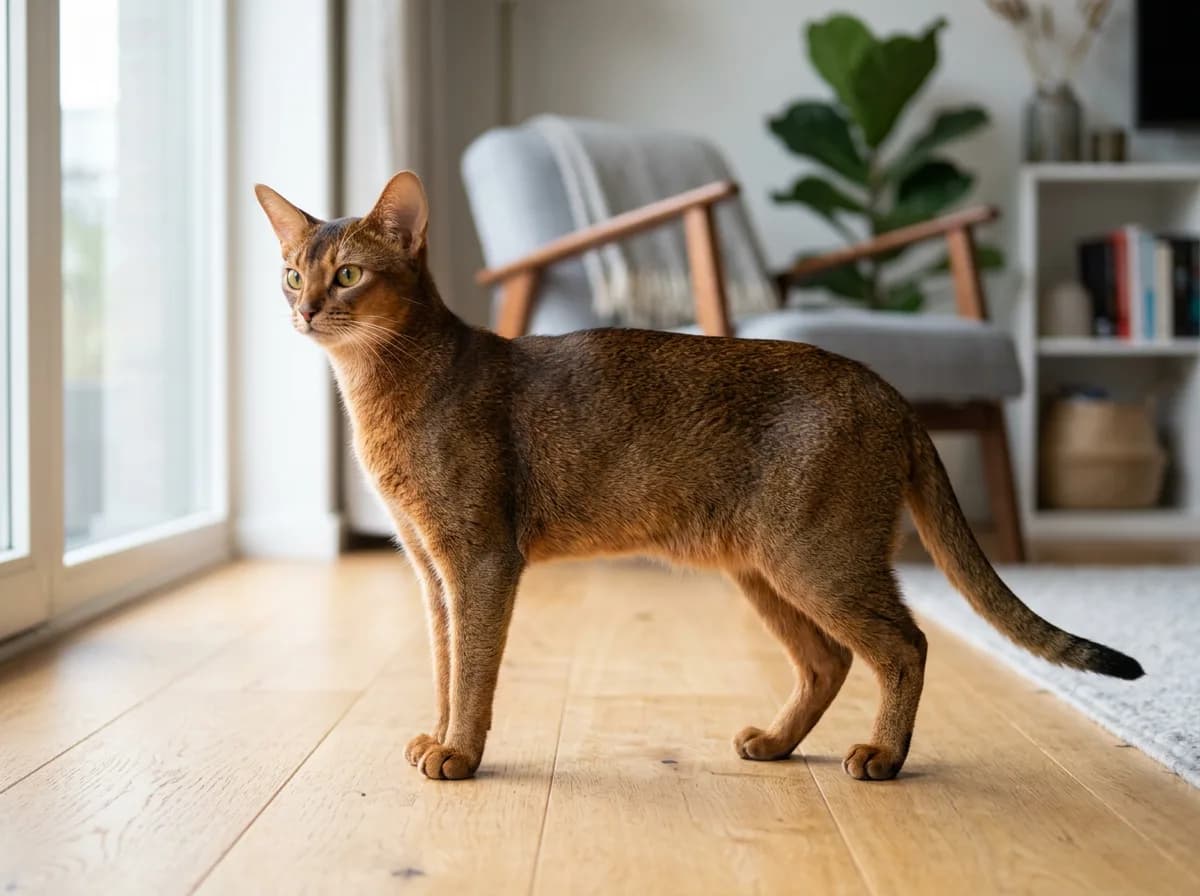
- 1The Abyssinian is one of the oldest and most recognizable shorthair breeds, prized for a warm, glowing ticked (agouti) coat where each hair carries several bands of color.
- 2Temperament is active, intelligent, and intensely people-oriented: this is a busy, climbing, fetch-playing cat, not a lap cat that naps all day.
- 3Standard colors are ruddy, red (sorrel/cinnamon), blue, and fawn, with rarer silver, lilac, and chocolate variants in some registries. There is no naturally black, orange-tabby, or white Abyssinian.
- 4Plan on $900 to $2,000+ for a breeder kitten plus $70 to $450 a month to keep one; lifespan is typically 9 to 15 years.
- 5Abyssinians are low-shedding and easy to groom but are NOT hypoallergenic, and the breed is prone to a handful of inherited conditions worth screening for.

Sign up for expert-backed reviews and safety alerts all in one place.
Abyssinian Cat Overview: Breed at a Glance
The Abyssinian is a medium-sized, athletically built cat with a lithe, muscular body, slim legs, large cupped ears, and expressive almond-shaped eyes rimmed by a fine dark "eyeliner" marking. Despite the name, the breed's true origin is debated: genetic studies point to the coast of the Indian Ocean and parts of Southeast Asia rather than Ethiopia (historically Abyssinia), the country that gave the breed its name at 19th-century English cat shows. Today the Abyssinian is recognized by every major registry, including the Cat Fanciers' Association (CFA) and The International Cat Association (TICA), and it consistently ranks among the most popular shorthair breeds in North America.
| Trait | Detail |
|---|---|
| Origin | Developed in Britain; ancestry traced to the Indian Ocean coast and Southeast Asia |
| Size | Medium, slender, fine-boned but muscular |
| Weight | 6 to 10 lb (males 8 to 10 lb, females 6 to 8 lb) |
| Lifespan | 9 to 15 years, commonly into the early teens |
| Coat | Short, fine, close-lying, with a distinctive ticked (agouti) pattern |
| Colors | Ruddy, red (sorrel/cinnamon), blue, fawn; rarer silver, lilac, chocolate |
| Eyes | Large, almond-shaped, gold to green, with a dark eyeliner rim |
| Temperament | Active, curious, intelligent, affectionate, people-oriented |
| Shedding | Low; not hypoallergenic |
| Price | $50 to $150 to adopt; $900 to $2,000+ from a breeder |
Abyssinian Cat Personality and Temperament
If you want a cat that participates in your life, the Abyssinian delivers. These cats are famously active, curious, and clever, with a deep need to be involved in whatever their humans are doing. An Abyssinian will open cupboards, learn to fetch, walk on a harness, and supervise your every task from the nearest high perch. They bond hard, often to one or two favorite people, and dislike being left alone for long stretches, which is why many owners keep them in pairs or alongside a playful, cat-friendly dog.
Abyssinians are not typically lap cats in the traditional sense. They show affection through proximity and play rather than long, motionless cuddles. They are vocal but soft-voiced, communicating with quiet chirps and trills rather than loud meows. Their intelligence cuts both ways: a bored Abyssinian is a destructive Abyssinian, so puzzle feeders, climbing trees, and daily interactive play sessions are non-negotiable for a well-adjusted cat.
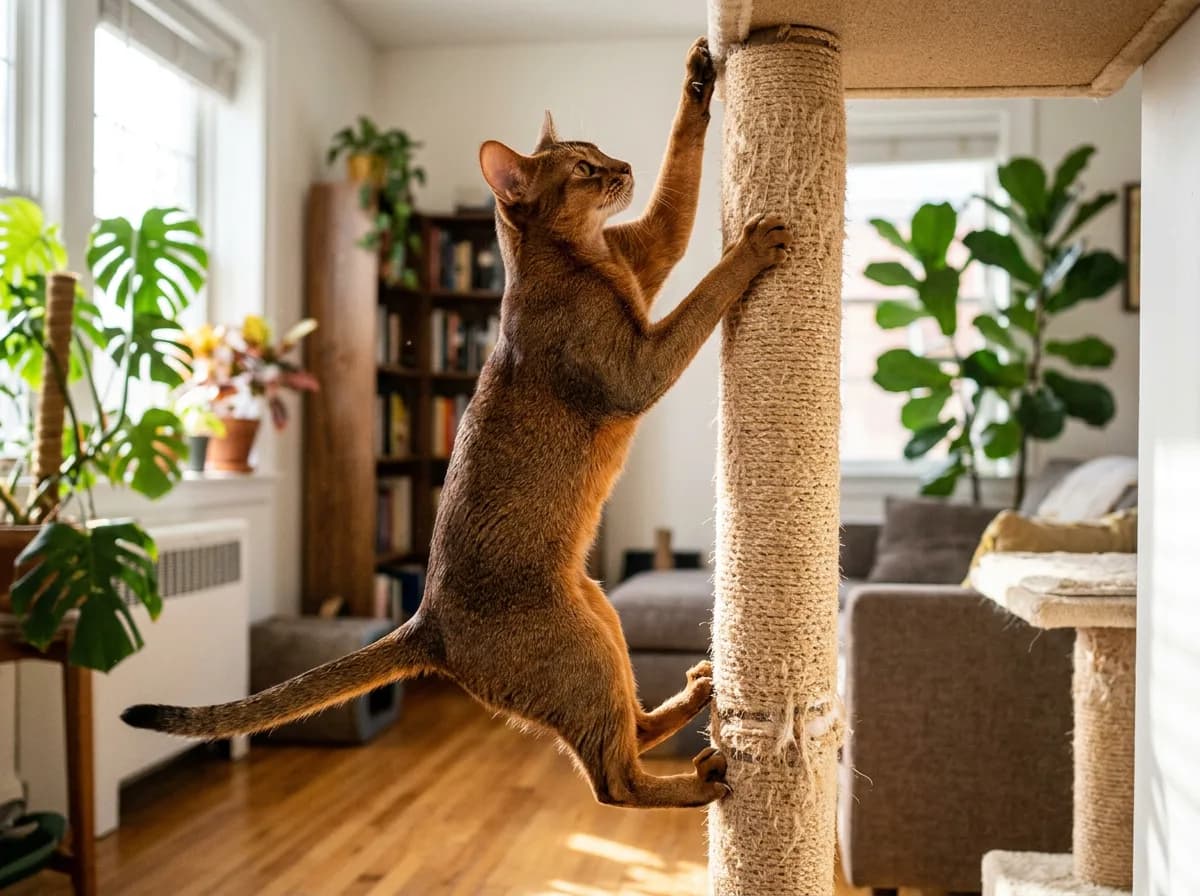
- Yes. Abyssinians are among the most people-oriented cat breeds, known for being friendly, sociable, and affectionate on their own active terms. They greet visitors, get along well with other pets when properly introduced, and thrive in busy households, but they want interaction and enrichment, not solitude.
Color-changing crystal litter that flags pH shifts in your cat's urine, an early warning sign of UTIs, kidney issues, and more.
Petful may earn a commission when you click through to Chewy, at no extra cost to you.
Abyssinian Cat Colors: Ruddy, Blue, Red, Fawn and Rare Shades
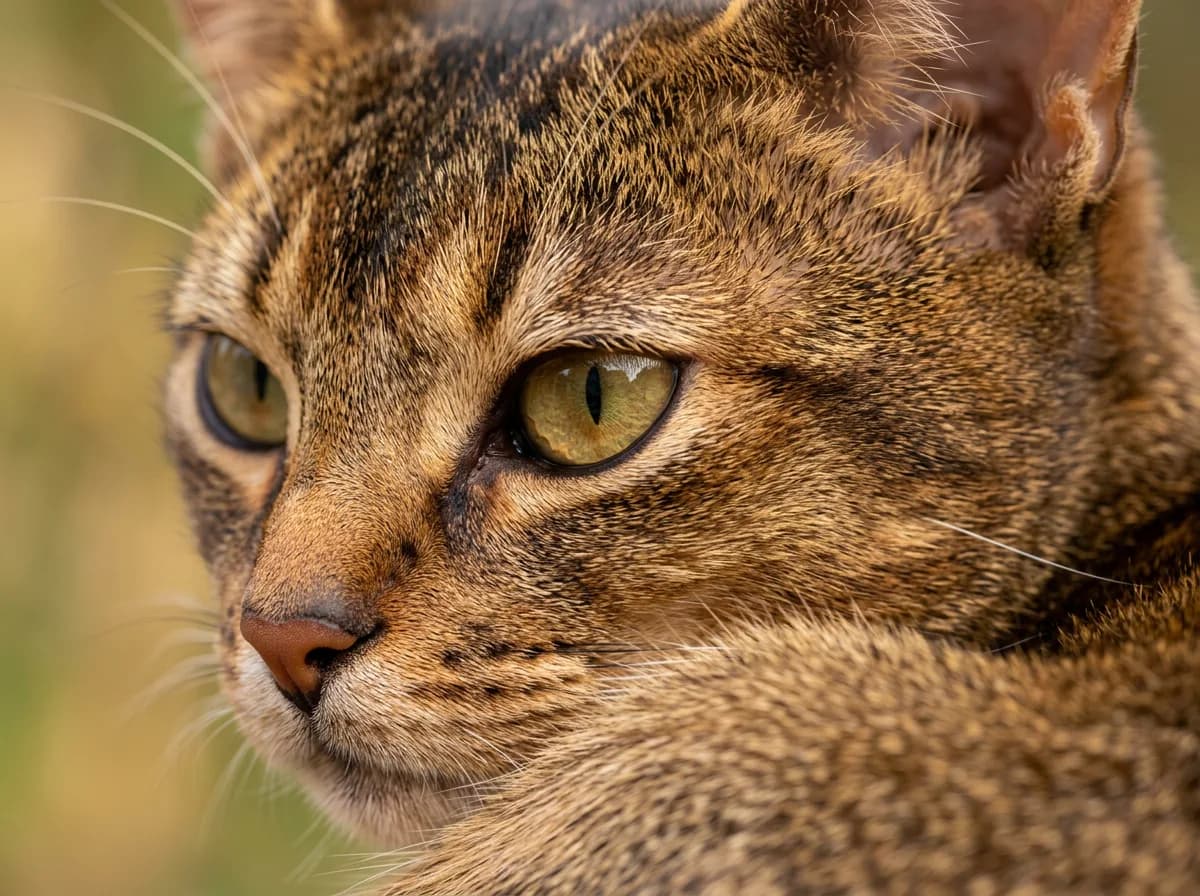
The Abyssinian's signature look comes from ticking, also called the agouti pattern: each individual hair is banded with several alternating shades of light and dark color, tipped with the darkest shade. This is the same gene that produces the banded fur on a wild rabbit, which is why the original ruddy color was once nicknamed the "hare" or "bunny" cat. The ticking gives the coat a warm, shimmering, almost iridescent quality that shifts as the cat moves. Abyssinians have no broad stripes, spots, or large white patches, and a small white chin is the only acceptable white marking.
Four colors are recognized across most registries, with several rarer dilutes and variants accepted in some. Here is how they break down.
Ruddy (the classic Abyssinian)
Ruddy is the original and most common color: a warm reddish-brown base ticked with black, over an apricot or burnt-orange undercoat. This is the color most people picture when they imagine an Abyssinian, and it is the one that earned the breed its glowing, sun-warmed reputation.
Red (sorrel or cinnamon)
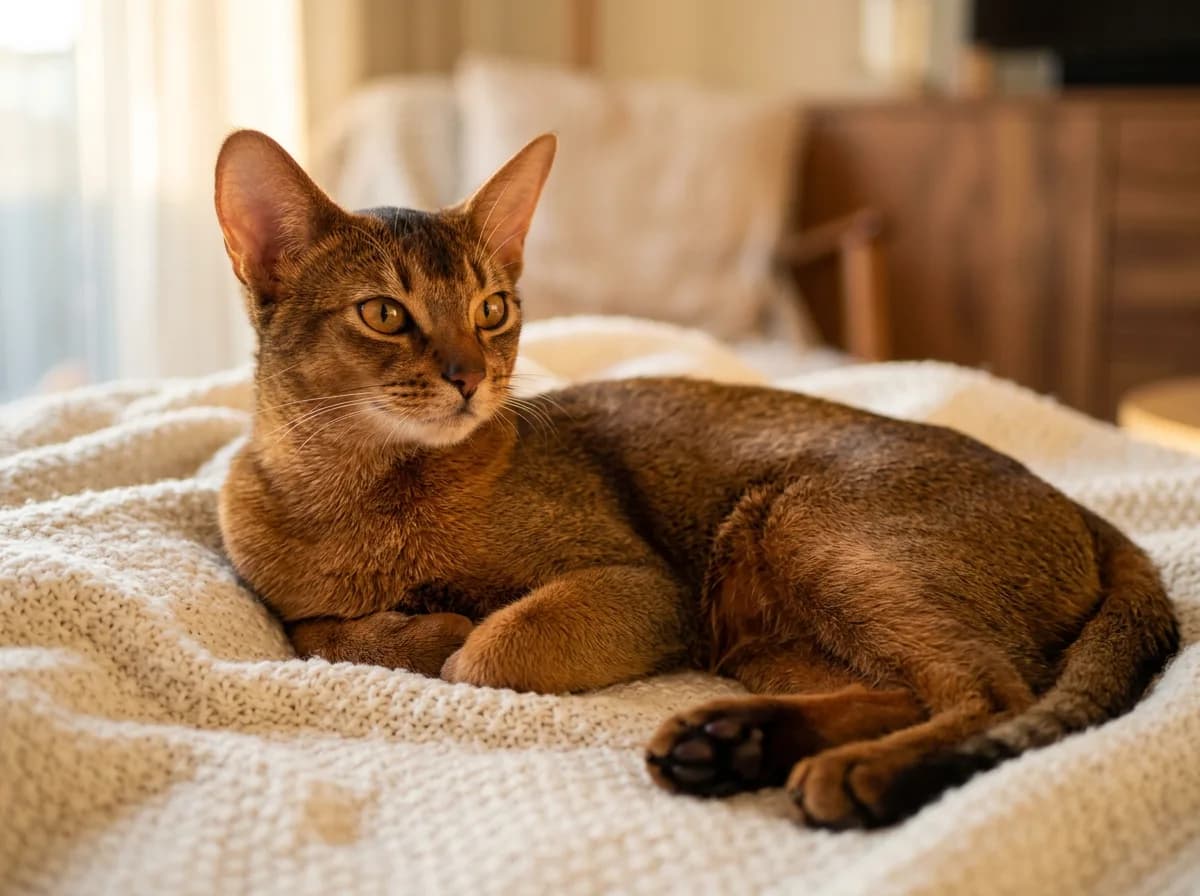
Often labeled "red" but genetically a cinnamon, the sorrel Abyssinian replaces the black ticking with warm chocolate-brown, producing a glowing coppery coat with a reddish sheen, chocolate nose leather, and pink paw pads. It is one of the most striking and sought-after colors.
Blue
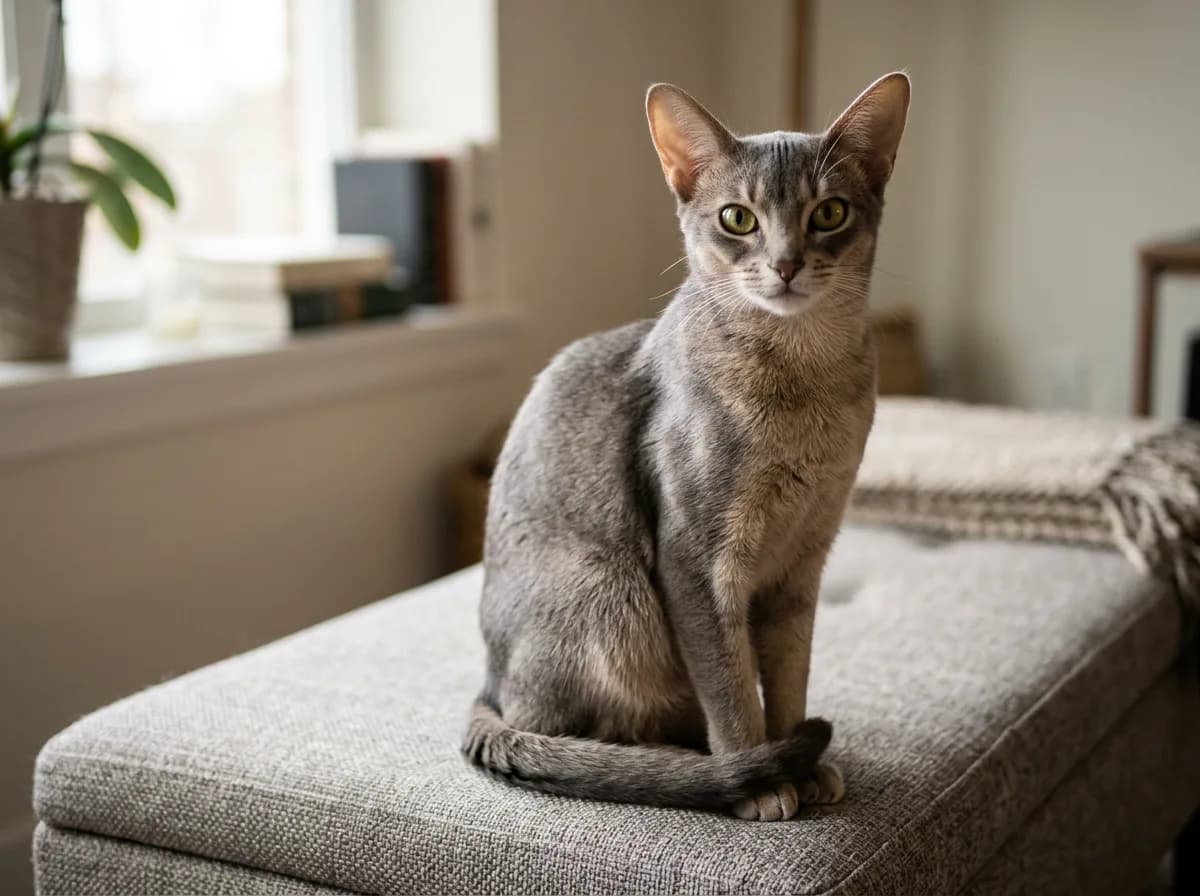
The blue Abyssinian is a dilute of ruddy: a soft, warm bluish-grey (slate) base ticked with darker steel-blue, set over a cream or beige undercoat. The effect is gentle and smoky rather than cool, and blue has become one of the breed's most popular alternative colors.
Fawn
Petful may earn a commission when you click through to Chewy, at no extra cost to you.
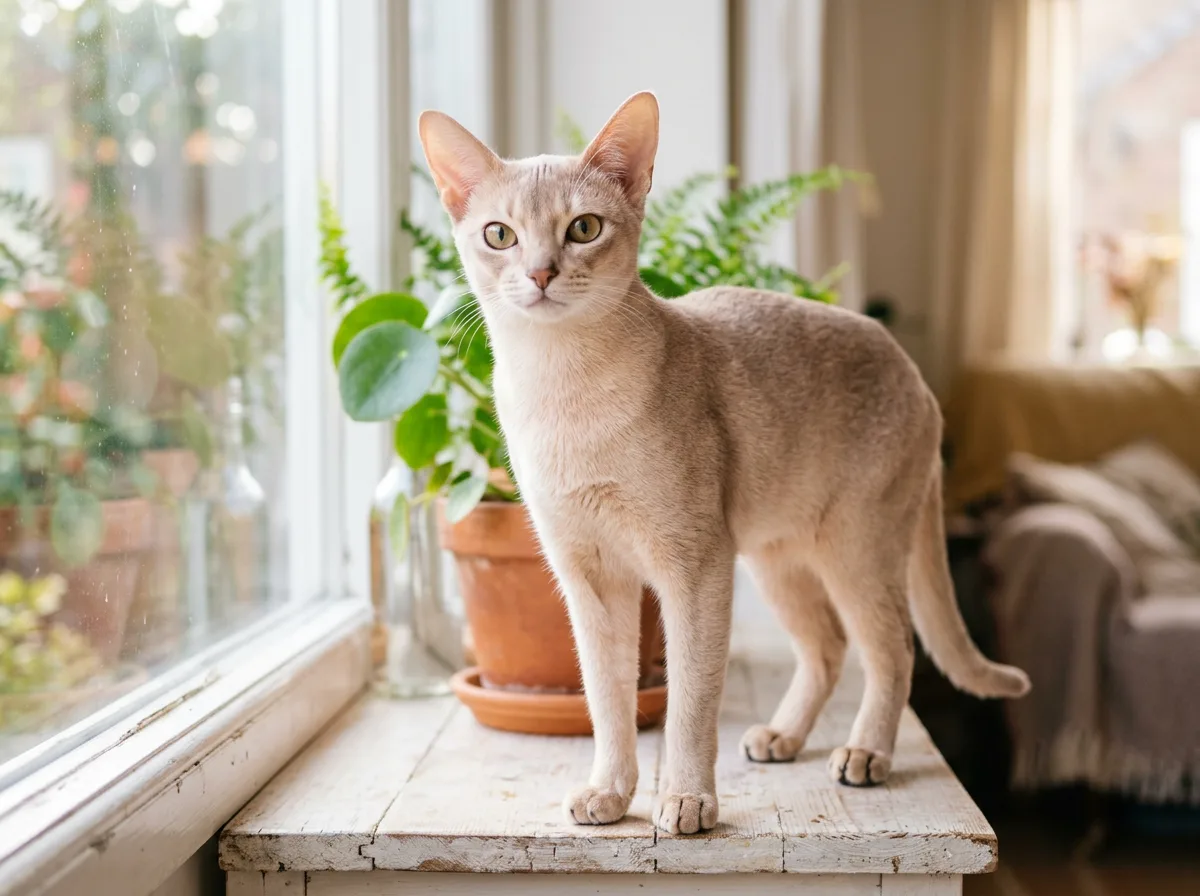
Fawn is the dilute of red (sorrel): a pale, warm cream-beige ticked with soft cocoa, with rosy undertones and pinkish paw pads. It is the lightest of the four standard colors and has a delicate, powdery appearance.
Rare colors: silver, lilac, chocolate and cinnamon
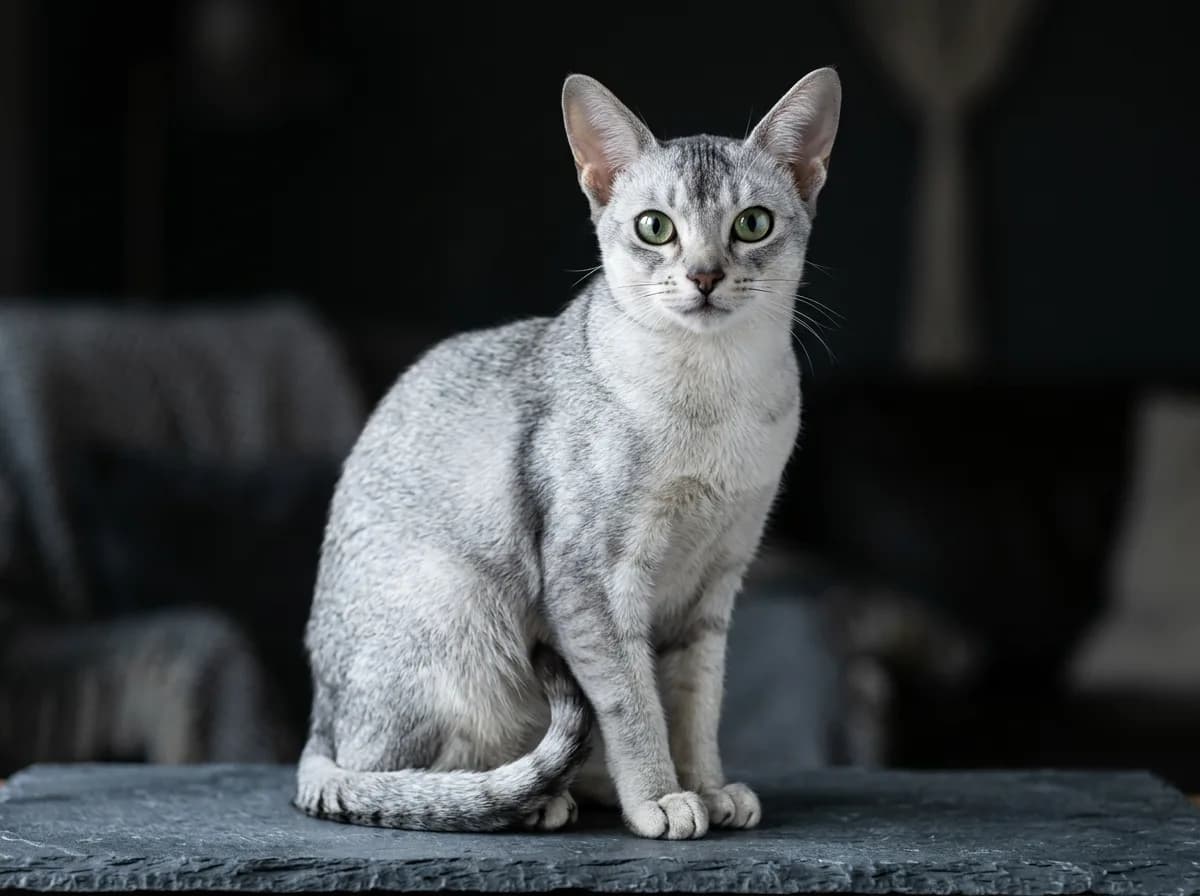
Beyond the four standards, some registries (notably the British GCCF) recognize silver Abyssinians, where an inhibitor gene strips the warm undercoat to leave a cool, sparkling silvery-white base with darker ticking. Lilac (a dilute chocolate), chocolate, and standalone cinnamon variants also appear in certain pedigrees. These rare colors command higher prices and can be harder to find from established breeders.
- Searches for a "black," "grey," "orange," or "white" Abyssinian usually describe another breed or a mixed cat. The blue and fawn colors can read as grey or cream in photos, and silver looks pale, but a solid black, classic orange tabby, or all-white cat is not an Abyssinian. The breed's defining trait is ticked agouti coloring, never a solid coat.
How Much Does an Abyssinian Cat Cost?
An Abyssinian cat typically costs $900 to $2,000 from a reputable breeder, with show- or breeding-quality kittens from proven, health-tested lines reaching $2,500 or more. Adoption through a rescue or breed-specific group runs far less, usually $50 to $150. On top of the purchase price, plan for $225 to $750 in one-time setup costs and roughly $70 to $450 per month to keep one, depending on food quality, insurance, and veterinary needs.
Abyssinians are relatively expensive for a few reasons: small litter sizes, the breed's popularity and demand, the cost of health screening responsible breeders perform, and the rarity premium on colors like silver and fawn. Here is a realistic budget breakdown for buying and owning one.
| Expense | Typical range | Notes |
|---|---|---|
| Adoption / rescue | $50 to $150 | Lowest-cost route; adults and the occasional kitten |
| Breeder kitten (pet quality) | $900 to $1,500 | Health-tested lines, spay/neuter often included |
| Breeder kitten (show / rare color) | $1,500 to $2,500+ | Silver, fawn, and proven show lines run highest |
| One-time setup | $225 to $750 | Carrier, litter box, cat tree, scratchers, bowls, initial vet visit |
| Food | $20 to $60 / month | High-protein diet suited to an active breed |
| Litter | $15 to $40 / month | Lower with a self-cleaning system over time |
| Routine + preventive vet care | $20 to $80 / month | Amortized wellness, vaccines, parasite control |
| Pet insurance (optional) | $15 to $35 / month | Worth considering given inherited health risks |
| Total monthly | $70 to $450 / month | Varies with food quality, insurance, and health needs |
As an aside, prospective owners often stumble onto headlines about cats "worth" $20,000 or even $100,000. Those figures refer to exotic hybrids like the Ashera or top-pedigree Savannahs and Bengals, not Abyssinians. While Abyssinians sit on the pricier side of pedigreed cats, no normal Abyssinian costs anywhere near those viral numbers; a few thousand dollars is the genuine ceiling for a rare-color show kitten.

108-oz stainless steel pet fountain with quiet pump and water-level window. Bengals are notoriously water-obsessed; a flowing fountain encourages hydration and pulls them away from sinks and toilets.
Petful may earn a commission when you click through to Chewy, at no extra cost to you.
Abyssinian Cat Lifespan and Health Problems
Abyssinians are generally healthy and long-lived, with a typical lifespan of 9 to 15 years and many cats reaching their mid-teens with good care. As a pedigreed breed, however, the Abyssinian carries a higher risk of several inherited conditions than the average mixed-breed cat. Buying from a breeder who DNA-tests and health-screens their breeding cats is the single most effective way to lower your kitten's risk.
The conditions below are the ones most associated with the breed. None are guaranteed, and a well-bred, well-cared-for Abyssinian can live a long, healthy life, but knowing the signs helps you act early.
Progressive retinal atrophy (PRA)
Abyssinians are one of the breeds linked to an inherited form of progressive retinal atrophy, a degeneration of the retina that causes gradual, painless vision loss and eventual blindness. A reliable DNA test exists for the rdAc mutation responsible, so reputable breeders screen their lines and avoid pairing two carriers.
Pyruvate kinase deficiency (PK deficiency)
Pyruvate kinase deficiency is an inherited enzyme defect that causes a form of anemia, with symptoms such as lethargy, pale gums, weakness, and poor appetite that may come and go. It is one of the most common genetic conditions in the breed, and like PRA it can be screened out with a simple DNA test, which is why health-tested parentage matters so much.
Renal amyloidosis
Renal amyloidosis is a condition in which abnormal protein (amyloid) deposits in the kidneys, impairing function and potentially leading to kidney failure. It is seen more often in Abyssinians and the related Somali than in cats generally. There is no DNA test, so watch for early signs of kidney disease (increased thirst and urination, weight loss, poor appetite) and keep up with routine bloodwork as your cat ages.
Dental disease and gingivitis
Abyssinians are prone to early-onset gingivitis and periodontal disease, sometimes including a painful condition called feline tooth resorption. Regular dental checkups, professional cleanings, and at-home tooth brushing protect both their comfort and their long-term health.
- Because PRA, PK deficiency, and renal amyloidosis are all over-represented in the Abyssinian, always ask a breeder for documented DNA test results on the parents and schedule annual wellness exams (with bloodwork as your cat ages). Early detection of kidney and eye disease meaningfully improves outcomes.
Grooming, Shedding and Are Abyssinian Cats Hypoallergenic?
No, Abyssinian cats are not hypoallergenic. No cat truly is. Every Abyssinian produces the Fel d 1 protein in its saliva and skin that triggers most cat allergies. That said, the breed's short, fine, close-lying coat sheds very little and is exceptionally low-maintenance, so there is less loose, allergen-coated hair drifting around your home than with many breeds. Allergy sufferers should spend time with an adult Abyssinian before committing rather than assuming the low coat will spare them.
Grooming an Abyssinian is genuinely easy. A weekly once-over with a rubber grooming mitt or fine comb removes the small amount of dead hair, distributes skin oils, and keeps the coat glossy. They rarely need bathing. Pair coat care with the dental routine mentioned above, regular nail trims, and ear checks, and the Abyssinian is about as low-effort to groom as a cat gets.
- No. Abyssinians are low shedders thanks to their short, fine single-layered coat. You will see a little more loose hair during seasonal coat changes in spring and fall, but day to day, shedding is minimal and easily managed with a weekly comb.
Abyssinian Kittens and Where to Adopt
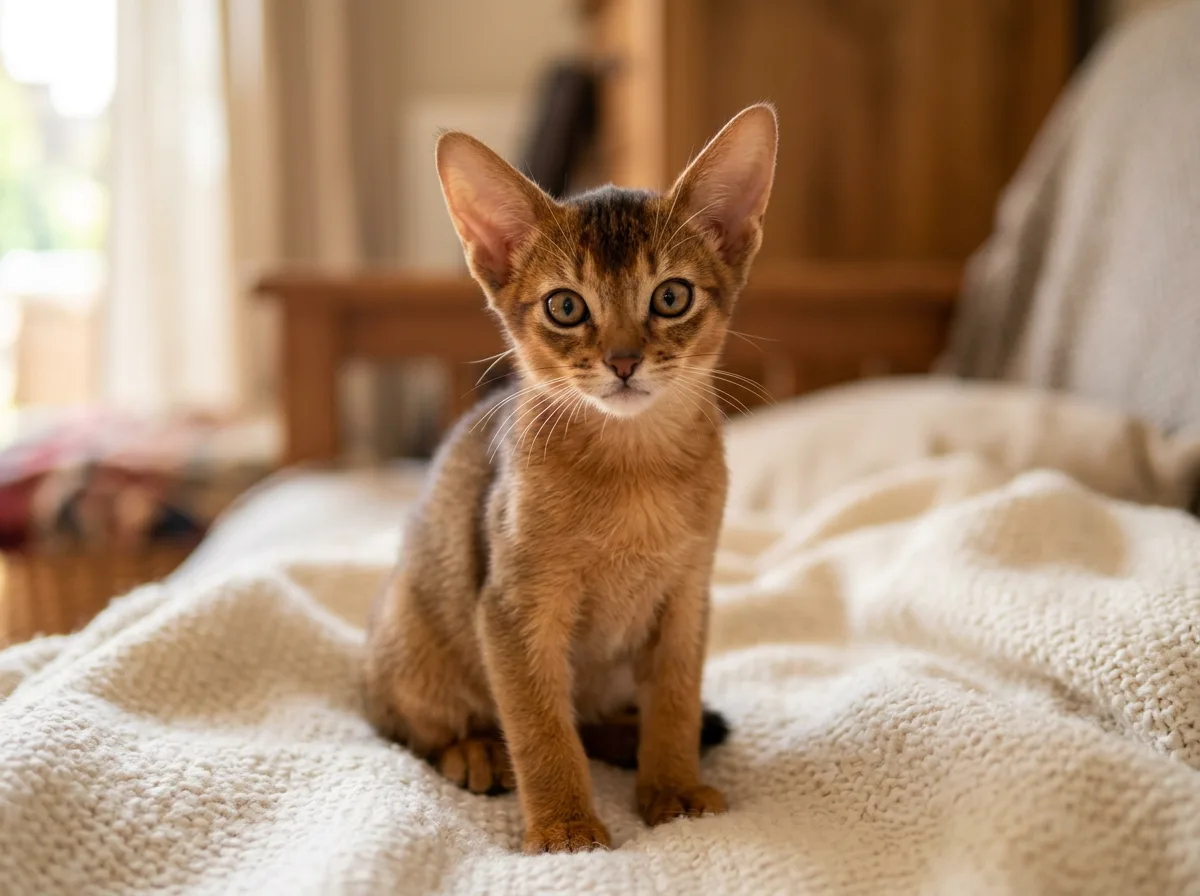
Abyssinian kittens are even busier than the adults: relentlessly curious, fearless climbers, and into absolutely everything. Expect a whirlwind for the first year. Before a kitten comes home, fully cat-proof your space, secure tall furniture, and set up plenty of vertical territory (a tall cat tree and shelves) so that climbing energy has a legitimate outlet. Kittens should stay with the breeder until at least 12 weeks so they are fully weaned, litter-trained, and socialized.
You can find an Abyssinian three ways: a reputable breeder, a breed-specific rescue, or general shelter adoption. Whichever route you choose, ask about health testing and meet the kitten in person. Good breeders will show you DNA test results for PRA and PK deficiency, let you see where the cats are raised, and ask you plenty of questions in return. If you would rather adopt, breed-specific rescues occasionally have Abyssinians and Abyssinian mixes, and you can always browse general listings of available cats.
For a broader look at other active, intelligent breeds before you decide, browse Petful's full library of cat breeds.
Abyssinian Cat Care, Diet and Activity
An Abyssinian's care plan is really an enrichment plan. This is a high-energy, high-intelligence breed that needs daily outlets to stay physically and mentally healthy. Provide tall climbing trees and window perches (they love to be up high), rotate interactive toys, teach tricks and fetch, and consider a second cat or harness training so your Abyssinian never runs short of stimulation. A bored Abyssinian invents its own entertainment, usually at your furniture's expense.
On diet, feed a high-quality, protein-rich cat food that matches the breed's lean, muscular, active build, and measure portions to prevent the weight creep that strains joints and organs. Because Abyssinians are prone to dental issues, dental-friendly food and treats are a smart addition. Always keep fresh water available; many active cats drink more readily from a flowing fountain than a still bowl, which also supports the urinary and kidney health that matters in this breed.
- Two or more interactive play sessions, vertical climbing space, a rotation of puzzle and chase toys, and ideally a feline or human companion for company. Meet these needs and the Abyssinian is a joyful, easy housemate; skip them and you get a frustrated, mischievous cat.
Never Scoop Again® with the Whisker Litter-Robot, the smart self-cleaning automatic litter box. Monitor visits and track weights for better overall care in the Whisker® app. Multi-cat friendly.
Petful may earn a commission when you click through to Whisker, at no extra cost to you.
Abyssinian vs Somali: The Longhaired Cousin
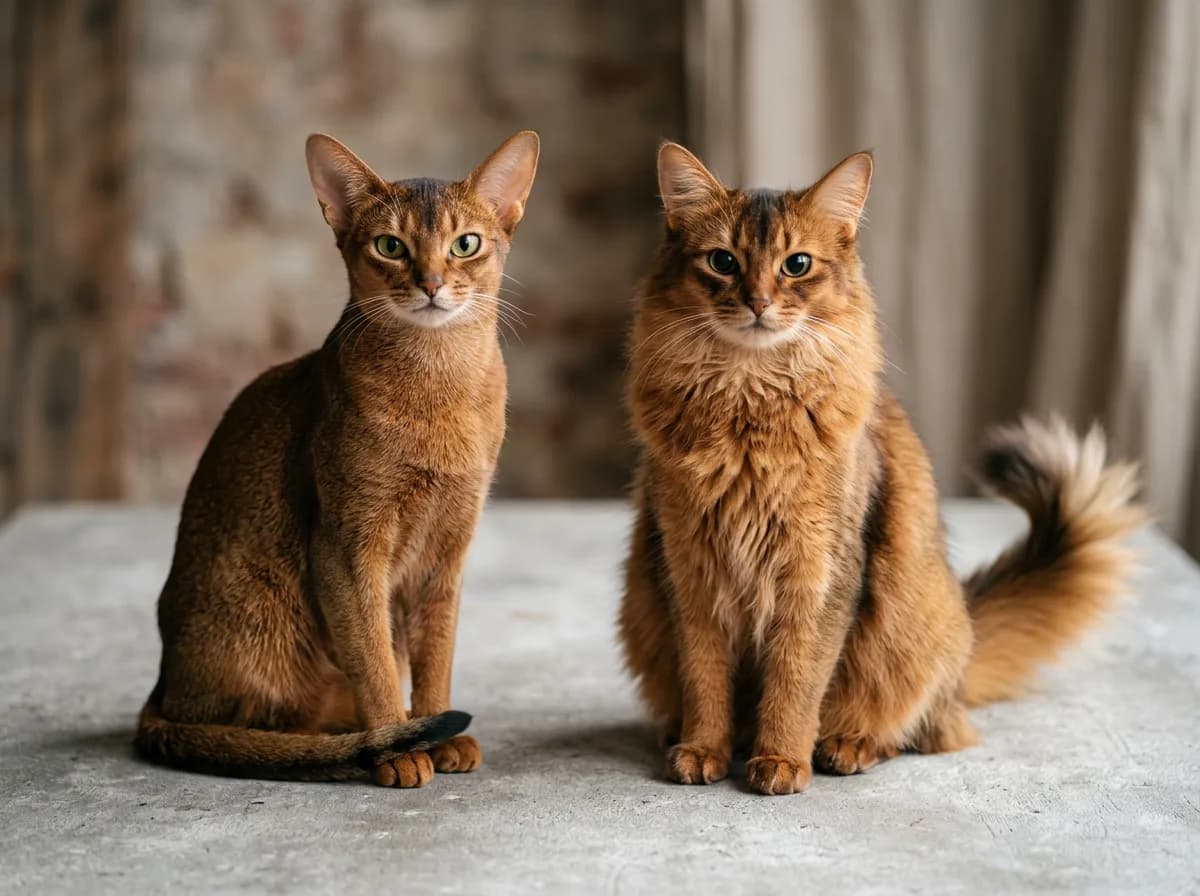
If you love the Abyssinian's look and personality but want a fluffier cat, meet the longhaired Somali (the Abyssinian's cousin). The Somali is essentially a semi-longhaired Abyssinian: it carries the same ticked agouti coloring and the same playful, people-loving temperament, but a recessive longhair gene gives it a soft, medium-length coat, a full plumed "fox" tail, a neck ruff, and ear tufts. The two breeds share ancestry and many of the same health considerations, including renal amyloidosis.
The practical differences come down to coat care and looks. The short-coated Abyssinian needs only a weekly comb, while the Somali's longer coat benefits from grooming a couple of times a week to prevent tangles. If you are choosing between them, the temperament is nearly identical, so it really comes down to whether you prefer the sleek, glowing Abyssinian or the dramatic, fluffy Somali. You can explore the full range of the cousin's coats in our guide to Somali cat colors.
Abyssinian Cat FAQ
An Abyssinian kitten typically costs $900 to $2,000 from a reputable breeder, rising to $2,500 or more for show- or rare-color kittens from health-tested lines. Adoption through a rescue runs far less, usually $50 to $150. Budget another $225 to $750 in one-time setup costs and roughly $70 to $450 per month to keep one.
Yes, for the right home. Abyssinians are affectionate, intelligent, and entertaining companions that bond closely with their families and get along with other pets. They suit active households that can give them daily play and climbing space. They are less ideal if you want a calm lap cat or are away from home for long stretches, since they crave interaction.
Abyssinians are expensive because of small litter sizes, strong demand for a popular breed, the cost of the DNA and health testing responsible breeders perform, and a rarity premium on colors like silver and fawn. Show-quality kittens from proven lines cost the most. Adoption is the budget-friendly alternative when available.
Abyssinian cats typically live 9 to 15 years, and many reach their mid-teens with good nutrition, regular veterinary care, and attention to the breed's inherited health risks. Indoor living, weight management, and dental care all help maximize their lifespan.
No. No cat is truly hypoallergenic, and Abyssinians produce the Fel d 1 allergen like any other cat. However, their short, fine, low-shedding coat releases less allergen-coated hair into the home than many breeds, so some mild allergy sufferers tolerate them better. Spend time with an adult before committing.
No. Abyssinians are low shedders because their coat is short, fine, and single-layered. Shedding ticks up slightly during spring and fall coat changes, but a weekly comb keeps loose hair to a minimum year-round.
Yes. Abyssinians are very friendly and affectionate, but on their own active terms. They show love through constant companionship, play, and supervision rather than long, still cuddles. They greet visitors, bond strongly with their people, and generally get along well with other cats, dogs, and children.
The four standard Abyssinian colors are ruddy (warm reddish-brown), red or sorrel (coppery cinnamon), blue (warm slate grey), and fawn (pale cream-beige). Rarer variants include silver, lilac, chocolate, and standalone cinnamon in some registries. There is no naturally black, orange-tabby, or solid-white Abyssinian; the breed always shows ticked agouti coloring.
Abyssinians are a medium-sized, slender breed. Most weigh 6 to 10 pounds, with males at the heavier end (8 to 10 pounds) and females typically 6 to 8 pounds. They look taller and leggier than they weigh thanks to their fine-boned, athletic build.
The Abyssinian is over-represented for several inherited conditions: progressive retinal atrophy (PRA), pyruvate kinase deficiency (PK deficiency), renal amyloidosis, and early-onset dental disease and gingivitis. PRA and PK deficiency can be screened with DNA tests, so always ask a breeder for documented results on the parents, and keep up with annual wellness exams and bloodwork.
The Abyssinian rewards an active, engaged owner with one of the most charismatic personalities in the cat world. Match its energy with play, climbing space, and good preventive care, and you will have a glowing, devoted companion for well over a decade.

Kristine Lacoste has been researching dog and cat breeds for nearly a decade and has observed the animals up close at dog shows in both the United States and the United Kingdom. She is the author of the book One Unforgettable Journey, which was named as a finalist for a Maxwell Award from the Dog Writers Association of America, and was host of a weekly pet news segment on the National K-9 Academy Radio Show. In addition, she was the New Orleans coordinator for Dogs on Deployment, a nonprofit that helps military members and their pets, for 3 years. Kristine has researched and written about pet behaviors and care for many years. She holds a bachelor’s degree in psychology, another bachelor’s degree in English and a Master of Business Administration degree.
Veterinarian · BVMS, MRCVS
Dr. Pippa Elliott, BVMS, MRCVS, is a veterinarian with nearly 30 years of experience in companion animal practice. Dr. Elliott earned her Bachelor of Veterinary Medicine and Surgery from the University of Glasgow. She was also designated a Member of the Royal College of Veterinary Surgeons. Married with 2 grown-up kids, Dr. Elliott has a naughty Puggle named Poggle, 3 cats and a bearded dragon.
Sign up for expert-backed reviews and safety alerts all in one place.