Can Cats Overdose on Catnip? Understanding the Effects and Safety Measures
Can cats overdose on catnip? No fatal overdose has ever been documented, but a cat that eats a lot can have a few hours of vomiting or diarrhea. A veterinarian explains what too much looks like, how much and how often is safe, and when to call.

An orange tabby cat rolling on its back on a wooden floor beside scattered dried catnip.
Petful is reader supported. As an affiliate of platforms like Amazon and Chewy, we may earn a commission when you buy through links on this page. There is no extra cost to you.
Can cats overdose on catnip? Not in the way the word usually means. No fatal catnip overdose has been documented in cats, and the herb remains one of the safest forms of enrichment you can offer. What is real is that a cat who eats a large amount can have a few hours of mild stomach upset. This guide covers what too much looks like, how much and how often is sensible, and what to do if your cat got into the whole bag.

Sign up for expert-backed reviews and safety alerts all in one place.
Can Cats Overdose on Catnip? The Direct Answer
No fatal overdose from catnip has been documented in cats. Sniffing catnip produces a short, self-limiting reaction that fades within about 15 minutes, and most cats walk away on their own. Eating a large amount can cause vomiting or diarrhea, which is why the ASPCA lists catnip as toxic to cats, but the signs are mild stomach upset that usually clears within a few hours and does not cause lasting harm.
- 1No fatal overdose from catnip has been documented in cats; a "catnip overdose" means an unpleasant excess, not a poisoning emergency
- 2Sniffing gives a 5-to-15-minute episode; eating a lot can cause vomiting, diarrhea, and drooling for a few hours
- 3A small pinch to a level teaspoon a few times a week is plenty for most cats
- 4Remove the herb, offer water, and give quiet space; call your vet if your cat is still vomiting after several hours, cannot walk steadily, or seems very lethargic
The confusion comes from two meanings of overdose. Some owners want to know whether a cat can overdose on catnip the way it could on a medication; it cannot. Others have just watched their cat eat a whole bag of catnip are asking what happens now; the answer is a few hours of digestive upset. Catnip (Nepeta cataria) works through the nose, and the cat's own brain shuts the response down, so a catnip overdose in cats is a question of how much was eaten, never how much was sniffed. Owners also ask whether cats can green out on catnip or whether cats can get too high on catnip. The closest thing is a cat that sniffs an unusually strong batch, gets a little wobbly or overexcited, and then sleeps; there is no state a cat can sniff its way into that lasts beyond the episode. The ASPCA lists catnip as toxic, yet no fatal overdose is documented; both facts are true, and the next section explains how they fit together.

Petful may earn a commission when you click through to Chewy, at no extra cost to you.
Is Catnip Toxic? Can It Kill a Cat?
Can catnip kill a cat? No death from catnip has been documented, and Pet Poison Helpline states that no significant toxicity is expected in cats. At the same time, the ASPCA lists catnip on its toxic-to-cats plant list because eating it can cause vomiting and diarrhea. Both are true: catnip mildly irritates the gut in large amounts, and it is not a life-threatening poison. The only real danger is a complication, such as dehydration from prolonged vomiting or a wobbly cat falling from a height. So is catnip harmful? Not in the way a true poison is: the worst outcome from eating too much is a bout of vomiting or diarrhea that clears on its own.
- ASPCA Animal Poison Control lists catnip (Nepeta cataria, also called catmint or catswort) as toxic to cats with the toxic principle nepetalactone. The clinical signs it names are vomiting and diarrhea, with some cats sedated and others stimulated. That is a mild toxicity rating, the same category of plant that upsets a stomach rather than one that damages organs. No fatal overdose appears in the listing or in the veterinary literature.
Used as intended, catnip is not bad for cats or poisonous to them. "Catnip poisoning in cats" on some websites means the vomiting and loose stool after a large ingestion, not organ damage. What happens when cats eat catnip depends almost entirely on the amount: a few leaves or a pinch off a toy produces nothing, while a pile produces the digestive signs above. Catnip safety, in other words, is a question of quantity and form rather than a yes-or-no toxin question. Catnip is not dangerous at any amount a cat is likely to eat on its own, and no lasting harm from repeated use over time has been documented. The health benefits of catnip are enrichment and stress relief for cats that respond to it; nothing medicinal has been proven, and catnip is not good for a cat's digestion, since large amounts upset the stomach rather than settle it. For a healthy adult cat given a pinch to a teaspoon a few times a week, catnip is safe. The route matters:
- Sniffing catnip produces the classic 5-to-15-minute episode and does not involve the gut.
- Eating catnip is where the mild toxicity lives; many cats become calmer after eating it, and a large amount can irritate the stomach and intestines.
- Catnip essential oil is not the herb. Concentrated oils are a genuine risk to cats; keep them off your cat entirely.
If vomiting or diarrhea began without catnip in the house, or continues well beyond a catnip episode, use our guide to cat poisoning symptoms that are not catnip to rule out the toxins that are emergencies.

Pack of 18 soft plush mice filled with catnip to spark batting, pouncing, and play.
Petful may earn a commission when you click through to Chewy, at no extra cost to you.
Catnip Overdose Symptoms and How Long They Last
Catnip overdose symptoms fall into two groups: the normal reaction every responding cat shows, and the digestive signs that appear only after a cat eats a large amount. A normal episode is loud but short; a true excess is quieter and centers on the stomach. So can catnip make cats sick? Sniffing it cannot make a cat sick; eating a large amount can, for a few hours. Does catnip make cats drool? Yes, drooling is part of the normal reaction and on its own is never a sign that catnip made a cat sick.
- Normal reaction to sniffing: rolling and rubbing, drooling, chirping or loud meows, a burst of zoomies with the odd play bite, dilated pupils, then a calm, sleepy stretch.
- Side effects of catnip that suggest a cat ate too much, usually within an hour or two: vomiting once or twice with green plant material, loose stool or diarrhea, a wobbly walk, lethargy that outlasts the usual nap.
| Sign | When it starts | How long it lasts | Normal episode or call the vet? |
|---|---|---|---|
| Rolling, rubbing, drooling, vocalizing | Within a minute of sniffing | 5 to 15 minutes | Normal episode; no action needed |
| Zoomies, pouncing, play biting | Within the first few minutes | Fades with the episode | Normal episode; put hands and wand toys away until it passes |
| Calm, sleepy stretch | Right after the episode | 30 minutes to a couple of hours | Normal episode; let the cat rest |
| Vomiting once or twice with plant material | 30 minutes to 2 hours after eating a large amount | Usually stops within a few hours | Watch and offer water; call the vet if still vomiting after several hours |
| Loose stool or diarrhea | 2 to 12 hours after eating a large amount | Usually resolves within 24 hours | Watch; call the vet if it continues past a day or contains blood |
| Wobbly walk or trouble jumping | Shortly after a large ingestion | Should clear within a few hours | Keep the cat off high surfaces; call the vet if it is not improving in a few hours |
| Deep lethargy, refusing food or water, repeated vomiting | Any time | Ongoing | Call the vet or a poison hotline; this is no longer a catnip episode |
Do cats crash after catnip? Yes, in a mild sense. After the active episode most cats settle into a calm or sleepy stretch of half an hour to a couple of hours. That overlaps with the refractory period, a window of roughly one to two hours during which the cat will not respond to catnip again no matter how much is offered. A cat that is sleepy after the episode and then wakes up acting normally has had a textbook reaction, not an overdose.
How long does catnip poisoning last when a cat genuinely ate too much? Vomiting usually stops within a few hours and loose stool resolves within a day. If a cat is still vomiting after several hours, cannot keep water down, or is getting weaker rather than brighter, it is no longer a simple catnip excess and deserves a veterinary call. For the mechanism behind the episode, see our guide to how catnip works and when kittens start responding.
How Much Catnip Is Too Much (and How Often Is Safe)
How much catnip can a cat have a day? For most adult cats, a small pinch rubbed into a toy or a level teaspoon of dried catnip on the floor is plenty for one session, and one session a day is the most any cat needs. Commonly cited guidance puts the ceiling for dried catnip at about a tablespoon. There is no formal veterinary dose standard for catnip, so treat these amounts as vet guidance ranges rather than clinical thresholds.
How often is safe? Offer catnip no more than a few times a week, with a day or two between sessions, and skip it for a week if your cat is losing interest. This is vet guidance, not a measured limit, because no formal catnip dose standard exists. The reason for spacing is not toxicity. Two things drive this schedule: the refractory period after each episode and the desensitization that comes from daily use. A cat cannot respond again for an hour or two after an episode, and cats given catnip daily stop responding altogether, so a few sessions a week keeps the reaction strong and the total eaten small. That frequency recommendation rests on two things: the refractory period after each session, and the desensitization that daily exposure causes.

Silvervine and catnip dental chew sticks that give cats a safe, satisfying outlet for biting and chewing while helping scrape away plaque.
Petful may earn a commission when you click through to Chewy, at no extra cost to you.
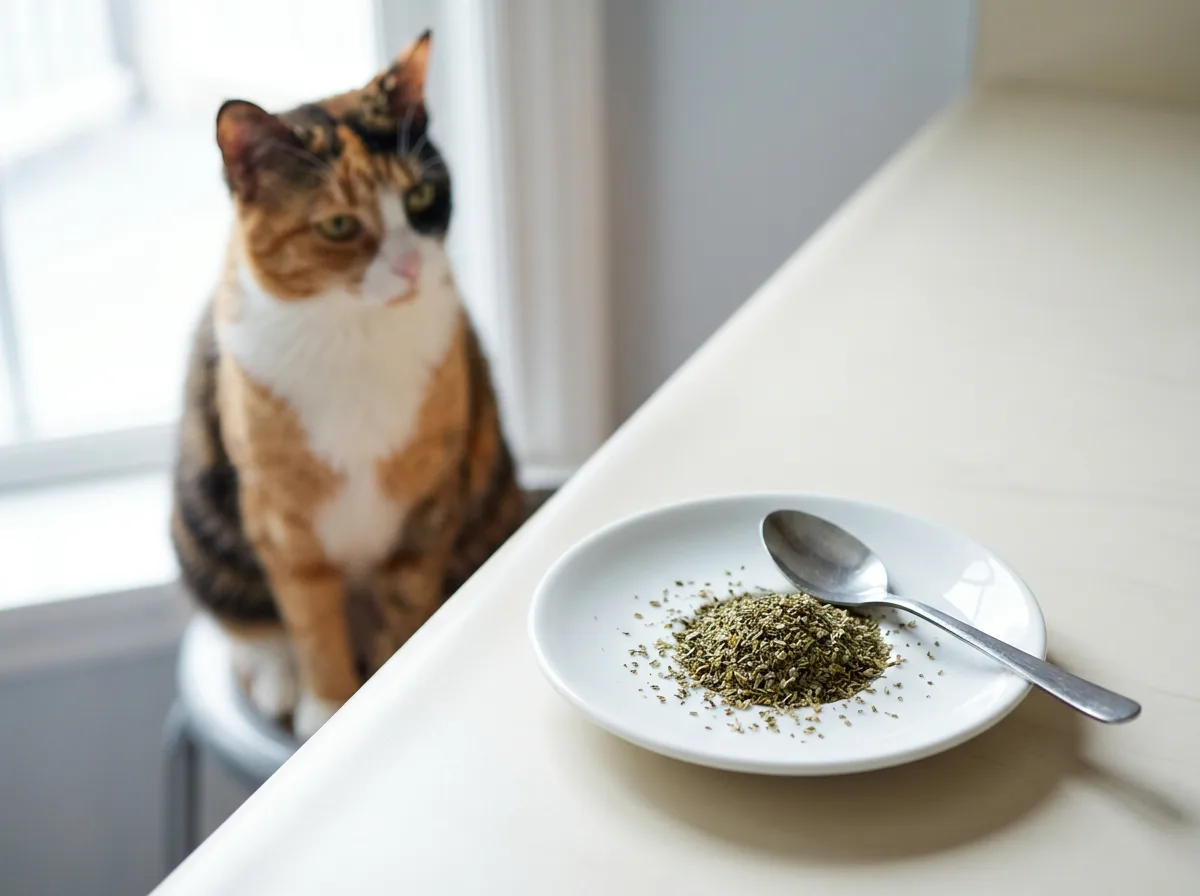
How to use catnip, and how to give catnip so the amount stays sensible: rub a pinch into a toy or scratcher, or measure a level teaspoon onto the floor, let the cat have its episode, then put the rest away. The table below shows what to expect from a pinch, a teaspoon, a tablespoon, or a whole bag.
| Amount | What to expect | When to call a vet |
|---|---|---|
| Small pinch rubbed on a toy or scratcher | A normal 5-to-15-minute episode, then a nap; almost nothing is eaten | Never, for a healthy adult cat |
| Level teaspoon of dried catnip on the floor | The same episode; a cat that eats it all may be calmer than usual and rarely has a soft stool | Only if vomiting or diarrhea appears and lasts more than a few hours |
| Tablespoon of dried catnip | Strong episode; a cat that eats most of it may vomit once or have loose stool later that day | If still vomiting after several hours, or if the cat is wobbly and not improving |
| Whole bag of dried catnip or a whole plant chewed | Vomiting with green plant material, diarrhea, an unsteady walk, and a long sleepy stretch over the next several hours | Call the vet or a poison hotline the same day, sooner if vomiting is repeated, the cat cannot keep water down, or is very weak |
Can cats have too much catnip in one sitting? They can eat more than is comfortable, which the bottom rungs describe, and the result is a few unpleasant hours rather than a medical crisis. The form changes how much a cat can actually take in:
- Dried loose catnip is the easiest to overeat; measure it with a spoon.
- Fresh catnip is milder by weight; a cat chewing a few leaves off a plant is very unlikely to get sick.
- Catnip toys hold a fixed, small amount sealed in fabric, the safest option for a cat that eats its catnip. The Yeowww! Catnip Yellow Banana Cat Toy is a typical pre-portioned toy.
- Catnip spray carries far less nepetalactone and scents scratchers and beds; a few sprays cannot upset a stomach.
If your cat treats every catnip toy as a snack, pre-filled soft toys such as the Fashion's Talk plush catnip-filled mice keep the herb sealed and let you rotate a fresh one in every few days instead of pouring out loose catnip. Store spares in a closed container, since nepetalactone fades with air exposure.

Petful may earn a commission when you click through to Chewy, at no extra cost to you.
What to Do If Your Cat Ate Too Much Catnip
If your cat ate too much catnip, the plan is simple. There is no antidote and nothing to induce; the herb passes on its own. Stop further eating, keep the cat comfortable and hydrated, and watch for the few signs that turn wait-and-watch into a phone call.
- Remove the herb. Pick up the bag, plant, or chewed-open toy and vacuum loose catnip off the floor.
- Offer fresh water. Vomiting and diarrhea cost fluid; keep a clean bowl within reach.
- Give quiet space. A calm room with a bed, water, and a litter box, away from children, dogs, and wand toys.
- Rest the stomach. If the cat has vomited, wait a few hours, then offer a small portion of its normal food.
- Keep the cat off high places while it is wobbly. A misjudged jump can hurt a cat in a way the catnip never would.
- Note the time and amount. "About a tablespoon at 2 p.m." is far more useful to a vet than "a lot."

- Your cat is still vomiting after several hours, or cannot keep water down. Diarrhea continues past a day or contains blood. The cat is deeply lethargic, will not stand, or is still unsteady on its feet several hours after eating the catnip. The cat is a kitten, is pregnant, has a seizure disorder, or has a known stomach or kidney condition. You are not sure the plant was actually catnip. None of these means catnip has poisoned your cat; each means the picture no longer fits a simple catnip excess and a professional should look.
Most cats never reach the callout: they vomit once, sleep for a couple of hours, and ask for dinner. If you want a second opinion, ASPCA Animal Poison Control and Pet Poison Helpline both take plant-ingestion calls; our page on the pet poison hotline explains how to reach them. Have the product bag handy in case the blend includes other herbs.
When to Skip Catnip: Kittens, Pregnant Cats, Seizures, and Daily Use
Catnip is safe for the average healthy adult cat. A few situations call for holding off: pregnant cats, cats with a seizure history, cats prone to aggression, and kittens. In each case the advice below is hedged to the evidence level, because the reason is caution about a specific cat rather than a documented harm from the plant.
- Kittens. Catnip will not poison a kitten, but very young kittens generally do not respond to it, so there is no reason to let a small stomach fill up on loose herb. The age at which the response switches on is covered in our how catnip works article; most kittens ignore it until they are several months old.
- Pregnant cats. The claim that catnip is a uterine stimulant traces to traditional human herbal use, not cat data, so it should not be treated as fact for cats. With no safety data for pregnant queens either way, the cautious choice is to skip it.
- Cats with a seizure history. Older sources suggested catnip might lower the seizure threshold, based on rodent work. That has not been demonstrated in cats, but a cat on seizure medication has nothing to gain from a stimulant herb.
- Cats that get aggressive. A minority become overstimulated and swat, bite, or pick fights with housemates; Pet Poison Helpline notes the same lowered-inhibition play biting. Offer catnip only when that cat is alone, or skip it.
Is catnip addictive to cats? No. Cats show no dependence, and what daily use produces is desensitization: the reaction fades, the cat stops caring, and the interest returns after a break. Long-term side effects beyond that boredom have not been documented, and the old idea that chronic exposure dulls a cat's mind has no evidence behind it. For daily-enrichment households, give catnip on two or three days and on the others use toys that do not depend on scent, such as the Catit Play Treat Puzzle.
Why Catnip Affects Cats and How Long It Lasts
What does catnip do to cats? The reaction starts when nepetalactone reaches receptors in the cat's nose and triggers a response that looks much like feline courtship behavior. How long does catnip last? The episode runs about 5 to 15 minutes, then the cat becomes unresponsive for an hour or two while the system resets. About one cat in three does not respond at all, a trait that appears inherited, and kittens show no interest until they approach maturity. For the veterinary view of the reaction itself, WebVet explains what catnip does to cats step by step.
For the full catnip effects on cats, whether catnip acts like a drug for cats and why it does not affect people the same way, the mechanism behind the response, the age at which kittens start responding, and how long the effects last in different cats, see our guide to how catnip works and when kittens start responding.
Silvervine and Other Catnip Alternatives
If your cat is among the one in three that shrug at catnip, silvervine for cats (also written silver vine) is the best-studied alternative. In the largest test to date, nearly 80 percent of domestic cats responded to silvervine, including 71 percent (22 of 31) of the cats that ignored catnip; Tatarian honeysuckle and valerian root each worked for about half. Can cats overdose on silvervine? No fatal dose is documented for it either, and the same eat-a-little-not-a-lot logic applies. Chew sticks such as the SunGrow silvervine chew sticks let a cat gnaw wood rather than swallow loose powder.
For how silvervine compares with catnip in potency and form, which alternative to try for a non-responder, and where to buy catnip and silvervine, see our guide to silvervine vs catnip and alternatives.
Frequently Asked Questions About Catnip Overdose
No. Catnip toys hold a small, fixed amount of herb sealed in fabric, so even a chewed-open toy delivers far less than a pile of loose catnip. Catnip spray contains much less nepetalactone and is applied to surfaces, not eaten. The realistic risk with either form is that it stops working from overuse, not that it makes a cat sick.
No fatal overdose has been documented at any age. Most vets hold off on giving kittens catnip because very young kittens do not respond to catnip and gain nothing from it, and a small kitten that eats a pile of loose herb is more likely than an adult to vomit. Once a kitten responds, start with a pinch on a toy.
A true allergic reaction to catnip is rare but possible. Allergy signs differ from a normal reaction or an excess: itchy skin, hives, sneezing, watery eyes, or facial swelling rather than rolling, drooling, or an upset stomach. If you see those, stop offering catnip and have your vet confirm the cause. Facial swelling or trouble breathing is an emergency.
It can, but almost only after a large amount eaten in one sitting. Sniffing or licking a pinch off a toy does not affect the gut. A cat that eats a tablespoon or more may pass loose stool later that day, and the whole-bag cat may have diarrhea for up to a day. Loose stool past 24 hours, with blood, or with repeated vomiting warrants a vet call.
Old catnip does not turn toxic; it loses potency as the nepetalactone evaporates, which is why a stale bag gets a shrug. The only way it can make a cat sick is if damp storage has let it pick up mold or moisture. Toss catnip that smells musty or looks clumped, and keep the rest sealed in the freezer.
Catmint is a common name covering several Nepeta species. True catnip is Nepeta cataria, and the ASPCA lists catmint as one of its alternate names. The ornamental garden catmint sold at nurseries is a milder relative many cats will rub on. Both sit in the same mildly-irritating-if-eaten-in-bulk category, and neither is considered dangerous.
No. Cats show no withdrawal signs when catnip is stopped, because there is no physical dependence. What owners notice is the opposite: a cat given catnip every day gradually stops reacting, and after a week or two without it the interest returns. A cat that seems flat after you stop catnip needs another explanation, such as boredom or illness.
References
- ASPCA Animal Poison Control Center. "Catnip." Toxic and Non-Toxic Plants. https://www.aspca.org/pet-care/animal-poison-control/toxic-and-non-toxic-plants/catnip
- Pet Poison Helpline. "The Chemistry of Catnip." https://www.petpoisonhelpline.com/uncategorized/the-chemistry-of-catnip/
- Bol, Sebastiaan, et al. "Responsiveness of Cats (Felidae) to Silver Vine (Actinidia polygama), Tatarian Honeysuckle (Lonicera tatarica), Valerian (Valeriana officinalis) and Catnip (Nepeta cataria)." BMC Veterinary Research 13, no. 70 (2017). https://bmcvetres.biomedcentral.com/articles/10.1186/s12917-017-0987-6
- Humane World for Animals. "Crazy for Catnip." https://www.humaneworld.org/resources/crazy-catnip
- Grognet, Jeff, DVM. "Catnip: Its Uses and Effects, Past and Present." Canadian Veterinary Journal 31, no. 6 (1990): 455–456. https://pmc.ncbi.nlm.nih.gov/articles/PMC1480656/

VMD
Dr. Debora Lichtenberg, VMD, is a small animal and exotics veterinarian who has been practicing medicine for over 30 years. A graduate of the University of Pennsylvania School of Veterinary Medicine, Dr. Lichtenberg also trained at the Philadelphia Zoo. She now practices in the New York City area and lives in the West Village with her husband and her rescued pets, Cocoa and OG. Dr. Lichtenberg has been writing for Petful for many years, and she has been recognized with Certificates of Excellence from both the Dog Writers Association of America and the Cat Writers Association of America.
Sign up for expert-backed reviews and safety alerts all in one place.